
Reviewed · WORKSHOPS
Woolf & Dickens: London Literary Tour & Writing Workshop
A writing workshop in literary London feels personal. This 1.5-hour Woolf and Dickens session turns famous streets into fresh writing prompts, starting at Waterloo Bridge and moving through Somerset House and St Mary Le Strand. You’re not just looking at monuments. You’re using them.
I like how it’s guided by Joseph, an award-winning novelist with a PhD in creative writing, and the tone stays kind and inclusive. You’ll also get practical writing experiments at every stop, from mindful noticing to ekphrasis inside a church. One thing to consider: it’s an active workshop, so if you want a quiet sightseeing walk with no writing, this may feel like too much.
In This Review
- Key Things You Should Notice Before You Go
- Where You’ll Meet and How the Pace Feels in 90 Minutes
- Starting at Waterloo Bridge: Woolf’s View and Your First Draft
- What I’d watch for as you write
- Possible drawback
- Somerset House Mindful Writing: Slowing Down to Catch Details
- Why this stop is good value
- St Mary Le Strand and Eliot: Ekphrasis in a Church Interior
- What you might do with the prompt
- Practical tip
- Aldwych, Timeline Walls, and the Gladstone Statue: How Perspective Changes Truth
- A balanced way to approach the politics prompt
- Doctor Johnson’s House and the Dictionary Reading: Language as Identity
- What you’ll likely take home
- Dickens and Samuel Johnson as Prompts: Truth, Politics, and Your Personal Angle
- Why this combo works
- Price and Value: What $101 Buys in a 1.5-Hour Workshop
- Who This Tour Fits Best
- What to Bring So You Don’t Get Stuck
- Should You Book Woolf and Dickens in London?
- FAQ
- How long is the Woolf & Dickens London Literary Tour and Writing Workshop?
- Where is the meeting point?
- Do I need entry tickets for the stops?
- Who leads the tour?
- Is this tour suitable for beginners?
- What should I bring?
- Is it wheelchair accessible?
- Is it a private group?
- What language is the tour in?
- Is there free cancellation?
- Can I reserve now and pay later?
Key Things You Should Notice Before You Go
- Waterloo Bridge view-writing: Woolf-inspired reflection that starts with what you see and what it makes you remember.
- Somerset House mindful exercise: a slower, attention-based task rather than a test of writing skill.
- St Mary Le Strand ekphrasis: respond to the church interior with a guided writing prompt.
- T.S. Eliot and time: you’ll connect Eliot’s ideas to the setting, including a timeline moment at Aldwych.
- Gladstone, truth, and politics: prompts shift as your perspective shifts, not as fixed answers.
- Doctor Johnson’s dictionary reading: you work with language as a structure that shapes identity.
Still deciding? A handful more London outings we rated
- London: Traditional English Scone Making and Tea Workshop
★ 5.0 · 702 reviews - London: East End Street Art Tour and Spray Painting Workshop
★ 4.8 · 297 reviews - London Traditional English Scone Making and Tea Workshop
★ 5.0 · 271 reviews - London: Half-Day Street Art Tour and Workshop
★ 4.9 · 172 reviews
Where You’ll Meet and How the Pace Feels in 90 Minutes
The tour meets at the north end of Waterloo Bridge, at a slope on the right that goes behind Somerset House. That’s helpful because it puts you close to the action right away, with an easy way to orient yourself on foot.
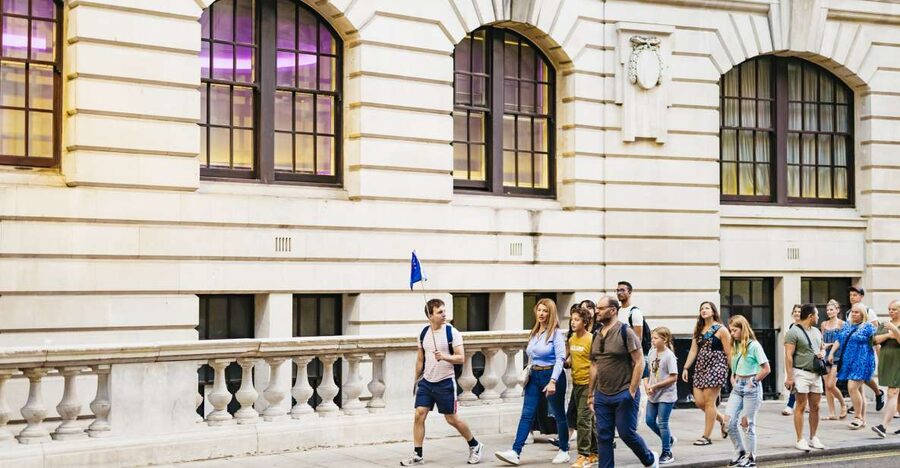
The format is intimate and private, and it runs for about 1.5 hours. That short time can be a big plus: you get focused prompts at multiple stops without the day getting swallowed by transport or long museum breaks. It also means you’ll want to show up ready to write, think, and move on.
Your guide leads in English and keeps the atmosphere supportive. You can expect readings from major English writers, but you’ll also be answering with your own words, not just listening.
Starting at Waterloo Bridge: Woolf’s View and Your First Draft
Waterloo Bridge is where the tour sets its mood: reflective, slightly wistful, and very present. Virginia Woolf is part of the prompt, especially her way of blending past and present while observing a view. In practice, that means you’re not being asked to imitate Woolf line-by-line. You’re using the idea as a trigger.
The writing task here is inspired by what you see from the bridge area. You’ll work toward a biographical sketch, which is a smart choice for first-timers. It’s less about perfect literary style and more about connecting place to memory: what the scene stirs up, what you notice, and how the moment pulls threads from your own life.
What I’d watch for as you write
- Keep it simple. Your first draft is meant to be usable, not publishable.
- Notice one physical detail from the view, then connect it to one personal detail from your past.
- Let the piece move between now and earlier without forcing a straight timeline.

Possible drawback
Because this is a workshop start, you may feel a bit rushed if you’re the type who likes to plan everything before writing. If that’s you, give yourself permission to write a messy version first.
Somerset House Mindful Writing: Slowing Down to Catch Details
After the Woolf-inspired opening, you shift into a mindful writing experiment at Somerset House. The “mindful” part matters because it changes how you approach the blank page. Instead of chasing an idea, you practice attention: what’s around you, what you’re feeling, and what words arrive when you slow your eyes down.
This is one of the stops I like most because it works for different levels. If you’re new to creative writing, the task can feel like structure rather than pressure. If you’ve written before, it becomes a way to reset your instincts and write from observation again.
Why this stop is good value
At $101 for a 90-minute guided writing experience, the best value is in the parts you can’t get from a self-guided walk. Somerset House is doing that work for you. You’re not just passing through a landmark; you’re using a prompt to generate text on demand.
You’ll also hear relevant literary readings during the tour, so the mindful exercise isn’t floating in isolation. It’s tied to writers and ideas that help you justify what you’re choosing to say.
St Mary Le Strand and Eliot: Ekphrasis in a Church Interior
St Mary Le Strand is where the tour gets extra literary in a very physical way. You enter the church and respond to T.S. Eliot’s study of time. That’s the theme, but the technique is the real engine: you’ll practice ekphrasis, meaning writing inspired by what you see.
In a church, ekphrasis is especially effective because there’s visual layering—architecture, light, symbols, and a sense of movement through space. You’re trained to convert the room into language. Not with “describe everything,” but with the prompt’s direction: how the interior might lead you to think about time, memory, and what feels permanent versus what keeps changing.
What you might do with the prompt
You might write in a way that treats the church interior like a timeline. Or you might answer Eliot’s idea of time through contrast—what looks old, what feels immediate, and what you personally carry into the space.
The timeline element shows up again later at Aldwych, so this isn’t a one-off theme. Eliot’s time-thinking becomes a thread you’ll keep pulling.
Practical tip
Bring your pen ready before you arrive at the church interior. When you start ekphrasis, momentum helps. You don’t want to be hunting for a notebook or phone notes when the prompt is active.
Aldwych, Timeline Walls, and the Gladstone Statue: How Perspective Changes Truth
There’s a timeline moment associated with Aldwych, with reflections that echo Eliot’s sense of time and history. This is useful because it pushes you to treat history as something you interact with, not something that sits still.
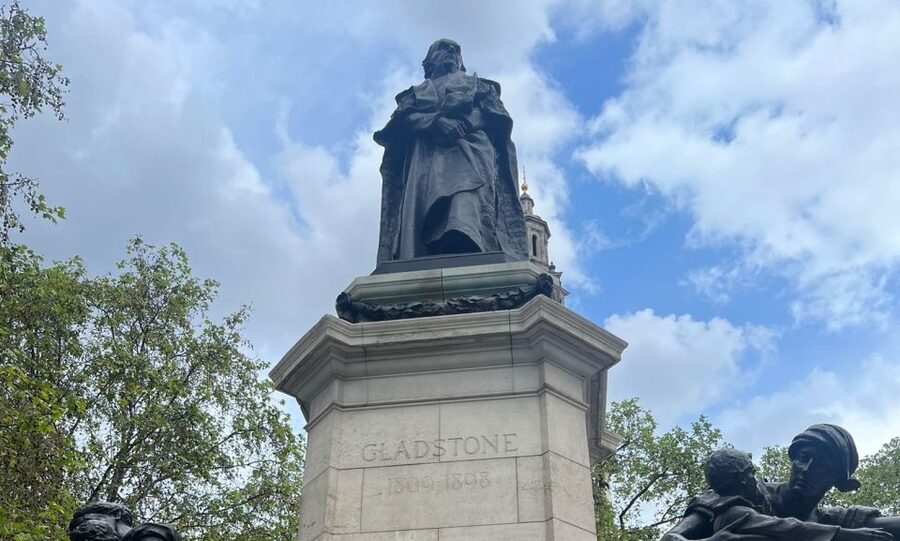
Then the tour moves to a statue of Gladstone. This isn’t just a photo stop. It becomes a prompt about politics, truth, and history, and how those things shift with perspective. The writing exercise tied to this is a list of facts that blends your personal history with the environment you’re part of.
That sounds simple, but it’s clever. A list of facts can go two ways: sterile or alive. The guide’s framing pushes you toward alive. You’re forced to decide what counts as a fact in your world, what you believe about the facts, and how your own background colors what you notice.
A balanced way to approach the politics prompt
You don’t need a strong opinion to do this well. You need honest attention. Ask yourself:
- Which facts feel objective to me?
- Which facts feel personal or emotional?
- Where do my beliefs come from, and how might they change when I stand somewhere else?
That’s where the exercise becomes more than “writing about politics.” It becomes writing about how humans build truth.
Doctor Johnson’s House and the Dictionary Reading: Language as Identity
At Doctor Johnson’s house, you read from his dictionary. That choice is more than a literary nod. It helps you slow down on language itself—how words are shaped, defined, and used to create mental order.
The prompt here looks at how structures such as religion, politics, art, and language make us who we are. This is one of the most grounding parts of the whole tour because it links literary culture to everyday self-making. You’re not only learning names and dates. You’re noticing how different systems shape voice, belief, and identity.
If you love writing, this stop is a reminder that your words come from somewhere. If you’re newer to writing, it gives you a scaffold. The dictionary reading acts like a tool: it shows you how meaning can be built carefully from language choices.
What you’ll likely take home
You may come away thinking differently about your own writing habits. Even if your final piece is short, you’ll have a stronger sense of where word choice comes from and how to make your own voice feel intentional.
Dickens and Samuel Johnson as Prompts: Truth, Politics, and Your Personal Angle
Dickens and Samuel Johnson show up as prompts for reflecting on truth and politics. This doesn’t ask you to solve public issues like a debate club. It asks you to practice perspective—how truth can feel different depending on what you bring to it and what you’re standing near.
This is a key part of why the workshop works across skill levels. Writers at any level can do this because the prompt is about observation and reflection more than technical mastery.
Why this combo works
Dickens brings social eye and human scale. Samuel Johnson brings language discipline and moral curiosity. Together, they nudge you toward a balanced kind of writing: both compassionate and precise.
You’ll probably notice that your writing changes when you’re allowed to bring your own timeline—your own facts—into the prompt. Instead of trying to write what you think you should write, you write what your mind actually does when it sees these ideas in real places.
Price and Value: What $101 Buys in a 1.5-Hour Workshop
At $101 per person for 1.5 hours, you’re paying for something more specific than a standard walking tour. This includes a guided tour and writing workshop, plus literary readings during the walk. No entry tickets are needed, which helps keep costs predictable.
You’re also paying for structure. Writing on your own in London can be great, but you might stall out. Here, the guide provides prompts you can follow even if you don’t know what to write next. That’s a real value add in a short time window.
What you should consider is your own preference for participation. If you want a passive experience, you’ll likely feel the time pressure. If you like active workshops, this price is reasonable for the amount of guidance and feedback-style prompting you get in one sitting.
Also, the group is private. Private format usually means you get more attention and more room to work with your comfort level during writing tasks.
Who This Tour Fits Best
This workshop fits best if you:
- enjoy writing or want a gentle way to restart writing
- like literature but also want to translate it into your own words
- want a guided, supportive environment rather than a stiff classroom
- are curious about how writers respond to place, time, politics, and language
It’s also a good fit if you’re traveling solo or with a partner and you want an activity that feels human, not like a checklist.
If you hate writing exercises, or you strongly prefer just hearing stories while someone else carries the thinking, you may find it too interactive.
What to Bring So You Don’t Get Stuck
Bring what the workshop asks for: a pen, water, and internet access. It also helps to pack an umbrella just in case.
If you’re relying on your phone for notes or a digital document, make sure you have enough battery and connectivity. During a writing prompt, you’ll want to capture ideas quickly.
A notebook is implied in practice for a writing workshop, even if the core list focuses on pen and internet access. Either way, plan to have a place where you can write immediately when the prompt lands.
Should You Book Woolf and Dickens in London?
Yes, if you want London to do more than entertain you. This tour turns the city into a writing partner: Waterloo Bridge for Woolf-style memory and observation, Somerset House for mindful noticing, St Mary Le Strand for ekphrasis and Eliot’s time, and then Johnson and Dickens ideas that connect truth and politics to language and identity.
Book it if you like workshops, prompts, and the chance to produce something real within 90 minutes. I’d skip it if you’re looking for a quiet, traditional sightseeing tour where you never have to write.
If you’re on the fence, think about this: the best moment in this kind of experience is often the first time you realize you can write without waiting to feel ready.
FAQ
How long is the Woolf & Dickens London Literary Tour and Writing Workshop?
It lasts 1.5 hours.
Where is the meeting point?
You meet at the north end of Waterloo Bridge, at the slope on the right that goes behind Somerset House.
Do I need entry tickets for the stops?
No entry tickets are needed for this experience.
Who leads the tour?
The workshop is delivered by Joseph (JPierson), an award-winning novelist with a PhD in creative writing.
Is this tour suitable for beginners?
Yes. The workshop is designed to suit all levels, from novice to novelist.
What should I bring?
Bring a pen, water, and internet access. An umbrella is also suggested just in case.
Is it wheelchair accessible?
Yes, the tour is wheelchair accessible.
Is it a private group?
Yes, it is a private group.
What language is the tour in?
The tour is conducted in English.
Is there free cancellation?
Yes. You can cancel up to 24 hours in advance for a full refund.
Can I reserve now and pay later?
Yes. You can reserve and pay later to keep your plans flexible.
More Workshops in London
- London: Traditional English Scone Making and Tea Workshop
★ 5.0 · 702 reviews - London: East End Street Art Tour and Spray Painting Workshop
★ 4.8 · 297 reviews - London Traditional English Scone Making and Tea Workshop
★ 5.0 · 271 reviews - London: Half-Day Street Art Tour and Workshop
★ 4.9 · 172 reviews - London: Traditional Scone Making Workshop
★ 4.7 · 129 reviews
More Tours in London
- From London: Harry Potter Warner Bros Studio Tour
★ 4.7 · 26,588 reviews - Magical London: Harry Potter Guided Walking Tour
★ 4.7 · 22,044 reviews - London: Warner Bros. Studio Harry Potter Tour & Branded Bus
★ 4.7 · 19,194 reviews - London Big Bus Hop-On Hop-Off Tour with Optional River Cruise
★ 3.5 · 10,803 reviews - London Small Group Tour of Historical Pubs
★ 5.0 · 10,422 reviews
More Tour Reviews in London
- From London: Harry Potter Warner Bros Studio Tour
★ 4.7 · 26,588 reviews - London: Westminster to Greenwich River Thames Cruise
★ 4.5 · 22,836 reviews - Magical London: Harry Potter Guided Walking Tour
★ 4.7 · 22,044 reviews - London: Madame Tussauds London
★ 4.6 · 20,915 reviews - London: Warner Bros. Studio Harry Potter Tour & Branded Bus
★ 4.7 · 19,194 reviews
Just reviewed around London





Workshops, compared.
 ★ 5.0Traditional English Scone Making and Tea WorkshopFrom $45702 reviews
 ★ 4.8East End Street Art Tour and Spray Painting WorkshopFrom $50297 reviews
★ 5.0London Traditional English Scone Making and Tea WorkshopFrom $48271 reviews
 ★ 4.9Half-Day Street Art Tour and WorkshopFrom $60172 reviews
 ★ 4.7Traditional Scone Making WorkshopFrom $80129 reviews
 ★ 5.0Street Art Tour and Spray Painting Workshop in LondonFrom $5398 reviews
 ★ 5.0Street Art Walking Tour and Workshop in LondonFrom $7258 reviews
3 Hour Chinese Dumpling Cooking Class for 2-6 people in LondonFrom $11744 reviews
Browse the lists this tour appears in