
Reviewed · LONDON WALKING TOURS
Women of Bloomsbury Walking Tour
London has a hidden trail of women’s stories. This guided Women of Bloomsbury Walking Tour turns central London into a living map, using real places and real names to explain how people like Virginia Woolf, Noor Inayat Khan, and Mary Prince shaped the city.
I especially love the storytelling with named figures—it’s not vague or generic—and the way the walk connects blue plaques, statues, and streets into something you can actually picture. The route also ends in a park area that’s easy to use for a meal break right after.
One drawback to plan for: you’re outside the whole time, and it can be cold and wet, so bring an umbrella and dress for London weather. Also, it’s a bit substantive, so it may be better for older kids and teens than little ones.
In This Review
- Key things to know before you go
- Where you start: Cambridge Theatre to Bloomsbury
- Seven Dials: a short first stop with big context
- Bloomsbury: the heart of the women’s stories
- Tavistock Square: listening with your eyes on public space
- Gordon Square: a fitting finish with easy onward plans
- Guides and storytelling: warm, human, and question-friendly
- The real value: you learn London and women’s history at the same time
- Weather, walking pace, and who it suits best
- Price and what you get for $54.82
- Should you book the Women of Bloomsbury Walking Tour?
- FAQ
- How long is the Women of Bloomsbury Walking Tour?
- Where does the tour start and end?
- What does it cost?
- Is the tour in English?
- How many people are in a group?
- Do I need an admission ticket for the stops?
- What ticket do I get?
- How active is the walk?
- Is it okay to bring a service animal?
- What should I do about weather?
Key things to know before you go
- Women-led focus across Bloomsbury and nearby districts so London feels personal, not just historical
- Stops that stay short but specific, with time to listen and look at the sites
- Guides who actively welcome questions, so you get back-and-forth, not a one-way lecture
- Blue plaques and statues used as visual “anchors” for the stories
- Small group size (max 20), which helps the tone stay friendly and manageable
- All outdoor walking means weather gear matters
London on foot, a few more ways
- Magical London: Harry Potter Guided Walking Tour
★ 4.7 · 22,044 reviews - London: The Original Jack the Ripper Walking Tour
★ 4.7 · 7,833 reviews - Tour for Muggles The Ultimate Harry Potter Walking Tour in London
★ 5.0 · 4,684 reviews - London Jack The Ripper Guided Walking Tour
★ 5.0 · 3,131 reviews
Where you start: Cambridge Theatre to Bloomsbury
The tour runs about 2 hours 30 minutes and stays in central London, with a start near the Cambridge Theatre on Earlham St (WC2H 9HU). It finishes near Gordon Square (WC1H), which is handy because you’ll be close to transport and lunch options when you’re done.
You’ll want moderate walking fitness—this is a steady walk through the city, not a bus-and-stop-by-stop ride. The good news is that the group is kept small, up to 20 people, which usually makes it easier to hear your guide and ask questions when something sparks your interest.
You’ll also have a mobile ticket, and the tour is offered in English. Service animals are allowed, which is great if you rely on one. And since the tour is designed around looking at streets and public markers, it’s less about indoor comfort and more about using your eyes as you go.
Seven Dials: a short first stop with big context
The first stop is Seven Dials, about 10 minutes. Even with the short time, this kind of opening matters because it sets the tone: you’re not just touring landmarks—you’re learning how the area’s story is tied to women’s lives and influence.
Seven Dials has a reputation for being a “busy bit of London” in the way districts cross and overlap. That makes it a smart place to begin, because it lets you understand Bloomsbury’s broader connections early on, before you settle into the deeper Bloomsbury blocks.
Practical tip: this first stop is quick, so if you want great photo angles, be ready to pause fast and adjust. If you’re the type who loves asking questions, this is a good moment to get your first clarifier in early—your guide has the full route in mind and can point you toward what comes next.
Bloomsbury: the heart of the women’s stories
The core stretch is Bloomsbury, about 45 minutes—the longest segment of the walk. This is where you’ll feel the tour’s personality most clearly: the guide connects the neighborhood’s streets to the people who lived, wrote, organized, or stood up for something there.
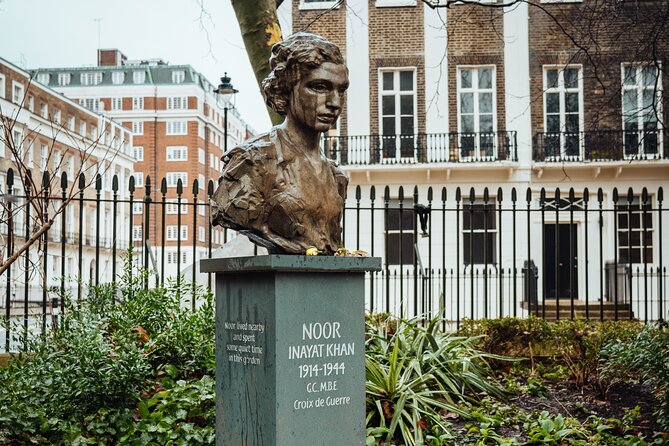
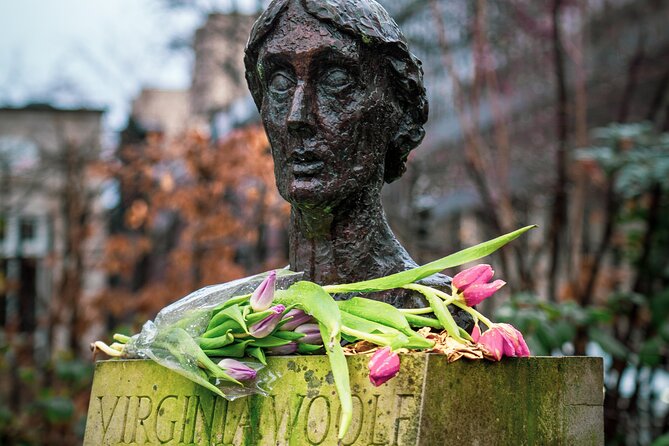
This is also where the famous names show up: you’ll hear about Virginia Woolf, plus other important figures tied to the area and its cultural and social movements, including Noor Inayat Khan and Mary Prince. You don’t have to be a London expert to follow along, because the guide tends to anchor the big ideas to what you can see right in front of you.
What I like about this kind of neighborhood focus is that it helps you learn how “place” shapes people. Bloomsbury isn’t just a setting; it’s part of the story. When you walk the blocks and look for plaques or statues, you start noticing how often London memorializes individuals in small, specific ways—names on walls, reminders in public space, and little moments that would be easy to miss on your own.
A small caution: because this is the longest stop, it’s also the most mentally dense. If you’re the type who gets restless during purely verbal tours, try to keep your eyes moving—look at the blue plaques and statues, and let the visuals keep you engaged.
Still deciding? A handful more London outings we rated
Tavistock Square: listening with your eyes on public space
Next is Tavistock Square, about 20 minutes. This stop shifts the tone slightly from the literary/cultural feel of Bloomsbury toward the kind of history you experience in public squares: movement, community, and the way activism and identity play out in everyday places.
You’ll explore the women connected to Tavistock Square’s story, and that’s a useful reminder: women’s history in London isn’t only in famous books or museums. It’s also in public space—where people gather, speak, and get noticed.
Practical benefit: a square stop like this is often a relief mid-walk. You get a defined area to pause, take in architecture, and let the guide’s explanation land. If it’s raining, squares can still be manageable because you’re not constantly trudging while listening—you’re stopping to focus.
Gordon Square: a fitting finish with easy onward plans
The final stop is Gordon Square, about 20 minutes, and that’s more than a convenient place to end. It’s a good way to close the loop: by the time you reach this park area, you’ve already built context for what you saw earlier, and now you can step back and absorb the whole neighborhood through the lens your guide provided.
This is also where the tour becomes practical for your day. You finish in a very pretty Gordon Square park area, and it’s well-placed for restaurants and transport. That matters because the tour isn’t just about history—it’s about helping you use your London time well. After 2.5 hours, you’re ready to eat, plan the next stop, or just slow down with a calmer walk.
If you’re visiting during a busy season, I like ending at a park because it gives your body a small reset. Even if you’re eager to see more, you’re not forced into a frantic rush immediately after the final sentence.
Guides and storytelling: warm, human, and question-friendly
The tour’s strongest ingredient is how the stories are told. Guides like Becky and Matilda come through in the way the experience is described: friendly tone, active conversation, and a sense that the guide actually cares about what people ask.
Becky is noted as the kind of guide who has researched and written the tour herself—meaning you can expect stories that fit the route rather than random facts tacked on. Matilda is described as warm and open to questions, which is a big deal on a walking tour. When you can ask follow-ups, you don’t just memorize; you connect.
Another thing I appreciate: there’s humor in the mix. That doesn’t turn the tour into a comedy routine. It just keeps the pacing natural, especially when the subject matter gets serious.
If you’re wondering how to make the most of it, come with at least one small curiosity: a question about one of the names you’ve heard (Woolf, Khan, Prince figures), or a practical question like how the neighborhood changed over time. The format supports that kind of engagement, because the guide isn’t trying to race through.
The real value: you learn London and women’s history at the same time
It’s easy to think of a women’s history tour as either inspiring but abstract, or informative but emotionally distant. This one works because it treats the city as the textbook. You learn about major figures, but you also learn how to “read” London streets—what gets marked, what gets remembered, and why that matters.
That’s why the sightseeing pieces feel more than decorative. The tour includes theatre land and connections around Covent Garden, and that helps you place Bloomsbury within the larger geography of central London. You’re not only walking a quiet scholarly zone; you’re walking a part of the city that connects to the arts, performance, and everyday life.
I also like the balance for first-time visitors: the walk helps you see posh, beautiful neighborhood streets you might not naturally wander into when you’re short on time. And because the group is small, it feels intimate enough to ask questions without feeling like you’re interrupting a performance.
Weather, walking pace, and who it suits best
Plan on standing and walking outside the entire time. That’s great for atmosphere and photo opportunities, but it’s not great for pretending you won’t get damp. Bring an umbrella if there’s any chance of rain, and dress for cool London temperatures.
This tour fits best if you:
- like your history tied to streets and physical markers
- enjoy guided conversation rather than one-way talking
- want a women’s history lens that also helps you build basic bearings in London
It may be less ideal if:
- you want a strictly light, kid-friendly activity
- you get bored with a substantive format (this tour is not skimpy)
- you can’t handle a full outdoor walking experience
One useful note: it’s described as likely not great for younger children, but it could work for a brainy middle schooler or high school student who enjoys stories with substance.
Price and what you get for $54.82
At about $54.82 per person, you’re paying for a professional guide and a focused route lasting about 2.5 hours. This isn’t a cheap “see it from the sidewalk” pass, but it’s not overpriced for the kind of experience you’re getting.
You’re paying for three things that matter in London:
- Structure: you cover specific neighborhoods in a logical order rather than getting lost in random stops.
- Interpretation: you don’t just see plaques and buildings—you learn what they mean.
- Interaction: small group size and question-friendly guides add real value.
If you’ve ever felt that self-guided walking in London turns into staring at stone without understanding it, this tour solves that. For many people, the price feels fair because the guide turns your walk into a guided “story route” you can remember later.
Should you book the Women of Bloomsbury Walking Tour?
I’d book it if you want women’s history in London that actually shows up on the street—in blue plaques, statues, and public squares—with a guide who keeps the pace human and lets you ask questions. The small group size and the specific stops (Seven Dials, Bloomsbury, Tavistock Square, Gordon Square) make it feel focused rather than generic.
Skip it if you’re looking for an indoor experience, you hate wet-weather walking, or you’re traveling with very small kids who need constant movement and short attention spans.
If you’re the kind of visitor who likes learning by looking, this tour is a strong pick. You’ll leave with names in your head and streets in your memory—and a better sense of how central London became the London you see today.
FAQ
How long is the Women of Bloomsbury Walking Tour?
It runs about 2 hours 30 minutes (approx.) and is fully guided.
Where does the tour start and end?
You start near Cambridge Theatre on Earlham St (WC2H 9HU) and finish at Gordon Square on Gordon Sq (WC1H).
What does it cost?
The price is $54.82 per person.
Is the tour in English?
Yes, it’s offered in English.
How many people are in a group?
The tour has a maximum of 20 travelers.
Do I need an admission ticket for the stops?
No. The stops listed are marked with admission ticket free.
What ticket do I get?
You’ll receive a mobile ticket.
How active is the walk?
It’s rated for moderate physical fitness, since you’ll be walking outdoors for the duration.
Is it okay to bring a service animal?
Yes, service animals are allowed.
What should I do about weather?
The tour is outside for the entire time, so bring an umbrella and dress appropriately for cold or wet conditions.
More Tours in London
- From London: Harry Potter Warner Bros Studio Tour
★ 4.7 · 26,588 reviews - Magical London: Harry Potter Guided Walking Tour
★ 4.7 · 22,044 reviews - London: Warner Bros. Studio Harry Potter Tour & Branded Bus
★ 4.7 · 19,194 reviews - London Big Bus Hop-On Hop-Off Tour with Optional River Cruise
★ 3.5 · 10,803 reviews - London Small Group Tour of Historical Pubs
★ 5.0 · 10,422 reviews
More Tour Reviews in London
- From London: Harry Potter Warner Bros Studio Tour
★ 4.7 · 26,588 reviews - London: Westminster to Greenwich River Thames Cruise
★ 4.5 · 22,836 reviews - Magical London: Harry Potter Guided Walking Tour
★ 4.7 · 22,044 reviews - London: Madame Tussauds London
★ 4.6 · 20,915 reviews - London: Warner Bros. Studio Harry Potter Tour & Branded Bus
★ 4.7 · 19,194 reviews
More London Walks Worth the Shoe Leather
- Magical London: Harry Potter Guided Walking Tour
★ 4.7 · 22,044 reviews - London: The Original Jack the Ripper Walking Tour
★ 4.7 · 7,833 reviews - Tour for Muggles The Ultimate Harry Potter Walking Tour in London
★ 5.0 · 4,684 reviews - London Jack The Ripper Guided Walking Tour
★ 5.0 · 3,131 reviews - London: Harry Potter Movies Walking Tour (Kids Go Free)
★ 4.7 · 3,071 reviews
Just reviewed around London





London Walking Tours, compared.
 ★ 4.7Magical London: Harry Potter Guided Walking TourFrom $2022,044 reviews
 ★ 4.7The Original Jack the Ripper Walking TourFrom $257,833 reviews
 ★ 5.0Tour for Muggles The Ultimate Harry Potter Walking Tour in LondonFrom $234,684 reviews
 ★ 5.0London Jack The Ripper Guided Walking TourFrom $03,131 reviews
 ★ 4.7Harry Potter Movies Walking Tour (Kids Go Free)From $203,071 reviews
 ★ 5.0Changing of the Guard Guided Walking Tour in LondonFrom $251,793 reviews
 ★ 4.9The Great British Rock and Roll Music Walking TourFrom $361,783 reviews
 ★ 4.8Harry Potter Walking Tour in GermanFrom $201,505 reviews