
Reviewed · LONDON WALKING TOURS
Women in Art Walking Tour
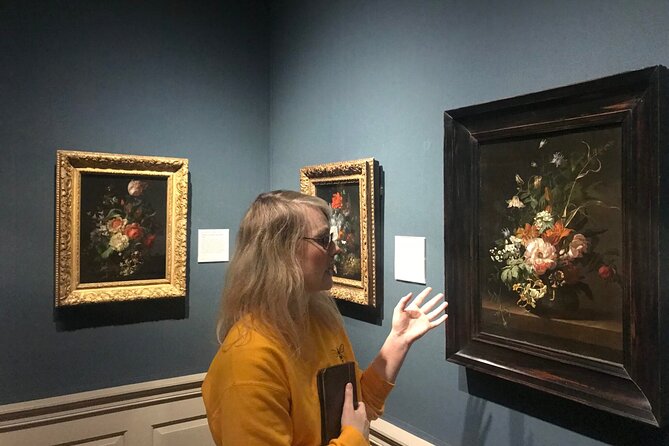
A walk through the National Gallery changes how you see. This Women in Art tour uses the museum’s collection to spotlight women who made art, not just appeared in it. I really like that it’s a focused visit with a small group, and you get specific context on artists such as Artemisia Gentileschi and Berthe Morisot.
Two things I especially loved: the tour keeps the pace human (no big herd), and it connects women’s lived realities to what’s on the canvas. One possible drawback is meeting up can be a little confusing if you don’t have the joining info in hand, so I’d plan to arrive early and double-check your messages.
In This Review
- Key points before you go
- Women in Art at the National Gallery: why this feels different
- Small group touring inside a giant museum (up to five people)
- The big theme: women as creators, not just subjects
- Artemisia Gentileschi and the drama of choosing your own subject
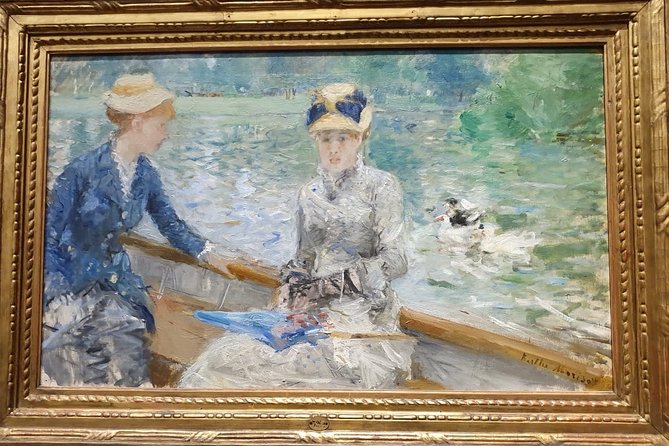
- Berthe Morisot: painting alongside the men, despite the rules
- How the tour ties women’s art to what came after
- What it feels like in real time (duration, pace, and flow)
- Admission ticket included: better value than you’d expect
- Getting the most out of your National Gallery visit
- Accessibility and comfort: easier than many museum tours
- A heads-up from one real-world hiccup
- Who this tour suits best
- Should you book this Women in Art tour?
- FAQ
- Where does the Women in Art walking tour take place?
- How much does the tour cost?
- How long is the tour?
- What languages is the tour offered in?
- Is the National Gallery entry included?
- How big is the group?
- Is the tour accessible for wheelchairs and strollers?
- Are service animals allowed?
- What is the cancellation policy?
Key points before you go

- Small group size (up to five people) means you actually get time to ask questions.
- Admission ticket included, so you don’t have to juggle museum entry plans mid-trip.
- Women artists across centuries, from 17th-century Artemisia Gentileschi to Impressionist Berthe Morisot.
- Access-friendly, with wheelchair and stroller accessibility.
- English-language tour with a guided walkthrough inside the National Gallery collection.
- Mobile ticket for easier day-of check-in.
London on foot, a few more ways
- Magical London: Harry Potter Guided Walking Tour
★ 4.7 · 22,044 reviews - London: The Original Jack the Ripper Walking Tour
★ 4.7 · 7,833 reviews - Tour for Muggles The Ultimate Harry Potter Walking Tour in London
★ 5.0 · 4,684 reviews - London Jack The Ripper Guided Walking Tour
★ 5.0 · 3,131 reviews
Women in Art at the National Gallery: why this feels different
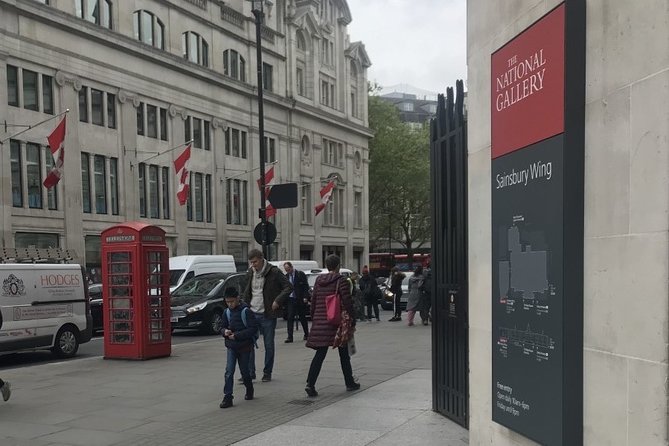
If you’ve visited the National Gallery before, you already know it’s full of masterpieces. What’s trickier is what those masterpieces usually leave out. This tour is built to correct one big gap: the idea that women only show up in art as subjects, while men do the creating and the credit-taking.
What I like about this experience is how it treats women artists as artists first—makers with choices, techniques, influences, and ambitions. You’re not just hearing cute facts. You’re getting the story behind the work: what shaped it, what it responds to, and why it landed the way it did.
This is also a great London option if you want something cultural that doesn’t require museum knowledge to enjoy. You can come in as a casual art lover, and the tour still gives you a clear “aha” map for what to look for when you’re standing in front of paintings.
And yes, it’s in the National Gallery—one of London’s most convenient, high-value museum stops—so you’re combining world-class art with a theme that feels personal and timely.
Small group touring inside a giant museum (up to five people)
The National Gallery can feel like a maze when you’re on your own. This tour helps because it limits the group to no more than five people. That small size matters more than you’d think.
With a tiny group, the guide can slow down for questions and point out details you’d miss if you were just trying to cover highlights. You also spend less time waiting in line-of-sight and more time actually looking at the paintings and learning what to notice.
It’s also a relief if you’re traveling with kids, a stroller, or you’re just more comfortable moving at a steadier pace. The tour is designed to work with wheelchair and stroller access, which means you’re less likely to hit the frustrating “some areas are impossible” problem that can happen in old buildings.
The big theme: women as creators, not just subjects
This tour is structured around the idea that women’s contributions to art history were real—and long denied or minimized. It focuses on how women were represented, but it doesn’t stop there. You’ll connect representation to influence and impact: what women painted, how they painted, and how their work shaped what came after.
That shift is the point. You’ll walk through the collection with a different set of questions than you probably use on a museum day:
- Who made this?
- What did they choose to show?
- What was happening in their world when they painted?
- What traditions influenced them, and what did they change?
That’s the kind of framing that makes even familiar gallery rooms feel fresh.
Still deciding? A handful more London outings we rated
Artemisia Gentileschi and the drama of choosing your own subject

One of the tour’s standout threads is the work of Artemisia Gentileschi, a 17th-century painter known for bringing intense realism and emotional power to her narratives.
You’ll learn how Artemisia’s style was influenced by Caravaggio’s naturalistic approach—and more importantly, how Artemisia used that influence to tell stories with a distinctly personal angle. The tour highlights why she chose to paint biblical narratives about women and why she portrayed herself as the main character.
That last detail is worth your attention in the gallery. When you’re standing in front of a painting like that, it helps to know you’re not just looking at a scene. You’re looking at a deliberate decision: a woman artist placing herself at the center of the story, not as an afterthought or an observer.
You also leave with a clearer sense of how artists can push against expectations. Artemisia’s work isn’t presented as a random success story. It’s treated as evidence of capability, agency, and authorship—exactly the kind of recognition women artists fought for.
Berthe Morisot: painting alongside the men, despite the rules
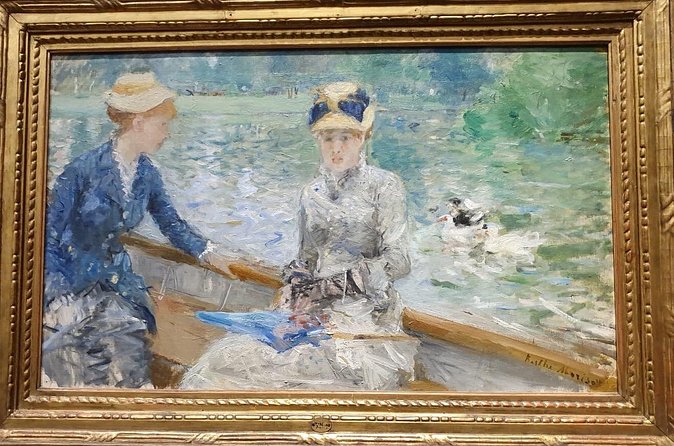
Another major stop in the story is Berthe Morisot, an Impressionist who worked in a circle where she had to overcome gender restrictions.
You’ll hear how Morisot exhibited her art alongside artists such as Monet, Degas, and Renoir—despite barriers that came from being a woman in that scene. The tour doesn’t just name names. It gives you the context that explains why her position mattered and why her work carried extra weight in a world that tried to limit who could participate.
What I like about this part is that it frames Morisot’s art as both participation and resistance. She wasn’t standing outside the movement. She was part of it, shaping it, and making sure her voice stayed in the room.
When you’re in the gallery after that, you’ll probably find yourself noticing brushwork and mood with more care. That’s a good sign. It usually means the tour has given you the right lens for looking, not just the right facts.
How the tour ties women’s art to what came after

The tour’s payoff isn’t only learning about two famous names. It’s how it connects women artists across time.
You’re shown how women’s themes—how they were represented, how they represented others, and how their own work influenced later artists—become part of art history’s actual chain of ideas. The result is that the collection feels less like random masterpieces and more like a living conversation across centuries.
That matters for two reasons:
- You understand the influence, not just the outcome.
- You notice patterns—how subjects, styles, and themes shift when someone changes who gets to tell the story.
Even if you’re not a hardcore museum person, that “story of influence” approach sticks. It’s the difference between walking through rooms and walking out with something you can explain to a friend.
What it feels like in real time (duration, pace, and flow)
This experience is planned as a guided walkthrough lasting about two hours (approx.), with the program described as taking about 2.5 hours. Either way, you’re not doing a quick photo stop. It’s enough time to see the museum thoughtfully without feeling stuck for hours.
Because it’s a group of five or fewer, you’re also less likely to feel rushed. The guide can keep you oriented and help you connect what you’re looking at with the theme of women in art.
And inside the National Gallery, that matters. Without guidance, you can spend your energy just finding your way from one room to another. With this tour, the focus stays on viewing and learning.
Admission ticket included: better value than you’d expect
The tour includes an admission ticket, which is a simple but big value boost. In London, museum days can get expensive fast once you add entries on top of tours.
Here’s why that inclusion helps you specifically: it reduces decision fatigue. You don’t need to plan separate museum entry timing. You don’t need to worry about whether you’ll hit the right entry window. You can treat the day like one plan, not two.
At $54.85 per person, it’s not the cheapest activity in the city. But when admission is included and the tour is capped at a tiny group size, it starts to look like a fair deal—especially if you like the idea of leaving with more than just a list of famous paintings.
Getting the most out of your National Gallery visit
To enjoy this tour fully, go in ready to look closely. The themes are strong, but your results will depend on how much you let the guide’s points shape how you view the paintings.
A few practical ways to make it click:
- Bring a curious mindset. This kind of tour works best when you’re willing to reconsider what you thought you knew.
- Slow down at each painting the guide points to. The best learning happens when you actually see the details being discussed.
- If you’ve visited the National Gallery before, try treating it like a new museum. The focus on women artists changes what you pay attention to.
Also, the tour is offered in English, so it’s the right fit if you prefer art history explained in a straightforward, accessible way rather than relying on translations.
Accessibility and comfort: easier than many museum tours
This tour is wheelchair and stroller accessible, which is a huge practical win. It means the experience is planned with mobility needs in mind, not as an afterthought.
If you rely on a stroller for a kid or you use mobility aids, you can feel more confident that you won’t be forced into the most difficult routes. Service animals are also allowed, and the meeting area is near public transportation, so you’re not limited to walking long distances just to get there.
That combination—accessibility plus transit convenience—adds up to a smoother London day.
A heads-up from one real-world hiccup
I’ll also mention a caution that’s worth taking seriously. One visitor had trouble locating the group because joining instructions didn’t arrive by email, and the guide was waiting outside while the ticket office staff didn’t seem to know what to do.
You can reduce the chance of stress by doing two simple things:
- Check for any joining info as soon as you book, and again the day of.
- Arrive a little early so you’re not hunting while everyone else is already moving.
If you end up stuck, you may need to contact support (one person used a live chat to track down the group). So build a little slack into your timing.
Who this tour suits best
This is a strong choice if you:
- Love art but want the context you don’t always get from quick gallery guides
- Prefer small group experiences
- Want women in art history framed with real artistic decisions, not just background trivia
- Plan a National Gallery visit anyway and want to turn it into a more meaningful stop
It’s also a smart pick for mixed groups. Both locals and tourists can enjoy it because the theme is engaging and the museum is familiar, even if the stories behind it are new.
Should you book this Women in Art tour?
If your goal is to see the National Gallery with fresh eyes, I’d say yes. The tour’s value comes from the small group size, the included admission, and the way it connects women artists to the wider story of art history—from Artemisia Gentileschi’s choices and influences to Berthe Morisot’s place in Impressionism.
Skip it only if you’re the type who wants a completely self-guided museum day with minimal structure. This experience is designed to guide your looking. If you dislike that, you might prefer an audio guide or independent wandering.
For most people—especially art lovers who care about who gets credited and why—it’s a high-impact, well-paced way to spend a couple of hours in one of London’s best museums.
FAQ
Where does the Women in Art walking tour take place?
It takes place in London, England, at the National Gallery.
How much does the tour cost?
The price is $54.85 per person.
How long is the tour?
The tour runs for about 2 hours (approximately).
What languages is the tour offered in?
The tour is offered in English.
Is the National Gallery entry included?
Yes. The admission ticket is included.
How big is the group?
The tour is in a group of no more than five people.
Is the tour accessible for wheelchairs and strollers?
Yes. It is wheelchair and stroller accessible.
Are service animals allowed?
Yes. Service animals are allowed.
What is the cancellation policy?
You can cancel for a full refund if you cancel at least 24 hours in advance of the experience’s start time.
More Tours in London
- From London: Harry Potter Warner Bros Studio Tour
★ 4.7 · 26,588 reviews - Magical London: Harry Potter Guided Walking Tour
★ 4.7 · 22,044 reviews - London: Warner Bros. Studio Harry Potter Tour & Branded Bus
★ 4.7 · 19,194 reviews - London Big Bus Hop-On Hop-Off Tour with Optional River Cruise
★ 3.5 · 10,803 reviews - London Small Group Tour of Historical Pubs
★ 5.0 · 10,422 reviews
More Tour Reviews in London
- From London: Harry Potter Warner Bros Studio Tour
★ 4.7 · 26,588 reviews - London: Westminster to Greenwich River Thames Cruise
★ 4.5 · 22,836 reviews - Magical London: Harry Potter Guided Walking Tour
★ 4.7 · 22,044 reviews - London: Madame Tussauds London
★ 4.6 · 20,915 reviews - London: Warner Bros. Studio Harry Potter Tour & Branded Bus
★ 4.7 · 19,194 reviews
More London Walks Worth the Shoe Leather
- Magical London: Harry Potter Guided Walking Tour
★ 4.7 · 22,044 reviews - London: The Original Jack the Ripper Walking Tour
★ 4.7 · 7,833 reviews - Tour for Muggles The Ultimate Harry Potter Walking Tour in London
★ 5.0 · 4,684 reviews - London Jack The Ripper Guided Walking Tour
★ 5.0 · 3,131 reviews - London: Harry Potter Movies Walking Tour (Kids Go Free)
★ 4.7 · 3,071 reviews
Just reviewed around London





London Walking Tours, compared.
 ★ 4.7Magical London: Harry Potter Guided Walking TourFrom $2022,044 reviews
 ★ 4.7The Original Jack the Ripper Walking TourFrom $257,833 reviews
 ★ 5.0Tour for Muggles The Ultimate Harry Potter Walking Tour in LondonFrom $234,684 reviews
 ★ 5.0London Jack The Ripper Guided Walking TourFrom $03,131 reviews
 ★ 4.7Harry Potter Movies Walking Tour (Kids Go Free)From $203,071 reviews
 ★ 5.0Changing of the Guard Guided Walking Tour in LondonFrom $251,793 reviews
 ★ 4.9The Great British Rock and Roll Music Walking TourFrom $361,783 reviews
 ★ 4.8Harry Potter Walking Tour in GermanFrom $201,505 reviews