

Reviewed · LONDON WALKING TOURS
Winston Churchill & London in World War II Walking Tour
Westminster has a WWII pulse if you look down. This walking tour brings World War II London into focus fast, with a small group (max 15) and an expert guide who turns famous buildings into real scenes.
I especially like the pace: short stops, mostly outside, and enough time to ask questions without feeling rushed. I also love that you finish at the Churchill War Rooms, so the tour naturally hands you off to the most powerful part of the story.
One possible drawback: the biggest indoor moment isn’t included. You’ll want to plan for Churchill War Rooms entry (optional, but strongly suggested) and note that Westminster Abbey entry also isn’t included.
In This Review
- Key Points You’ll Care About
- Why Westminster WWII Makes Sense on Foot
- Price and What You’re Actually Paying For
- Getting Started at Victoria Embankment and Staying Comfortable
- Westminster Bridge: The Bridge Where Bombs Still Surface
- Houses of Parliament and Big Ben’s Wartime Silence
- Parliament Square: Democracy in Stone, Even During WWII
- Westminster Abbey: From Anglo-Saxon Roots to the Blitz
- Whitehall: Where the War Government Became Real
- Horse Guards Parade: Photos, Tradition, and a War-Linked Setting
- Churchill War Rooms: The Underground Ending You’ll Want to Plan For
- Timing Tips: How to Make This Work With a London Day
- Who This Tour Suits (and Who Might Need More)
- Should You Book This Winston Churchill and London WWII Walking Tour?
- FAQ
- How long is the Winston Churchill & London in World War II walking tour?
- What is the group size?
- Is the tour offered in English?
- Is entry to Churchill War Rooms included?
- Is Westminster Abbey entry included?
- Where do you start and where does the tour end?
- Is the walking tour strenuous?
- Are service animals allowed?
- What is the cancellation policy?
Key Points You’ll Care About
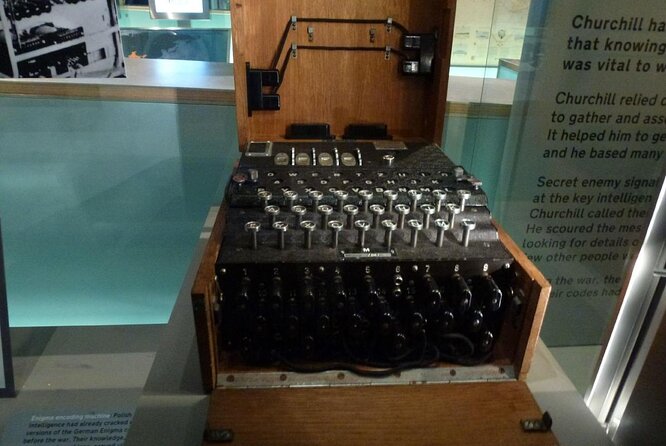
- Small group, max 15: you get a more personal walk through Westminster, not a herd.
- WWII context on real streets: the guide connects politics, bombing, and daily life to specific spots.
- Churchill War Rooms finish: you end right outside the entrance, ready to go in (if you booked tickets).
- Most stops are outside: good for staying flexible, but dress for London weather.
- Memorials with meaning: you’ll pause at places tied to service and sacrifice, including Women in WW2.
London on foot, a few more ways
- Magical London: Harry Potter Guided Walking Tour
★ 4.7 · 22,044 reviews - London: The Original Jack the Ripper Walking Tour
★ 4.7 · 7,833 reviews - Tour for Muggles The Ultimate Harry Potter Walking Tour in London
★ 5.0 · 4,684 reviews - London Jack The Ripper Guided Walking Tour
★ 5.0 · 3,131 reviews
Why Westminster WWII Makes Sense on Foot
If you’ve ever tried to read about WWII London, you know it can feel like facts floating in space. This tour fixes that problem by putting the story on the sidewalk. Westminster is where government decisions happened, where wartime fear showed up in headlines, and where the country tried to keep order while London took hits.
The best part is how quickly you connect landmarks to the war. The tour starts with the Houses of Parliament area and moves through the political heart of London, then ends under the street—inside Churchill’s underground command center. It’s a clean arc: above-ground authority, wartime tension, then the bunker where planning took place.
Also, the format is built for real attention. With a group capped at 15, the guide can steer the conversation. You’re not shouting over 40 people while trying to take in the details.
Price and What You’re Actually Paying For
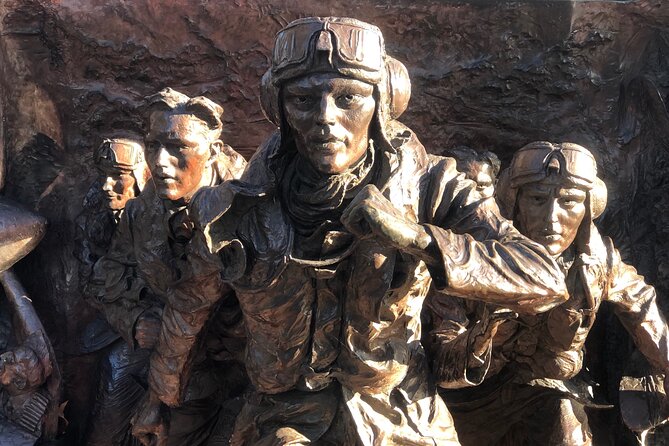
At $38.89 per person, you’re buying two things: expert guidance and a focused walk that hits key WWII-linked Westminster landmarks. You’re not paying for museum admission as part of the base price.
That matters because the tour is priced for the guide-led experience, then gives you the choice to add the biggest ticketed stop: Churchill War Rooms. If you want the full impact of seeing how the war government really ran, plan to add that entry. If you’re only curious about the surface-level landmarks and memorials, you can still get a lot from the walking part alone.
In practical terms, you’re getting about 1.5 to 3 hours (depending on the day and pacing). For London, where many experiences charge extra for each segment, this is a tidy way to pack in WWII context without turning your day into a ticket scavenger hunt.
Getting Started at Victoria Embankment and Staying Comfortable
You meet at Boadicea and Her Daughters, Victoria Embankment (SW1A 2JH). From there, the route is designed around short, outdoor viewing times—think 5 to 20 minutes at a stop. That structure makes it easier to handle London’s weather and keeps the energy up.
Most people can handle this. The walk isn’t presented as a big athletic challenge. The stops are close enough to move along without long detours, and the guide keeps you moving at a steady pace with time to look, listen, and regroup.
One small “do this in advance” tip: bring whatever you need for a comfortable outdoor walk—water, a hat, and a layer. Even though the stops are short, Westminster can feel exposed, especially near bridges and open squares.
Still deciding? A handful more London outings we rated
Westminster Bridge: The Bridge Where Bombs Still Surface
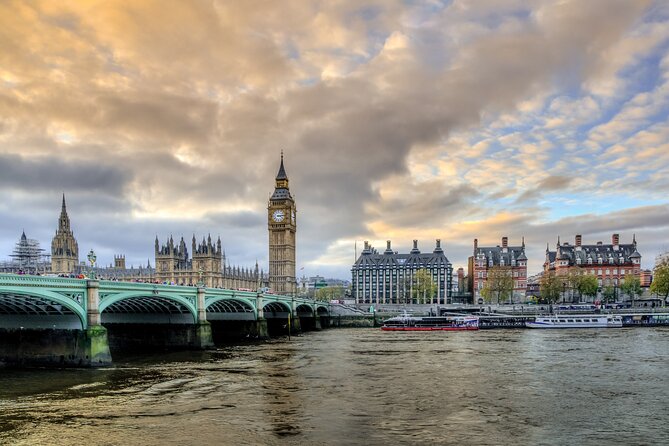
The tour begins at Westminster Bridge, and it’s not just a scenic crossing. The guide points out that the bridge was painted green for the Houses of Commons—a detail that makes the area’s political identity easier to spot once you know what you’re looking for.
Then there’s the most haunting part: the bridge is tied to wartime damage so directly that WWII bombs are still discovered there today. That’s one of those details that collapses time. You stop seeing the bridge as “just infrastructure” and start thinking of it as a place with a lingering history.
This first stop sets the tone well. It gives you a reason to stay alert with your eyes, because the tour isn’t only about famous facades—it’s about how WWII left marks that can still show up.
Houses of Parliament and Big Ben’s Wartime Silence
Next is the Houses of Parliament, seen from the outside. This is where the guide connects architecture and power to wartime reality—how Parliament responded to the threat from the Third Reich.
The tour frames the moment dramatically: with Big Ben’s bell quiet and the skies filled by the Luftwaffe. It’s a reminder that wartime isn’t only about explosions. It’s also about changes in routines, government communication, and public morale.
From a “what you’ll actually do” standpoint, you’re mostly listening here. So come ready to focus. If you like political stories, wartime decision-making, and the way leaders tried to keep functioning under threat, this stop is one of the strongest early anchors.
Potential drawback: because it’s outside and the time is brief, you may not get a super detailed view of specific corners or halls. This isn’t a museum visit. It’s a guided interpretation of what you can see from the street.
Parliament Square: Democracy in Stone, Even During WWII
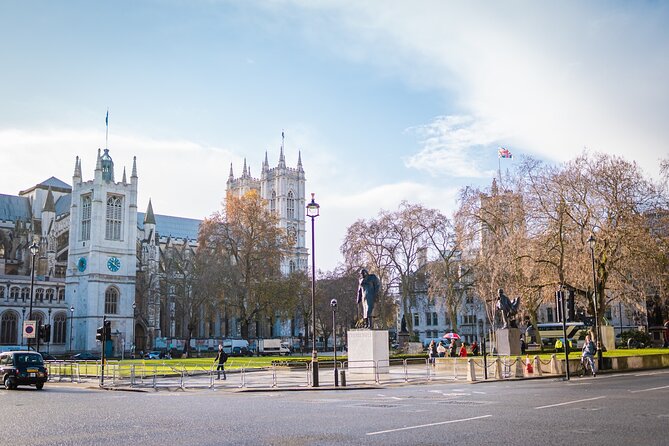
Then you step into Parliament Square, where statues turn the political theme into something more human. You’ll see icons including Mahatma Gandhi and Millicent Fawcett, plus Honest Abe (Abraham Lincoln).
The guide ties the square to the idea of democracy in all forms—something the world needed in the dark days of WWII. It’s not just a photo stop. You’ll get a sense of why these symbols were relevant when freedom and self-rule were under pressure everywhere, not only in Britain.
This stop works well even if you’re not a full-on statue person. The context makes the square feel intentional rather than decorative.
Westminster Abbey: From Anglo-Saxon Roots to the Blitz
The tour moves to Westminster Abbey, again viewed from outside. Here, the guide adds layers: you’ll hear about the last Anglo-Saxon king linked to the abbey, and you’ll get a story about how the abbey survived the Blitz with help from local heroes.
This is one of those stops where you’ll want to slow your brain a bit. Westminster Abbey is famous enough that you might already feel you “know it.” But the wartime angle gives you a different way to interpret the building—less “tourist landmark,” more “surviving institution.”
Important note: Westminster Abbey entry isn’t included. So if you want to go inside, you’ll need separate tickets. If you don’t, that’s fine. The outside viewing still carries meaningful story beats.
Whitehall: Where the War Government Became Real
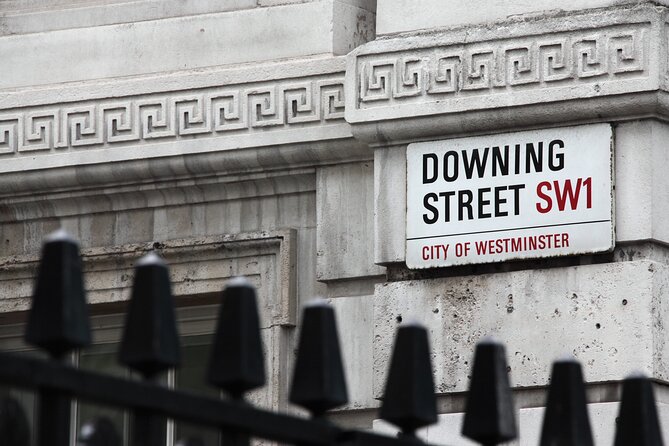
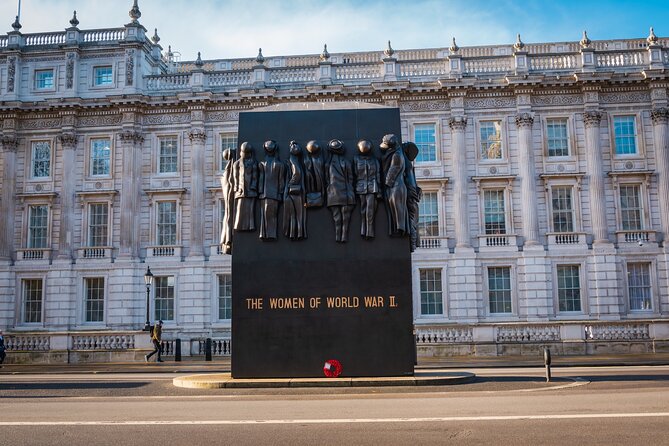
Now you reach Whitehall, home to the Ministry of Defence. This is where you start feeling the concentration of wartime decision-making.
The tour includes stops tied to remembrance and service:
- The Cenotaph
- The Women in WW2 monuments
This is a quieter, more respectful segment. The pace shifts from “look at the buildings” to “pay attention to the people behind the story.” If you want WWII to feel personal—not just historical—this is where it lands.
Time-wise, you’ll spend about 20 minutes around this zone, which gives the guide room to connect the war’s scope to what these memorials represent.
If you’re the type who finds memorials emotionally heavy, you’ll probably appreciate that the tour doesn’t rush you through. It’s built as a pause in the middle of a walking experience.
Horse Guards Parade: Photos, Tradition, and a War-Linked Setting
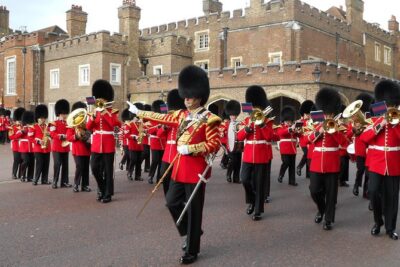
After Whitehall, you get to Horse Guards Parade. This is a prime photo spot, including the view of the mounted cavalry connected to the Queen’s Horseguards.
The tour frames this as more than a snapshot moment: Horse Guards Parade is also described as an official entrance to Buckingham Palace, which helps you understand the ceremonial side of British life—something that continued even during wartime strain.
This stop is listed as about 10 minutes, so keep it simple: look, take your photo if you want it, and listen for the guide’s quick context. It’s short, but it gives you a satisfying “real London” interlude before the underground ending.
Churchill War Rooms: The Underground Ending You’ll Want to Plan For
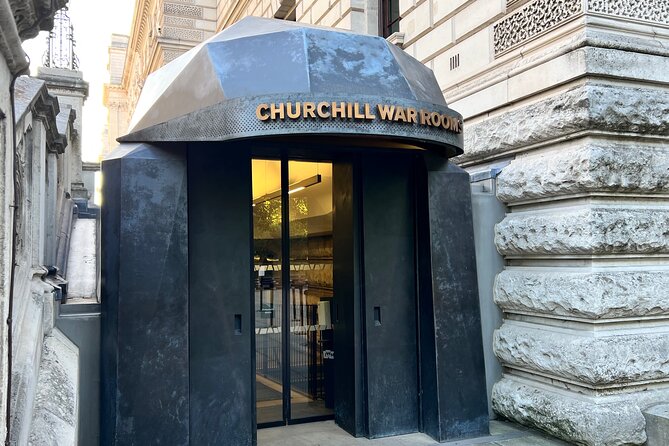
The final stop is the Churchill War Rooms at King Charles St (SW1A 2AQ). The tour ends just outside the entrance, and you’ll typically have about 10 minutes at the handoff point.
This underground complex was the center of the government’s war effort—where Britain’s leaders worked to coordinate the response to invasion threats. The setting itself matters. You don’t just hear about leadership under pressure; you see what pressure required: planning in cramped rooms, decisions made fast, and communication that couldn’t afford delays.
The tour strongly recommends booking Churchill War Rooms entrance. That’s not sales talk. It’s practical. If you only do the walking portion and skip the War Rooms, you’ll miss the “why this walk exists” payoff.
One note to keep in mind from real experience: inside the War Rooms, you may use an audio-guided setup (headsets are used for self-paced viewing). Some people love moving at their own speed. Others find audio doesn’t match how they like to learn. If you’re in the second camp, decide before you go so you’re not stuck fighting your preferred style.
Timing Tips: How to Make This Work With a London Day
This is a short enough tour that you can combine it with other Westminster activities. The duration is listed at about 1 hour 30 minutes to 3 hours, depending on the day’s flow and how much time you spend at the War Rooms entrance.
Here’s how I’d build your schedule:
- Give yourself time for the War Rooms if you booked tickets.
- If you want food after, don’t schedule something “right after” the end time that leaves no buffer.
- Plan to dress for outside time. Most stops are outside, so weather is part of the deal.
If you’re a WWII history fan, this is a strong “first or early” tour because it gives you context before you wander. If you’re a first-time London visitor, it’s a smart way to learn how the city’s power centers worked under stress.
Who This Tour Suits (and Who Might Need More)
This tour fits best if you like:
- WWII stories connected to specific places
- Government, memorials, and the human side of war
- A guided walk with small-group attention
It also suits families and casual history lovers because the walking pace isn’t presented as difficult, and the stops are short and structured.
You might consider a different style of experience if:
- You want full indoor museum coverage with timed entry included for every major site. Westminster Abbey entry isn’t included, and Churchill War Rooms entry is optional.
- You strongly dislike audio-guide formats once you reach the underground rooms. Some visitors love them; others prefer a live guide the whole time.
One more practical point: this experience runs in English and is a local expert-led walk, so you’ll get more out of it if you can follow spoken storytelling without needing lots of reading.
Should You Book This Winston Churchill and London WWII Walking Tour?
Yes, if you want a focused Westminster walk that takes WWII seriously and ends where the story gets real. For the price, you’re getting a small-group guided tour plus a strong path to Churchill War Rooms—one of London’s most important WWII experiences.
I’d book it especially if you:
- Want WWII context without the hassle of planning a self-guided route
- Prefer a relaxed walking pace over a packed day
- Like memorials and political history tied to the street-level city
Skip or adjust your expectations if you don’t want ticketed indoor time. The walking part is meaningful on its own, but the Tour’s strongest payoff is at the War Rooms, where entry is a separate decision.
FAQ
How long is the Winston Churchill & London in World War II walking tour?
The tour lasts about 1 hour 30 minutes to 3 hours (approx.).
What is the group size?
The experience has a maximum group size of 15 travelers.
Is the tour offered in English?
Yes, it is offered in English.
Is entry to Churchill War Rooms included?
No. Entrance to the Churchill War Rooms is not included, though you have an option to add tickets for convenience.
Is Westminster Abbey entry included?
No. Entrance to Westminster Abbey is not included.
Where do you start and where does the tour end?
The tour starts at Boadicea and Her Daughters, Victoria Embankment, London SW1A 2JH and ends at Churchill War Rooms, King Charles St, London SW1A 2AQ.
Is the walking tour strenuous?
The tour notes that most travelers can participate, and the format is based on short outdoor stops rather than a long, intense hike.
Are service animals allowed?
Yes, service animals are allowed.
What is the cancellation policy?
You can cancel for a full refund up to 24 hours before the experience starts. If you cancel less than 24 hours before, the amount paid is not refunded.
More Tours in London
- From London: Harry Potter Warner Bros Studio Tour
★ 4.7 · 26,588 reviews - Magical London: Harry Potter Guided Walking Tour
★ 4.7 · 22,044 reviews - London: Warner Bros. Studio Harry Potter Tour & Branded Bus
★ 4.7 · 19,194 reviews - London Big Bus Hop-On Hop-Off Tour with Optional River Cruise
★ 3.5 · 10,803 reviews - London Small Group Tour of Historical Pubs
★ 5.0 · 10,422 reviews
More Tour Reviews in London
- From London: Harry Potter Warner Bros Studio Tour
★ 4.7 · 26,588 reviews - London: Westminster to Greenwich River Thames Cruise
★ 4.5 · 22,836 reviews - Magical London: Harry Potter Guided Walking Tour
★ 4.7 · 22,044 reviews - London: Madame Tussauds London
★ 4.6 · 20,915 reviews - London: Warner Bros. Studio Harry Potter Tour & Branded Bus
★ 4.7 · 19,194 reviews
More London Walks Worth the Shoe Leather
- Magical London: Harry Potter Guided Walking Tour
★ 4.7 · 22,044 reviews - London: The Original Jack the Ripper Walking Tour
★ 4.7 · 7,833 reviews - Tour for Muggles The Ultimate Harry Potter Walking Tour in London
★ 5.0 · 4,684 reviews - London Jack The Ripper Guided Walking Tour
★ 5.0 · 3,131 reviews - London: Harry Potter Movies Walking Tour (Kids Go Free)
★ 4.7 · 3,071 reviews
Just reviewed around London





London Walking Tours, compared.
 ★ 4.7Magical London: Harry Potter Guided Walking TourFrom $2022,044 reviews
 ★ 4.7The Original Jack the Ripper Walking TourFrom $257,833 reviews
 ★ 5.0Tour for Muggles The Ultimate Harry Potter Walking Tour in LondonFrom $234,684 reviews
 ★ 5.0London Jack The Ripper Guided Walking TourFrom $03,131 reviews
 ★ 4.7Harry Potter Movies Walking Tour (Kids Go Free)From $203,071 reviews
 ★ 5.0Changing of the Guard Guided Walking Tour in LondonFrom $251,793 reviews
 ★ 4.9The Great British Rock and Roll Music Walking TourFrom $361,783 reviews
 ★ 4.8Harry Potter Walking Tour in GermanFrom $201,505 reviews