
Reviewed · LONDON WALKING TOURS
Walking Tour around Spitalfields in the East End of London
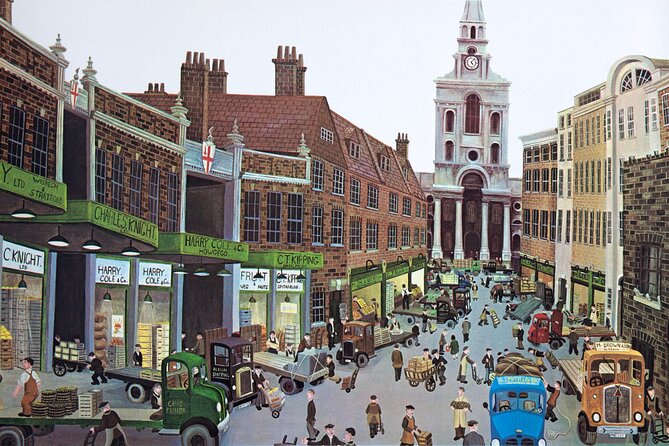
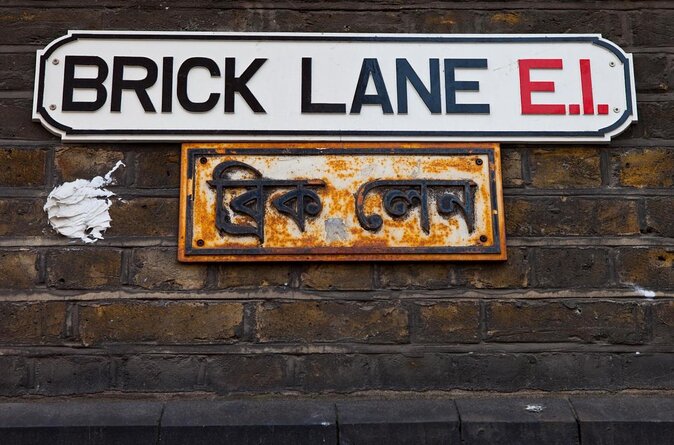
Spitalfields history moves at walking pace. This 2-hour East End walk with The Gentle Author’s Tours shows you London that feels less polished and more personal, with old and new landmarks tied together by real people and tough times. It starts in the shadow of Christ Church Spitalfields and keeps going on foot, with stops that explain the area’s shifting identity—religion, trade, immigration, and street life.
I love two things most: the small-group size (only up to 5 people), which makes it easier to ask questions and get attention on details; and the way the guide turns facts into stories—so you’re not just looking at buildings, you’re learning why they mattered. I also liked the ending: tea and cakes baked to a recipe from 1720, served in a historic drawing room with a view over Christ Church Spitalfields.
One consideration: it’s about two hours of walking and standing, and it’s not recommended if you can’t do that comfortably.
In This Review
- Key Highlights at a Glance
- Why Spitalfields Feels Different From Central London
- Starting at Christ Church Spitalfields: The Anchor Point
- Nicholas Hawksmoor’s English Baroque: When Form Tells a Story
- Jewish Immigrants and the Institutional Lifeline
- The Ancient Market: A Story in How Trade Kept Going
- Priory of St Mary Spital: The Weight of One Site
- Brewing Through Women’s Lives: A Business Story With Heart
- The Future of a Famous Thoroughfare: Commercial Street Under Debate
- Huguenot Chapel to Synagogue to Mosque: The Repurposed Building Layer
- 18th-Century Townhouses: The Streets That Still Speak
- Nicholas Culpeper’s Herb Garden: Plants as Local Knowledge
- The 1720 Drawing Room Tea Stop: The Best Way to End a Walk
- Price and Value: Is $90.28 Worth It?
- Who This Tour Suits (and Who Should Skip It)
- Should You Book the Spitalfields Walking Tour?
- FAQ
- How long is the Spitalfields walking tour?
- How many people are in the group?
- Where does the tour start?
- What time does the tour start?
- Is the tour in English?
- Is a mobile ticket provided?
- What is included at the end of the tour?
- What if the weather is bad?
- Is it suitable if I have limited mobility?
Key Highlights at a Glance
- Max 5-person group means more conversation and less rushing.
- Old-meets-new Spitalfields: Baroque church, medieval survivals, and modern street debates.
- A multi-faith “layer cake” of places repurposed across centuries: chapel to synagogue to mosque.
- Human-scale storytelling that links history to the lives of specific people.
- Tea and 1720-style treats in a historic drawing room to close the loop.
- Focus on the finer details since you explore at walking speed.
London on foot, a few more ways
- Magical London: Harry Potter Guided Walking Tour
★ 4.7 · 22,044 reviews - London: The Original Jack the Ripper Walking Tour
★ 4.7 · 7,833 reviews - Tour for Muggles The Ultimate Harry Potter Walking Tour in London
★ 5.0 · 4,684 reviews - London Jack The Ripper Guided Walking Tour
★ 5.0 · 3,131 reviews
Why Spitalfields Feels Different From Central London

Spitalfields sits in London’s East End, where the city’s story is louder and messier. This tour is designed for that reality. Instead of sprinting past highlights, you move at a human pace and stop often, so you can look closely at architecture and the “why” behind changes over time.
What makes it work is the balance between big themes and small, concrete scenes. You’ll hear how institutions formed around need—especially for newcomers—and you’ll see how markets and streets created a daily rhythm that shaped the neighborhood. It’s history you can almost hear in the background.
Starting at Christ Church Spitalfields: The Anchor Point
You begin at Christ Church Spitalfields on Commercial Street (London E1 6LY) at 2:00 pm. That matters because it sets the tone: this isn’t a random wander. Christ Church gives you a starting landmark that connects later stops, and it becomes a visual reference as the tour unfolds.
Commercial Street is also one of the threads you’ll return to. The guide discusses the thoroughfare’s ongoing controversy about what comes next, which is a useful reminder that history isn’t just behind glass. Even in a neighborhood this old, decisions are still being made.
And yes, you’ll be on foot the whole way—so comfortable shoes help. It’s also near public transportation, which makes it easier to layer this into a day of East End sightseeing.
Nicholas Hawksmoor’s English Baroque: When Form Tells a Story
One of the first major stops is Nicholas Hawksmoor’s masterpiece of English Baroque. Hawksmoor is a name you’ll hear more if you like architecture, but even if you don’t, the tour helps you “read” the building.
This is the kind of stop where you look at shapes and intent, not just dates. You’ll get the sense that architecture was a public statement—meant to last, meant to impress, and meant to hold meaning for a community.
The value here is that the style isn’t treated as an art-school exercise. It’s tied into the neighborhood’s identity, so the Baroque detail connects to what Spitalfields people needed and built over time.
Still deciding? A handful more London outings we rated
Jewish Immigrants and the Institutional Lifeline
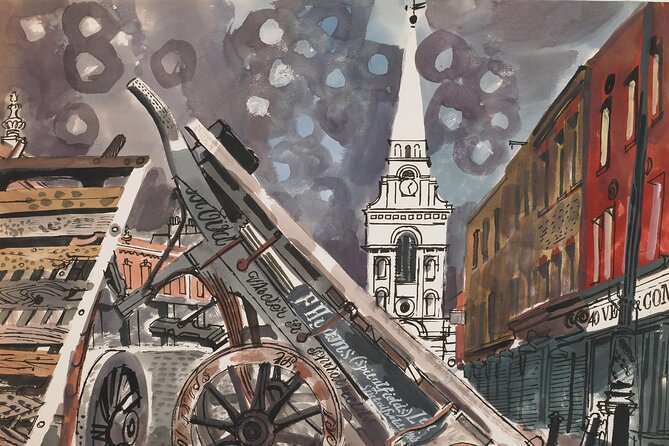
Next, you meet the people whose lives were bound up with an institution that served Jewish immigrants who came from East Europe—what we now broadly think of as the Ukraine region. Spitalfields wasn’t just housing new arrivals; it was building the services and community structures that helped them survive and settle.
This part of the tour stands out because it doesn’t stop at background facts. The story is framed around needs—how someone gets help, where they turn, and why institutions grow roots in one place. It’s a strong antidote to the typical “and then X happened” walking tour approach.
If you like history that feels human—families, community, and adaptation—this is where you’ll lean in.
The Ancient Market: A Story in How Trade Kept Going

Then you move into the story of an ancient market. Markets are the engine rooms of neighborhoods, and Spitalfields is no exception. This stop explains how commerce shaped daily life and how traditions lasted even as the area changed.
You’ll also hear about the purpose of an astonishing medieval survival. That’s the kind of phrase that could sound dramatic, but the tour makes it practical: you learn what kept it alive and what role it played in the neighborhood’s functioning.
If you’ve ever wondered why certain places stay relevant long after the original use shifts, this segment gives you the reasoning—and the visual clues—to understand the continuity.
Priory of St Mary Spital: The Weight of One Site

You visit the site of the Priory of St Mary Spital. Even without turning it into a museum lecture, the tour treats the site with respect, which is exactly what a spiritual and historical location deserves.
What I like about this stop is the way it’s used as a bridge. It connects earlier medieval significance to later layers of Spitalfields, so you don’t just see remnants—you understand what kind of long-term importance the area had.
This is also a good moment to notice how landscapes and buildings in London often act like fingerprints. Small remnants can point to centuries of change.
Brewing Through Women’s Lives: A Business Story With Heart
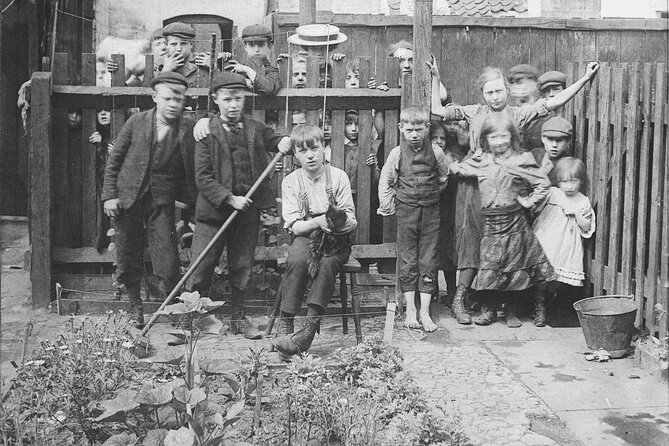
Next comes the brewery story, told through the lives of two women who worked there. That choice does a lot of work for you as a visitor. Instead of treating industry like an abstract economic topic, it becomes lived experience—work rhythms, responsibilities, and the reality of earning a living.
It’s also a useful reminder that neighborhoods are built by people in roles you might not immediately associate with “important history.” This stop keeps the tone grounded. You get social history, not just dates.
If you care about everyday labor and how it ties into local identity, you’ll likely find this a highlight.
The Future of a Famous Thoroughfare: Commercial Street Under Debate
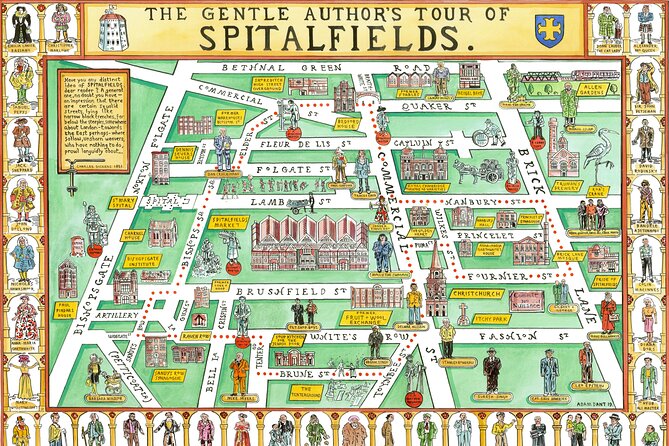
You then get a tour-specific look at the history of a famous thoroughfare and the ongoing controversy over its future. Because this is a living neighborhood, the question is never purely academic.
This stop is valuable even if you’re only passing through London. It trains your eye to notice how cities evolve: redevelopment, preservation, and the tug-of-war between what residents need now and what older structures represent.
So when you hear about the controversy, it’s not presented as gossip. It’s presented as part of the neighborhood’s continuing story.
Huguenot Chapel to Synagogue to Mosque: The Repurposed Building Layer
One of the most memorable moments is the history of a building emblematic of Spitalfields: a Huguenot Chapel that became a Synagogue and later a Mosque.
This is a big concept, but the tour doesn’t treat it like a trivia question. It explains what it means when communities repurpose space to fit their faith and their needs. You learn that buildings can carry more than stone—they carry memory, adaptation, and survival.
This stop is especially good for anyone who likes to understand London as more than a single culture snapshot. Spitalfields is proof that the city’s religious map has shifted over centuries, and it did so in a very practical way.
18th-Century Townhouses: The Streets That Still Speak
After the major institutional stops, you learn the story behind fine eighteenth-century houses. This is where the tour slows down even more for visual attention.
Look at proportions, façades, and street-level details. The tour helps you connect those looks to the social and economic life of the area—who lived there, what the street meant, and how architectural choices reflect the neighborhood’s priorities at the time.
If you’re a “read the building” type of traveler, you’ll probably enjoy this section more than you expect.
Nicholas Culpeper’s Herb Garden: Plants as Local Knowledge
Then you visit the herb garden of the 17th-century herbalist, Nicholas Culpeper. Culpeper is a name tied to medicine and practical herbal knowledge, and this garden stop helps you see how that knowledge belonged to place—not just to textbooks.
Even if you’re not a gardening person, it’s a refreshing change from churches and institutions. It brings you back to the everyday: people needed remedies, and gardens were part of that local understanding.
It also gives you a different kind of London texture—green, compact, and tied to human use.
The 1720 Drawing Room Tea Stop: The Best Way to End a Walk
You finish with a quieter, cozy stop. You put your feet up in an 18th-century drawing room overlooking Christ Church Spitalfields. Then you enjoy tea and cakes baked to a recipe of 1720.
This is one of the tour’s best value points. You’re paying for more than narration. You get a proper sitting break, plus a historic touch that connects the neighborhood’s past to your present moment in the same room.
And based on how people describe the experience, you’ll likely be thinking about that refreshment for the rest of the day. Many mention a muffin alongside the tea and cake, which makes the ending feel genuinely generous.
Price and Value: Is $90.28 Worth It?
At $90.28 per person for about two hours, this isn’t a bargain-basement walk. But it’s also not a rip-off price if you understand what’s included.
You’re paying for:
- A maximum group size of 5, which typically costs more but gives better flow and room for questions.
- Multiple major stops tied to institutions and repurposed buildings, not just street-level sightseeing.
- Tea and cakes based on a 1720 recipe, served as part of the tour.
- An included admission ticket for the townhouse/drawing-room stop (the part where you sit and snack).
In short, you’re buying time with a guide who treats Spitalfields like a real story, plus a comfortable ending that feels thought-out rather than tacked on.
Who This Tour Suits (and Who Should Skip It)
This walking tour is a great fit if you:
- Want East End London without the heavy crowds.
- Enjoy small-group history with room for questions.
- Care about migration, faith communities, and how neighborhoods change over time.
- Like architecture and also like hearing the human side of it.
It’s not the right choice if you:
- Can’t stand and walk for about two hours.
- Prefer long, uninterrupted sightseeing without stops and explanations.
Should You Book the Spitalfields Walking Tour?
I think you should book it if you want Spitalfields to feel personal, not generic. The combination of small-group attention, architecture, and layered community stories makes this more than a standard highlights walk. And the tea-and-cakes finish gives you a satisfying way to end—like the tour actually cares how your day lands, not just how it starts.
If you’re sensitive to walking time or you need more accessibility flexibility, you may want to look for a shorter or more seated option. But for most visitors, this is a smart, story-rich way to experience the East End.
FAQ
How long is the Spitalfields walking tour?
It runs for about 2 hours.
How many people are in the group?
The tour has a maximum of 5 travelers.
Where does the tour start?
The meeting point is Christ Church Spitalfields on Commercial St, London E1 6LY, UK.
What time does the tour start?
The start time listed is 2:00 pm.
Is the tour in English?
Yes, the tour is offered in English.
Is a mobile ticket provided?
Yes, the tour uses a mobile ticket.
What is included at the end of the tour?
You end back at the meeting point with tea and cakes baked to a recipe of 1720, and there is an admission ticket included for the townhouse/drawing-room stop.
What if the weather is bad?
The experience requires good weather. If it’s canceled due to poor weather, you’ll be offered a different date or a full refund.
Is it suitable if I have limited mobility?
It’s most suitable for travelers who can stand and walk for two hours. Service animals are allowed, but it’s not recommended if you cannot stand and walk for that duration.
More Tours in London
- From London: Harry Potter Warner Bros Studio Tour
★ 4.7 · 26,588 reviews - Magical London: Harry Potter Guided Walking Tour
★ 4.7 · 22,044 reviews - London: Warner Bros. Studio Harry Potter Tour & Branded Bus
★ 4.7 · 19,194 reviews - London Big Bus Hop-On Hop-Off Tour with Optional River Cruise
★ 3.5 · 10,803 reviews - London Small Group Tour of Historical Pubs
★ 5.0 · 10,422 reviews
More Tour Reviews in London
- From London: Harry Potter Warner Bros Studio Tour
★ 4.7 · 26,588 reviews - London: Westminster to Greenwich River Thames Cruise
★ 4.5 · 22,836 reviews - Magical London: Harry Potter Guided Walking Tour
★ 4.7 · 22,044 reviews - London: Madame Tussauds London
★ 4.6 · 20,915 reviews - London: Warner Bros. Studio Harry Potter Tour & Branded Bus
★ 4.7 · 19,194 reviews
More London Walks Worth the Shoe Leather
- Magical London: Harry Potter Guided Walking Tour
★ 4.7 · 22,044 reviews - London: The Original Jack the Ripper Walking Tour
★ 4.7 · 7,833 reviews - Tour for Muggles The Ultimate Harry Potter Walking Tour in London
★ 5.0 · 4,684 reviews - London Jack The Ripper Guided Walking Tour
★ 5.0 · 3,131 reviews - London: Harry Potter Movies Walking Tour (Kids Go Free)
★ 4.7 · 3,071 reviews
Just reviewed around London





London Walking Tours, compared.
 ★ 4.7Magical London: Harry Potter Guided Walking TourFrom $2022,044 reviews
 ★ 4.7The Original Jack the Ripper Walking TourFrom $257,833 reviews
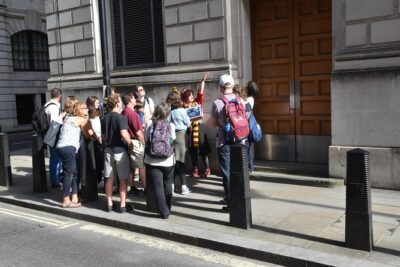 ★ 5.0Tour for Muggles The Ultimate Harry Potter Walking Tour in LondonFrom $234,684 reviews
 ★ 5.0London Jack The Ripper Guided Walking TourFrom $03,131 reviews
 ★ 4.7Harry Potter Movies Walking Tour (Kids Go Free)From $203,071 reviews
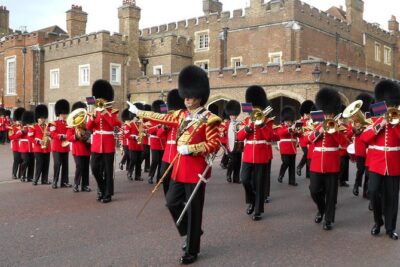 ★ 5.0Changing of the Guard Guided Walking Tour in LondonFrom $251,793 reviews
 ★ 4.9The Great British Rock and Roll Music Walking TourFrom $361,783 reviews
 ★ 4.8Harry Potter Walking Tour in GermanFrom $201,505 reviews