
Reviewed · LONDON WALKING TOURS
Thomas Cromwell’s Wolf Hall Tudor London Walking Tour
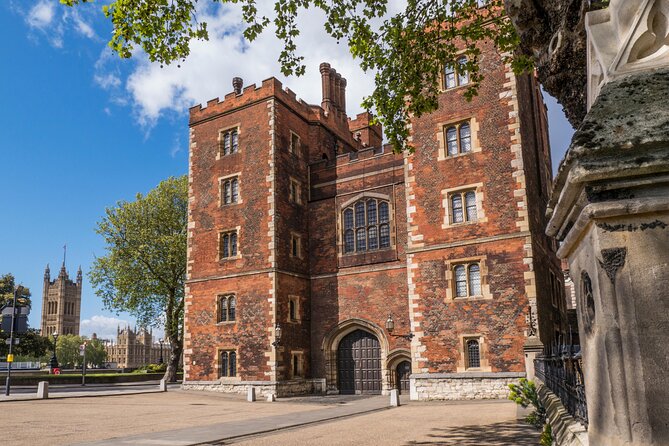
A Tudor London story starts at the Tower’s dark doorway. This Thomas Cromwell Wolf Hall walking tour strings together major City of London monuments with quieter legal-institution stops like Maughan Library, and it includes hotel pickup for smoother logistics. The one catch: it’s a lot of walking and some church/Inn sites can be closed on weekends, so you’ll want comfortable shoes and a little flexibility.
What I like most is the way you don’t just see famous landmarks. You move through working neighborhoods where London’s layers show up in facades, small ruins, and tucked-away courtyards. The route also keeps you thinking about Cromwell as a real person in a real map, not a floating TV character.
In This Review
- Key highlights that make this Wolf Hall tour worth your time
- Thomas Cromwell in London: where the Wolf Hall plot matches the streets
- Starting and finishing at Traitors’ Gate: a sharp start, a sharper payoff
- The Inns of Court run: Tudor law buildings with real Cromwell context
- Staple Inn: a Tudor facade that tells the wool-and-tax story
- Gray’s Inn and Gray’s Inn Chapel: Cromwell’s professional home zone
- Lincoln’s Inn: prestigious neighbors, similar vibe, different details
- Quiet detours below street level and behind private gates
- London Silver Vaults: antiques in underground spaces
- Maughan Library (King’s College): where Cromwell had an office
- Playhouse Yard: the Tudor theatre footprint
- Henry VIII, divorce politics, and Temple area symbolism
- Temple: a legal district with a film-and-literature reputation
- Temple Church: 800-year history plus modern pop-culture fame
- A key London decision room moment: the divorce plans site
- Blackfriars to St Paul’s: fires, ruins, and the City’s stubborn rebuild
- Blackfriars and Whitefriars: small ruins from seized monasteries
- St Paul’s Cathedral: City symbol, built from ashes, nearly destroyed in the Blitz
- The memorial stretch: Great Fire markers, executions, revolt memory
- Golden Boy of Pye Corner: Great Fire story you can point to
- William Wallace Memorial and 1381 Great Rising: rebellion remembered in stone
- St Bartholomew’s Gatehouse: Tudor-looking remnants and gatehouse survival
- Smithfield Martyrs’ Memorial: Tudor religious execution memory
- Greyfriars and the Cromwell-linked dissolution story
- Austin Friars to Drapers’ Hall: Cromwell’s city base and the institutions that survived
- Austin Friars: Cromwell’s main City residence
- Drapers’ Hall: a gorgeous surviving reminder of Cromwell-era proximity
- Dutch Church: Cromwell would have recognized the refuge
- Churches around Bishopsgate and beyond: continuity, foundations, and literary connections
- St Helen’s Church, Bishopsgate: nunnery roots under a church
- Fenchurch Street: a modern street with Tudor echoes
- The Maypole of Shaft’s Court: Wolf Hall’s little detail turned real
- St Olave’s Church: Dickens, Pepys, and burial memory
- Walking-time reality and price value: what $271.76 buys you
- Who should book this Cromwell Wolf Hall tour (and who might prefer something else)
- FAQ
- FAQ
- How long is the Thomas Cromwell’s Wolf Hall Tudor London Walking Tour?
- What time does the tour start?
- Where does the tour start and end?
- Is hotel pickup included?
- Are Tube tickets included?
- Is the tour private?
- Are admission tickets included for stops?
- What is the cancellation policy?
- Should you book this Wolf Hall Tudor London Walking Tour?
Key highlights that make this Wolf Hall tour worth your time
- Hotel pickup included (either meet at your hotel or near Chancery Lane, with Underground transfer covered by the pickup plan)
- Off-the-tourist-trail Tudor stops, including Staple Inn’s wool-staple story and Maughan Library’s Cromwell connection
- Legal London focus via Gray’s Inn, Gray’s Inn Chapel, Lincoln’s Inn, and Temple areas
- St Paul’s plus the Great Fire aftermath, including Pye Corner’s Golden Boy marker
- A strong ending at the Tower district, with Traitors’ Gate and the Tower Hill scaffold site
London on foot, a few more ways
- Magical London: Harry Potter Guided Walking Tour
★ 4.7 · 22,044 reviews - London: The Original Jack the Ripper Walking Tour
★ 4.7 · 7,833 reviews - Tour for Muggles The Ultimate Harry Potter Walking Tour in London
★ 5.0 · 4,684 reviews - London Jack The Ripper Guided Walking Tour
★ 5.0 · 3,131 reviews
Thomas Cromwell in London: where the Wolf Hall plot matches the streets
This tour is built for people who want more than set-piece sightseeing. Cromwell’s London wasn’t all palaces and court drama. It was law, paperwork, property, and institutions packed into the City and Westminster neighborhoods.
You’ll see why the Inns of Court matter. Gray’s Inn and Lincoln’s Inn aren’t just historic buildings; they represent the legal world Cromwell would have navigated. Even small stops like a chapel or a cobbled yard help you understand how power moved through London’s professional class.
And the tour’s balance is smart. Yes, you get landmark moments like St. Paul’s Cathedral. But you also get the smaller physical clues that make Tudor London feel tangible: survived facades, bomb-damaged remnants, and memorial stones tied to real people and real executions.
Starting and finishing at Traitors’ Gate: a sharp start, a sharper payoff
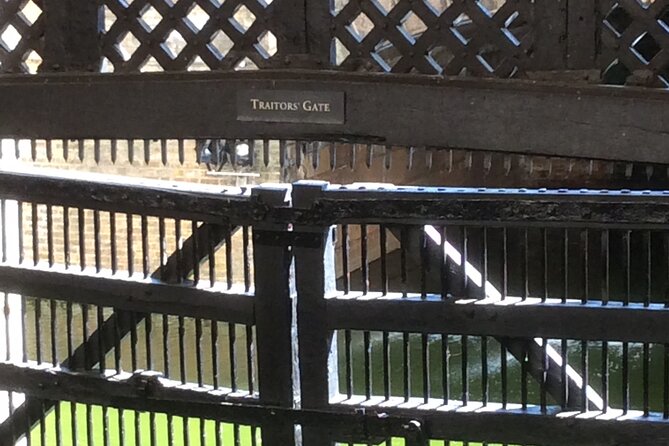
You begin at Traitors’ Gate (London EC3N 4AB) and you finish at the same place. That matters because the Tower of London area is emotionally loaded, even when you’re not focused on the medieval and Tudor tours you’ve already done.
The tour ends with Traitors’ Gate outside the Tower of London, and that sets up the final, heavy stop: the Tower Hill Scaffold Site. Standing near the execution point is where Cromwell’s era stops feeling like a TV storyline and starts feeling like the consequences of politics.
Practical tip: plan for river/stone-walk conditions around the Tower. The route is outdoors most of the day, so you’ll feel it in the legs. Bring shoes you’d wear for long museum days, not just short city wandering.
The Inns of Court run: Tudor law buildings with real Cromwell context
The early stretch leans into Tudor London’s legal geography. You’ll walk past three institutions that were essential to England’s legal system and, in Cromwell’s case, deeply personal.
Still deciding? A handful more London outings we rated
Staple Inn: a Tudor facade that tells the wool-and-tax story
Staple Inn is one of the most prominent Tudor facades in London. It’s tied to the wool staple (1585), where wool was weighed and taxed. What makes it interesting is not just the architecture, but the survival story: it survived the Great Fire, was refaced in the 17th century, and was restored in the 19th and 20th centuries. World War II damage is also part of the building’s record.
This stop is short, but it teaches a key lesson about London sites. A building can be the same facade, yet the meaning changes across centuries.
Note on costs: admission ticket is not included for this stop, so if you want to go in, you’ll need to pay separately.
Gray’s Inn and Gray’s Inn Chapel: Cromwell’s professional home zone
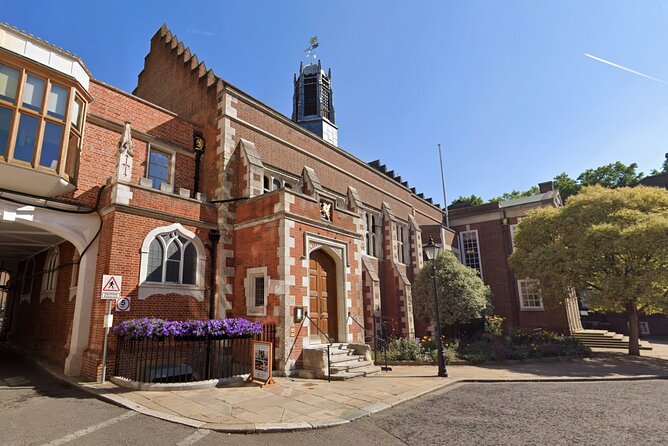
Gray’s Inn is where Thomas Cromwell was elected as a member. That detail turns the walk from sightseeing into interpretation. The tour points out that the paths, gardens, and buildings of Gray’s Inn would have been familiar to him.
Then you get the Gray’s Inn Chapel, which you can step inside. It’s built for Inn members, but it’s open to worship and respectful visitors. The payoff here is the human scale of legal London. In a city of offices and documents, a chapel is a reminder that institutions held daily lives, not just courts.
Practical note: some Inn areas can be closed at weekends, so check the timing when booking if your trip includes a Saturday or Sunday.
Lincoln’s Inn: prestigious neighbors, similar vibe, different details
Lincoln’s Inn is another legal heavyweight with a beautiful setting. The tour suggests you might be able to take a peek inside on weekdays, but it can be closed on weekends.
Even if you can’t get in, it’s worth it. Seeing multiple Inns back-to-back makes the whole area click. You start to recognize the pattern of how legal power clustered into walkable spaces.
Quiet detours below street level and behind private gates
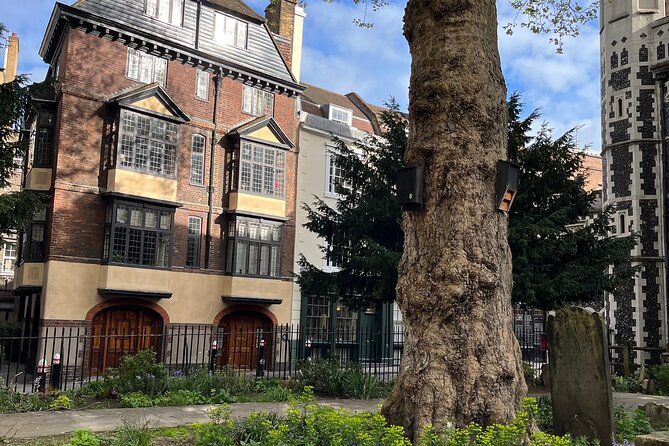
This part of the walk is where the tour earns its off-the-tourist-trail reputation. You’ll hit a few places that aren’t obvious targets on most London itineraries.
London Silver Vaults: antiques in underground spaces
The London Silver Vaults are home to specialist dealers in fine English silver, antiques, and objets d’art. They’re housed in underground vaults, which instantly adds atmosphere. You’re going from legal courtyards to a hidden-storage world.
Stop length is brief, so think of it as a look-and-learn moment. Admission ticket is not included, so plan on viewing rather than purchasing if you’re on a tight budget.
Maughan Library (King’s College): where Cromwell had an office
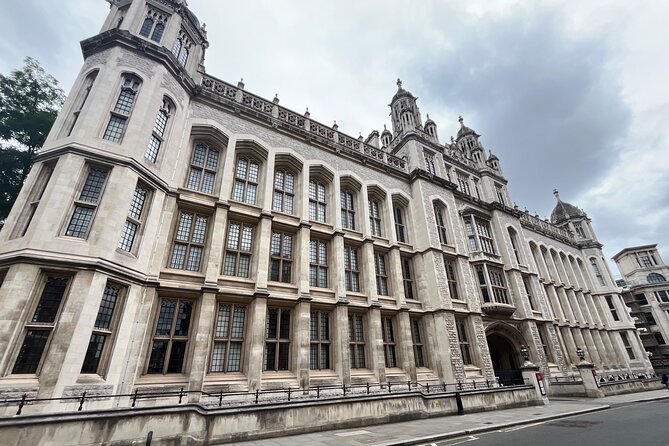
Maughan Library is now a private library building connected to King’s College. The tour’s key point is that it was once a place where Thomas Cromwell had an office.
That’s a big deal for understanding Cromwell. This isn’t a grand palace. It’s a place where work got done. You’ll feel the shift from storytelling to the day-to-day machinery behind power.
Admission ticket is not included, so this is another exterior-or-pass-through type stop unless you arrange entry on your own.
Playhouse Yard: the Tudor theatre footprint
Playhouse Yard recalls a famed Tudor theatre location. It’s a short stop, but it’s a good reminder that Tudor London wasn’t only law and royalty. Entertainment sat in the same neighborhoods as power.
The tour uses this kind of stop well: it keeps the walk from becoming one-note. You’ll come away with a broader sense of Tudor-era city life.
Henry VIII, divorce politics, and Temple area symbolism
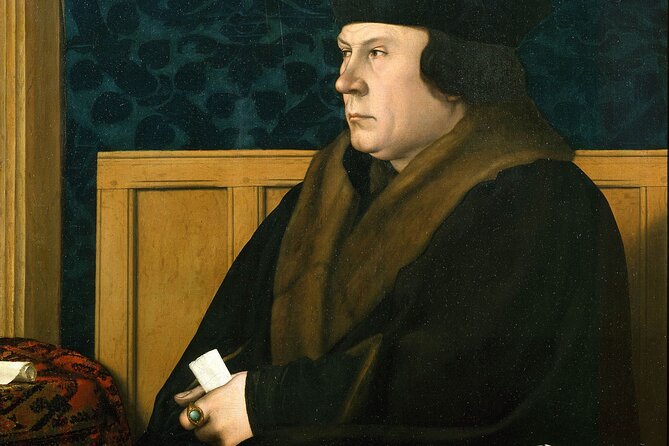
The tour turns sharper here by linking London legal spaces with real Tudor events. You’ll walk through the Temple area and connect sites to what was going on at court.
Temple: a legal district with a film-and-literature reputation
The Temple area is described as famous for legal history and also used as filming locations and settings in literary works. It’s the sort of neighborhood where you feel like you’re walking through layers of fiction stacked on top of real legal institutions.
Temple can be closed at weekends, so again: weekday timing helps if you care about interior access.
Temple Church: 800-year history plus modern pop-culture fame
You see Temple Church from the outside. It’s more recently famous due to its role in the Da Vinci Code, but the tour stresses its history goes back about 800 years.
From an interpretation standpoint, this is one of those stops where even an exterior view works. You’ll learn what the building represents and why it keeps showing up in modern storytelling.
A key London decision room moment: the divorce plans site
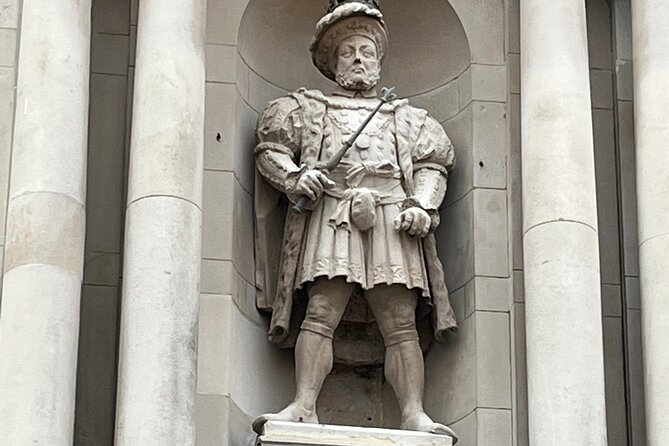
Near the church entry stop, the tour says plans for Henry VIII’s divorce from Queen Katherine of Aragon were hatched. You’re not just learning the dates. You’re learning the physical geography where decisions were discussed.
That makes the tour feel more like walking through a political map rather than touring isolated monuments.
Blackfriars to St Paul’s: fires, ruins, and the City’s stubborn rebuild
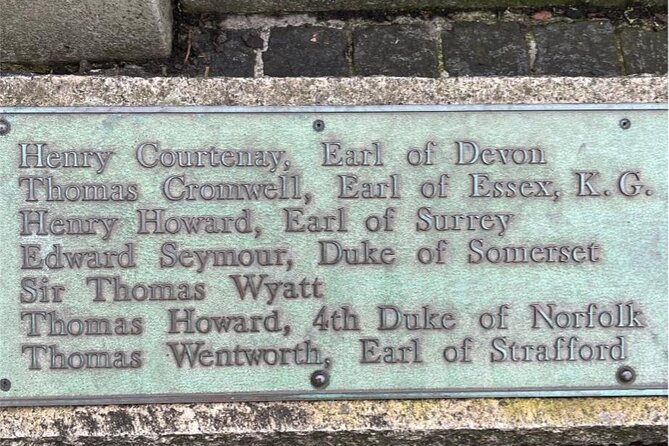
Then you pivot toward the City’s scars. The tour’s middle section is a chain of survival stories tied to Tudor seizure, Great Fire damage, and later warfare.
Blackfriars and Whitefriars: small ruins from seized monasteries
You’ll see small ruins remaining of Blackfriars, one of the abbeys and priors seized and closed by King Henry VIII. Whitefriars is nearby too and the tour includes that area as well.
This is a key Cromwell-era theme: the dissolution of religious institutions didn’t just change ownership. It changed the whole city footprint. The fact that you’re looking at ruins makes the power shift feel permanent.
St Paul’s Cathedral: City symbol, built from ashes, nearly destroyed in the Blitz
From a short distance, you marvel at St Paul’s Cathedral, framed as the City of London’s symbol. The tour connects it to two major survival chapters: it arose from the ashes after the Great Fire and narrowly escaped destruction in the Blitz.
This is one of the most emotionally satisfying “big London” moments on the walk. Even if you’ve seen St Paul’s before, the way the tour ties it to repeated cycles of catastrophe and rebuilding gives it new meaning.
Admission ticket is not included for this stop.
The memorial stretch: Great Fire markers, executions, revolt memory
From here, the tour becomes harder in subject matter. The walk shifts from architecture to the cost of politics, religion, and rebellion.
Golden Boy of Pye Corner: Great Fire story you can point to
You learn the story of the Golden Boy and the Great Fire of London. It’s a small marker, but those are often the best history clues in London. You can literally return later and remember the full context.
William Wallace Memorial and 1381 Great Rising: rebellion remembered in stone
You also see a William Wallace memorial. The tour ties it to where Wallace met his end.
Then comes the Great Rising of 1381 memorial, tied to one of medieval England’s most significant moments: the Peasants Revolt.
These stops are brief, but they broaden the Tudor-era lens. They show that the city has long carried memory of who rebelled and who paid for it.
St Bartholomew’s Gatehouse: Tudor-looking remnants and gatehouse survival
You’ll see St Bartholomew’s Gatehouse, described as wonderful and old Tudor-looking. The stop is short, but it adds a sense of institutional continuity.
Admission ticket is not included, so think exterior/interpretation rather than entry.
Smithfield Martyrs’ Memorial: Tudor religious execution memory
At Smithfield Martyrs’ Memorial, you stand on the spot where Protestant bishops were burned at the stake by Queen Mary in Tudor times. This is direct, grim, and important.
The tour doesn’t treat it like background. It gives the memorial weight, which is exactly how these places should be handled.
Greyfriars and the Cromwell-linked dissolution story
A standout thematic stop arrives at Christchurch Greyfriars Church Garden. The tour describes Cromwell as having more personal involvement with the dissolution of this once-great building than some others. Now the area is a memorial garden after being bombed out in World War II.
This is one of those moments where you finally see the Cromwell link as something physical. Buildings don’t just vanish. They become gardens, ruins, and reminders. That helps you understand the dissolution as a long, messy process, not a single headline.
Austin Friars to Drapers’ Hall: Cromwell’s city base and the institutions that survived
Now the tour gets very specific about Cromwell’s living and influence in the City.
Austin Friars: Cromwell’s main City residence
Austin Friars is where the tour really lands a big Cromwell point. After the dissolution, the sprawling estate became the person domain of Thomas Cromwell (one of many), and it became his main residence in the City of London.
This is where you feel the tour’s thesis: Cromwell wasn’t only a political figure. He was a landlord and a neighborhood presence. Even if you don’t see a “Cromwell house” in the simple sense, the estate identity matters.
Drapers’ Hall: a gorgeous surviving reminder of Cromwell-era proximity
Drapers’ Hall is described as the home of the Drapers Livery Company and one of the few reminders connected to Cromwell’s home. Admission ticket is not included for this stop, so entry isn’t guaranteed in the tour price.
Still, it’s a good stop for architecture lovers because the hall is framed as gorgeous and visually memorable.
Dutch Church: Cromwell would have recognized the refuge
The tour brings you to the Dutch Church, once the church for the friars. It’s positioned as a quiet refuge from the busy financial center, and it’s a place Cromwell would have known intimately.
This stop is valuable because it connects city hustle to religious quiet. It’s not only about the political changes. It’s about daily atmosphere.
Churches around Bishopsgate and beyond: continuity, foundations, and literary connections
You’ll keep moving through the City’s church network, each one adding a different layer of London’s long memory.
St Helen’s Church, Bishopsgate: nunnery roots under a church
St Helen’s Church, Bishopsgate is the largest parish church in the City. Before the Reformation, it was a nunnery, and it sits atop suspected Roman or Saxon foundations.
Admission ticket is not included here, so you’ll mainly get exterior or approach-time context unless you plan your own entry.
Fenchurch Street: a modern street with Tudor echoes
You pass through Fenchurch Street, now transformed, but the tour notes it was once another home area connected to Cromwell near the Walkie-Talkie building.
This stop is a reminder to look up and around. Even when the street looks new, London is often built on earlier city layouts.
The Maypole of Shaft’s Court: Wolf Hall’s little detail turned real
The Maypole of Shaft’s Court is tied directly to Wolf Hall. In the novel-world (and in the tour’s framing), Henry VIII mentions a feeling he might marry Anne of Cleves, with the Cornhill Maypole referenced. The tour points out where it is now, next to the Cheesegrater building.
If you like when literature lands as physical reality, this is one of the more fun stops.
St Olave’s Church: Dickens, Pepys, and burial memory
You pass by St Olave’s Church, noted as a favorite of Charles Dickens. The tour also points out that Samuel Pepys is buried here and that he lived across the road during the Great Plague and Great Fire of London.
Admission ticket is not included for this stop, but the fact that two big literary/personal histories connect in one location is the reason it gets mentioned.
Walking-time reality and price value: what $271.76 buys you
The price is listed at $271.76 per person, and the tour includes a private guide plus hotel pickup options and a mobile ticket.
Here’s how I’d judge value: a private, 3-hours-approx history walk in London with pickup and a guide who focuses on specific Cromwell-linked sites can be worth it if you want depth and fewer crowds. It’s also often better value for a small group than for a solo traveler, simply because private tours spread better when costs are shared.
One more reality check: the tour is described as 3 hours (approx.). But the guide is also said to do shorter and longer versions, including a 5-hour option. So if you love walking and want more time for questions, this is a tour you might stretch into a longer format.
Also, admission tickets are not included for several stops. You’ll likely spend a bit extra if you choose to enter St Paul’s or if any churches/venues you care about require paid entry.
Who should book this Cromwell Wolf Hall tour (and who might prefer something else)
Book this if you fit at least one of these:
- You’re a Wolf Hall or Thomas Cromwell fan and want the story’s real London geography.
- You like institutions as much as monuments: legal districts, courtyards, chapels, and places tied to decision-making.
- You enjoy off-the-beaten-path London where you’re not only chasing the big postcard views.
You might rethink it if:
- You dislike long walks or you’re limited on mobility, since the tour runs outdoors and moves between many locations.
- You’re traveling on a weekend and expect every Inn/church stop to be open. The tour notes some places can be closed on weekends.
- You want fully paid admissions at every site; several key stops have admission tickets not included.
FAQ
FAQ
How long is the Thomas Cromwell’s Wolf Hall Tudor London Walking Tour?
It runs about 3 hours.
What time does the tour start?
The start time is 9:30 am.
Where does the tour start and end?
Both the start and end are at Traitors’ Gate, London EC3N 4AB, UK.
Is hotel pickup included?
Pickup is offered. You can meet your guide at your hotel or residence and use the Underground to get to the starting point, or you can meet just outside Chancery Lane Station.
Are Tube tickets included?
No. Tube tickets to and from your hotel are not included.
Is the tour private?
Yes. It’s a private tour, and only your group participates.
Are admission tickets included for stops?
Not all of them. Some stops list admission ticket not included, while several others are marked free.
What is the cancellation policy?
Free cancellation is available up to 24 hours in advance for a full refund.
Should you book this Wolf Hall Tudor London Walking Tour?
If you want Tudor London with logic and place-based storytelling, this is a strong pick. The route pairs landmark London with the quieter legal-institution world that helps Thomas Cromwell make sense. I especially like that you end back at the Tower area, so the walk has a narrative arc, not just a list of sights.
Book it if you’re comfortable with walking and you don’t mind a few stops being closed depending on the day. If you’re the kind of person who enjoys small facades, courtyards, and the human geography behind major decisions, you’ll get your money’s worth.
More Tours in London
- From London: Harry Potter Warner Bros Studio Tour
★ 4.7 · 26,588 reviews - Magical London: Harry Potter Guided Walking Tour
★ 4.7 · 22,044 reviews - London: Warner Bros. Studio Harry Potter Tour & Branded Bus
★ 4.7 · 19,194 reviews - London Big Bus Hop-On Hop-Off Tour with Optional River Cruise
★ 3.5 · 10,803 reviews - London Small Group Tour of Historical Pubs
★ 5.0 · 10,422 reviews
More Tour Reviews in London
- From London: Harry Potter Warner Bros Studio Tour
★ 4.7 · 26,588 reviews - London: Westminster to Greenwich River Thames Cruise
★ 4.5 · 22,836 reviews - Magical London: Harry Potter Guided Walking Tour
★ 4.7 · 22,044 reviews - London: Madame Tussauds London
★ 4.6 · 20,915 reviews - London: Warner Bros. Studio Harry Potter Tour & Branded Bus
★ 4.7 · 19,194 reviews
More London Walks Worth the Shoe Leather
- Magical London: Harry Potter Guided Walking Tour
★ 4.7 · 22,044 reviews - London: The Original Jack the Ripper Walking Tour
★ 4.7 · 7,833 reviews - Tour for Muggles The Ultimate Harry Potter Walking Tour in London
★ 5.0 · 4,684 reviews - London Jack The Ripper Guided Walking Tour
★ 5.0 · 3,131 reviews - London: Harry Potter Movies Walking Tour (Kids Go Free)
★ 4.7 · 3,071 reviews
Just reviewed around London





London Walking Tours, compared.
 ★ 4.7Magical London: Harry Potter Guided Walking TourFrom $2022,044 reviews
 ★ 4.7The Original Jack the Ripper Walking TourFrom $257,833 reviews
 ★ 5.0Tour for Muggles The Ultimate Harry Potter Walking Tour in LondonFrom $234,684 reviews
 ★ 5.0London Jack The Ripper Guided Walking TourFrom $03,131 reviews
 ★ 4.7Harry Potter Movies Walking Tour (Kids Go Free)From $203,071 reviews
 ★ 5.0Changing of the Guard Guided Walking Tour in LondonFrom $251,793 reviews
 ★ 4.9The Great British Rock and Roll Music Walking TourFrom $361,783 reviews
 ★ 4.8Harry Potter Walking Tour in GermanFrom $201,505 reviews