
Reviewed · LONDON WALKING TOURS
The Mayflower Private Walking Tour
South Bank history on foot in three hours. This private tour strings together Mayflower-era clues and big London landmarks along the Thames, so you get a clear sense of where the story fits into everyday city life. I especially love the step-by-step route that mixes famous sights with lesser-known corners, and I like how the pace is quick enough to feel lively but not rushed. One thing to plan for: it’s a long walk, and you’ll want sturdy shoes and some stamina.
I also like that it’s built for real viewing, not just talking. You’ll stop at places you can actually stand inside (where tickets are included) or study up close from the street. The only potential drawback is that a handful of stops are exterior views, so if you’re the type who wants every stop to be an indoor museum, you might feel you’re moving from one highlight to the next.
In This Review
- Key things I’d circle before you book
- Why this Mayflower South Bank route feels different
- Price and value: what $205.29 per person really means
- Before you go: shoes, weather, and the start-time tip
- The walking route: from Millennium Bridge to Tate Modern power-station art
- Winchester Palace ruins and the Clink Prison Museum: medieval leftovers and modern discomfort
- Crossbones Graveyard and Marshalsea: plague victims, poverty, and Dickens links
- The George, Southwark Cathedral, and Borough Market: words, faith, and food on the same path
- London Bridge, Hay’s Galleria, HMS Belfast, City Hall, and The Scoop: icons with a job to do
- Tower Bridge, Shad Thames, and Edward III’s Manor: seeing the river as a crime scene
- Rotherhithe’s Mayflower anchors: The Angel to St Mary’s Church
- The Mayflower Pub and what to do after: a smart ending plan
- Who this tour fits best (and who should look elsewhere)
- Should you book the Mayflower Private Walking Tour?
- FAQ
- How long is the Mayflower Private Walking Tour?
- What does the price include?
- Are tickets and admissions included?
- Where does the tour start?
- Is hotel pickup available?
- How does the tour handle weather?
- What kind of walking fitness level is required?
- FAQ
- Is this a private tour?
- Is transportation to and from attractions included?
- Is there a mobile ticket?
- Are service animals allowed?
- What if I want to start later to avoid rush hour?
Key things I’d circle before you book
- Private guide pace: it’s just your group, so you’re not sharing questions and photos with strangers
- Mayflower connection: the route includes the Mayflower departure theme at key Rotherhithe stops
- A mix of entry and street stops: some sights are free or included, others are not
- Dickens-and-disaster London: prisons, plague burials, and poverty show up repeatedly
- Good value if you like walking: the admissions and guided time add up for a 3-hour sampler
London on foot, a few more ways
- Magical London: Harry Potter Guided Walking Tour
★ 4.7 · 22,044 reviews - London: The Original Jack the Ripper Walking Tour
★ 4.7 · 7,833 reviews - Tour for Muggles The Ultimate Harry Potter Walking Tour in London
★ 5.0 · 4,684 reviews - London Jack The Ripper Guided Walking Tour
★ 5.0 · 3,131 reviews
Why this Mayflower South Bank route feels different
Most London walking tours hit the big cards—cathedrals, towers, bridges. This one also hits those, but it spends serious time on the human scale of the South Bank: work, punishment, disease, and survival. That’s what makes the Mayflower thread land better. You don’t just hear a birth-and-legend story. You see the grim backstory of the city’s waterfront world, then you reach the places tied to the Pilgrim Fathers.
The route is also smart about variety. You’ll walk from the Millennium Bridge art view zone into markets and Tudor-era remnants, then pivot into prison sites and Dickens connections, and finally end in Rotherhithe, where the Mayflower story is anchored by church and pub stops. It’s the kind of itinerary that helps you understand why the Thames was a magnet for travelers and troublemakers alike.
Price and value: what $205.29 per person really means
At $205.29 per person for a 3-hour private walking tour, you’re paying for two things: time with a guide and less crowd pressure. The price is steep compared with group tours, but the value math changes when you notice what’s folded into the day.
Here’s how it breaks down in practical terms:
- You’ll get a local guide (and a professional guide as well) guiding the full route.
- You’ll have entry at multiple stops where the tour lists admission as included, plus a couple of free stops.
- A few other attractions are outside-only or not included, so you’re not trying to buy everything separately in the moment.
If you’re traveling with a small group and you hate the feeling of being herded, private usually pays off quickly. If you’re solo and only want one or two big museums, the price may feel harder to justify. This tour works best when you want a guided “walk the neighborhood” experience more than you want a stack of indoor attractions.
Before you go: shoes, weather, and the start-time tip
This tour runs in all weather, so dress like you mean it. The route includes many short stops, but you’re still looking at a 4–5 mile walk in total, according to one of the most positive notes about the experience. Plan for real walking time, not just sightseeing time.
The schedule lists a start time of 9:30 am, and there’s an extra suggestion to meet closer to 10:30–11:00 am so you can avoid rush-hour. That’s not just comfort. It can make photo stops smoother and keep the walking flow steadier.
Also note: transportation to and from attractions is not included. The tour meets at Underground Ltd Station, Mansion House (38 Cannon St, London EC4N 6JD), and it ends in a different location. If you’re planning dinner afterward, I’d map your route home before you go.
Still deciding? A handful more London outings we rated
The walking route: from Millennium Bridge to Tate Modern power-station art
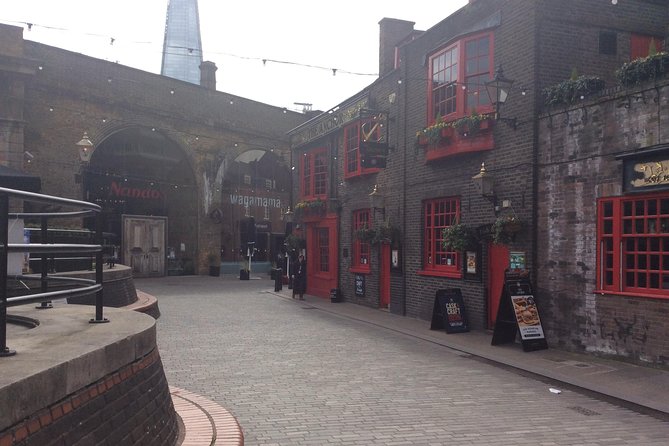
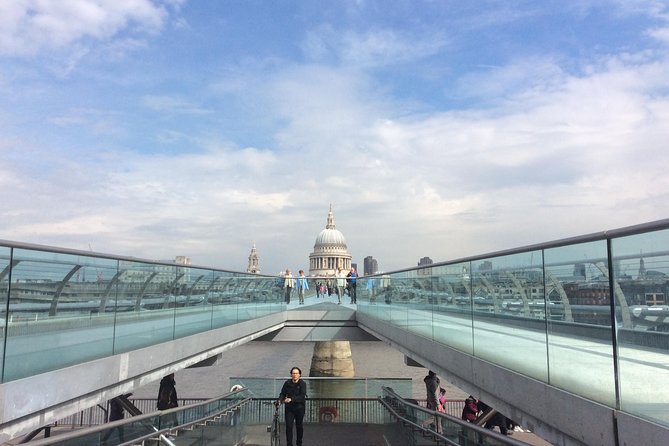
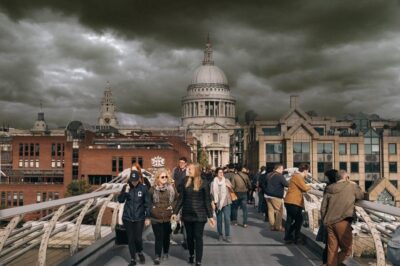
You start at the Millennium Bridge, the newer Thames crossing that links St Paul’s Cathedral with the Tate Modern. This is a great warm-up stop because the bridge view naturally points you toward the river’s story: the city’s religious landmarks on one side, and the industrial-to-cultural repurpose on the other.
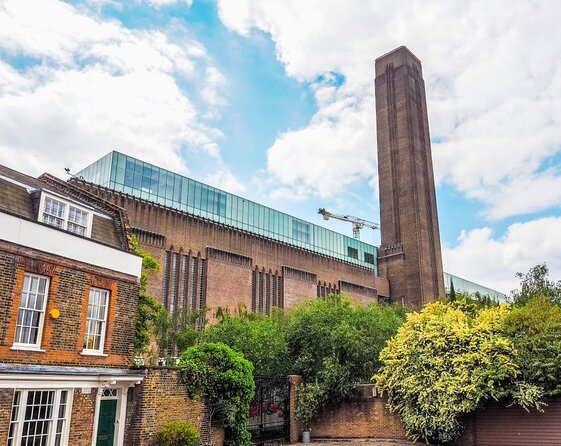
From there, the tour moves into the orbit of Tate Modern—housed in a former power station. The building’s past matters here. The South Bank used to be about industry and labor. Now it’s where you go for art, theater, and a steady stream of people. Even if you don’t go inside every time, standing in the area helps you read the city’s “old job, new use” theme.
If the weather’s great, this section gives you clean sightlines and open space for photos. If it’s pouring, you’ll still be fine, but you’ll feel it more because you’re out in the open for river views.
Winchester Palace ruins and the Clink Prison Museum: medieval leftovers and modern discomfort
Next comes Winchester Palace, a set of ruins that survived centuries of London’s constant rebuilding pressure. The tour frames it as a palace that miraculously endured, even with industry and WWII in the mix. What I like about stops like this: they’re small, but they teach you how layers work in London. You’re not always seeing a complete building—you’re often seeing what refused to disappear.
Then the tone turns darker at the Clink Prison Museum. This is where the guide’s job really matters, because prison history can become either too “gross” or too abstract. The tour describes it as eerie and atmospheric, and the key practical point for you is that this is one of the stops where you’ll get the feeling of how the area was used—then and now. It’s fashionable nearby now, which can make the contrast hit harder when you’re standing there.
Crossbones Graveyard and Marshalsea: plague victims, poverty, and Dickens links
The tour’s prison-and-poverty phase gets stronger with two included stops.
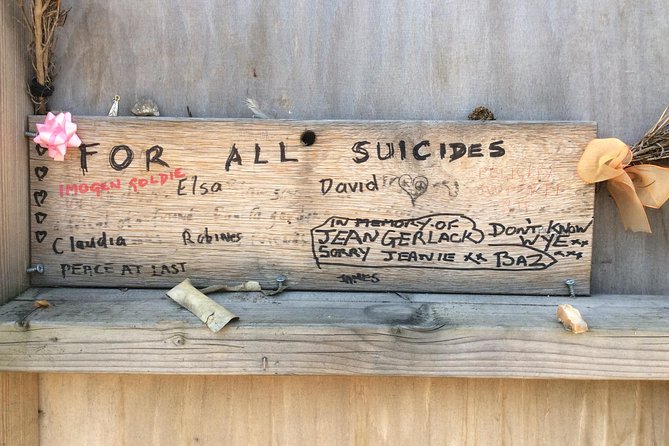
At Crossbones Graveyard & Garden of Remembrance, you’re looking at a resting place tied to plague victims, criminals, and people buried with little ceremony. The tour also connects this hardship to the kind of poverty that inspired social reform and the writings of Charles Dickens. Even if you’re not a Dickens superfan, this stop helps you understand why his work felt so urgent: it wasn’t a historical hobby; it was built on real suffering in real neighborhoods.
Then you move to the Marshalsea Prison South Wall—marked today by a small park space where a feared debtors prison once stood. The tour notes that Dickens’s family was incarcerated here. That’s the kind of detail that makes the street feel like more than a walking route. You’re seeing the setting behind the literature.
A heads-up: these stops are emotionally heavy compared with the market and bridge views. If you’re traveling with kids or anyone who dislikes grim history, you can still do the tour—you may just want to pace your reactions and lean on the guide for context rather than letting your brain run ahead.
The George, Southwark Cathedral, and Borough Market: words, faith, and food on the same path
Next you hit three stops that help balance the darker material.
The George is described as the only remaining galleried tavern in London. It’s connected to writers and to the yard where pilgrims gathered for The Canterbury Tales. Whether you read the story or not, it’s a good reminder that literature isn’t only parchment—it’s also taverns, meetings, and the buzz of people preparing to travel.
Then Southwark Cathedral gives you a calmer moment. It’s often overlooked, and the tour points out that Southwark was once its own city. That local independence matters. You’ll feel how this area didn’t always function as the “London” everyone imagines—it was its own center.
Finally, Borough Market is a practical break and a big reward. The tour notes a food market of around a thousand years, possibly back to Roman times. Here’s the value for you: it’s not just a photo stop. It’s a place to reset your energy and taste the neighborhood. With your guide’s context, you can also look at what you’re eating as part of an old pattern: people trading, selling, and sharing food on the same general ground for ages.
If you’re going at a busy time of day, you’ll want to keep your walk pace steady after the market so you don’t lose time. The itinerary still moves on.
London Bridge, Hay’s Galleria, HMS Belfast, City Hall, and The Scoop: icons with a job to do
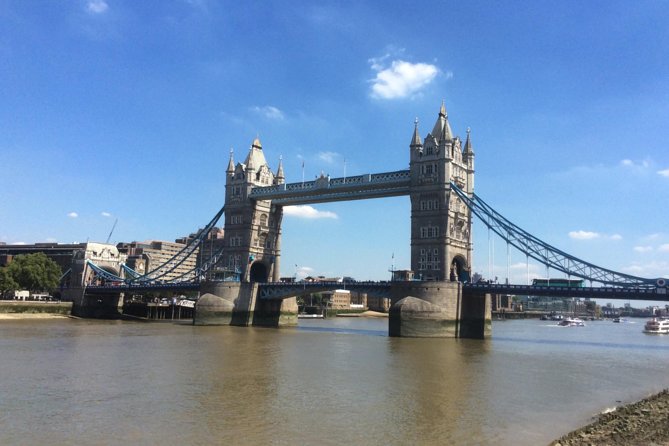
You’ll then glide through a sequence of famous landmarks and distinctive settings.
- London Bridge: the tour includes why it’s here and what used to happen in its past. It’s short, but it sets up the Thames as more than scenery.
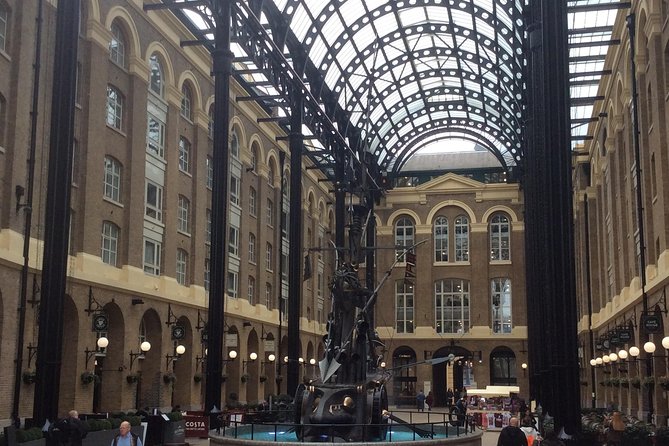
- Hay’s Galleria: once a covered dockyard, now leisure and good eating. This is another example of the industrial-to-modern transition theme.
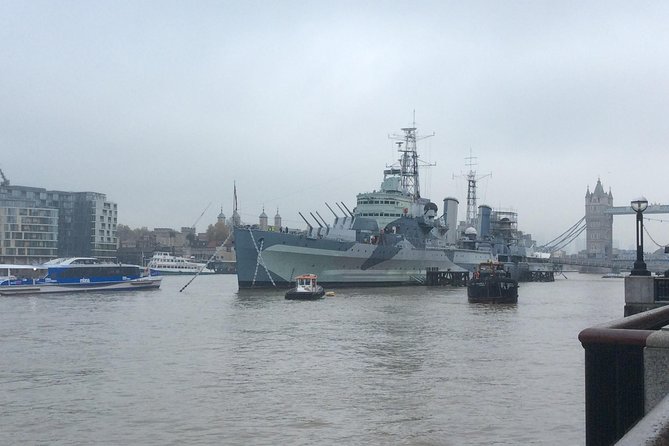
- HMS Belfast: a WWII Royal Navy cruiser now turned tourist attraction. You’ll see it, but the tour lists admission as not included—so treat it as a viewing stop unless you plan your own add-on time.
- City Hall: the Mayor’s home, with the “armadillo” nickname tied to its design.
- The Scoop: a modern outdoor theatre. It’s a good contrast to all the older stone you’re seeing.
These stops are ideal when you want variety without extra ticket spending. The trade-off is that they’re short. If you love deep museum time, you’ll probably wish you had more time at a couple of these.
Tower Bridge, Shad Thames, and Edward III’s Manor: seeing the river as a crime scene
Next comes more river energy.
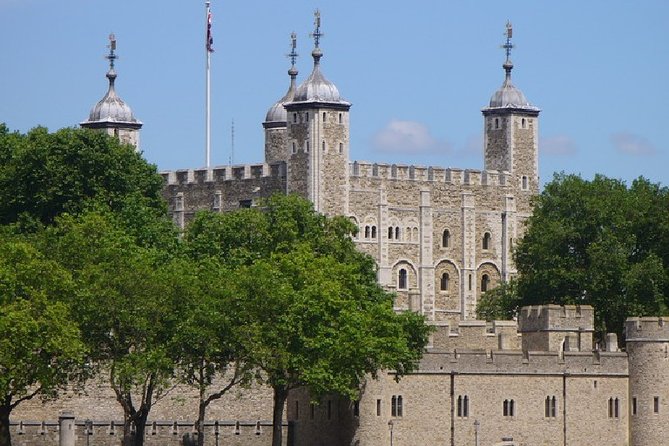
You’ll walk to Tower Bridge, including a chance to walk under the famous hydraulic lifting bridge. Even when you know the image, it’s different standing near the mechanism and seeing the scale in person.
Then you reach Shad Thames, described as a streets-and-creeks space once called the Venice of Drains, with links to murders and executions and the Charles Dickens connection. This is where the guide’s storytelling matters for turning “cool old buildings” into an actual sense of the place.
The tour also includes Edward III’s Manor House, with the note that this land was once swamp and that a hunting lodge built here was unearthed not long ago. This stop is a reminder that the Thames edge kept changing. It’s not always the same shoreline you picture in your head.
Rotherhithe’s Mayflower anchors: The Angel to St Mary’s Church
Now you shift fully toward the Mayflower story’s end points in this itinerary.
The tour stops at The Angel, an old pub described as a smugglers den. The guide also points out details like trap doors, plus the mention that Captain Cook set sail nearby and that a hanging judge used to sit nearby to watch sentences carried out. That’s a lot of history for one building, but it’s exactly why walking routes like this work: the city keeps reusing the same small stretch of land for new stories.
Then comes St Mary’s Church, Rotherhithe, an included stop. The key theme here is the monument to the Pilgrim Fathers, plus the statement that the “Captain” of the Mayflower is buried there and that the ship was beached up on the Thames behind. If you came for the Mayflower connection, this is the stop that likely gives you the most satisfying payoff—because it ties the legend to a specific place.
The Mayflower Pub and what to do after: a smart ending plan
The tour ends with the Mayflower Pub, where the tour highlights that this is the famous old pub from where the crew departed for the New World. It’s listed as included, and the practical value is that it gives you a natural place to decompress after the walking and museum stops. If you want a drink or a meal, this is the easiest time to do it.
One of the most helpful final segments also includes optional-feeling landmarks even when admission isn’t included:
- The Brunel Museum at Rotherhithe is not listed as included, but it’s tied to Brunel’s first underwater tunnel idea, where trains still use it today.
- The Watchhouse Café is free and described as an organic cafe, with a watchhouse story about dead bodies washed up and protected from theft until authorities arrived.
- Rotherhithe Picture Research Gallery is also free, set in old industrial warehouses with cinema and heritage costuming and a reference library for how the area used to look.
These last stops are a nice blend of food-and-rest and “how the past is preserved now.” If you’d like a light bite, the Watchhouse Café is the easiest “no pressure” choice on the route.
Who this tour fits best (and who should look elsewhere)
I’d point you to this tour if:
- you like walking and you’re comfortable with a 4–5 mile effort
- you want the South Bank story with context, not just a list of famous sights
- you care about the Mayflower theme and also want the darker London backdrop that shaped the era
I’d hesitate if:
- you hate grim prison/plague themes and want only upbeat sites
- you’re hoping for every stop to be an indoor museum with long viewing time
The private format helps most in the “I want questions answered” way. If you enjoy chatting with your guide and adjusting the pace for your interests, you’ll get more out of it than someone who prefers to read a sign and move on.
Should you book the Mayflower Private Walking Tour?
If your main goal is to understand the South Bank as a real lived-in neighborhood—and you want the Mayflower story grounded in specific places—this is a strong booking. The private setup makes a big difference, especially when the itinerary switches between famous icons and heavier sites like plague graves and debt prison history.
I’d book it if you’re ready for a proper walking day and you like history that connects to places you can still see today. I’d think twice only if you want short, easy sightseeing with minimal walking and minimal dark subject matter.
FAQ
How long is the Mayflower Private Walking Tour?
The tour lasts about 3 hours.
What does the price include?
It includes a local guide, a professional guide, and the private tour experience. Hotel pickup and drop-off are included only if you choose the pickup option.
Are tickets and admissions included?
Some stops are free, some have admission included, and some are not included. The tour listing specifies ticket status for each stop (free, included, or not included).
Where does the tour start?
The start point is Underground Ltd Station, Mansion House, 38 Cannon St, London EC4N 6JD, UK.
Is hotel pickup available?
Yes, hotel pickup and drop-off are offered if you select that option.
How does the tour handle weather?
It operates in all weather conditions, so dress appropriately.
What kind of walking fitness level is required?
The tour calls for a moderate physical fitness level.
FAQ
Is this a private tour?
Yes. It’s private, so only your group participates.
Is transportation to and from attractions included?
No. Transportation to/from attractions is not included.
Is there a mobile ticket?
Yes, the tour offers a mobile ticket.
Are service animals allowed?
Yes, service animals are allowed.
What if I want to start later to avoid rush hour?
There’s an option to meet a little later (around 10.30–11am) to help avoid rush-hour, and the team can meet you at the hotel if needed.
More Tours in London
- From London: Harry Potter Warner Bros Studio Tour
★ 4.7 · 26,588 reviews - Magical London: Harry Potter Guided Walking Tour
★ 4.7 · 22,044 reviews - London: Warner Bros. Studio Harry Potter Tour & Branded Bus
★ 4.7 · 19,194 reviews - London Big Bus Hop-On Hop-Off Tour with Optional River Cruise
★ 3.5 · 10,803 reviews - London Small Group Tour of Historical Pubs
★ 5.0 · 10,422 reviews
More Tour Reviews in London
- From London: Harry Potter Warner Bros Studio Tour
★ 4.7 · 26,588 reviews - London: Westminster to Greenwich River Thames Cruise
★ 4.5 · 22,836 reviews - Magical London: Harry Potter Guided Walking Tour
★ 4.7 · 22,044 reviews - London: Madame Tussauds London
★ 4.6 · 20,915 reviews - London: Warner Bros. Studio Harry Potter Tour & Branded Bus
★ 4.7 · 19,194 reviews
More London Walks Worth the Shoe Leather
- Magical London: Harry Potter Guided Walking Tour
★ 4.7 · 22,044 reviews - London: The Original Jack the Ripper Walking Tour
★ 4.7 · 7,833 reviews - Tour for Muggles The Ultimate Harry Potter Walking Tour in London
★ 5.0 · 4,684 reviews - London Jack The Ripper Guided Walking Tour
★ 5.0 · 3,131 reviews - London: Harry Potter Movies Walking Tour (Kids Go Free)
★ 4.7 · 3,071 reviews
Just reviewed around London





London Walking Tours, compared.
 ★ 4.7Magical London: Harry Potter Guided Walking TourFrom $2022,044 reviews
 ★ 4.7The Original Jack the Ripper Walking TourFrom $257,833 reviews
 ★ 5.0Tour for Muggles The Ultimate Harry Potter Walking Tour in LondonFrom $234,684 reviews
 ★ 5.0London Jack The Ripper Guided Walking TourFrom $03,131 reviews
 ★ 4.7Harry Potter Movies Walking Tour (Kids Go Free)From $203,071 reviews
 ★ 5.0Changing of the Guard Guided Walking Tour in LondonFrom $251,793 reviews
 ★ 4.9The Great British Rock and Roll Music Walking TourFrom $361,783 reviews
 ★ 4.8Harry Potter Walking Tour in GermanFrom $201,505 reviews