
Reviewed · LONDON WALKING TOURS
The History of London City Center Exclusive Guided Walking Tour
London clicks into place on foot. This London city center guided walking tour strings together big names—Covent Garden, Trafalgar Square, Whitehall, and Westminster—so you leave with the story behind what you’re seeing, not just a photo list. I especially like the small-group or private feel, because the guide can adjust the pace and focus without you losing the key sights.
One thing to know up front: this walk is mostly outside views. Some major stops are point-and-learn, and entry/ticketing is limited—Westminster Abbey gives you entry at the end, but it’s not a guided interior tour.
In This Review
- Key highlights worth planning for
- From Covent Garden to Westminster: a smart walking route
- Covent Garden: where the morning starts lively
- Trafalgar Square and Nelson’s Column: the square behind the victory
- Admiralty Arch and Whitehall: politics as architecture
- 10 Downing Street and St. James’s Palace: pageantry with a purpose
- Buckingham Palace area: the lead-in to royal London
- Churchill War Rooms: seeing wartime command without leaving the street
- Big Ben and the Houses of Parliament: icons with context
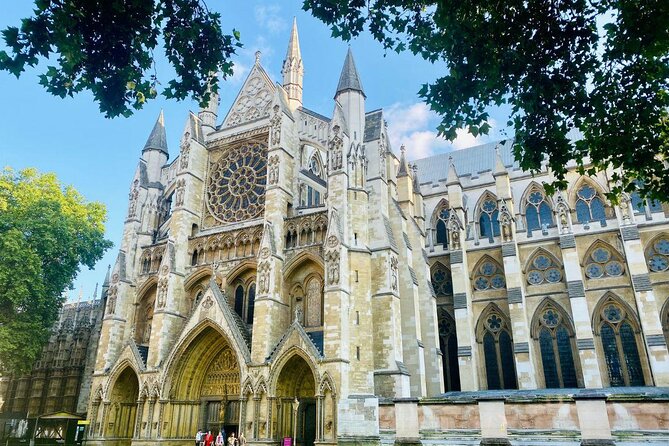
- Westminster Abbey: your end point, with entry on your terms
- What 2.5 hours feels like in real life
- Price value: is $59.28 fair for this route?
- Small-group versus private: choosing the right feel
- Practical tips so your walk stays fun (not stressful)
- Should you book this London city center walking tour?
Key highlights worth planning for
- Covent Garden start with street performers and a real sense of how central London moves
- Trafalgar Square to Nelson’s Column explained with Napoleonic-era context and why the square still matters
- Whitehall and 10 Downing Street area for a practical look at how government space works in the real city
- Royal stops via St. James’s Palace and a pass by Buckingham Palace, including timing that can line up with changing the guard
- Westminster finale at Abbey exterior with entry included, but an unguided interior visit
- A guide-led, fast 2.5 hours that’s built for first-timers who want maximum orientation
London on foot, a few more ways
- Magical London: Harry Potter Guided Walking Tour
★ 4.7 · 22,044 reviews - London: The Original Jack the Ripper Walking Tour
★ 4.7 · 7,833 reviews - Tour for Muggles The Ultimate Harry Potter Walking Tour in London
★ 5.0 · 4,684 reviews - London Jack The Ripper Guided Walking Tour
★ 5.0 · 3,131 reviews
From Covent Garden to Westminster: a smart walking route
This is the kind of London tour that helps you stop guessing. You start in Covent Garden, a place with energy that dates back a long way—there’s even evidence of Saxon settlement as far back as the 7th century. While you’re not going to study every alley on your own, you’ll get a guided sweep that connects neighborhoods to events.
I like that the tour doesn’t just throw landmarks at you. Your guide ties each stop to the “why” behind it, so Trafalgar Square isn’t a random monument moment, and Whitehall isn’t just buildings on a map.
You’re also walking with purpose. The route is designed as a full city-center line, from Covent Garden’s streetscape down to Westminster Abbey, so your day feels organized rather than scattered.
Covent Garden: where the morning starts lively
You meet in Covent Garden, and the area does what it’s always done best: pull you in with people. Expect street performers, shops, and that mix of theatre and shopping that makes the neighborhood feel like it has multiple lives at once. For many first-timers, this is a good way to start because it’s active and central but not yet overwhelming.
The historical angle here is subtle, but it matters. Knowing that London’s story in this area goes back to early Saxon settlement helps you understand why Covent Garden became such a long-lasting urban hub. It’s a reminder that the city’s “new” sidewalks sit on top of older routes and routines.
Trafalgar Square and Nelson’s Column: the square behind the victory
Trafalgar Square is the kind of place you can’t miss, but it’s easy to skim. On this tour, you’ll get the context: the square commemorates the Battle of Trafalgar, a major British naval victory in the Napoleonic Wars over France and Spain. That’s the origin story, and it’s the key to why the space has always been about more than sightseeing.
Your guide also points out that the square has been a location for protests and demonstrations through the years, including modern-day activity. That makes the area feel current, not locked in a museum frame.
Nelson’s Column comes next, built to memorialize Admiral Horatio Nelson, who died in 1805. You’ll see it as a monument with a purpose, not just a tall statue for travelers to pose beside.
Still deciding? A handful more London outings we rated
Admiralty Arch and Whitehall: politics as architecture
After Trafalgar Square, you head toward Admiralty Arch, a landmark that sits between the Mall and Trafalgar Square. This building was commissioned by King Edward VII in memory of his mother, Queen Victoria. Even if you’ve never heard the name before, you’ll leave with a clear sense of why it looks the way it does and what it’s there to honor.
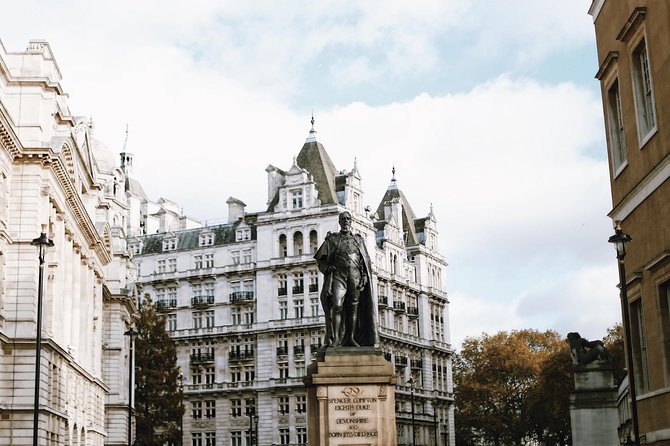
Then the walk shifts into Whitehall. This is one of those streets that works like a set on a history show, because it’s packed with government offices and names tied to national power. You’ll also learn that Henry VIII’s court at Whitehall Palace helped establish the area as a government center starting in the 1530s.
Whitehall is where this tour turns practical. You start to see how London organizes authority in real space—major roads, symbolic buildings, and the way the city channels foot traffic right by them.
10 Downing Street and St. James’s Palace: pageantry with a purpose
Next up is 10 Downing Street, the official address associated with the Prime Minister of the United Kingdom. You won’t be stepping through gates as part of the tour, but you’ll still get what matters: a sense of where power lives and how it fits into a working capital city.
Right after, you’ll pass by St. James’s Palace, described here as the most senior royal palace in the UK. The big takeaway is how long it’s been used—over 300 years as a royal residence—and how that continuity shapes the monarchy’s presence in London.
This portion of the walk is especially good if you like connections. Your guide can help you link monarchs and political leadership to the physical geography you’re standing in.
Buckingham Palace area: the lead-in to royal London

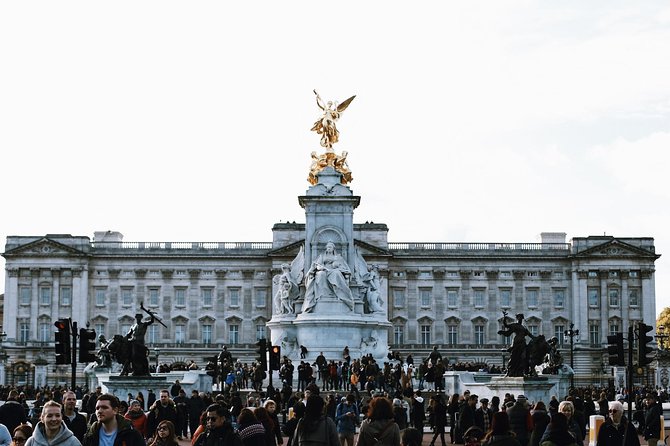
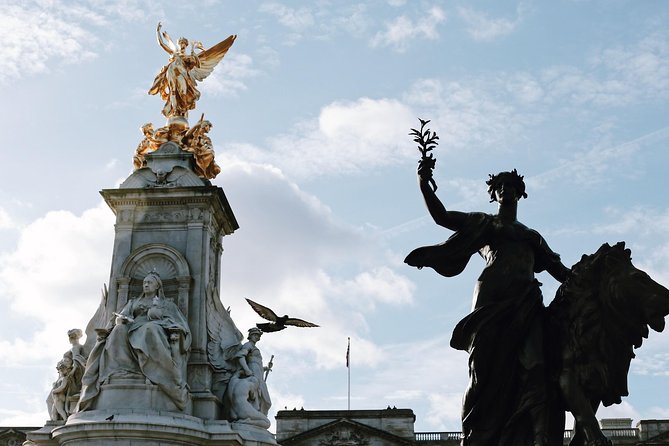
You’ll pass by Buckingham Palace as you keep moving toward Westminster. This is one of those moments where London’s royal identity becomes visual and immediate, even from the outside. The best part is the way your guide frames it as part of a much larger historical chain, not just a photo stop.
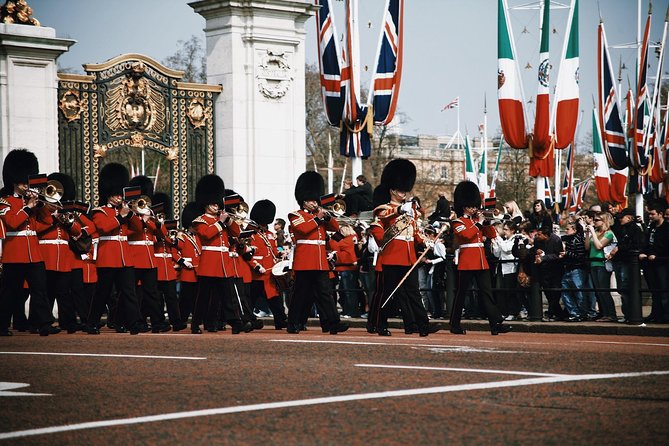
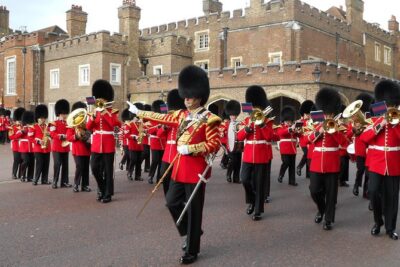
Timing can also be a factor. I love that guides can sometimes time the route so you might catch the changing of the guard, like it reportedly happened when Sheldon guided a tour group with perfect pacing. Even if you don’t get it, you still get a clean orientation to where the ceremonies happen in the city.
Churchill War Rooms: seeing wartime command without leaving the street
As you move through the Westminster area, you’ll pass by the Churchill War Rooms. This museum is part of the Imperial War Museum network, and it’s tied to the Cabinet War Rooms, an underground command center used by the British government during World War II.
Important note: the tour here is designed as a pass-by. Churchill War Rooms admission isn’t included, so if you want to step inside, you’ll need to plan separately. Still, getting the backstory on what those underground rooms represent makes the exterior stop feel more meaningful.
This is a good moment to slow down a touch. You’ll be walking through the same zone where national decision-making happened during a crisis, which makes the area feel heavier than typical sightseeing.
Big Ben and the Houses of Parliament: icons with context
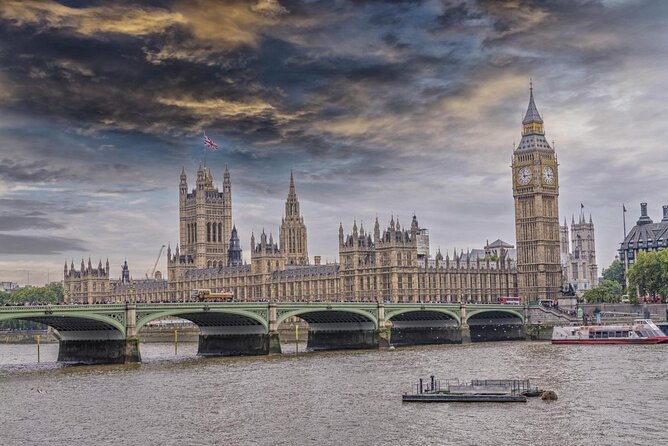
Big Ben is next, with views of the clock tower at the end of the Palace of Westminster. You’ll see one of London’s most recognized faces, but the tour’s real value is the context your guide shares: this is the heart of the Westminster political complex.
Then you’ll look at the Houses of Parliament, the Gothic-style building where the House of Commons and the House of Lords meet. Even without going inside, you’ll get a clear explanation of the building’s long span—over 900 years of history—and why that continuity matters.
If you’re thinking about photos, remember this is a walking tour. You won’t have hours to set up a perfect angle, so the smart move is to keep your phone ready and focus on quick, clear shots when the group stops.
Westminster Abbey: your end point, with entry on your terms
The tour finishes in front of Westminster Abbey. You’ll get exterior time and guidance for understanding what you’re looking at, and then you’ll have entry at the end of the tour.
One key detail: the guided tour of the Abbey interior is not included. You’ll visit the inside unguided on your own after the walking portion ends, and you’ll have to manage your own pacing. That can be a plus if you want freedom, but it’s less ideal if you want a guide to explain everything you’re seeing.
This ending works well for people who like a finish-line moment. You go from government buildings and monarch-linked landmarks right into one of London’s most famous ceremonial sites, all in one continuous flow.
What 2.5 hours feels like in real life
This tour is about 2 hours 30 minutes. That’s long enough to build understanding, but short enough to fit into a first-time itinerary without wrecking your whole day. It’s also rain or shine, which matters in London, where weather changes like it’s on a schedule.
A moderate fitness level is recommended. You’re walking through central streets, and while the stops are frequent, you still need shoes that don’t punish you after an hour.
The route can also change. When national celebrations affect foot traffic or access, you’ll be offered an alternate route that still aims to cover the highlights. In those situations, refunds or discounts aren’t offered, so it’s smart to treat the schedule as a guide, not a guarantee.
Price value: is $59.28 fair for this route?
At $59.28 per person, you’re paying for a guided, time-saving orientation across core London landmarks. You’re not just buying access to a single ticketed attraction. You’re paying for a structured walkthrough that connects neighborhoods (Covent Garden and Whitehall) to major national symbols (Trafalgar Square, Downing Street, Westminster).
The value is strongest if you’re one of these:
- first-time visitors who want a big-picture understanding fast
- history and culture lovers who enjoy explanations while you walk
- people who’d rather ask questions than read a guidebook on the move
You might feel the cost less if you prefer deep museum time or you already know the story well. Since several major sites are outside passes and some interiors aren’t included, this is best as your orientation stop, not your only London history plan.
Small-group versus private: choosing the right feel
This experience offers a small-group or private option. In practice, the difference is about how much flexibility you get from the guide and how quickly you can adjust your pace.
Private tours can be great if you want your visit to match your own interests—maybe you care more about political London than royal London, or you want more photo time around particular buildings. One example from a reported booking: when a group stayed tiny and the guide (Lucy) adapted to emphasize what the couple wanted most, the route apparently included spots not typically emphasized on a more standard group flow. That’s the upside of a smaller group: fewer constraints, more tailoring.
There’s also mention of a semi-private option where the “guide exclusively for you” detail may not apply. So if exclusivity matters to you, check which option you’re selecting before you lock it in.
Practical tips so your walk stays fun (not stressful)
This tour asks you to show up ready to move. No large bags or suitcases are allowed, so pack lightly. Comfortable shoes matter, because you’ll be covering several central blocks while the group keeps moving.
It also helps to bring a bottle of water and plan for weather: an umbrella is recommended in rain, and a hat can help in summer. The tour runs in all weather, so you’re dressing for being outside for hours—not just for the first five minutes.
Lastly, have your phone situation handled. You’ll need to provide a mobile phone number (with country code), and you’ll receive a mobile ticket. If you hate dealing with last-minute phone things, this is still manageable—just make sure your number is correct before you arrive.
Should you book this London city center walking tour?
I’d book it if you want a guided, compact route that stitches together London’s main power landmarks and helps you understand what you’re looking at. It’s especially good for first-timers because it gives you fast orientation across Covent Garden, Trafalgar Square, Whitehall, Downing Street, royal stops, and ends with Westminster Abbey.
I would skip or pair it differently if you know you only want big-ticket interior time. Several stops are exterior viewpoints, and Churchill War Rooms admission isn’t included, so your schedule should leave room for optional add-ons if those interiors matter to you.
If your ideal day is: walk, learn, take photos, then sit down afterward with your bearings—this is a solid way to get there without wasting time.
More Tours in London
- From London: Harry Potter Warner Bros Studio Tour
★ 4.7 · 26,588 reviews - Magical London: Harry Potter Guided Walking Tour
★ 4.7 · 22,044 reviews - London: Warner Bros. Studio Harry Potter Tour & Branded Bus
★ 4.7 · 19,194 reviews - London Big Bus Hop-On Hop-Off Tour with Optional River Cruise
★ 3.5 · 10,803 reviews - London Small Group Tour of Historical Pubs
★ 5.0 · 10,422 reviews
More Tour Reviews in London
- From London: Harry Potter Warner Bros Studio Tour
★ 4.7 · 26,588 reviews - London: Westminster to Greenwich River Thames Cruise
★ 4.5 · 22,836 reviews - Magical London: Harry Potter Guided Walking Tour
★ 4.7 · 22,044 reviews - London: Madame Tussauds London
★ 4.6 · 20,915 reviews - London: Warner Bros. Studio Harry Potter Tour & Branded Bus
★ 4.7 · 19,194 reviews
More London Walks Worth the Shoe Leather
- Magical London: Harry Potter Guided Walking Tour
★ 4.7 · 22,044 reviews - London: The Original Jack the Ripper Walking Tour
★ 4.7 · 7,833 reviews - Tour for Muggles The Ultimate Harry Potter Walking Tour in London
★ 5.0 · 4,684 reviews - London Jack The Ripper Guided Walking Tour
★ 5.0 · 3,131 reviews - London: Harry Potter Movies Walking Tour (Kids Go Free)
★ 4.7 · 3,071 reviews
Just reviewed around London





London Walking Tours, compared.
 ★ 4.7Magical London: Harry Potter Guided Walking TourFrom $2022,044 reviews
 ★ 4.7The Original Jack the Ripper Walking TourFrom $257,833 reviews
 ★ 5.0Tour for Muggles The Ultimate Harry Potter Walking Tour in LondonFrom $234,684 reviews
 ★ 5.0London Jack The Ripper Guided Walking TourFrom $03,131 reviews
 ★ 4.7Harry Potter Movies Walking Tour (Kids Go Free)From $203,071 reviews
 ★ 5.0Changing of the Guard Guided Walking Tour in LondonFrom $251,793 reviews
 ★ 4.9The Great British Rock and Roll Music Walking TourFrom $361,783 reviews
 ★ 4.8Harry Potter Walking Tour in GermanFrom $201,505 reviews
Browse the lists this tour appears in