
Reviewed · TOURS
The Freemasons Tour of London
London has layers. This tour shows them fast.
I like how the Freemasons Tour of London strings together religion and military history in a way that makes the City of London feel real, not museum-dust. You’ll also get hotel pickup and a tight 3-hour route that hits a lot of landmarks without wasting half your day in transit. One heads-up: the pace is brisk, with many stops around 5–10 minutes, so if you want slow, deep museum time every step of the way, this may feel a bit more “walk-and-spot” than “sit-and-stay.”
In This Review
- Key Stops You’ll Actually Remember
- A 3-Hour Route That Makes London Feel Like One Story
- Price and Logistics: What You Get for $253.66
- Pickup at Your Hotel and a Clean Start at Farringdon
- Clerkenwell’s Hidden Corners: Clerk’s Well to St John’s Gate
- Museum Timing Note
- Charterhouse Square and the Black Death Skeleton
- Bartholomew the Great and Its Gatehouse Relatives
- William Wallace to Greyfriars: Pop Culture Meets Old Stone
- St Paul’s and the City’s “Why Is That There?” Moments
- Temple Area: The Templars’ Architectural Influence
- Fleet Street and the Old Curiosity Shop: Newspapers to Secret Meetings
- The Seven Stars Pub and Lincoln’s Inn
- Arriving at Freemasons’ Hall: The Meaningful Finish
- Who This Tour Is Best For (and Who Should Skip It)
- Final Verdict: Should You Book the Freemasons Tour of London?
- FAQ
- How long is the Freemasons Tour of London?
- Is this a private tour?
- What are the start and end locations?
- What does the price include?
- What admissions are included versus not included?
- Are any museums closed on certain days?
- Do I need Tube tickets?
- What’s the cancellation policy?
Key Stops You’ll Actually Remember
- Clerk’s Well and Clerkenwell’s origin story: a lesser-known well tied to the name of the whole district
- Knights of St John sights in Clerkenwell: St John’s Gate plus the Museum of the Order of St John
- Plague and power at Charterhouse: a major plague pit and a recently discovered Black Death skeleton
- Templar-shaped landmarks: Temple Church and Inner Temple, plus a quick look at Temple Bar
- The Freemasons’ endgame: Freemasons’ Hall, the working headquarters of major Masonic bodies in England
- A Dickens-to-Freemasons walking link: you’ll pass the Old Curiosity Shop and stop at The Seven Stars pub
Not sure yet? See how a few of London's most-booked trips stack up:
- From London: Harry Potter Warner Bros Studio Tour
★ 4.7 · 26,588 reviews - London: Westminster to Greenwich River Thames Cruise
★ 4.5 · 22,836 reviews - Magical London: Harry Potter Guided Walking Tour
★ 4.7 · 22,044 reviews - London: Madame Tussauds London
★ 4.6 · 20,915 reviews
A 3-Hour Route That Makes London Feel Like One Story
This is the kind of London walk that works because the theme is consistent. You’re not just hopping between famous buildings. You’re following a thread through the City that blends churches, medieval orders, and the places where people organized—religiously and militarily—and later organized again, through Freemasonry.
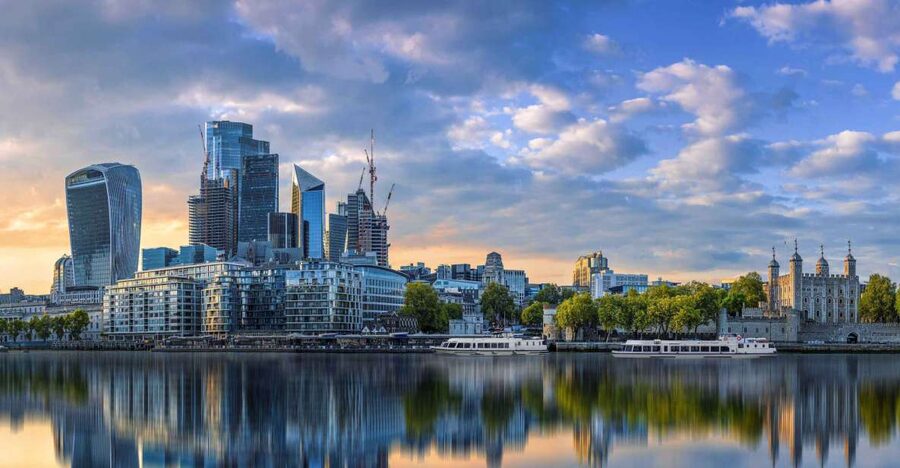
The value here is in the connection-making. You’ll see why streets, gates, and churches have the shapes they do, and how different eras reused the same physical spaces. Even if you’re not a hardcore history fan, the route has enough variety that it stays interesting: hidden corners, major landmarks like St Paul’s, and small details you would almost certainly miss on your own.
Price and Logistics: What You Get for $253.66
At about $253.66 per person for roughly 3 hours, you’re paying for convenience and for a guide to stitch it all together. The big practical win is hotel pickup. That matters in London, where timing and cross-city hopping can turn a “quick walk” into a half-day shuffle.
You also get a mobile ticket and the tour is private (only your group participates). That typically means more time to ask questions and less waiting around for a large group to regroup.
Two practical considerations:
- Tube tickets aren’t included before and after. The tour itself handles getting you from your pickup to the start, but you’ll still want transit money for anything you do outside the tour hours.
- Several sites are marked with admission as free versus not included. In practice, you’ll likely get a mix of exterior views, quick interior peeks, and a few stops where entry is included.
Pickup at Your Hotel and a Clean Start at Farringdon
The tour starts at Farringdon Station (Cowcross St, London EC1M 6BY) at 9:30 am. If you’re in Central London and you’ve arranged pickup, you meet in your hotel’s reception area and head to the start point by Underground (or taxi).
If you don’t take pickup, you can meet outside Farringdon station. Either way, you’ll be in the right neighborhood fast—this route begins in Clerkenwell and quickly fans out across the City toward St Paul’s and finally down to Freemasons’ Hall near Holborn and Covent Garden.

Clerkenwell’s Hidden Corners: Clerk’s Well to St John’s Gate
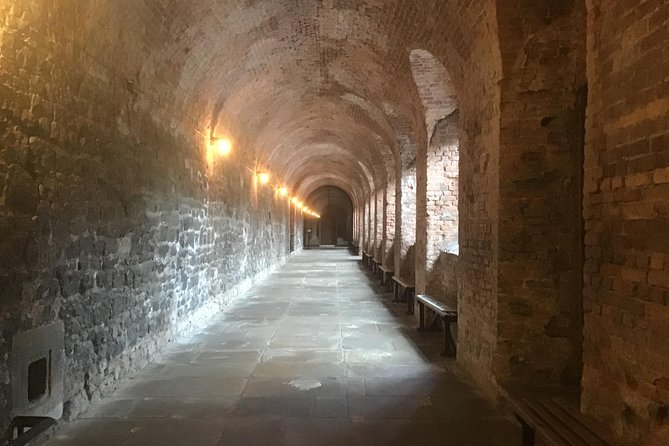
Most London sightseeing routes ignore the small, older plumbing of the city—literal wells, forgotten gardens, and side-gate structures. This one doesn’t.
You begin at Clerk’s Well, a well many Londoners don’t know about. The payoff isn’t just the well itself. The guide connects it to how the name Clerkenwell grew out of an old knight’s well. It’s a reminder that place names aren’t random. They often come from very concrete, very local history.
Next comes the Marx Memorial Library. It’s a working institute, and the stop is tied to the area’s communist heritage in Clerkenwell. If your brain likes contrasts—medieval order one minute, 19th/20th-century politics the next—this section delivers.
Then you head to St John Priory Church, where you get a look at an old church garden planted with traditional medicinal plants. The detail that makes this stop memorable is the mix: garden peace paired with a surprising ancient military weapon.
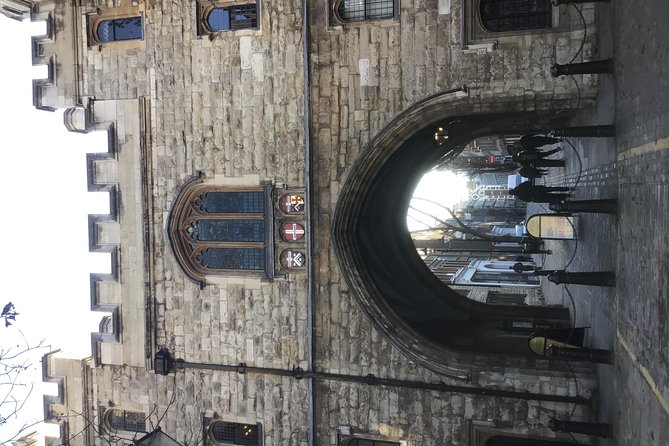
From there you reach St John’s Gate, the old gatehouse/tower that once guarded the entryway to the compound of the Knights of St John. The point isn’t just architecture. Gates like this show you how medieval power operated: you didn’t just build buildings—you controlled movement.
Museum Timing Note
The Museum of the Order of St John is where this section becomes more than a look-out. You’ll see the gatehouse tied to the Knights of St John Crusaders and get a quick look inside at weapons and armor. The one catch is timing: this museum is closed on Mondays and Tuesdays.
Charterhouse Square and the Black Death Skeleton
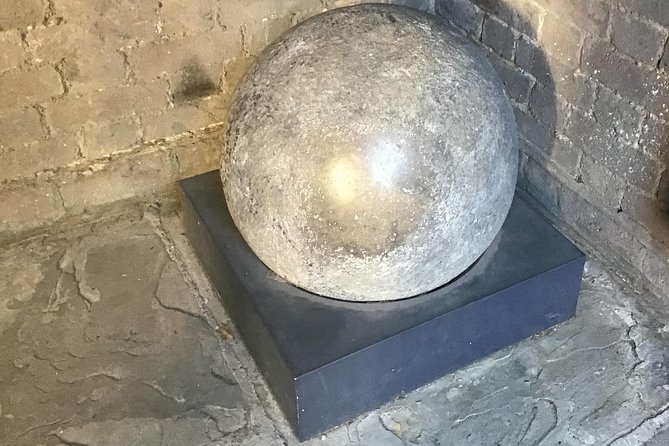
After Clerkenwell, the route turns darker—on purpose, and in a way that feels grounded rather than spooky.
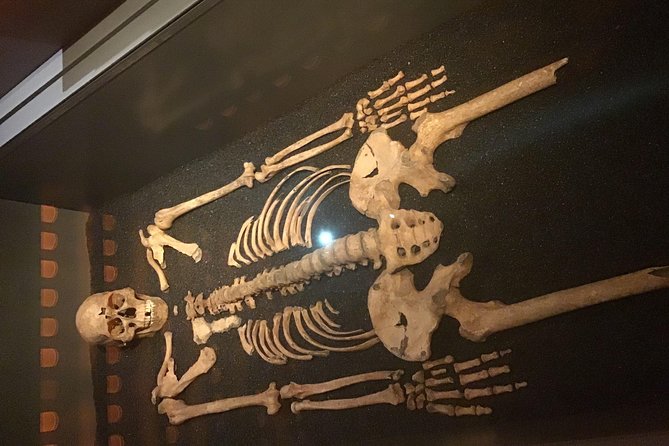
You stop at The Charterhouse, within Charterhouse Square. Here the theme is plague and the way the city dealt with mass death. You’ll see one of the largest plague pits before entering the Charterhouse chapel area.
A standout detail: there’s mention of a recently discovered skeleton of a victim of the Black Death. That makes the story hit harder than any textbook summary ever will. It’s also one reason this route isn’t just about “pretty churches.” London’s sacred places often sit right next to the mess of real life.
From a practical standpoint, Charterhouse is marked as closed on Mondays, so plan around that if you’re choosing your travel dates for this specific tour.
Bartholomew the Great and Its Gatehouse Relatives
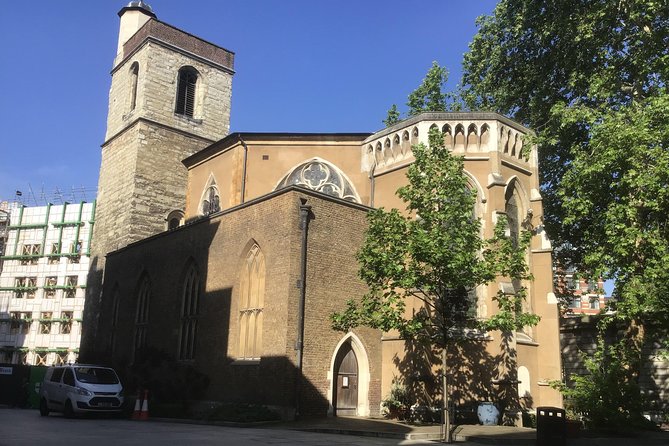
Then the walk shifts into classic City-church territory.
At Church of St Bartholomew the Great, you’ll see one of the oldest churches in London, built by a Crusader. The quick stop works because the broader route is already about Crusader-era influence. This church isn’t a random detour—it’s part of the logic.
Right after, you get St Bartholomew’s Gatehouse, a quieter, more hidden treasure dating back almost 800 years. The value of a gatehouse stop on a walking tour is that you’re learning while your feet are still warm. You don’t need to be inside to understand the shape of medieval life: keep out, let in, enforce order.
William Wallace to Greyfriars: Pop Culture Meets Old Stone
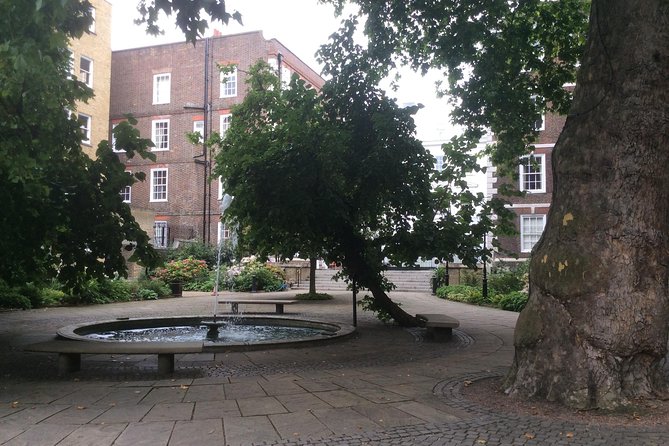
You then reach William Wallace Memorial—the spot connected with the story of Braveheart. Even if you know the movie version, the stop gives you a way to reframe it in the geography of London. It’s also a reminder that “famous history” often survives in very specific street-level markers.
Next comes Christchurch Greyfriars Church Garden, where monastic ruins form a garden under the shadow of St Paul’s Cathedral. This is one of the quieter wins of the tour: a calm pocket that still sits right in the middle of major tourist London.
If you like seeing how religious institutions evolved into something more landscaped and open, this garden stop hits the sweet spot.
St Paul’s and the City’s “Why Is That There?” Moments
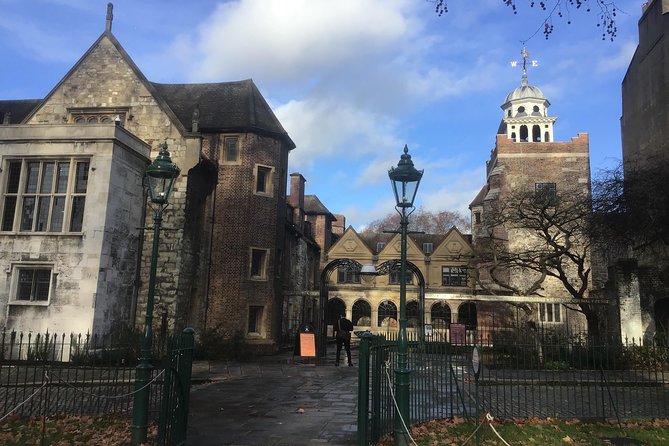
You get a quick look at Christopher Wren’s Temple Bar, an old gate of the City with a sometimes gory past. It’s short, but it adds spice to the route and keeps the story from turning into a straight line of name-drops.
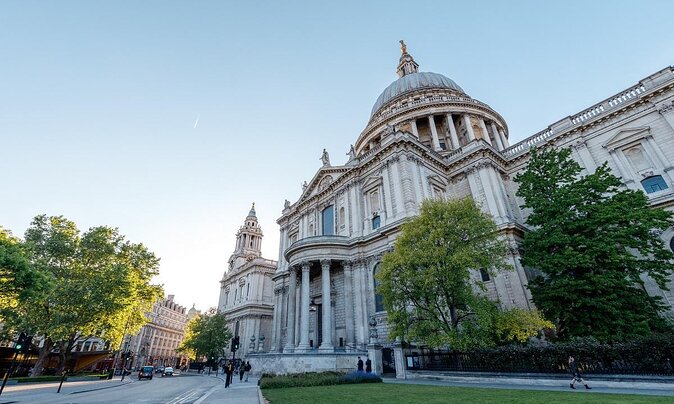
Then you see St Paul’s Cathedral. The stop is brief, but it acts like a visual anchor. When your route stretches from Clerkenwell toward the City’s center, St Paul’s is the landmark that helps you understand scale. It’s the skyline proof that this is all really in one walkable urban fabric.
You’ll also pass by Blackfriars, with all that remains of an institution in a small yard reached by a tiny alleyway. That kind of placement is exactly why guided tours matter: most visitors won’t instinctively go looking for a back-yard survival.
Close by is the Crypt on the Green, monastic remains that are described as well off the beaten path. This stop is a good reminder that not everything important is loud. Some of the City’s most meaningful history sits one sidestep away from where crowds queue.
Temple Area: The Templars’ Architectural Influence
Now the tour leans even more into the medieval orders thread with the Temple area.
First, you explore Middle Temple Lane—a beautiful area often used as a filming location (including shows like Downton Abbey and Dickens-style stories). That’s useful because it tells you what to notice: the lane gives you an easy sense of how London’s legal and historic spaces look on screen because they really do have that period feel.
Then comes Temple Church. This is a key stop, and admission is included. The church is tied to the Templars’ influence and is described as inspired by what the Templars saw in the Holy Land. You might also hear that Temple Church became especially well-known due to later pop culture interest linked to the Da Vinci Code films, but the current mood is peaceful rather than theatrical.
After Temple Church, you enter Inner Temple, described as a tranquil refuge. Admission is included here too, making this one of the best “you paid for more than walking” sections.
One balanced caution: Temple Church details can be nuanced. If you care about exact comparisons of architectural inspiration, it’s worth asking questions on the spot so you leave with the interpretation that matches your interests.
Fleet Street and the Old Curiosity Shop: Newspapers to Secret Meetings
You move into the sweep of Fleet Street, once the home of the infamous British newspaper trade. That’s a smart bridge to the Freemasons theme because it reminds you that London is always reinventing its centers of influence. Media replaced guilds; offices replaced cloisters. The physical street stays, but the power changes costumes.
The walk also includes a look at a long-lost ruin from a monastic order along the way. It’s not meant to distract you. It’s meant to show how the City keeps layers even when institutions vanish.
Then you pass by The Old Curiosity Shop, noted as the oldest shop in London and linked to Charles Dickens. That stop is quick, but it gives you a cultural waypoint so the tour doesn’t feel only medieval.
The Seven Stars Pub and Lincoln’s Inn
A major theme shift happens at The Seven Stars, a tiny old pub described as an early meeting place connected to Freemasons. This is where the tour gets delightfully human. It’s one thing to learn about organizations. It’s another to stand where those organizations met and traded stories.
Near the end you pass Lincoln’s Inn, a large square that’s rarely visited by tourists. You learn about its connection to the Great Fire of London. It’s a useful stop for anyone who wants London history to include real city-scale events, not just battles far away.
Arriving at Freemasons’ Hall: The Meaningful Finish
The tour ends at Freemasons’ Hall (60 Great Queen St, London WC2B 5AZ). It’s a strong closing point because it’s not just a monument. It’s described as the headquarters of the United Grand Lodge of England and also tied to the Supreme Grand Chapter of Royal Arch Masons of England.
This is also where the tour’s theme becomes literal: you’re finishing where the organizational work happens and not just where the story is told.
A timing note: the Freemasons Museum is closed on Mondays. If you’re taking this tour on a Monday and museum access matters to you, plan accordingly.
The good news: after the tour, you’re in an area that’s easy to extend. Freemasons’ Hall is just a few minutes walk from Holborn and Covent Garden Underground stations, and you’ll be near plenty of food options.
Who This Tour Is Best For (and Who Should Skip It)
This works best if you like London history that lives in actual streets and buildings—church gardens, gates, courtyards, and small remnants that don’t scream for attention.
It’s also a great choice if you want:
- a private format where you can ask questions
- a tight route that covers many landmarks in under half a day
- a religion and military themed lens that ties different eras together
You might want to think twice if:
- you dislike walking pace and prefer long stays in fewer places
- you mostly want modern London sights rather than medieval and early-institution sites
- you’re expecting a strict history lecture at every stop (some people find the mix more anecdote-heavy than they hoped)
Final Verdict: Should You Book the Freemasons Tour of London?
I’d book it if you want London to feel connected: Clerkenwell to the Temple area to St Paul’s, then down to Freemasons’ Hall. For the money, hotel pickup, a private format, and multiple “non-tour-bus” stops make it good value—especially if you’d otherwise struggle to find these places on your own.
Skip it if you want a slow-paced, museum-first itinerary or if closed-day timing would ruin your plan to see the interiors. If you’re flexible on day choice and you like learning while walking, this tour is exactly the kind of London day that leaves you thinking about streets in a new way.
FAQ
How long is the Freemasons Tour of London?
It runs for about 3 hours.
Is this a private tour?
Yes. Only your group participates.
What are the start and end locations?
You start at Farringdon Station (Cowcross St, London EC1M 6BY) and end at Freemasons’ Hall (60 Great Queen St, London WC2B 5AZ).
What does the price include?
Hotel pickup is included. The tour also uses a mobile ticket.
What admissions are included versus not included?
Some stops are marked admission free, some are marked ticket included, and others are marked admission ticket not included. Where tickets are marked included, the tour includes entry for that portion.
Are any museums closed on certain days?
Yes. The Museum of the Order of St John is closed on Mondays and Tuesdays, Charterhouse is closed on Mondays, and the Freemasons Museum is closed on Mondays.
Do I need Tube tickets?
Tube tickets before and after the tour are not included.
What’s the cancellation policy?
You can cancel for free up to 24 hours in advance of the experience for a full refund. If you cancel less than 24 hours before, the amount paid isn’t refunded.
More Tours in London
- From London: Harry Potter Warner Bros Studio Tour
★ 4.7 · 26,588 reviews - Magical London: Harry Potter Guided Walking Tour
★ 4.7 · 22,044 reviews - London: Warner Bros. Studio Harry Potter Tour & Branded Bus
★ 4.7 · 19,194 reviews - London Big Bus Hop-On Hop-Off Tour with Optional River Cruise
★ 3.5 · 10,803 reviews - London Small Group Tour of Historical Pubs
★ 5.0 · 10,422 reviews
More Tour Reviews in London
- From London: Harry Potter Warner Bros Studio Tour
★ 4.7 · 26,588 reviews - London: Westminster to Greenwich River Thames Cruise
★ 4.5 · 22,836 reviews - Magical London: Harry Potter Guided Walking Tour
★ 4.7 · 22,044 reviews - London: Madame Tussauds London
★ 4.6 · 20,915 reviews - London: Warner Bros. Studio Harry Potter Tour & Branded Bus
★ 4.7 · 19,194 reviews
Just reviewed around London





Tours, compared.
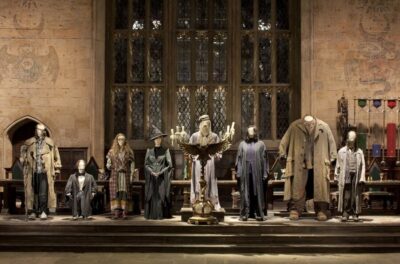 ★ 4.7From London: Harry Potter Warner Bros Studio TourFrom $11726,588 reviews
 ★ 4.7Magical London: Harry Potter Guided Walking TourFrom $2022,044 reviews
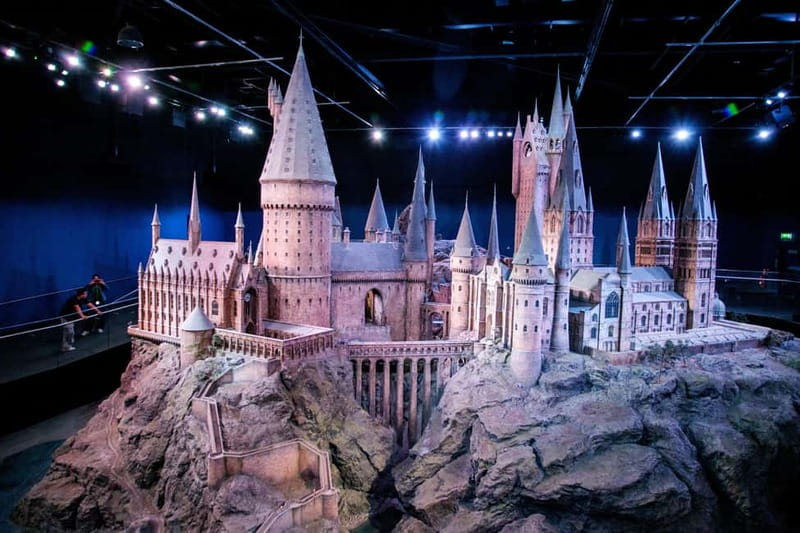 ★ 4.7Warner Bros. Studio Harry Potter Tour & Branded BusFrom $15119,194 reviews
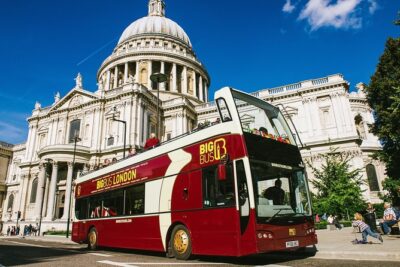 ★ 3.5London Big Bus Hop-On Hop-Off Tour with Optional River CruiseFrom $3910,803 reviews
 ★ 5.0London Small Group Tour of Historical PubsFrom $4010,422 reviews
 ★ 4.6Warner Bros. Studio Harry Potter Tour with TransfersFrom $1179,709 reviews
★ 4.7Warner Bros. Studio Harry Potter Tour with TransfersFrom $1169,485 reviews
 ★ 4.7The Original Jack the Ripper Walking TourFrom $257,833 reviews