
Reviewed · LONDON WALKING TOURS
Sweeney Todd The Demon Barber of Fleet St Night Walking Tour
Fleet Street gets spooky after dark. This Sweeney Todd night walking tour turns famous myths into a real walk you can picture. You’ll compare the character as fiction versus something that might have roots, while stopping at Temple-area sites tied to older stories, crime-era London, and the kind of London details you’d miss on your own.
I really like two parts: first, the guide’s tight focus on the specific places where the story is said to connect. Second, you get more than one layer of Sweeney Todd—there’s the penny-dreadful version, plus how later writers (like Stephen Sondheim’s musical) reshaped the tale. The only real drawback is physical and crowd-related: there are steep steps, the tour is unsuitable for under 16s, and at night it’s easy for a group to drift if you’re not paying attention.
In This Review
- Key points before you go
- Fleet Street’s Sweeney Todd tour: myth, music, and real street corners
- Price and what $0.00 really means for value
- Meeting at Temple Station: the big question you’ll carry all night
- 2 Temple Pl: the Astor connection and why it fits this kind of story
- Milford Lane and the Thames sewers: the city gets darker for a reason
- The String of Pearls at Milford Lane: where the penny-dreadful version begins
- Devereux Court and Stephen Sondheim’s 1979 shift
- Entering the Temple: hidden from view, full of old London layers
- Middle Temple Hall: a baronial hall with a modern audience
- Temple Church: graves behind and a 12th-century spine
- Temple Bar Memorial and stepping back into Fleet Street chaos
- Bell Yard: the Royal Courts of Justice side and Mrs Lovette’s pies
- St Dunstan-in-the-West: the tunnels idea and where it passes
- Daily Courant plaque at Crane Ct: the story gets journalistic
- Dr Johnson’s House in Gough Sq: the smart London counterweight
- Ye Olde Cheshire Cheese: post–Great Fire pub stop with famous drinkers
- St Bride’s Church finale: why it’s called the Wedding Cake Church
- Who this night walk suits best (and who might want a different option)
- Should you book this Sweeney Todd The Demon Barber night walking tour?
- FAQ
- How long is the Sweeney Todd night walking tour?
- Where does the tour start and end?
- Is a mobile ticket required?
- Is this tour suitable for children?
- Is the tour physically demanding?
- Are service animals allowed?
- Can I cancel for a full refund?
Key points before you go
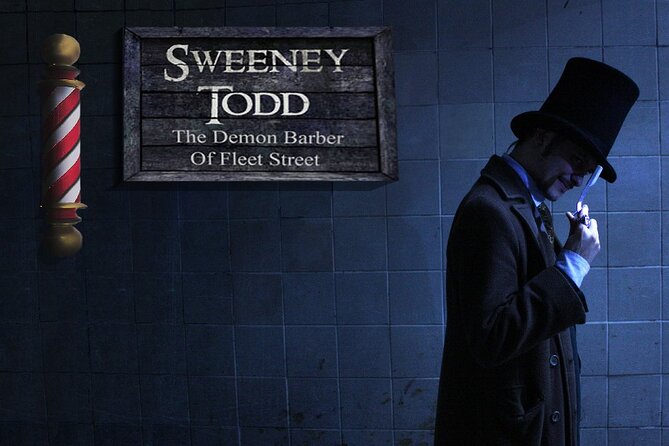
- Temple Station start: you begin with the core question—was Sweeney Todd real, or pure invention?
- Sweeney Todd vs The String of Pearls: you’ll trace the story through the original penny-dreadful magazine-style tale.
- Temple and Temple Church: the walk uses the Knights Templar sites to add a darker, older London layer.
- Pies, tunnels, and Mrs Lovette: the route connects Fleet Street locations to the idea of secret transportation.
- Ye Olde Cheshire Cheese on Fleet Street: a post–Great Fire pub stop with classic names tied to writers and poets.
- St Bride’s Church finale: the tour wraps by explaining why it’s nicknamed the Wedding Cake Church.
London on foot, a few more ways
- Magical London: Harry Potter Guided Walking Tour
★ 4.7 · 22,044 reviews - London: The Original Jack the Ripper Walking Tour
★ 4.7 · 7,833 reviews - Tour for Muggles The Ultimate Harry Potter Walking Tour in London
★ 5.0 · 4,684 reviews - London Jack The Ripper Guided Walking Tour
★ 5.0 · 3,131 reviews
Fleet Street’s Sweeney Todd tour: myth, music, and real street corners
This is the kind of night walk that works best when you treat it like a guided “set tour” of London. The Sweeney Todd legend is extreme, but the tour keeps you grounded by building the story around blocks, courts, gates, churchyards, and pub history. You’re not just hearing spooky chatter—you’re learning how the legend got passed along and how later versions changed it.
What I like about the setup is how it forces you to think. At the start, you’re asked to weigh the evidence for a real person versus a fictional character. Then the guide keeps shifting time periods, moving you from the barbershop myth to nearby criminal-and-public-life London references—so the legend feels like it grew inside a real city.
It also helps that you’re outdoors at night but not wandering endlessly. The tour runs about 2 hours and keeps stops tight enough that you’ll actually remember what you saw, instead of getting lost in the dark.
Price and what $0.00 really means for value
The tour is listed at $0.00. Even if you mentally adjust for the idea that some tours aren’t truly “free” in the real world, the value math here is still strong: you’re getting a guided route through a lot of famous central London real estate for a short, focused time.
In practical terms, free (or effectively free) means you should show up ready to engage. If a guide is spending effort on route details, historical connections, and explaining how different versions of the story compare, your job is to listen closely—especially at the moments when the group turns corners.
Also, the tour caps at 30 people, which matters. Smaller groups are easier to keep together at night, and they tend to make it more possible to hear the guide without straining.
Meeting at Temple Station: the big question you’ll carry all night
You start at Temple Station (London WC2R 2PH area, near the Victoria Embankment side). The first stop is also the tone-setter: the guide lays out the Sweeney Todd question immediately—was this a real figure or a fictional one?
That matters because it changes how you interpret everything after. Instead of treating each stop as a “gotcha spooky location,” you’re actively comparing ideas: what people claimed, what stories copied, and how later writers might have built a character by combining rumors, themes, and city geography.
Still deciding? A handful more London outings we rated
2 Temple Pl: the Astor connection and why it fits this kind of story
Next you stop outside 2 Temple Pl, where you’ll see a notable house now used as a museum/exhibition/event hire space. You’ll hear how it was built by American William Waldorf Astor and why he settled in England after a family row. You also get a sense of how money from John Jacob Astor helped fuel that shift.
Why this stop works on this tour: it reminds you that London streets are crowded with stories of power and reinvention. Even when the guide is talking about Sweeney Todd, you’re constantly getting a parallel track—how real people with money and influence shaped the city and its spaces.
Milford Lane and the Thames sewers: the city gets darker for a reason
At Milford Lane, you shift to the River Thames and to public works. The tour connects the 1850s to the digging of sewers, tied to Joseph Bazelgette (Chief Engineer). The point isn’t just “history facts.” It’s that London’s worst outbreaks and its sanitation fixes are part of the same 19th-century atmosphere that fed crime stories and gruesome public imagination.
If you’ve ever wondered why Victorian London fiction feels so grim, this is the kind of detail that explains it. The city physically changed, and those changes show up in what people wrote—and feared.
The String of Pearls at Milford Lane: where the penny-dreadful version begins
After climbing steep steps around Milford Lane, you get the story segment tied to The String of Pearls, described here as the original penny-dreadful magazine-style series about Sweeney Todd and his barbershop. This is where you start getting the “how the legend moved through print” angle.
This stop is important for readers who don’t want horror-by-horror. You’ll learn how the early serialized storytelling style shaped the character—why the story is built around repeated shocks and cliff-hanger momentum, and why later adaptations could easily rewrite the details while keeping the core idea.
Devereux Court and Stephen Sondheim’s 1979 shift
At Devereux Court, the walk turns to another version: the 1979 musical created by Stephen Sondheim. The tour notes how he altered the story, including changing Sweeney Todd’s real name to Benjamine Barker.
I like this part because it’s a reality check. You’ll see how creative works borrow from earlier material, then reshape it for a new audience. If you know Sondheim’s version, this segment helps you understand that what you love on stage didn’t come from nowhere—it connects to earlier story patterns and character branding.
Entering the Temple: hidden from view, full of old London layers
You then enter the Temple, an enclosed area created by the Knights Templar in the 12th century after the Crusades. This is one of those London places where the city noise fades behind stone walls, and you quickly understand why legends like this stick around.
The Temple is valuable on a tour like this because it creates mood with geography. The Sweeney Todd story is about betrayal, secrecy, and hidden routes—and the Temple area is literally built like a walled-in secret.
Middle Temple Hall: a baronial hall with a modern audience
Next you walk to Middle Temple Hall, a 16th-century baronial hall used today for dining and celebrations. The tour also highlights how the area is one of the places heavily filmed and photographed in London.
This is where the tour taps into something practical: you learn how “story space” becomes “camera space.” Even if you’re not filming, it helps you see why some landmarks become go-to settings for crime and period drama. They’re photogenic for a reason.
You’ll also appreciate the way the guide connects past and present without turning it into a lecture. The hall is old, but it’s not dead. You’re still seeing it used.
Temple Church: graves behind and a 12th-century spine
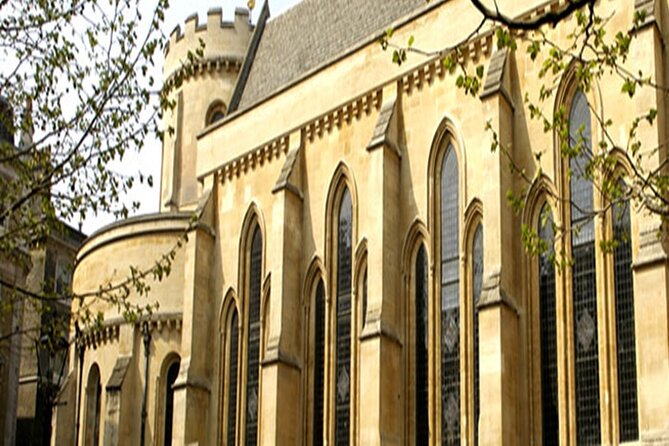
At Temple Church, you’ll see the Master of the Temple’s house and then reach a church still standing from the 12th century. Behind it, you’ll see graves from Knights Templar from that period.
This stop makes the earlier Temple material feel less like atmosphere and more like timeline. The tour turns the legend into a long London thread: the city’s dark corners aren’t only about one fictional barber—they’re layered over centuries of conflict, secrecy, and ritual.
Temple Bar Memorial and stepping back into Fleet Street chaos
You come out into the noisy world at Temple Bar Memorial, where you stop by the monument to Temple Bar. The guide asks why it has that name, which is a nice reminder that even street boundaries and “gateway” points have their own story gravity.
This is a good transition stop: you’ve been inside courts and enclosed areas, and now you get back to the core stage—Fleet Street—where the legend lives in imagination.
Bell Yard: the Royal Courts of Justice side and Mrs Lovette’s pies
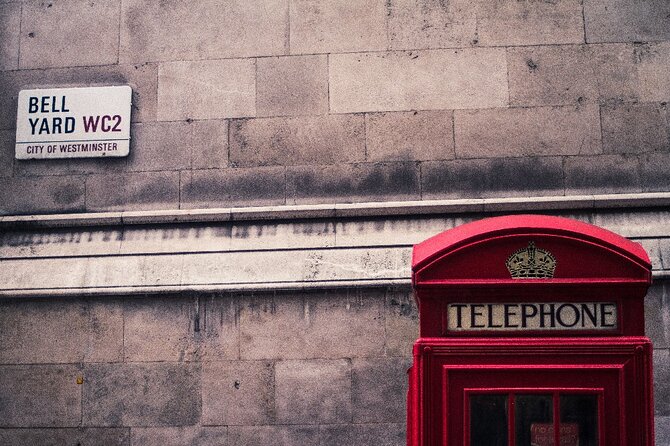
Cross to Bell Yard and you’ll pass the huge building of the Royal Courts of Justice, described as the Law Courts today. This stop ties to Mrs Lovette’s pie shop, and the tour even mentions her juicy meat pie recipe story.
Even if you don’t care about pies, this stop is a key part of the Sweeney Todd logic. The legend isn’t only about murder; it’s about what happens afterward. The food angle is exactly why the story sticks in people’s heads: it’s ordinary, it’s sellable, and it’s horrifying when you connect it to the rest of the tale.
St Dunstan-in-the-West: the tunnels idea and where it passes
Next you walk down Fleet Street to St Dunstan-in-the-West, described as a stones throw from where Sweeney Todd’s barbershop stood. Here the tour explains how he murdered victims and took remains to Mrs Lovette’s basement bakery via tunnels that pass this area.
This is one of the most “don’t miss it” stops because it turns the walk into a route map. You start picturing movement—who goes where, how secrecy works, and how a city’s underground or semi-hidden connections can fuel stories.
Daily Courant plaque at Crane Ct: the story gets journalistic
You stop at Fleet Street near Crane Ct, by a plaque related to the first daily newspaper, the Daily Courant. In the tour logic, this adds another layer: legends spread faster when there’s media.
If you want the reason crime stories feel more real in a certain era, it’s partly because newspapers made shock repeatable. This stop gives you a street-level reminder of that.
Dr Johnson’s House in Gough Sq: the smart London counterweight
You then turn into Johnson’s Ct and head to Dr Johnson’s House in Gough Sq. You’ll hear about Samuel Johnson as the compiler of a famous dictionary and a major wit in the 18th century, with a quote used as a kind of London mantra:
When a man is tired of London he is tired of life, for there is in London all that life can afford.
I like this pivot because it balances the tour. You get horror and sewage and tunnels, then you get one of London’s biggest wordsmith figures—like the city itself saying: yes, we can be dark, but we’re also smart.
Ye Olde Cheshire Cheese: post–Great Fire pub stop with famous drinkers
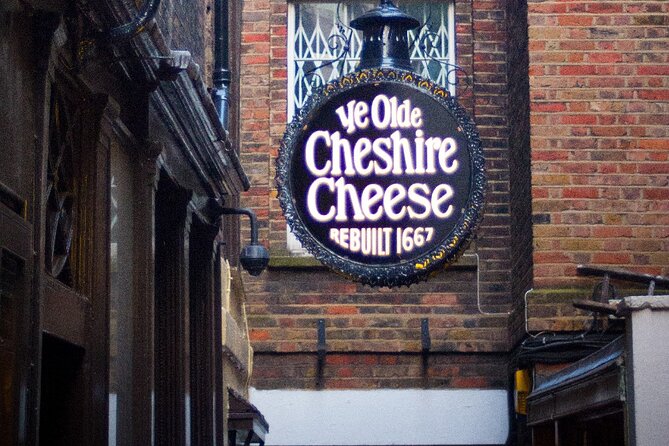
The tour continues past Ye Olde Cheshire Cheese, a pub built just after the Great Fire of London, in the reign of King Charles II. The tour notes that board outside lists monarchs from then until now.
You’ll also hear that famous writers and poets drank here, with names including Charles Dickens, Mark Twain, and Yeats.
This stop is valuable because it turns the legend into a night-out feel without breaking the mood. It’s a perfect place to pause, look up at the building, and remind yourself that Fleet Street wasn’t only about crime—it was about publishing, gossip, and the kind of social life that made stories travel.
St Bride’s Church finale: why it’s called the Wedding Cake Church
For the final stop, you cross Fleet Street and reach St Bride’s Church. The tour explains why it has the nickname The Wedding Cake Church and then wraps up the overall question: what you learned about Sweeney Todd, and whether he seems more like a real character or a fictional one.
St Bride’s is also a practical end point. The tour finishes near Blackfriars station (Circle/District lines) or near St Paul’s (Central line), with walking time around 5–8 minutes depending on which station you head for.
Who this night walk suits best (and who might want a different option)
This tour is made for adults and older teens—again, it’s listed as unsuitable for under 16s. It’s also best if you can handle a bit of walking and a very steep flight of stairs during the route.
If you like any of these, you’ll probably enjoy it:
- London stories that mix place-based history with literature
- Theaters and musicals, especially if you’re curious how Sweeney Todd got reshaped
- People who like spooky night walks but still want real context, not just jump-scare vibes
If you want a totally flat stroll with minimal exertion, this may not be your best fit due to those steep steps. Also, night walking means you should stay alert and keep close to the group at turns.
Should you book this Sweeney Todd The Demon Barber night walking tour?
I’d book it if you want a guided night route where you don’t just hear the legend—you see how the story connects to real Fleet Street and Temple-area geography. The biggest reasons to go are the way the guide links different versions of Sweeney Todd (including the penny-dreadful material and Sondheim’s musical changes) and the strong “story map” feel of the stops.
I’d skip it if:
- you’re not comfortable with steep stairs
- you’re hoping for something kid-friendly
- you want a purely historical tour with no myth debate
If you do go, treat it like a guided walk-through of a London crime story set. Bring curiosity, stay with the group, and you’ll come away with a clearer sense of why Sweeney Todd endures.
FAQ
How long is the Sweeney Todd night walking tour?
It runs for about 2 hours.
Where does the tour start and end?
The tour starts at Temple Station (Underground Ltd, London WC2R 2PH) and ends at St Bride’s Church, Fleet Street (London EC4Y 8AU).
Is a mobile ticket required?
Yes, the tour uses a mobile ticket.
Is this tour suitable for children?
No. It is listed as unsuitable for under 16s.
Is the tour physically demanding?
It requires moderate physical fitness because there is a very steep flight of stairs to climb.
Are service animals allowed?
Yes, service animals are allowed.
Can I cancel for a full refund?
You can cancel for free up to 24 hours in advance for a full refund. If you cancel less than 24 hours before the start time, you won’t receive a refund.
More Tours in London
- From London: Harry Potter Warner Bros Studio Tour
★ 4.7 · 26,588 reviews - Magical London: Harry Potter Guided Walking Tour
★ 4.7 · 22,044 reviews - London: Warner Bros. Studio Harry Potter Tour & Branded Bus
★ 4.7 · 19,194 reviews - London Big Bus Hop-On Hop-Off Tour with Optional River Cruise
★ 3.5 · 10,803 reviews - London Small Group Tour of Historical Pubs
★ 5.0 · 10,422 reviews
More Tour Reviews in London
- From London: Harry Potter Warner Bros Studio Tour
★ 4.7 · 26,588 reviews - London: Westminster to Greenwich River Thames Cruise
★ 4.5 · 22,836 reviews - Magical London: Harry Potter Guided Walking Tour
★ 4.7 · 22,044 reviews - London: Madame Tussauds London
★ 4.6 · 20,915 reviews - London: Warner Bros. Studio Harry Potter Tour & Branded Bus
★ 4.7 · 19,194 reviews
More London Walks Worth the Shoe Leather
- Magical London: Harry Potter Guided Walking Tour
★ 4.7 · 22,044 reviews - London: The Original Jack the Ripper Walking Tour
★ 4.7 · 7,833 reviews - Tour for Muggles The Ultimate Harry Potter Walking Tour in London
★ 5.0 · 4,684 reviews - London Jack The Ripper Guided Walking Tour
★ 5.0 · 3,131 reviews - London: Harry Potter Movies Walking Tour (Kids Go Free)
★ 4.7 · 3,071 reviews
Just reviewed around London





London Walking Tours, compared.
 ★ 4.7Magical London: Harry Potter Guided Walking TourFrom $2022,044 reviews
 ★ 4.7The Original Jack the Ripper Walking TourFrom $257,833 reviews
 ★ 5.0Tour for Muggles The Ultimate Harry Potter Walking Tour in LondonFrom $234,684 reviews
 ★ 5.0London Jack The Ripper Guided Walking TourFrom $03,131 reviews
 ★ 4.7Harry Potter Movies Walking Tour (Kids Go Free)From $203,071 reviews
 ★ 5.0Changing of the Guard Guided Walking Tour in LondonFrom $251,793 reviews
 ★ 4.9The Great British Rock and Roll Music Walking TourFrom $361,783 reviews
 ★ 4.8Harry Potter Walking Tour in GermanFrom $201,505 reviews
Browse the lists this tour appears in