

Reviewed · LONDON WALKING TOURS
Slavery and City of London Walking Tour
London’s landmarks hide hard truths. This 90-minute walk ties famous stops like St. Paul’s Cathedral to the systems that fueled Britain’s slave economy, and I love Sam’s storytelling on the street and the way the route reveals Roman and later layers of the City. The drawback: it’s not a light stroll, and you should be ready for frank conversations about trafficking and enslavement.
I found the pace practical for a lunchtime outing. You’re in a group of up to 35 people, with a mobile ticket, and several stops are set up so you don’t have to hunt for paid entry. One small planning note: it does require good weather, so bring sensible shoes and be ready to keep moving.
What makes this walk feel different is that it blends big landmark London (St Paul’s, the Bank area) with less-obvious places tied to empire, commerce, and abolition. You’ll also hear about the Bank of England’s public handling of its own historic links, including a stated plan to remove certain statues and paintings from public display.
In This Review
- Key highlights I’d prioritize
- Why this City of London walk feels more real than a typical sightseeing route
- Timing, meeting point, and how long 90 minutes really means
- Starting at Tower Hill: the Ordnance Office and Granville Sharp’s anti-slavery work
- Roman Londinium: the wall that still shapes London’s borders
- East India House site: how the East India Company fits the slavery story
- Fenchurch Street and Fen Gardens: the Gilt of Cain sculpture
- Jamaica Wine House: the Jamaica Coffee House and the sugar-and-slavery link
- St Mary Woolnoth Church: John Newton as rector and abolitionist
- Bank of England Museum and Threadneedle Street: apology, statues, and the Royal Africa Company
- Finishing near St Paul’s: turning the City’s icons into evidence
- Price and value: why $27.43 can make sense here
- Who should book this tour (and who might want a different vibe)
- Should you book Sam’s Walks Slavery and City of London?
- FAQ
- FAQ
- How long is the Slavery and City of London Walking Tour?
- What time does the tour start?
- Where does the tour start and end?
- How large is the group?
- Is the ticket mobile?
- Are there any paid admissions included at the stops?
- Who is the guide?
- Does the tour depend on weather?
- Is it suitable for most people?
Key highlights I’d prioritize
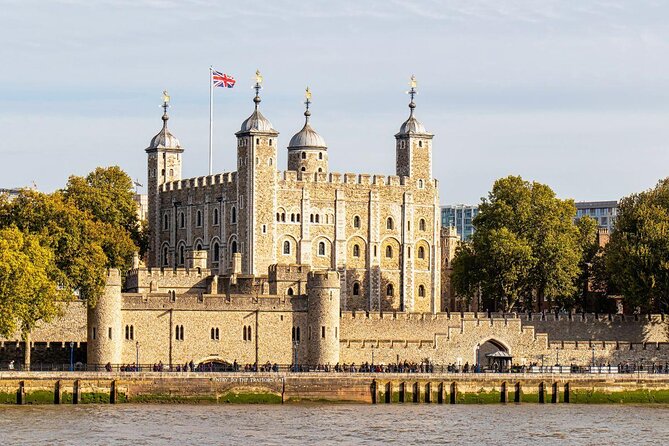
- Granville Sharp’s workplace at the Tower Hill Ordnance Office and the anti-slavery story behind it
- Roman wall remnants of Londinium, showing how London’s borders were shaped long before the modern empire
- The East India Company’s East India House site, tied here to slave labor and trafficking routes
- Fen Gardens and the Gilt of Cain sculpture, commemorating the abolition of the transatlantic slave trade
- St Mary Woolnoth Church and John Newton, placing abolition in a real church setting
- Bank of England Museum stops, including the Bank’s stated apology and removal plans for certain displays
London on foot, a few more ways
- Magical London: Harry Potter Guided Walking Tour
★ 4.7 · 22,044 reviews - London: The Original Jack the Ripper Walking Tour
★ 4.7 · 7,833 reviews - Tour for Muggles The Ultimate Harry Potter Walking Tour in London
★ 5.0 · 4,684 reviews - London Jack The Ripper Guided Walking Tour
★ 5.0 · 3,131 reviews
Why this City of London walk feels more real than a typical sightseeing route
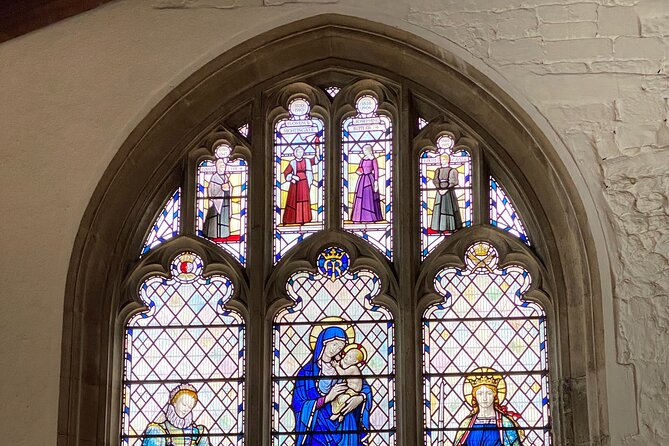
London is good at giving you postcard angles. This walk is good at giving you context. You still see major landmarks, but the guide keeps pulling on the thread that connects commerce, power, and human suffering. The point isn’t shock for shock’s sake. It’s clarity—so the City’s buildings stop feeling like scenery and start feeling like evidence.
I like that it treats London as a working city, not a museum with one neat storyline. You’ll be looking at the same streets you might walk on your own, but with the explanations timed to what you can physically see: boundaries, institutions, and the places where decisions were made.
And yes, it’s heavy. Expect the subject of slavery to be direct, and expect the conversation to include trafficking and enslaved labor tied to British wealth. If you want a breezy history walk with jokes every five minutes, this isn’t that. If you want your “London landmarks” to mean something, you’ll get a lot out of it.
Timing, meeting point, and how long 90 minutes really means
The tour starts at 12:00 pm, with the published start location at Tower Hill Tram, Trinity Square (EC3N 4TH). It ends at Aldgate Station (Aldgate High St, EC3N 1AH), and the route itself also brings you past the St Paul’s Cathedral area. In plain terms: you’re staying in the City and ending on the east side of central London.
The duration is listed at about 1 hour 30 minutes. Based on how the route is paced, it should feel brisk rather than exhausting. You’ll have short stops—some at outdoor points, some near places you can step into or view closely—and then you’ll move again. The group size caps at 35 people, so you’re not in a herd.
The best practical tip I can give you: dress for walking and for standing around while someone points, explains, and ties sites together. Even when a stop is short, the value comes from paying attention while you’re there, not from speed-scanning later.
Starting at Tower Hill: the Ordnance Office and Granville Sharp’s anti-slavery work

You kick things off around Tower Hill, with a stop connected to the Ordnance Office where Granville Sharp was employed. Sharp was one of the prominent anti-slavery figures of 18th-century Britain, and the guide uses his presence as a human entry point.
This matters, because it prevents the story from becoming only about institutions and profit. You get a person—someone working inside a British system—pushing back against it. It’s a useful mental shift: you’re not only looking at the machinery of exploitation. You’re also seeing the friction that helped drive change.
Expect the explanation to connect Sharp’s work with the wider culture of abolition. The tour doesn’t treat abolition as a vague idea that just happened. It shows it as real activism inside real buildings and systems.
Still deciding? A handful more London outings we rated
Roman Londinium: the wall that still shapes London’s borders
One of the most striking stops is the Roman wall of Londinium, tied to the founding of London about 2,000 years ago. You’re not looking at a full museum artifact behind glass. You’re learning to notice the physical edge of a city—because the wall helped define Londinium’s boundary.
The guide also includes a reminder that Roman power came with exploitation. It’s described here as the Romans taking Britons as slaves, with Roman authorities even complaining about the “lazy” nature of those they controlled. It’s not presented as a neat one-to-one comparison to later slavery. It’s presented as a theme: empires repeat patterns, even when the timelines change.
If you like history that you can see under your feet, this part is gold. You start the walk learning how the City’s edges formed, and that makes later stops—where laws, companies, and civic power gather—feel less abstract.
East India House site: how the East India Company fits the slavery story

Next, you’ll be at the site where East India House once stood. That was the headquarters of the East India Company, and the tour makes the connection between the company’s operations and slave labor and trafficking from East and West Africa.
This stop is valuable because it broadens the usual map of “British slavery.” If your mental picture is only the transatlantic journey, this tour adds another layer: the way trade networks and European companies created demand that fed into forced labor systems.
A practical note: this is where the guide’s storytelling style matters. You’ll be standing in a modern street environment, so the explanations need to anchor you in what the building represented and why it mattered. If you pay attention here, you’ll start recognizing how London became a hub where information, money, and policy could flow.
Fenchurch Street and Fen Gardens: the Gilt of Cain sculpture
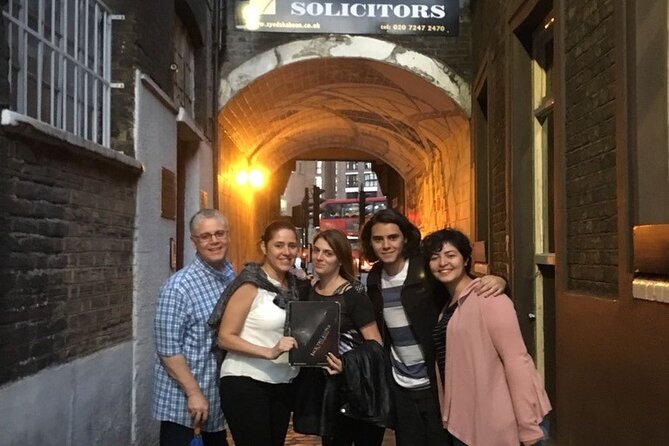
At Fenchurch Street, you’ll reach Fen Gardens and see the Gilt of Cain sculpture. The key detail is what it commemorates: the abolition of the transatlantic slave trade.
I like this stop because it’s not just explanation-by-facts. It gives you a visual marker in the modern City—something you can go back to later on your own and remember. The story of abolition can feel distant unless you connect it to something you can find on a walk.
This is also a good moment to pause and let the themes settle. You’ve been moving through institutions tied to exploitation; the sculpture brings you back to the moment when the trade was ended.
Jamaica Wine House: the Jamaica Coffee House and the sugar-and-slavery link
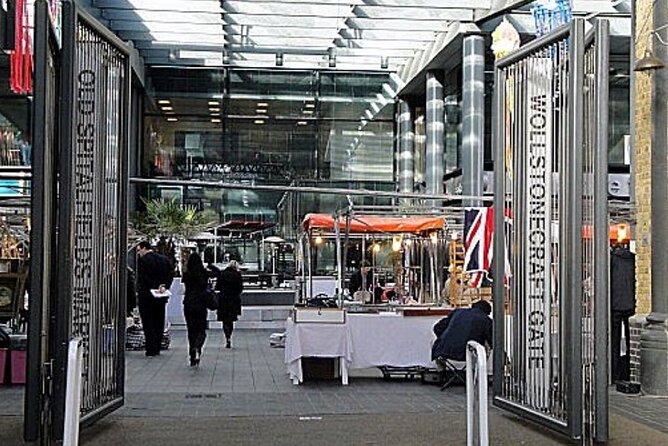
You’ll then come to the Jamaica Wine House, described as the site of London’s first coffee house, the Jamaica Coffee House. Here’s the part that makes it more than a quirky fact: it’s framed as a hub in the sugar trade and the slave plantations of the West Indies.
This works because coffee-house culture is often remembered as debate and ideas. This stop doesn’t erase that. It adds the uncomfortable companion truth: the same city spaces that hosted conversations were also tied into profit systems powered by forced labor.
If you’re the kind of person who loves walking tours that include oddball details, this is one of them. But it’s not trivia for trivia’s sake. It’s a reminder that everyday urban culture can sit right beside brutal business models.
St Mary Woolnoth Church: John Newton as rector and abolitionist
The walk continues to St Mary Woolnoth Church, and the highlight here is that John Newton—an abolitionist—was rector.
Church settings can sometimes make history feel distant or overly moralized. This stop keeps it grounded. You’re connecting a named person to a specific institution, which makes it easier to understand how abolition ideas circulated through society, not just through pamphlets or distant conferences.
It also balances the walk emotionally. You’ve seen trade hubs and civic-administration spaces. Now you’re in a religious building where an abolitionist had a formal role. That contrast helps you avoid reducing the whole story to finance alone.
Bank of England Museum and Threadneedle Street: apology, statues, and the Royal Africa Company
One of the most important stops comes at the Bank of England Museum, located around Threadneedle Street. The guide points out that the Bank of England has apologised for involvement by some former directors and governors in the slave trade, and it has promised to remove statues and paintings of them from public display in its building.
That’s a big deal, and it’s not just a modern headline to toss in. It signals that institutions are being asked to handle their past in a visible way. You’re not only learning what happened. You’re also seeing how the City and its major power centers choose to face it now.
The tour also links this area directly to the Royal Africa Company, describing how sheriffs, mayors, and aldermen met here as shareholders. That detail can feel jarring, because you’re standing near the symbol of financial modernity while learning about older forms of profit built on forced labor.
This is a stop where it helps to slow down. Listen for the connections the guide makes between civic governance and trade companies. It’s easier to understand why abolition was so necessary when you can see how deeply embedded the profit system was in leadership roles.
Finishing near St Paul’s: turning the City’s icons into evidence
The walk ends near St Paul’s Cathedral, with the route tied to St Paul’s Underground Station on the Central line. The published end point is also listed as Aldgate Station. Either way, your finish puts you in a part of London with great transit for continuing your day.
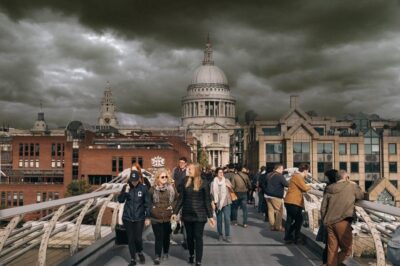
What I like about ending near St Paul’s is how the building changes in your mind. You’re no longer just seeing a landmark silhouette. You’re seeing it in relation to the institutions and trade networks you just walked past. That’s the real payoff of the whole route: London’s most famous spaces start acting like notes in a larger story.
Give yourself a plan for after the tour. If you want to explore further, this is one of the best areas to do it because you’re close to lots of transport and more classic sightlines. If you want quiet, grab a coffee nearby and give your brain time to process the themes. This kind of history doesn’t stick best when you rush the next hour.
Price and value: why $27.43 can make sense here
At $27.43 per person, this isn’t a budget freebie, but it also doesn’t pretend to be a luxury experience. The value comes from three practical pieces:
- You’re paying for guided interpretation—the kind that helps you notice Roman boundaries, identify what sites used to be, and connect abolition efforts to the institutions that resisted them.
- Many stops are marked as admission ticket free, which reduces friction. You spend less time on tickets and more time learning on the street.
- The group cap of 35 people keeps things more conversational. If you’ve done big-city tours with 50+ people, you’ll feel the difference in how the guide can manage the group.
Also, the experience being booked about 24 days in advance suggests it’s a stable tour, not something constantly changing schedules at the last minute. That predictability can matter when you’re planning a single afternoon.
Who should book this tour (and who might want a different vibe)
This is a good fit if you:
- Want your London sightseeing to connect to the city’s actual economic story.
- Like walking routes that include named people—like Granville Sharp and John Newton—in real locations.
- Appreciate a guide who can explain both Roman-era and later institutional layers without making it feel like random facts thrown at you.
It might not be for you if you:
- Want only light history or only famous landmarks, with minimal focus on slavery and trafficking.
- Prefer a tour that avoids emotional or moral topics. This route doesn’t sugarcoat the subject.
Should you book Sam’s Walks Slavery and City of London?
If your goal is to understand why London looks the way it does—and how power worked—you’ll likely be glad you booked. The tour’s strength is the mix of big institutions (the Bank area, St Paul’s), measurable city edges (Roman walls), and named abolition figures (Granville Sharp, John Newton). You get fewer generic photos and more meaning.
My decision rule is simple: if you’re comfortable learning about slavery in a direct, place-based way, this is a smart use of a 12:00 pm window in the City. If you’re looking for a guilt-free scenic walk, pick something lighter and save this for another trip when you want depth.
FAQ
FAQ
How long is the Slavery and City of London Walking Tour?
It runs for about 1 hour 30 minutes.
What time does the tour start?
The start time is listed as 12:00 pm.
Where does the tour start and end?
It starts at Tower Hill Tram, Trinity Square (EC3N 4TH). It ends at Aldgate Station, Aldgate High St (EC3N 1AH).
How large is the group?
The tour has a maximum of 35 people.
Is the ticket mobile?
Yes, the tour uses a mobile ticket.
Are there any paid admissions included at the stops?
The listed stops in the route note admission is ticket free.
Who is the guide?
The experience provider is Sam’s Walks, and the guide is described as Sam.
Does the tour depend on weather?
Yes. It requires good weather, and if it’s canceled due to poor weather, you’ll be offered a different date or a full refund.
Is it suitable for most people?
The information provided says most travelers can participate.
More Tours in London
- From London: Harry Potter Warner Bros Studio Tour
★ 4.7 · 26,588 reviews - Magical London: Harry Potter Guided Walking Tour
★ 4.7 · 22,044 reviews - London: Warner Bros. Studio Harry Potter Tour & Branded Bus
★ 4.7 · 19,194 reviews - London Big Bus Hop-On Hop-Off Tour with Optional River Cruise
★ 3.5 · 10,803 reviews - London Small Group Tour of Historical Pubs
★ 5.0 · 10,422 reviews
More Tour Reviews in London
- From London: Harry Potter Warner Bros Studio Tour
★ 4.7 · 26,588 reviews - London: Westminster to Greenwich River Thames Cruise
★ 4.5 · 22,836 reviews - Magical London: Harry Potter Guided Walking Tour
★ 4.7 · 22,044 reviews - London: Madame Tussauds London
★ 4.6 · 20,915 reviews - London: Warner Bros. Studio Harry Potter Tour & Branded Bus
★ 4.7 · 19,194 reviews
More London Walks Worth the Shoe Leather
- Magical London: Harry Potter Guided Walking Tour
★ 4.7 · 22,044 reviews - London: The Original Jack the Ripper Walking Tour
★ 4.7 · 7,833 reviews - Tour for Muggles The Ultimate Harry Potter Walking Tour in London
★ 5.0 · 4,684 reviews - London Jack The Ripper Guided Walking Tour
★ 5.0 · 3,131 reviews - London: Harry Potter Movies Walking Tour (Kids Go Free)
★ 4.7 · 3,071 reviews
Just reviewed around London





London Walking Tours, compared.
 ★ 4.7Magical London: Harry Potter Guided Walking TourFrom $2022,044 reviews
 ★ 4.7The Original Jack the Ripper Walking TourFrom $257,833 reviews
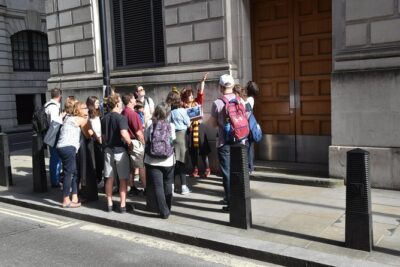 ★ 5.0Tour for Muggles The Ultimate Harry Potter Walking Tour in LondonFrom $234,684 reviews
 ★ 5.0London Jack The Ripper Guided Walking TourFrom $03,131 reviews
 ★ 4.7Harry Potter Movies Walking Tour (Kids Go Free)From $203,071 reviews
 ★ 5.0Changing of the Guard Guided Walking Tour in LondonFrom $251,793 reviews
 ★ 4.9The Great British Rock and Roll Music Walking TourFrom $361,783 reviews
 ★ 4.8Harry Potter Walking Tour in GermanFrom $201,505 reviews