
Reviewed · LONDON WALKING TOURS
Sir Winston Churchill Private Walking Tour & War Rooms
Churchill’s London, on foot and underground. This private walk strings together West End streets, Mayfair tailoring, and the wartime power sites that shaped WWII, finishing with included entry to the Churchill War Rooms. I love the private, customizable guide who can slow down for questions and speed up when your group is keen, and I love that you’re not just looking at history from a distance—you also get inside the bunker.
One possible drawback: the day runs on a set rhythm, with the War Rooms entry generally slotted for about 12:45–1:45 depending on your pickup location and walking pace. Also, the War Rooms audio/video setup can feel a bit clunky for some people once you settle in.
In This Review
- Key highlights that make this tour worth your time
- Private Churchill Walking Tour With War Rooms Tickets Included
- West End Warm-Up: Piccadilly, Eros, Regent Street, and Savile Row
- Tailoring, Royals, and Mayfair Stop-Ins: Burlington Arcade to Turnbull & Asser
- Churchill’s Early Years and Gentleman’s Club England Near St James
- WWII Command in Central London: From Statues to the Mall
- Whitehall and War Office Area: Horse Guards, Parliament Square, and the Cenotaph
- Churchill War Rooms Underground: The One-Hour WWII Finale
- Price, Value, and Who This Tour Fits Best
- Should You Book This Churchill Private Tour?
- FAQ
- How long is the Sir Winston Churchill Private Walking Tour & War Rooms?
- What’s the tour’s starting point in London?
- Where does the tour end?
- Is hotel pickup included?
- Is entry to the Churchill War Rooms included?
- When do you enter the Churchill War Rooms?
- Is the tour private?
- What language is the tour offered in?
- Is transportation by London Underground included?
- What’s the dress code?
- What’s the cancellation timeframe?
Key highlights that make this tour worth your time
- Private guide, private pace: You can tailor the focus, from Churchill’s life to London’s WWII landmarks.
- War Rooms entry included: You get paid admission to the underground command center.
- West End to Whitehall, mostly on foot: You cover ground that’s hard to string together on your own without a plan.
- Stops in Mayfair’s tailoring world: Savile Row and classic shops are part of the story, not just scenery.
- You hit both symbols and specifics: memorials, statues, and real locations tied to WWII are explained in plain language.
London on foot, a few more ways
- Magical London: Harry Potter Guided Walking Tour
★ 4.7 · 22,044 reviews - London: The Original Jack the Ripper Walking Tour
★ 4.7 · 7,833 reviews - Tour for Muggles The Ultimate Harry Potter Walking Tour in London
★ 5.0 · 4,684 reviews - London Jack The Ripper Guided Walking Tour
★ 5.0 · 3,131 reviews
Private Churchill Walking Tour With War Rooms Tickets Included
This is the kind of tour that works because it gives you two different lenses in one half day. Above ground, you move through London’s showy streets and gentler corners, then you go underground to see how Churchill’s government kept functioning while the city was under threat.
The private format matters. When your guide is not herding a crowd, you can ask follow-ups and get answers that actually fit your questions. Reviews repeatedly name guides like Kevin, Martin, Marty, and Stephen for exactly this style: clear storytelling, room for questions, and a sense that the guide is excited to show you the details you’d miss standing alone on the pavement.
The other big value point is the War Rooms admission included. The War Rooms are not a quick photo stop. The tour schedules you for entry and then you spend real time inside using the provided audio/video guide system. In other words, the cost isn’t just paying for walking—it’s paying for access and interpretation.
West End Warm-Up: Piccadilly, Eros, Regent Street, and Savile Row
You start in the West End area at the Criterion Theatre on Piccadilly (218–223 Piccadilly). From there, the walk begins with the big, recognizable landmarks that help you “get oriented” fast.
Piccadilly Circus is where most people come to see the lights and crowds. On this tour, it becomes a war-era talking point—how this central hub fit into Londoners’ everyday life, and how Churchill’s era touched even the busiest streets.
Next is the Statue of Eros (Anteros) in the center of Piccadilly. This quick stop sounds short on paper, but it’s useful because your guide can connect the statue to London’s habits of celebration and strain—what people rally around during tough national moments.
Then you head along Regent Street, famously treated like a “mile of style.” This stop isn’t just fashion spotting. It’s your bridge toward Mayfair, and toward the idea that Churchill’s London still had trade, tailoring, and ceremony running underneath the war story.
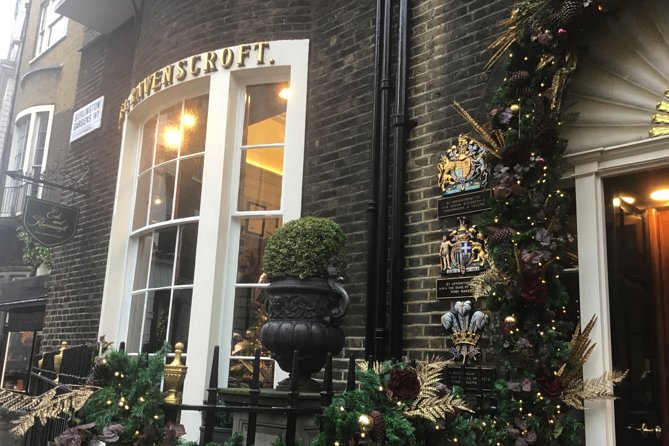
When you reach Savile Row, the vibe shifts. This is where you see the street credited with some of the finest tailoring in the world, and where your guide can place names and people in context, including the royal connection described in the tour. Even if you’re not a fashion person, it’s a fun way to break up “heavy history” with a human, everyday London detail.
A couple of the Savile Row storefront stops are short but meaningful:
- Henry Poole & Co: a historic tailoring stop with a typically Churchill-linked story.
- Turnbull & Asser: you’ll look for the legacy of a surviving Siren suit linked to Churchill’s WW2 wardrobe. The shop notes it can be closed Sundays and some public holidays, so you may mainly observe from outside on those days.
Tailoring, Royals, and Mayfair Stop-Ins: Burlington Arcade to Turnbull & Asser
Mayfair is built for slow wandering, and this tour uses that energy well. It doesn’t try to cram everything into one long sprint; it gives you a sequence of stops that feel like a guided stroll through a real neighborhood.
Churchill and Roosevelt Allies Sculpture is one of the included-photo moments. It’s a quick stop, but it’s timed so you get the visual reference before the talk moves on.
Then you pass into Burlington Arcade, where the tour includes your entry. This place is perfect for a short pause because it’s compact, polished, and easy to appreciate even if you only spend a few minutes there. The guide frames it as part of the “finest of everything” mindset tied to Churchill.
A few minutes later, you’re back at another classic tailoring stop: Turnbull & Asser. The tour calls out a specific Churchill-related detail (that surviving Siren suit), which is exactly the sort of “only-once-you-know-it” fact that makes these store-side stops feel more than decorative.
After that, the walk begins to move you toward the next layer of Churchill’s connection to London, including places linked to his early life and the circles he moved in.
Still deciding? A handful more London outings we rated
Churchill’s Early Years and Gentleman’s Club England Near St James
Once you leave the tailoring cluster, the tour shifts from “London as a setting” to “London as a personal map.”
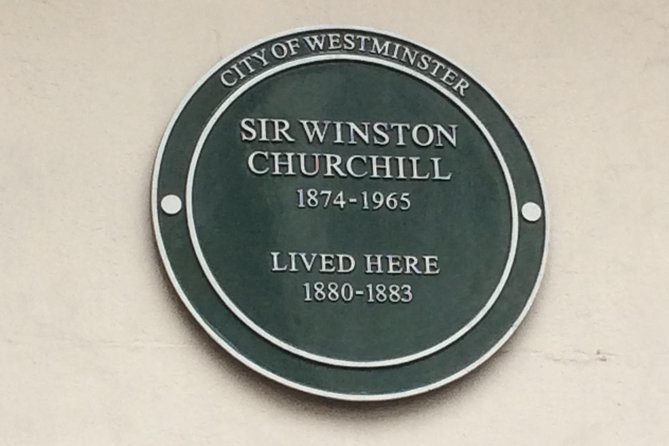
You visit Spencer House, described as Churchill’s childhood home, and you learn why his family lived there. Even though there’s no entry included at this stop, the exterior context helps your guide connect Churchill’s later leadership to the earlier shape of his world.
From there, Lock & Co. Hatters is the kind of shop stop that works because it’s oddly specific. It’s one of the oldest hatters in London, and the tour ties the shop to Churchill and also to pop-culture trivia about Oddjob from James Bond, plus the wider reach of the brand.
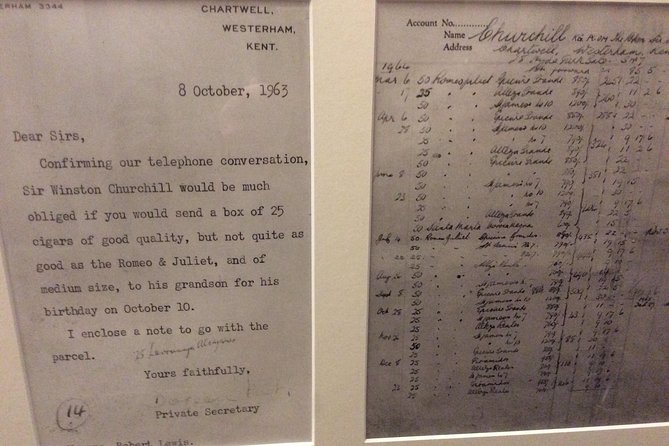
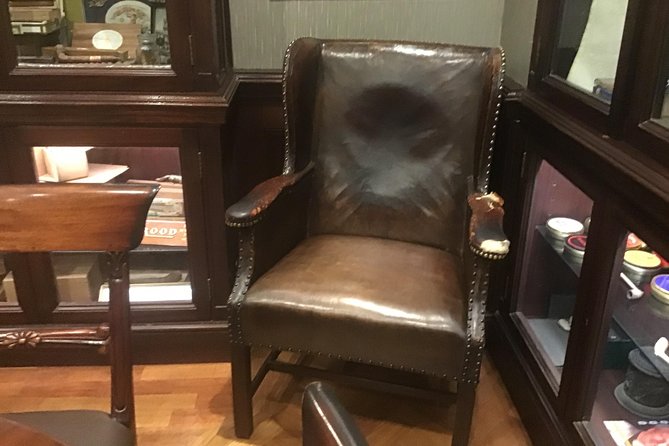
Next is James J. Fox & Robert Lewis, another included time stop. This one is about cigars and atmosphere, and the tour notes that if the room is open you can sit in Churchill’s smoking chair or find Churchill/cigar-related memorabilia. It also flags closures on Sundays and some public holidays, so plan your expectations accordingly if your dates land on a closure day.
Then you move past St. James’s Palace, presented as the senior royal palace where Prince Charles lives today. That’s a useful reference point because it helps you understand why this part of London feels so formal and ceremonial.
You also see the King George VI & Queen Elizabeth Memorial (included). This is a strong “pause and look” moment: memorial art is a language of its own, and your guide can point out what the bronze tells you about London in WWII.
This section is where the tour starts feeling balanced: you get both the big wartime stage and the smaller social rooms and symbols where leadership and national morale were shaped.
WWII Command in Central London: From Statues to the Mall
Now the tour turns its attention to WWII markers across central London. You’ll see a mix of memorial sculpture, wartime credited figures, and physical reminders you’d normally walk past.
A quick stop is Charles de Gaulle Statue, with the tour asking a straightforward question: why is it here, and what did Churchill think about him. Even though the time is brief, this stop is a good example of the guide’s storytelling method—one statue, one relationship, one political lesson.
Then you approach the Reform Club (no admission included). It’s framed as one of the great gentlemen’s clubs and tied to Churchill’s time there. Even from outside, the club architecture helps you grasp the social environment Churchill operated within.
On Carlton House Terrace, you’ll see monuments connected to the Battle of Britain and a note about the only “NAZI” memorial in Britain. The tour builds a context around how that situation came about, which helps you process it rather than just reading an odd headline and moving on.
You also stop at Sir Keith Park Memorial. This is called out as especially important because Churchill credited Park with major credit for winning the Battle of Britain. That kind of attribution detail makes the memorial feel like more than decoration.
Next is Giro the German Ambassador’s Dog, another included stop. The tour highlights it as the only “Nazi” memorial in Britain and connects it to a specific story, so you leave with a sharper understanding of why it exists at all.
Then comes Duke of York Column (no admission). Yes, it’s the classic “marching 10,000 men up and back down” story, but the value is in your guide turning the scene into an easy mental picture of command and control imagery.
You pass along The Mall (no admission included). This is a long ceremonial road, but the tour emphasizes a WWII remnant and notes it’s still a military site. That makes the road feel less like a postcard route and more like a living spine through the city’s history.
Whitehall and War Office Area: Horse Guards, Parliament Square, and the Cenotaph
The tour keeps tightening toward the British government core. You’re moving into the part of London where the wartime story is most physically obvious.
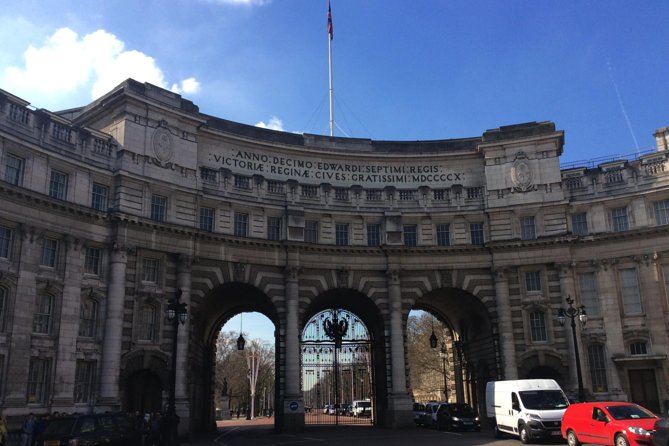
At Admiralty Arch (no admission), you get close to offices tied to Churchill during WWI. Even though the tour is focused on WWII, this back-link helps you see Churchill as a long-game political operator rather than a man who appeared only when WWII started.
Then there’s Trafalgar Square (no admission). The tour uses it as an anchor: London’s biggest public square tied to a national hero, Lord Nelson, which helps your guide explain how Britain “puts names in stone” to build shared identity.
At Ministry of Defence (no admission), you see the area associated with the old War Office and statues of WW2 generals. The tour also touches on the tempestuous relationship between Monty and Churchill, which is the kind of political tension that makes wartime leadership feel human instead of myth-like.
Horse Guards Parade at Whitehall is an included stop (with entry/tickets noted). This is one of those “you’re here right in the action” moments, and the tour explains what it was for and why Churchill supposedly hated it—again, turning a formal military setting into a personality-driven story.
You also stop at Women of World War II Memorial (no admission). This includes discussion of the Women’s Cenotaph and the meanings behind the carvings. It’s a great corrective stop, because a Churchill-heavy tour can sometimes skew too male-and-command focused without this kind of balance.
Then it’s 10 Downing Street from the outside (no admission). The tour keeps it practical: standing outside the gates and connecting it to British prime ministers through the decades from Churchill onward.
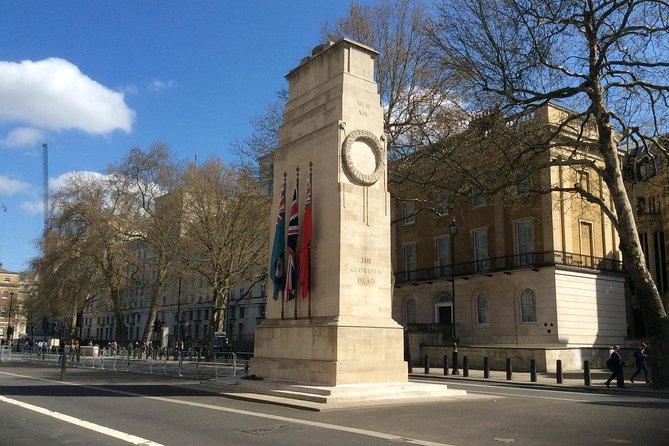
Right after that is The Cenotaph (no admission). This is described as the primary monument to remember the fallen from the Great War onwards. Even without entry, it’s an easy place for your guide to connect the emotional backbone of national memory to the political decisions made nearby.
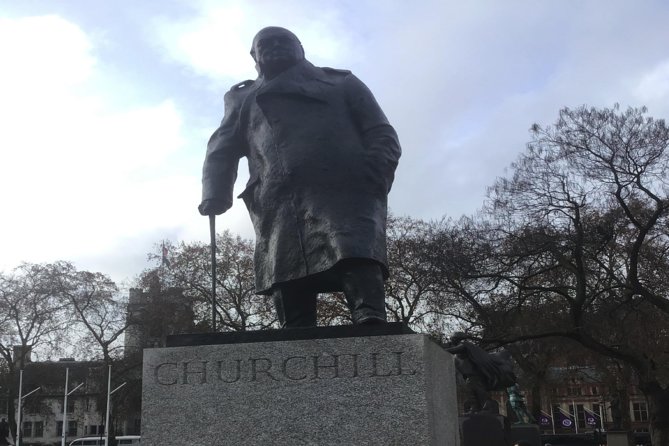
And then you reach Winston Churchill Statue. This is a straightforward photo moment with explanation attached—why the statue exists and what story it’s meant to hold.
Finally in this broad stretch you’ll cover Parliament Square (no admission), including reference to the church where Winston and Clemmie got married, plus your guide’s explanation of the importance of politics and democracy.
You also see Houses of Parliament (no admission) and Saint Margaret’s Church on Parliament Square (no admission). These stops help you understand why wartime leadership isn’t only about generals and bombers—it’s about institutions and public legitimacy.
Churchill War Rooms Underground: The One-Hour WWII Finale
The tour ends at the Churchill War Rooms near King Charles Street (SW1A 2AQ). The walk is designed so the War Rooms don’t feel random. You arrive with the major names and memorials already explained, and that makes the bunker experience hit harder.
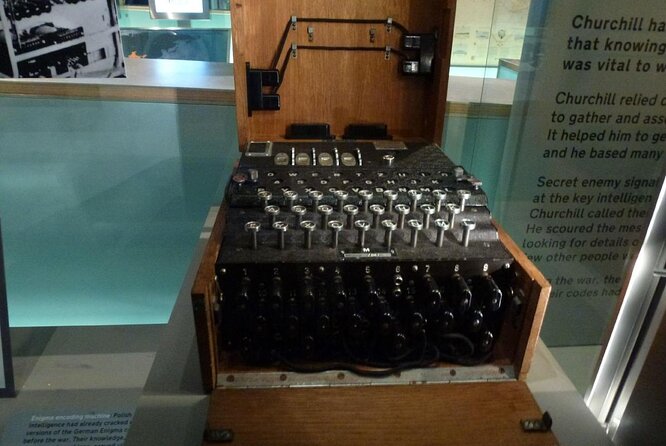
You get entry included and you’re set up for about one hour inside using the audio/video guides. The War Rooms are described as perfectly preserved as they were in 1945, and that’s the core idea: you’re not just reading about command, you’re seeing how it was staged while London was under bombing.
A practical note: the War Rooms self-guided device system is where one review called out a drawback—it can feel clunky and not very intuitive. That doesn’t kill the experience, but it’s worth knowing in advance. If you’re the type who likes fast tech and clear menus, you might want to keep your expectations realistic and treat the audio/video system as part of the historical presentation rather than as a modern museum app.
If you want the best experience, pace yourself. Spend time at the key rooms your guide points out, and don’t rush to the exit just because you’ve already “done” the bunker.
Price, Value, and Who This Tour Fits Best
At $263.90 per person, you’re paying for a private guide experience plus included War Rooms admission and time. That price can feel high if you compare it to a generic group walking tour, but it makes more sense when you factor in what you actually receive: hotel pickup (when booked for central hotels), private tour time, a guide, and a full paid entry into one of London’s most in-demand WWII sites.
You’ll also want to look at the total package: this is about four hours, and you’re moving across multiple neighborhoods in one cohesive storyline. That saves you time and planning effort compared with building your own route and trying to time War Rooms entry without help.
This tour is a strong fit for:
- People who want Churchill plus the locations around him, not just the War Rooms alone
- Anyone who likes WWII details but also wants London’s real neighborhoods and architecture
- First-time visitors who want a guided route through central London that actually makes the city feel connected
It may be less ideal if you’re short on stamina. It’s an active walking format across West End, Mayfair, and government district areas. Dress code is casual, but your legs still do the heavy lifting.
Finally, book sooner rather than later. The tour is commonly booked about 68 days in advance on average, which tells you the private time slots fill up.
Should You Book This Churchill Private Tour?
Book it if you want a guided London story with two payoffs: a well-paced walk through Churchill-linked neighborhoods and then a real in-depth visit to the Churchill War Rooms with included tickets.
Skip it (or rethink) if your priority is only the War Rooms and you’d rather avoid walking across multiple central areas. Also consider the War Rooms audio/video setup if you know you dislike museum audio devices that can be fiddly.
If you’re deciding today, here’s the simplest way to choose: if Churchill and WWII feel like your kind of subject, and you like understanding cities through real locations, this tour is built for you.
FAQ
How long is the Sir Winston Churchill Private Walking Tour & War Rooms?
It runs about 4 hours (approx.).
What’s the tour’s starting point in London?
The tour starts at the Criterion Theatre, 218–223 Piccadilly, London W1J 9HR, UK.
Where does the tour end?
It ends just outside the Churchill War Rooms at King Charles St, London SW1A 2AQ, UK.
Is hotel pickup included?
Yes. Pickup is offered at central London hotels, and the tour can also meet you at the Criterion Theatre if you prefer.
Is entry to the Churchill War Rooms included?
Yes. Churchill War Rooms admission tickets are included, and the War Rooms visit is generally about one hour.
When do you enter the Churchill War Rooms?
Entry is generally between 12:45 and 1:45, depending on hotel location and walking speed.
Is the tour private?
Yes. It’s a private tour/activity, and only your group participates.
What language is the tour offered in?
The tour is offered in English.
Is transportation by London Underground included?
Transportation to and from attractions by London Underground is not included, though the pickup process uses the Underground to reach the starting point if meeting at the Criterion Theatre.
What’s the dress code?
Dress code is casual.
What’s the cancellation timeframe?
You can cancel up to 24 hours in advance for a full refund. If you cancel less than 24 hours before the start time, the amount paid is not refunded.
More Tours in London
- From London: Harry Potter Warner Bros Studio Tour
★ 4.7 · 26,588 reviews - Magical London: Harry Potter Guided Walking Tour
★ 4.7 · 22,044 reviews - London: Warner Bros. Studio Harry Potter Tour & Branded Bus
★ 4.7 · 19,194 reviews - London Big Bus Hop-On Hop-Off Tour with Optional River Cruise
★ 3.5 · 10,803 reviews - London Small Group Tour of Historical Pubs
★ 5.0 · 10,422 reviews
More Tour Reviews in London
- From London: Harry Potter Warner Bros Studio Tour
★ 4.7 · 26,588 reviews - London: Westminster to Greenwich River Thames Cruise
★ 4.5 · 22,836 reviews - Magical London: Harry Potter Guided Walking Tour
★ 4.7 · 22,044 reviews - London: Madame Tussauds London
★ 4.6 · 20,915 reviews - London: Warner Bros. Studio Harry Potter Tour & Branded Bus
★ 4.7 · 19,194 reviews
More London Walks Worth the Shoe Leather
- Magical London: Harry Potter Guided Walking Tour
★ 4.7 · 22,044 reviews - London: The Original Jack the Ripper Walking Tour
★ 4.7 · 7,833 reviews - Tour for Muggles The Ultimate Harry Potter Walking Tour in London
★ 5.0 · 4,684 reviews - London Jack The Ripper Guided Walking Tour
★ 5.0 · 3,131 reviews - London: Harry Potter Movies Walking Tour (Kids Go Free)
★ 4.7 · 3,071 reviews
Just reviewed around London





London Walking Tours, compared.
 ★ 4.7Magical London: Harry Potter Guided Walking TourFrom $2022,044 reviews
 ★ 4.7The Original Jack the Ripper Walking TourFrom $257,833 reviews
 ★ 5.0Tour for Muggles The Ultimate Harry Potter Walking Tour in LondonFrom $234,684 reviews
 ★ 5.0London Jack The Ripper Guided Walking TourFrom $03,131 reviews
 ★ 4.7Harry Potter Movies Walking Tour (Kids Go Free)From $203,071 reviews
 ★ 5.0Changing of the Guard Guided Walking Tour in LondonFrom $251,793 reviews
 ★ 4.9The Great British Rock and Roll Music Walking TourFrom $361,783 reviews
 ★ 4.8Harry Potter Walking Tour in GermanFrom $201,505 reviews