
Reviewed · LONDON WALKING TOURS
Secrets of the London Underground Small Group Walking Tour
The Tube has secrets on the sidewalk. This 2.5-hour route gives you a history-and-engineering look at London’s underground—starting at Baker Street and working toward Westminster. I especially like the small-group feel (max 25) and the chance to see how stations and lines were planned long before modern tech. One thing to plan for: you’ll need your own Zone 1–2 Tube payment since travel cards are not provided.
I’ve read about guides who make this topic fun without turning it into a lecture. Names like John, Peter, and Angela show up with the same theme: lots of detail about construction, politics, and even WWII-era context, plus humor that keeps the group moving.
It’s also a walking tour with many steps, so comfortable shoes matter. If you don’t enjoy being outside for chunks of time between stations, this might feel slower than a pure ride.
In This Review
- Key Things I’d Focus On
- What This Tube-Themed Walk Really Shows You
- Price and Value of $41.13: What You’re Paying For
- Before You Go: Tickets, Steps, and Where the Tour Starts
- Baker Street Station: The Underground’s Early Metropolitan Roots
- Oxford Circus: Cross-Platform Interchange Plans and the 1969 Opening
- Green Park and Down Street: The Disused Station Story
- Piccadilly Circus Station: 1906 Beginnings and Line Mergers
- Victoria Embankment: River Reclamation and 19th-Century Thames Change
- Westminster: From Westminster Bridge Origins to the Modern Station
- The Best Parts: Guides, Humor, and How You Leave Understanding More
- A Fair Warning: Weather, Crowds, and What the Tour Is Not
- Who Should Book This (and Who Might Skip It)
- Should You Book This Secrets of the London Underground Tour?
Key Things I’d Focus On
- Original Underground stations: you start at Baker Street, tied to the Metropolitan Railway’s early era
- Victorian-era construction stories: you’ll hear how the system was built before today’s tech
- Disused station vibes: Green Park/Down Street is part of the story, including why it closed
- Big junction design: Oxford Circus gets explained in terms of how interchange was planned
- Riverfront engineering: Victoria Embankment connects the Tube to 19th-century changes along the Thames
- A strong guide narrative: John and Peter are singled out for clear, lively storytelling
London on foot, a few more ways
- Magical London: Harry Potter Guided Walking Tour
★ 4.7 · 22,044 reviews - London: The Original Jack the Ripper Walking Tour
★ 4.7 · 7,833 reviews - Tour for Muggles The Ultimate Harry Potter Walking Tour in London
★ 5.0 · 4,684 reviews - London Jack The Ripper Guided Walking Tour
★ 5.0 · 3,131 reviews
What This Tube-Themed Walk Really Shows You
This tour is for people who already know how to ride the Tube but want to understand what they’re riding through. You get the London you usually miss: the station layouts, the decisions behind line connections, and the reasons some stops thrived while others faded.
The “small group” part matters more than it sounds. With a maximum of 25, you’re more likely to hear the details the guide is actually using to explain each place. It also helps you keep up with the pace when you’re moving between stations and crossing city streets.
If you’re a history buff, it helps that the tour doesn’t only focus on famous landmarks. It treats the underground itself as the main attraction—part transport system, part engineering experiment, part political project.
Price and Value of $41.13: What You’re Paying For
At $41.13 per person for about 2 hours 30 minutes, the best value is tied to what’s included: guided interpretation of the network’s past. You’re not buying a separate museum ticket. You’re paying for time with a guide who connects station names to the bigger story of how the Underground evolved.
What can affect value is transport cost on your side. Travel cards aren’t provided, and you’ll need contactless or a Zone 1–2 Travelcard to use the Tube. So your real “trip cost” is the tour price plus whatever you spend moving between stops.
Some reviews criticized the value because they felt the paid Tube segments added cost. That’s worth noting if you’re trying to keep your total daily spend tight. Still, you’re paying for an organized, station-focused walk and narration that you can’t easily recreate on your own in the same order.
Before You Go: Tickets, Steps, and Where the Tour Starts
The tour starts at Baker Street Underground Station (Marylebone Rd, NW1 5LJ) at 1:00 pm and ends at Westminster Station (Bridge St, SW1A 2JR). It’s offered on Tuesdays, Thursdays, and Sundays from April through March, with closures on 24–26 December and 1 January.
Bring a way to pay for the Tube in Zone 1 (and the tour instructions specifically point to a Zones 1–2 day travel card). A mobile ticket is provided as part of the experience, but that doesn’t replace your Tube payment method.
Fitness is moderate-but-real. It’s a walking tour with many steps, so it isn’t suitable for reduced mobility. If you can handle stairs and regular walking without frequent breaks, you’ll probably be fine.
Also note the “sell-out” vibe: it’s booked on average about 49 days in advance, so planning ahead is smart if your dates are fixed.
Still deciding? A handful more London outings we rated
Baker Street Station: The Underground’s Early Metropolitan Roots
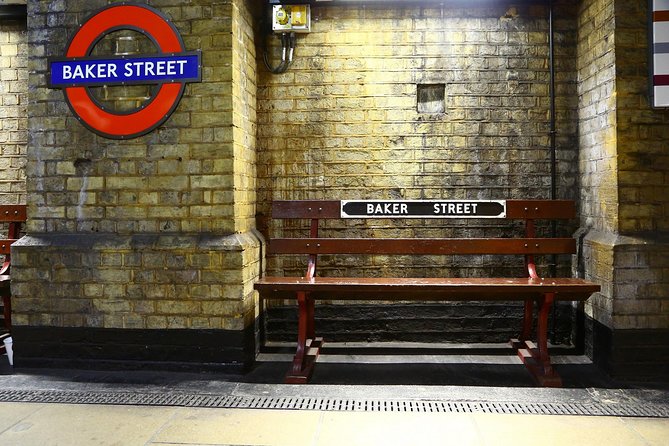
You begin at Baker Street Station, tied to the Metropolitan Railway, which is described as the world’s first underground railway system. That’s the key idea here: you’re starting not just at a famous stop, but at the story-root of the Underground concept in London.
Why this works well for the tour: Baker Street gives you a strong baseline. From there, the guide can connect later line changes and station evolution back to the earliest underground thinking. It’s an efficient way to build context early instead of sprinkling history randomly later.
A practical note: the stop is about 10 minutes. That’s enough time to hear what matters and still move before the group clumps up.
Oxford Circus: Cross-Platform Interchange Plans and the 1969 Opening
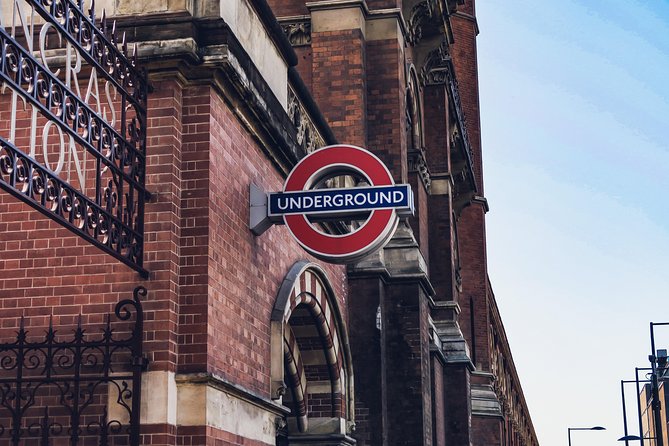
Next is Oxford Street / Oxford Circus area, where the tour explains Oxford Circus Station as a planned interchange point. You’ll hear that construction began in 1962 on the initial Walthamstow to Victoria section, with cross-platform interchange planned at Oxford Circus.
The story continues to the line’s operational debut: the Victoria line platforms opened on 7 March 1969. The station opened as part of a second extension running from Warren Street to Victoria.
What I like about this stop is that it turns station design into something you can picture. Instead of only naming dates, you start noticing how interchange planning shaped what you see underground—platform placement, connections, and the idea of moving passengers quickly across lines.
Again, the timing is short (about 10 minutes). If you’re the type who wants photos at every angle, I’d recommend moving through quickly with your camera ready rather than stopping to shoot after the narration starts.
Green Park and Down Street: The Disused Station Story

The tour moves to Green Park / Down Street Station, and this stop has the most “hidden London” flavor—because it’s about a station that didn’t last.
You’ll hear that Down Street Station opened in 1907 by the Great Northern, Piccadilly and Brompton Railway. Later, it was served by the Piccadilly line and sat between what is now Dover Street (renamed Green Park) and Hyde Park Corner stations.
Then comes the reason it faded: limited patronage and its proximity to other stations led to closure in 1932.
This is where the tour’s “haunted and disused stations” promise fits best. Even without stepping into abandoned spaces, you get the narrative of why a station could exist, operate, and then disappear from daily life. It also makes the current Tube map feel less permanent—in a good way.
The trade-off: this is still a walk-and-listen stop, not a full exploration. If you expect behind-the-scenes access, manage your expectations and treat this as story-based station context.
Piccadilly Circus Station: 1906 Beginnings and Line Mergers
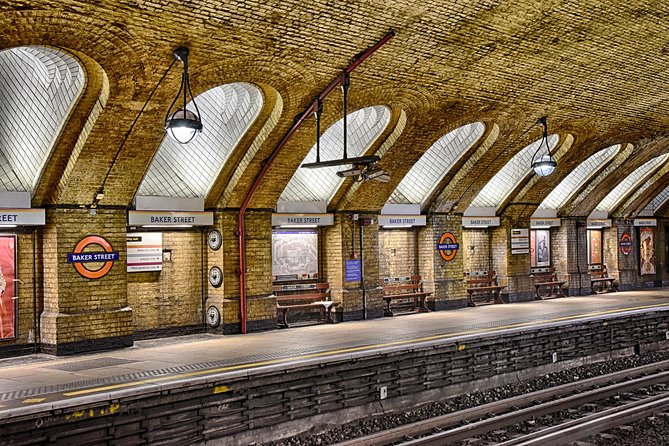
At Piccadilly Circus Station, the tour ties history to how multiple railway lines came together. The station was opened on 10 March 1906 by the Baker Street and Waterloo Railway, now part of the Bakerloo line.
You’ll also hear that platforms for the Great Northern, Piccadilly and Brompton Railway (now the Piccadilly line) opened later, on 15 December 1906. That detail matters because it shows Tube growth as something staged—new sections arriving, then station capacity catching up.
Why this stop is good for first-timers: it explains why the Tube feels layered. You’re not just in one “thing.” You’re moving through different eras of planning that had to coordinate over time.
The stop is about 10 minutes, so the story stays punchy. Expect facts plus the “why” behind the station’s evolution rather than a full architectural walk-through.
Victoria Embankment: River Reclamation and 19th-Century Thames Change
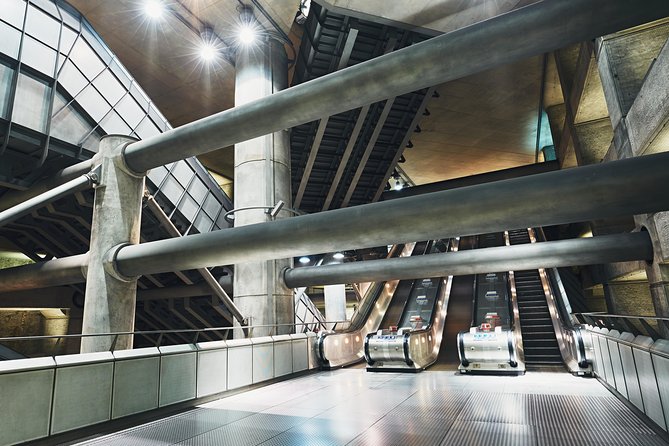
Then you reach Embankment Station, where the tour shifts from station-only history to city engineering. You’ll hear that Embankment runs along the north bank of the Thames up toward the City of London and was developed in the 19th century to reclaim marshy land along the river banks.
This is a nice correction to a common assumption: that the Tube was created in isolation. In reality, it rode on top of major changes happening in London at street and river level. When you connect the Tube to reclaimed land, you get a sharper sense of London as a built project that keeps rewriting itself.
Like other stops, this is about 10 minutes. It’s meant to give you the big idea quickly, so you can carry it forward to the final push.
If you like thinking in systems—how city planning, infrastructure, and passenger movement tie together—this is one of the more satisfying segments.
Westminster: From Westminster Bridge Origins to the Modern Station
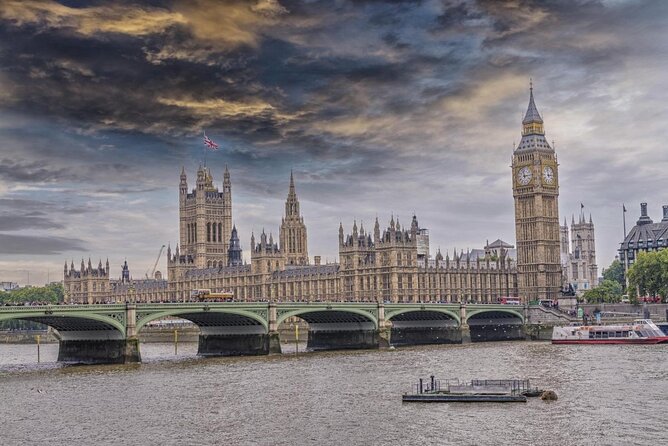
The tour ends at Westminster Tube Station, and the background here is unusually literal. The station was opened as Westminster Bridge on 24 December 1868 by the steam-operated District Railway (now the District line).
Access originally ran via a passageway from Bridge Street and a pedestrian subway under the road. That kind of detail helps you understand how people reached Tube infrastructure when streets, crossings, and underground passages weren’t built for today’s flow.
Why this ending works: Westminster is one of London’s big power-and-landmark zones, so your brain already expects importance. The tour adds the missing layer: how the Underground was physically integrated into travel routes over a century ago.
This final stop is listed with admission ticket free, and it’s about 10 minutes—enough to wrap up the story without turning the day into a long endurance test.
The Best Parts: Guides, Humor, and How You Leave Understanding More
The most praised aspect is the guide’s ability to connect what you see with how the system was built. John and Peter are repeatedly described as enthusiastic and knowledgeable about the London transit system’s history, with a clear, calm style that keeps the group moving.
Angela is noted for architecture and context, including construction, politics, and even WWII experience, plus photos shared during the tour. If you’re the type who enjoys mental images while listening, that can make a real difference in comprehension.
Also, the “local side of London” angle isn’t just marketing here. Walking between stations gives you street-level orientation—so after the tour you tend to feel like you can read the Tube map with your feet, not just your phone.
A Fair Warning: Weather, Crowds, and What the Tour Is Not
This tour is part walking and part station-to-station moving. If the weather is bad, expect discomfort. One review mentioned getting wet and wished the tour had set expectations about bringing an umbrella. That matches the reality of being outdoors for multiple segments.
Another fair consideration: the tour is Tube-themed and history-focused, but it’s not positioned as a full behind-the-scenes access tour. The topic can feel like Hidden London style only in terms of the stories and disused elements. If you want restricted areas, ticketed platform access, or backstage walkthroughs, you might be disappointed.
Finally, because travel payments are on you, your total cost can feel higher than the headline price once you factor in Tube usage during the day. If you prefer tours where transport is fully included, this one might require more budget math.
Who Should Book This (and Who Might Skip It)
You’ll love this if you:
- are a history buff who likes engineering and station design details
- already ride the Tube and want the “how it worked and why it looks like this” version
- enjoy a fast-paced, guided walk with a lively guide and lots of little facts
You might skip it if you:
- hate walking with stairs or expect a mostly seated experience
- want backstage access beyond the standard station viewing
- are very price-sensitive once you add Tube fares on top of the tour fee
Should You Book This Secrets of the London Underground Tour?
I think it’s a strong pick if your goal is to understand London’s transport story in a way that feels practical. The stations you visit cover different eras and themes—early underground thinking at Baker Street, interchange planning at Oxford Circus, the rise-and-fall lesson at Down Street, and the river and city engineering link near the Thames.
If you book, come prepared with two things: comfortable shoes and a plan for Zone 1–2 Tube payment. That one detail protects the experience from feeling more expensive than it first looks.
If you want a fun, fact-forward way to see familiar stations with brand-new context, this is the kind of tour that makes the Underground feel like more than just a commute.
More Tours in London
- From London: Harry Potter Warner Bros Studio Tour
★ 4.7 · 26,588 reviews - Magical London: Harry Potter Guided Walking Tour
★ 4.7 · 22,044 reviews - London: Warner Bros. Studio Harry Potter Tour & Branded Bus
★ 4.7 · 19,194 reviews - London Big Bus Hop-On Hop-Off Tour with Optional River Cruise
★ 3.5 · 10,803 reviews - London Small Group Tour of Historical Pubs
★ 5.0 · 10,422 reviews
More Tour Reviews in London
- From London: Harry Potter Warner Bros Studio Tour
★ 4.7 · 26,588 reviews - London: Westminster to Greenwich River Thames Cruise
★ 4.5 · 22,836 reviews - Magical London: Harry Potter Guided Walking Tour
★ 4.7 · 22,044 reviews - London: Madame Tussauds London
★ 4.6 · 20,915 reviews - London: Warner Bros. Studio Harry Potter Tour & Branded Bus
★ 4.7 · 19,194 reviews
More London Walks Worth the Shoe Leather
- Magical London: Harry Potter Guided Walking Tour
★ 4.7 · 22,044 reviews - London: The Original Jack the Ripper Walking Tour
★ 4.7 · 7,833 reviews - Tour for Muggles The Ultimate Harry Potter Walking Tour in London
★ 5.0 · 4,684 reviews - London Jack The Ripper Guided Walking Tour
★ 5.0 · 3,131 reviews - London: Harry Potter Movies Walking Tour (Kids Go Free)
★ 4.7 · 3,071 reviews
Just reviewed around London





London Walking Tours, compared.
 ★ 4.7Magical London: Harry Potter Guided Walking TourFrom $2022,044 reviews
 ★ 4.7The Original Jack the Ripper Walking TourFrom $257,833 reviews
 ★ 5.0Tour for Muggles The Ultimate Harry Potter Walking Tour in LondonFrom $234,684 reviews
 ★ 5.0London Jack The Ripper Guided Walking TourFrom $03,131 reviews
 ★ 4.7Harry Potter Movies Walking Tour (Kids Go Free)From $203,071 reviews
 ★ 5.0Changing of the Guard Guided Walking Tour in LondonFrom $251,793 reviews
 ★ 4.9The Great British Rock and Roll Music Walking TourFrom $361,783 reviews
 ★ 4.8Harry Potter Walking Tour in GermanFrom $201,505 reviews