
Reviewed · LONDON WALKING TOURS
Secret Old London Walking Tour
One dark alley at a time, London starts telling the truth. This Secret Old London Walking Tour links medieval plague ground, public executions, and churchyard shadows with Roman-London clues and Blitz scars. You’ll be guided through streets that still feel like the “real” City of London, not the postcard version.
I especially love two things: the chance to stand in places tied to Black Death-era London and the way the tour paints the mood at Smithfield, where executions once happened in plain sight. And the guides matter. Folks like Rosie, Jess, Pepe, and Jeremy have been highlighted for making hard history feel human and clear, with jokes and pace that keep it moving.
The main drawback to consider is subject matter. If you’re sensitive to execution details or the heavier side of the past, this tour’s “guts and gore” focus may feel like a lot for a short 1.5 hours.
In This Review
- Key Things I’d Put On Your Radar
- Meeting at Barbican and Getting Oriented Fast
- Charterhouse Square: When the Present Quiet Covers the Black Death
- Smithfield: Medieval Jousts, Public Executions, and William Wallace
- St Bartholomew the Great: A Medieval Church You Can Spot in Film
- Blitz-Era Scars: Standing Inside a Bombed-Out Church Shell
- A Touching Memorial in the Park: Where the Emotion Lingers
- Roman Amphitheatre Perimeter: Tracing London Back to Rome
- Pace, Practicalities, and What 90 Minutes Really Means
- The Tour Price: Why $26 Can Be a Fair Deal
- Who This Walking Tour Fits Best
- Should You Book This Secret Old London Walk?
- FAQ
- Where is the meeting point for the Secret Old London Walking Tour?
- How long is the tour?
- What does the tour cost?
- Is the tour wheelchair accessible?
- What should I bring?
- Are pets allowed?
- Are dogs allowed?
- Is video recording allowed?
Key Things I’d Put On Your Radar
- Barbican start: you begin right where modern London rubs shoulders with older layers
- Charterhouse Square’s Black Death connection: a calm square built on a grim past
- Smithfield execution ground: you’ll learn why this area was feared, not just famous
- St Bartholomew the Great: a medieval church you’ll recognize from screen stories
- Blitz church shell: a visible reminder that the 20th century also left scars
- Roman amphitheatre perimeter: you trace an empire footprint without needing big excavations
London on foot, a few more ways
- Magical London: Harry Potter Guided Walking Tour
★ 4.7 · 22,044 reviews - London: The Original Jack the Ripper Walking Tour
★ 4.7 · 7,833 reviews - Tour for Muggles The Ultimate Harry Potter Walking Tour in London
★ 5.0 · 4,684 reviews - London Jack The Ripper Guided Walking Tour
★ 5.0 · 3,131 reviews
Meeting at Barbican and Getting Oriented Fast
You meet outside Barbican Underground Station, then head into the City’s inner-history zone on foot. This matters because Barbican is a modern landmark; it gives you a clean starting point before the tour shifts into medieval, Tudor, Roman, and WWII layers.
The timing is tight in a good way: 1.5 hours is long enough to connect dots, not long enough to drag. Wear comfortable shoes. You’re walking through streets that can feel uneven underfoot, and this is one of those tours where your feet do most of the work.
If you’re a wheelchair user, the tour is wheelchair accessible, which is a huge plus for this kind of “old streets and tight corners” theme. Just know it’s still a walking experience, so you’ll want to be ready for steady, real-city movement.
Charterhouse Square: When the Present Quiet Covers the Black Death
The walk’s first big historical emotional hit is Charterhouse Square. Today, it reads tranquil and orderly. But about 600 years ago, this was the dumping ground for London’s worst plague, the Black Death.
That contrast is what makes the stop work. You’re not just learning a fact; you’re standing where the city’s horror once had a physical place. And because the square still looks like a normal square, it forces your brain to do the uncomfortable leap between then and now.
This is also a great time to reset your expectations for the tour. The tour leans into mood: you’re meant to imagine what a street or square felt like when survival was the point, not sightseeing.
Smithfield: Medieval Jousts, Public Executions, and William Wallace
From Charterhouse Square you head toward Smithfield, an open space tied to medieval jousts and executions. The tour’s framing here is blunt for a reason. This area wasn’t a distant story; it was where people saw punishment happen in real life.
Smithfield is where William Wallace gets brought into the conversation. You’ll hear how his story connects to public power, fear, and the message governments tried to send to the crowds. The tour doesn’t treat it like sanitized history, either. It pushes you to imagine what “principal execution sites” meant when the world didn’t blur danger behind barriers.
One practical consideration: if you’re a specific “William Wallace is my must-have” kind of visitor, don’t assume every guide gives every detail the same weight. Ask your guide early if you’ll get a good chunk on him, and then lean into the rest of the stops.
Also, if you’d rather keep your trip lighter, you might feel more comfortable treating this portion as the heavy chapter. That’s not a fault of the tour. It’s just what the route is designed to do.
Still deciding? A handful more London outings we rated
St Bartholomew the Great: A Medieval Church You Can Spot in Film
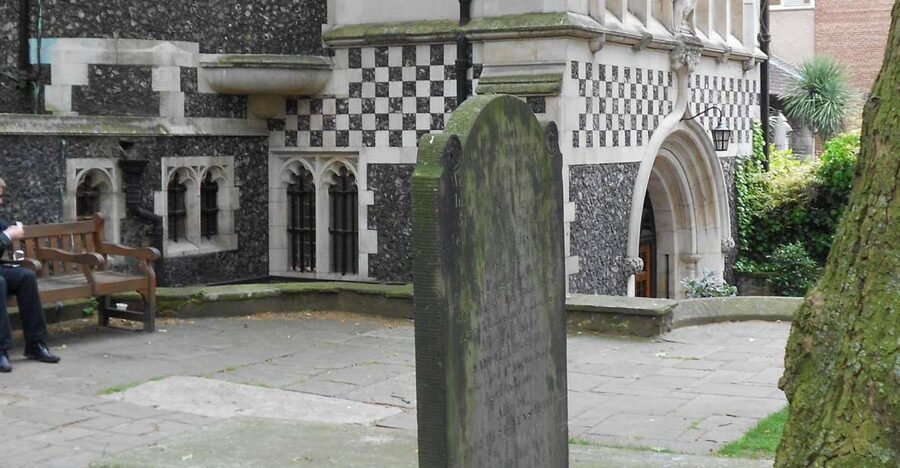
Between Charterhouse Square and Smithfield is St Bartholomew the Great, one of those London churches that feels like it’s been watching people for centuries. The tour highlights it as an outstanding medieval church, and yes, you may recognize it from Four Weddings and a Funeral and Sherlock Holmes filming.
Why I like this stop: it gives your mind a place to rest between dark topics. The churchyard atmosphere helps ground the stories. Instead of only thinking about violence and fear, you get a sense of daily life—ritual, work, and community continuing alongside political turmoil.
There’s also a practical side. A church like this is easier to “read” as you stand in place—architecture and old stone do part of the storytelling for you. The guide then connects the physical building to the human events happening around it.
If you like history that feels seen, not just told, this is the moment to slow down a touch and look around. The exterior and the churchyard setting are part of the experience.
Blitz-Era Scars: Standing Inside a Bombed-Out Church Shell
Next, the walk moves into the Blitz-era layer: you’ll pass the shell of a church destroyed during WWII and also stand inside that bombed-out structure. This is a powerful shift in tone, because it changes the historical scale from medieval centuries to 20th-century catastrophe—still painful, still close to living memory.
This part works well if you like history with visible edges. You’re not touring a rebuilt “look at me” monument. You’re seeing damage that stopped the story mid-sentence, and that changes how you process the rest of the route.
The tour also pairs this kind of place with reflection. It’s not doom for doom’s sake. It helps you feel why London history isn’t only about ancient Romans and Tudor rulers. Modern London inherits scars too.
A Touching Memorial in the Park: Where the Emotion Lingers
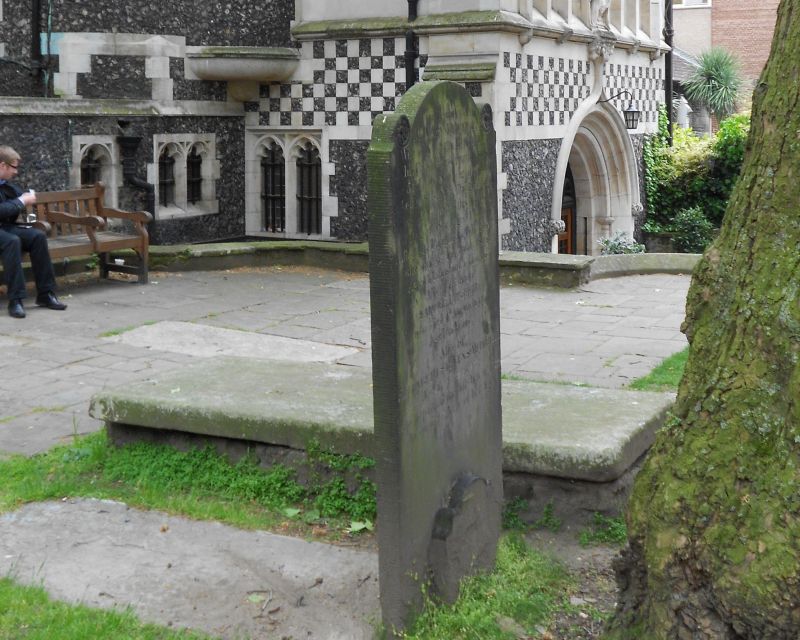
After the Blitz shell, the route includes a park stop tied to a hidden memorial to heroic self sacrifice. The highlight here is emotional rather than structural: you’re meant to slow down and actually look at what someone chose to remember.
Memorials can be tricky on tours. Some guides rush them because they’re not “main attractions.” Here, the focus is the opposite. The route is designed so you reach the memorial when you’ve already been carrying heavy context from previous stops. That makes the memorial hit harder, and it feels earned.
If you’re traveling with kids or with anyone who struggles with heavier topics, this memorial stop can be a good way to steer attention from violence toward meaning—what people did, and what the city decided to mark.
Roman Amphitheatre Perimeter: Tracing London Back to Rome
Then comes the long lost Roman ampitheatre connection. The tour doesn’t promise a full ruin you can circle like a theme-park Roman site. Instead, it takes you to the perimeter location—where you can picture the shape and scale of what once stood there.
This is one of my favorite types of urban history stops: the kind where you’re not just reading plaques. You’re using your imagination to connect street layout to ancient space. In London, that’s often the best way to experience antiquity. The city is still “on top,” so you learn to see traces instead of expecting full remains.
This stop pairs nicely with Smithfield and the medieval church area because it gives the tour a bigger timeline. You go from punishment and plague, to church life, to WWII damage, and then back further to Roman occupation.
In other words: London doesn’t have one “old London.” It has layers, stacked.
Pace, Practicalities, and What 90 Minutes Really Means
This tour is 1.5 hours, which is short enough that you’ll stay fresh, but long enough for a real narrative arc. It’s also a walking experience, so treat it like one. You’ll want your stamina, not just your curiosity.
A few practical notes you should plan around:
- No refreshments are included, so if you need water or a quick snack, plan ahead before you start.
- Video recording isn’t allowed, so keep your phone available for photos rather than filming.
- Pets aren’t allowed, and dogs aren’t permitted except guide dogs.
- It’s suitable for all persons over 12, so it’s usually a better fit for teens and adults who can handle the tone.
One more real-world tip: bring a jacket if the weather is iffy. A short walk in drizzle can still feel chilly, especially if the tour pauses for stories.
The Tour Price: Why $26 Can Be a Fair Deal
At $26 per person, this is priced like an entry-level walking tour, not a premium private guide. And for what you get, it can be good value.
You’re paying mainly for guided storytelling: a live guide, a focused route, and access to interpretation that you wouldn’t reliably get from wandering on your own. The stops are also high-impact for a short duration: plague ground, execution site area, major medieval church, WWII shell, memorial, and a Roman site perimeter.
The only real “cost” is on your side: your time and your comfort level with heavy subject matter. If you want a quick hit of mainstream sights, this route might feel too edgy. If you like atmosphere and historical cause-and-effect, it’s a solid use of 90 minutes.
Who This Walking Tour Fits Best
This is a strong fit if you:
- love City of London history and don’t mind darker chapters
- enjoy walking between sites rather than sitting through museums
- like architecture and place-based storytelling, especially churches and ruins
- want an alternative to the usual big-name itinerary
It’s less ideal if you:
- strongly prefer light, feel-good sightseeing
- dislike tours that ask you to imagine grim realities at historic execution sites
- need lots of indoor time to warm up or take breaks (this is mostly walking and standing outdoors)
Should You Book This Secret Old London Walk?
I’d book it if you want a compact, story-driven walk that connects medieval plague, public punishment at Smithfield, St Bartholomew the Great, Blitz church damage, and a Roman amphitheatre trace into one satisfying route.
I’d hesitate only if the tour’s darker theme would ruin your mood. The route is built around guts-and-gore history and war scars, so you should go in ready for it.
If that sounds like your kind of London, you’re likely to leave feeling like you saw the city under your feet, not just around it.
FAQ
Where is the meeting point for the Secret Old London Walking Tour?
You meet outside Barbican Underground Station.
How long is the tour?
The tour lasts 1.5 hours.
What does the tour cost?
It costs $26 per person.
Is the tour wheelchair accessible?
Yes, it is wheelchair accessible.
What should I bring?
Bring comfortable shoes.
Are pets allowed?
No. Pets aren’t allowed on this tour.
Are dogs allowed?
Dogs aren’t permitted, except guide dogs.
Is video recording allowed?
No, video recording isn’t allowed during the tour.
More Tours in London
- From London: Harry Potter Warner Bros Studio Tour
★ 4.7 · 26,588 reviews - Magical London: Harry Potter Guided Walking Tour
★ 4.7 · 22,044 reviews - London: Warner Bros. Studio Harry Potter Tour & Branded Bus
★ 4.7 · 19,194 reviews - London Big Bus Hop-On Hop-Off Tour with Optional River Cruise
★ 3.5 · 10,803 reviews - London Small Group Tour of Historical Pubs
★ 5.0 · 10,422 reviews
More Tour Reviews in London
- From London: Harry Potter Warner Bros Studio Tour
★ 4.7 · 26,588 reviews - London: Westminster to Greenwich River Thames Cruise
★ 4.5 · 22,836 reviews - Magical London: Harry Potter Guided Walking Tour
★ 4.7 · 22,044 reviews - London: Madame Tussauds London
★ 4.6 · 20,915 reviews - London: Warner Bros. Studio Harry Potter Tour & Branded Bus
★ 4.7 · 19,194 reviews
More London Walks Worth the Shoe Leather
- Magical London: Harry Potter Guided Walking Tour
★ 4.7 · 22,044 reviews - London: The Original Jack the Ripper Walking Tour
★ 4.7 · 7,833 reviews - Tour for Muggles The Ultimate Harry Potter Walking Tour in London
★ 5.0 · 4,684 reviews - London Jack The Ripper Guided Walking Tour
★ 5.0 · 3,131 reviews - London: Harry Potter Movies Walking Tour (Kids Go Free)
★ 4.7 · 3,071 reviews
Just reviewed around London





London Walking Tours, compared.
 ★ 4.7Magical London: Harry Potter Guided Walking TourFrom $2022,044 reviews
 ★ 4.7The Original Jack the Ripper Walking TourFrom $257,833 reviews
 ★ 5.0Tour for Muggles The Ultimate Harry Potter Walking Tour in LondonFrom $234,684 reviews
 ★ 5.0London Jack The Ripper Guided Walking TourFrom $03,131 reviews
 ★ 4.7Harry Potter Movies Walking Tour (Kids Go Free)From $203,071 reviews
 ★ 5.0Changing of the Guard Guided Walking Tour in LondonFrom $251,793 reviews
 ★ 4.9The Great British Rock and Roll Music Walking TourFrom $361,783 reviews
 ★ 4.8Harry Potter Walking Tour in GermanFrom $201,505 reviews