
Reviewed · LONDON WALKING TOURS
Roman London Private Walking Tour
Roman Londinium is still there, if you know where to look. This private walking tour threads Roman London through today’s streets, including ruins under buildings and bits of the Roman wall you’d never spot on your own. You’ll start near St. Paul’s Cathedral and finish at the London Mithraeum at Bloomberg SPACE, where the past goes underground fast.
What I especially like is the mix of “big-name” landmarks with truly out-of-the-way finds, like wall sections that were only revealed after WWII bombing patterns. I also like that you get a real person guiding the pace—names like Kevin and Stephen come up often, and their style is practical, story-driven, and question-friendly. One consideration: you’ll walk for 3-plus hours, so comfortable shoes and a steady pace matter.
In This Review
- Key Things That Make This Roman London Tour Worth It
- Price and Pace: What You’re Paying For
- St. Paul’s and Diana’s Temple: Starting With a Roman Surprise
- What to watch for here
- The Roman Wall Thread: Cripplegate to the Gates Beneath Today
- One practical drawback
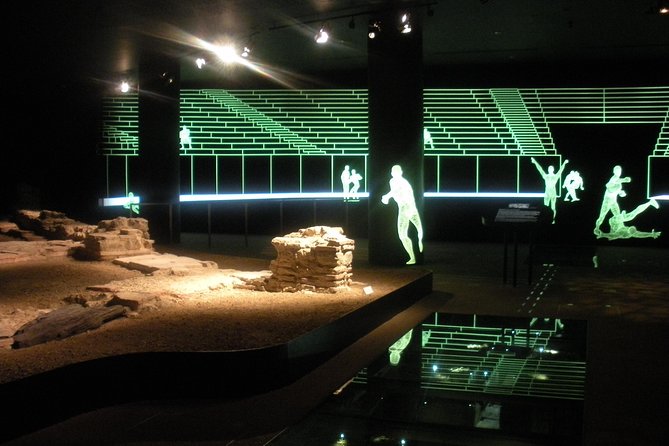
- The Amphitheatre Under the Modern Streets
- City of London Icons With Roman Connections
- Timing tip
- Churches, Bridges, and the Great Fire Marker: Roman London’s Afterlife
- Practical note
- London Mithraeum at Bloomberg SPACE: The Underground Finish
- Should You Book This Roman London Private Walking Tour?
- FAQ
- How long is the Roman London Private Walking Tour?
- Is this tour private?
- Where does the tour start and end?
- Is hotel pickup available?
- What’s included for site entry and what isn’t?
- Do I need to book ahead for the Temple of Mithras?
- Can I cancel for a full refund?
Key Things That Make This Roman London Tour Worth It
- Roman wall clues in the most unexpected places, including sections tied to WWII discoveries
- Below-street visits where you see ruins under modern buildings, not just plaques and photos
- A true private format (only your group) with a guide who can answer questions on the spot
- The Mithras stop is a highlight, with access to the underground temple area included
- Plenty of “quick hits” across the City of London, so you see a lot without feeling rushed
London on foot, a few more ways
- Magical London: Harry Potter Guided Walking Tour
★ 4.7 · 22,044 reviews - London: The Original Jack the Ripper Walking Tour
★ 4.7 · 7,833 reviews - Tour for Muggles The Ultimate Harry Potter Walking Tour in London
★ 5.0 · 4,684 reviews - London Jack The Ripper Guided Walking Tour
★ 5.0 · 3,131 reviews
Price and Pace: What You’re Paying For
At $254.93 per person for a 3–4 hour private walk, this isn’t a cheap casual stroll. You’re paying for three things: a guide who can connect the dots, the time saved by getting from stop to stop with less wandering, and the access to specific sites where timing and entry matter.
The pace is the biggest practical factor. This is built for a longer walk across central London, and you should expect a solid amount of time on your feet. A recurring theme from past guests: you’ll do roughly three solid hours of walking, with only short stops. I’d plan your morning like a mini workout day—bring water, wear supportive shoes, and don’t expect to hop on and off at will.
Also note: transportation isn’t included. Pickup is offered only as help meeting you at a Central London hotel, and then you’ll go by Tube to the start. Smart casual is the dress code, and it runs in all weather, so bring rain gear if the forecast looks iffy.
St. Paul’s and Diana’s Temple: Starting With a Roman Surprise
You begin in the shadow of St. Paul’s Cathedral, and that’s not just for the view. The Roman connection here is the point: before St. Paul’s, the area had a temple tied to the Roman goddess Diana. Your guide sets the stage so the “cathedral-first” view turns into a “layers of London” lesson.
From there, you keep it very close—one reason this tour works well is that it compresses history into short walking segments. The next stop is the Church of St Vedast Alias Foster, where you’ll see Roman remains hidden away from the street, plus something even older. This is the kind of stop that’s easy to miss if you’re just scanning facades. With a guide, you understand what you’re looking at.
A short hop later, the theme becomes: Romans built walls, then London built over them, then history revealed them again. You’ll move toward a stretch of Roman wall at Noble Street, discovered thanks to WWII-era bombing patterns. It’s a great reminder that archaeology often starts with modern events, not ancient ones.
What to watch for here
- Roman remains can be subtle, and small differences matter—this is where having a guide makes the biggest difference.
- Expect very short stops around the City of London, so keep your questions ready and your camera handy.
Still deciding? A handful more London outings we rated
The Roman Wall Thread: Cripplegate to the Gates Beneath Today
This route strongly follows the idea of boundaries—where the Romans drew a line around the city, and how that line still shapes London’s street plan. After Noble Street, you head to Cripplegate Street, one of the old Roman gate areas with preserved sections of Roman city wall nearby.
Then it’s on to London Wall in a few different places. The tour approach here is smart: instead of dumping everything into one big museum moment, you see wall fragments and street-level hints in multiple settings. That’s how the Roman city edge starts to feel real.
You’ll also get Guildhall as a key City-of-London anchor. It’s the kind of place that dominates the square visually, but the guide brings out the Roman connections around it. If you like history that explains how the present inherited the past, Guildhall is a good “bridge stop” in the walk.
One practical drawback
These wall-and-gate areas often sit near active streets and busy corners. If you’re sensitive to crowds or noise, plan to lean on the guide to keep the moment focused—ask for context, then take your photos quickly.
The Amphitheatre Under the Modern Streets
Next comes one of the most exciting shifts on the walk: you’ll stand in the Roman Amphitheatre area, with the feeling of stepping into a different era of street level. This amphitheatre was discovered only a few decades ago, which adds to the wow factor. It’s one of those stops that helps you understand how much London had going on long before the usual story gets told.
This is a longer stop on the route, around 25 minutes, and that extra time matters. It gives you room to understand how an amphitheatre fit into daily Roman life—where people gathered, how the urban plan worked, and why it’s believable when you see the setting.
City of London Icons With Roman Connections
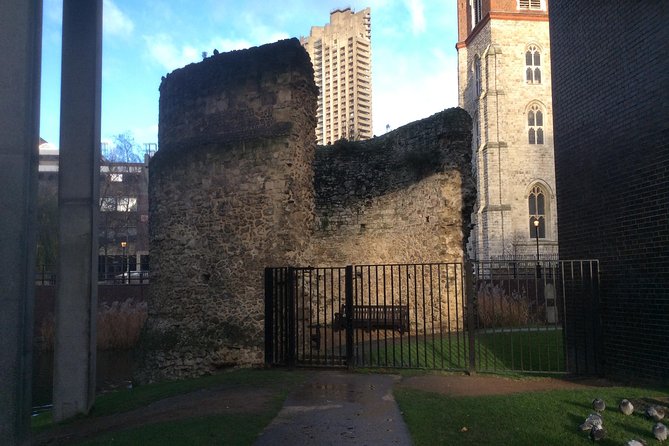
From here, the walk starts stacking “you recognize this” moments with Roman context.
- Bank of England: The heart of old Roman London, now replaced by some extremely imposing stone buildings. The guide helps you see the Roman city logic behind modern grandeur.
- Royal Exchange Building: Standing in front of it can feel like being in an “ancient Rome” version of a financial district—built-up stone and civic confidence, with Roman connections highlighted.
- Leadenhall Market: This old Victorian market sits on top of its Roman predecessor. If you like architecture layers, this is a satisfying stop because the building above makes the Roman underneath easier to imagine.
You’ll also catch smaller-but-memorable Roman finds:
- 30 St Mary Axe (The Gherkin): In the shadow of the Gherkin, you’ll find an unexpected Roman memorial.
- The Tomb of the Unknown Roman Girl: A memorial to one of London’s oldest recorded citizens. It’s brief, but it sticks with you because it’s human-scale history.
- Aldgate Square: The Roman gate remains here are buried beneath a newly landscaped park. Even if you don’t see the stones directly, you can follow the route of the wall with the guide’s direction.
And then there’s a newer stop style:
- Vine Street museum area: London’s newest museum stop on the route, with Roman wall and artefacts you can actually connect to what you saw earlier in the walk.
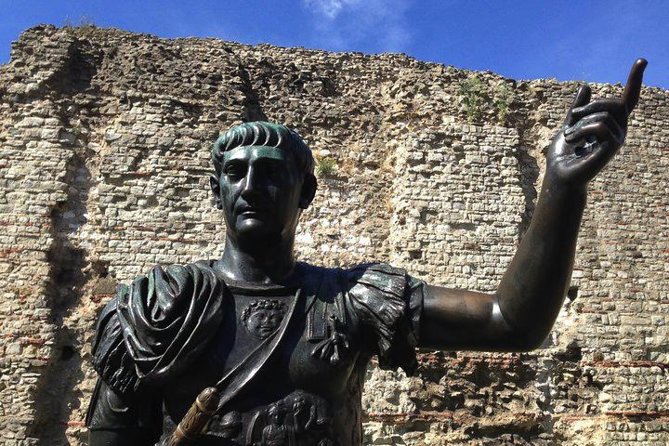
- Emperor Trajan statue: Outside the Tower of London, you’ll see this Roman emperor statue—a good way to anchor who ruled and why expansion mattered.
Timing tip
Many of these points are 5–15 minutes each. If your attention tends to drift in city walks, keep one “focus question” in your head, like: Why did Romans place this here? Or: What did London need at this spot?
Churches, Bridges, and the Great Fire Marker: Roman London’s Afterlife
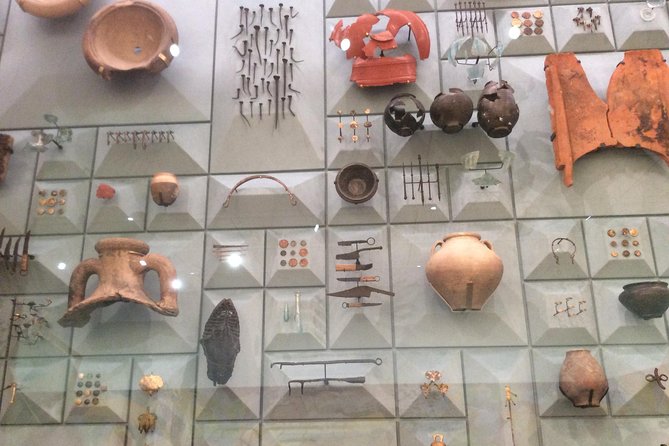
Roman London doesn’t just vanish. It turns into medieval London, then modern London—often with physical leftovers still showing.
A key stop is All Hallows By The Tower, where you’ll see the oldest archway in London and also remains of an old Roman house. This is exactly the kind of “timeline overlap” that makes the tour feel more than a list of sites.
Then you move to St. Dunstan In The East, which isn’t strictly Roman—but it’s described (on the tour experience) as one of the most peaceful and beautiful ruins in London. That contrast matters. After Roman walls and civic power, you get a quieter pause before the walk continues.
You’ll also visit the Billingsgate Roman Bath House locations. It’s a short stop, around 5 minutes, and it helps you place Romans where they spent downtime: water, routine, and social life. Nearby, St. Magnus The Martyr connects you to the idea of the original Roman London Bridge, with possibly the only remaining part of it still visible. That’s a big “bridge” moment for understanding how Romans moved people and goods.
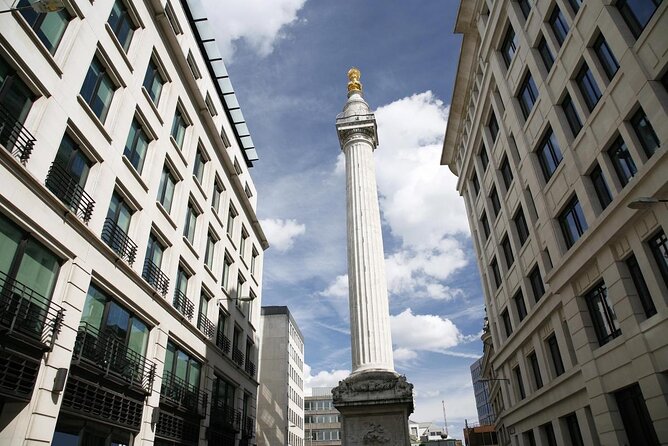
After that, you’ll see The Monument to the Great Fire of London—standing on the spot where it started—and you’ll also get visuals and context tying Roman Londinium to the city that would later burn and rebuild.
Practical note
This portion blends paid sites and included access points, so don’t plan a tight schedule for the rest of your day immediately after. You’ll likely want a buffer afterward.
London Mithraeum at Bloomberg SPACE: The Underground Finish
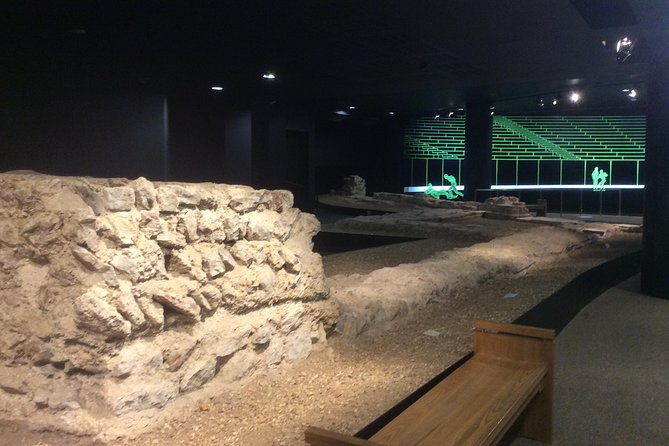
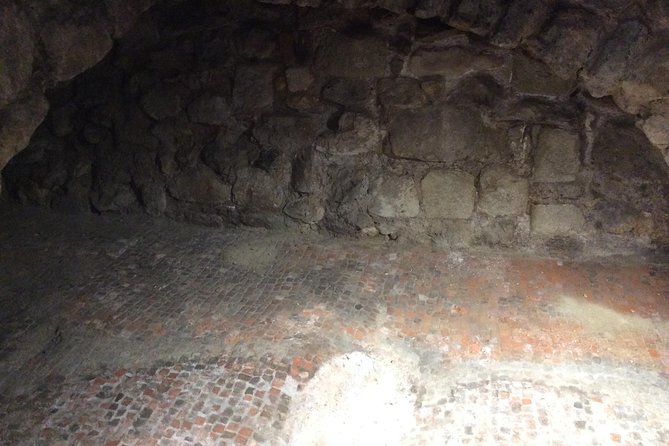
The endgame of this tour is the London Mithraeum at Bloomberg SPACE, where you’ll see hundreds of Roman artefacts and then go underground to the Temple of Mithras. This is the single biggest “wow” move on the route—not because it’s flashy, but because it’s rare to see this kind of Roman sacred space so close to modern finance and traffic.
The tour includes access for this stop, but the rules for temple-like sites still matter. Guaranteed access to the temple requires advanced booking for peak times, so if you’re traveling during a busy season or on a popular weekend, I’d book early and treat this stop as your top priority.
Right near the end, you’ll also learn about London Stone, the legendary stone tied to London’s deep age. It’s short, but it’s a fun cultural close: a Roman-era city concept followed by a long afterlife of myth and identity.
Should You Book This Roman London Private Walking Tour?
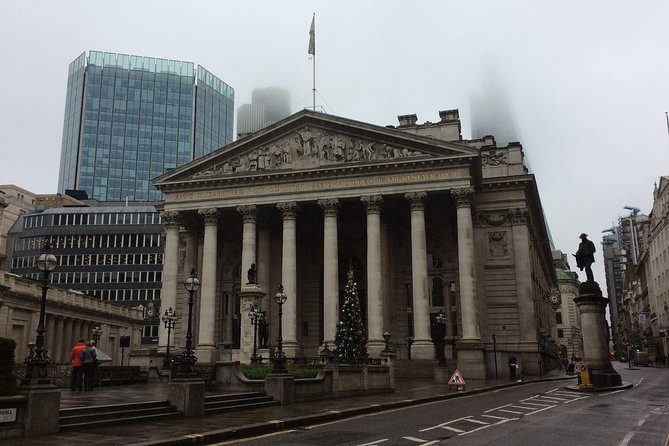
Book it if you want Roman London that feels walkable and understandable, not just a stack of famous monuments. This tour is a strong choice if you like:
- Roman remains that show up in ordinary places (churches, walls, markets, parks)
- a guide who can connect sites across time, from Romans to medieval London and beyond
- a private format where you can ask questions without feeling rushed
Skip it—or at least reconsider dates—if you hate long city walking or you can’t comfortably do a few hours on foot. It’s not a “sit down every 10 minutes” tour. And if you’re visiting during peak times, make sure your Temple of Mithras access is handled early.
If your main goal is to see Roman Londinium in a way that makes the city’s layers click, this one is built for that exact payoff.
FAQ
How long is the Roman London Private Walking Tour?
It runs about 3 to 4 hours.
Is this tour private?
Yes. It’s a private tour, and only your group participates.
Where does the tour start and end?
It starts at Panyer Alley, London EC2V 6AA and ends right by London Mithraeum | Bloomberg SPACE, 12 Walbrook, London EC4N 8AA near Bank Underground Station.
Is hotel pickup available?
Yes. You can meet your guide at a Central London hotel, and then you’ll use the Tube to reach the tour starting point.
What’s included for site entry and what isn’t?
Some stops include admission (like the Roman Amphitheatre, Royal Exchange Building, Leadenhall Market, London Wall, All Hallows By The Tower, St Dunstan In The East, St. Magnus The Martyr, and London Mithraeum). Other stops do not include admission tickets, including St. Paul’s Cathedral and Billingsgate Roman Bath House.
Do I need to book ahead for the Temple of Mithras?
Yes. The info says guaranteed access to the temple requires advanced booking for peak times.
Can I cancel for a full refund?
Yes. You can cancel for a full refund if you cancel at least 24 hours before the experience’s start time.
More Tours in London
- From London: Harry Potter Warner Bros Studio Tour
★ 4.7 · 26,588 reviews - Magical London: Harry Potter Guided Walking Tour
★ 4.7 · 22,044 reviews - London: Warner Bros. Studio Harry Potter Tour & Branded Bus
★ 4.7 · 19,194 reviews - London Big Bus Hop-On Hop-Off Tour with Optional River Cruise
★ 3.5 · 10,803 reviews - London Small Group Tour of Historical Pubs
★ 5.0 · 10,422 reviews
More Tour Reviews in London
- From London: Harry Potter Warner Bros Studio Tour
★ 4.7 · 26,588 reviews - London: Westminster to Greenwich River Thames Cruise
★ 4.5 · 22,836 reviews - Magical London: Harry Potter Guided Walking Tour
★ 4.7 · 22,044 reviews - London: Madame Tussauds London
★ 4.6 · 20,915 reviews - London: Warner Bros. Studio Harry Potter Tour & Branded Bus
★ 4.7 · 19,194 reviews
More London Walks Worth the Shoe Leather
- Magical London: Harry Potter Guided Walking Tour
★ 4.7 · 22,044 reviews - London: The Original Jack the Ripper Walking Tour
★ 4.7 · 7,833 reviews - Tour for Muggles The Ultimate Harry Potter Walking Tour in London
★ 5.0 · 4,684 reviews - London Jack The Ripper Guided Walking Tour
★ 5.0 · 3,131 reviews - London: Harry Potter Movies Walking Tour (Kids Go Free)
★ 4.7 · 3,071 reviews
Just reviewed around London





London Walking Tours, compared.
 ★ 4.7Magical London: Harry Potter Guided Walking TourFrom $2022,044 reviews
 ★ 4.7The Original Jack the Ripper Walking TourFrom $257,833 reviews
 ★ 5.0Tour for Muggles The Ultimate Harry Potter Walking Tour in LondonFrom $234,684 reviews
 ★ 5.0London Jack The Ripper Guided Walking TourFrom $03,131 reviews
 ★ 4.7Harry Potter Movies Walking Tour (Kids Go Free)From $203,071 reviews
 ★ 5.0Changing of the Guard Guided Walking Tour in LondonFrom $251,793 reviews
 ★ 4.9The Great British Rock and Roll Music Walking TourFrom $361,783 reviews
 ★ 4.8Harry Potter Walking Tour in GermanFrom $201,505 reviews