
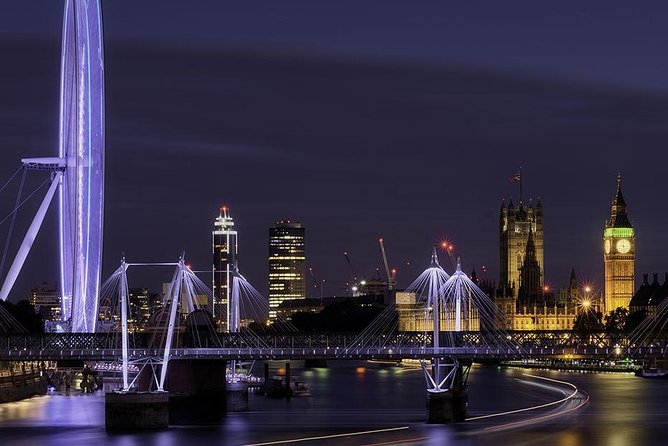
Reviewed · HISTORICAL TOURS
London’s Alternative History: A Self-Guided Audio Tour
London gets stranger when you walk with audio. This self-guided GPS-based VoiceMap route turns familiar streets into a story trail, and I like that it tells you where to look and when to turn as you go. I also love the lifetime access, so you can replay favorite stops without rebooking. One thing to consider: you need your own smartphone to run the VoiceMap app, and you should plan for some steady walking.
You start at The Piazza, 1-7 Covent Garden (WC2E 8HD) and finish near The Savoy, Strand (WC2R 0EZ). The format is simple: press play, follow the location tags, and set your own pace for about 1 to 1.5 hours.
At $9.99 per person for a one-person audio experience, it’s the kind of London deal that works best when you want stories without waiting for a meeting time. If you’re hoping for major museum ticket time, note that attractions along the way aren’t included—this is a street-walk tour with audio.
In This Review
- Key things you’ll notice right away
- How the GPS-tagged VoiceMap experience keeps you on track
- Timing and pacing that actually feel realistic
- The one practical drawback: bring your own device
- Covent Garden market: why Convent Garden became a shopper magnet
- Actors’ Church: memorials, theatre legends, and the first recorded punch-up
- The oldest theatre site: performances, hauntings, and the Man in Grey
- The quirky side of London legal history: cases and famous trials
- The Lion King and early electricity in theatre lighting
- Somerset House area: from Tudor palace to Navy office and postal development
- The Thames riverside promenade: diverting the river and finding hidden secrets
- Ladies’ Bridge: women built it in WWII, and the views reward you
- The Lamp that Lights Itself: a Victorian gas lamp powered by sewer gas
- The Savoy area: the first public building fully lit by electricity
- What you should pack and how to make it enjoyable
- Price and value: is $9.99 a good deal?
- Should you book London’s Alternative History audio tour?
- FAQ
- How long is the London’s Alternative History self-guided audio tour?
- How much does the tour cost?
- Where does the tour start and where does it end?
- Is the tour offered in English?
- Is the audio GPS-based?
- Do I need an internet connection to use it?
- What do I need to bring?
- Are museum tickets or entrance fees included?
- What is the cancellation policy?
Key things you’ll notice right away
- GPS-tagged audio that guides you location by location, not just by a map line
- Lifetime access to the tour inside the VoiceMap app
- Offline access to audio, maps, and geodata once you have the tour loaded
- Stories across theatre, law, electricity, and the Thames, not just landmarks
- A route built for pausing and taking your time, since it’s self-paced
Still deciding? A handful more London outings we rated
- Magical London: Harry Potter Guided Walking Tour
★ 4.7 · 22,044 reviews - London: Emirates Stadium Entry Ticket and Audio Guide
★ 4.7 · 5,513 reviews - London: Christmas Lights Bus Tour With Live Guide
★ 4.0 · 5,410 reviews - Stonehenge, Windsor Castle and Bath Full Day Guided Tour
★ 4.5 · 5,346 reviews
How the GPS-tagged VoiceMap experience keeps you on track
This tour’s main trick is its location-based audio. Instead of trying to match landmarks to a printed script, the narration is tagged to stops, so your phone works like a quiet, step-by-step guide. In plain terms: you shouldn’t spend the whole walk fighting directions.
You’ll also want to use headphones. Audio-style walking works best when you can hear clearly and keep your eyes up. The good news is that the experience includes offline access to audio, maps, and geodata, so you’re less dependent on spotty mobile service as you move around central London.
Timing and pacing that actually feel realistic
The route is built for about 1 to 1.5 hours, and it’s designed so you can stop to read signs, take photos, or just listen for a few extra minutes. You don’t have to sprint. If you’re the kind of person who likes to look at architecture while the story runs, you’ll be happier planning closer to 90 minutes.
The one practical drawback: bring your own device
Because the tour includes the VoiceMap application but not the smartphone, you’ll be responsible for battery life and data/offline setup. If you travel with a low battery habit, consider an external charger before you start.
Still deciding? A handful more London outings we rated
Covent Garden market: why Convent Garden became a shopper magnet
You begin in the Covent Garden area, where the streets feel lively even when you’re not trying to shop. The narration starts by explaining where the name came from: Convent Garden. Long before it was a public market scene, it was tied to the idea of a convent’s garden in medieval times.
What I like about this opening is that it gives you a mental map for the rest of the walk. Instead of treating Covent Garden as one more shopping district, you learn to see it as a place that has kept changing roles over centuries. Even if you don’t plan to browse the market, the story makes the area feel purposeful.
Possible consideration: this stop can be busy. If you’re sensitive to crowds, use the audio to your advantage: listen, then take a short breather off to the side while you wait for a gap in foot traffic.
Actors’ Church: memorials, theatre legends, and the first recorded punch-up
Next comes the area known as the Actors’ Church. It’s where many famous actors have been memorialized, which instantly gives the stop weight. Then the narration swings to a detail that feels very London: it’s also tied to London’s first recorded punch-up.
That combination works. You get the reverent side—names and memory tied to performance—then you get the human side, the messy moments that remind you history wasn’t always polite.
What you’ll want to do: look slowly around the setting as the story runs. Memorial sites can be easy to miss if you only pass through at walking speed.
The oldest theatre site: performances, hauntings, and the Man in Grey
From there, you’ll hear about what’s described as the oldest theatre site in London, with a long chain of performances and ghostly apparitions. The narration includes a specific legend: the infamous Man in Grey.
I like this stop because it doesn’t ask you to choose between culture and weirdness. You get theatre as an institution—then the folklore layer that makes London feel like it has an extra channel of stories running underneath the usual tourist facts.
Practical tip: if you’re photographing or standing still to listen, be mindful of foot traffic. This is one of those stops where it’s worth stepping slightly to the edge while you listen to the ghost stories.
The quirky side of London legal history: cases and famous trials
The tour then shifts to a different kind of drama: trials. You’ll learn about intriguing cases and famous trials that took place at this site area, showing another side of London’s character.
This section is a good balance for the theatre stops. Theatre and law both deal in public storytelling—except one is planned and one is contested. You start noticing how often London’s buildings were used for public spectacle, then later repurposed for new life.
Consideration: if you’re expecting only courthouse-style facts, you might find yourself enjoying the odd details more than the legal ones. That’s the point here: you’re chasing the offbeat connections.
The Lion King and early electricity in theatre lighting
Then the narration lands on theatre modernity and tech history together. You’ll hear about famous productions, including The Lion King, and the connection to the early days of electricity in theatre lighting.
This stop works best if you like the moment where something practical changes how people experience art. Theatre lighting is one of those inventions you don’t think about until you’re reminded that audiences used to experience performances with very different lighting conditions.
What you’ll get out of it: a sense that progress happened in rooms you can still walk past today, not just in textbooks. It makes the city feel like an active lab for ideas.
Somerset House area: from Tudor palace to Navy office and postal development
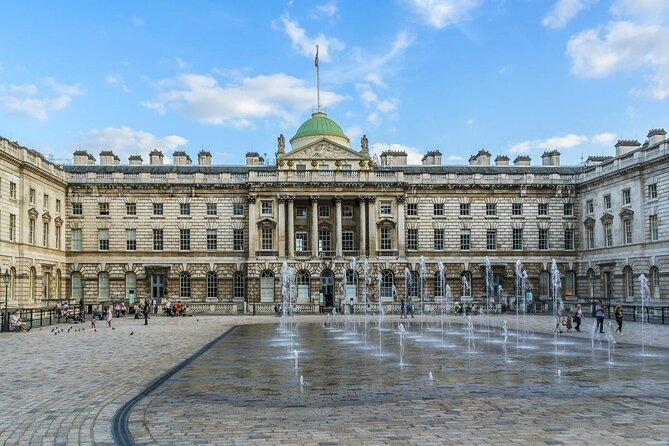
One of the more interesting transformations in the route is described as a grand building shifting roles from a Tudor palace to a Navy office, plus its role in the development of the British postal system.
This is the kind of stop that’s easy to skim if you only look at architecture. The narration helps you connect function to history: a palace becomes an office, an office becomes part of communications, and suddenly you understand why certain streets and river-adjacent zones mattered.
Possible drawback: if you prefer storylines that stay focused on entertainment or architecture only, this stop mixes in institutional history. Personally, I find the variety keeps the walk from getting monotone.
The Thames riverside promenade: diverting the river and finding hidden secrets
Next, you move along the riverside promenade. Here the narration explains the construction involved diverting the River Thames and what that work revealed about hidden river secrets.
This is one of the “wait, London can do that?” stops. You’re not just hearing that London built things—you’re hearing that London physically reshaped its geography to make space for what it needed. The Thames is already dramatic, but learning that the city altered its path makes the whole waterline feel like a human project.
Practical note: riverside areas can be windy. If you’re listening with volume turned up, you might want to manage headphone comfort so you don’t crank the sound too high.
Ladies’ Bridge: women built it in WWII, and the views reward you
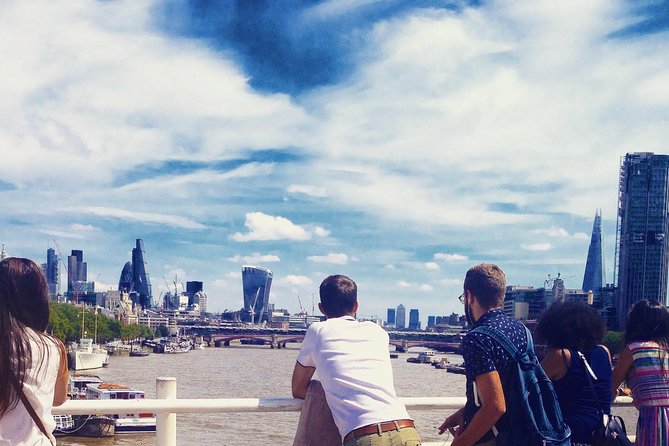
You’ll then reach Ladies’ Bridge, described as largely built by women during World War II, with spectacular views of London.
This stop has two jobs. First, it corrects the usual story that war-era construction was only done by men. Second, it gives you something immediate for your effort: a viewpoint. The narration makes the bridge feel like infrastructure with a message, not just a crossing point.
What to do here: pause for a minute. Audio tours work best when you give your brain time to absorb what’s around you.
The Lamp that Lights Itself: a Victorian gas lamp powered by sewer gas
One of the most fun moments is the stop with the last remaining Victorian gas lamp in London, powered by sewer gas and nicknamed the Lamp that Lights Itself.
This is exactly the kind of London detail that makes you sound like a local at dinner. It’s technical, weird, and also oddly charming. You’ll hear how it works in story form, turning an everyday-looking object into a piece of engineering folklore.
Consideration: like any outdoor feature, lighting and visibility depend on time of day and weather. The audio still works even if the lamp isn’t perfectly visible, but if you want the full visual effect, plan for a time when it’s easy to spot.
The Savoy area: the first public building fully lit by electricity
The tour ends near The Savoy (Strand), where the narration describes the first public building in the world to be lit entirely by electricity. You’ll also hear about luxurious guests and infamous parties tied to its reputation.
This finale ties the walk together. Earlier you heard about theatre lighting taking early electricity steps. Here, it becomes the story’s finish line: what happens when a whole public space adopts a new power source.
Why it’s satisfying: the route starts with medieval roots and ends with electric glamour, all while staying in one walkable zone. It makes London feel like one connected timeline rather than a pile of separate sights.
What you should pack and how to make it enjoyable
For a self-guided walk like this, the basics matter more than any fancy planning.
- Comfortable shoes: you’re doing a real walk between multiple stops.
- Charged phone: the smartphone is not included, and your battery is part of the experience.
- Headphones: you’ll get the best results when the audio is clear.
- A flexible mindset: you’ll get more from listening if you let yourself pause without rushing.
Also, because it’s a private tour/activity (your group only), you can keep the pacing calm. No need to wait for anyone’s pace but your own.
Price and value: is $9.99 a good deal?
At $9.99 per person, this is priced like an impulse-friendly add-on day. The key is what you get for that money: a 1–1.5 hour self-paced walk with lifetime access, plus offline audio and maps.
If your goal is to add stories to a walk you already want to do, this cost feels light. If you’re the type who only enjoys tours where you can sit down with a guide for every detail, this might feel too DIY. But if you like walking and listening—especially when the stories lean offbeat—this is strong value.
And the lifetime access part matters more than it sounds. You can revisit a favorite stop later when you’re back in London without paying again.
Should you book London’s Alternative History audio tour?
Book it if you want London with personality—the kind of history that mixes theatre, legal oddities, and electricity with street-level details. It’s especially good for days when you want to walk between major sights but keep your own rhythm.
Skip or rethink it if you hate self-navigation or you’re likely to run out of phone battery. Also, if you’re expecting entrance tickets or museum time, you’ll need to plan that separately since tickets and entrance fees aren’t included.
If you want a low-cost way to turn central London into a story walk, this one makes a lot of sense.
FAQ
How long is the London’s Alternative History self-guided audio tour?
It takes about 1 hour to 1 hour 30 minutes, depending on your pace and how long you spend at each stop.
How much does the tour cost?
The price is $9.99 per person.
Where does the tour start and where does it end?
It starts at The Piazza, 1-7 Covent Garden, London WC2E 8HD, UK, and ends at The Savoy, Strand, London WC2R 0EZ, UK.
Is the tour offered in English?
Yes, it’s offered in English.
Is the audio GPS-based?
Yes. The audio commentary is GPS-based and tagged to each location.
Do I need an internet connection to use it?
Offline access is included for audio, maps, and geodata.
What do I need to bring?
You’ll need a smartphone, since it’s listed as not included. The VoiceMap application is included with the tour.
Are museum tickets or entrance fees included?
No. Tickets or entrance fees to museums or other attractions along the way are not included.
What is the cancellation policy?
Free cancellation is available up to 24 hours in advance for a full refund. If you cancel less than 24 hours before the start time, you won’t get a refund.
More Guided in London
- Magical London: Harry Potter Guided Walking Tour
★ 4.7 · 22,044 reviews - London: Emirates Stadium Entry Ticket and Audio Guide
★ 4.7 · 5,513 reviews - London: Christmas Lights Bus Tour With Live Guide
★ 4.0 · 5,410 reviews - Stonehenge, Windsor Castle and Bath Full Day Guided Tour
★ 4.5 · 5,346 reviews - London Jack the Ripper Guided Tour with Ripper-Vision
★ 4.5 · 4,840 reviews
More Tours in London
- From London: Harry Potter Warner Bros Studio Tour
★ 4.7 · 26,588 reviews - Magical London: Harry Potter Guided Walking Tour
★ 4.7 · 22,044 reviews - London: Warner Bros. Studio Harry Potter Tour & Branded Bus
★ 4.7 · 19,194 reviews - London Big Bus Hop-On Hop-Off Tour with Optional River Cruise
★ 3.5 · 10,803 reviews - London Small Group Tour of Historical Pubs
★ 5.0 · 10,422 reviews
More Tour Reviews in London
- From London: Harry Potter Warner Bros Studio Tour
★ 4.7 · 26,588 reviews - London: Westminster to Greenwich River Thames Cruise
★ 4.5 · 22,836 reviews - Magical London: Harry Potter Guided Walking Tour
★ 4.7 · 22,044 reviews - London: Madame Tussauds London
★ 4.6 · 20,915 reviews - London: Warner Bros. Studio Harry Potter Tour & Branded Bus
★ 4.7 · 19,194 reviews
Just reviewed around London





Historical Tours, compared.
 ★ 5.0London Small Group Tour of Historical PubsFrom $4010,422 reviews
 ★ 5.0Soho Music & Historic Pubs TourFrom $441,993 reviews
 ★ 4.9Historic Pubs of Central London Walking TourFrom $391,065 reviews
 ★ 4.9Soho Music and Historic Pubs Walking TourFrom $39836 reviews
 ★ 5.0Royal Historic Pubs Walking Guided Tour in LondonFrom $44803 reviews
 ★ 5.0Private Group: Historical Pub Walking Tour of LondonFrom $173660 reviews
 ★ 4.6Rock ‘n’ Roll History TourFrom $74645 reviews
 ★ 4.7Westminster Abbey Tour with a Royal Heritage GuideFrom $93614 reviews
Browse the lists this tour appears in