
Reviewed · IMMERSIVE GAMES & ESCAPE ROOMS
London Sherlock Holmes: Crack the Case Walking Adventure
Sherlock Holmes turns London into a puzzle walk. You follow a story inspired by Arthur Conan Doyle, hopping between places you’d normally just pass by, and cracking 13 puzzle challenges along the way. It’s a fun way to see both “famous” and less-obvious corners of the city—starting right at BBC Broadcasting House.
My favorite part is the freedom to play at your pace. There’s no tour guide to keep up with, and the app-based format lets you pause, resume, and spend as long as you like at each clue stop. One caution: the mystery relies on clear app prompts and logic, so if you get stuck, you’ll want patience (and a phone with enough battery for the whole route).
In This Review
- Key things to know before you go
- Sherlock Holmes by App: how the Crack the Case walk really works
- Route Snapshot: BBC Broadcasting House to 221B Baker Street
- Stops 1–4: clues at BBC, Langham, Queen Anne Street, and Harley Street
- Practical tip for these early stops
- Stops 5–8: Smile Time Dental Lab, Upper Wimpole Street, UCLH Heart Hospital, New Cavendish Street
- A good expectation to set
- Stops 9–12: Sherlock Mews, Sherlock Holmes Statue, Baker Street Tube Station, then the museum finish
- What I’d do at the finish
- Price and value: $7.20 for a 50–80 minute mystery
- Who this self-guided Sherlock walk is best for
- Potential snag points: when puzzles feel unclear or directions act up
- Quick practical checklist (so the game stays fun)
- Should you book this Sherlock Holmes Crack the Case walk?
- FAQ
- How long does the London Sherlock Holmes Crack the Case walking adventure take?
- Where does the adventure start and end?
- Is there a tour guide included?
- What do I receive to play the game?
- Do I need to buy entry tickets for attractions along the route?
- Can I pause and resume the game?
- What language is the game available in?
- Is the experience accessible by public transportation?
- Is it suitable for most people?
- Are service animals allowed?
Key things to know before you go
- A 13-step mystery game built around Sherlock Holmes, not just a scenic stroll
- Free admission at most stops, with the final museum ticket sold separately
- Self-paced walking with “pause/resume anytime” flexibility built in
- A route mix of iconic and everyday London (media, hotels, streets, hospitals)
- No guide required since you’re given a mobile access code and directions in the app
Locked in for more: other games and rooms
- London: Sherlock Holmes-Themed Walking Tour
★ 4.7 · 756 reviews - Sherlock: The Official Live Game
★ 4.5 · 460 reviews - Moriarty’s Game: The Professor’s Invitation by HiddenCity
★ 5.0 · 445 reviews - The Hunt for the Cheshire Cat by HiddenCity
★ 5.0 · 225 reviews
Sherlock Holmes by App: how the Crack the Case walk really works
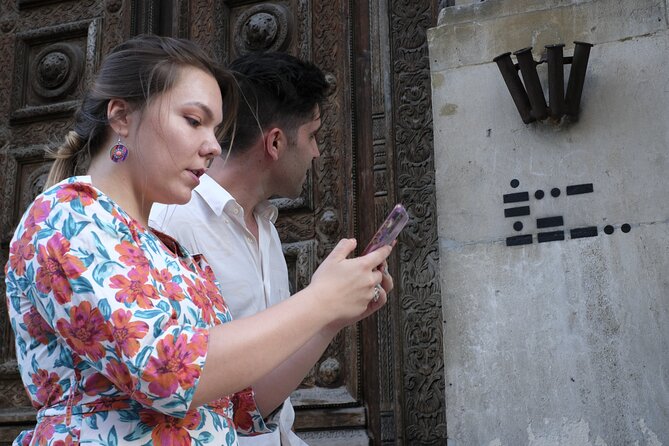
This is a self-guided walking adventure powered by your phone. After you book, you receive a mobile access code and then use it to play through the story from stop to stop. The “tour” isn’t led by a person—instead, you get a clue at each location, solve a puzzle, and the game feeds you the next set of directions.
The key detail for your expectations: you’re not touring London like a guided group. You’re using your walking time to solve a chain of mini-challenges. If you like games where you actively notice your surroundings—street name signs, building facades, the immediate area around you—this format will feel satisfying. If you’re hoping for someone to explain London history at each corner, you may find it more like a puzzle hunt than a classic sightseeing tour.
Duration is listed as 50 minutes to 1 hour 20 minutes (approx.), depending on how long you linger and how fast you solve. Each stop is roughly set as a quick session (often around 5 minutes), but you can spend more time if you want to re-read clues, look around, or just enjoy the walk.
Route Snapshot: BBC Broadcasting House to 221B Baker Street
Your walk starts at BBC Broadcasting House, Portland Pl, London W1A 1AA. That’s a strong opener because you begin the story immediately—there’s no slow ramp-up. You’ll then move through a sequence of clue locations, ending at the Sherlock Holmes Museum, 221B Baker St, London NW1 6XE.
The end point matters for planning. The museum is where the story and the London exploration game end, but the museum entry ticket is not included. So you have a choice at the finish: treat the last clue as a game victory and move on, or add museum time if you want to see the subject matter up close.
The route is also designed for real walking logistics: it’s near public transportation, and the walking segments are short enough that you’re not stuck with a giant hike if you’re tired or want breaks.
Stops 1–4: clues at BBC, Langham, Queen Anne Street, and Harley Street
You kick off at BBC Broadcasting House (former headquarters). You get your first clue at the starting building, which is meant to unlock the next part of the story and tell you where to go next. Starting at a recognizable “institution” like this gives you a clear anchor point, and it helps the game feel grounded rather than random.
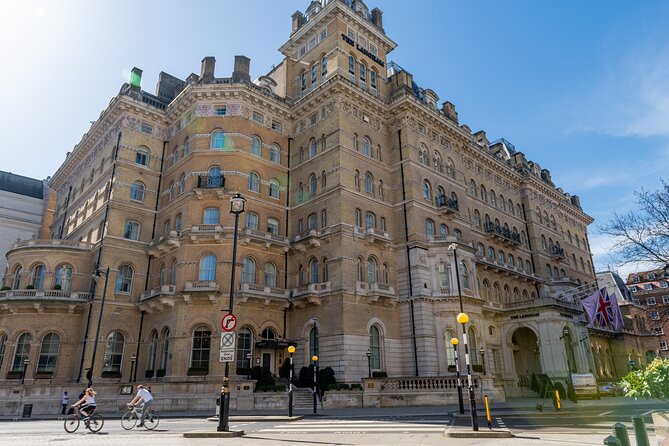
Next is The Langham, London. The app delivers a new clue and you can stop for as long as you like before continuing. This stop is a reminder that the game is built around short “solve and go” loops. If you’re traveling with others who might want a slower pace, these flexible stop lengths help.
After that, you’ll reach Queen Anne Street for another clue challenge. Queen Anne Street is one of those London streets where the city looks polished and busy from the sidewalk. For the game, that’s actually useful: you can focus on finding what the app wants you to notice without needing to detour far.
Stop 4 is Harley Street. Harley Street is another location where the surroundings feel distinct—an area you can recognize even if you don’t know it well. The game again keeps you moving in a focused way: clue, puzzle, then app directions onward.
Still deciding? A handful more London outings we rated

Practical tip for these early stops
Before you start, I’d make sure you can comfortably read your phone at walking speed. These early stages are where the story momentum builds, and it’s easier when your screen is bright and your hands are free enough to interact.
Stops 5–8: Smile Time Dental Lab, Upper Wimpole Street, UCLH Heart Hospital, New Cavendish Street
This middle stretch is where the route gets more “everyday London” (while still staying very much in the Holmes orbit through the story theme). You’ll move from the quieter rhythm of solving clues outdoors into locations tied to health and services.
Stop 5 is Smile Time Dental Lab. It’s a fun contrast piece: you’re solving Sherlock Holmes–inspired puzzles while standing outside a modern business, not a costume-filled set. The challenge here is to stay in game mode—don’t get distracted by the fact that it’s not a tourist museum.
Stop 6: Upper Wimpole Street. Again, the structure stays consistent. You receive a clue at the location, solve the puzzle, and the app points the way forward. This part of the walk suits people who like steady pacing and don’t need every stop to be “legendary.” It’s about keeping the momentum of the mystery.
Stop 7 is University College Hospital at Westmoreland Street – The Heart Hospital. A hospital stop can be intimidating in real life, mostly because it’s an active place. But for this game it works as an obvious, high-clarity landmark: you know exactly where you are, and the clue-solving gives you a reason to slow down for a moment.
Stop 8 brings you to Chiltern Street. The game keeps you outdoors and moving. Chiltern Street is a place where you’ll likely feel the “London neighborhoods” vibe: less theme-park, more actual city walking.
A good expectation to set
Because the stops aren’t all “famous tourist sites,” the value here comes from noticing your way through the city. You’re not only sightseeing—you’re doing a logic-and-observation exercise while walking between real addresses.
Stops 9–12: Sherlock Mews, Sherlock Holmes Statue, Baker Street Tube Station, then the museum finish
Now you turn into the most on-theme section. The game starts leaning harder into Sherlock Holmes landmarks, and the walking route becomes a satisfying approach toward Baker Street.
Stop 9 is Sherlock Mews. This is one of those spots that feels like it belongs in a Holmes story because of the name alone. In the game, it’s not just atmosphere—you get another clue and another puzzle step before moving on.
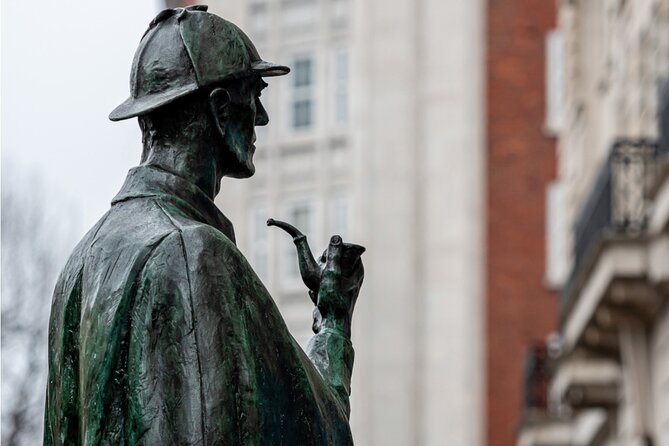
Stop 10: Sherlock Holmes Statue. This is a high-energy checkpoint. You’re not just passing it; you’re meant to interact with the story beat tied to it. If you like the feeling of “we’re getting closer,” this is where it kicks in.
Stop 11 is Baker Street tube station. That transition matters. One moment you’re solving in a classic Holmes-feeling corner, and the next you’re right by transit. It’s practical: if you want to jump back to your hotel or keep exploring after the game, transit access is right there.
Stop 12 is The Sherlock Holmes Museum, where you finish. The game ends here, but your museum experience isn’t automatically included. If you want to spend time inside, plan extra time so you’re not rushed after you complete the final clue.
What I’d do at the finish
When you reach the museum, take a breath before you decide what to do next. The game ending is a moment of closure, and you’ll enjoy it more if you don’t immediately force yourself into rushing inside.
Price and value: $7.20 for a 50–80 minute mystery
At $7.20 per person, this is an unusually low price for a structured walking experience. The value isn’t just the ticket cost—it’s that you’re effectively paying for a route, a story, and 13 puzzles delivered via your phone.
Also, it’s short. A typical 50 minutes to 1 hour 20 minutes gives you a low-commitment activity, which is great if you want one “thing to do” during a half day in London. If your plan is already full, this kind of time-boxed game fits well.
What you should factor in: there’s no guided commentary included. The experience is the puzzle and the self-driven walking. If you enjoy figuring things out and you like interactive activities, the price feels even better. If you prefer a person telling stories, you may see it as “cheap because it’s not a classic tour.”
Who this self-guided Sherlock walk is best for
I think this works best for people who like:
- Interactive sightseeing (you’re doing something, not just looking)
- Puzzle-solving during transit-friendly walking loops
- Flexible schedules (you can pause/resume and linger)
It also works well for mixed groups where not everyone has the same pace. Since you can stop for as long as you like at the clue locations, you don’t have to keep “matching the leader’s pace” the way you would on a traditional group tour.
It may be less ideal if you:
- Want a guided explanation at every stop
- Dislike puzzle formats where clarity depends on reading app prompts carefully
- Need a very predictable script with no detours and no surprises
The good news: the game is listed as suitable for most travelers, and it’s marked as near public transportation, which makes it easier to build into a normal sightseeing day.
Potential snag points: when puzzles feel unclear or directions act up
From the experience format, there are two realistic friction points.
First, puzzle clarity. One piece of feedback indicated some questions could feel unclear or difficult, with help sometimes needed. My advice is simple: treat it like a team activity. Bring a friend or family member you can collaborate with, and don’t let one confusing clue steal your whole vibe.
Second, routing and directions. There was also feedback about missing directions between specific locations, plus mention of an outdoor clue element being temporarily covered during a previous run. The operator responded that they had fixed issues in the game. Still, I’d recommend two things:
- Keep your phone charged and screen brightness up.
- If something seems off, pause and re-check the app prompt before you guess—guessing costs time and can break the story flow.
If you’re the type who hates uncertainty, it may be worth doing this early in your day. That way, if you run into problems, you still have time to recover and adjust plans.
Quick practical checklist (so the game stays fun)
- Bring a phone with enough battery for the whole session. The adventure runs on mobile access.
- Wear shoes that handle city sidewalks and short stops.
- Give yourself a little buffer time if you care about finishing at a specific moment.
- Decide ahead of time whether you’ll go into the museum, since the museum ticket is not included.
Should you book this Sherlock Holmes Crack the Case walk?
I’d book it if you want a low-cost way to mix London strolling with Sherlock Holmes–inspired problem solving. For $7.20, you get a structured route, 13 puzzles, and the freedom to play at your own speed—plus the finish at Baker Street is a natural place to keep exploring.
Skip it (or swap for a guided tour) if you want explanations from a person, or if you strongly dislike puzzle games. Since there’s no tour guide included, the enjoyment depends on your willingness to read clues and work through them at your own pace.
If you’re curious, this is the kind of activity that can turn an ordinary walk into a real event. And even when a clue takes extra thought, you’ll still end with a satisfying trail of stops—and a clear reason to be near Baker Street when you’re done.
FAQ
How long does the London Sherlock Holmes Crack the Case walking adventure take?
It’s listed as approximately 50 minutes to 1 hour 20 minutes.
Where does the adventure start and end?
It starts at BBC Broadcasting House, Portland Pl, London W1A 1AA and ends at The Sherlock Holmes Museum, 221B Baker St, London NW1 6XE.
Is there a tour guide included?
No. A tour guide is not included.
What do I receive to play the game?
You get a mobile access code and 13 puzzle challenges, along with a mystery storyline inspired by Arthur Conan Doyle.
Do I need to buy entry tickets for attractions along the route?
Attraction entry tickets are not needed to complete the tour. The Sherlock Holmes Museum ticket is not included.
Can I pause and resume the game?
Yes. The experience is designed to let you pause/resume anytime, and you can continue at your own pace.
What language is the game available in?
It’s offered in English.
Is the experience accessible by public transportation?
Yes. It’s listed as near public transportation.
Is it suitable for most people?
The experience states most travelers can participate.
Are service animals allowed?
Yes. Service animals are allowed.
More Walking Tours in London
- Magical London: Harry Potter Guided Walking Tour
★ 4.7 · 22,044 reviews - London: The Original Jack the Ripper Walking Tour
★ 4.7 · 7,833 reviews - Tour for Muggles The Ultimate Harry Potter Walking Tour in London
★ 5.0 · 4,684 reviews - London Jack The Ripper Guided Walking Tour
★ 5.0 · 3,131 reviews - London: Harry Potter Movies Walking Tour (Kids Go Free)
★ 4.7 · 3,071 reviews
More Tour Reviews in London
- From London: Harry Potter Warner Bros Studio Tour
★ 4.7 · 26,588 reviews - London: Westminster to Greenwich River Thames Cruise
★ 4.5 · 22,836 reviews - Magical London: Harry Potter Guided Walking Tour
★ 4.7 · 22,044 reviews - London: Madame Tussauds London
★ 4.6 · 20,915 reviews - London: Warner Bros. Studio Harry Potter Tour & Branded Bus
★ 4.7 · 19,194 reviews
More Games and Escape Rooms
- London: Sherlock Holmes-Themed Walking Tour
★ 4.7 · 756 reviews - Sherlock: The Official Live Game
★ 4.5 · 460 reviews - Moriarty’s Game: The Professor’s Invitation by HiddenCity
★ 5.0 · 445 reviews - The Hunt for the Cheshire Cat by HiddenCity
★ 5.0 · 225 reviews - Sherlock Holmes Walking Tour in London
★ 5.0 · 207 reviews
Just reviewed around London





Immersive Games & Escape Rooms, compared.
 ★ 4.7Sherlock Holmes-Themed Walking TourFrom $18756 reviews
 ★ 4.5Sherlock: The Official Live GameFrom $48460 reviews
Moriarty’s Game: The Professor’s Invitation by HiddenCityFrom $40445 reviews
 ★ 5.0The Hunt for the Cheshire Cat by HiddenCityFrom $40225 reviews
 ★ 5.0Sherlock Holmes Walking Tour in LondonFrom $23207 reviews
 ★ 3.9Jack The Ripper and Sherlock Holmes Bus TourFrom $80195 reviews
 ★ 5.0Interactive Jack the Ripper Night Walk: London’s Murder MysteryFrom $22171 reviews
 ★ 5.0Epic 60 Minute Free-Roam Virtual Reality Experience at NavrtarFrom $69160 reviews
Browse the lists this tour appears in