
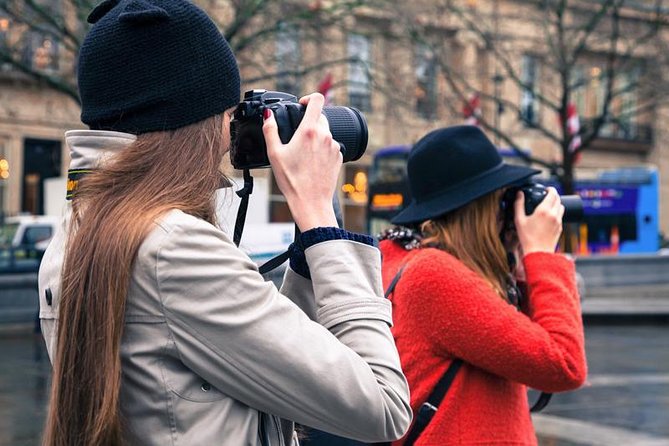
Reviewed · PHOTOGRAPHY SESSIONS
London Photography Tour – Private Tour
Your camera will start behaving in London. This private London Photography Tour turns classic sights into real photo practice, with hands-on coaching from Fine Art pro Lou. You walk central London, shoot as you go, then get feedback that helps you repeat the results later.
I love the way you learn the basics fast, like aperture and depth of field, right where the scenery actually tests your choices. I also love the photo review and skill-building coaching, so you leave with more than a pile of pictures.
One consideration: you’re on your feet for about four hours across major landmarks, so plan for crowds, lots of walking, and weather that can change quickly.
In This Review
- What makes this tour work so well
- A private London photography tour led by Fine Art pro Lou
- Price and value: what you’re really paying for
- Meeting at Charing Cross and finishing by Victoria Embankment
- Stop 1: Trafalgar Square shooting—light, framing, and far-reaching views
- Why this stop is a strong start
- The National Gallery moment—angles of view and architectural contrast
- Leicester Square portraits and light practice—Shakespeare, Chaplin, and creative control
- A quick takeaway to try yourself
- Piccadilly Circus working break—camera handling, white balance, and buses
- Horse Guards Parade and Whitehall—uniform portraits, shutter speed, and flash fill
- Big Ben and Houses of Parliament—statues, scale, and freezing the iconic
- A quick lens mindset
- Westminster Abbey outside—the scale problem solved with framing and zoom choice
- London Eye across the river—river light, depth of field, and shutter speed
- What to bring so you can actually learn (not just shoot)
- My practical tip for phones
- Who should book this private London photography tour
- Should you book it? My honest take
- FAQ
- How long is the London Photography Tour?
- Is this tour private?
- Where does the tour start and end?
- What landmarks are included?
- Is the tour in English?
- Do I need to bring a camera?
- Does the tour work with smart phones?
- Is admission included?
- Does the tour include lunch or refreshments?
- Does the tour operate in bad weather?
What makes this tour work so well
- Lou teaches camera settings while you shoot, not in a classroom
- Landmark-by-landmark practice, from Trafalgar Square to the London Eye
- Small private group feel for personalized framing and focus help
- Short working break at Piccadilly Circus to check progress mid-tour
- Works with smart phones and digital cameras, so you’re not stuck using one device
Still deciding? A handful more London outings we rated
- Harry Potter Studios & Private Transfer from Central London
★ 4.5 · 6,134 reviews - The Premier Classic London: Private 4-Hour Tour in a Black Cab
★ 5.0 · 2,737 reviews - Stonehenge Inner Circle Private Tour from London with Bath Visit
★ 5.0 · 1,909 reviews - Private Tour: Black Taxi Tour of London
★ 5.0 · 1,153 reviews
A private London photography tour led by Fine Art pro Lou
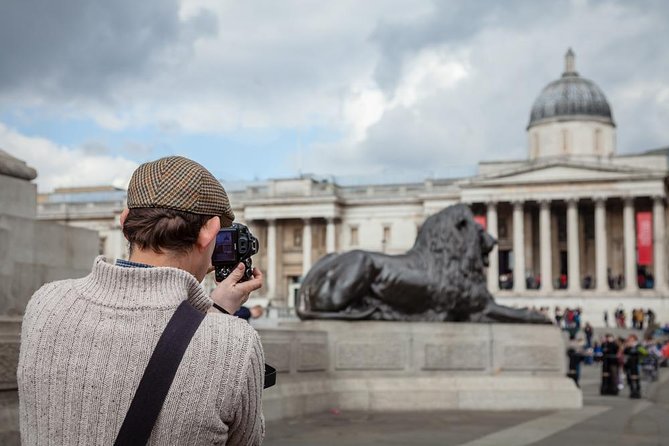
This isn’t a sit-and-listen photo lesson. It’s a guided walk where you make choices with your own camera and then get corrected on the spot—composition, framing, exposure, and focus. The payoff is practical: you learn how to see a scene and how to translate that into settings, whether you shoot on a DSLR, mirrorless, or a phone.
The guide, Lou, is a Fine Art photographer with teaching experience, and that teaching style shows up in how she works. In past sessions, people highlighted how encouraging and step-by-step Lou can be, especially for beginners who feel awkward with manual controls. Others also mentioned that she handles different cameras well, which matters when your group has a mix of gear types.
And because it’s private (just your group), you’re not competing for attention or waiting your turn to ask why your photo looks flat or blurry. That alone is a big value point for a tour at this price.
Price and value: what you’re really paying for
At $336.40 per person for about 4 hours, you’re not just buying access to landmarks. You’re buying:
- expert, on-the-ground tuition from a professional photographer
- personalized help for your camera and skill level
- a route that hits multiple iconic spots in one walk
- feedback on what you captured and how to improve next
For London, the pricing makes sense if you like structured learning. You could wander on your own and take photos of the same places—but you’d likely repeat the same mistakes without someone pointing them out. Here, the goal is to help you leave with real skills: how to frame, when to change aperture, how to adjust shutter speed, and how to get sharper focus.
If you already know your way around exposure triangles and composition, you may still find value in the targeted landmark practice. The tour is designed to give quick, repeatable “try this” moments rather than a slow, generic lecture.
Meeting at Charing Cross and finishing by Victoria Embankment
You start at Charing Cross (London WC2N 5DP), near the Charing Cross rail and tube area. The walk ends at Victoria Embankment. That matters because it keeps the route logical: you begin in a central hub, then work across the West End toward Westminster and over to the riverside views.
The tour runs in English, and it’s designed for “bring your own camera” learning. They also mention mobile ticket use, which is handy if you like everything in one place on your phone.
One more practical note: the tour runs in all weather. So if you’re hoping for perfect skies, you might be disappointed. If you’re hoping to learn how light changes your photos, you’ll actually be in a great mindset.
Still deciding? A handful more London outings we rated
Stop 1: Trafalgar Square shooting—light, framing, and far-reaching views
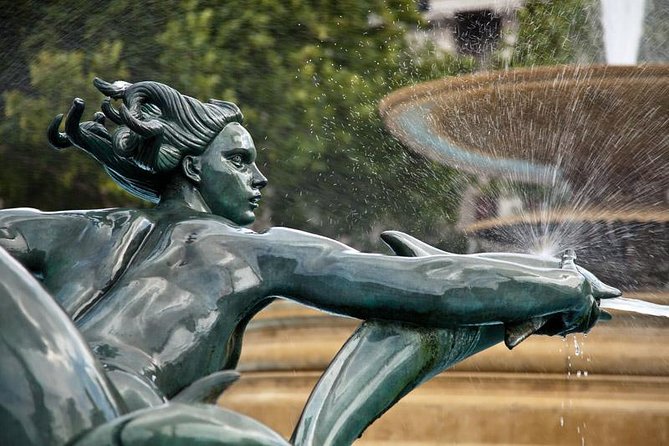
Trafalgar Square is the kind of place that makes your camera work harder—in a good way. You get classic London landmarks clustered close together: the National Gallery nearby, famous lion statues, fountains, and plenty of carved detail. You also have street entertainers and chalk artists in the mix, which is perfect for practicing candid street shots.
This stop is where the tour introduces key concepts through action. You learn about aperture, depth of field, and using light effectively. In plain terms, you’re practicing how to make one subject crisp while the background feels cinematic—or how to keep enough detail sharp when the scene has lots going on.
There’s also time to build composition skills, including framing and creative positioning. A standout tip idea here is learning how to capture the feel of the square, not just the monuments. That often means thinking about angles—where you place the horizon, how much empty space you include, and how to keep the image from looking like a postcard copy.
Why this stop is a strong start
You’ll finish this section with quick confidence: you’ll know how the same square can look dramatic or calm depending on settings and framing. It’s a good way to get your “photographer brain” turned on before you move deeper into the route.
The National Gallery moment—angles of view and architectural contrast
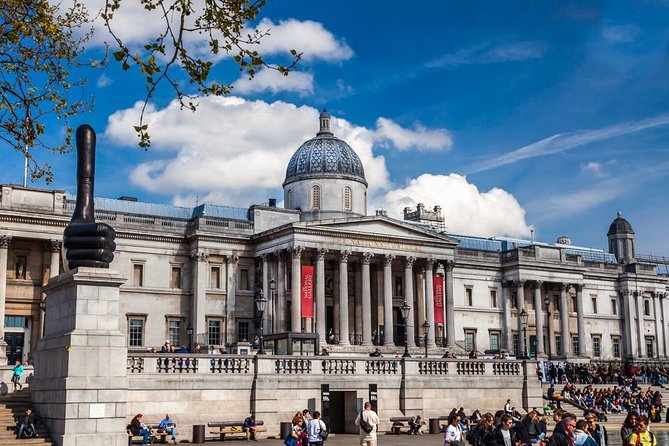
Next you head to the National Gallery. This is a different challenge than Trafalgar Square: more architecture, more texture, and more lines to manage.
The coaching focus here includes:
- angles of view
- depth of field
- focusing techniques
In practice, this is where you learn to “control the frame.” Buildings can make photos look messy because there’s so much structure. You’re guided to choose the angle that simplifies the scene—then set focus so the building edges look intentional, not accidentally soft.
You’ll also get a push toward modern compositions rather than only wide, obvious shots. For me, that’s one of the most useful parts of any London photo tour: the chance to photograph familiar landmarks in a way that doesn’t feel lazy.
Leicester Square portraits and light practice—Shakespeare, Chaplin, and creative control
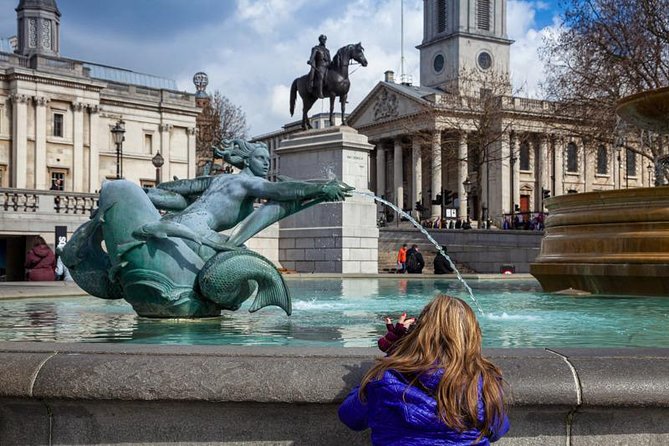
Leicester Square brings movie-premier energy, gardens and fountains, and big faces made of stone and bronze. You’ll photograph a statue of William Shakespeare dominating the gardens, and you’ll also work on portraits such as a Charlie Chaplin subject.
What makes this stop valuable is the mix of subjects. You’re not only shooting wide views; you’re also practicing how to isolate a portrait within a busy scene. The lesson themes include composition and framing, how light affects your pictures, and technical ideas like aperture values and depth of field.
You’ll also experiment with varying angles of view, which helps you avoid the common mistake of shooting everything from eye level. Small changes in position can turn a flat scene into a photo with depth.
A quick takeaway to try yourself
When you see a statue, don’t just shoot it straight on. Try shifting to an angle where the background shapes the subject instead of cluttering it. That is the kind of thinking the guide pushes during the stop.
Piccadilly Circus working break—camera handling, white balance, and buses
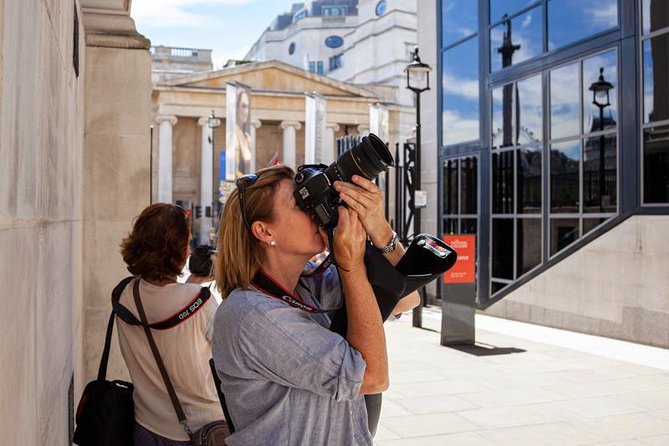
Piccadilly Circus is loud visually: phone boxes, buses, signs, and the Statue of Eros nearby. It’s also one of the best places in central London to practice color and exposure choices because there’s so much red, bright signage, and mixed lighting.
This section includes time to work through camera handling, composition, light, and white balance, plus “how to see locations with a fresh perspective.” That phrase matters because the trick in a place like this is not taking more photos—it’s taking photos that look like you made smart decisions.
There’s also a short working break built in to review progress and plan the rest of the route. That’s genuinely useful, because it lets you correct issues early. If your shots are too dark, too soft, or too washed out, you can fix it while you still have other stops ahead.
Horse Guards Parade and Whitehall—uniform portraits, shutter speed, and flash fill
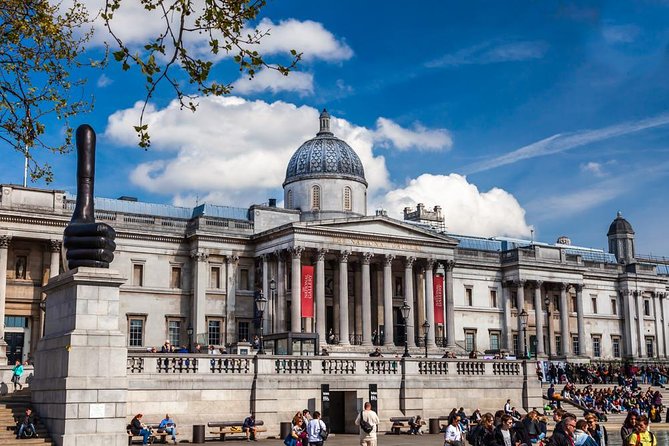
Now the tour shifts from signs and squares to people and action. At Admiralty Arch, Horse Guards Parade, and Whitehall, you’ll photograph horses, sentries, and colorful uniforms. That gives you great material for portraits with strong shapes and lots of detail.
The coaching here is specifically aimed at posing and freezing motion. You learn about:
- aperture values for portraits
- shutter speed to freeze action
- focusing techniques
- fill in flash (when needed)
That last one is practical: London daylight can still throw harsh shadows, and uniforms with bright highlights can fool your camera meter. Knowing when to use flash fill means you can keep your subject strong without blowing out detail.
You also pass major sites like the Cabinet War Rooms and statues honoring women of the Second World War, plus you’ll explore iconic Westminster elements like a Tube sign. Those small contextual photo opportunities help your final set feel like more than standalone landmark images.
Big Ben and Houses of Parliament—statues, scale, and freezing the iconic
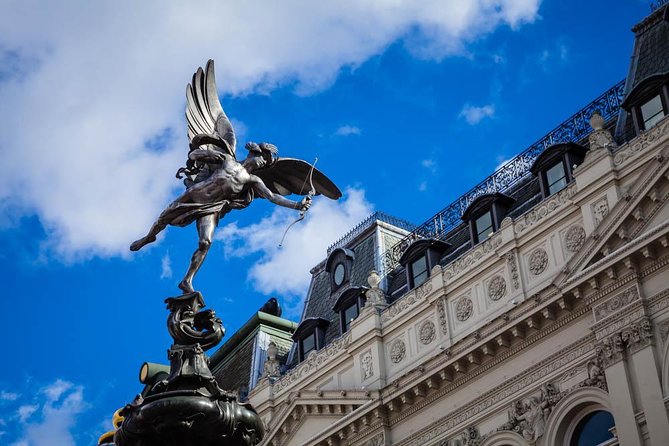
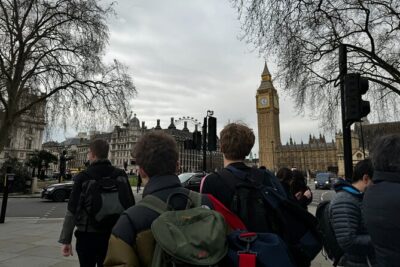
Westminster is where London becomes truly photogenic and truly unforgiving for sloppy framing. You get time at Big Ben and the Houses of Parliament, plus Parliament Square statuary including figures like Winston Churchill, Gandhi, and Nelson Mandela.
Here, the coaching turns toward scale and landscape-like composition logic—how to show the monument’s size without making the photo look empty. You’ll also focus on how to capture the statues against the backdrop of Parliament, which is tricky because backgrounds are high-contrast and busy.
For action and sharpness, you’ll hear about shutter speed and focusing techniques again. The goal is to help you avoid the common blur issue when you’re photographing people moving or when wind and camera shake combine on a long focal length.
A quick lens mindset
Even though the tour mentions “lens choice” and “zoom selection” around Parliament and Westminster Abbey, you can use the same idea everywhere: zoom in when you need separation, zoom out when you need context. The coach helps you make that call rather than guessing.
Westminster Abbey outside—the scale problem solved with framing and zoom choice
At Westminster Abbey, you photograph the architecture from the outside. You’ll practice composition and framing, but the highlight is learning how to handle scale—getting the grandeur without losing the key lines.
The specific teaching themes include:
- scale
- lens choice and zoom selection
- creative aperture values
In practical terms, this is where aperture becomes more than a buzzword. A wider aperture can soften background distractions, while stopping down can help keep key architectural edges sharp. You’re guided to choose based on what you want your viewer to notice first.
Also, because the Abbey is tied to major Royal wedding history, the stop has an emotional weight that you can reflect visually through careful framing. You’re not photographing a random building—you’re photographing a symbol.
London Eye across the river—river light, depth of field, and shutter speed
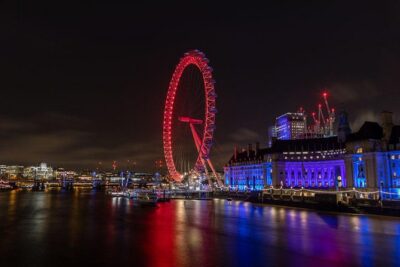
The final major landmark is the London Eye, seen from across the river. You’ll explore the Eye’s scale (the structure is described as 443 feet / 135 metres) and how it sits in the wider riverside scene.
This stop is especially helpful if you want to learn how to photograph iconic structures without making them look flat. The coaching covers:
- framing and lighting
- lens choice
- depth of field
- shutter speed and focusing techniques
You’ll also have time for river views and “vibrant river life” style moments—meaning you’re not only shooting the monument, you’re practicing how to include motion and activity without turning your image into a blur.
If you like photos that show both landmark and atmosphere, the London Eye stop is where that final set comes together.
What to bring so you can actually learn (not just shoot)
This tour works with many devices, including smart phones and digital cameras, and it suits all skill levels. Still, you’ll get more out of it if you come prepared.
Bring:
- your own camera and a fully charged battery
- extra memory cards, since you’ll take more photos than usual
- whatever manual controls you have access to (if you’re learning exposure and focus, you’ll want that flexibility)
Plan clothing for walking and weather. The tour runs in all conditions, so pack a rain layer even if the forecast looks fine. Comfort helps you concentrate on the settings your guide is coaching.
My practical tip for phones
Even if you’re on a phone, ask to try the same framing and light ideas the guide teaches for cameras. The mechanics differ, but the thinking—where to place your subject, how to manage brightness, how to focus—still transfers.
Who should book this private London photography tour
This tour fits several types of people:
- Beginners who want clear explanations of composition, exposure, and focusing without feeling lost
- Intermediate shooters who want landmark-specific practice and fast correction
- Families with teens who can handle a camera and enjoy active learning (one review noted a 17-year-old joining with an SLR)
- Anyone who wants a photo walk that’s structured enough to change how they shoot on the next trip
If your goal is just to check boxes and take a few quick pics, this might feel too lesson-heavy. But if you want to improve and actually understand what you’re doing, this is a strong match.
Should you book it? My honest take
If you’re hoping for a London souvenir set plus better skills, I think this tour earns its price. You’re paying for a professional teacher (Lou), a route that hits the big iconic stops, and hands-on feedback that helps you get sharper, better composed images.
Book it if:
- you want settings explained in context
- you like learning by doing
- you’d rather pay for coaching than keep guessing on your own
Skip it if:
- you hate walking or crowds (you’ll be moving through central London for about four hours)
- you only want casual snapshots and don’t care about camera settings at all
Either way, come with curiosity. London rewards people who look closely, and this tour gives you a focused reason to do exactly that.
FAQ
How long is the London Photography Tour?
It runs for about 4 hours (approx.).
Is this tour private?
Yes. It is a private tour/activity, exclusive to you or your personal group.
Where does the tour start and end?
It starts at Charing Cross, London WC2N 5DP, UK, and ends at Victoria Embankment, London.
What landmarks are included?
You’ll visit Trafalgar Square, the National Gallery area, Leicester Square, Piccadilly Circus, Horse Guards Parade at Whitehall, Big Ben, the Houses of Parliament, Westminster Abbey (outside), and the London Eye.
Is the tour in English?
Yes, tours are conducted in English.
Do I need to bring a camera?
Yes. Bring your own camera and a fully charged battery.
Does the tour work with smart phones?
Yes. It is suitable for all types of digital cameras, including smart phones, and it supports all skill levels.
Is admission included?
The tour notes admission tickets are free at each stop.
Does the tour include lunch or refreshments?
No. Refreshments and lunch are not included.
Does the tour operate in bad weather?
Yes. It operates in all weather conditions, so dress appropriately.
More Private in London
- Harry Potter Studios & Private Transfer from Central London
★ 4.5 · 6,134 reviews - The Premier Classic London: Private 4-Hour Tour in a Black Cab
★ 5.0 · 2,737 reviews - Stonehenge Inner Circle Private Tour from London with Bath Visit
★ 5.0 · 1,909 reviews - Private Tour: Black Taxi Tour of London
★ 5.0 · 1,153 reviews - Private London Arrival Transfer – Airport to Hotel / Accommodation
★ 3.5 · 1,085 reviews
More Tours in London
- From London: Harry Potter Warner Bros Studio Tour
★ 4.7 · 26,588 reviews - Magical London: Harry Potter Guided Walking Tour
★ 4.7 · 22,044 reviews - London: Warner Bros. Studio Harry Potter Tour & Branded Bus
★ 4.7 · 19,194 reviews - London Big Bus Hop-On Hop-Off Tour with Optional River Cruise
★ 3.5 · 10,803 reviews - London Small Group Tour of Historical Pubs
★ 5.0 · 10,422 reviews
More Tour Reviews in London
- From London: Harry Potter Warner Bros Studio Tour
★ 4.7 · 26,588 reviews - London: Westminster to Greenwich River Thames Cruise
★ 4.5 · 22,836 reviews - Magical London: Harry Potter Guided Walking Tour
★ 4.7 · 22,044 reviews - London: Madame Tussauds London
★ 4.6 · 20,915 reviews - London: Warner Bros. Studio Harry Potter Tour & Branded Bus
★ 4.7 · 19,194 reviews
Just reviewed around London





Photography Sessions, compared.
 ★ 4.8Private Photoshoot with Video Clip OptionFrom $161182 reviews
 ★ 5.0Professional Photoshoot in London PhotographerFrom $305102 reviews
 ★ 5.0Private landmarks photoshoot for families and couplesFrom $16692 reviews
 ★ 4.7Private Landmark Tour with Professional PhotographerFrom $15691 reviews
 ★ 5.0Professional Private Photoshoot in LondonFrom $10963 reviews
 ★ 4.530 Major London Attractions Walking Tour With PhotosFrom $6751 reviews
 ★ 4.7Private travel vacation photoshoot -Romantic SpecialFrom $21150 reviews
 ★ 5.0Private Tour: Night Photography Tour in LondonFrom $33748 reviews
Browse the lists this tour appears in