

Reviewed · LONDON WALKING TOURS
London: Old City Walking Tour
Old London has a way of changing your pace. This City of London Old City walk links nearly 2,000 years of layers—Roman-ish origins through plague, fire, and WWII—all on foot. You get to see the big-name landmarks like St. Paul’s Cathedral and the Tower of London, but the real magic is the street-level in-between: church courtyards, small lanes, and the Thames edge that make history feel close.
Two things I really like: first, the way the route mixes iconic stops with smaller, story-driven moments, like the Knights Templar church tied to the Da Vinci Code vibe and the blitz and plague storytelling that gives you more than dates. Second, the pacing for learning—guides (including Daniel Corrigan, James, Daniel, Ivo, Luke, and Ben in past groups) tend to pack a lot in without turning it into a lecture. One thing to consider: even though it’s priced and timed at 2.5 hours, it usually runs closer to about 3 hours, and your guide may adjust for what works best for the group.
In This Review
- Quick takes before you go
- Why The City’s old streets work better than a museum day
- Starting at Tower Hill: where the tour begins and how to find your guide
- Tower Bridge photos and the Tower area mindset
- London Bridge to Bank of England: the business side of power
- St. Paul’s Cathedral: a highlight that sets the tone
- The wobbly Millennium Bridge and the Thames link to modern London
- HMS Belfast, Tower Bridge views, and survival stories that stick
- The Church of the Knights Templar and the Da Vinci Code angle
- St. Clement Danes Church and the long stretch to Covent Garden
- Price and time: is $35 for 2.5 hours a good deal?
- What to expect from the guides: humor, Q&A, and story glue
- Who this London Old City walking tour fits best
- Should you book this Old City walking tour?
- FAQ
- FAQ
- How long is the Old City Walking Tour?
- Where do I meet the guide?
- Where does the tour end?
- What sights will I see on the tour?
- Is the tour wheelchair accessible?
- Are children allowed, and do they pay?
- Is pick-up or drop-off included?
- What language is the tour guide?
Quick takes before you go
- A real “original London” route: The walk centers on The City, the old square mile by the Thames, not the modern tourist core.
- St Paul’s to the wobbly Millennium Bridge: The pedestrian Millennium Bridge is part of the experience, not just a photo stop.
- Tower Bridge plus Tower of London energy: You’ll get the fortress feeling early, with photo time built in.
- Thames-side history beats: HMS Belfast and Tower Bridge show up while you hear survival stories like the blitz and Great Fire.
- Modern London appears too: Tate Modern comes up via the Millennium Bridge corridor.
- You finish at Covent Garden: You can roll right into dinner or a pre-theater stroll.
London on foot, a few more ways
- Magical London: Harry Potter Guided Walking Tour
★ 4.7 · 22,044 reviews - London: The Original Jack the Ripper Walking Tour
★ 4.7 · 7,833 reviews - Tour for Muggles The Ultimate Harry Potter Walking Tour in London
★ 5.0 · 4,684 reviews - London Jack The Ripper Guided Walking Tour
★ 5.0 · 3,131 reviews
Why The City’s old streets work better than a museum day
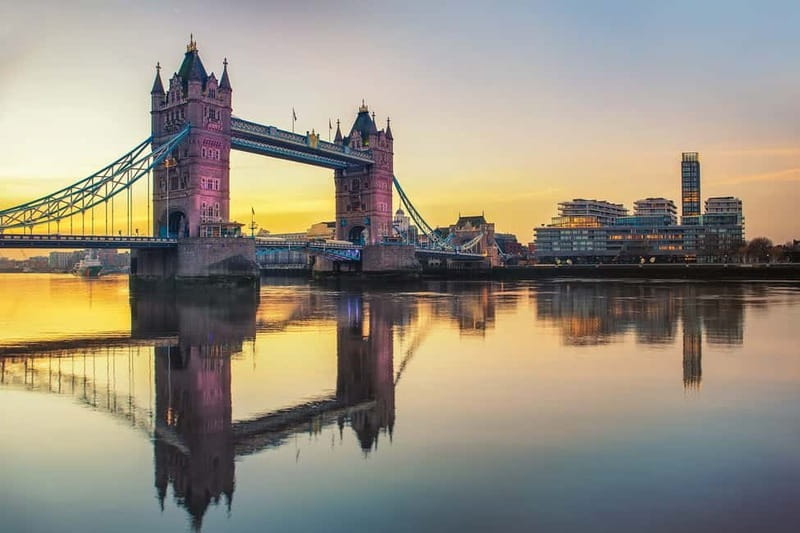
The City of London can feel a bit like two places at once. On one side, you’ve got global headquarters and busy office streets. On the other, you’ve got an area whose street pattern and landmarks stretch back almost 2,000 years, where tiny church courtyards and narrow lanes still make you think, Wait, this is really old.
What makes this tour especially good value at $35 is that you’re not just collecting sights. You’re learning how the Thames-shaped geography helped London survive repeated shocks—bad fires, disease, and war. That’s a different way to “do history.” Instead of staring at artifacts, you’re moving through the same kinds of spaces where people once hurried, hid, rebuilt, and argued over power.
And because it’s a walking tour, you get momentum. Each stop sets up the next one, so the Tower area doesn’t feel like a random fortress detour, and St Paul’s isn’t just a pretty dome. The route is built so your brain starts linking events, rebuilding, and locations.
Starting at Tower Hill: where the tour begins and how to find your guide
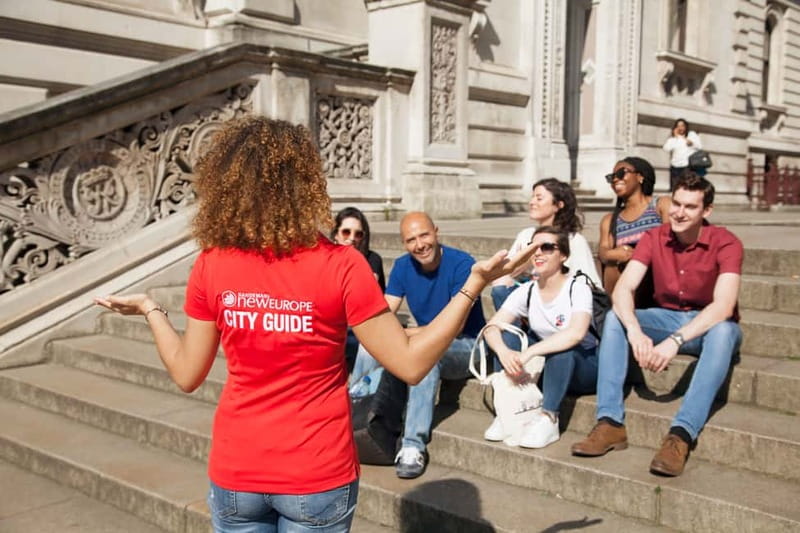
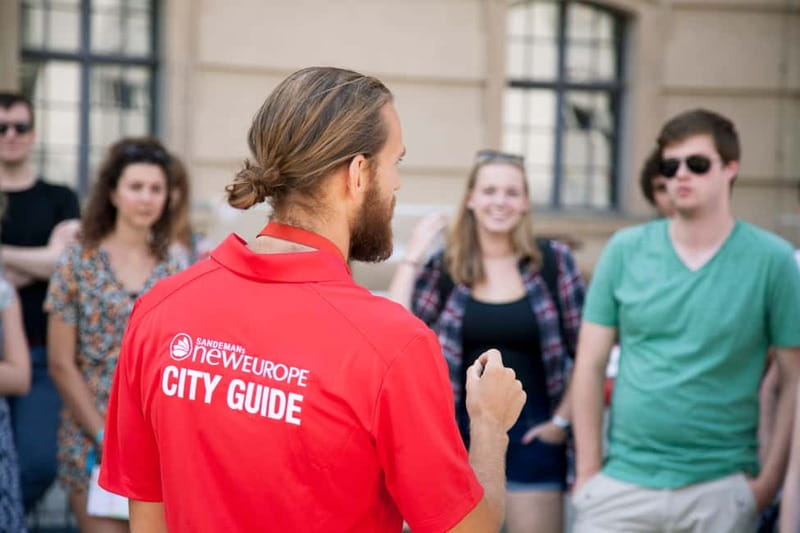
You’ll meet at the CitizenM Hotel entrance, right next to Tower Hill Station. Look for the guide with the SANDEMANs red name badge—it’s the easiest way to avoid the classic London “Is that them?” scramble.
This matters because the tour timing is tight. The first stretch is about getting you into position quickly for what you’ll see next. Once you’re moving, the learning starts immediately: guides in this format tend to use short story hooks—how London’s power centers shifted, what the City was protecting, and why certain buildings ended up where they did.
If you’re the type who likes to orient fast, this start helps. You’re not waiting around for background; you’re stepping straight into the Thames-and-Tower orbit.
Tower Bridge photos and the Tower area mindset
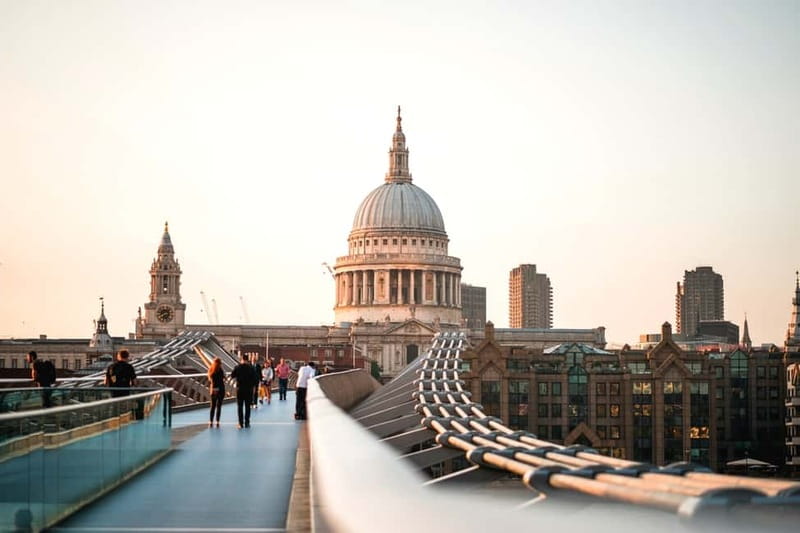
The tour heads toward Tower Bridge right away. Expect about a 25-minute walk around this section, followed by a photo stop at the Tower of London (about 25 minutes).
Tower Bridge is more than a postcard bridge here. It acts like a boundary marker for the kinds of stories you’ll hear next: the mix of trade, defense, and the river’s role in daily life. Then the Tower of London photo stop gives you a clear visual anchor. Even if you don’t go inside, the scale and the setting communicate why this place mattered—power isn’t abstract around here.
Practical note: this is one of the spots where your photos will benefit from timing. If your guide pauses long enough for people to reposition, grab your shots efficiently—don’t spend your whole photo window fiddling with camera settings.
Still deciding? A handful more London outings we rated
London Bridge to Bank of England: the business side of power
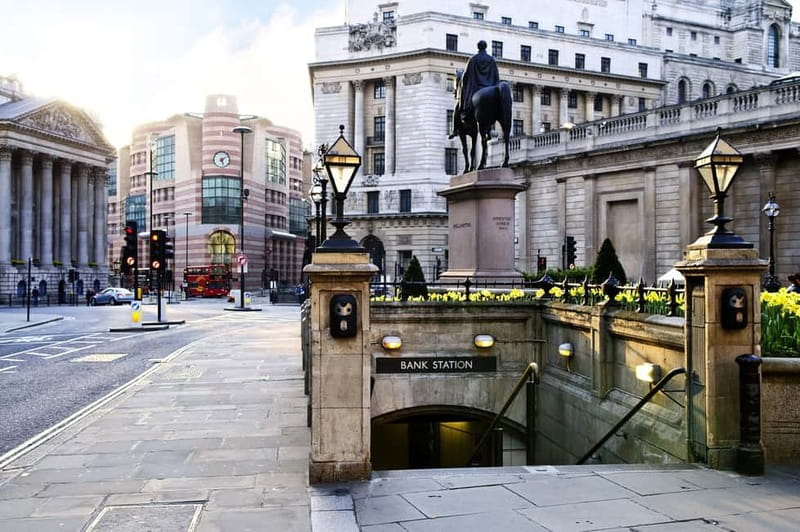
After the Tower area, you’ll continue along the London Bridge area with another walk stretch (around 25 minutes). Then you’ll hit the Bank of England Museum photo stop (about 25 minutes).
This segment is valuable because it shows the City isn’t only castles and cathedrals. The City became a financial engine in a way that still shapes London’s daily rhythm. Even from the outside, the Bank area helps you understand why the City stayed politically and economically important long after the medieval days.
For you, that means the tour doesn’t stop at “cool old buildings.” It links the survival stories you’ll hear later to the City’s long-term role in maintaining stability and money flows—things Londoners fought over for centuries.
One drawback worth flagging: photo stops mean you’ll likely be standing more than walking at certain points. If you have limited walking stamina, bring water and plan to use your breaks. The route is wheelchair accessible overall, but the stopping patterns still affect how long you’ll be on your feet.
St. Paul’s Cathedral: a highlight that sets the tone
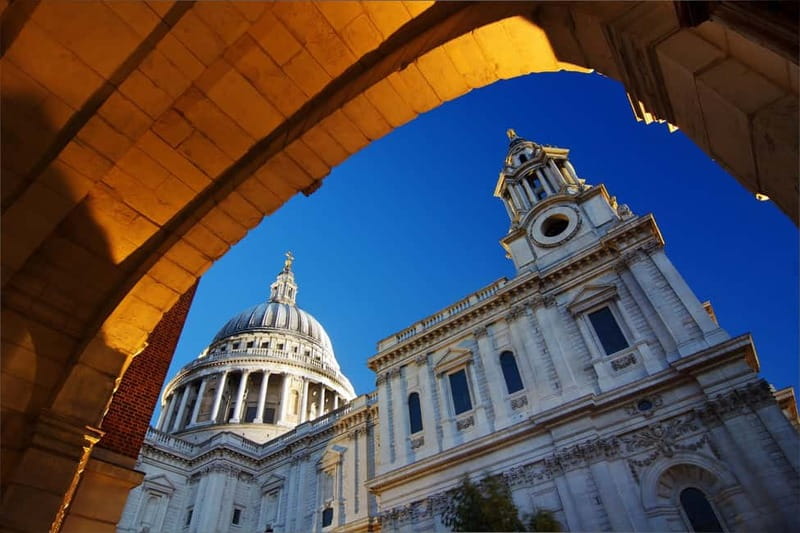
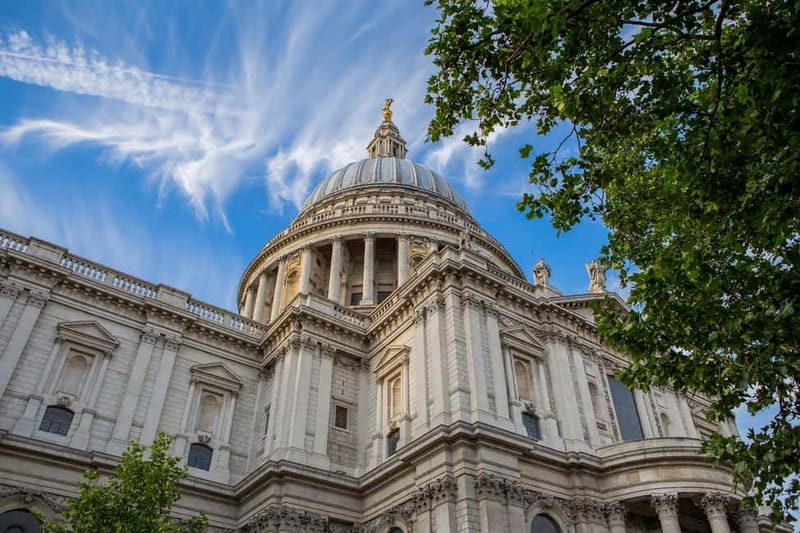
Next comes St. Paul’s Cathedral for a photo stop (about 25 minutes). You’ll be seeing Wren’s iconic cathedral, and that’s a huge part of why this tour hits hard.
St Paul’s isn’t just a landmark. It’s a symbol of how London rebuilt. When you pair the exterior sight with stories about major disasters—like the Great Fire—you start to see why this building sits so confidently in the skyline. It becomes shorthand for resilience.
Also, it’s a natural “story reset” point. After the Tower-and-bank power arc, St Paul’s brings the human side of rebuilding into focus: churches, civic identity, and the way people looked to faith and institutions after catastrophe.
If you like your sightseeing with context, this is where the tour usually feels most satisfying.
The wobbly Millennium Bridge and the Thames link to modern London
One of the best-known surprises in the Old City is the walk over the Millennium Bridge, sometimes nicknamed the wobbly bridge. This is a pedestrian connector between St Paul’s and the river corridor toward Tate Modern, which sits in a renovated power station.
Why I like this part for you: it changes your tempo. You’re not just absorbing old stone. You’re crossing a bridge that’s part of modern London’s identity, while still staying in the same Thames framework that shaped the original square mile.
And because you’re walking, you get little “in-between” views that you won’t get in a bus. The river shows up in fragments—glimpses of activity, angles on major sites, and that layered feeling of old and new living side by side.
HMS Belfast, Tower Bridge views, and survival stories that stick

As the tour moves along the Thames, you’ll see HMS Belfast and get another look toward Tower Bridge. At the same time, you’ll hear stories about how London survived the blitz during World War II, plus stories connected to the Great Fire and the plague.
This is the heart of what makes this tour more than a highlights reel. Those survival stories aren’t random trivia. They’re the reason the City’s buildings and civic spaces matter. You begin to understand the logic behind reconstruction, crowd movement, and how neighborhoods changed their relationship to the river and the defenses around the center.
If you’re the kind of person who likes history with cause-and-effect, you’ll appreciate this. If you only want scenic walking, you’ll still get the scenery, but you might feel the tour leans a little more toward storytelling than pure sight-seeing.
The Church of the Knights Templar and the Da Vinci Code angle

The route includes a stop at the Church of the Knights Templar, the one that gets attention for the Da Vinci Code connection.
Here’s the honest way to think about it: you’re not going there for a ticketed museum. You’re going for the location and the lore. That means it can be extra fun if you enjoy puzzles, legends, and how pop culture latches onto real buildings.
It’s also a reminder that London history isn’t only royal or military. Religious orders, myths, and symbolic meanings show up in the same streets as official power centers.
If you’ve got no interest in the Da Vinci Code side of things, don’t worry. Your guide will still likely connect it back to broader City life—who used these spaces, what the area represented, and how stories traveled.
St. Clement Danes Church and the long stretch to Covent Garden
The tour includes St. Clement Danes Church for a photo stop. Then it finishes in Covent Garden.
St. Clement Danes works well as a closer because it keeps the focus on place-based storytelling. It’s a different feel from the Tower and the financial district. Instead of heavy defense and institutions, you get a calmer church-courtyard vibe that fits how City streets often feel: small, thoughtful, and surprisingly easy to miss if you’re not looking.
Ending at Covent Garden is practical. Once you’re done walking, you’ve got options for food and the chance to keep the “old-to-new” theme going with street life and theater-adjacent energy. It’s a good pairing for a half-day plan.
Price and time: is $35 for 2.5 hours a good deal?
At $35 per person, you’re paying for a structured route, a live guide, and a tight selection of major landmarks. For a London walking tour, that price can feel fair—especially because the stop list includes big names: St. Paul’s, Tower Bridge views, Tower of London, plus the Bank area and Thames-side points like HMS Belfast.
The trade-off is time. It’s listed as 2.5 hours, but it usually runs closer to around 3 hours. That’s common with walking tours because guides account for crowd movement, photo gaps, and questions. If you’re trying to stack this with another event right after, I’d give yourself buffer time.
Value-wise, I’d call it a solid buy if your goal is “see key places + learn what they meant.” If your goal is only photos and landmarks, you might prefer a more free-form day route. But if you want the City’s stories tied to the street corners, this one is priced like it respects that.
What to expect from the guides: humor, Q&A, and story glue
The guides are a major part of why people rate this tour so highly. Across multiple guides you might encounter—people like Daniel Corrigan, James, Daniel, Ivo, Luke, Peter, Ed, and Ben—the pattern is consistent: clear storytelling, lots of specific factoids, and a sense of humor that makes the long timeline easier to digest.
One thing I’d look for is responsiveness. In past tours, guides have answered questions, and some even use extra materials like videos or pictures to help you understand. That can be a big help when stories get complex fast.
Also, there’s a mention of pace in the feedback: some people noted guides didn’t walk too fast, while others wished the tour started nearer to the first information stop. So if you’re sensitive to walking time, don’t assume it will feel perfectly paced from minute one—pay attention to your own comfort level and take breaks when you can.
Who this London Old City walking tour fits best
This is a great match if you:
- Want major City landmarks without museum lines or ticket planning
- Like history that explains why places mattered (blitz, Great Fire, plague themes)
- Enjoy guided storytelling more than self-guided wandering
- Want a route that keeps old and modern London in the same frame
It’s also a good pick if you’re not a “tower museum” person but still want the Tower vibe, the Thames views, and the stories.
If you hate walking, or you’re very limited physically, you’ll want to weigh your comfort carefully. The tour is wheelchair accessible, but a walking route still includes street crossings, tempo changes, and curb navigation.
Should you book this Old City walking tour?
If you’re visiting London for the first time, or you want a sharper understanding of the City beyond postcards, I think this is an easy yes. It’s one of those tours where you leave with both pictures and a mental map of how London survived and rebuilt—especially when your guide is strong at storytelling.
Book it if your schedule can handle about 3 hours of walking and you want history with real locations attached. Skip it if you only want quick landmark snapshots and you’d rather trade the stories for more independent time.
FAQ
FAQ
How long is the Old City Walking Tour?
It’s listed as 2.5 hours, but it usually runs about 3 hours depending on your guide and what works best for the group.
Where do I meet the guide?
You meet at the CitizenM Hotel entrance next to Tower Hill Station. Look for the guide with the SANDEMANs red name badge.
Where does the tour end?
The tour finishes at Covent Garden.
What sights will I see on the tour?
You’ll see major highlights like St. Paul’s Cathedral, the Millennium Bridge (the wobbly bridge), Tower Bridge and the Tower of London, plus Thames-area spots like HMS Belfast, and sites tied to stories such as the blitz, Great Fire, and plague. The route also includes places like the Bank of England Museum photo stop and St. Clement Danes Church.
Is the tour wheelchair accessible?
Yes, the tour is wheelchair accessible.
Are children allowed, and do they pay?
Children under 13 go free of charge.
Is pick-up or drop-off included?
No pick up or drop off at your accommodation is included.
What language is the tour guide?
The live tour guide speaks English.
More Tours in London
- From London: Harry Potter Warner Bros Studio Tour
★ 4.7 · 26,588 reviews - Magical London: Harry Potter Guided Walking Tour
★ 4.7 · 22,044 reviews - London: Warner Bros. Studio Harry Potter Tour & Branded Bus
★ 4.7 · 19,194 reviews - London Big Bus Hop-On Hop-Off Tour with Optional River Cruise
★ 3.5 · 10,803 reviews - London Small Group Tour of Historical Pubs
★ 5.0 · 10,422 reviews
More Tour Reviews in London
- From London: Harry Potter Warner Bros Studio Tour
★ 4.7 · 26,588 reviews - London: Westminster to Greenwich River Thames Cruise
★ 4.5 · 22,836 reviews - Magical London: Harry Potter Guided Walking Tour
★ 4.7 · 22,044 reviews - London: Madame Tussauds London
★ 4.6 · 20,915 reviews - London: Warner Bros. Studio Harry Potter Tour & Branded Bus
★ 4.7 · 19,194 reviews
More London Walks Worth the Shoe Leather
- Magical London: Harry Potter Guided Walking Tour
★ 4.7 · 22,044 reviews - London: The Original Jack the Ripper Walking Tour
★ 4.7 · 7,833 reviews - Tour for Muggles The Ultimate Harry Potter Walking Tour in London
★ 5.0 · 4,684 reviews - London Jack The Ripper Guided Walking Tour
★ 5.0 · 3,131 reviews - London: Harry Potter Movies Walking Tour (Kids Go Free)
★ 4.7 · 3,071 reviews
Just reviewed around London





London Walking Tours, compared.
 ★ 4.7Magical London: Harry Potter Guided Walking TourFrom $2022,044 reviews
 ★ 4.7The Original Jack the Ripper Walking TourFrom $257,833 reviews
 ★ 5.0Tour for Muggles The Ultimate Harry Potter Walking Tour in LondonFrom $234,684 reviews
 ★ 5.0London Jack The Ripper Guided Walking TourFrom $03,131 reviews
 ★ 4.7Harry Potter Movies Walking Tour (Kids Go Free)From $203,071 reviews
 ★ 5.0Changing of the Guard Guided Walking Tour in LondonFrom $251,793 reviews
 ★ 4.9The Great British Rock and Roll Music Walking TourFrom $361,783 reviews
 ★ 4.8Harry Potter Walking Tour in GermanFrom $201,505 reviews