
Money has a long shadow in London. This walking tour links Babylon to bitcoin and steers you through the City’s Square Mile power map, from church steps to the Bank of England Museum.
You’ll also get that inside sense of how money thinking shaped the streets you’re standing on.
Two things I like a lot: the guide, Arjun, is well prepared and seriously good at turning odd money details into a story you can follow, and the tour’s free admission stops keep the focus on what you learn, not what you pay at the door.
A great touch is that the same framework works for serious students too, like the economics-focused 16-year-old in one of the standout reviews.
The main catch is the pace. You’re on your feet for about 2 hours 45 minutes, with short time windows at each site, so if you want long inside visits, you’ll need to add your own time after.
In This Review
- Key takeaways before you walk
- Why this Money & Power walk makes sense in London’s City
- Price and what you actually get for it
- Pace, timing, and your best prep
- Stop-by-stop: Babylon to bitcoin through the City’s power map
- 1) Guild Church of ST Mary Aldermary: where money, magic, and power begin
- 2) Royal Exchange: trading floors under a neoclassical face
- 3) London Mithraeum Bloomberg SPACE: money stories from before the Romans
- 4) St. Edmund The King Church: the “birthplace” idea of banking
- 5) Jamaica Wine House: the early coffee house and finance
- 6) Change Alley: the epicenter of trading talk
- 7) Bank of England Museum: beheading a king to the digital dollar and bitcoin
- 8) Equestrian Statue of the Duke of Wellington: speed, pigeons, and market manipulation
- 9) Statue of James Henry Greathead: industrial revolution through one pioneer
- 10) St. Mary Woolnoth Church: debt, slavery, and Christian values
- 11) 1 Lime St: insurance and empire
- 12) Plantation Lane: tides of money, finance, and power
- 13) Leadenhall Market: back to roots, plus dragons
- 14) Hogarth Court: the Gilt of Cain and the transatlantic slave trade
- 15) Garden at 120: a lighter finish with a better perspective
- What you’ll get from Arjun’s style (and why it matters)
- Who should book this tour
- Should you book London: Money & Power – Babylon to Bitcoin?
- FAQ
- How much does the London Money & Power walking tour cost?
- How long is the tour?
- What language is the tour offered in?
- How big are the groups?
- Where does the tour start and where does it end?
- Is a mobile ticket required?
- What’s included in the price?
- Are there admission fees at the stops?
- Can I cancel for a full refund?
Key takeaways before you walk
- Babylon to bitcoin, in one City loop: You’ll connect ancient trade ideas to today’s digital money story.
- Most stops are quick, on-purpose: Think short scenes, not long museum marathons.
- Small group size (max 8): It’s easier to hear your guide and ask questions.
- Sites you’d likely miss alone: Alleyways and City corners show up in a bigger money story.
- Faith, kings, and markets in the same thread: Religion and power aren’t treated as separate topics.
- A guide who ties details to concepts: Arjun’s explanations make the history feel usable.
London on foot, a few more ways
- Magical London: Harry Potter Guided Walking Tour
★ 4.7 · 22,044 reviews - London: The Original Jack the Ripper Walking Tour
★ 4.7 · 7,833 reviews - Tour for Muggles The Ultimate Harry Potter Walking Tour in London
★ 5.0 · 4,684 reviews - London Jack The Ripper Guided Walking Tour
★ 5.0 · 3,131 reviews
Why this Money & Power walk makes sense in London’s City
This tour is built for people who feel bored by standard landmarks. Instead of collecting photos, you’re tracking how power moves through money: who controls it, who benefits, and how the system changes when new tools show up.
What makes it work is the route. You walk through the Square Mile’s core money geography, then your guide keeps pulling the curtain back on what those buildings and streets actually meant. One moment you’re at a church linked to debt and values. Next moment you’re at a trading landmark tied to finance. It all clicks because the story stays consistent.
Price and what you actually get for it
At $30.57 per person, the ticket price is modest for London. Here’s the value angle that matters: many of the specific stops are listed as free admission, so you’re paying mainly for the guided interpretation plus the route itself, not for entry fees at each location.
You also get a PDF overview and a local guide. That combination helps you remember what you saw, and it’s useful if you like to review notes later.
Pace, timing, and your best prep
Expect about 2 hours 45 minutes total, and the timing includes travel time between stops. This is an easy-to-moderate walking experience overall, but it’s still a walking tour, not a sit-down seminar.
You’ll start at Pret A Manger, 90 Queen St, London EC4N 1SA, and end at Garden at 120, 120 Fenchurch St, London EC3M 5BA. The ending matters: you finish on top of that building, where you can keep your bearings with a view and grab a drink or bite if you want.
A small group helps the experience. With a maximum of 8 travelers, your guide can shift pacing and explanation without losing everyone.
Still deciding? A handful more London outings we rated
Stop-by-stop: Babylon to bitcoin through the City’s power map
1) Guild Church of ST Mary Aldermary: where money, magic, and power begin
You kick off at the Guild Church of ST Mary Aldermary. The framing is direct: religious institutions weren’t just spiritual spaces; they were also part of the early power structure that shaped how people understood money and authority.
The practical value here is perspective. If you only think of finance as numbers on screens, this first stop nudges you to think about systems—who influences them, and why.
Time is short (about 10 minutes), so treat this as a strong opener rather than a deep lecture.
2) Royal Exchange: trading floors under a neoclassical face
Next up is the Royal Exchange Building. You learn it began in 1566 as England’s first purpose-built trading floor, then it was rebuilt twice after fires. Today, it still signals commerce loudly—but with luxury shops beneath its classic facade.
For me, this stop is about how continuity and reinvention work in the City. The place changes, but the function keeps returning: gatherings where deals happen, reputations form, and money finds a stage.
3) London Mithraeum Bloomberg SPACE: money stories from before the Romans
At London Mithraeum Bloomberg SPACE, you’re pointed toward the origin story in a very specific way. The theme is “money magicians,” the oldest financial transaction, and money from before the Romans arrived.
Even if you don’t know the details going in, the point is clear: the idea of exchange and value isn’t modern. It’s old—and it shows up in surprising places.
Time on this stop is about 20 minutes, which gives your guide room to connect the dots.
4) St. Edmund The King Church: the “birthplace” idea of banking
At St. Edmund The King Church, the tour theme turns to modern western banking. The guidance here places the idea of banking’s beginnings around this area and uses that setting to talk about how everyday people got pulled into financial systems.
This is also one of those stops that helps you understand why finance grew so tangled with daily life. Banking is not just institutions; it’s trust, record-keeping, and social acceptance.
5) Jamaica Wine House: the early coffee house and finance
At Jamaica Wine House, you hit an early marker for finance’s everyday social side. The tour connects it to the idea that the first coffee house in London played a crucial role in early finance.
This is a great moment to notice a pattern: money spreads through conversation. Meetings, gossip, and public information flows help deals move faster. Coffee houses were like an early network.
You’re there for about 5 minutes, so it’s quick but purposeful.
6) Change Alley: the epicenter of trading talk
Then comes Change Alley, described as the epicenter of London’s financial world in the 17th and 18th centuries. In a short amount of time, your guide helps you see why alleyways mattered so much: they concentrated activity, information, and decision-making.
If you’ve ever wondered why the City feels like it runs on speed and rumors, this stop is your answer. It’s where money and news start acting like one system.
7) Bank of England Museum: beheading a king to the digital dollar and bitcoin
At the Bank of England Museum, the tone shifts into modern money. The tour connects trade, the story of money’s evolution, and it also nods to dramatic political change—like the beheading of a King.
You also hear about companies that developed an empire and then the tour jumps ahead to modern concepts like the digital dollar and bitcoin. That final step is important. It doesn’t treat bitcoin as a random tech topic; it’s framed as part of money’s long, ongoing evolution.
Time here is about 20 minutes, and it’s one of the stops that helps you walk away with a clearer mental map of what money systems do.
8) Equestrian Statue of the Duke of Wellington: speed, pigeons, and market manipulation
At the Equestrian Statue of the Duke of Wellington, you get a story about war news and market power. A speedy pigeon reporting on the war (Wellington and Napoleon) is described as enabling massive manipulation of the markets.
This stop gives you a modern lesson in old packaging: information speed changes behavior. Markets don’t just react to facts; they react to the timing of facts.
It’s only about 5 minutes, so keep your attention locked on the explanation, not the statue itself.
9) Statue of James Henry Greathead: industrial revolution through one pioneer
Next is the Statue of James Henry Greathead, where the focus is what the Industrial Revolution meant, positioned next to a pioneer. The goal isn’t to memorize engineering names. It’s to link infrastructure and systems change to finance and power.
If you think money grew only from banks and laws, this is where the tour quietly widens the lens.
Time is around 10 minutes.
10) St. Mary Woolnoth Church: debt, slavery, and Christian values
At St. Mary Woolnoth Church, the tour brings in debt and the difficult intersection of slavery and Christian values. It’s a heavier stop, but it fits the tour’s overall thesis: money systems are never neutral.
This is also where you’ll likely feel the difference between a fun trivia walk and a meaningful money story. It asks you to notice what people justified to keep the system running.
About 10 minutes here.
11) 1 Lime St: insurance and empire
At 1 Lime St, you learn how an insurance company helped shape empire and the world. This is one of those topics that usually gets skipped, but it matters because insurance is a mechanism for taking risks at scale.
I like that the tour makes you think beyond banks. If you want to understand how global expansion actually becomes possible, insurance and risk management are part of the equation.
Time is about 10 minutes.
12) Plantation Lane: tides of money, finance, and power
Plantation Lane is an outdoor installation, and it’s positioned as a pause for reflection. The theme is the movements of times and tides of money and finance and power.
Even if you don’t spend long here (about 5 minutes), it breaks the pattern of buildings and keeps the story human. It’s a reminder that all these systems are built by people moving through time.
13) Leadenhall Market: back to roots, plus dragons
At Leadenhall Market, you return to financial roots at an ancient market. The tour also mentions dragons in the discussion, which adds a bit of folklore energy without losing the finance angle.
Markets like this are proof that trade isn’t only boardrooms. It’s also public space, commerce, and daily movement.
Time is around 10 minutes.
14) Hogarth Court: the Gilt of Cain and the transatlantic slave trade
At Hogarth Court, you meet the Gilt of Cain sculpture, which memorializes the City’s role in the transatlantic slave trade. This stop is direct and uncomfortable by design, and it ties the City’s wealth to consequences that still echo.
If you’ve ever wondered how to talk about money ethically, this is one of the places where the tour forces the question.
Time is about 10 minutes.
15) Garden at 120: a lighter finish with a better perspective
Finally, you end at Garden at 120 for the conclusion. It’s framed as a fresh perspective after everything you’ve just seen and heard.
This ending is practical for your day too. You’re higher up, the views help your brain reset, and it’s a natural spot to grab a snack before you move on.
Time here is about 10 minutes.
What you’ll get from Arjun’s style (and why it matters)
One of the biggest strengths is how the guide explains connections. In one standout experience, Arjun was described as very knowledgeable, well prepared, and engaging, and that matches the way this route needs to work.
This tour can feel like a string of interesting sites unless the guide keeps you oriented. Arjun’s approach helps you connect religion, institutions, kings, markets, and modern crypto into a single story about power and systems.
Also, the route can land well for different ages. The economics-minded teenager in the best-rated review enjoyed it and walked away with ideas for future studies. That suggests the explanations aren’t just for history lovers; they’re built to make concepts feel real.
Who should book this tour
You’ll likely love this if:
- You’re curious about how money systems evolve from older societies to today’s digital world.
- You like walking tours that teach you more than where things are.
- You want City-of-London context without only seeing the usual tourist hits.
You might want to skip or plan extra time if:
- You prefer long museum stays over quick stops.
- You want full interior exploration at every location, since many stops are timed around 5–20 minutes.
Should you book London: Money & Power – Babylon to Bitcoin?
If you want a smart, story-driven walk through the Square Mile that connects old power to modern money, this is a strong choice. The price is fair for what you get, especially with free-admission stops listed across the route and a local guide who can connect the dots.
My main “book it” reason is simple: you don’t just learn facts. You learn how to think about money as a force that spreads through institutions, news speed, risk, and even religion.
If you’re willing to do some standing and short stop learning, you’ll leave with a clearer mental map of London’s financial story—from Babylon-style origins all the way to bitcoin.
FAQ
How much does the London Money & Power walking tour cost?
The price is $30.57 per person.
How long is the tour?
It’s about 2 hours 45 minutes (approx.), and the time for travel between stops is included.
What language is the tour offered in?
The tour is offered in English.
How big are the groups?
The tour has a maximum of 8 travelers.
Where does the tour start and where does it end?
It starts at Pret A Manger, 90 Queen St, London EC4N 1SA, UK and ends at The Garden at 120, 120 Fenchurch St, London EC3M 5BA, UK.
Is a mobile ticket required?
You get a mobile ticket.
What’s included in the price?
Included are a PDF overview of the tour and a local guide.
Are there admission fees at the stops?
The itinerary lists admission tickets for each stop as free.
Can I cancel for a full refund?
Yes. Free cancellation is available up to 24 hours in advance for a full refund.
More Tours in London
- From London: Harry Potter Warner Bros Studio Tour
★ 4.7 · 26,588 reviews - Magical London: Harry Potter Guided Walking Tour
★ 4.7 · 22,044 reviews - London: Warner Bros. Studio Harry Potter Tour & Branded Bus
★ 4.7 · 19,194 reviews - London Big Bus Hop-On Hop-Off Tour with Optional River Cruise
★ 3.5 · 10,803 reviews - London Small Group Tour of Historical Pubs
★ 5.0 · 10,422 reviews
More Tour Reviews in London
- From London: Harry Potter Warner Bros Studio Tour
★ 4.7 · 26,588 reviews - London: Westminster to Greenwich River Thames Cruise
★ 4.5 · 22,836 reviews - Magical London: Harry Potter Guided Walking Tour
★ 4.7 · 22,044 reviews - London: Madame Tussauds London
★ 4.6 · 20,915 reviews - London: Warner Bros. Studio Harry Potter Tour & Branded Bus
★ 4.7 · 19,194 reviews
More London Walks Worth the Shoe Leather
- Magical London: Harry Potter Guided Walking Tour
★ 4.7 · 22,044 reviews - London: The Original Jack the Ripper Walking Tour
★ 4.7 · 7,833 reviews - Tour for Muggles The Ultimate Harry Potter Walking Tour in London
★ 5.0 · 4,684 reviews - London Jack The Ripper Guided Walking Tour
★ 5.0 · 3,131 reviews - London: Harry Potter Movies Walking Tour (Kids Go Free)
★ 4.7 · 3,071 reviews
Just reviewed around London





London Walking Tours, compared.
 ★ 4.7Magical London: Harry Potter Guided Walking TourFrom $2022,044 reviews
 ★ 4.7The Original Jack the Ripper Walking TourFrom $257,833 reviews
 ★ 5.0Tour for Muggles The Ultimate Harry Potter Walking Tour in LondonFrom $234,684 reviews
 ★ 5.0London Jack The Ripper Guided Walking TourFrom $03,131 reviews
 ★ 4.7Harry Potter Movies Walking Tour (Kids Go Free)From $203,071 reviews
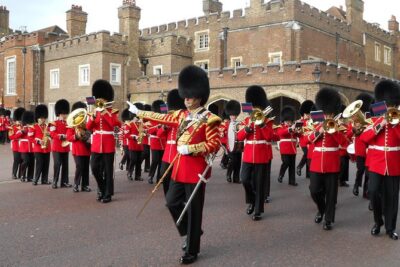 ★ 5.0Changing of the Guard Guided Walking Tour in LondonFrom $251,793 reviews
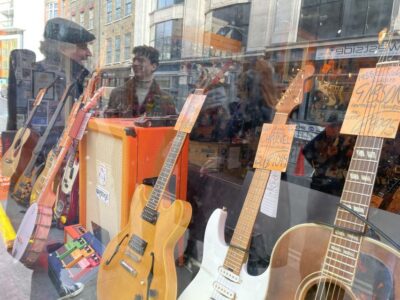 ★ 4.9The Great British Rock and Roll Music Walking TourFrom $361,783 reviews
 ★ 4.8Harry Potter Walking Tour in GermanFrom $201,505 reviews