
Reviewed · LONDON WALKING TOURS
London: Little Venice, Regents Canal on Camden Walking Tour
London can feel big—then the canal quiets it down. This walk trades the crowds for Little Venice houseboats and Primrose Hill skyline views, with history explained in plain English. I like how the pace stays easy while still packing in architecture stops, and I especially like ending at Camden Lock so you can keep exploring. One thing to consider: it’s a solid walking route, so bring comfy shoes and expect about 150 minutes on your feet.
You’ll start at Paddington Station, where the big-city rhythm is real, then move into calmer waters at Paddington Basin. From there, you follow Regent’s Canal east to Little Venice, pick up big sights like Crocker’s Folly and Regent’s Park villas, then finish at Camden Lock and Camden High Street. If you want London views plus character without the heavy tourist crush, this is a strong choice.
In This Review
- Key highlights I’d plan around
- Enter Paddington Station and Find Platform 1’s Paddington Bear
- Paddington Basin: where train noise meets canal calm
- Little Venice: houseboats, narrowboats, and Browning’s Pool
- Regent’s Canal basics: why this waterway is more than scenery
- Crocker’s Folly and canal architecture that makes you pause
- Maida Hill Tunnel: the canal’s second-longest stretch
- Lisson Grove moorings, the Upside Down House, and Regent’s Park calm
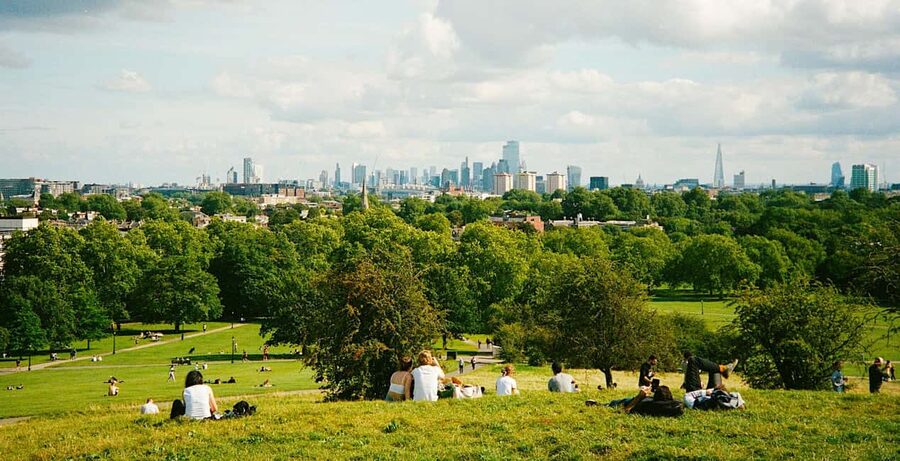
- Primrose Hill: the skyline payoff (and why it’s worth it)
- Back along the canal: Gilbey’s Yard and a creative change of use
- Camden Lock finish: Turnover Bridge to Camden High Street
- Price and time: is $33 for 150 minutes a fair deal?
- What to bring so the walk feels good, not annoying
- Who should book this London canal walk?
- Should you book the London: Little Venice and Camden Walking Tour?
- FAQ
- Where do we meet at Paddington Station?
- How long is the tour?
- What is the price per person?
- What does the tour include?
- Is food or drinks included?
- What should I bring?
- What is the tour end point?
- Are pets allowed?
- Is this tour suitable for wheelchair users?
Key highlights I’d plan around
- Little Venice on foot: watch colorful houseboats and narrowboats glide by close up
- Prince Regent’s canal story: why Regent’s Canal mattered for goods and industry
- Maida Hill Tunnel: the canal’s second-longest tunnel on your route
- Primrose Hill views: a skyline viewpoint that’s worth the climb
- Camden Lock finish: turn the tour into a flexible market stroll after it ends
- Fun oddities: the Upside Down House and other canal-area surprises along the way
London on foot, a few more ways
- Magical London: Harry Potter Guided Walking Tour
★ 4.7 · 22,044 reviews - London: The Original Jack the Ripper Walking Tour
★ 4.7 · 7,833 reviews - Tour for Muggles The Ultimate Harry Potter Walking Tour in London
★ 5.0 · 4,684 reviews - London Jack The Ripper Guided Walking Tour
★ 5.0 · 3,131 reviews
Enter Paddington Station and Find Platform 1’s Paddington Bear

The tour meeting point is easy once you know what to look for: meet on Platform 1 under the station clock, near the bronze Paddington Bear statue with his suitcase and tag.
If you’re coming in from the main station concourse, follow the signs for Platform 1. Then walk roughly halfway down the platform until you spot Paddington seated on a plinth beneath the large analog clock. It’s one of those details that makes the meet-up feel friendly and fast.
Practical note: Paddington Station can be busy with trains and commuters. If you tend to get flustered in stations, give yourself a few extra minutes before the start time so you’re not doing last-second navigating.
Paddington Basin: where train noise meets canal calm
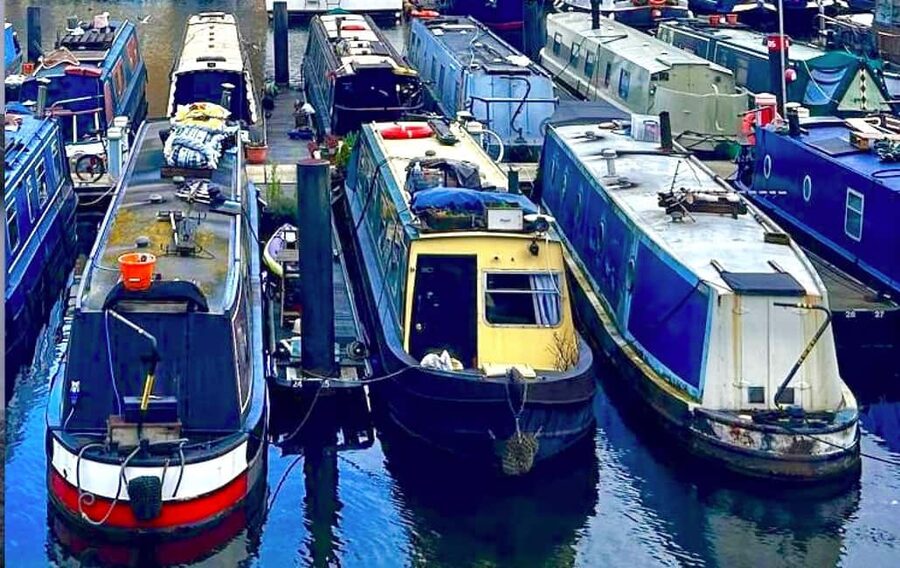
After the meet-up, the first shift is the change in sound and mood. You move from the rail buzz into the calmer setting of Paddington Basin, where the canal water takes over the atmosphere.
This early section matters because it sets expectations: this isn’t a museum walk. It’s a real London canal corridor, so you’re learning history while your feet keep moving. You’ll also get into position for one of the tour’s best themes—how London’s industrial plumbing shaped daily life.
Little Venice: houseboats, narrowboats, and Browning’s Pool
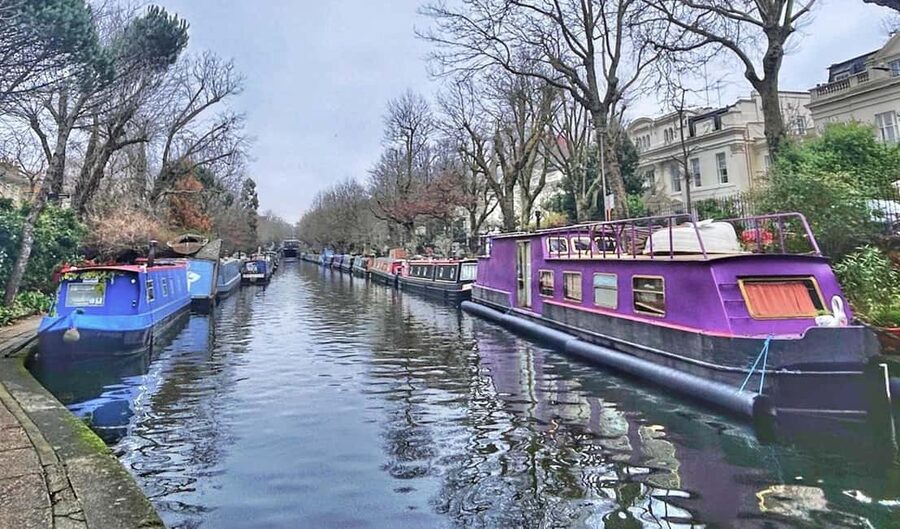
Then comes the reason many people choose this tour: Little Venice. You’ll stroll along the canal and get those postcard visuals up close—the colorful houseboats and narrowboats lining the waterway like floating cottages.
In the Little Venice stretch, you’ll also see Browning’s Pool, listed as part of the experience. This is the kind of spot that helps you understand why the canal area feels so much calmer than the surrounding streets: the water creates its own slow pace. If you like atmosphere over checklists, this section is a highlight.
What makes it especially good is that you’re not just looking from a single angle. You’re walking the canal edge, so your perspective changes naturally—more photo angles without needing to hunt for the perfect vantage point.
Still deciding? A handful more London outings we rated
Regent’s Canal basics: why this waterway is more than scenery
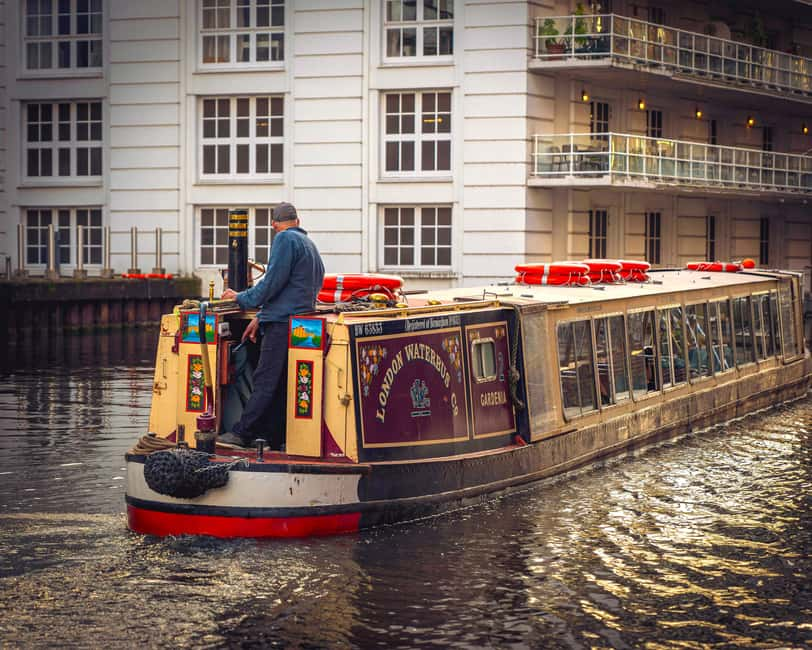
Along the walk, the canal’s role in London becomes clear. Regent’s Canal was commissioned by the Prince Regent (later George IV) and opened in 1820. It once functioned as a key transport link across industrial London, connecting the Grand Junction Canal in Paddington to the River Thames at Limehouse.
This context turns what could be just pretty scenery into something you can “read.” When you learn the canal was built to move coal, timber, and goods, the whole route makes more sense. Even if you only half-absorb the details (it happens), you still walk away with a clearer picture of why these neighborhoods grew the way they did.
Crocker’s Folly and canal architecture that makes you pause
One of the stops I’d plan my photos around is Crocker’s Folly. It’s described as a Northern Renaissance-style hotel built on hopeful anticipation of a nearby railway terminus that never materialized.
That kind of story is more than trivia—it explains the odd mix of grand architecture and practical canal life. You see how optimism, finance, and infrastructure all collided here, and you start noticing similar patterns across London.
This stretch also fits well with how the guide style comes through. Multiple bookings highlight that the guide (including Gary) stays friendly and explains local history and architecture in a way that doesn’t feel heavy. You get facts, but you also get a walking rhythm that stays pleasant.
Maida Hill Tunnel: the canal’s second-longest stretch
Next up is one of the most memorable physical features on the route: Maida Hill Tunnel, noted as the canal’s second-longest. Walking near a tunnel changes the mood immediately. The air can feel cooler and the canal becomes more enclosed, even when you’re not inside the structure for long.
A tunnel stop is a smart element for a walking tour because it breaks up the “just keep walking” feeling. It also gives you a clear sense of the engineering decisions behind the canal—London’s growth required solutions, not straight lines.
If you’re the type who likes to mark moments, this is one to do it. Take a photo, look toward the tunnel line, then keep going because the next oddities arrive fast.
Lisson Grove moorings, the Upside Down House, and Regent’s Park calm
As you continue, you pass Lisson Grove Moorings and the quirky Upside Down House. The Upside Down House is the kind of stop that keeps the walk from turning too formal. It’s a breather: something unusual, visual, and easy to react to.
After that, you reach Regent’s Park villas, tied to architect John Nash’s 19th-century vision for a refined London. This section slows your eyes down. Instead of canal-side craft and contraptions, you’re looking at a more planned, formal residential style.
The mix is what makes the route feel like real London:
- industrial canal life
- playful curiosities
- planned, elegant streets
Primrose Hill: the skyline payoff (and why it’s worth it)
Then you climb up to Primrose Hill for one of the tour’s biggest payoffs: a view over the London skyline. The route uses a classic strategy that works—save a high-impact viewpoint for when you’re already warmed up on the walk.
You don’t have to be a skyline-obsessed person to appreciate this. What makes Primrose Hill special on a short tour is that it turns the city into one big map. You can look around and connect what you’ve just walked through—canal, neighborhoods, parks—to the wider city shape.
If you’re visiting in clear weather, this is where you’ll want your camera ready. If it’s cloudy, you’ll still get good context, but you may prefer a few slower minutes rather than rushing for perfect light.
Back along the canal: Gilbey’s Yard and a creative change of use
After the viewpoint, the walk returns to the canal corridor. One of the stops here is Gilbey’s Yard, described as a former hub for the Gilbey family’s wine and spirits empire, now operating as a creative live-work community.
This kind of transformation is one of the most interesting lessons of urban travel. The canal corridor wasn’t only for shipping goods—it was for building businesses. When you see a place shift from industry to creative work, you get a clear example of how London changes without erasing everything.
So if you like “how a place works now,” pay attention here. It’s not just nostalgia; it’s the present-day reuse of old infrastructure.
Camden Lock finish: Turnover Bridge to Camden High Street
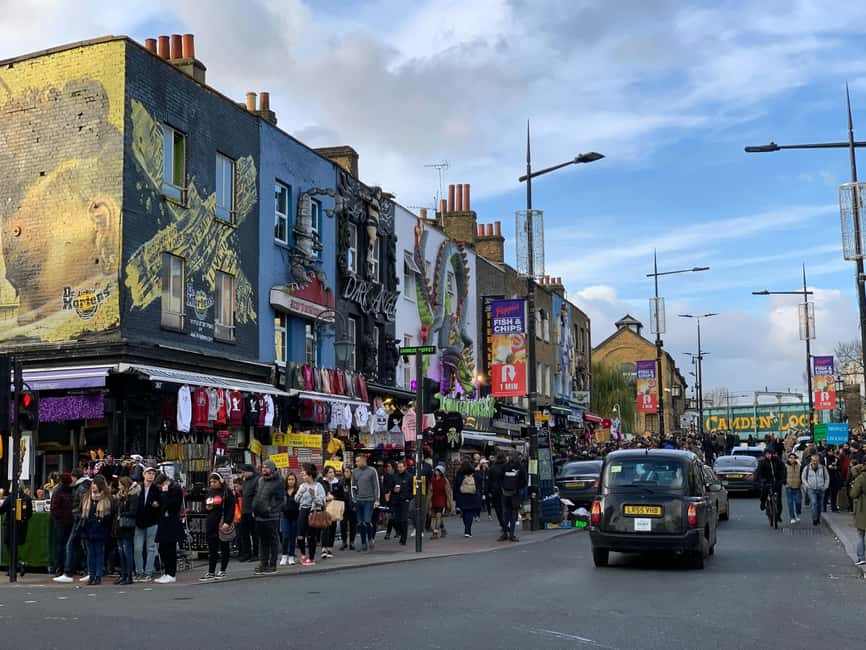
Your tour ends at Camden Lock, where the canal once served cargo boats and now hums with market stalls, music, and food. The important part is that you’re not trapped in the experience—you’re free to explore.
From Camden Lock, the route continues through the Camden Basin area and crosses the Turnover Bridge near the old Ice House. Then you walk down Camden High Street, which is where the energy shifts fully from canal-walk mode to market-and-street mode.
If you want an easy “transition plan” for the rest of your day, this ending is great. After a structured walk, Camden gives you control: pick what looks good, snack if you want (food isn’t included), and wander at your own pace.
The tour finishes near Camden Town Tube Station, which is practical if you’re planning dinner elsewhere.
Price and time: is $33 for 150 minutes a fair deal?
At $33 per person for about 150 minutes, you’re paying for a guided route that strings together several distinct zones: Paddington Basin, Little Venice, major canal features (including a tunnel), Regent’s Park, a big viewpoint climb, and Camden.
To me, this price works because you’re not just buying transport between sights. You’re buying:
- narration that ties the canal to London’s development
- a logical walking sequence (so you’re not zigzagging yourself)
- multiple visual “moments” in a compact timeframe
Could you do parts of it on your own? Sure. But you’ll likely spend more time figuring out where to go and what each spot means. This tour compresses that learning into a single smooth walk, and that saves both time and mental effort.
Also, the duration is short enough to feel like a morning or afternoon activity rather than a whole day commitment. For people who want value without exhausting logistics, that’s a win.
What to bring so the walk feels good, not annoying
This is a walking tour, so your comfort matters. The basics you should follow:
- comfortable shoes (no high heels)
- water
- weather-appropriate clothing, and an umbrella if conditions look uncertain
- camera and sunscreen
If you use sunscreen, the tour info even flags biodegradable sunscreen, so keep that in mind if you’re trying to be environmentally thoughtful.
Other practical idea: keep your phone charged. You’ll want it for photos and for navigating once the tour ends near Camden Town Tube.
And leave the extras at home. Oversize luggage isn’t allowed, and the rules list a long list of prohibited items, including pets (assistance dogs allowed), walking frames/mobility scooters, and anything that adds bulk or safety concerns.
Who should book this London canal walk?
This one suits you best if you like:
- neighborhoods over landmarks
- walking with real-world ambience (canal edges, moorings, markets)
- architecture and place stories that make sense on the street
It’s also a great option if you want the “less touristy London” feel. The route explicitly avoids only big, famous sights and instead shows you the canal and park side of the city.
If you have low fitness, mobility limits, or you’re traveling with very young kids, it may not match your needs. The activity info lists several age cutoffs and says it isn’t suitable for wheelchair users.
Should you book the London: Little Venice and Camden Walking Tour?
Yes, I’d book it if you want a smart mix of canal beauty and city context in a short window. The strongest reason is the way the route flows: you get Little Venice houseboats, big architecture stops like Crocker’s Folly, a memorable canal feature in Maida Hill Tunnel, a skyline payoff at Primrose Hill, and then a flexible finish at Camden Lock.
I’d skip it if you hate walking, dislike viewpoints that require climbing, or you need a very controlled, low-step environment. Also, since food and drinks aren’t included, plan to grab your own snack either before you start or after you reach Camden.
If you’re open to a guide-led stroll, this is one of those London experiences that gives you more than photos. It gives you a better read of the city you’re actually in.
FAQ
Where do we meet at Paddington Station?
Meet on Platform 1 under the station clock, next to the bronze Paddington Bear with his suitcase and tag. It’s roughly halfway down the platform.
How long is the tour?
The tour lasts about 150 minutes.
What is the price per person?
It’s priced at $33 per person.
What does the tour include?
The experience includes a historical walk, visits to Paddington Basin and Little Venice, walking along Regent’s Canal with views of houseboats and Browning’s Pool, stops for Crocker’s Folly, Maida Hill Tunnel, Lisson Grove Moorings, Upside Down House, Regent’s Park Villas, Primrose Hill skyline views, and visits to Camden Lock and Camden High Street.
Is food or drinks included?
No. Food and drinks are not included.
What should I bring?
Bring comfortable shoes, an umbrella, a camera, sunscreen, water, and weather-appropriate clothing. You should also have a charged smartphone and any personal medication.
What is the tour end point?
It ends at Camden Town Tube Station, after visiting Camden Lock and walking down Camden High Street.
Are pets allowed?
Pets are not allowed. Assistance dogs are allowed.
Is this tour suitable for wheelchair users?
No. The activity information states it is not suitable for wheelchair users and people with mobility impairments.
More Tours in London
- From London: Harry Potter Warner Bros Studio Tour
★ 4.7 · 26,588 reviews - Magical London: Harry Potter Guided Walking Tour
★ 4.7 · 22,044 reviews - London: Warner Bros. Studio Harry Potter Tour & Branded Bus
★ 4.7 · 19,194 reviews - London Big Bus Hop-On Hop-Off Tour with Optional River Cruise
★ 3.5 · 10,803 reviews - London Small Group Tour of Historical Pubs
★ 5.0 · 10,422 reviews
More Tour Reviews in London
- From London: Harry Potter Warner Bros Studio Tour
★ 4.7 · 26,588 reviews - London: Westminster to Greenwich River Thames Cruise
★ 4.5 · 22,836 reviews - Magical London: Harry Potter Guided Walking Tour
★ 4.7 · 22,044 reviews - London: Madame Tussauds London
★ 4.6 · 20,915 reviews - London: Warner Bros. Studio Harry Potter Tour & Branded Bus
★ 4.7 · 19,194 reviews
More London Walks Worth the Shoe Leather
- Magical London: Harry Potter Guided Walking Tour
★ 4.7 · 22,044 reviews - London: The Original Jack the Ripper Walking Tour
★ 4.7 · 7,833 reviews - Tour for Muggles The Ultimate Harry Potter Walking Tour in London
★ 5.0 · 4,684 reviews - London Jack The Ripper Guided Walking Tour
★ 5.0 · 3,131 reviews - London: Harry Potter Movies Walking Tour (Kids Go Free)
★ 4.7 · 3,071 reviews
Just reviewed around London





London Walking Tours, compared.
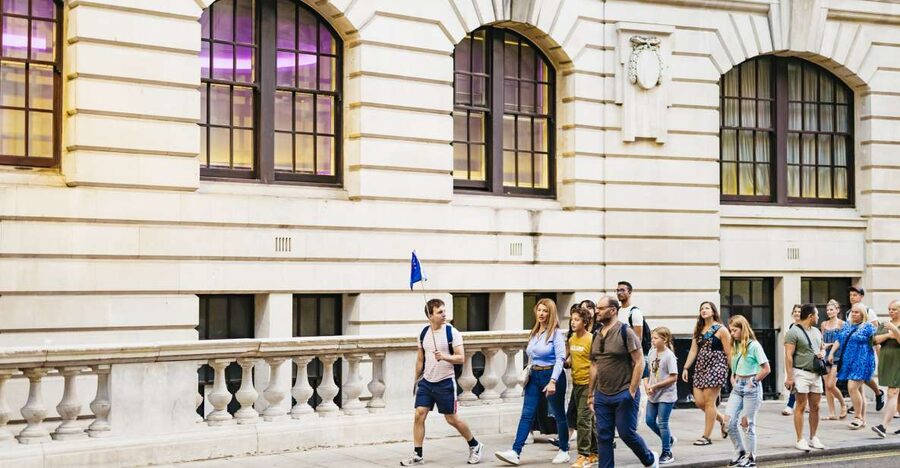 ★ 4.7Magical London: Harry Potter Guided Walking TourFrom $2022,044 reviews
 ★ 4.7The Original Jack the Ripper Walking TourFrom $257,833 reviews
 ★ 5.0Tour for Muggles The Ultimate Harry Potter Walking Tour in LondonFrom $234,684 reviews
 ★ 5.0London Jack The Ripper Guided Walking TourFrom $03,131 reviews
 ★ 4.7Harry Potter Movies Walking Tour (Kids Go Free)From $203,071 reviews
 ★ 5.0Changing of the Guard Guided Walking Tour in LondonFrom $251,793 reviews
 ★ 4.9The Great British Rock and Roll Music Walking TourFrom $361,783 reviews
 ★ 4.8Harry Potter Walking Tour in GermanFrom $201,505 reviews