
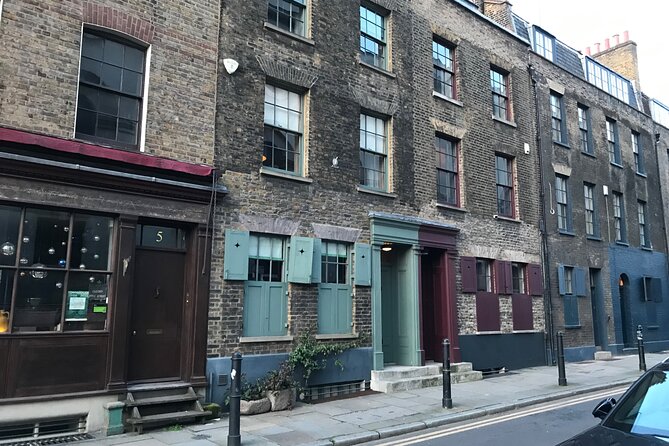
Reviewed · JACK THE RIPPER TOURS
London – Jack the Ripper Small Group Tour
Whitechapel feels like it’s still watching. This small-group Jack the Ripper walk takes you through East London by night and builds a clear case around victims, geography, and suspects. It’s led by Richard Walker, who uses tech so you can actually hear the story in a busy street.
I especially like how the tour stays victim-focused, not just mystery-movie scenes. And I love the practical setup: radio mike + earphones, plus Richard using an iPad to show what the locations looked like back in the late 1800s.
The main drawback to plan for is physical time on your feet. The walk is brisk, you’ll spend long stretches standing at key spots, and there’s no mention of sitting opportunities—so comfy shoes matter.
In This Review
- Key things to know before you go
- Entering Whitechapel at 7 pm: exactly how the evening flows
- Whitechapel Road and the London Hospital: starting with Emma Elizabeth Smith
- Buck’s Row in Whitechapel: the first murder scene and Polly Nichols
- Brick Lane, Thrawl Street, and the map of the victims
- Christ Church Spitalfields and Ten Bells: history in plain sight
- Old Spitalfields Market and the street of Mary Kelly
- How Richard Walker tells the story: facts, theories, and tech that actually works
- Price and value: what $41.67 buys you in real terms
- Who should book this Jack the Ripper walk
- Should you book this tour?
- FAQ
- How long is the London Jack the Ripper Small Group Tour?
- What time does the tour start?
- Where do I meet and where does the tour end?
- What is included in the tour price?
- Is admission to the sites included?
- What kind of physical effort should I expect?
Key things to know before you go
- Radio Mike + earphones so the guide is easy to hear in noisy neighborhoods
- iPad visuals that help you picture buildings and street angles from the era
- Small-group feel (max 15) for question time without getting lost in a crowd
- Victim-and-places approach using street geography as part of the reasoning
- Multiple named stops tied to the murders, from Whitechapel Road to Spitalfields
- End near Liverpool Street so you can connect fast to London transport
More of the East End after dark
- London: The Original Jack the Ripper Walking Tour
★ 4.7 · 7,833 reviews - London Jack the Ripper Guided Tour with Ripper-Vision
★ 4.5 · 4,840 reviews - London: Jack the Ripper Small Group Tour
★ 4.7 · 3,159 reviews - London Jack The Ripper Guided Walking Tour
★ 5.0 · 3,131 reviews
Entering Whitechapel at 7 pm: exactly how the evening flows
This tour starts in the Whitechapel area at 7:00 pm, and it’s timed for a night walk with the streets awake enough to feel real, but not so hectic that you’re constantly dodging tour groups. You meet at 279 Whitechapel Rd, London E1 1BY, and you end at 126A Middlesex St, London E1 7HY by Liverpool Street Station—handy because you can jump onto the Central, Circle, Hammersmith and City, Metropolitan lines, or the Elizabeth line.
Plan on about 2 hours 15 minutes of walking and stopping. The route covers roughly 1.5 miles (2.5 km), and it’s described as not suitable for people with walking difficulties. If you’re good for a steady evening stroll, you’ll be fine; if you need frequent rests, you might wish for more seating breaks.
The small-group size helps your brain keep up. Instead of hearing half a lecture while craning your neck, you get a calmer pace and enough room to ask questions when you want to.
Whitechapel Road and the London Hospital: starting with Emma Elizabeth Smith
The first stop puts you opposite the London Hospital area on Whitechapel Road (E1 1BY). Richard focuses on Emma Elizabeth Smith, identified as the first victim of the Whitechapel murders tied to early reports, who died after an attack on April 3, 1888.
This is a strong opening because it anchors the case in a specific place and a human timeline. You’re not starting with a legend; you’re starting with a real address, a real moment, and the practical question of what made this neighborhood so dangerous at the time—especially for vulnerable residents.
It also sets the tone of the tour: the facts come first, and the “what ifs” come next. The tour keeps you moving, but it doesn’t rush past the meaning of each location.
If you’re sensitive to true-crime topics, note that the tour is often described as engaging and not “gory.” It’s more about context, victim stories, and theories than shock value.
Buck’s Row in Whitechapel: the first murder scene and Polly Nichols
From there you move into Whitechapel, heading to Buck’s Row for what the tour treats like a crime-scene investigation. Here, the story centers on Polly Nichols, described as Jack the Ripper’s first murder in this sequence—and you’ll look at when, where, and how the killings may have happened.
What I like about this part is the way the reasoning is built. You’re not just told a plot; you’re guided through geography and assumptions: how a killer could pick targets, how movement through streets might work, and what witness statements might—or might not—support.
The tour also introduces the idea of suspects in a structured way. You’ll learn there are competing profiles and theories, and that “most likely” depends on which details you trust.
This stop works best if you enjoy true crime the way detectives do: location, timing, patterns, and constraints.
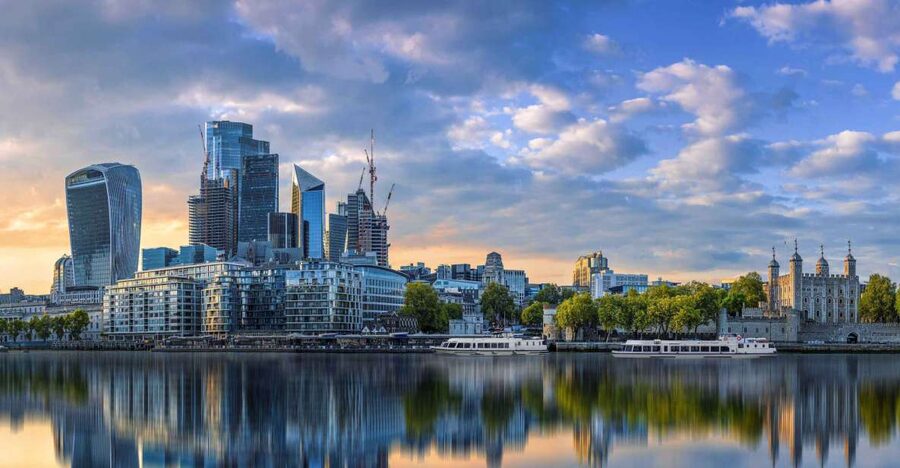


Brick Lane, Thrawl Street, and the map of the victims
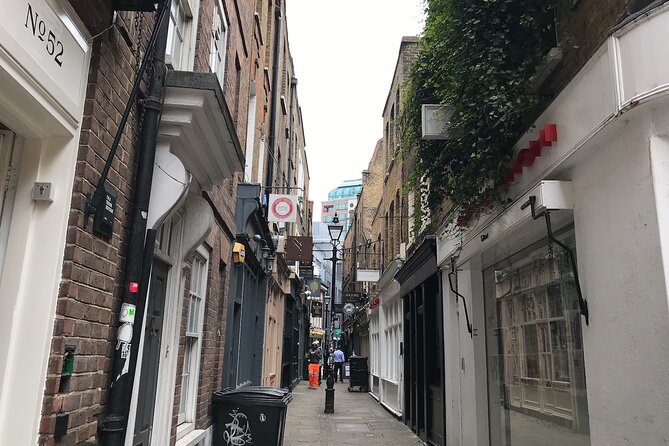
Brick Lane is where the tour starts to feel like a real geography puzzle. You’ll hear how it fits into the eastern boundary of where the five victims lived, and how street names connect to lodging houses, neighborhoods, and potential movement routes.
Expect details like Thrawl Street, which ran from Brick Lane toward Commercial Street, and the connection to Polly Nichols at Wilmott’s Lodging House. The tour also links Flower and Dean Street with the later victims and notes that Scotland Yard believed Jack could be living in that general area. And you’ll be shown where Annie Chapman was found murdered, close to Brick Lane.
If you like history that you can “see,” this is one of the best stretches. The streets are still there, and Richard uses the iPad images to help you compare old street layouts with what you see today. That’s what turns random sidewalks into evidence you can picture.
Potential drawback here: you’ll be standing in the street and looking at angles, not sitting in a cozy room. If you’re prone to leg fatigue, bring that discomfort expectation with you.
Christ Church Spitalfields and Ten Bells: history in plain sight
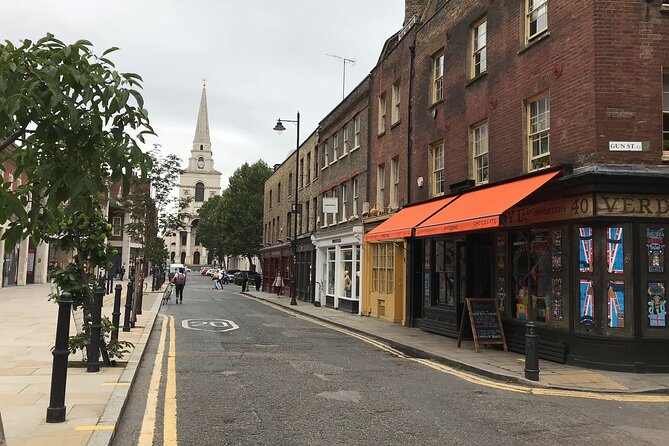
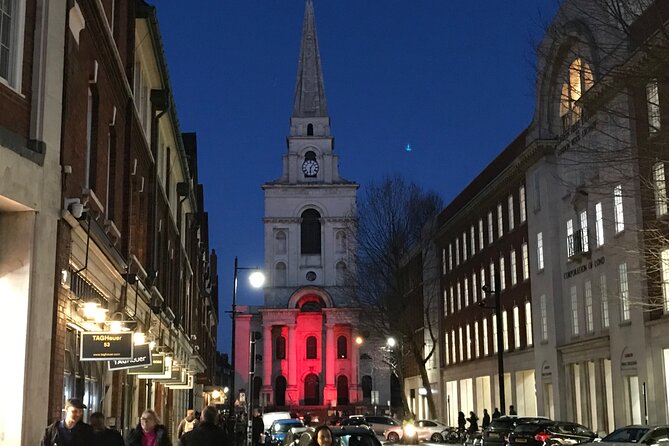
Next comes Christ Church Spitalfields, designed by Nicholas Hawksmoor—a name you’ll hear for a reason. The church is across from the Ten Bells Pub, which takes its name from the church opposite it. The tour also points out that the victims drank nearby, using the area to show how ordinary life and tragedy collided so close together.
This stop is eerie for a calmer reason: it’s not just “Ripper sites,” it’s architecture and community landmarks still doing what they’ve always done. You’re looking at the edges of a neighborhood that once held both routine and risk in the same streets.
If you’re a visual learner, this is where the iPad helps again—Richard frames the church and the pub so you understand the sightlines and proximity, not just the fact that they exist.
One practical note: admission isn’t included for this stop. You can still enjoy the exterior/history, but if you were planning on going inside, check before you go so you’re not surprised.
Old Spitalfields Market and the street of Mary Kelly
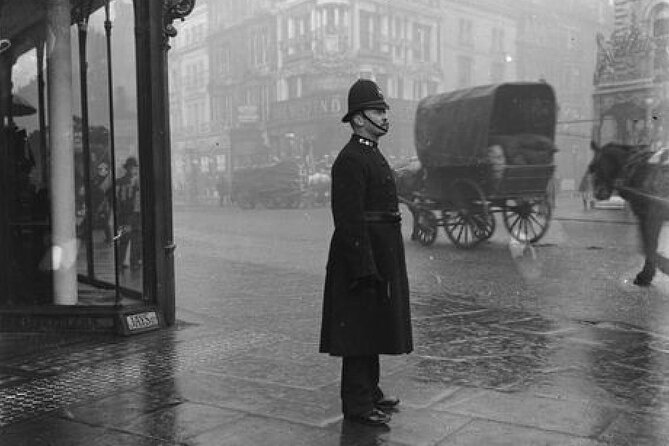
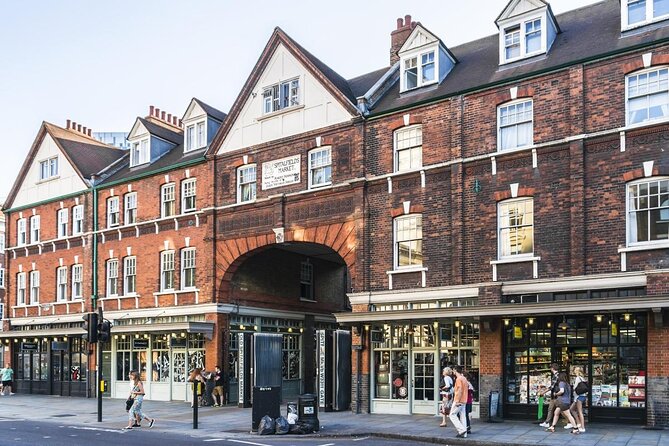
You’ll then head to Old Spitalfields Market, where the American writer Jack London is described as witnessing serious poverty in Victorian London. Even if you don’t know the exact wording of his observations, the stop works because it gives you a social backdrop you can feel: this wasn’t a fantasy set. It was economic pressure, cramped living, and streets where the wrong person had no safe option.
Then the tour focuses on Spitalfields, described as the area where the “worst street” in London stood. You’ll connect Annie Chapman’s home location to the night she was murdered, and you’ll hear about Mary Kelly, who lived and was murdered there. This part of the walk also brings in a third suspect tied to this later sequence, continuing the tour’s theme of “evidence, profiles, and alternatives,” not just one fixed answer.
I like that Richard keeps returning to people, not just the killer myth. The victims here feel like residents with routines and constraints, not names dropped in a lecture.
Again, you’ll likely stand in place while Richard explains. So if you want a lot of frequent movement, this is more “stop-and-consider” than “walk-while-marching.”
How Richard Walker tells the story: facts, theories, and tech that actually works
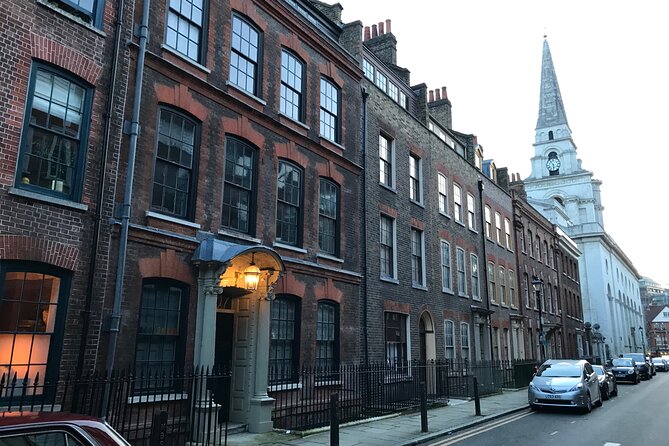
Richard Walker leads the tour with a mix of entertainment and research, and the practical tech is a big part of why the tour feels smooth. You’ll be given headsets (radio mike and earphones) so you can hear the guide even when you’re surrounded by traffic noise and passersby. Several guests singled this out as a game-changer, and it makes sense: Whitechapel streets are not a library.
Richard also uses an iPad to show images of locations as they might have looked in the late 1800s. That helps you build a mental picture instead of staring at a modern street and guessing what’s missing.
As for the theories: the tour isn’t only “here’s the culprit.” It pulls from approaches like a 1988 FBI profile by John Douglas and a Scotland Yard geographical profile (2008) to discuss how a killer might have operated across the area. You’ll hear multiple suspects discussed, including a case-study-style mention of Amelia Dyer (the Baby Farmer of Reading) tied to an older theory that shows up in Ripper research.
One caution: this is not the kind of tour that tries to scare you with gory set pieces. If you’re expecting a horror-movie script, you may find it more educational and theoretical than creepy. If you want the “why these streets” side of true crime, you’ll probably enjoy it more.
Price and value: what $41.67 buys you in real terms
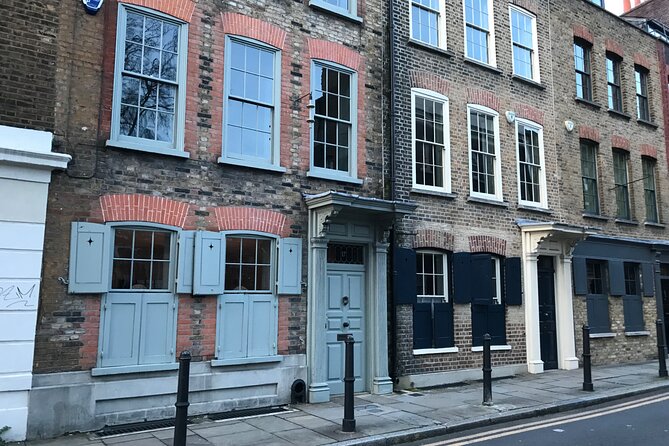
At about $41.67 per person for roughly 2 hours 15 minutes, this isn’t a budget novelty. The value comes from two things: the small group size and the audio-visual support.
A max group of 15 means you’re less likely to get lost in the crowd, and it’s easier to hear questions and follow the map logic. The included headsets and iPad visuals also cut down on frustration. You’re paying for clarity, not just walking through a themed neighborhood.
Also, this area is dense with sites, and the tour gives you a sequence. Instead of hopping between stops on your own and missing the connections, you get a guided route that ties victims to streets and streets to reasoning.
If you’re visiting for a short trip and want one “big Ripper night” with structure, this price feels fair.
Who should book this Jack the Ripper walk
This tour is a great fit if you want:
- True crime with context, not just celebrity mythology
- A small group where you can ask questions
- A night walk focused on victims and location logic
- A guide who brings street-level storytelling and uses visuals to explain what you’re seeing
It may not be your best match if you:
- Need a lot of places to sit, because the pace is brisk and you’ll stand at several points
- Want heavy gore or a purely suspenseful, scary tone
- Are hoping for the tour to focus mainly on suspects at the expense of victims and neighborhood realities
Should you book this tour?
If you’re the type who likes to think like a detective—timelines, geography, patterns, and what eyewitnesses might have gotten wrong—book it. The headsets, iPad visuals, and the structured sequence from Whitechapel Road to Spitalfields make the story easier to follow than doing it all on your own.
If you’re sensitive to true-crime topics or you hate standing around, go in with the right expectations: this is a brisk walking tour with standing stops, and it leans into history and victim stories more than horror theatrics.
Bring good shoes, and plan to be mentally “on” for a couple hours. Then you’ll get the payoff: East London streets that suddenly feel like evidence, not just scenery.
FAQ
How long is the London Jack the Ripper Small Group Tour?
It runs for about 2 hours 15 minutes.
What time does the tour start?
The start time is 7:00 pm.
Where do I meet and where does the tour end?
Meet at 279 Whitechapel Rd, London E1 1BY, and the tour ends at 126A Middlesex St, London E1 7HY near Liverpool Street Station.
What is included in the tour price?
The tour includes a radio mike and earphones, plus an iPad used to display images.
Is admission to the sites included?
Admission is free for most stops. Christ Church Spitalfields is noted as admission ticket not included.
What kind of physical effort should I expect?
You should have moderate physical fitness for a brisk walking experience, and it is not suitable for people with walking difficulties.
More Tours in London
- From London: Harry Potter Warner Bros Studio Tour
★ 4.7 · 26,588 reviews - Magical London: Harry Potter Guided Walking Tour
★ 4.7 · 22,044 reviews - London: Warner Bros. Studio Harry Potter Tour & Branded Bus
★ 4.7 · 19,194 reviews - London Big Bus Hop-On Hop-Off Tour with Optional River Cruise
★ 3.5 · 10,803 reviews - London Small Group Tour of Historical Pubs
★ 5.0 · 10,422 reviews
More Tour Reviews in London
- From London: Harry Potter Warner Bros Studio Tour
★ 4.7 · 26,588 reviews - London: Westminster to Greenwich River Thames Cruise
★ 4.5 · 22,836 reviews - Magical London: Harry Potter Guided Walking Tour
★ 4.7 · 22,044 reviews - London: Madame Tussauds London
★ 4.6 · 20,915 reviews - London: Warner Bros. Studio Harry Potter Tour & Branded Bus
★ 4.7 · 19,194 reviews
More Ripper Walks After Dark
- London: The Original Jack the Ripper Walking Tour
★ 4.7 · 7,833 reviews - London Jack the Ripper Guided Tour with Ripper-Vision
★ 4.5 · 4,840 reviews - London: Jack the Ripper Small Group Tour
★ 4.7 · 3,159 reviews - London Jack The Ripper Guided Walking Tour
★ 5.0 · 3,131 reviews - London: Jack the Ripper Tour with Immersive Ripper Vision
★ 4.5 · 1,840 reviews
Just reviewed around London





Jack the Ripper Tours, compared.
 ★ 4.7The Original Jack the Ripper Walking TourFrom $257,833 reviews
 ★ 4.5London Jack the Ripper Guided Tour with Ripper-VisionFrom $274,840 reviews
 ★ 4.7Jack the Ripper Small Group TourFrom $263,159 reviews
 ★ 5.0London Jack The Ripper Guided Walking TourFrom $03,131 reviews
 ★ 4.5Jack the Ripper Tour with Immersive Ripper VisionFrom $241,840 reviews
 ★ 4.6German Language : Original Jack the Ripper TourFrom $241,805 reviews
 ★ 5.0Ultimate Jack the Ripper : Guided Tour of LondonFrom $271,495 reviews
 ★ 4.9Jack the Ripper Evening Walking TourFrom $331,449 reviews
Browse the lists this tour appears in