

Reviewed · AUDIO TOURS
Londinium’s Footprint: Explore London’s Roman wall on a self-guided audio tour
Roman walls hide in plain sight. This self-guided VoiceMap audio walk lets you linger at the spots you care about, with stop-anytime photo breaks and offline maps and audio that keep working without Wi‑Fi. I also like that it turns scattered landmarks into one storyline, but the one catch is you’ll need your own smartphone and headphones to hear it all.
You’ll start near Tower Hill and work your way toward the Museum of London, picking up Roman, medieval, and wartime layers along the way. I especially liked the moment you get eyes-on the wall behind the Leonardo Hotel, then follow it into shaded gardens and a church ruin area that carries WW2 and later bombing history.
In This Review
- Key highlights worth planning for
- Roman Wall in Real Life: What This Walk Feels Like
- Tower Hill Start: From the Crown Jewels Area to Roman Lines
- The WW1 to Emperor Connection: A Small Detour With Big Meaning
- Seeing the Roman Wall Behind the Leonardo Hotel
- City Gates to Shaded Gardens: Where the Wall Still Shapes Space
- Medieval Church Site, WW2 Blitz Survival, and Later Bombing
- The Hill of Executions and the Crypt Museum
- Garden Ruins Built Within the Roman Wall
- Ending at the Museum of London (Free) With a Clean Finish
- Price and Value: Why $9.99 Actually Makes Sense
- What You’ll Need on Your Phone (So You Don’t Get Stuck)
- Timing and Route Pace: 1 to 2 Hours That Add Up
- Who This Walk Is Best For (And Who Might Skip It)
- Short FAQ: The Practical Stuff
- FAQ
- Is this tour an app-based self-guided walk?
- How long does the tour take?
- What does it cost?
- Where do I start and where does it end?
- Do I need Wi‑Fi?
- What do I need to bring?
- Are museum tickets included?
- Is this a private experience?
- Should You Book Londinium’s Footprint?
Key highlights worth planning for
- Offline-first VoiceMap guidance so you can keep going even with spotty signal
- Roman wall sightings in unexpected places, including behind the Leonardo Hotel
- Stop-and-go pacing with audio you can pause while you take photos
- Layers of London history from Roman city defenses to later church use and wartime scars
- A practical finish near the Museum of London, where entry is free
Still deciding? A handful more London outings we rated
- Magical London: Harry Potter Guided Walking Tour
★ 4.7 · 22,044 reviews - London: Emirates Stadium Entry Ticket and Audio Guide
★ 4.7 · 5,513 reviews - London: Christmas Lights Bus Tour With Live Guide
★ 4.0 · 5,410 reviews - Stonehenge, Windsor Castle and Bath Full Day Guided Tour
★ 4.5 · 5,346 reviews
Roman Wall in Real Life: What This Walk Feels Like
This is a self-guided audio experience built around one goal: showing you part of Londinium’s ancient city wall, piece by piece, while you connect it to the London that grew on top of it. Instead of herding you through a checklist, the format lets you move at a normal walking pace and stop when something catches your eye.
What makes it work well is the way the route is framed. You don’t just hear facts. You get prompts that help you look in the right direction at the right time—like when the audio leads you to view the wall visible behind a hotel garage area. That kind of guidance matters in London, where the most interesting stuff can be a few steps off the busy sidewalk.
You’re also not locked into a tour schedule. Depending on how often you pause for photos and how long you linger at the garden and ruins stops, you’re looking at about 1 to 2 hours. For a $9.99 experience, that timing is a big part of the value.
Tower Hill Start: From the Crown Jewels Area to Roman Lines
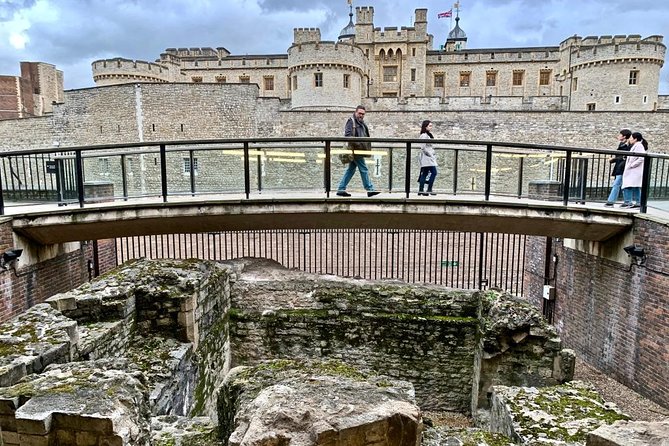
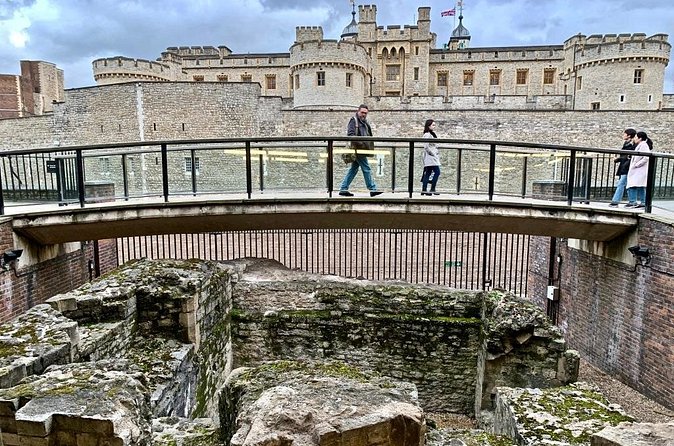
The tour starts at 12 Tower Hill, London EC3N 4EE, outside the Tower of London area—the infamous castle and prison, and still the current home of the Crown Jewels. That start location isn’t random. It places you at one of the city’s most famous historic anchors, then uses the audio to steer you toward something less obvious: the Roman wall footprint underneath later London landmarks.
At this stage, I’d treat the first few minutes like orientation. Start your audio, check that your phone’s volume is audible for walking, and take a moment to locate the direction your route is heading. If you do this, the rest feels smoother, because you stop “guessing” and start just following the audio cues.
The WW1 to Emperor Connection: A Small Detour With Big Meaning

One of the stops covers a World War I hero who has honored an ancient Emperor. The attraction here is the contrast. You’re in London today, and then the audio forces a link backward in time—showing how one era remembers another.
Even without a long museum-style explanation, it helps you notice how public monuments and memorial choices can carry meaning across centuries. In practice, this is a good place to slow down and actually look around before you move on. The audio makes you aware that history isn’t only in buildings—it’s also in how people mark places.
Still deciding? A handful more London outings we rated
Seeing the Roman Wall Behind the Leonardo Hotel

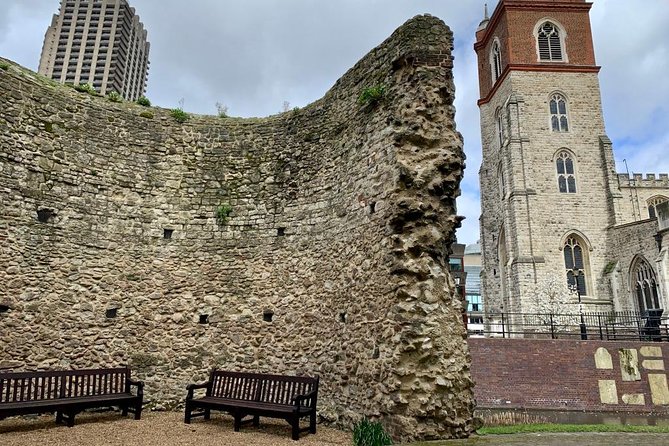
Here’s what several people highlight for a reason: you get a real view of the Roman wall behind the Leonardo Hotel, reached by walking through the area near the hotel garage. That’s not the kind of Roman-wall encounter you expect when you’re thinking of London as glass towers and busy streets.
This is one of those moments where the audio guide really earns its keep. If you show up without direction, you can walk right past where the wall becomes visible. With VoiceMap, the audio helps you time your look so you’re seeing it when it matters.
A practical tip: pause audio before you take photos if you want clean framing, then restart it when you’re ready to move. The whole point is that you can stop as often as you like.
Also, one helpful note from user feedback: some people report the tour experience includes a dedicated Wi‑Fi connection and a Google Maps style map within the setup. Even if you don’t rely on that, it’s comforting to know the experience is designed to keep your navigation workable.
City Gates to Shaded Gardens: Where the Wall Still Shapes Space
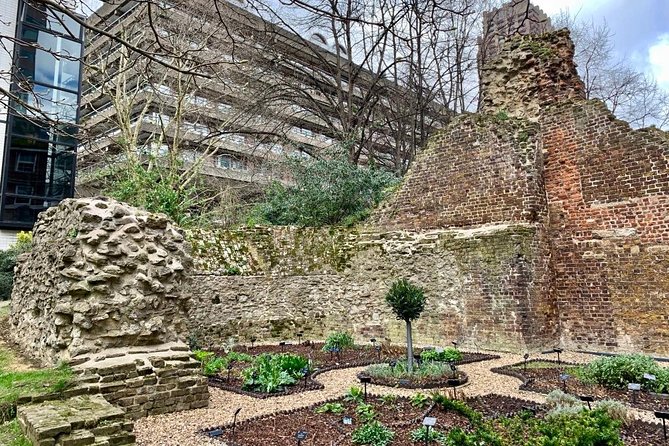
The tour then shifts from the hard idea of defenses to a softer reality: in ancient times, that wall helped guard the city gates. Now, the spaces connected to it function more like a patchwork of London quiet—shaded gardens where you can catch your breath.
This stop is valuable for a simple reason. It teaches you how to “read” ruins and remnants inside an active city. You’re not looking at something behind a fence that never touches modern life. You’re seeing a wall footprint that influences how people move through the area today.
If you like walking breaks, take advantage of this part. It’s one of the few spots in the route that feels like a pause rather than a pass-through.
Medieval Church Site, WW2 Blitz Survival, and Later Bombing
Next, the audio takes you to a site where a church has been present since medieval times. What really shapes this stop is the survival story: the church survived the WW2 Blitz, and it was also affected by a 1990s IRA bombing.
That combination matters. It’s not just a building history lecture. It’s a reminder that places of worship in London have also been collision points in modern conflict. In a walking tour, this kind of context can be heavy—so I’d recommend you pace yourself. Stand where the audio tells you, listen fully, then give yourself a few minutes to reset before moving on.
If you’re someone who likes your history grounded in real geography, this stop will feel especially meaningful because the “why” is tied to where you’re standing, not to a distant image.
The Hill of Executions and the Crypt Museum

After the church stop, the route goes to the final resting spot of many executed upon the hill. The tour also notes that there’s a small museum in the crypt area among the Roman ruins.
This is the emotional center of the walk. Even if you don’t linger long, treat the audio here as a moment to slow your pace and respect the place. The mixture of execution history plus Roman ruins adds layers that can feel intense, but that’s also the point of the experience: you see how many different stories occupy the same ground.
In practical terms, this is also a good time to check your battery level. If you’ve been using audio continuously, make sure your phone has enough charge for the final stretch toward the Museum of London.
Garden Ruins Built Within the Roman Wall
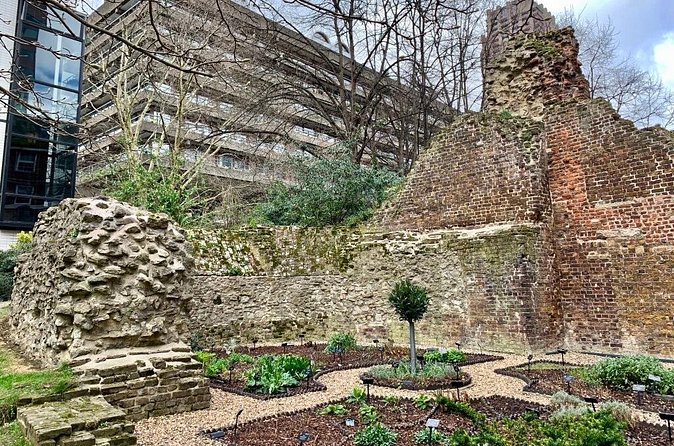
Another standout stop is a garden built among church ruins that were constructed within the ruins of the ancient wall. This is the kind of setup that makes London unique: you don’t just see Roman remains; you see later life and later rebuilding literally layered into them.
I like this portion because it changes your perspective. Instead of thinking of ruins as frozen in time, you understand them as reused spaces. When you walk through the garden area during the audio segments, you get a clearer mental picture of how Romans, medieval builders, and later generations all shaped the same environment.
Again, this is one of the best segments to take your time with. If you’re the type who always rushes at the first sign of a photo-worthy wall, slow down here—this is where the whole “walk the layers” concept clicks.
Ending at the Museum of London (Free) With a Clean Finish
The tour ends at London Wall (Stop BE), Barbican, London EC2Y 5BL, a few feet from the Museum of London entrance. The tour data says entrance is free, and you can pop in for a short look at exhibits or even a quick restroom break.
This is a smart finishing move because it gives you two options. If you want more, you can continue inside. If you’re tired or the weather shifts, you can end your visit right there and still feel like you got a complete experience.
The Museum of London connection also supports the theme of the walk: it’s presented as an area full of artefacts focused on the Square Mile—the heart of old London life.
Price and Value: Why $9.99 Actually Makes Sense
At $9.99 per person, this is one of those “easy decision” buys—especially because you get:
- Lifetime access to the tour in English
- Offline access to audio, maps, and geodata
- Use of the VoiceMap app for Android and iOS
The value comes from the structure. You’re paying less for a guided route, and more for a tool that helps you understand the place you’re already walking through. If you’re traveling on a budget, this is the kind of activity that fits without turning into a money trap.
A small caution on value: since it’s audio-only, you’re not getting a live guide to answer questions. If you need real-time explanations or want to argue with facts, this may not scratch that itch. But if you like self-paced walking with solid prompts, it’s a good match.
What You’ll Need on Your Phone (So You Don’t Get Stuck)
You’ll need to bring your own smartphone and headphones. That’s obvious, but in practice it makes the difference between smooth and frustrating.
Before you start:
- Download the tour setup if it’s available in your flow, so you can rely on offline audio and maps.
- Headphones should be comfortable enough for an hour or two.
- If your phone battery is low, top it up before you begin.
The included offline access is a real advantage in London, where Wi‑Fi can be inconsistent. Still, I’d rather you plan as if you won’t have help—so you stay confident and keep the walk going.
Timing and Route Pace: 1 to 2 Hours That Add Up
This experience is listed as about 1 to 2 hours. That’s perfect for a morning block, a pre-dinner walk, or a break between bigger sights.
Because the tour is self-guided, your main time drivers are:
- Photo stops
- How long you linger around the Roman wall view behind the Leonardo Hotel area
- Time at the church ruins area and the crypt museum segment
- Whether you quickly step into the Museum of London to wrap things up
If you’re visiting in bad weather, the audio format helps. You can slow down, keep your place, and make the route fit the day rather than forcing a fixed schedule.
Who This Walk Is Best For (And Who Might Skip It)
This is ideal if you:
- Like walking tours that are easy to follow
- Want to see Roman remains without committing to a full museum day first
- Enjoy layered stories, especially Roman to medieval to WW2 and beyond
- Prefer stopping for photos without asking anyone permission
You might skip it if:
- You strongly dislike audio-guided experiences
- You want a live guide to answer questions on the spot
- You don’t travel with headphones or a charged phone
Short FAQ: The Practical Stuff
FAQ
Is this tour an app-based self-guided walk?
Yes. It’s provided through the VoiceMap app for Android and iOS, with offline access to audio, maps, and geodata included.
How long does the tour take?
The experience is listed at about 1 to 2 hours.
What does it cost?
The price is listed as $9.99 per person.
Where do I start and where does it end?
Start: 12 Tower Hill, London EC3N 4EE. End: London Wall (Stop BE), Barbican, London EC2Y 5BL, near the entrance to the Museum of London.
Do I need Wi‑Fi?
No. The tour includes offline access to audio, maps, and geodata.
What do I need to bring?
You need to bring your smartphone and headphones.
Are museum tickets included?
No. Museum entry is not included, but the tour notes that the Museum of London entrance is free, so you can do a quick look if you want.
Is this a private experience?
It’s described as a private tour/activity, with only your group participating.
Should You Book Londinium’s Footprint?
If you like being outside, walking at your own pace, and connecting Roman London to what you can actually see today, I’d book it. The best part is the combination of offline audio/maps plus the chance to spot the Roman wall in real places, especially behind the Leonardo Hotel, then continue through church ruins and crypt context without needing a live guide.
Book it especially if you want a value-friendly history walk that fits into a tight itinerary. Just don’t forget your headphones, and don’t plan on using the experience without a charged phone—audio is the whole point.
More Guided in London
- Magical London: Harry Potter Guided Walking Tour
★ 4.7 · 22,044 reviews - London: Emirates Stadium Entry Ticket and Audio Guide
★ 4.7 · 5,513 reviews - London: Christmas Lights Bus Tour With Live Guide
★ 4.0 · 5,410 reviews - Stonehenge, Windsor Castle and Bath Full Day Guided Tour
★ 4.5 · 5,346 reviews - London Jack the Ripper Guided Tour with Ripper-Vision
★ 4.5 · 4,840 reviews
More Tours in London
- From London: Harry Potter Warner Bros Studio Tour
★ 4.7 · 26,588 reviews - Magical London: Harry Potter Guided Walking Tour
★ 4.7 · 22,044 reviews - London: Warner Bros. Studio Harry Potter Tour & Branded Bus
★ 4.7 · 19,194 reviews - London Big Bus Hop-On Hop-Off Tour with Optional River Cruise
★ 3.5 · 10,803 reviews - London Small Group Tour of Historical Pubs
★ 5.0 · 10,422 reviews
More Tour Reviews in London
- From London: Harry Potter Warner Bros Studio Tour
★ 4.7 · 26,588 reviews - London: Westminster to Greenwich River Thames Cruise
★ 4.5 · 22,836 reviews - Magical London: Harry Potter Guided Walking Tour
★ 4.7 · 22,044 reviews - London: Madame Tussauds London
★ 4.6 · 20,915 reviews - London: Warner Bros. Studio Harry Potter Tour & Branded Bus
★ 4.7 · 19,194 reviews
Just reviewed around London





Audio Tours, compared.
 ★ 4.7Emirates Stadium Entry Ticket and Audio GuideFrom $475,513 reviews
 ★ 4.0Westminster Abbey Entrance Ticket Including Audio GuideFrom $41661 reviews
 ★ 4.5British Museum Audio Tour & Priority Entrance TicketFrom $9631 reviews
 ★ 4.6Churchill War Rooms Ticket & Political London AudioFrom $62224 reviews
 ★ 3.5Windsor Castle Tour from London with Transportation & Audio GuideFrom $94222 reviews
 ★ 4.0London Panoramic Open Top Bus Tour with Audio GuideFrom $48209 reviews
 ★ 4.8Royal Walking Tour and Buckingham Palace Audio TourFrom $100154 reviews
 ★ 4.5Emirates Stadium and Arsenal Museum Entrance Ticket Including Audio GuideFrom $48113 reviews
Browse the lists this tour appears in