
Reviewed · JACK THE RIPPER TOURS
Jack the Ripper Private Immersive Tour
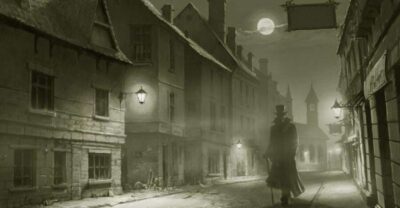
Jack the Ripper stories hit different on London streets.
This is a private 2.5-hour walk built around real locations, tight timing, and hi-tech headphones that keep you in the story. You’ll pause at key spots tied to the murders, hear what life was like in 1888, and get a guide who can take questions as you go.
I like two things a lot: first, the audio setup and visuals (photos shown on a 14-inch tablet) make it easier to follow even after dark. Second, the tone feels interactive without turning into a lecture—guides like Jenny in past runs are praised for energetic delivery and clear communication.
One thing to consider: there isn’t much time to stop, rest, or break up the walking, and the route is 2 hours 30 minutes on foot. Also, if you’re hard of hearing, plan to stand toward the front so you have the best chance of hearing your guide clearly.
In This Review
- Key points before you go
- A private Ripper walk you can actually hear
- Price and what you’re paying for
- The route feels like a night walk with a point
- Stop 1: Dorsett City Hotel and the 1888 setup
- Stop 2: St Botolph’s Aldgate and what people endured
- Stops 3 and 4: Mitre Street and Mitre Square
- Stop 5: Goulston Street and a clue tied to two police forces
- Stop 6: Wentworth Street and the non-canonical angle
- Stops 7 to 9: Osborn Street music and Polly Nichols on Brick Lane
- Stop 10 and 11: Hanbury Street and Annie Chapman’s lure
- Stops 12 to 14: letters, headlines, and the Ten Bells area
- Stop 15: London Fruit & Wool Exchange and Mary Kelly’s indoor murder
- What makes the guide matter (and how to get the best audio)
- Small comfort notes that actually help
- Should you book this Jack the Ripper Private Immersive Tour?
- FAQ
- How long is the Jack the Ripper Private Immersive Tour?
- How much does the tour cost?
- Where does the tour start and end?
- Is this tour private?
- Are headphones included?
- Do I need bottled water?
- Is there a mobile ticket?
- What’s the cancellation policy?
- Does the tour run in all weather?
- Is the tour suitable for limited walking or standing?
Key points before you go
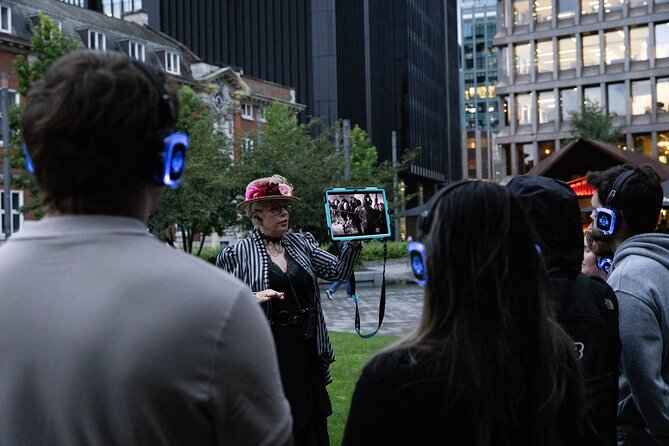
- Hi-tech headphones included to help you catch every detail on a dark street.
- 14-inch tablet photos at stops so you can actually see what the guide is pointing out.
- Private guide with lots of Q&A, so you can steer the conversation.
- A route that starts at Aldgate and ends near Liverpool Street, with a logical flow of locations.
- No break built in, so you’ll want comfy shoes and a steady pace.
More of the East End after dark
- London: The Original Jack the Ripper Walking Tour
★ 4.7 · 7,833 reviews - London Jack the Ripper Guided Tour with Ripper-Vision
★ 4.5 · 4,840 reviews - London: Jack the Ripper Small Group Tour
★ 4.7 · 3,159 reviews - London Jack The Ripper Guided Walking Tour
★ 5.0 · 3,131 reviews
A private Ripper walk you can actually hear
There’s a certain thrill to doing true crime in London, but the best tours don’t just say names. They make you look at the street the way a witness might have, and they give you enough sensory detail to make it stick.
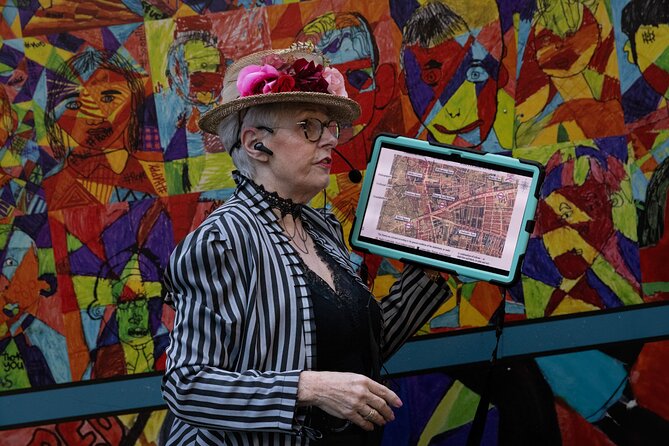
This one leans hard on listening. You get hi-tech headphones, and the guide uses a mic at times when groups are larger or the night is busy. In the better experiences, headphones keep the story feeling close, like your guide is talking to you alone. One common highlight from past guests is that the tech helps you stay connected so you don’t miss key moments.
Now, a small practical note. One guest who said they’re very hard of hearing reported not hearing most of the tour. The provider’s response was simple: if you have hearing challenges, tell the guide and stand at the front for the clearest audio. That’s the sort of tip that can save your whole trip—so treat it like part of the plan, not an afterthought.
Price and what you’re paying for
At $47.52 per person for about 2 hours 30 minutes, you’re not buying a cheap bus tour. You’re paying for a guided route with a private group experience, headphones, and visuals at multiple stops.
Here’s the value logic I see:
- You’re paying for structure: the story moves stop to stop, so it doesn’t drift.
- You’re paying for tech: headphones and tablet visuals help the tour work in real night conditions.
- You’re paying for personal pacing: as a private tour, you can ask questions without competing with a crowd.
If you love true crime, you’ll likely feel the price is fair because the tour gives you a lot of time on the ground—15 stops, with short segments at each location. If you’re mostly in it for quick photo ops, you may find it more intense than you expect, since it’s built for listening and attention.
The route feels like a night walk with a point
You start at Aldgate Station and finish at Bell Lane near central London (with the guide later directing you along the shortest route to Liverpool Street Station).
The pacing is steady: lots of street-level stops, each timed fairly tightly, and then you move on. Stop times vary—from just a few minutes to around a quarter hour near the end—but overall it’s a continuous experience. That’s great if you want momentum. It’s not great if you prefer long breaks, lots of standing off to the side, or frequent bathroom stops.
The provider also flags that this isn’t ideal if you have walking or standing difficulties. So if you’re planning knee support or need frequent sit-down breaks, consider that before you book. In London, shoes matter, and it matters here even more.
Still deciding? A handful more London outings we rated

Stop 1: Dorsett City Hotel and the 1888 setup
The tour kicks off at the Dorsett City Hotel, where you get the introduction to the murders and what the area looked and felt like in 1888.
This opening is useful because it frames the rest of the route. Without that context, these locations can feel like random dots on a map. With it, you start connecting street life, housing conditions, and why certain places became hard to manage even for police.
You’ll also learn how to think about the case: not just who, but how the night unfolded and how witnesses and officers would have experienced the area.
Stop 2: St Botolph’s Aldgate and what people endured
At St Botolph’s Aldgate, you’ll pause near the green and get a close look at daily life in 1888—especially homelessness, common lodging houses, and the lack of stable employment.
This stop is where the tour earns its seriousness. It turns the story from “gruesome events” into “a society under pressure.” You’re not just hearing crime facts. You’re seeing the background conditions—workhouses, precarious living, and the reality that many people didn’t have many safe options.
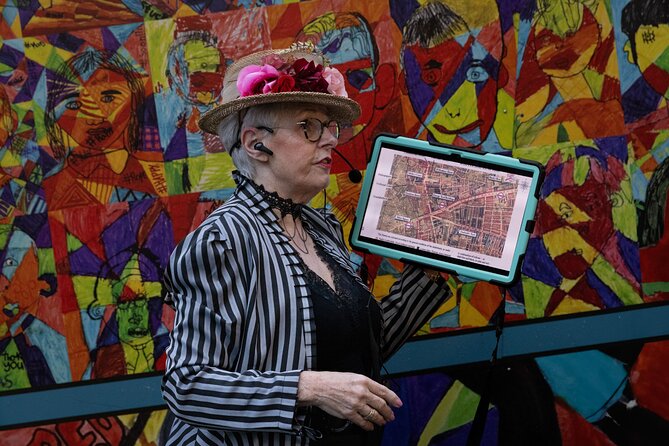
The visuals help here too. You’ll see photos on the tablet to illustrate what the guide is describing, and the tablet size makes it easier to read and understand in darker conditions.
Stops 3 and 4: Mitre Street and Mitre Square
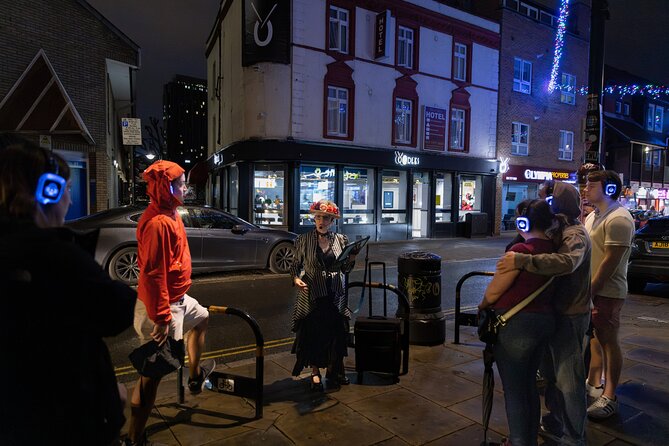
Next comes Mitre Street, focused on Elizabeth Stride. You’ll hear about the evening leading up to the murder and how Louis Diemschultz discovered her body near the gateway of Dutfield’s Yard. The guide also shows photos of the street and victim.
Then you move to Mitre Square, tied to Catherine Eddowes, found dead and mutilated on 30th August 1888. You’ll hear that this was the second murder within about an hour, and that PC Edmund Watkins discovered her body on his beat. After that, the tour follows the route officers took right to where the case’s only clue, in the tour’s telling, was found—again with photo support.
I like this two-stop pairing because it teaches you how the case played out in real time. It’s not a single “big mystery moment.” It’s chaos across nearby streets, with officers scrambling while the city’s nerves were already stretched tight.
Stop 5: Goulston Street and a clue tied to two police forces
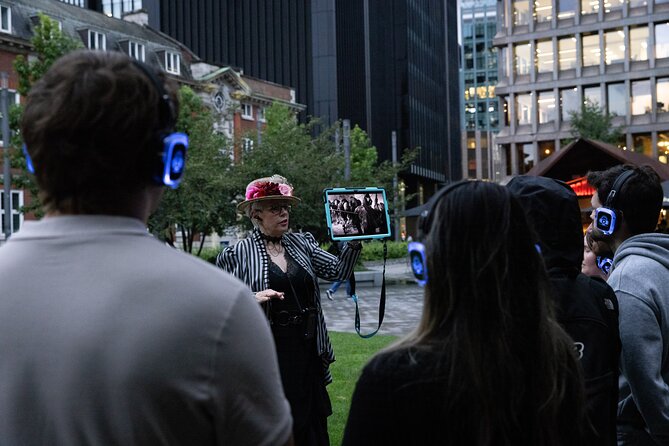
At Goulston Street, you stand opposite 108–119 Goulston Street to view the doorway where the tour says the only clue in the case was found.
Then comes a detail that’s easy to miss on casual tours: the tour explains how the Metropolitan Police and the City of London Police were separate systems then—and still are separate in some ways today. For me, this matters because it helps explain why investigations can get messy, even when people think the “right answer” should be obvious.
You’re not just learning what happened. You’re learning how institutions behaved under pressure.
Stop 6: Wentworth Street and the non-canonical angle
At Wentworth Street, the tour returns to the beginning of the killings and tackles a victim not included in the canonical five. The guide discusses a more recent accreditation by Professor David Wilson, a criminologist.
This is one of the most interesting parts if you like cases that don’t fit neatly into the textbook version. It also adds a “research culture” vibe to the walk: not just repeating the famous names, but noting that serious people revisit evidence and theories.
Because this is still theory-led, it’s worth paying attention to how the guide frames it. The value here is in learning what’s argued, not just hearing a name.
Stops 7 to 9: Osborn Street music and Polly Nichols on Brick Lane
As you turn toward Brick Lane via Osborn Street, you’ll hear music as it would have come out of pubs and music hall in 1888. That’s a simple trick, but it changes the mood fast. It makes the street feel occupied, not just photographed.
Then you hit Brick Lane near the Frying Pan pub—presented as the last place Polly Nichols had a drink. You’ll hear the tragic chain of events tied to her. The story includes how two men discovered her body in Berner’s Street, Whitechapel, and that police were sent to the scene—though she was already dead. Photos of the murder site and victim appear on the tablet.
Right after Polly’s story, the tour continues along Brick Lane with details about street vendors calling out, and police questioning people in the local community about any suspicious men.
This part works well for two reasons:
- It doesn’t treat the street like a backdrop.
- It shows how normal life and police work overlapped in the same area.
If you’re the kind of traveler who likes “what would it have been like to walk here,” you’ll probably enjoy these stops most.
Stop 10 and 11: Hanbury Street and Annie Chapman’s lure
At Hanbury Street, the tour focuses on Annie Chapman. You’ll hear about her life and the events leading to her death on 8th September 1888. The guide shares how she was seen less than an hour before the murder by Mrs Long, with a man outside no 27, and how Chapman was enticed into the backyard of 29 with promises of money.
Then you get the blunt fact of what happened next: she was brutally murdered. There are photos of the victim and the murder site, plus a look at a prominent suspect and why that suspect was discounted.
As you walk on to Wilkes Street, the tour talks about how the murders caused outrage in the community, how newspapers stoked terror, and even what the houses here are like—some reportedly built as far back as the 1700s and shaped by why people lived where they did.
This sequence helps you understand why the fear spread so fast. It wasn’t just the crime. It was the story the city told itself in print.
Stops 12 to 14: letters, headlines, and the Ten Bells area
At Puma Court, you stop to look at one of the letters sent by the press. The tour says there were 1,092 letters sent to police and press, but this one (and another) stood out. As you leave, you’ll hear about newspaper boys or men shouting lurid headlines—detail that shows how fear turned into entertainment very quickly.
Next is Commercial Street, stopping opposite The Ten Bells, which the tour frames as Mary Kelly’s favourite pub. You’ll hear about the area at the time, Spitalfields Market, the long-running controversy around Jack the Ripper, and why Christchurch Graveyard mattered to homeless people. Even small things you’d take for granted—shelter, safety, access—were high-stakes needs, and conflicts sometimes broke out among people trying to survive.
Then you shift to Brushfield Street at the entranceway of the London Fruit and Wool Exchange Building. Here, you’ll hear about the Lusk letter, said to have arrived in a box with an article that could have come from one of the victims. Photos of the letter and the recipient are shown.
These stops are valuable if you like the case beyond the murders. They show the case as a system: media, threats, public fear, and competing narratives.
Stop 15: London Fruit & Wool Exchange and Mary Kelly’s indoor murder
The final stop is inside the London Fruit and Wool Exchange Building, in the central courtyard, described as the nearest place to where Mary Kelly was slaughtered in her own room.
The tour frames Kelly as the youngest victim and the only one killed indoors. You’ll hear the events leading up to her death and the murder itself in detailed terms. After that, the guide talks through suspects then and now and shares their theory on who did it. You then get help finding the shortest route to Liverpool Street Station to wrap things up cleanly.
This ending lands best when you treat it as more than a “final reveal.” It’s also a reminder of why the case never fully closes: every layer—street life, institutions, media—adds noise.
What makes the guide matter (and how to get the best audio)
Past reviews strongly emphasize the quality of the guide. Names like Jenny show up in the best feedback for a reason: energetic delivery, clear communication, and lots of visual support.
But the audio setup is still the make-or-break factor. Here’s how to protect yourself:
- Arrive a bit early so you can get a good spot at the front.
- If you’re hard of hearing, tell the guide immediately and plan to stand where you’ll hear best.
- Bring a willingness to listen closely for the full time—this is a walk built for attention.
And if you like question time, this tour seems designed for it. The guide is set up to answer as you go, not just at the end.
Small comfort notes that actually help
A few practical things based on what’s included or not:
- No bottled water is included, so bring your own.
- Comfortable shoes are a must. It’s 2 hours 30 minutes with multiple street stops and limited downtime.
- The tour uses mobile tickets, so have your phone ready with the ticket info.
- Service animals are allowed, and the route is near public transportation—but you still do the walking.
Should you book this Jack the Ripper Private Immersive Tour?
If you’re a true crime fan who likes street-level storytelling, I’d say this is a smart booking. The combination of headphones + tablet photos + a private guide makes it easier to follow than many generic “Ripper walks.”
I’d think twice if:
- You strongly need breaks or a low-walking pace.
- You’re hard of hearing and you can’t position yourself for the best audio.
- You want a casual sightseeing stroll. This is story-forward, with dark subject matter and sustained attention.
One more piece of advice: double-check your confirmation so you’re getting the private version with the audio setup you expect. A past guest ran into confusion about their confirmation type. It’s rare, but it’s the kind of issue that’s worth preventing before you step outside.
If you match the vibe—curious, okay with walking, and ready to listen—this tour is likely to feel like one of the more focused ways to experience London’s Ripper streets.
FAQ
How long is the Jack the Ripper Private Immersive Tour?
It’s approximately 2 hours 30 minutes.
How much does the tour cost?
The price is $47.52 per person.
Where does the tour start and end?
The tour starts at Aldgate Station and ends at Bell Lane (near Bell Lane, London E1).
Is this tour private?
Yes. It’s a private tour, and only your group participates.
Are headphones included?
Yes. Hi-tech headphones are included.
Do I need bottled water?
Bottled water is not included, so you should plan to bring some.
Is there a mobile ticket?
Yes. It says the tour uses a mobile ticket.
What’s the cancellation policy?
It has free cancellation. You can cancel up to 24 hours in advance for a full refund. If you cancel less than 24 hours before, the amount paid is not refunded.
Does the tour run in all weather?
The tour requires good weather. If it’s canceled due to poor weather, you’ll be offered another date or a full refund.
Is the tour suitable for limited walking or standing?
It’s not recommended for people with walking or standing difficulties, since it’s 2.5 hours with no break.
More Tours in London
- From London: Harry Potter Warner Bros Studio Tour
★ 4.7 · 26,588 reviews - Magical London: Harry Potter Guided Walking Tour
★ 4.7 · 22,044 reviews - London: Warner Bros. Studio Harry Potter Tour & Branded Bus
★ 4.7 · 19,194 reviews - London Big Bus Hop-On Hop-Off Tour with Optional River Cruise
★ 3.5 · 10,803 reviews - London Small Group Tour of Historical Pubs
★ 5.0 · 10,422 reviews
More Tour Reviews in London
- From London: Harry Potter Warner Bros Studio Tour
★ 4.7 · 26,588 reviews - London: Westminster to Greenwich River Thames Cruise
★ 4.5 · 22,836 reviews - Magical London: Harry Potter Guided Walking Tour
★ 4.7 · 22,044 reviews - London: Madame Tussauds London
★ 4.6 · 20,915 reviews - London: Warner Bros. Studio Harry Potter Tour & Branded Bus
★ 4.7 · 19,194 reviews
More Ripper Walks After Dark
- London: The Original Jack the Ripper Walking Tour
★ 4.7 · 7,833 reviews - London Jack the Ripper Guided Tour with Ripper-Vision
★ 4.5 · 4,840 reviews - London: Jack the Ripper Small Group Tour
★ 4.7 · 3,159 reviews - London Jack The Ripper Guided Walking Tour
★ 5.0 · 3,131 reviews - London: Jack the Ripper Tour with Immersive Ripper Vision
★ 4.5 · 1,840 reviews
Just reviewed around London





Jack the Ripper Tours, compared.
 ★ 4.7The Original Jack the Ripper Walking TourFrom $257,833 reviews
 ★ 4.5London Jack the Ripper Guided Tour with Ripper-VisionFrom $274,840 reviews
 ★ 4.7Jack the Ripper Small Group TourFrom $263,159 reviews
 ★ 5.0London Jack The Ripper Guided Walking TourFrom $03,131 reviews
 ★ 4.5Jack the Ripper Tour with Immersive Ripper VisionFrom $241,840 reviews
 ★ 4.6German Language : Original Jack the Ripper TourFrom $241,805 reviews
 ★ 5.0Ultimate Jack the Ripper : Guided Tour of LondonFrom $271,495 reviews
 ★ 4.9Jack the Ripper Evening Walking TourFrom $331,449 reviews
Browse the lists this tour appears in