
Reviewed · LONDON WALKING TOURS
Hidden Tube Walking Tour of Moorgate Station
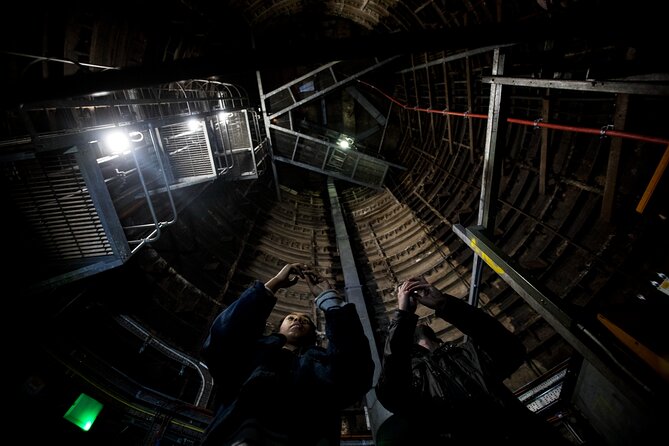
Moorgate has a secret life below the platforms. This guided Hidden Tube walk takes you into unused corridors and forgotten tracks at one of London’s oldest Underground stations, so you’re trading the roar of trains above ground for quiet stone, old tiles, and the engineering layers that built the Tube. Moorgate opened in 1865, and you’ll see how the station changed as London kept growing.
I love the practical setup: the meeting point is right in a working public transport station, and the tour runs about 80 minutes, which fits neatly into a busy day. I also love how the guides connect what you’re looking at to the timeline of the Underground—stage by stage, from the early system to later upgrades you can still spot. One thing to consider is that this is a lot of walking on uneven ground and in low light, with stairs and no elevator, so you’ll want a body that can handle that.
In This Review
- Hidden Tube Walking Tour of Moorgate Station: Quick Key Points
- Moorgate’s Underground Layer Cake: From 1865 to Today
- Finding the Meeting Point at a Working Station (Without Stress)
- What 80 Minutes Feels Like Underground
- Inside Disused Tunnels and Forgotten Tracks
- Original Passenger Corridors and Vintage Details You Can Spot
- Timeline Storytelling: How Later Upgrades Leave Visible Clues
- Guides: Friendly, Energetic, and Built for Questions
- Practical Tips: Shoes, Bags, Stairs, and Low Light
- Who This Moorgate Tour Is Best For
- Price and Value: Is $61.73 Worth It?
- Should You Book This Hidden Tube Tour?
- FAQ
- How long is the Hidden Tube walking tour of Moorgate Station?
- Where does the tour start and end?
- What language is the tour offered in?
- Do I need photo ID?
- Is the tour suitable for children?
- Is the tour step-free or wheelchair accessible?
- Are open-toed shoes allowed?
- Is food or drink provided or allowed during the tour?
Hidden Tube Walking Tour of Moorgate Station: Quick Key Points
- Moorgate Station’s 1865 beginnings: you’re walking through the physical “bones” of early Underground expansion.
- Unused tunnels and disused tracks: you get to see spaces most people never experience.
- Original passenger corridors: vintage glass tiles and old-style posters are part of what you’ll notice.
- Low-light, uneven ground, and stairs: it’s not step free, so wear smart footwear and plan for movement.
- Small group energy (max 18): easier listening and question time than you’d get on a huge tour.
- History that names modern connections: the tour references later developments, including the Elizabeth Line, even while you’re underground.
London on foot, a few more ways
- Magical London: Harry Potter Guided Walking Tour
★ 4.7 · 22,044 reviews - London: The Original Jack the Ripper Walking Tour
★ 4.7 · 7,833 reviews - Tour for Muggles The Ultimate Harry Potter Walking Tour in London
★ 5.0 · 4,684 reviews - London Jack The Ripper Guided Walking Tour
★ 5.0 · 3,131 reviews
Moorgate’s Underground Layer Cake: From 1865 to Today
If you like cities that show their work, Moorgate is a good place to start. This station was originally opened in 1865 as Moorgate Street, and it became part of the first extension of the Metropolitan line. That matters because it explains why you don’t just see one era of London Underground—you see layers: older parts that survived renovations, newer adaptations, and spaces that ended up unused as service patterns shifted.
The tour is built around that idea. You’re not just hearing dates; you’re walking along areas where the station’s changing needs left physical traces. That’s why the experience feels different from a typical museum talk. Instead of “reading about” the Underground, you’re standing in corridors and adjacent spaces that still carry the geometry of earlier layouts.
Finding the Meeting Point at a Working Station (Without Stress)
The meeting point is Moorgate Station in central London (Moorgate, London EC2M 6TX), and the best part is that it’s easy to find because it’s a real, operating transit hub. You’re not hunting for a back-alley door or a hidden staircase. You’re meeting in a place with clear signage and constant foot traffic.
I also appreciate that the tour is short—about 1 hour 20 minutes—because it reduces the chance you’ll feel rushed or boxed into a tight schedule. In practice, that means you can plan this for late morning or early afternoon, then still have time to do something above ground the same day.
What 80 Minutes Feels Like Underground
This isn’t a long endurance hike. It’s a guided walk designed to keep you moving through key areas while you stop for interpretation. Because the tour takes place in underground spaces with low lighting and uneven ground, the pacing is more about safety and visibility than speed.
You’ll also want to factor in that it’s a group experience limited to a maximum of 18 people. That number is high enough to make it lively, but small enough that you can usually hear the guide and actually look at what they point out.
The “hidden” part isn’t just marketing. You’re guided through portions of Moorgate’s underground network that are not part of the everyday passenger route. That contrast is the whole point: you walk where the system used to operate differently, and you get the sense of how London Underground kept reshaping itself.
Still deciding? A handful more London outings we rated
Inside Disused Tunnels and Forgotten Tracks
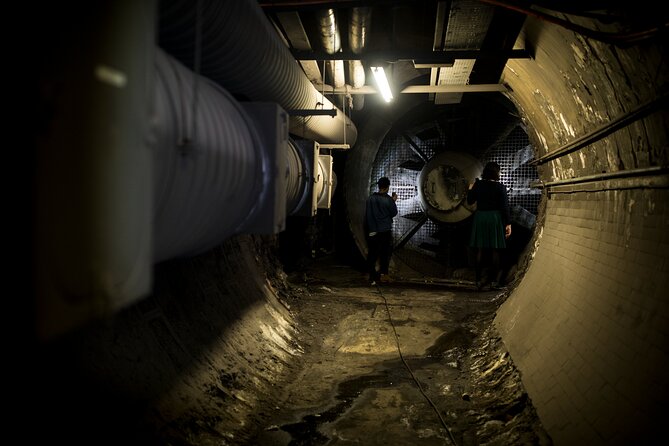
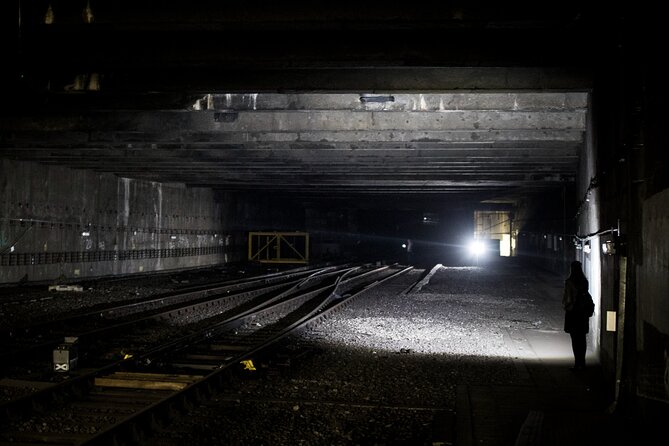
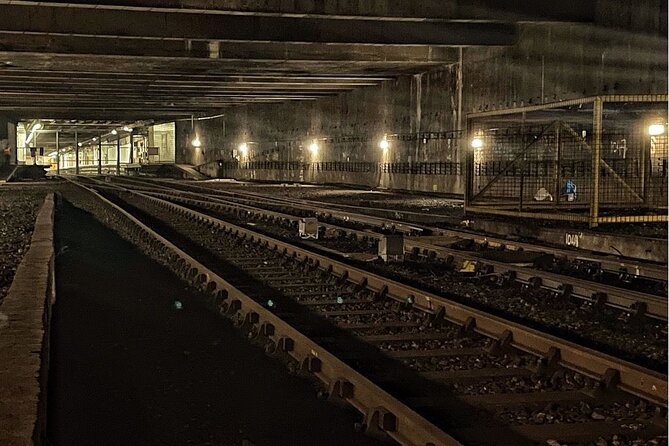
This is the core attraction: unused tunnels, forgotten tracks, and corridors that aren’t normally open to the public. As you go, you’ll spend time looking at abandoned sections of track and the surrounding structures that made those tracks work.
What makes this memorable is the detail you can actually see. One review highlights original passenger corridors with vintage glass tiles and old posters. Another mentions the scale of lift shafts and the span of the concrete roof overhead—those are the kinds of things you can’t really picture from photos. When you’re standing there, the size reads differently, and you start to understand why engineering decisions shaped the feel of daily Underground travel.
A personal tip from how this tour is described: slow down when you stop. The guide’s job is to tell you what you’re looking at, but your job is to look back. Notice the tiles, the way corridors narrow, and the remnants of track alignment. Those details are what make the history feel physical.
Original Passenger Corridors and Vintage Details You Can Spot

The guide experience hinges on being able to recognize the visual cues that mark different eras of design. Expect to see passenger corridors styled with older materials—particularly glass tile work and period posters. These aren’t just decorations. They help you understand how people once moved through the station and what the environment was designed to do.
If you’re the type who likes “small evidence,” you’ll get a lot out of this. The Underground isn’t a blank concrete tube; it has fingerprints from each redesign. Even when parts are unused now, the shapes and surfaces still tell you where the old passenger pathways were and how they connected.
Timeline Storytelling: How Later Upgrades Leave Visible Clues
A big reason people enjoy this tour is that the guide stitches what you’re seeing into a timeline you can follow. One review mentions the route feeling like a walk back to the 1860s, then forward through the 1920s and 1930s, the war years, post-war changes, and more recent developments. That progression matters because it shows how the Underground grew with London—not in a straight line, but in jumps and adaptations.
You’ll also hear modern references tied to the station’s continuing evolution. For example, the tour references the Elizabeth Line, connecting what you’re seeing underground with what’s happening in the wider network.
That’s useful for you as a visitor because it keeps the story grounded. You can go from the physical evidence in the corridor to a broader idea: the Underground you use today is the result of decades of reuse, re-routing, and upgrade work.
Guides: Friendly, Energetic, and Built for Questions
The tour is guided by the London Transport Museum team. In at least one account, the group was led by guides Emma and Roberto, plus a health and safety person (name not remembered). That combination is a good sign: it typically means you get both the storytelling and the practical attention to how to move through low-light areas.
One of the best outcomes of a guided station walk is the chance to ask questions in context. People have specifically praised how the guides are friendly, knowledgeable, and willing to answer questions during the tour. That matters because underground spaces can raise your curiosity fast: Why was this corridor closed? What used to run here? How did the station adapt as lines changed?
If you’re interested in transport history in particular, you’ll likely enjoy how personal details get folded into the talk. One review describes the tour sparking memories for someone who worked at related services on the Northern City Line in the late 1980s/early 1990s, even though certain sites (like some platform areas) weren’t accessible.
Practical Tips: Shoes, Bags, Stairs, and Low Light
This tour comes with a “moving conditions” reality check. Here’s what you need to plan for, based on the tour requirements:
- Wear closed-toe shoes. Open-toed shoes are not allowed, so skip sandals.
- Bring photo ID, because it’s required for all guests.
- Don’t bring luggage or large bags—there’s no cloakroom.
- No food or drinks during the tour.
- Expect lots of walking, including uneven ground and low lighting.
- It’s not step free: you’ll walk up and down flights of stairs and there’s no elevator.
- The tour is described as suitable for people with moderate physical fitness.
My advice: treat this like an active museum tour, not a sit-down experience. If you’re used to London walking days, you’ll probably feel fine. If stairs or low-light spaces are tough for you, this is the place to think twice.
Also, if you’re traveling in warmer months, remember that the “no open-toed shoes” rule might force a footwear rethink. Closed trainers or sturdy walking shoes make the whole day easier.
Who This Moorgate Tour Is Best For
This is a strong fit for you if you like:
- rail and Underground history
- seeing engineering details you usually only read about
- photos, but also the “you had to be there” feeling from walking inside older structures
It can also work for you if you’re a casual history lover who wants something different from standard sights. The Underground theme gives you a London experience that’s not just buildings and monuments.
It’s less suitable if you:
- need step-free access (there’s no elevator and it’s not step free)
- struggle with stairs or uneven surfaces
- are traveling with children under 10 years old (the tour isn’t suitable under 10)
Price and Value: Is $61.73 Worth It?
At about $61.73 per person for roughly 80 minutes, this isn’t “cheap history.” But value isn’t only about the clock—it’s about access and what you’re paying for.
What you’re buying is a guided walk through parts of a working Underground station that aren’t generally open to the public. You’re also paying for safety management in low-light, restricted spaces, plus interpretation that connects what you’re seeing to how the station evolved.
One response associated with the pricing also points to something important: the cost reflects time spent on exclusive historical research and writing, often taking months, plus the complex logistics of safely taking people into closed parts of the network. Put bluntly: you’re paying for curated access, not just a chat on a platform.
That said, one account described the experience as overpriced and said some behind-the-scenes areas felt unremarkable. That’s the honest counterpoint. If you expect dramatic, movie-set “secret rooms,” you might be disappointed. If you appreciate details—tiles, corridors, scale, and the logic of old track layouts—you’ll likely feel the value.
Should You Book This Hidden Tube Tour?
I’d book it if you want a London experience that feels specific and grounded in real infrastructure. Moorgate isn’t one of those generic “Underground history” tours. It’s built around walking through disused tunnels and corridors, and that’s exactly the kind of access that’s hard to recreate on your own.
Hold off if you’re not comfortable with stairs, uneven ground, and low lighting. Also don’t assume you’ll have time for snacks or extra bag storage—no cloakroom and no food or drinks means you should plan like it’s an active walk.
If that all sounds manageable, this is one of the smarter ways to spend 1.5 hours in London—especially on a day when you want a break from the noise above ground.
FAQ
How long is the Hidden Tube walking tour of Moorgate Station?
The guided tour is about 1 hour 20 minutes.
Where does the tour start and end?
The tour starts at Moorgate Station, Moorgate, London EC2M 6TX, UK, and it ends back at the meeting point.
What language is the tour offered in?
The tour is offered in English.
Do I need photo ID?
Yes, all guests must bring photo ID.
Is the tour suitable for children?
The tour is not suitable for children under 10 years of age. There is also a limit of a maximum of four children aged 10–15 per adult.
Is the tour step-free or wheelchair accessible?
No. The tour is not step free and includes walking up and down flights of stairs. There is no elevator.
Are open-toed shoes allowed?
No. Open-toed shoes are not allowed.
Is food or drink provided or allowed during the tour?
No food or drinks are allowed on the tour.
More Tours in London
- From London: Harry Potter Warner Bros Studio Tour
★ 4.7 · 26,588 reviews - Magical London: Harry Potter Guided Walking Tour
★ 4.7 · 22,044 reviews - London: Warner Bros. Studio Harry Potter Tour & Branded Bus
★ 4.7 · 19,194 reviews - London Big Bus Hop-On Hop-Off Tour with Optional River Cruise
★ 3.5 · 10,803 reviews - London Small Group Tour of Historical Pubs
★ 5.0 · 10,422 reviews
More Tour Reviews in London
- From London: Harry Potter Warner Bros Studio Tour
★ 4.7 · 26,588 reviews - London: Westminster to Greenwich River Thames Cruise
★ 4.5 · 22,836 reviews - Magical London: Harry Potter Guided Walking Tour
★ 4.7 · 22,044 reviews - London: Madame Tussauds London
★ 4.6 · 20,915 reviews - London: Warner Bros. Studio Harry Potter Tour & Branded Bus
★ 4.7 · 19,194 reviews
More London Walks Worth the Shoe Leather
- Magical London: Harry Potter Guided Walking Tour
★ 4.7 · 22,044 reviews - London: The Original Jack the Ripper Walking Tour
★ 4.7 · 7,833 reviews - Tour for Muggles The Ultimate Harry Potter Walking Tour in London
★ 5.0 · 4,684 reviews - London Jack The Ripper Guided Walking Tour
★ 5.0 · 3,131 reviews - London: Harry Potter Movies Walking Tour (Kids Go Free)
★ 4.7 · 3,071 reviews
Just reviewed around London





London Walking Tours, compared.
 ★ 4.7Magical London: Harry Potter Guided Walking TourFrom $2022,044 reviews
 ★ 4.7The Original Jack the Ripper Walking TourFrom $257,833 reviews
 ★ 5.0Tour for Muggles The Ultimate Harry Potter Walking Tour in LondonFrom $234,684 reviews
 ★ 5.0London Jack The Ripper Guided Walking TourFrom $03,131 reviews
 ★ 4.7Harry Potter Movies Walking Tour (Kids Go Free)From $203,071 reviews
 ★ 5.0Changing of the Guard Guided Walking Tour in LondonFrom $251,793 reviews
 ★ 4.9The Great British Rock and Roll Music Walking TourFrom $361,783 reviews
 ★ 4.8Harry Potter Walking Tour in GermanFrom $201,505 reviews