
Reviewed · LONDON WALKING TOURS
Hidden Tube Walking Tour of Green Park Station
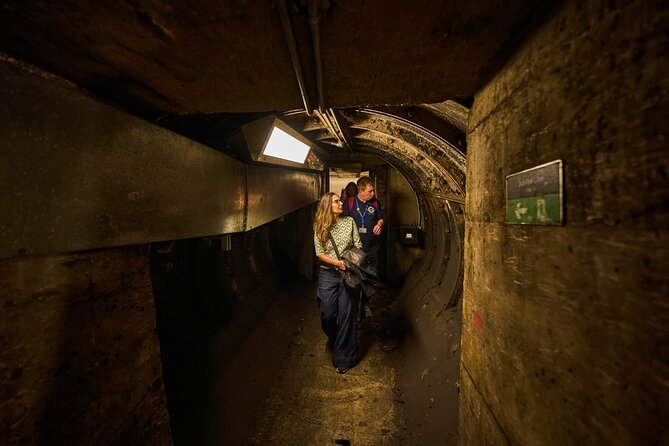
A working tube station with secret backstage space. This Hidden Tube tour turns London Underground history into a hands-on walk through Dover Street, with real views of service areas like ventilation shafts and corridors most people never see. I like the mix of old-station story plus physical access to working infrastructure, but you should know it’s not a polished, museum-style stroll, and some sections can feel like practical back-of-house space.
Plan on a mostly underground walk with uneven ground, low lighting, and lots of stairs. It’s great for transport and engineering fans, and it feels especially fun when your group is small and the guides can keep the pace moving. The one big trade-off: if you’re not comfortable with confined spaces or dim tunnels, this tour may be a poor fit.
In This Review
- Quick hits before you go
- Where Dover Street hides inside Green Park Station
- The main walk: corridors, closed passages, and lift landings
- Ventilation shafts and train-track glimpses for photo fans
- History and wartime intrigue without museum glass
- Guide energy and group size: how the experience feels in motion
- Price, time, and value: is $61.71 worth it?
- Who this tour fits (and who should skip it)
- Tips to make your hidden-tube experience smoother
- Should you book this Hidden Tube walking tour of Green Park Station?
- FAQ
- Where does the tour start and end?
- How long is the Hidden Tube Walking Tour of Green Park Station?
- How much does it cost?
- What’s included in the ticket price?
- Is the tour step-free or elevator accessible?
- Is it suitable for children?
- Is the tour suitable if I have claustrophobia?
- Are photo ID and certain shoes required?
- Can I bring food, drinks, or luggage?
Quick hits before you go
- Dover Street station, renamed Green Park in 1933: it opened in 1906 and served rail lines that helped shape today’s Piccadilly line
- Backstage access in a working station: closed passageways, lift landings, and corridors not open to normal passengers
- Ventilation shafts are a highlight and a top photo moment, with time to pause and look
- A real walk, not a ride: expect uneven ground, low light, and stairs (no elevator)
- Small-group feel: maximum 18 travelers, and multiple guides for larger groups
- Go in with the right expectations: some parts can feel like utilitarian corridors rather than showpiece rooms
London on foot, a few more ways
- Magical London: Harry Potter Guided Walking Tour
★ 4.7 · 22,044 reviews - London: The Original Jack the Ripper Walking Tour
★ 4.7 · 7,833 reviews - Tour for Muggles The Ultimate Harry Potter Walking Tour in London
★ 5.0 · 4,684 reviews - London Jack The Ripper Guided Walking Tour
★ 5.0 · 3,131 reviews
Where Dover Street hides inside Green Park Station
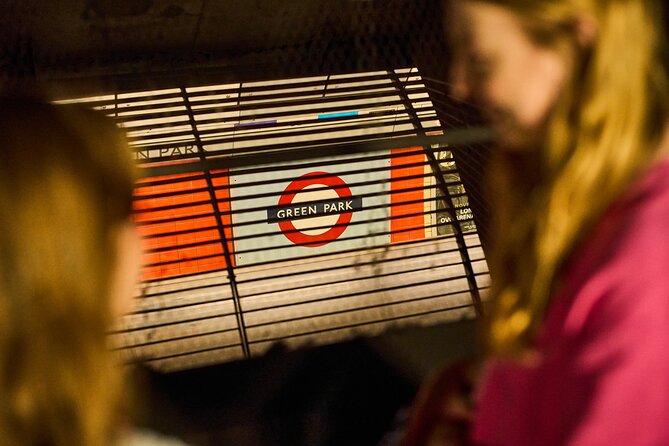
Green Park Station (the modern name you’ll see on signs) has a quieter twin underneath: Dover Street Station. This tour focuses on that “station-within-a-station” idea, where Dover Street sits hidden within the larger flow of the Piccadilly line area.
You get the context first: Dover Street opened in 1906, built to serve the Great Northern, Piccadilly and Brompton Railway—directly tied to the Piccadilly line as you know it today. It also sat right on the edge of Mayfair, near three of London’s Royal Parks, which helped make it busy early on. In 1933, it was renamed Green Park. That timeline matters because the tour doesn’t treat the station like a static exhibit. It frames these corridors as living transport space that evolved with the network, including wartime chapters and later repurposing.
What I like about this setup is that you’re not just learning dates. You’re walking through physical remnants that make the timeline feel concrete—especially when you spot areas that have been closed to passengers for decades.
The main walk: corridors, closed passages, and lift landings
Once you start, the tour’s core experience is moving away from the normal passenger routes. You’ll spend your time in Dover Street areas that have long been off-limits, including former passageways and lift landings that were closed to the public for generations.
This is where the tour works best if you like infrastructure as a story. Underground spaces don’t get preserved the same way as palaces or churches, so you’re seeing the Underground’s “in-between” zones: transitions, access points, and service layouts. It’s the kind of place that makes you notice how stations are engineered to handle crowds, equipment, and emergency needs.
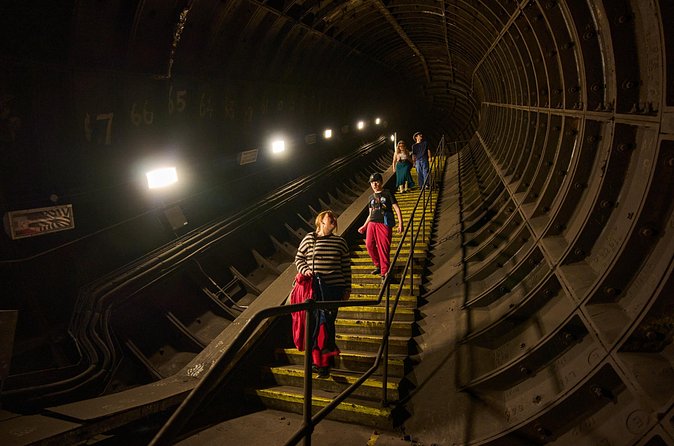
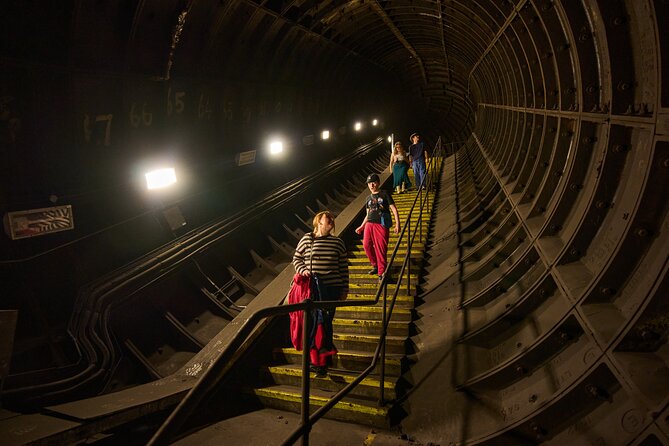
You should also prepare for the physical side. The tour is listed as involving a lot of walking and it is not step-free. There are flights of stairs, and there’s no elevator. Reviews point out that one section can involve a big step count—around 56 steps—though you may be able to opt out of descending that part depending on how the route is handled that day.
Practical takeaway: go in feeling ready for uneven ground and low light. If you expect a gentle walk with lots of open air, this is not that.
Ventilation shafts and train-track glimpses for photo fans
The headline visual on this tour is the ventilation area. You get striking ventilation shafts and long corridors that open up into service volumes you just don’t see on a typical platform. If you’ve ever wondered how London Underground moves air, this is the most direct way to put eyes on the system.
This is also the most photogenic part of the experience. One of the common themes is that people really remember the ventilation—because it looks dramatic, and it feels more like “industrial architecture” than “subway wallpaper.” Guides also make it fun to look from the right angles, and there’s time to pause for photos, especially in smaller groups.
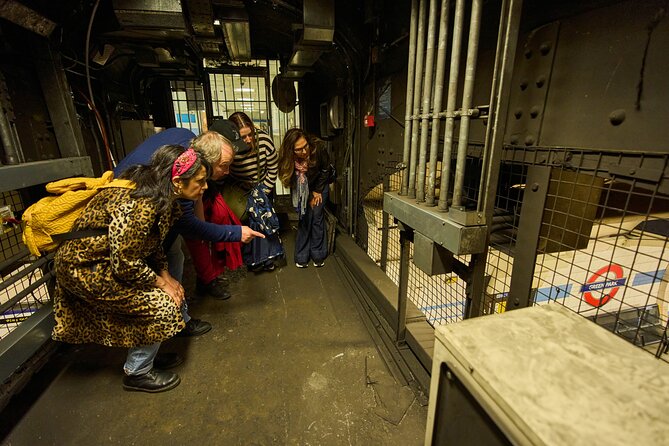
Another perk: the walk includes moments where you can catch a glimpse of the working tube environment—sometimes from unusual viewpoints—so you see the Underground as a live machine rather than a backdrop. That sense of seeing the present from an older perspective is part of why this tour feels unique compared with standard station sightseeing.
One consideration: because parts of the experience are utility spaces, you might encounter corridors that feel dusty or workmanlike rather than curated. If that would bother you, this tour may not match what you’re picturing.
Still deciding? A handful more London outings we rated
History and wartime intrigue without museum glass
The station story here isn’t only about engineering dates. It includes wartime intrigue and how areas were redeveloped and repurposed. The tour weaves these themes through what you can see: closed-off routes, older layouts, and the kinds of spaces that would matter during tense periods.
This is also where guides play a major role. In one group, guides Colin and Sarah Jane were highlighted for keeping the station story lively, while Andrea helped connect details and keep the group moving with full headcounts. In another experience, Sophie and Gary (with Pat adding humor) were praised for making the Underground feel human—like a place with personality, even when you’re standing in the least glamorous corners.
You’ll also notice the tour doesn’t rely on glass cases and interpretive panels. The storytelling is tied to the space itself. That’s great when you want a “stand where it happened” feeling. It can be less satisfying if you’re looking for lots of visual evidence of every wartime claim, because the tour is still a walking route through current infrastructure and older service passages, not a slideshow.
Guide energy and group size: how the experience feels in motion
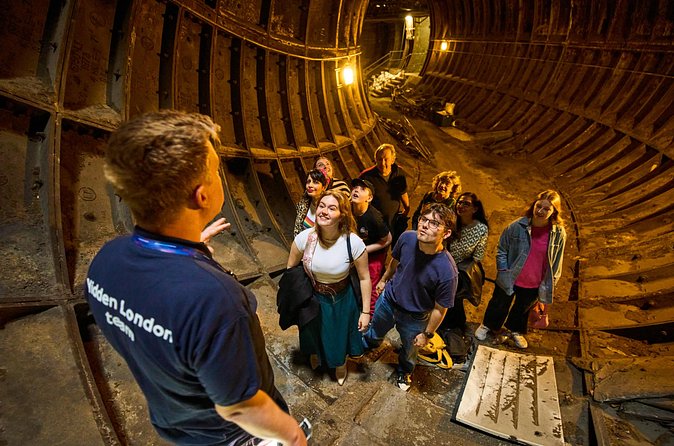
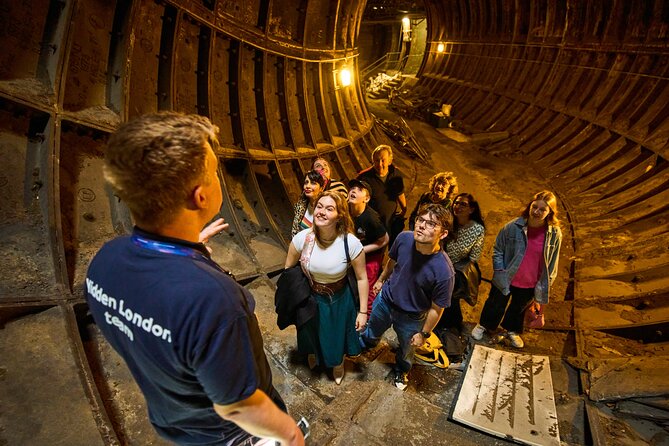
With a maximum of 18 travelers, this tour typically stays in a sweet spot: small enough to hear explanations clearly and pause for photos, large enough to keep energy up. For a bigger group, the format can include multiple guides—one account called out three guides for a 16-person group—so you’re not stuck listening from far away.
The guide team matters because the walk takes time and can include stairs, tighter corners, and low light. A good guide helps you move efficiently without rushing, and helps you know where to look. The tour also seems to lean into humor and enthusiasm at times, which keeps the experience from turning into pure lecturing.
If you prefer quiet and photo time, the group size also affects that. One review mentioned that when the group was just two people, it felt easier to take pictures because there was more time to stop and frame shots. So if you’re booking around your own travel style, smaller groups can make it more relaxed.
Price, time, and value: is $61.71 worth it?
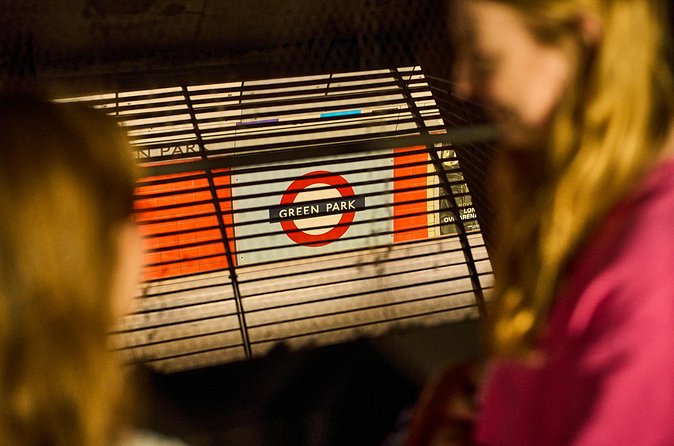
At $61.71 per person for about 1 hour 20 minutes, you’re paying for something that’s not “common sightseeing”: access. You’re going into areas of Dover Street/Green Park that are not part of everyday commuter life, and you’re seeing engineering spaces like ventilation shafts and closed corridors.
That said, value comes down to expectations. If you want a glossy highlight reel with lots of restored rooms, this tour may feel pricey because some spaces are utilitarian and workmanlike. One more critical take described long stretches in corridors that felt more like back-of-house cleaning or storage areas than dramatic historic rooms, and noted that the tour felt shorter than advertised.
On the other hand, the strongest praise circles the same few points: ventilation is genuinely impressive, the station history is explained clearly, and the experience feels like backstage access rather than a generic walkthrough. If you’re the type who gets excited by how systems function—airflow, circulation, station layout—this price often feels more justified.
My practical advice: treat it like a short guided infrastructure visit. It’s not a full-day London history program. You’re buying a focused look at hidden Underground space.
Who this tour fits (and who should skip it)
This is a strong match for:
- Transport geeks and engineering fans who want to see real infrastructure
- History lovers who like wartime and station evolution stories tied to places you can actually stand in
- People who enjoy photos of industrial architecture and unusual perspectives
- Adults with moderate physical fitness who don’t mind stairs and uneven ground
This is a risky match for:
- Anyone with claustrophobia, since the tour isn’t suitable for that
- People who need step-free access, because it is not step free and has no elevator
- Families with younger kids: it’s not suitable for children under 10, and there’s a limit on kids per adult (plus the tour notes a maximum of 18 travelers overall)
- Anyone expecting a low-effort walking tour with minimal stairs
If you’re unsure, honestly ask yourself one question: can you comfortably handle dim, underground spaces with stairs? If the answer is no, skip it and pick a different London Underground activity that stays on the bright, open side.
Tips to make your hidden-tube experience smoother
A few small prep steps make a big difference on this kind of tour.
- Bring photo ID. It’s required for entry.
- Wear shoes that work in low lighting and on potentially uneven ground. Open-toed shoes aren’t allowed, and the tour involves lots of walking.
- Don’t plan on food breaks. No food or drinks are allowed on the tour.
- Travel light. No large bags or luggage are recommended since there’s no cloakroom.
- Expect stairs. Even if you can opt out of one stair-heavy section, the overall route includes flights of stairs and areas not step free.
- If you’re booking near your trip dates, know that this tour is often planned in advance (it’s commonly booked about a month in advance on average).
Also, it starts and ends at Green Park Station on London’s W1J 9DZ area, so you can plan the rest of your day around that. Just give yourself buffer time, because once you’re underground, walking pace matters.
Should you book this Hidden Tube walking tour of Green Park Station?
I’d book it if you want London Underground history you can see, not just read—especially if ventilation shafts and backstage infrastructure are your kind of sightseeing. The tour’s sweet spot is the combination of guiding, timing, and access to closed areas that feel genuinely rare. And if you like guides who bring station stories to life—people have highlighted names like Colin, Sarah Jane, Andrea, Sophie, Gary, and Pat—this kind of energy can make the walk fly by.
I would skip it if stairs and confined, dim spaces would be stressful, or if you’re expecting restored, clean, museum-like rooms everywhere. It’s a real working network space, so some corridors will feel like the Underground’s practical side.
If you’re a “show me how it works” person, this Hidden Tube tour is one of the few ways to get that kind of behind-the-scenes look at Green Park/Dover Street without special engineering training.
FAQ
Where does the tour start and end?
The tour starts at Green Park Station, London W1J 9DZ, UK, and it ends back at the meeting point.
How long is the Hidden Tube Walking Tour of Green Park Station?
The guided walking tour runs for about 1 hour 20 minutes, or roughly 80 minutes.
How much does it cost?
The price listed is $61.71 per person.
What’s included in the ticket price?
You get an 80-minute guided walking tour of the hidden areas of Green Park tube station.
Is the tour step-free or elevator accessible?
No. The tour is not step free and does not include an elevator. It involves walking up and down flights of stairs and some uneven ground.
Is it suitable for children?
It is not suitable for children under 10 years old. The tour also limits the number of children aged 10–15 per adult (maximum of four per adult).
Is the tour suitable if I have claustrophobia?
No. The tour is not suitable for guests with claustrophobia.
Are photo ID and certain shoes required?
Yes—photo ID is required, and open-toed shoes are not allowed.
Can I bring food, drinks, or luggage?
No food or drinks are allowed on the tour. You should not bring luggage or large bags because there is no cloakroom.
More Tours in London
- From London: Harry Potter Warner Bros Studio Tour
★ 4.7 · 26,588 reviews - Magical London: Harry Potter Guided Walking Tour
★ 4.7 · 22,044 reviews - London: Warner Bros. Studio Harry Potter Tour & Branded Bus
★ 4.7 · 19,194 reviews - London Big Bus Hop-On Hop-Off Tour with Optional River Cruise
★ 3.5 · 10,803 reviews - London Small Group Tour of Historical Pubs
★ 5.0 · 10,422 reviews
More Tour Reviews in London
- From London: Harry Potter Warner Bros Studio Tour
★ 4.7 · 26,588 reviews - London: Westminster to Greenwich River Thames Cruise
★ 4.5 · 22,836 reviews - Magical London: Harry Potter Guided Walking Tour
★ 4.7 · 22,044 reviews - London: Madame Tussauds London
★ 4.6 · 20,915 reviews - London: Warner Bros. Studio Harry Potter Tour & Branded Bus
★ 4.7 · 19,194 reviews
More London Walks Worth the Shoe Leather
- Magical London: Harry Potter Guided Walking Tour
★ 4.7 · 22,044 reviews - London: The Original Jack the Ripper Walking Tour
★ 4.7 · 7,833 reviews - Tour for Muggles The Ultimate Harry Potter Walking Tour in London
★ 5.0 · 4,684 reviews - London Jack The Ripper Guided Walking Tour
★ 5.0 · 3,131 reviews - London: Harry Potter Movies Walking Tour (Kids Go Free)
★ 4.7 · 3,071 reviews
Just reviewed around London





London Walking Tours, compared.
 ★ 4.7Magical London: Harry Potter Guided Walking TourFrom $2022,044 reviews
 ★ 4.7The Original Jack the Ripper Walking TourFrom $257,833 reviews
 ★ 5.0Tour for Muggles The Ultimate Harry Potter Walking Tour in LondonFrom $234,684 reviews
 ★ 5.0London Jack The Ripper Guided Walking TourFrom $03,131 reviews
 ★ 4.7Harry Potter Movies Walking Tour (Kids Go Free)From $203,071 reviews
 ★ 5.0Changing of the Guard Guided Walking Tour in LondonFrom $251,793 reviews
 ★ 4.9The Great British Rock and Roll Music Walking TourFrom $361,783 reviews
 ★ 4.8Harry Potter Walking Tour in GermanFrom $201,505 reviews