
Reviewed · LONDON WALKING TOURS
Hidden Tube Walking Tour – Euston: The Lost Tunnels
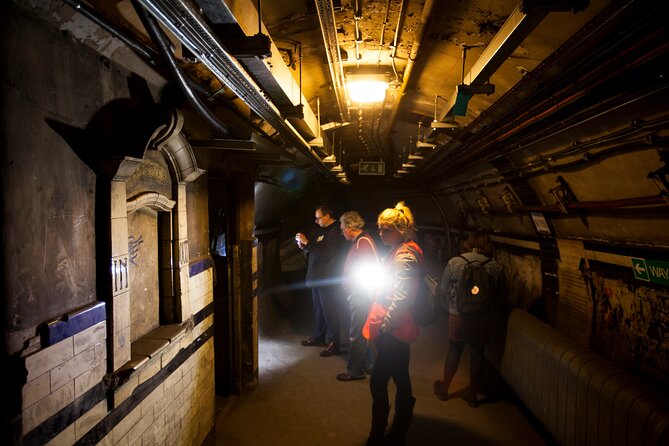
Euston has secrets under your feet. This tour takes you into closed-off areas of Euston Station, where you can spot vintage poster fragments hidden for decades, including a true time-capsule feel. I also like that the guide keeps it human-scale and story-driven, not a lecture. The one real drawback: it is low-lit, stair-heavy, and not step-free, so it is not a great fit if you have claustrophobia or limited mobility.
What makes it worth your time is the setting. You are not in a museum building; you’re in the working bones of London’s transport system, with the London Transport Museum guiding you through a century of changes. Expect a small group (up to 20), about 75 minutes long, and a pace that leaves room to take photos and ask questions.
Logistics are straightforward if you prepare. You meet near Sainsbury’s Local at Euston Station, bring photo ID, and wear shoes with your toes covered since open-toed shoes are not allowed. Also, no big bags—there’s no cloakroom, and you will do a lot of walking on uneven ground.
In This Review
- Key moments worth showing up for
- Why Euston’s lost tunnels feel different from a normal station stop
- Meeting at Sainsbury’s Local: rules that matter in the tunnels
- The 75-minute walk: passageways, concealed ads, and locked doors
- Leslie Green design details inside a working transport hub
- Past meets today: Tube and Network Rail innovations
- Who should go (and who should skip)
- Price and value: a rare guided access moment at $0
- Should you book The Lost Tunnels tour at Euston?
- FAQ
- How long is the Hidden Tube Walking Tour – Euston: The Lost Tunnels?
- Where do I meet for the tour?
- Where does the tour end?
- What’s included in the price?
- Do I need a photo ID?
- Is the tour suitable for children?
- Is the tour step-free and accessible?
- Is the tour suitable for claustrophobia?
- What should I wear and bring?
Key moments worth showing up for
- Into closed areas at Euston Station, not just the public platforms
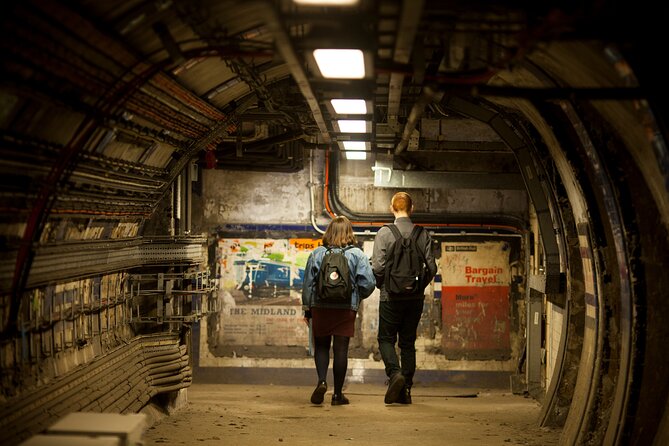
- Vintage advertising posters concealed for over 50 years, including a poster highlight from 1962
- A labyrinth of old passageways with the sense that some parts were frozen in time
- Leslie Green station design details tied to the way the Underground grew
- Photo-friendly pacing, with time to take pictures without feeling rushed
- A modern-to-old contrast, seeing today’s innovations alongside the older infrastructure
London on foot, a few more ways
- Magical London: Harry Potter Guided Walking Tour
★ 4.7 · 22,044 reviews - London: The Original Jack the Ripper Walking Tour
★ 4.7 · 7,833 reviews - Tour for Muggles The Ultimate Harry Potter Walking Tour in London
★ 5.0 · 4,684 reviews - London Jack The Ripper Guided Walking Tour
★ 5.0 · 3,131 reviews
Why Euston’s lost tunnels feel different from a normal station stop
Most station tours show you what you can already see—signs, platforms, maybe a quick photo spot. This one flips it. You get access to areas that are usually shut, where the “how this all worked” part becomes real instead of abstract.
I like that the tour focuses on small, concrete details: the passageways, the concealed remnants, and the physical changes over time. You also get a sense of Euston as a living machine—busy today, but layered over earlier designs.
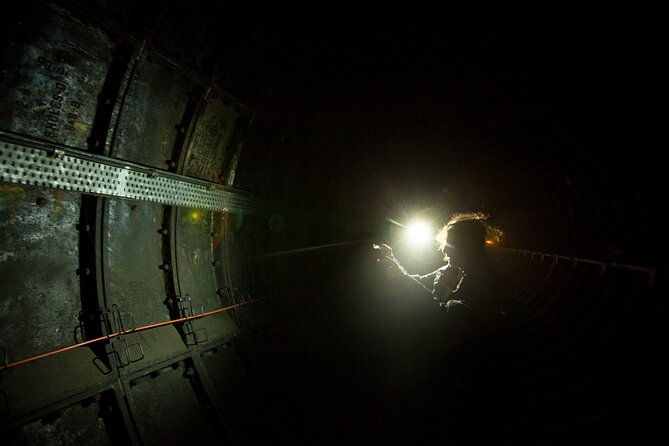
Another plus is the atmosphere. People describe it as spooky in a fun way, mostly because the tour takes you through dark, dusty corridors and locked spaces. If you enjoy transport as a story of engineering and human habits, this tour hits that sweet spot.
Meeting at Sainsbury’s Local: rules that matter in the tunnels
You start at Sainsbury’s Local at Euston Station (NW1 2DU). If you are coming out of the mainline station toward the Underground, the route recommended is through the Way Out labeled for Melton Street and Drummond Street, then walking in the direction of the hoardings; the meeting point is past the lift and stairs to the Underground station.
Before you go in, take a minute to prepare for the rules. Everyone must bring photo ID, open-toed shoes are not allowed, and you should plan to travel light because there’s no cloakroom. The tour also has a no food and no drinks policy once you’re underway.
Physically, you should expect a lot of walking. This includes uneven ground, low lighting, and flights of stairs. It is also not step-free, and there is no elevator. If stairs are a problem, or if you get anxious in tight, dim spaces, you’ll want to skip this tour.
The 75-minute walk: passageways, concealed ads, and locked doors
The tour runs for about 1 hour 15 minutes, guided start to finish. In that time, the guide takes you through a sequence of spaces that help you understand Euston’s underground life across generations.
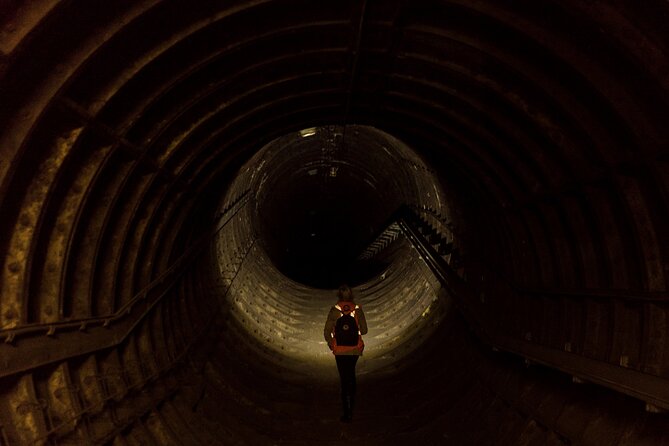
First comes the feel of the place: dark and dusty passageways that were once used by the travelling public. You’re not just seeing artifacts—you’re walking through parts of the station’s past layout. That “labyrinth” feeling is the point. It shows how stations functioned beyond what most people notice during a normal commute.
Then there are the preserved advertising fragments. Pieces of vintage posters have been concealed for over 50 years, so you get that wow-factor of spotting something that has mostly stayed out of sight. One standout mentioned in the tour experience is posters from 1962, the kind of detail that makes the whole thing feel like a time capsule.
Photography is also part of the experience, and the guides are careful about pacing. You’re given time for pictures and for questions without being rushed out the door. The content itself is structured to avoid info overload; it’s more like a guided conversation with stops at the most meaningful places.
The overall impression is that the guide is helping you connect three things: what the station looked like, what it was used for, and why those changes happened.
Still deciding? A handful more London outings we rated
Leslie Green design details inside a working transport hub
Euston isn’t just any station. The tour points you toward the iconic Leslie Green-designed station areas and their surrounding features—exactly the sort of architectural thread that helps you understand what the Underground tried to do visually and functionally as it spread.
You’ll also see how London’s transport identity shows up in details beyond the platform signs. That matters because the Underground is not just trains and tracks. It’s a branded city system—design choices, materials, and passenger flow all bundled together.
If you’re the type who notices old station artwork, tiling, or signage, this is where it clicks. The tour makes those elements feel connected instead of random. You’re seeing why the past was built the way it was, and how that planning shaped what passengers experienced day to day.
Past meets today: Tube and Network Rail innovations
A big value of this tour is contrast. You’re in the “lost” spaces, but you’re also reminded that the station doesn’t sit still. The guide connects the century-old story to newer innovations to a Tube and Network Rail station that serves over 42 million passengers each year.
That passenger number is a useful reality check. It’s easy to romanticize tunnels and posters, but the tour keeps the focus on how massive the modern system is—and how it has to keep moving even as older parts remain part of the same complex.
Practically, this also helps the time feel balanced. You get both the atmosphere of hidden history and the context of why upgrades and redesigns are constant. It makes the experience feel relevant instead of purely nostalgic.
Who should go (and who should skip)
This is best for adults and older teens who enjoy transport design, station history, and hands-on storytelling. The tour involves moderate physical fitness, plenty of walking, stairs, and uneven ground.
It is not suitable for children under 10 years old. There’s also a limit: no more than four children ages 10 to 15 per adult. If you’re bringing a kid, that ratio matters.
Most important: the tour is not suitable for guests with claustrophobia. Even people who are fine with stairs can find low lighting and tight passageways stressful. If that sounds like you, it’s worth choosing a different London Transport Museum option that stays in more open spaces.
If you’re comfortable with dim interiors and can handle stairs, you’ll likely enjoy the atmosphere. That “spooky but controlled” feel comes from the mix of working infrastructure and old, sealed-away areas.
Price and value: a rare guided access moment at $0
The price shown is $0.00 per person, and at that level it’s almost unfair. You’re getting a 75-minute guided experience run by the London Transport Museum, with access to closed areas that you simply cannot wander into on your own.
Even if you treat it like a paid tour, the value case is strong:
- Guide included throughout
- Small group size (maximum of 20)
- Access to places with visible, preserved details like posters that have been concealed for decades
- Time for photos and questions rather than a rushed walkthrough
The main reason not to book is simple: if you strongly dislike stairs, low light, or anything tight and enclosed, this tour will stress you out. But if you’re looking for a different side of London—one that lives under everyday movement—this is a smart use of an hour and change.
Should you book The Lost Tunnels tour at Euston?
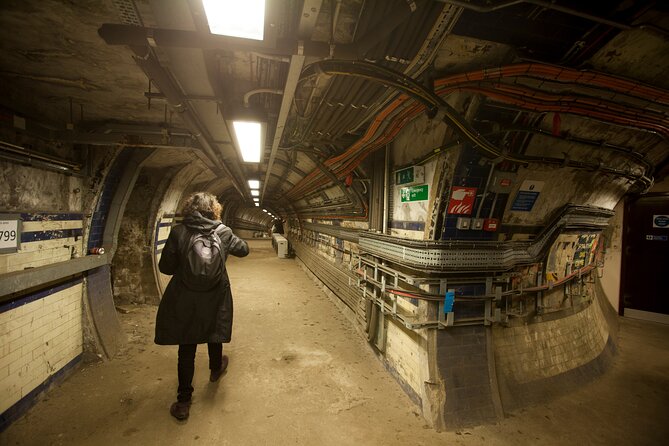
Book it if you like station history that you can actually walk through. You’ll enjoy the hidden access, the concealed poster fragments, and the guide’s story flow from early Euston days to what the system looks like now.
Skip it if you know you cannot handle stairs, uneven ground, or dim, enclosed spaces. And don’t show up with a suitcase—there’s no cloakroom, so keep your bag small and manageable.
If you’re deciding late in the day, do it anyway. This is the sort of experience that makes the time feel unusual in a good way, because it turns a familiar station into a place with secrets.
FAQ
How long is the Hidden Tube Walking Tour – Euston: The Lost Tunnels?
The tour is about 1 hour 15 minutes.
Where do I meet for the tour?
You meet at Sainsbury’s Local at Euston Station, London NW1 2DU.
Where does the tour end?
The tour ends at Euston Underground station in the ticket hall.
What’s included in the price?
A 75-minute tour of Euston underground station and a tour guide are included.
Do I need a photo ID?
Yes. All guests must bring photo ID.
Is the tour suitable for children?
It is not suitable for children under 10. There is also a maximum of four children aged 10 to 15 allowed per adult.
Is the tour step-free and accessible?
No. The tour is not step-free and includes walking up and down flights of stairs, with no elevator.
Is the tour suitable for claustrophobia?
No. The tour is not suitable for guests with claustrophobia.
What should I wear and bring?
Open-toed shoes are not allowed. There is no cloakroom, so avoid luggage or large bags. No food or drinks are allowed during the tour.
More Tours in London
- From London: Harry Potter Warner Bros Studio Tour
★ 4.7 · 26,588 reviews - Magical London: Harry Potter Guided Walking Tour
★ 4.7 · 22,044 reviews - London: Warner Bros. Studio Harry Potter Tour & Branded Bus
★ 4.7 · 19,194 reviews - London Big Bus Hop-On Hop-Off Tour with Optional River Cruise
★ 3.5 · 10,803 reviews - London Small Group Tour of Historical Pubs
★ 5.0 · 10,422 reviews
More Tour Reviews in London
- From London: Harry Potter Warner Bros Studio Tour
★ 4.7 · 26,588 reviews - London: Westminster to Greenwich River Thames Cruise
★ 4.5 · 22,836 reviews - Magical London: Harry Potter Guided Walking Tour
★ 4.7 · 22,044 reviews - London: Madame Tussauds London
★ 4.6 · 20,915 reviews - London: Warner Bros. Studio Harry Potter Tour & Branded Bus
★ 4.7 · 19,194 reviews
More London Walks Worth the Shoe Leather
- Magical London: Harry Potter Guided Walking Tour
★ 4.7 · 22,044 reviews - London: The Original Jack the Ripper Walking Tour
★ 4.7 · 7,833 reviews - Tour for Muggles The Ultimate Harry Potter Walking Tour in London
★ 5.0 · 4,684 reviews - London Jack The Ripper Guided Walking Tour
★ 5.0 · 3,131 reviews - London: Harry Potter Movies Walking Tour (Kids Go Free)
★ 4.7 · 3,071 reviews
Just reviewed around London





London Walking Tours, compared.
 ★ 4.7Magical London: Harry Potter Guided Walking TourFrom $2022,044 reviews
 ★ 4.7The Original Jack the Ripper Walking TourFrom $257,833 reviews
 ★ 5.0Tour for Muggles The Ultimate Harry Potter Walking Tour in LondonFrom $234,684 reviews
 ★ 5.0London Jack The Ripper Guided Walking TourFrom $03,131 reviews
 ★ 4.7Harry Potter Movies Walking Tour (Kids Go Free)From $203,071 reviews
 ★ 5.0Changing of the Guard Guided Walking Tour in LondonFrom $251,793 reviews
 ★ 4.9The Great British Rock and Roll Music Walking TourFrom $361,783 reviews
 ★ 4.8Harry Potter Walking Tour in GermanFrom $201,505 reviews