
Reviewed · LONDON WALKING TOURS
Hidden London Walking Tour
Fleet Street has more than headlines. This 90-minute walk trades the big monuments for a local perspective and insider stories you can actually follow on foot, with frequent chances to pause for photos and take in the streetscape. You’ll get a tight route in a small area, plus commentary that connects London’s institutions to everyday places you’d otherwise walk past.
One thing to note: this tour is built for seeing from the outside. You won’t go into churches or other buildings, so if you’re hoping for interior visits and full-on museum time, this may feel too surface-level. Still, if you like streets, legends, and quick-hit history, it’s a very smart way to spend your afternoon.
In This Review
- Key highlights you’ll feel right away
- Why This Temple-to-Fleet Street Walk Feels Local
- Price and Group Size: Good Value for a Guided Story
- Starting at Temple Station: Where the Walk Gets Its Energy
- Fleet Street Stop: Where the Press DNA Still Shows
- Temple Church Stop: Knights Templar Lore in the Real World
- St Bride’s Church Stop: The Wedding Cake Story
- Samuel Johnson Statue Stop: Dictionary-Maker on the Side Streets
- Route Between Stops: Alleyways, WWII Marks, and Other Off-the-Map Stops
- Pacing, Photo Stops, and Hills: How to Prepare
- What You’re Likely to Take Away at the End on Fleet Street
- Who This Tour Suits Best (and Who Might Want a Different Option)
- Should You Book Hidden London Walking Tour?
- FAQ
- How long is the Hidden London Walking Tour?
- How much does the tour cost?
- What is included in the price?
- Are any buildings entered during the tour?
- Where do I meet the tour and where does it end?
- Is the tour offered in English?
- How many people are on the tour?
- Can I bring a service animal or a dog?
- Is full cancellation available, and how far in advance?
Key highlights you’ll feel right away
- Temple Station start, Fleet Street finish: a simple end point with good walking flow
- Small group size (max 20): easier conversation and less crowd pressure
- No building entry: you focus on streets, facades, and the stories tied to them
- Photo-friendly pacing: frequent stops without the hassle of parking
- Story-driven stops tied to famous London names: Fleet Street, Knights Templar, Samuel Johnson
London on foot, a few more ways
- Magical London: Harry Potter Guided Walking Tour
★ 4.7 · 22,044 reviews - London: The Original Jack the Ripper Walking Tour
★ 4.7 · 7,833 reviews - Tour for Muggles The Ultimate Harry Potter Walking Tour in London
★ 5.0 · 4,684 reviews - London Jack The Ripper Guided Walking Tour
★ 5.0 · 3,131 reviews
Why This Temple-to-Fleet Street Walk Feels Local
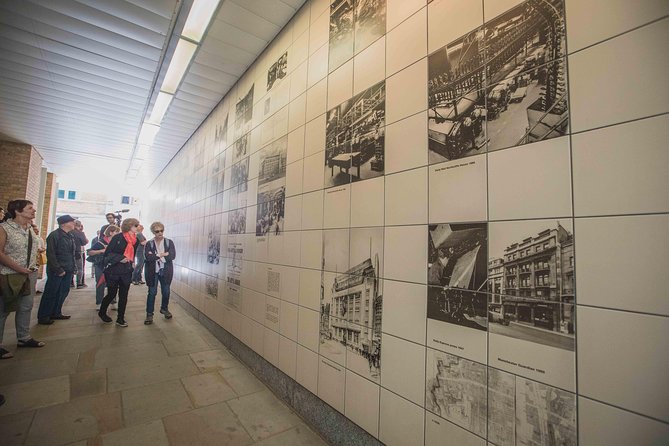
This is one of those London tours where you don’t just look at the city. You learn how it works. The route runs through the Temple and Fleet Street corridor, where journalism, legal power, and old London lore all rub shoulders. That matters because London can feel like a pile of famous stops—this walk helps it feel like one connected neighborhood.
I like that it focuses on what you can see and understand quickly: street-level details, architecture you’d miss, and the myths that grew around real places. The best part is the guide’s storytelling. Names like Rachael, Paul, Joe, Pepe, Rosie, and Will show up in reviews as people who kept the mood friendly and the information clear, with enough personality to make the history stick.
The result is an experience that feels made for “quick Londoners” and for people who’ve been here before. You’ll still find something you didn’t know, because the tour isn’t chasing the usual crowd magnets.
Price and Group Size: Good Value for a Guided Story
At $27.73 per person for about 1 hour 30 minutes, you’re paying mainly for the guide. There’s no museum ticket bundle here, and the tour doesn’t include building admissions. That might sound limiting, but it’s also the point: you’re buying time with a local professional who knows how to turn ordinary sidewalks into a story.
The small group limit (maximum 20) is a big part of the value. In practice, it means you can hear the guide, ask a question, and actually keep pace without feeling herded. Reviews back this up with lots of praise for guides engaging a mixed age range—from teens to people well into retirement age.
If you’re on a budget, this is one of the safer bets in London because you’re not paying for access you won’t use. You’re paying for context.
Starting at Temple Station: Where the Walk Gets Its Energy
You meet at Temple Station, Temple Pl, Temple, London WC2R 2PH, starting at 1:30 pm. Getting underway from Temple is smart. It’s central enough to feel easy, but it’s also a little less touristy than the big landmark loops. The walking style is practical too: you arrive, listen, walk, stop, and take photos. No long waiting around.
Come a bit early. The tour asks you to arrive 10 minutes prior, and you’ll be happier if you do. London stations and street crossings can be chaotic, and you’ll want a moment to orient yourself before the group forms.
Also plan for a bit of elevation. The tour calls for moderate physical fitness, and reviews mention hills. This isn’t a marathon, but comfortable shoes matter, especially if you’re pairing it with other sightseeing that same day.
Still deciding? A handful more London outings we rated
Fleet Street Stop: Where the Press DNA Still Shows
The walk’s first major anchor is Fleet Street, made famous by London’s newspaper industry. You’ll spend a short stretch here—about five minutes—long enough to connect what you’ve heard about Fleet Street with what you can see now.
The practical value of this stop is context. When you stand in the right place and get the right explanation, it’s easier to understand why Fleet Street became a hub. It’s not only about headlines. It’s about how information traveled, who controlled it, and how that shaped city life.
I also like that Fleet Street works as a “visual warm-up.” It gets you oriented to the themes of the route—power, institutions, and older London layers—before the tour shifts into quieter corners.
If you’re the kind of visitor who only wants photos of the obvious, you might leave Fleet Street feeling slightly underfed. But if you enjoy walking while learning, this part sets you up for the more unexpected turns.
Temple Church Stop: Knights Templar Lore in the Real World
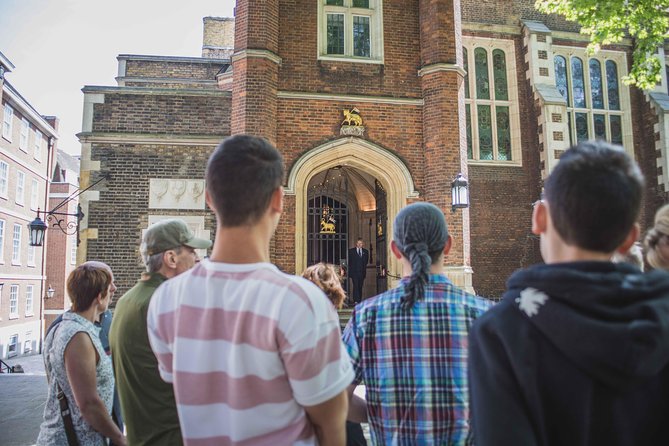
Next comes Temple Church, where you’ll learn about the Knights Templar. This is one of the tour’s story-heavy moments: about ten minutes, with plenty of chances to look at the setting and understand why people cared so much about this area.
Here’s the key thing to know: you don’t go inside. You view from the outside, and the guide’s commentary does the heavy lifting. That’s a tradeoff, but it also keeps the tour moving and keeps it focused on street-level history—how old institutions sit inside a living city.
Reviews praise guides for bringing these details to life without turning the walk into a lecture. You’ll probably find yourself looking more carefully at stonework, layout, and the way the church connects to the surrounding Temple area. Even if you’ve passed near here before, this stop tends to make the neighborhood feel more meaningful.
Drawback to consider: if your personal definition of a great London tour includes entering major historic sites, you may feel a little teased by the no-interiors approach. But for many people, that’s exactly what makes the pace enjoyable.
St Bride’s Church Stop: The Wedding Cake Story
Then you’ll stop at St Bride’s Church, also about five minutes, with a quirky detail that cuts through the heavy stuff: the church is linked to the story that inspired the wedding cake.
This is the kind of stop that makes the tour fun without needing you to be a deep history fan. The wedding cake connection gives you a hook you can remember later, and it helps the guide balance serious temple-and-temple-related themes with lighter, human-scale stories.
Because you’re staying outside, you’ll focus on why this place got attention and how myths and traditions attach to specific sites. It’s not presented as trivia for trivia’s sake. It’s more like London showing you how culture spreads through landmarks.
If you’re traveling with someone who gets bored by dense history, St Bride’s is often a strong moment to keep them engaged.
Samuel Johnson Statue Stop: Dictionary-Maker on the Side Streets
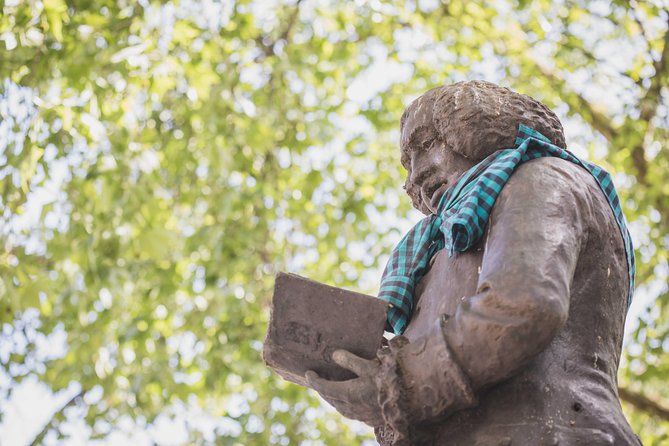
Another short highlight, about ten minutes, is the Statue of Samuel Johnson. The guide connects Johnson’s legacy to a specific London story: he lived where the statue points, and he’s credited as the inventor of the modern dictionary. You’ll also get the fun fact that he’s the second most quoted man in the English language.
This stop works well for two reasons. First, Johnson is instantly recognizable even if you’re not a classics person. Second, it places a major literary figure into a real urban setting. You can walk away feeling like you understand how famous writers fit into ordinary London geography.
This is also where the “insider questions” vibe shows up. Some guides in reviews were praised for being open to follow-ups, which matters a lot at this kind of stop. If Samuel Johnson is your thing, you’ll likely get extra context that makes the statue more than a photo backdrop.
Route Between Stops: Alleyways, WWII Marks, and Other Off-the-Map Stops
The itinerary lists the main anchors, but the value often comes from what happens between them: the smaller pauses and side sights that other tours tend to skip. The tour description and guide responses point to extra moments like:
- alleyways off Fleet Street that most people don’t wander into
- WWII damage visible on the side of an ancient church
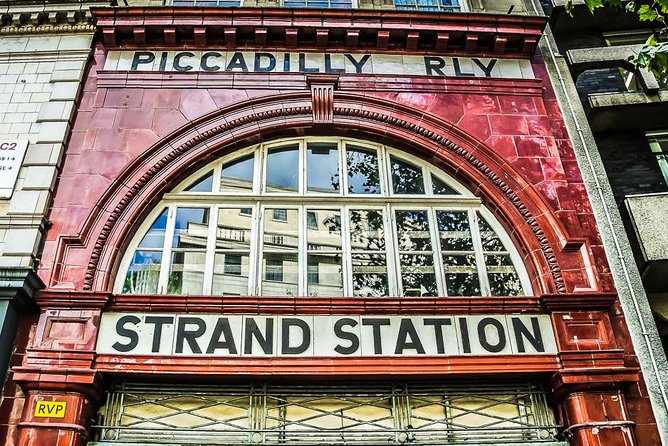
- a disused Tube stop
- and even a fake Roman baths you can spot as you move through the area
That’s the real “Hidden London” angle. Not secret doors. Just the city’s normal corners that happen to be overlooked. These are the places that make you slow down, look up, and notice the layers.
One review criticism was that it didn’t feel hidden enough to them. I get that reaction. If you expect only places that are truly unknown to everyone, you might be disappointed. But if you define hidden as less common, less crowded, and more local than the main tourist circuit, this route usually delivers.
The off-beat sights are what encourage you to keep noticing London after the tour ends.
Pacing, Photo Stops, and Hills: How to Prepare
This is a walking tour, not a sprint. It’s about 1 hour 30 minutes, and the pacing is built around frequent short stops. That’s great for photos because you’re not sprinting to catch a shot, and you’re not spending time fighting for space in crowded plazas.
Bring comfortable shoes. Reviews mention hills, and the Temple-to-Fleet Street corridor has enough elevation to matter if you’re wearing flat fashion sneakers you regret later.
Also, the tour is outdoors-focused with no building entry. That means weather can affect your day more than on indoor-heavy experiences. If London is gray and rainy, you’ll want a light layer and a rain-ready layer. A mobile ticket is used, so you’ll also want your phone charged.
A practical perk: stopping frequently means you won’t need to worry about parking or transport changes mid-tour. You simply keep walking and listening.
What You’re Likely to Take Away at the End on Fleet Street
The tour ends on Fleet Street (the departure point is Temple Station, and the finish is back on Fleet Street). That’s a smart way to structure things. You end where the city’s energy is, so you can roll right into lunch, a drink, or more sightseeing without needing a long jump across town.
What you’ll carry out of the walk isn’t only facts. It’s a new habit of seeing. After learning the reason Temple and Fleet Street developed their roles, you’ll spot patterns: how power clusters, how institutions endure, and how stories cling to stone and street corners.
Many guides are praised for making the walk “relaxed and informative,” and that matches the experience design. You’re not crammed with constant dates and names. You’re guided through scenes. You’ll likely want to point things out after you finish, which is always a sign the tour landed.
Who This Tour Suits Best (and Who Might Want a Different Option)
This walk is ideal if you:
- like history told through streets, not only buildings
- enjoy story-driven commentary more than museum-style interpretation
- want something that fits between other plans without eating your whole day
- want a smaller group experience (max 20) with a guide who can answer questions
It’s also a good match if you’ve been to London before. Reviews include people who said they were London insiders and still learned new things. That happens because the focus isn’t only the headline monuments. It’s the lesser-frequented corners that fill in the city’s logic.
If you’re the kind of visitor who wants to go inside major sites, this may feel like the wrong format. Since there’s no building entry, you’ll be more satisfied if your priorities are streets, legends, and atmosphere rather than interior access.
Should You Book Hidden London Walking Tour?
Yes, if you want a solid value guided walk that makes London feel connected and human. For $27.73, you’re getting a small-group, story-first experience with practical pacing, photo stops, and a route that gets you off the most obvious tracks. The guide skills show up again and again in the high rating and the strong recommendation rate.
Skip it only if your top priority is indoor admissions and major landmark interiors. If that’s you, you might do better with a classic attractions tour.
If you’re still on the fence, here’s the simplest way to decide: do you want London as a city of streets and stories, or as a checklist of famous interiors? This tour chooses streets and stories, and it does it well.
FAQ
How long is the Hidden London Walking Tour?
It runs for about 1 hour 30 minutes.
How much does the tour cost?
The price is $27.73 per person.
What is included in the price?
A local professional guide is included.
Are any buildings entered during the tour?
No. This tour does not enter buildings.
Where do I meet the tour and where does it end?
You start at Temple Station, Temple Pl, Temple, London WC2R 2PH, UK, and you end on Fleet Street.
Is the tour offered in English?
Yes, it’s offered in English.
How many people are on the tour?
The tour has a maximum of 20 travelers.
Can I bring a service animal or a dog?
Service animals are allowed. No dogs are allowed other than guide dogs.
Is full cancellation available, and how far in advance?
Yes. You can cancel up to 24 hours in advance for a full refund.
More Tours in London
- From London: Harry Potter Warner Bros Studio Tour
★ 4.7 · 26,588 reviews - Magical London: Harry Potter Guided Walking Tour
★ 4.7 · 22,044 reviews - London: Warner Bros. Studio Harry Potter Tour & Branded Bus
★ 4.7 · 19,194 reviews - London Big Bus Hop-On Hop-Off Tour with Optional River Cruise
★ 3.5 · 10,803 reviews - London Small Group Tour of Historical Pubs
★ 5.0 · 10,422 reviews
More Tour Reviews in London
- From London: Harry Potter Warner Bros Studio Tour
★ 4.7 · 26,588 reviews - London: Westminster to Greenwich River Thames Cruise
★ 4.5 · 22,836 reviews - Magical London: Harry Potter Guided Walking Tour
★ 4.7 · 22,044 reviews - London: Madame Tussauds London
★ 4.6 · 20,915 reviews - London: Warner Bros. Studio Harry Potter Tour & Branded Bus
★ 4.7 · 19,194 reviews
More London Walks Worth the Shoe Leather
- Magical London: Harry Potter Guided Walking Tour
★ 4.7 · 22,044 reviews - London: The Original Jack the Ripper Walking Tour
★ 4.7 · 7,833 reviews - Tour for Muggles The Ultimate Harry Potter Walking Tour in London
★ 5.0 · 4,684 reviews - London Jack The Ripper Guided Walking Tour
★ 5.0 · 3,131 reviews - London: Harry Potter Movies Walking Tour (Kids Go Free)
★ 4.7 · 3,071 reviews
Just reviewed around London





London Walking Tours, compared.
 ★ 4.7Magical London: Harry Potter Guided Walking TourFrom $2022,044 reviews
 ★ 4.7The Original Jack the Ripper Walking TourFrom $257,833 reviews
 ★ 5.0Tour for Muggles The Ultimate Harry Potter Walking Tour in LondonFrom $234,684 reviews
 ★ 5.0London Jack The Ripper Guided Walking TourFrom $03,131 reviews
 ★ 4.7Harry Potter Movies Walking Tour (Kids Go Free)From $203,071 reviews
 ★ 5.0Changing of the Guard Guided Walking Tour in LondonFrom $251,793 reviews
 ★ 4.9The Great British Rock and Roll Music Walking TourFrom $361,783 reviews
 ★ 4.8Harry Potter Walking Tour in GermanFrom $201,505 reviews