
London has layers you can walk through. This 2 to 2.5 hour guided stroll across the City of London and East London mixes big landmarks with small-group attention and the kind of local stories you won’t get from a quick guidebook glance. I like how the route moves fast enough to keep you engaged, but slow enough that you can ask questions and actually get answers.
One thing to consider: this walk is mostly about seeing famous buildings from the outside, and some popular spots have restrictions or extra entry on your own. The stop near the Monument notes that entrance isn’t included, and the Gherkin is also an exterior-only moment. Paths can vary day to day, so if you’re relying on limited mobility support, plan for uneven public sidewalks and curb cuts.
In This Review
- Key things to know before you go
- Why this Secrets of the City walk feels different
- Meeting point in the City and how the timing usually lands
- Royal Exchange and the Great Fire: where finance meets 1666
- St Dunstan-in-the-East: a church ruin turned quiet garden
- Leadenhall Market and the Gherkin: markets and modern glass
- Ten Bells and Old Spitalfields Market: crime stories meet real street life
- Brick Lane finish: how to use the last stretch wisely
- Price and value: what $34.41 buys you in real terms
- Who this tour is best for
- Practical tips to make the walk easy (and more fun)
- Should you book it
- FAQ
- How long is the Guided Walking Tour in London: Secrets of the City?
- How much does the tour cost?
- Where does the tour start and end?
- Are any entrances included?
- Is the tour suitable for people with limited mobility?
- Can I cancel for a full refund?
Key things to know before you go
- Max 15 people means you’re not lost in a crowd and your questions actually get answered
- City of London + East London crossover ties together finance, war-scarred landmarks, and Spitalfields street life
- Free-to-view stops cover architecture and markets without ticket costs (with a couple clear exceptions)
- Jack the Ripper-adjacent storytelling shows up in the Ten Bells area, including Mary Jane Kelly
- Tour guide support is a big part of the value, with guides like Senne praised for detailed, accommodating explanations
London on foot, a few more ways
- Magical London: Harry Potter Guided Walking Tour
★ 4.7 · 22,044 reviews - London: The Original Jack the Ripper Walking Tour
★ 4.7 · 7,833 reviews - Tour for Muggles The Ultimate Harry Potter Walking Tour in London
★ 5.0 · 4,684 reviews - London Jack The Ripper Guided Walking Tour
★ 5.0 · 3,131 reviews
Why this Secrets of the City walk feels different
If you’ve ever felt like London tours rush from one photo stop to the next, this one works because it stays human-sized. With a group capped at 15, you get room for real conversation. That matters in London, where the best stories tend to sit in the details: a doorway’s position, a street’s survival, or why a market building still looks the way it does.
What I especially like is the mix of scales. You’re not just looking at famous monuments. You’re also walking through working urban spaces: covered markets, old market streets, and a finishing stretch in Brick Lane where the neighborhood energy is part of the experience. And the guide angle is practical, not just theatrical. Guides can explain what you’re seeing and why it matters, and they’re happy to respond as you walk. In reviews, a guide named Senne gets singled out for being accommodating and for answering questions with detail and a light, entertaining style.
Meeting point in the City and how the timing usually lands
You start at the London Troops War Memorial at 1 Cornhill (EC3V 3LN). That’s in the City of London, not far from the kind of office blocks and old-stone streets that make this area feel like a different planet compared with the West End.
The tour runs about 2 to 2.5 hours, and the structure is built for short, focused stops: several are quick exterior looks (often around 5–10 minutes), with one longer stretch at Brick Lane. That pacing is good if you want a fast orientation to the City’s geography and the shift toward Spitalfields and Shoreditch.
You also get a mobile ticket, which reduces the usual pre-walk hassle. And because the walk ends in Brick Lane, it’s easy to keep going on your own right after without getting caught in a late-night transport problem.
Royal Exchange and the Great Fire: where finance meets 1666
The first major stop is the Royal Exchange Building. This is a landmark because it was once the hub of London’s financial district, and the architecture reflects that confidence—grand façade, a sense of civic importance, and a courtyard feel that makes it memorable even if you’ve seen photos.
What’s useful here is the way the guide can connect past and present. Even today, the building holds shops, restaurants, and offices, so you’re not just looking at history behind glass. You’re seeing how London keeps repurposing important structures instead of freezing them in time.
Then you walk to the Monument to the Great Fire of London. It’s a tall column near Monument Street, close to where the Great Fire began in 1666. The key note: entrance isn’t included on this tour. Still, this stop works well because it gives you a clear reference point for the fire story and the old-city layout. If you want to go higher or look inside, you’ll need to plan that separately.
Practical tip: this section is a great time to ask your guide how the Great Fire changed the city plan. Even if you’ve read the basics before, walking gives it a sense of scale.
Still deciding? A handful more London outings we rated
St Dunstan-in-the-East: a church ruin turned quiet garden
One of the most quietly moving stops is St. Dunstan-in-the-East. This is a historic church site near Tower Hill that dates back to the 12th century. During the Blitz in World War II, it was severely damaged, and rather than rebuilding it fully, the remains were preserved and converted into a tranquil public garden.
I like this stop because it adds emotional texture to the walk. Up to this point you’ve been seeing London as architecture and commerce. St. Dunstan-in-the-East shows London as survival—how the city remembers tragedy without turning it into a theme park.
There’s also a simple viewing advantage: it’s short and accessible as a pause in your walking rhythm. Even if you only have a few minutes here, it’s long enough to absorb the contrast between what used to be a church and what it became afterward.
Leadenhall Market and the Gherkin: markets and modern glass
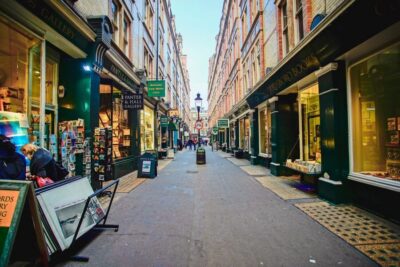
Next comes Leadenhall Market, a historic covered market in the heart of the City. It originally served the trading of meat, poultry, and provisions. Today, it’s filled with specialty shops, restaurants, and bars. The cobbled walkway and the roof structure make it feel distinct from the streets outside, even when crowds build.
Two reasons this stop is worth your attention:
- It shows how London’s older commercial spaces still function.
- The atmosphere is tied to the building, not just the stores inside.
Leadenhall Market also has pop-culture fame. It appeared in the Harry Potter and the Philosopher’s Stone films as a stand-in for Diagon Alley. Even if you’re not chasing movie locations, the filming connection is a fun lens for noticing details.
After the market, you’ll see 30 St Mary Axe, the Gherkin, designed by Norman Foster and completed in 2003. The tour note is clear: entrance isn’t included. That’s not a deal-breaker, because the exterior is the point—its rounded shape and glass façade are visually strong at street level.
If you like modern architecture, use this stop to compare it with the Royal Exchange’s more classical massing. The contrast helps you see how London’s business identity has shifted from old-world grandeur to sleek contemporary design.
Ten Bells and Old Spitalfields Market: crime stories meet real street life
The walk continues into Spitalfields with a quick stop at The Ten Bells, a historic pub known for Victorian décor and a darker claim to fame: its association with Jack the Ripper murders in the late 19th century. The name that matters here is Mary Jane Kelly, listed among the victims connected to people who frequented the pub.
This is where the guide storytelling becomes the experience, not just the building. If you’ve read about Jack the Ripper before, it helps to connect the story to actual streets you can stand on. And if you haven’t, it’s still handled in a way that keeps it tied to place.
From there you move to Old Spitalfields Market, originally established in the 17th century. It shifted from a wholesale trading space into a mix of independent stalls, boutiques, and food spots. The best part for me isn’t any single shop; it’s the mix of old architecture with present-day shopping and dining.
This stop also gives you a sense of East London’s texture right in the middle of the walk. You’re not just collecting landmarks. You’re experiencing how a neighborhood markets district actually looks and moves on a normal day.
Brick Lane finish: how to use the last stretch wisely
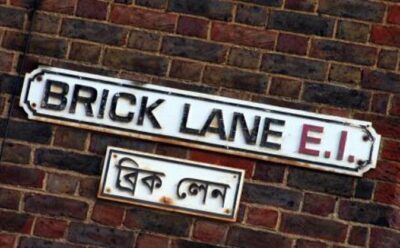
The tour ends at Brick Lane. The finish point matters because it’s not a dead end—it’s a neighborhood you can continue exploring on your own.
Brick Lane is known for a mix of cultures, street art, and the kind of street-market energy that’s easy to enjoy at your own pace. You can spend time with street art, shop for vintage clothing, or follow the food smell toward street food options. Since the tour ends here, you can stay as long as you want without switching transport.
My advice: treat Brick Lane like a choose-your-own-adventure. If you’re tired, grab a snack and watch the street. If you’re still energetic, walk a few side streets to see how quickly the vibe changes from block to block.
Price and value: what $34.41 buys you in real terms
At $34.41 per person, this tour is priced like a budget-friendly entry into the City’s walkable sights. What makes it feel like good value is that you’re paying mainly for the guide’s direction and context, not for expensive attractions.
Most of what you see are free-to-view stops, including the Royal Exchange exterior area, St. Dunstan-in-the-East, Leadenhall Market, and the Ten Bells vicinity. The two explicit exceptions you should notice are the Monument and Gherkin, where entrance isn’t part of the tour.
Also, there are no snacks or dinner included. That’s normal for a walking tour, but it means you should plan a small pre-walk bite or be ready to pick up something in Brick Lane after.
Group size and timing are the other value drivers. A 2 to 2.5 hour walk that moves through multiple neighborhoods is exactly the kind of first-day or mid-trip activity that saves you effort later. You’ll get a better sense of where things are, and your future self will thank you when you’re deciding what to do next.
Who this tour is best for
This one fits best if you want:
- A small-group way to orient yourself through the City and into East London
- A guide-led focus on story and place, not only big-photo landmarks
- A route that mixes architecture, markets, and a neighborhood finale
It’s also a strong pick for people who like asking questions. In the praised guide feedback, Senne is highlighted for being accommodating and for answering questions in a way that keeps the tour moving without shutting down curiosity.
If you only care about inside-the-building experiences, you may feel slightly limited, since the Monument and Gherkin entrances aren’t included.
Practical tips to make the walk easy (and more fun)
- Wear comfortable walking shoes. This is a city sidewalk walk, and even without big inclines, sidewalks can be uneven.
- If you have limited mobility, pay attention to the tour note about varying public path conditions. The tour says it does not include stairs or many inclines, but the real world is still full of curb cuts and surface differences.
- Bring a small water bottle if you tend to get thirsty during walks. The tour doesn’t include snacks or dinner.
- Use the guide time to ask about transitions. The route changes from the City’s financial vibe to Spitalfields market life, and then into Brick Lane. Ask how those areas evolved, and you’ll get more out of what you’re seeing.
Also, if you’re bringing a service animal, the tour allows them. And it’s near public transportation, which makes it simpler to fit into your overall London plan.
Should you book it
Book this tour if you want a focused London walk that teaches you how the City connects to the stories of fire, war damage, markets, and neighborhood culture. The price is reasonable for what you’re paying for: a capable guide plus multiple sight stops that are mostly free to view.
Skip or think twice if you’re primarily chasing ticketed interiors. The tour notes that some big attractions—like entrance to the Monument and the Gherkin—aren’t part of the experience. If inside views are your top priority, you could plan separate tickets.
If you’re on a first trip, or you want a morning-to-early afternoon walking plan with an easy finish in Brick Lane, this is a solid choice.
FAQ
How long is the Guided Walking Tour in London: Secrets of the City?
The tour lasts about 2 hours to 2 hours 30 minutes.
How much does the tour cost?
It costs $34.41 per person.
Where does the tour start and end?
It starts at London Troops War Memorial, 1 Cornhill, London EC3V 3LN, and ends on Brick Lane, Brick Ln, London.
Are any entrances included?
Most stops are free to view, but entrance to the Monument and the Gherkin is not included as part of the tour.
Is the tour suitable for people with limited mobility?
The tour notes that it does not include stairs or many inclines, but public path conditions can vary. If mobility is limited, you should consider that.
Can I cancel for a full refund?
Yes. Free cancellation is allowed up to 24 hours in advance of the experience start time for a full refund. After that window, the amount paid is not refunded.
More Tours in London
- From London: Harry Potter Warner Bros Studio Tour
★ 4.7 · 26,588 reviews - Magical London: Harry Potter Guided Walking Tour
★ 4.7 · 22,044 reviews - London: Warner Bros. Studio Harry Potter Tour & Branded Bus
★ 4.7 · 19,194 reviews - London Big Bus Hop-On Hop-Off Tour with Optional River Cruise
★ 3.5 · 10,803 reviews - London Small Group Tour of Historical Pubs
★ 5.0 · 10,422 reviews
More Tour Reviews in London
- From London: Harry Potter Warner Bros Studio Tour
★ 4.7 · 26,588 reviews - London: Westminster to Greenwich River Thames Cruise
★ 4.5 · 22,836 reviews - Magical London: Harry Potter Guided Walking Tour
★ 4.7 · 22,044 reviews - London: Madame Tussauds London
★ 4.6 · 20,915 reviews - London: Warner Bros. Studio Harry Potter Tour & Branded Bus
★ 4.7 · 19,194 reviews
More London Walks Worth the Shoe Leather
- Magical London: Harry Potter Guided Walking Tour
★ 4.7 · 22,044 reviews - London: The Original Jack the Ripper Walking Tour
★ 4.7 · 7,833 reviews - Tour for Muggles The Ultimate Harry Potter Walking Tour in London
★ 5.0 · 4,684 reviews - London Jack The Ripper Guided Walking Tour
★ 5.0 · 3,131 reviews - London: Harry Potter Movies Walking Tour (Kids Go Free)
★ 4.7 · 3,071 reviews
Just reviewed around London





London Walking Tours, compared.
 ★ 4.7Magical London: Harry Potter Guided Walking TourFrom $2022,044 reviews
 ★ 4.7The Original Jack the Ripper Walking TourFrom $257,833 reviews
 ★ 5.0Tour for Muggles The Ultimate Harry Potter Walking Tour in LondonFrom $234,684 reviews
 ★ 5.0London Jack The Ripper Guided Walking TourFrom $03,131 reviews
 ★ 4.7Harry Potter Movies Walking Tour (Kids Go Free)From $203,071 reviews
 ★ 5.0Changing of the Guard Guided Walking Tour in LondonFrom $251,793 reviews
 ★ 4.9The Great British Rock and Roll Music Walking TourFrom $361,783 reviews
 ★ 4.8Harry Potter Walking Tour in GermanFrom $201,505 reviews