
Reviewed · LONDON WALKING TOURS
Burnings, Butchery & Black Death: A Walking Tour of London’s Bloody Past
Dark London starts with one alleyway. This tour strings together a thousand years of grim London history in about two hours, and I love how it keeps moving through real places instead of turning into a lecture. I also like the small group size (max 15), which helps you hear the guide and actually ask questions. One consideration: it’s firmly themed around disease, violence, and punishment, so if you want light sightseeing, this one may feel heavy.
You’ll hit a tight set of stops, mostly with free entry, and one included church visit that anchors the medieval thread. I like that the pacing stays manageable—each stop is short—so you get a sense of the big story without feeling trapped for hours.
If the guide is Tom, you’ll likely get clear, fun storytelling and quick answers. I especially appreciate that the focus stays on London’s institutions and sites, not the usual serial-killer detours.
In This Review
- Key reasons this tour is worth your time
- Two Hours, Ten Stops: How a Thousand Years Fits
- Starting At Aldersgate: Easy Transit and a Clear Ending
- Stop 1: The Charterhouse and a Plague-Era Setting
- Stop 2: Smithfield Market, Where Meat Markets Became City Memory
- Stop 3: St John’s Gate and the Knights Hospitallers
- Stop 4: Cloth Fair, a Quiet Alley with a Noisy Past
- Stop 5: The William Wallace Memorial and the Shadow of Conflict
- Stop 6: St Bartholomew the Great, London’s Old Parish Church
- Stop 7: Golden Boy of Pye Corner and Great Fire Aftermath
- Stop 8: Holborn Viaduct and the River Fleet Sewer
- Stop 9: Ye Olde Mitre, an Alleyway Pub Stop for Real London Comfort
- Stop 10: St Bartholomew’s Hospital Museum, the Oldest Hospital Story
- What Makes the Price Feel Fair at About $27
- The Right Fit: Who Should Book This Walk
- Should You Book It? My Decision Guide
- FAQ
- How long is the walking tour?
- What’s the price per person?
- Where does the tour start and end?
- Is a mobile ticket used?
- What language is the tour offered in?
- How many people are in a group?
- Are any stop admissions included?
- Is the tour near public transportation?
- Does it require good weather?
- Is free cancellation available?
Key reasons this tour is worth your time
- A tight 2-hour walk that covers Middle Ages through Victorian London
- Max group size of 15 for better listening and interaction
- Ten stops packed into a small central area, from plague sites to pub alleys
- Mostly free admission, plus one included church entry
- Dark, specific storytelling tied to places you’d otherwise pass by
- A tour ending near Farringdon, so you can keep your day moving
London on foot, a few more ways
- Magical London: Harry Potter Guided Walking Tour
★ 4.7 · 22,044 reviews - London: The Original Jack the Ripper Walking Tour
★ 4.7 · 7,833 reviews - Tour for Muggles The Ultimate Harry Potter Walking Tour in London
★ 5.0 · 4,684 reviews - London Jack The Ripper Guided Walking Tour
★ 5.0 · 3,131 reviews
Two Hours, Ten Stops: How a Thousand Years Fits
This is the kind of walking tour that works when you’re short on time but want more than postcard London. The route is built to cover big eras quickly: medieval institutions, the slow grind of city life, then the early modern shock of fires and rumors, and finally the Victorian obsession with sanitation. The result is a tour that feels like a fast timeline you can walk through.
What helps is the structure: each stop is roughly 10 minutes, so your attention stays fresh. You’re not stuck standing in one place long enough to get bored, and you’re not racing so hard that the guide can’t explain what matters. For you, that means you leave with names, locations, and a clearer sense of why London keeps layering new stories over old ones.
Starting At Aldersgate: Easy Transit and a Clear Ending
The walk starts at Underground Ltd, Aldersgate St, near the Barbican area. That’s a useful choice because it connects you well to London’s transit network before you even begin. The tour ends at Ely Place, close to Farringdon station, so you can head straight to lunch, museums, or your next reservation without trekking back across town.
The tour also uses a mobile ticket, which is convenient if you’re juggling trains, buses, and other plans. And because it’s a good-weather experience, plan to keep an eye on conditions—if the weather turns, your day can shift.
Stop 1: The Charterhouse and a Plague-Era Setting
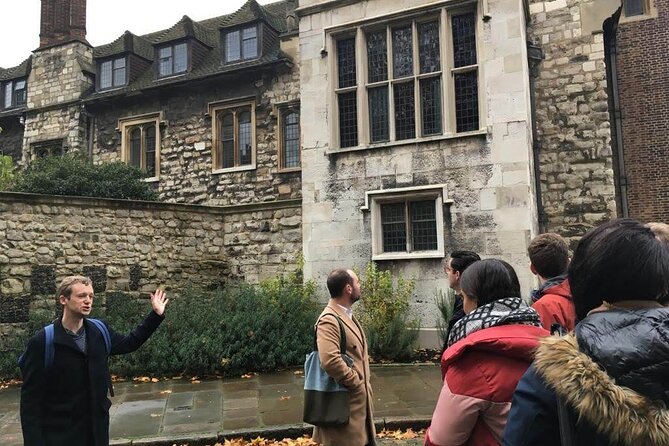
Your first stop is The Charterhouse, a fourteenth-century monastery and a plague pit. This is a strong opener because it frames London’s danger in a grounded way. Instead of vague talk about death, you begin in a place that’s directly tied to disease and burial practices.
You’ll get a sense of how religious institutions and public health realities overlapped. Monasteries weren’t just quiet spiritual spaces; they were part of the city’s systems, including how communities handled crises. If you like history that connects cause to place, this start does a good job.
A drawback to note: the theme is heavy right from the start. If you’re sensitive to grim subjects, you’ll want to mentally pace yourself for this kind of tour.
Still deciding? A handful more London outings we rated
Stop 2: Smithfield Market, Where Meat Markets Became City Memory
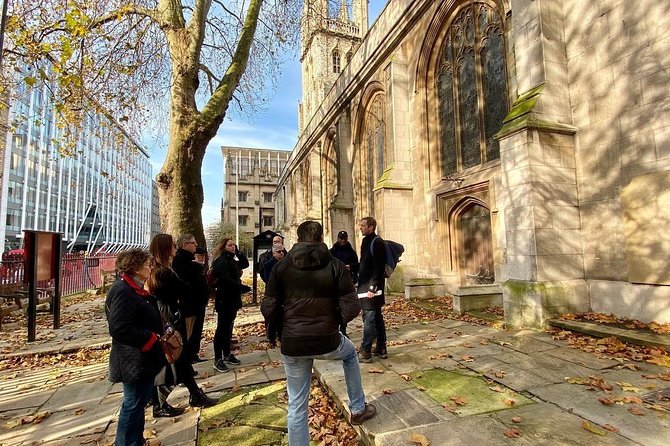
Next comes Smithfield Market, described as a meat market with roughly a thousand years of history. This stop matters because it shows how the city fed itself and how everyday commerce sat next to catastrophic events. It’s easy to think of history as kings and battles, but Smithfield anchors the story in daily life: food, animals, trade, and the constant motion of a large city.
There’s also a practical angle. In a tour about London’s bloody past, it helps to understand the human routine that kept going even when things went wrong. Smithfield lets you picture the kind of crowds and infrastructure that powered the city long before modern regulations.
You’ll also like this stop if you enjoy the texture of street-level history: the setting is less dramatic than some monuments, but the meaning sticks because it’s so real.
Stop 3: St John’s Gate and the Knights Hospitallers
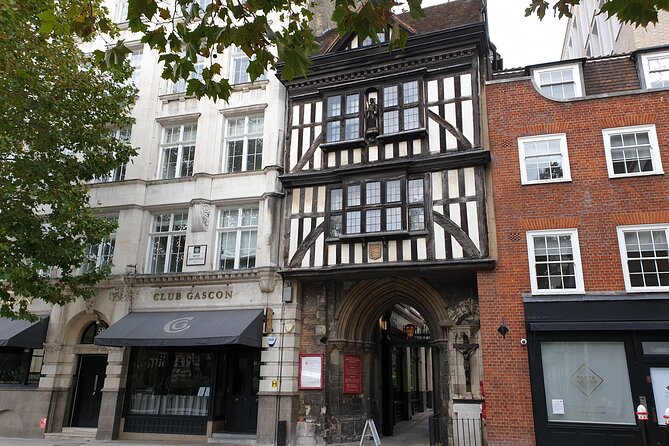
At St John’s Gate, you’re in the orbit of the medieval Knights Hospitallers. This is a turning point from markets and suffering sites into order, defense, and institutional power. The gate is one of those London structures you might walk by without realizing its role in medieval life.
This stop is valuable because it adds structure to the story. In other words, London’s turbulent past wasn’t just chaos. There were systems and organizations built to manage people, property, and security—some of it noble, some of it practical, and all of it tied to the city’s survival.
You’ll get more out of this if you pay attention to how the architecture and location reinforce the idea that the past is still physically present, even in a modern city.
Stop 4: Cloth Fair, a Quiet Alley with a Noisy Past
Cloth Fair is one of those places that sounds harmless until you learn what happened there. The tour frames it as a quiet alley with a noisy history, and that contrast is exactly why it works.
Alleyways like this are where London hides its layers. Big landmarks grab attention, but side streets carry the texture of old trades, court-linked activity, and community life that didn’t make it into the tourist highlights.
In a tour like this, this stop also provides a breathing pause. You’re still in the dark theme, but you’re not staring at the biggest death-related site every ten minutes. It’s a moment to refocus while still learning something specific.
Stop 5: The William Wallace Memorial and the Shadow of Conflict
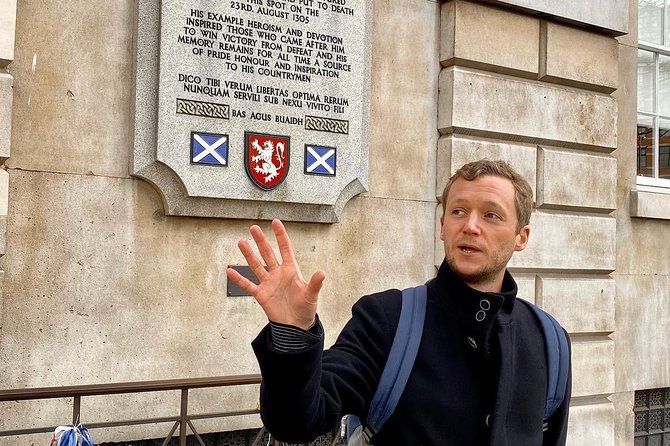
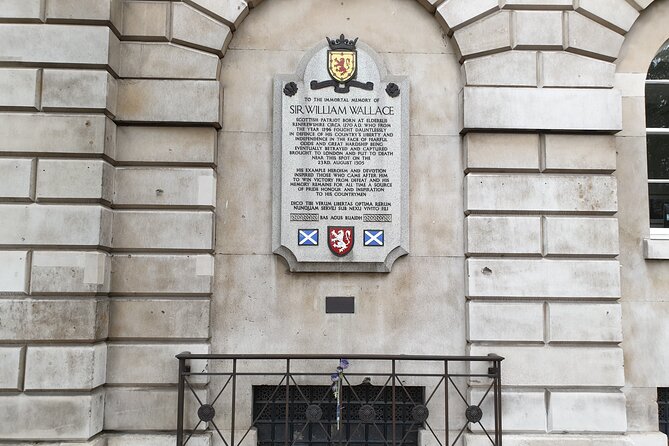
Then you reach the William Wallace Memorial, tied to the figure behind Braveheart. This stop widens the lens slightly. Even though London isn’t Scotland, memory of rebellion and war still shows up in how cities remember conflict.
It’s a reminder that London’s story isn’t isolated. The city absorbed news, politics, and people from across the British Isles. Memorials and references like this help you connect medieval struggles and later national narratives to what London chooses to remember in stone.
If you like history that feels connected to pop culture references, this one gives you a familiar entry point, but it’s still anchored in place.
Stop 6: St Bartholomew the Great, London’s Old Parish Church
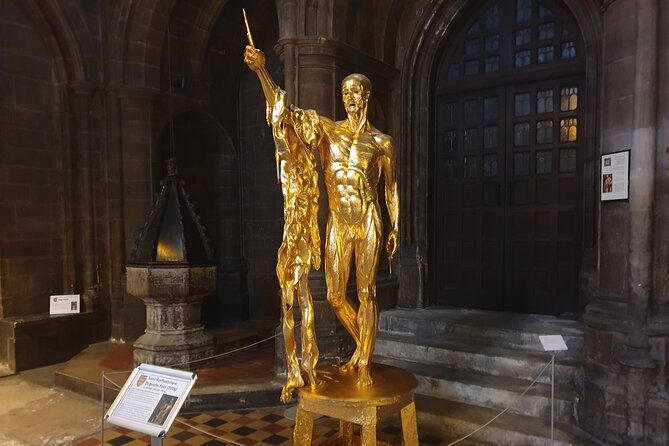
The tour’s one included admission stop is Church of St. Bartholomew the Great, noted as London’s oldest surviving parish church. This is where the walk gains a sense of continuity. After all the death, disorder, and fear, you get a structure that has endured.
This is also a smart timing choice. In a walking tour that moves fast, a church visit lets the story settle. You’re more likely to notice details when you’re not constantly marching to the next corner.
Practical tip: if you’re the kind of person who likes to take quick photos, keep your phone ready here—but also give yourself a moment to just look. This kind of stop rewards slow attention even if the overall tour pace stays brisk.
Stop 7: Golden Boy of Pye Corner and Great Fire Aftermath
At Golden Boy of Pye Corner, the tour points to a site connected to the Great Fire of 1666 dying out. It also ties the location to eighteenth-century ghost hysteria, which is a fascinating combo.
This stop shows how fear travels through time. Fire is a physical disaster, but rumor and superstition can spread just as fast afterward. You’re watching the city’s imagination respond to trauma, and that’s a big part of why London’s “bloody past” isn’t only about bloodshed—it’s also about panic, belief, and what people do when they don’t understand what they see.
This is one of the stops where you’ll likely have questions, and because the group is small, it’s easier to ask.
Stop 8: Holborn Viaduct and the River Fleet Sewer
Next is Holborn Viaduct, linked to the River Fleet, described as Victorian London’s largest open-air sewer. This is a more modern kind of “gory,” the kind that comes from sanitation problems rather than swords.
It’s valuable because it changes your idea of what counts as brutality in history. Disease didn’t only come from dramatic events; it also came from infrastructure. When you connect the sewer system to the health crises of earlier centuries, the whole tour gains coherence.
Look at this stop like a bridge. It’s how you move from medieval plague thinking to Victorian attempts to fix the city’s most stubborn problems—literally, underground.
Stop 9: Ye Olde Mitre, an Alleyway Pub Stop for Real London Comfort
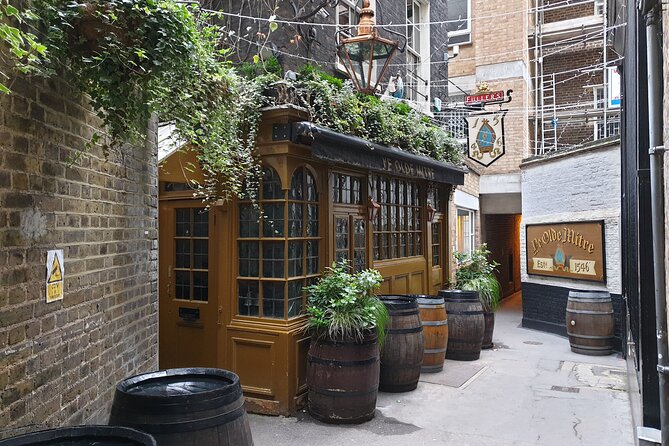
The route then slips you to Ye Olde Mitre, described as a pub down an alleyway. This stop is important even if you’re not a pub person. It gives the stories somewhere to land, away from stone and symbols and back into something human.
From the experience descriptions, people often pair this part of the tour with food, and it’s easy to see why: the pub is known for classic comfort-style items like cheese toasties and pork pies. You’ll likely appreciate the contrast after dark scenes—warm light, old wood, and a short moment to talk and reset.
If you’re photographing, this is also a great place to catch that London alley vibe without needing a landmark crowd.
Stop 10: St Bartholomew’s Hospital Museum, the Oldest Hospital Story
The finale is Saint Bartholomew’s Hospital Museum, described as the oldest surviving hospital in the country. This is a fitting wrap-up because it’s still in the realm of suffering, but with a focus on care, evolution, and institutional response.
This stop helps you reinterpret earlier parts of the tour. When you’ve learned about plague and fear, you appreciate why hospitals became so central. The museum makes the story less purely grim by showing how medical systems grew in response to recurring crises.
It also works as a practical ending: you finish near Farringdon, and you’ve got plenty of energy to keep exploring or head to dinner.
What Makes the Price Feel Fair at About $27
At around $27.73 per person for about two hours, the value comes from how dense the experience is. You’re paying for a guided route that covers ten meaningful stops close together, most with free entry, plus an included church admission. That’s not just convenience; it saves you time and helps you avoid missing context.
The small group size—maximum 15—also matters. You’re not shouting over the next person’s arm waving. It’s the kind of setup where the guide’s pacing and explanations stay clear.
And the stories aren’t just themed horror. They connect causes across centuries: markets and crowds, institutional power, fear after disasters, and the Victorian push to fix systems. You end up with a London you can actually explain to someone else.
The Right Fit: Who Should Book This Walk
This tour is best for you if you:
- Like London history but want it tied to real sites, not only famous monuments
- Enjoy a focused theme—plague, fire, fear, and how cities cope
- Prefer short stops and moving pace over long museum marathons
- Want a smaller group where the guide can answer questions
It may not be your best match if:
- You want a cheerful overview of London
- You’re not up for repeated references to death, disease, and punishment
- You dislike walking for about two hours with quick transitions
Should You Book It? My Decision Guide
Book this tour if you want a compact way to understand why London’s past feels so dark and why it still shows up in places you’d otherwise pass. The combination of small groups, a short route that spans centuries, and mostly free entry makes it a strong choice for visitors who like history with strong location anchors.
Skip it if the grim theme will weigh on you. Otherwise, go in ready for a serious walk—and you’ll likely leave with a sharper sense of how London got from plague pits to Victorian sewers without losing its ability to reinvent fear into story.
FAQ
How long is the walking tour?
It’s listed as about 2 hours.
What’s the price per person?
The price is $27.73 per person.
Where does the tour start and end?
It starts at Underground Ltd, Aldersgate St, Barbican, London EC1A 4JA, and ends at Ely Place, around the corner from Farringdon Station.
Is a mobile ticket used?
Yes, the tour uses a mobile ticket.
What language is the tour offered in?
It’s offered in English.
How many people are in a group?
The tour has a maximum of 15 travelers.
Are any stop admissions included?
Church of St. Bartholomew the Great has admission included. The other listed stops show admission ticket as free.
Is the tour near public transportation?
Yes, it’s near public transportation.
Does it require good weather?
Yes, it requires good weather, and if canceled for poor weather you’ll be offered a different date or a full refund.
Is free cancellation available?
Yes. You can cancel up to 24 hours in advance for a full refund.
More Tours in London
- From London: Harry Potter Warner Bros Studio Tour
★ 4.7 · 26,588 reviews - Magical London: Harry Potter Guided Walking Tour
★ 4.7 · 22,044 reviews - London: Warner Bros. Studio Harry Potter Tour & Branded Bus
★ 4.7 · 19,194 reviews - London Big Bus Hop-On Hop-Off Tour with Optional River Cruise
★ 3.5 · 10,803 reviews - London Small Group Tour of Historical Pubs
★ 5.0 · 10,422 reviews
More Tour Reviews in London
- From London: Harry Potter Warner Bros Studio Tour
★ 4.7 · 26,588 reviews - London: Westminster to Greenwich River Thames Cruise
★ 4.5 · 22,836 reviews - Magical London: Harry Potter Guided Walking Tour
★ 4.7 · 22,044 reviews - London: Madame Tussauds London
★ 4.6 · 20,915 reviews - London: Warner Bros. Studio Harry Potter Tour & Branded Bus
★ 4.7 · 19,194 reviews
More London Walks Worth the Shoe Leather
- Magical London: Harry Potter Guided Walking Tour
★ 4.7 · 22,044 reviews - London: The Original Jack the Ripper Walking Tour
★ 4.7 · 7,833 reviews - Tour for Muggles The Ultimate Harry Potter Walking Tour in London
★ 5.0 · 4,684 reviews - London Jack The Ripper Guided Walking Tour
★ 5.0 · 3,131 reviews - London: Harry Potter Movies Walking Tour (Kids Go Free)
★ 4.7 · 3,071 reviews
Just reviewed around London





London Walking Tours, compared.
 ★ 4.7Magical London: Harry Potter Guided Walking TourFrom $2022,044 reviews
 ★ 4.7The Original Jack the Ripper Walking TourFrom $257,833 reviews
 ★ 5.0Tour for Muggles The Ultimate Harry Potter Walking Tour in LondonFrom $234,684 reviews
 ★ 5.0London Jack The Ripper Guided Walking TourFrom $03,131 reviews
 ★ 4.7Harry Potter Movies Walking Tour (Kids Go Free)From $203,071 reviews
 ★ 5.0Changing of the Guard Guided Walking Tour in LondonFrom $251,793 reviews
 ★ 4.9The Great British Rock and Roll Music Walking TourFrom $361,783 reviews
 ★ 4.8Harry Potter Walking Tour in GermanFrom $201,505 reviews