
Reviewed · LONDON WALKING TOURS
Booze, Brothels & The Bard: A Walking Tour of London’s Bawdy Borough
Prisons, beer, and plays in one walk. This London route takes you through Southwark’s messier side while tying it to Shakespeare and Dickens. You’ll move between real places tied to punishment, drink, and street life, with stops at Borough Market and the Globe Theatre area that help explain why this neighborhood shows up so often in stories.
Two things I really like about this experience: the small group size (up to 15) that makes it feel personal, and the way the guide connects literature to physical locations you can see. One thing to consider: the whole walk is about 2 hours with very short pauses at each stop, so it’s more of a moving history lesson than a slow museum day.
In This Review
- Key highlights you’ll remember
- Booze, Brothels & The Bard: What you’re really signing up for
- Price and time: Does $27.78 make sense for two hours?
- Why Southwark feels different the moment you start
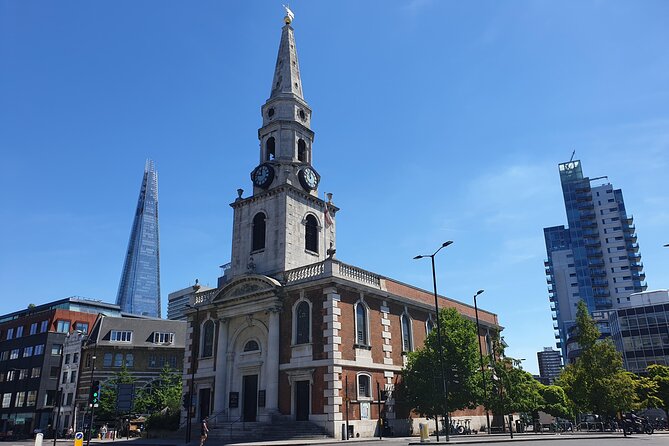
- First stop: St George the Martyr and the surviving Marshalsea link
- Crossbones Graveyard: The outcast story you won’t forget
- The Hop Exchange and the beer trade you can still see
- George and the idea of London’s coaching era
- Old Operating Theatre Museum and Herb Garret: medicine with historical weight
- London Bridge and Southwark Cathedral: two icons in the same neighborhood mood
- Borough Market: the market that keeps showing up
- Winchester Palace remains: medieval prestige in ruins
- The Clink Prison Museum: when punishment gets a name
- Shakespeare’s Globe Theatre reconstruction: art as a final destination
- What makes the guide matter on this kind of tour
- Who should book Booze, Brothels & The Bard
- A few practical tips so you enjoy every stop
- Should you book this walking tour?
Key highlights you’ll remember
- Marshalsea Prison’s surviving piece at St George the Martyr, London’s long shadow of debtors and punishment
- Crossbones Graveyard and the Garden of Remembrance, where Southwark’s outcast dead were laid to rest
- The Hop Exchange, a rare survival from the area’s beer trade
- Old Operating Theatre Museum and Herb Garret, Europe’s oldest surviving operating theatre
- Borough Market and Winchester Palace remains, a fast look at medieval food and power
- Shakespeare’s Globe Theatre reconstruction, tying the walk back to the stage
London on foot, a few more ways
- Magical London: Harry Potter Guided Walking Tour
★ 4.7 · 22,044 reviews - London: The Original Jack the Ripper Walking Tour
★ 4.7 · 7,833 reviews - Tour for Muggles The Ultimate Harry Potter Walking Tour in London
★ 5.0 · 4,684 reviews - London Jack The Ripper Guided Walking Tour
★ 5.0 · 3,131 reviews
Booze, Brothels & The Bard: What you’re really signing up for
This tour is a straightforward idea done with confidence: you walk through Southwark and let the neighborhood explain itself. Not with fancy museum pacing. Not with a single “big sight” followed by shopping. Instead, you get a sequence of places that were part of real life—work, hunger, drink, crime, illness, and entertainment—and then you see how those themes feed the writing people remember.
The best part is the balance. You’re not just marching through dark sites with no payoff. The route keeps steering you back toward the literary link: Shakespeare, Dickens, and other writers didn’t invent their settings out of nowhere. They used places like this because places like this were already telling stories.
And because it’s a walking tour, you also get the practical benefit of orientation. After you do this route, you’ll understand where you are in London and how Southwark sits in the bigger city map—especially around the river side landmarks and the market district energy.
Price and time: Does $27.78 make sense for two hours?
At $27.78 per person for around 2 hours, the value comes less from ticking boxes and more from how many distinct themes you cover in a short time. You’re paying for a guide to connect the dots between places that might feel random if you just showed up and wandered.
Also, the tour is built around stops that are admission ticket free in the context of the route. That matters, because it keeps your day from turning into “pay more at the next gate.” Even when a site isn’t a museum you can fully explore on your own during the stop, the guide’s commentary makes the location itself worth the time.
The short timing is the tradeoff. Each stop is only a few minutes, so if you love lingering, you’ll want to plan a follow-up visit to your favorite place after the walk. If you’re the type who likes getting your bearings and then choosing what to return for, this structure works well.
Why Southwark feels different the moment you start
Southwark has always been a place where London’s rules blurred. You can feel it in the mix of stops here: prisons, burial grounds for people on the edge, beer trade leftovers, and then world-famous theatre.
That blend is the real “hook.” It’s why the tour title leans into booze and brothels even when you’re not going to a modern entertainment venue. The point is that the area carried the social undercurrent that artists used for material. When you learn where the punishment happened and where the drink trade operated, the stories people tell about this part of London stop feeling like stereotypes.
You also get to see how the past layers physically. Even on a fast route, the neighborhood reveals different eras packed close together: medieval power remains, older church architecture, and later reconstructions and landmarks.
Still deciding? A handful more London outings we rated
First stop: St George the Martyr and the surviving Marshalsea link
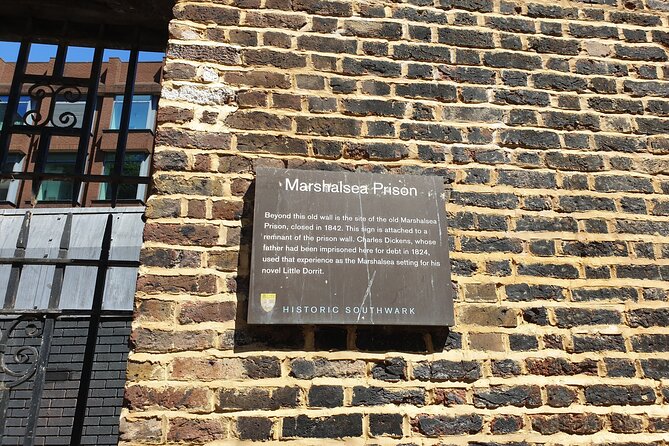
You begin at St George the Martyr, with a special focus on a remaining part of the Marshalsea Prison. This isn’t just a historical footnote. Marshalsea is one of those names that signals what imprisonment meant in earlier London—especially the way debt and punishment could tangle together.
What you’ll likely get from the guide here is context: how and why these institutions sat where they did, and what life would have looked like for the people caught inside that system. It’s the kind of start that sets the tone for the walk. Instead of warming up with “pretty views,” you immediately step into the real mechanics of the old city.
Practical note: because it’s a quick stop, don’t expect a full museum treatment. Treat it as a foundation. The tour builds outward from this idea.
Crossbones Graveyard: The outcast story you won’t forget
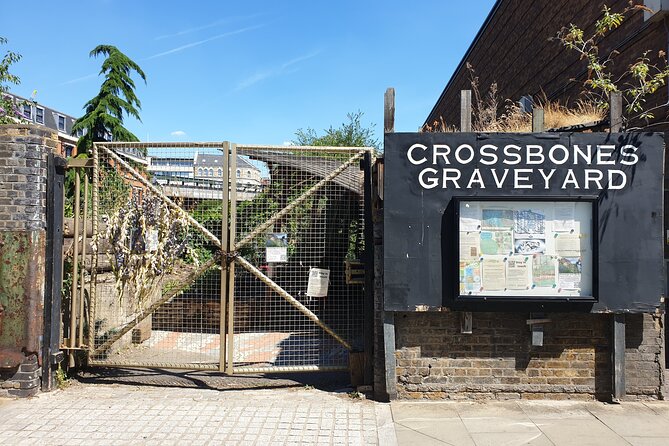
Next comes Crossbones Graveyard and the Garden of Remembrance, tied to thousands of Southwark’s outcast dead. This stop can hit hard, mostly because it shifts your attention from the big names to the people who didn’t get recorded the usual way.
I like how the route doesn’t rush you past the meaning. Even with a short visit, it’s a reminder that “history” isn’t only famous buildings and royal events. It’s also burial grounds, poverty, and how society decided who mattered enough to be properly remembered.
If you prefer a gentler pace, this may be the emotional peak of the walk. But even if you’re not a sentimental person, it’s the kind of stop that sharpens your understanding of the entire area.
The Hop Exchange and the beer trade you can still see
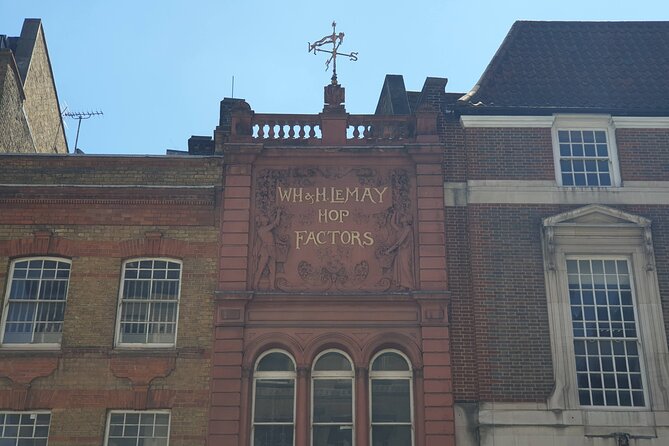
Then you shift gears to something more physical and everyday: The Hop Exchange, described as the largest extant reminder of Southwark’s beer trade.
This is a great example of why the tour works. Instead of treating “booze” as a theme word, you get a clue of the actual business behind it. Hops and beer trade were economic engines, tied to suppliers, shipping, storage, and local demand. When a place survives in stone while other parts of history disappear, that survival becomes evidence.
During a short stop, the guide’s job is to help you look. You’re not just seeing a building. You’re being taught what in the building matters and why it’s still standing.
George and the idea of London’s coaching era
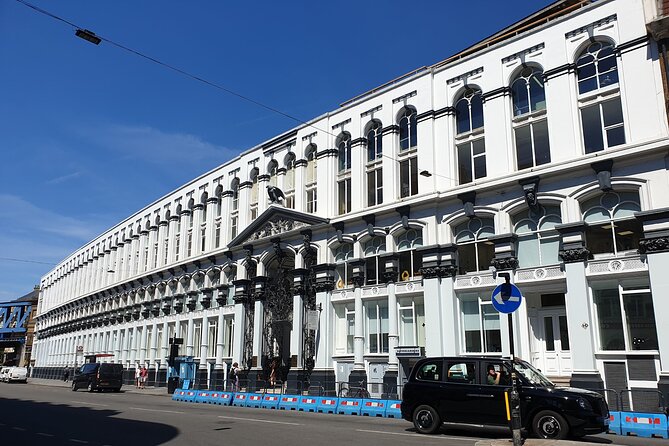
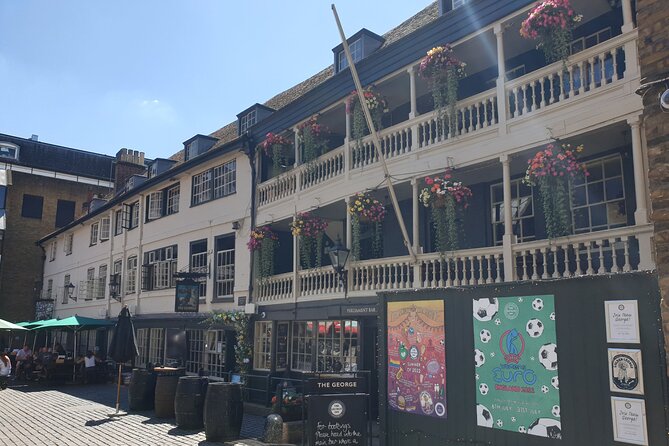
At George, you’ll get a look at London’s last surviving galleried coaching inn.
Coaching inns aren’t just quaint. They tell you about how people moved. Before modern transport, these were hubs where travelers met, horses changed, gossip traveled, and the city’s flow kept moving. A surviving example gives you something rare: a direct physical connection to a travel system that used to be central to everyday life.
This stop also helps bridge the tone of the walk. You’ve been in prison and burial ground. Now you’re in a place built for arrivals and departures. That change in mood keeps the tour from turning into one long grim march.
Old Operating Theatre Museum and Herb Garret: medicine with historical weight
Next is The Old Operating Theatre Museum and Herb Garret, noted as Europe’s oldest surviving operating theatre.
This is one of the stops that makes the walk feel genuinely special, because it’s not the usual list of famous London churches and towers. It’s about the history of surgery and what medical practice looked like in earlier centuries, plus how herbs fit into everyday treatment.
Because the stop is short, you won’t get a full guided tour of everything inside if you’re expecting a long visit. Still, the location itself gives you perspective fast. You can understand why the guide’s explanation matters: without a guide’s framing, you might see an old building. With it, you get the story behind the building and the people it served.
London Bridge and Southwark Cathedral: two icons in the same neighborhood mood
You then hit two big, recognizable names: London Bridge and Southwark Cathedral.
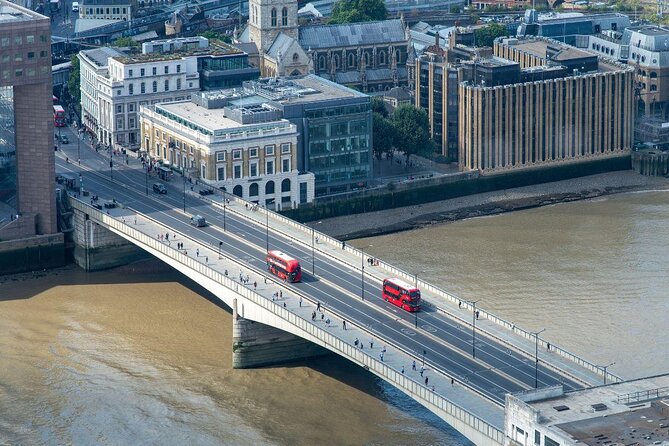
London Bridge is iconic, but what the tour can do is pull it down into local context—how the bridge mattered to movement, trade, and daily life in the area. Even if you’ve photographed London Bridge before, learning how it connects to the neighborhood you’ve been walking through changes the way you see it.
Then comes Southwark Cathedral, described as London’s oldest surviving gothic church. This stop gives you an architectural anchor. The guide can help you read the building in a way that feels connected to the earlier stops. Churches like this didn’t exist in a vacuum. They sat near markets, institutions, and communities dealing with hardship.
If you like architecture, you’ll probably want to linger here after the tour. The short pacing can feel rushed on a place this storied.
Borough Market: the market that keeps showing up
One of the most practical and enjoyable stops is Borough Market. It’s described as a one thousand year old food market.
This is where the walk turns from “learning” to “living.” Borough Market isn’t just a historical site—it’s still a food destination. Even if you don’t plan to eat on the day of the tour, it helps to have this stop in the middle, because it breaks up the heavier themes you’ve already covered.
It’s also the stop that can make the literary connections feel more grounded. Writers used markets because markets held characters, conflicts, and daily drama. Food and drink are social glue, and Borough Market is one of the places where that glue is visible.
Tip: bring a little flexibility. If the market is lively when you arrive, you might want a quick look at what’s being sold rather than rushing out for the next stop.
Winchester Palace remains: medieval prestige in ruins
Next is Winchester Palace, with a focus on the remains of one of the most prestigious medieval homes in England.
“Remains” is important here. You’re not walking through a fully restored palace. You’re looking at remnants, which means the guide’s explanation matters even more. Without context, ruins can feel like scattered stone. With it, you start to picture what kind of power lived here and how that power related to church life, politics, and wealth.
This stop pairs nicely with Southwark Cathedral because both connect to institutions. One is ecclesiastical presence. The other is elite residence. Together, they show you the social ladder sitting beside the harsher parts of the neighborhood.
The Clink Prison Museum: when punishment gets a name
Then you reach The Clink Prison Museum, a stop tied to the notorious Clink Prison.
Clink is one of those London names that feels like it belongs to stories—often because it was so closely tied to the entertainment world and social trouble of earlier eras. That makes it a key bridge between the tour’s darker themes and its literary focus.
Even with a brief stop, you’ll likely come away with a clearer sense of how prisons, markets, theatres, and public life were never fully separated. In a city like London, ideas and people moved across boundaries. When you understand that, Shakespeare and Dickens feel more “situated” and less like faraway literature.
Shakespeare’s Globe Theatre reconstruction: art as a final destination
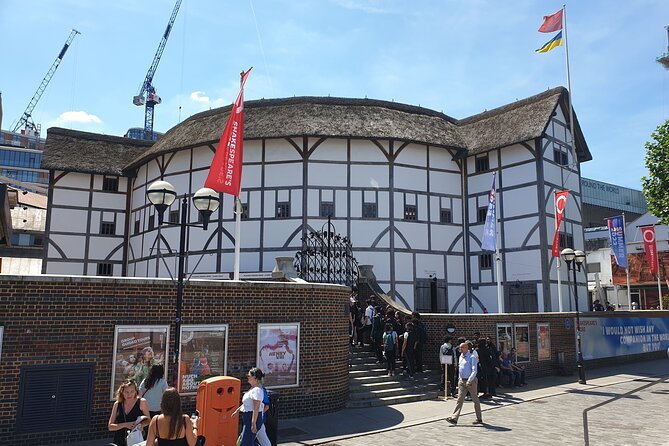
The walk ends at Shakespeare’s Globe Theatre, focused on the reconstruction.
This is a satisfying final button because it connects everything you’ve been seeing to the stage. The tour doesn’t only tell you Shakespeare wrote plays. It shows you why a playwright would look at places like these: prisons, markets, and the mixed social world around them.
Even if you’re not going inside during the stop, the guide’s framing can help you notice how a reconstruction works as more than a replica. It’s a storytelling tool. It’s the past rebuilt so modern visitors can understand what “home” for performance used to mean.
If you love theatre, this is the point where you’ll want to slow down and plan your next step. Maybe you’ll come back later for a show, or maybe you’ll just stand there and let the history click into place.
What makes the guide matter on this kind of tour
This type of walking tour lives or dies by the guide’s storytelling. And here, the tone is clearly in the “colorful and human” lane. The best way to get value is to listen for how the guide ties each stop to a bigger theme: punishment, work, drink, movement, and performance.
If you’re the sort of person who likes details you can repeat later, you’ll likely enjoy the guide’s style. In particular, the tour’s short stop length means you’ll get a lot of information fast, so your best move is simple: keep your phone away unless you’re capturing something specific. Let the place and the story work together.
Also, because the group is capped at 15, you’re more likely to get individual attention if you have questions. That personal pace makes it feel less like a lecture and more like a walk with a strong local storyteller.
Who should book Booze, Brothels & The Bard
This tour fits best if you want:
- A quick, structured way to learn Southwark without getting lost
- A literature-themed walking day that connects writers to real neighborhoods
- A short history dose with enough variety to keep it fun
It’s also a good match if you like dark themes but still want a satisfying endpoint at the Globe. The route doesn’t ignore the grim parts. It just refuses to let them be the whole story.
A few practical tips so you enjoy every stop
- Wear shoes you can walk in comfortably. This is city sidewalks for about 2 hours.
- Expect short stops. If you’re hoping for long museum time at each site, you’ll need to plan follow-up visits.
- Take the tour first, then decide what to return to. The route helps you pick priorities for later.
- If you’re sensitive to heavy topics, keep that in mind—especially around the prison and burial-ground stops.
Should you book this walking tour?
If you want an efficient, story-driven intro to Southwark, I’d say yes—especially at $27.78 and with free-entry stops on the route. The 5/5 rating and near-universal recommendation rate also suggest that people leave feeling entertained and informed, not just “processed.”
Book it if you like a guide-led walk that turns ordinary street corners into meaningful scenes, and if you’re fine with quick stops that give you direction for what to explore later. Skip it if you need slow, deep museum time at a single place. This tour is built for movement and connection, not extended indoor wandering.
More Tours in London
- From London: Harry Potter Warner Bros Studio Tour
★ 4.7 · 26,588 reviews - Magical London: Harry Potter Guided Walking Tour
★ 4.7 · 22,044 reviews - London: Warner Bros. Studio Harry Potter Tour & Branded Bus
★ 4.7 · 19,194 reviews - London Big Bus Hop-On Hop-Off Tour with Optional River Cruise
★ 3.5 · 10,803 reviews - London Small Group Tour of Historical Pubs
★ 5.0 · 10,422 reviews
More Tour Reviews in London
- From London: Harry Potter Warner Bros Studio Tour
★ 4.7 · 26,588 reviews - London: Westminster to Greenwich River Thames Cruise
★ 4.5 · 22,836 reviews - Magical London: Harry Potter Guided Walking Tour
★ 4.7 · 22,044 reviews - London: Madame Tussauds London
★ 4.6 · 20,915 reviews - London: Warner Bros. Studio Harry Potter Tour & Branded Bus
★ 4.7 · 19,194 reviews
More London Walks Worth the Shoe Leather
- Magical London: Harry Potter Guided Walking Tour
★ 4.7 · 22,044 reviews - London: The Original Jack the Ripper Walking Tour
★ 4.7 · 7,833 reviews - Tour for Muggles The Ultimate Harry Potter Walking Tour in London
★ 5.0 · 4,684 reviews - London Jack The Ripper Guided Walking Tour
★ 5.0 · 3,131 reviews - London: Harry Potter Movies Walking Tour (Kids Go Free)
★ 4.7 · 3,071 reviews
Just reviewed around London





London Walking Tours, compared.
 ★ 4.7Magical London: Harry Potter Guided Walking TourFrom $2022,044 reviews
 ★ 4.7The Original Jack the Ripper Walking TourFrom $257,833 reviews
 ★ 5.0Tour for Muggles The Ultimate Harry Potter Walking Tour in LondonFrom $234,684 reviews
 ★ 5.0London Jack The Ripper Guided Walking TourFrom $03,131 reviews
 ★ 4.7Harry Potter Movies Walking Tour (Kids Go Free)From $203,071 reviews
 ★ 5.0Changing of the Guard Guided Walking Tour in LondonFrom $251,793 reviews
 ★ 4.9The Great British Rock and Roll Music Walking TourFrom $361,783 reviews
 ★ 4.8Harry Potter Walking Tour in GermanFrom $201,505 reviews