
Reviewed · TOURS
Black Taxi Tour Of London
Four hours, one black cab, all of Westminster. This private custom taxi tour uses big windows and a glazed roof so you can actually see London as you glide between stops.
I love that you can request stops (or hand the day to your driver) and shape the route around what matters to your group. I also like the comfort level: the taxis are roomy, built for viewing, and in real-life reviews they’ve been used with mobility scooter and wheelchair-friendly help.
My only caution is simple: this is a 4-hour highlights run. If you want long indoor time in multiple major sites, you may end the tour hungry for more, and the per-group price can feel steep if you’re not filling all seats.
In This Review
- Key things to know before you ride
- Why a black cab makes London feel smaller
- Price and who this private tour actually fits
- Meeting point: Embankment Place, plus pickup that keeps your day intact
- Apsley House and Wellington Arch: start with power, then zoom out
- Westminster’s rebuild story: Westminster Hall and the Parliament makeover
- Big Ben, officially the Elizabeth Tower: the name change you can spot
- Downing Street from the curb: politics without the tickets
- Westminster Abbey: coronations, royal weddings, and Hawksmoor’s towers
- Bridges and the Thames: London’s timeline in stone and steel
- Victoria Embankment: memorials, gardens, and Joseph Bazalgette’s work
- St Paul’s Cathedral: Wren’s dome and the site’s multiple lives
- How your guide can make or break the day
- Time, comfort, and the one watch-out
- Should you book this black taxi tour?
- FAQ
- How long is the Black Taxi Tour of London?
- What does the tour cost?
- Is pickup included?
- Where does the tour start?
- What language is the tour in?
- Is this a private tour?
Key things to know before you ride
- A true private black cab experience: one group, one driver, no sharing seats or schedules.
- Custom stops on the fly: ask for what you care about, and adjust as the day unfolds.
- Glazed roof and large windows: built for sightseeing from inside the cab.
- A tight Westminster-to-St Paul’s circuit: history landmarks that sit close enough to fit.
- Best value when you fill the group: up to six people share one flat fare.
- Pickup near Trafalgar Square: free within 5 miles, plus hotel/Airbnb pickup options.
Not sure yet? See how a few of London's most-booked trips stack up:
- From London: Harry Potter Warner Bros Studio Tour
★ 4.7 · 26,588 reviews - London: Westminster to Greenwich River Thames Cruise
★ 4.5 · 22,836 reviews - Magical London: Harry Potter Guided Walking Tour
★ 4.7 · 22,044 reviews - London: Madame Tussauds London
★ 4.6 · 20,915 reviews
Why a black cab makes London feel smaller
London is big, but this tour is designed to make it feel manageable. In a regular bus day, you spend time waiting, shuffling, and getting dragged along someone else’s pace. In a private black taxi, the flow is different: your driver can keep things efficient while still giving you time to look, listen, and ask questions.
The cab setup matters more than you’d think. The taxis are described as spacious and accessible, with large windows and a glazed roof. That means you’re not craning your neck at tiny openings. From past experiences shared by other visitors, the ride is also described as clean and air-conditioned, which helps if your day starts warm or turns chilly later.
And because the driver is your driver for the whole time, you get that street-level context. People like Morris, Bryan, Boris, Brian, Dave, Sheldon, and Tony show up often in the positive feedback, and the common thread is flexibility plus strong commentary. If you’re the kind of traveler who likes to ask why something is where it is, this format is a good match.
Price and who this private tour actually fits
The cost is $603.08 per group (up to six) for about 4 hours. Do the math and it works out to roughly $100 per person if you can fill all seats. If you’re a couple, it’s closer to $300 per person. That doesn’t make it “bad,” but it does mean you should decide based on group size.
Here’s how I’d think about value:
- If you have 4 to 6 people, this starts to look like one of the more sensible ways to do a private, guided London overview in a short window.
- If you’re solo or two people, the price is more like a premium private tour. You’ll want to get your money’s worth by being ready with a clear stop list (or having your driver build it for you).
A practical perk: the tour is booked on average about 68 days in advance, so you’ll likely have an easier time locking in your preferred date if you plan ahead rather than rolling the dice.
Meeting point: Embankment Place, plus pickup that keeps your day intact
You start at Embankment Place, London WC2N. The tour ends back at the same meeting point, so you’re not stuck figuring out how to get back across town after four hours of sightseeing.
Pickup is a major part of why this tour can feel low-stress. Options include:
- Free pickup/drop-off within 5 miles of Trafalgar Square
- Pickup/drop-off from your hotel or Airbnb (subject to the area rules above)
The general starting time is 10:00 a.m., and you can request different times by contacting the provider. You’ll also get a mobile ticket, which is handy if you’re juggling schedules, transit, and multiple activities in one day.
If you’re arriving by airport or port, pickup can be arranged for an extra charge based on availability and parking/surcharges. This is especially useful if your “first day in London” needs to turn into a sightseeing day without wasting half the morning on trains and transfers.

Apsley House and Wellington Arch: start with power, then zoom out

Your day begins in a part of London where the stories are written in stone and street layout. Apsley House is the home of the Duke of Wellington, dating to 1825 and known for its illustrious address: Number One London. Opposite it, you’ll spot Wellington Arch, originally positioned as an outer gate for Buckingham Palace.
This stop is a great warm-up because it teaches you how London repurposes its own symbols. After Queen Victoria waited for the Duke’s death, the huge Wellington statue was taken down and moved to Aldershot Barracks. The smaller statue that now stands where the arch originally faced Apsley House keeps the theme but changes the scale.
Then there’s the quadriga on top of the arch, placed in 1912. It’s one of the largest equestrian statues in Europe, featuring Nike, the Goddess of Victory, riding a chariot. The big takeaway for you: you’re not just seeing a landmark. You’re watching London rewrite the meaning of a monument over time.
Drawback to consider here: because you’re doing a taxi route, you’ll likely rely on what you can see from the curb and through the cab rather than long on-foot exploring right at this exact spot. It’s still an excellent orientation start.
Westminster’s rebuild story: Westminster Hall and the Parliament makeover
Next comes one of the most useful “history lessons you can actually see.” The area covers multiple eras at once:
- The earliest record of buildings on this site goes back to the 11th century, when it was the palace of the monarch under William the Conqueror.
- The original palace burned down in 1512 and had to be rebuilt.
- It was destroyed again in 1834, but not everything vanished. The Crypt, the Jewel Tower, and Westminster Hall remain.
- Westminster Hall dates to 1097 under King William Rufus.
- The Houses of Parliament were rebuilt from 1834 to 1870 by Augustus Pugin and Charles Barry.
Why this stop matters on a taxi tour: it gives you a framework for understanding why Westminster looks the way it does today. The north bank location also helps. You’re not only hearing history; you’re seeing how the Thames frames the political heart of the city.
Possible consideration: this is a heavy “explanations stop.” If you’re the type who wants fewer facts and more photo time, ask your driver to keep the commentary short and focus on viewpoints you’ll remember.
Big Ben, officially the Elizabeth Tower: the name change you can spot
Then you’ll hit the most famous clock connection in London. Big Ben is the nickname for the Great Bell of the clock. People often use the name to refer to the clock and the tower as a whole, but the official term is The Clock Tower, later renamed The Elizabeth Tower in 2012 to commemorate Queen Elizabeth II’s Diamond Jubilee.
Designed by Augustus Pugin in a Gothic Revival style, the tower opened in 1859 and remains one of the city’s most iconic buildings. This is the kind of fact-check stop that pays off later when you’re walking around on your own and realizing how many names get mashed together in casual conversation.
How to get the most out of it: keep your camera ready early. On a tour like this, you’re often seeing things while the cab is already moving into a good angle, so you’ll want to be set before the driver slows down.
Downing Street from the curb: politics without the tickets
Downing Street is the official residence of the Prime Minister at Number 10, and the Chancellor of the Exchequer at Number 11. It was built in 1680 by Sir George Downing and sits in a tight area between the Houses of Parliament (one end) and Trafalgar Square and Whitehall (the other).
From a taxi, this stop works best as a reality check. You get the sense of scale and location, but you’re not promised access. Even when you know it from TV, seeing where it sits relative to Westminster helps it become a place, not just a headline.
If you’re traveling with kids, this is also a strong moment to ask your driver what’s different about life here compared with other government buildings. Your best bet is to steer the conversation toward how London’s streets shape the experience of power.
Westminster Abbey: coronations, royal weddings, and Hawksmoor’s towers
You’ll then roll toward Westminster Abbey, formally known as the Collegiate Church of Saint Peter. It’s mainly Gothic in design and one of the UK’s most notable religious buildings. This is where you learn why the Abbey is more than a pretty facade.
Key facts to remember:
- It’s where every Coronation has taken place since William the Conqueror.
- It has hosted sixteen royal weddings.
- It’s a burial site for many English and later British monarchs.
- It’s a Grade One listed building and a World Heritage Site.
- Founded in 960 AD.
- Alterations in the 13th century under Henry III helped earn Henry the nickname Henry the Builder.
- Rebuilding also happened in 1517 during Henry VIII’s reign.
- The Abbey’s two towers were added in the 18th century by Nicholas Hawksmoor, a key part of what you see today.
In a taxi tour, you won’t get the same deep inside-out experience as a long visit with tickets and time for galleries. But as a guided overview, it lands well: you’ll understand why people treat this spot as a stage for British history.
Practical tip: if you care about interior details, ask your driver to highlight what parts you should look for from the street and around the outside, so your later self-guided visit (if you do one) feels easier.
Bridges and the Thames: London’s timeline in stone and steel
From there, the route shifts into river and bridge territory, which is the right kind of change-up after Westminster’s political core. London’s bridge story stretches back to Roman times, with multiple layers of what was built, what failed, and what replaced it.
You’ll learn:
- Old London Bridge was built between 1176 and 1209, the first stone bridge across the Thames.
- It measured almost 906 feet, becoming the longest inhabited bridge in Europe with shops, houses, restaurants, and even a chapel.
- Today’s London Bridge is the third (stone) London Bridge.
- Tower Bridge was built between 1886 and 1894 and is a combined bascule and suspension bridge. The “bascule” part is a see-saw/balance idea (from French). People call it the Wonder Bridge.
- Albert Bridge connects Chelsea to Battersea and is known for its spectacular river lighting, seen in many films. It’s also linked to a safety sign about troops needing to break step, earning it the nickname The Trembling Lady.
Why this section is a smart use of taxi time: bridges give you motion and views. You can photograph quickly, then keep moving without losing momentum. If the tour feels like history class so far, the river part often makes everything feel more physical.
Victoria Embankment: memorials, gardens, and Joseph Bazalgette’s work
Next is the Victoria Embankment, running along the north bank from the Palace of Westminster to Blackfriars Bridge. It’s known for:
- Memorials, including The Battle of Britain
- Public gardens, specifically Victoria Embankment Gardens
- Retired vessels, including H.M.S President
- Construction between 1865 and 1870, directed by Joseph Bazalgette
This stop is valuable because it shifts from monarchy and politics into city engineering. Bazalgette’s work influenced the Thames, including narrowing the river, which you can connect back to why London’s river edges look and function the way they do today.
Taxi-tour reality: you’ll see a stretch rather than one single “main building” moment. If you want big-photo payoff, this is where your driver’s timing and angle can matter—ask for the best side for views as you pass.
St Paul’s Cathedral: Wren’s dome and the site’s multiple lives
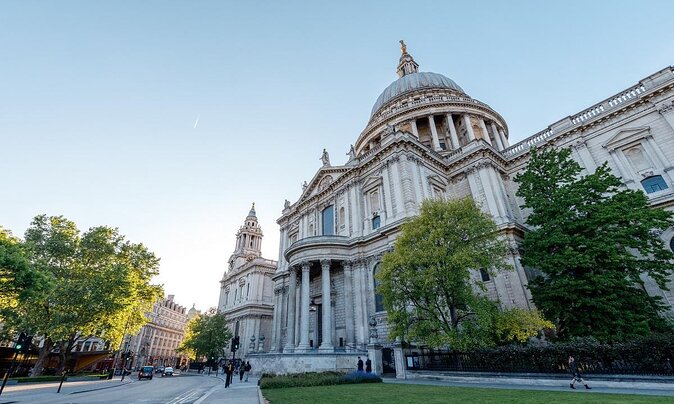
Your final big historical anchor is St Paul’s Cathedral. The site’s story goes deep:
- The first record of a building here dates to 604 AD under Bishop Mellitus.
- There have been four cathedrals on this site.
- The current cathedral was built between 1675 and 1710, designed by Christopher Wren.
- Wren is buried under the Dome.
- The older St Paul’s (1087 to 1314) was the largest building in the UK until the Great Fire of London in 1666.
- Today’s St Paul’s is Anglican and a seat of the Bishop of London.
- The dome reaches 365 feet and weighs about 65,000 tons.
- It remained among the highest in the world from 1710 to 1967.
- It sits on Ludgate Hill, making the positioning part of the experience, not an afterthought.
This stop works well as a closing moment because it gives you a “big picture” landmark you can orient around. After the bridges and river sweep, St Paul’s is a payoff: you can look back and connect the route you just covered.
How your guide can make or break the day
This is where the most praise really concentrates. People describe guides who:
- ask what you’re interested in before locking in a plan
- tailor the stops so you don’t duplicate what you already have planned
- keep the day moving efficiently without feeling rushed
- take extra time explaining places clearly
Guide names that come up strongly in the feedback include Morris, Bryan, Boris, Brian, Dave, Sheldon, and Tony. You can’t guarantee a specific driver, but you can still use that information to decide how you want to show up for the tour.
If you want the best results, come ready with:
- 3 to 6 “must-sees” (even if they overlap with what’s listed here)
- one theme for the day (royals, politics, architecture, war and memorials, or bridges and engineering)
- a realistic pacing goal (for example, how much walking you can handle)
The private cab format also helps with real-world comfort. Reviews include examples of guides adjusting for people with mobility challenges. In one case, a guide helped a mobility scooter user with easy cab access using a ramp, and in another, a guide built in pick-ups when someone couldn’t walk long distances. That’s not something every tour company markets in a clear way, so it’s worth asking yourself: do you want a day that adapts to your group, not one that assumes everyone can do everything the same way?
Time, comfort, and the one watch-out
Four hours is a strong length for a first London overview. It’s long enough to cover Westminster’s core landmarks, add major bridge views, and still finish at St Paul’s. It’s also short enough that you won’t feel like your entire vacation day is missing.
The trade-off: traffic and timing matter. London roads can slow down, and when that happens you may have less time at each spot than you expect. The tour is designed for viewing and listening from the road and at short stops, not for deep ticketed museum hours.
There’s also one caution worth noting from feedback: at least one review describes a situation where the driver did not show up and the tour had to be rescheduled. That’s rare in a highly rated pattern, but it’s still a reminder to double-check the details you receive at booking and keep a close eye on your confirmations.
Should you book this black taxi tour?
Yes, if you want an efficient, private, guided Westminster-to-Thames-to-St Paul’s overview in a single morning or afternoon window. This is especially smart for:
- first-time visitors who want London’s layout to click quickly
- families up to six (one flat fare for the group)
- travelers who like history explained clearly while they ride
- people who value comfort and better viewing from large windows and a glazed roof
I’d skip or adjust expectations if:
- you’re hoping for long indoor time in multiple major sites, because this is built as a moving overview
- you’re traveling solo or as a couple and the group price doesn’t fit your budget
- you’re very sensitive to any schedule changes and want a highly predictable curb-to-curb route every minute
If you book, do one thing that pays off: plan your “non-negotiables.” Even though the tour is customizable, walking in with a short list helps your driver lock in the day with less back-and-forth.
FAQ
How long is the Black Taxi Tour of London?
It’s approximately 4 hours.
What does the tour cost?
The price is $603.08 per group, up to 6 people.
Is pickup included?
Pickup and drop-off are included within 5 miles of Trafalgar Square, and pickup/drop-off from your hotel or Airbnb is offered.
Where does the tour start?
The tour starts at Embankment Place, London WC2N, UK, and ends back at the same meeting point.
What language is the tour in?
The tour is offered in English.
Is this a private tour?
Yes. It’s a private tour/activity, and only your group participates.
More Tours in London
- From London: Harry Potter Warner Bros Studio Tour
★ 4.7 · 26,588 reviews - Magical London: Harry Potter Guided Walking Tour
★ 4.7 · 22,044 reviews - London: Warner Bros. Studio Harry Potter Tour & Branded Bus
★ 4.7 · 19,194 reviews - London Big Bus Hop-On Hop-Off Tour with Optional River Cruise
★ 3.5 · 10,803 reviews - London Small Group Tour of Historical Pubs
★ 5.0 · 10,422 reviews
More Tour Reviews in London
- From London: Harry Potter Warner Bros Studio Tour
★ 4.7 · 26,588 reviews - London: Westminster to Greenwich River Thames Cruise
★ 4.5 · 22,836 reviews - Magical London: Harry Potter Guided Walking Tour
★ 4.7 · 22,044 reviews - London: Madame Tussauds London
★ 4.6 · 20,915 reviews - London: Warner Bros. Studio Harry Potter Tour & Branded Bus
★ 4.7 · 19,194 reviews
Just reviewed around London




Tours, compared.
 ★ 4.7From London: Harry Potter Warner Bros Studio TourFrom $11726,588 reviews
 ★ 4.7Magical London: Harry Potter Guided Walking TourFrom $2022,044 reviews
 ★ 4.7Warner Bros. Studio Harry Potter Tour & Branded BusFrom $15119,194 reviews
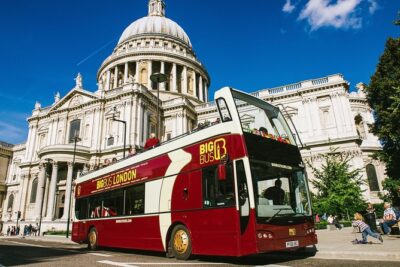 ★ 3.5London Big Bus Hop-On Hop-Off Tour with Optional River CruiseFrom $3910,803 reviews
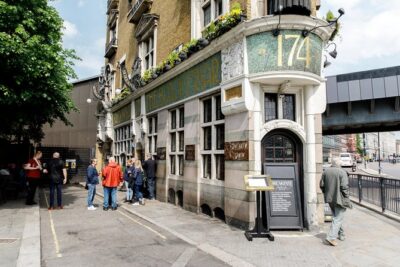 ★ 5.0London Small Group Tour of Historical PubsFrom $4010,422 reviews
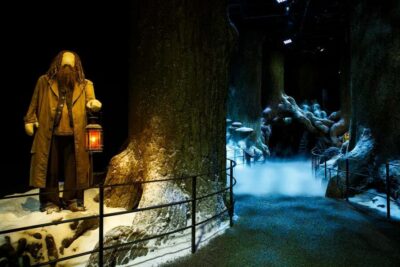 ★ 4.6Warner Bros. Studio Harry Potter Tour with TransfersFrom $1179,709 reviews
★ 4.7Warner Bros. Studio Harry Potter Tour with TransfersFrom $1169,485 reviews
★ 4.6Warner Bros. Studio Harry Potter Tour with TransfersFrom $1179,709 reviews
★ 4.7Warner Bros. Studio Harry Potter Tour with TransfersFrom $1169,485 reviews
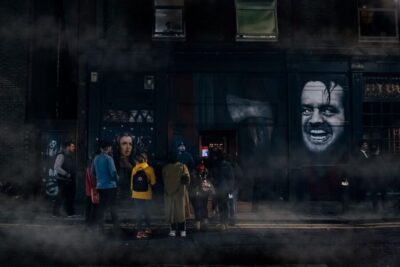 ★ 4.7The Original Jack the Ripper Walking TourFrom $257,833 reviews