
Reviewed · LONDON WALKING TOURS
Beatles Walking Tour of London
One sentence from you and I’m hooked on Beatles London. This tour turns the city into a guided playlist, with music-history street stops and a guide who connects the dots between songs and real addresses. Two things I like a lot are the hands-on details (like bringing a pen for the Abbey Road Studios wall) and the way the tour stretches beyond the Fab Four into other London music legends. One drawback to consider: most stops are brief photo pauses at street level, and some of the more ticketed or deeper addresses depend on the exact tour version.
I especially liked that the guide can tailor the route feel to your group. In the reviews, people highlight Kevin by name for being passionate and making the walk feel personal rather than scripted. Still, at this price point (from $268.39 per person), you’ll want to go in ready to walk, listen, and take in the story—this is not a sit-and-ride show.
In This Review
- Key Highlights at a Glance
- Why Beatles Walking Tours Work So Well in London
- Price and Value: What $268.39 Buys You (and What It Doesn’t)
- How the Tour Runs: The Start at Marble Arch and the Finish on Denmark Street
- What You Should Pack: Pen, Shoes, and a Simple Walking Mindset
- Abbey Road Studios and the Crossing: The Moment Most People Come For
- Stop 1: Abbey Road Studios (outside view)
- Stop 2: Abbey Road crossing (included)
- Paul’s Stomping Ground: St. John’s Wood and Marylebone Addresses
- St. John’s Wood (Sir Paul McCartney’s home exterior)
- The Old Marylebone Town Hall (Beatles weddings, 5-hour version)
- Wimpole Street and Marylebone (basement studio and the John/Yoko connection)
- Green Street (the only house where they all lived together)
- Apple, Savile Row, and Beatles Business: Where Music Met the Money
- Savile Row: Apple label creation and their last performance together
- Shaftesbury Avenue: Epstein, the drum set, and the logo
- Beyond the Fab Four: Bowie, the Rolling Stones, Clubs, and Street-Image Clues
- Bowie album cover location (Ziggy Stardust)
- Rolling Stones origin mention: Sounds Of The Universe
- Kingly Street: meeting Linda
- Broadwick Street: Sgt Pepper mural inspiration
- Trident Audio Post and Hey Jude recording
- Tin Pan Alley and La Giaconda
- Quick Stop Map: Other Addresses Worth Knowing
- Who This Tour Fits Best (and Who Might Want a Different Option)
- Should You Book the Beatles Walking Tour of London?
- FAQ
- How long is the Beatles Walking Tour of London?
- Where does the tour start and end?
- Is hotel pickup available?
- Is a London Underground ticket included?
- Is this tour private?
- Can I cancel for a full refund?
Key Highlights at a Glance
- Kevin as guide: reviewers point to his big-picture London context, not just Beatles facts.
- Abbey Road Studios wall sign-up: bring a pen so you can sign outside the studios.
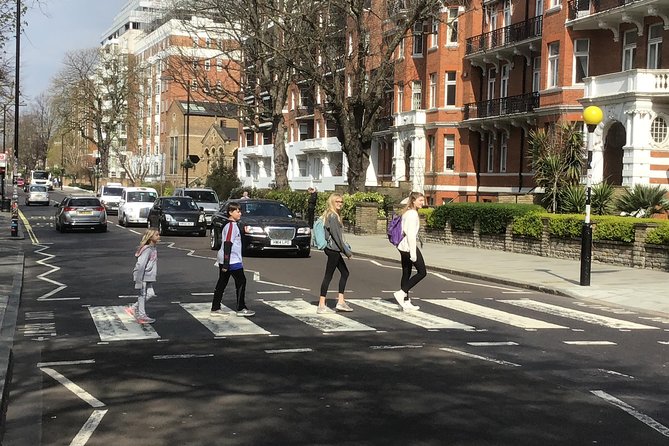
- Abbey Road crossing stop: you get the famous crosswalk moment with the included ticket.
- Beatles homes plus 60s music around them: the route threads through addresses tied to John, Paul, Ringo, and bandmates’ London life.
- David Bowie, Rolling Stones, and club culture: the tour mixes in major 60s music stops that fit the era’s story.
London on foot, a few more ways
- Magical London: Harry Potter Guided Walking Tour
★ 4.7 · 22,044 reviews - London: The Original Jack the Ripper Walking Tour
★ 4.7 · 7,833 reviews - Tour for Muggles The Ultimate Harry Potter Walking Tour in London
★ 5.0 · 4,684 reviews - London Jack The Ripper Guided Walking Tour
★ 5.0 · 3,131 reviews
Why Beatles Walking Tours Work So Well in London
London is one of those cities where the past is right there on the street—often literally. A Beatles tour isn’t only about spotting famous buildings. It’s about understanding why people wrote the songs they wrote, and how the business side, the clubs, and the changing neighborhoods shaped the music.
What I like about this format is the “walk-and-talk” rhythm. You cover a lot of ground without feeling rushed through a museum. You also get quick orientation as you go. When you finish at Denmark Street, you’re not just done with the tour—you’re in an area that still makes you feel like you’ve entered the music-world map of central London.
And if you’re a superfan, the details matter. Abbey Road is a word people say everywhere, but seeing the crossing in person hits different. Same deal with the studio connections and the addresses tied to the band’s working life.
Price and Value: What $268.39 Buys You (and What It Doesn’t)
At $268.39 per person for an approximately 3-hour private walking tour, the value hinges on three things:
- Privacy and personalization. “Only your group will participate” means you’re not sharing the guide with a crowd. That’s a big quality-of-life upgrade on tours like this.
- Guide storytelling. This tour leans hard on street-level context—how the neighborhoods and music scene connect. Reviews repeatedly credit Kevin for a lot more than Beatles-only talk.
- A concentrated hit of iconic sites. You’re not driving between random attractions. You’re building a map of the Fab Four’s London alongside a few major adjacent stars.
What’s not included also matters. You don’t get London Underground rides built into the price. You’ll want to factor in Tube time or a short transit cost from your hotel to Marble Arch Underground Station. Also, several stops are outside-only or list admission as not included. So this is value-through-information and photo-location, not value-through-ticket-heavy attractions.
If you’re traveling with a friend or small group and you know you’ll actually listen, this price is easier to justify. If you just want a quick photo tour with minimal walking, you may feel the cost more.
How the Tour Runs: The Start at Marble Arch and the Finish on Denmark Street
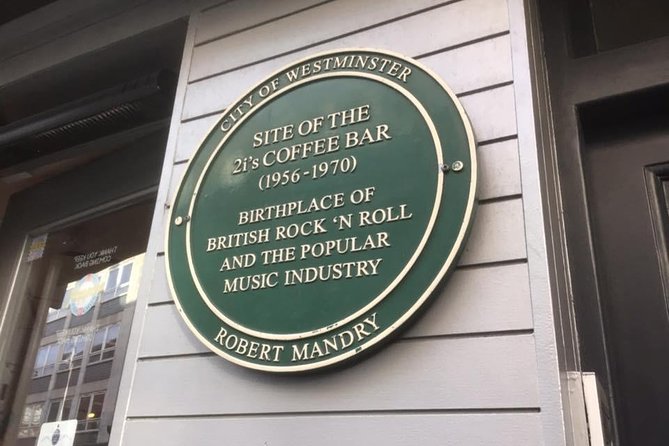
The tour starts at Marble Arch Underground Station on Oxford Street (W1C 1CX) and begins at 9:30 am. You’ll finish on Denmark Street (near Tottenham Court Road, or also walkable to areas like Leicester Square, Covent Garden, Soho, Piccadilly, and Oxford Street).
That ending location is smart. Denmark Street has long been associated with music and recording culture, and finishing there helps the day feel like it continues—even after the official tour stops. It’s also a practical transit win: you can connect quickly to more sightseeing or dinner.
If you’re meeting at a hotel, pickup is offered. Just note the detail that transport costs to reach the starting point aren’t included in the tour price. If your hotel is far from Marble Arch, plan for that extra step so the day doesn’t feel like a puzzle.
Still deciding? A handful more London outings we rated
What You Should Pack: Pen, Shoes, and a Simple Walking Mindset
This tour involves walking and standing at street corners. The physical level is described as moderate, so I’d pick shoes you can wear for a few hours of city walking.
Bring a pen. At Abbey Road Studios, you’ll sign your name on the wall outside. It’s a small thing, but it’s the kind of tiny detail that makes a tour feel real.
Also keep an eye on tickets. The tour specifically notes that the Abbey Road crossing has an admission ticket included, while several other stops indicate admission not included. That means you’ll want to follow your guide’s cues, since you might not be entering anything at some addresses, just seeing the exterior.
If you’re unsure about Tube navigation, you’ll likely be glad you asked questions early. Reviews mention Kevin helping people get comfortable with riding the Tube, which is a nice bonus if this is your first trip to London.
Abbey Road Studios and the Crossing: The Moment Most People Come For
Two of the biggest “wow” stops start early.
Stop 1: Abbey Road Studios (outside view)
You’ll see Abbey Road Studios from the outside. This is not about paying for a big interior visit here. It’s about the street-level presence of the place—the kind of stop you can remember later when you look up studio photos.
The standout extra: bring a pen so you can sign your name on the wall outside. That’s fun even if you’re not the type to sign everything.
Stop 2: Abbey Road crossing (included)
Next comes the crossing—the famous Abbey Road crosswalk. The tour includes the admission ticket for this stop.
This is the moment where fans stop thinking like tourists and start thinking like part of the story. It’s a simple walk across, but it carries huge cultural weight.
One consideration: Abbey Road can be busy. Your guide will keep the timing moving, but you should still expect a bit of street energy while you’re there.
Paul’s Stomping Ground: St. John’s Wood and Marylebone Addresses
Some stops on this route are noted for the 5-hour tour version, which means your exact experience depends on the version you booked. Still, the addresses listed are worth understanding because they explain what London life looked like for the band.
St. John’s Wood (Sir Paul McCartney’s home exterior)
You’ll see the outside of Sir Paul McCartney’s home in St. John’s Wood. Expect a mostly exterior, look-and-listen stop—short, photo-friendly, and story-focused.
The Old Marylebone Town Hall (Beatles weddings, 5-hour version)
The tour lists the Old Marylebone Town Hall as a building tied to Beatles weddings (marked for the longer version). If you’re a detail person, this is the kind of stop that makes the band feel less myth and more personal life.
Wimpole Street and Marylebone (basement studio and the John/Yoko connection)
Wimpole Street is described as part of Paul’s early-late-60s story, where the basement was converted into a recording studio, connected to songs like Yesterday and I Want To Hold Your Hand. Marylebone adds another layer: it’s linked to John and Yoko via a rented basement and includes mention of the famous drugs raid that led to their arrests.
These are the stops where the tour stops being only “look at the building” and becomes “why this mattered.” You’ll start seeing how recording, romance, media attention, and trouble all sat close together in the same London geography.
Green Street (the only house where they all lived together)
Green Street is listed as the only house where they all lived together, tied to Brian Epstein buying the place after the success of She Loves You.
The general tone here: you’re not only seeing famous sites; you’re seeing how the band’s personal world overlapped with the era’s big-city pressure.
Apple, Savile Row, and Beatles Business: Where Music Met the Money
A Beatles tour gets more interesting when it talks about branding, labels, and the business choices behind the songs.
Savile Row: Apple label creation and their last performance together
On Savile Row, the tour connects tailoring fame with Beatles music business and performance history. It notes that the band created the Apple label there and that they played their last ever performance together on this street.
That pairing is the point. London wasn’t only guitars and fans. It was also companies, labels, and professional spaces where decisions got made.
Shaftesbury Avenue: Epstein, the drum set, and the logo
At Shaftesbury Avenue, you’ll hear about Brian Epstein buying a drum set and having the iconic Beatles logo designed and put on the drum.
It’s a small visual detail, but it helps you understand Beatles iconography as something designed and manufactured—not only something that grew naturally from fame.
Beyond the Fab Four: Bowie, the Rolling Stones, Clubs, and Street-Image Clues
This tour isn’t trapped in Beatles-only mode. That’s one reason it earns high marks from fans who also love 60s London as a whole.
Bowie album cover location (Ziggy Stardust)
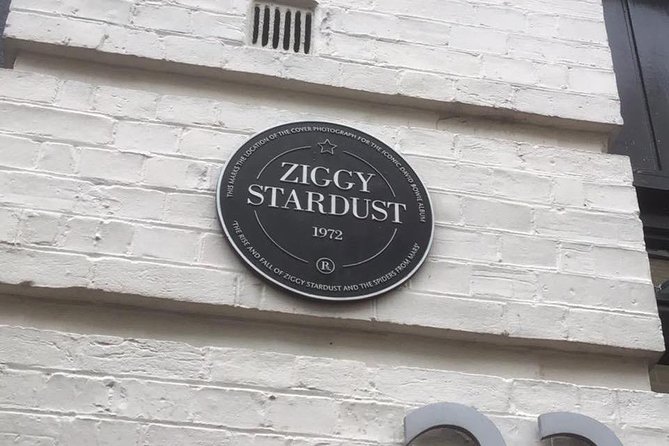
There’s a stop tied to the album cover photograph for David Bowie’s The Rise and Fall of Ziggy Stardust and the Spiders from Mars. If Bowie is part of your music DNA, this is a satisfying extra. It also reminds you that London’s creative scene didn’t end with the Beatles—it spread forward.
Rolling Stones origin mention: Sounds Of The Universe
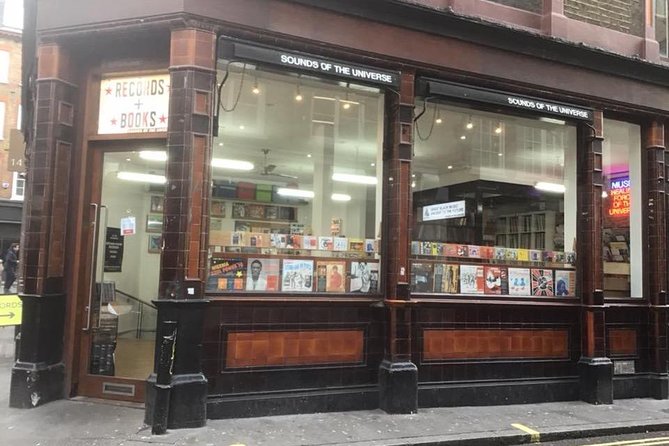
Sounds Of The Universe is listed as where the Rolling Stones began. Even if you don’t know their earliest story, this kind of stop is useful. It connects the era’s major acts without treating them like isolated legends.
Kingly Street: meeting Linda
At Kingly Street, the tour connects the famous club/social spot of the 1960s with Paul meeting Linda. This is one of those quietly meaningful “human life” stops.
Broadwick Street: Sgt Pepper mural inspiration
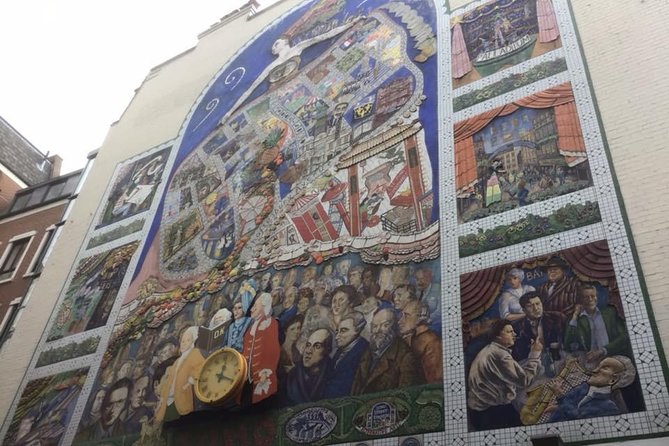
Broadwick Street is tied to the album cover inspiration for Sgt Pepper. When you see the mural idea in the right setting, it makes the cover art feel less like graphic design and more like a London mood.
Trident Audio Post and Hey Jude recording
Trident Audio Post is where the tour places the recording of Hey Jude. That’s a strong stop for music lovers who care less about photos and more about the working process behind the songs. Even if you only see an exterior, you’re walking where that famous sound lived.
Tin Pan Alley and La Giaconda
Finally, the tour reaches Tin Pan Alley, where La Giaconda is mentioned as a place bands would eat. The tour also notes a Beatles favor for the Rolling Stones connected to the first hit I Want To Be Your Man. That’s the kind of cross-band detail that makes the Beatles story feel like part of a larger ecosystem.
Quick Stop Map: Other Addresses Worth Knowing
Depending on your exact tour version, you may also hit a few additional streets listed on the route that are short but meaningful.
- Old Compton Street: where The Beatles had their collar suits made. Fashion stop, but it fits the visual identity.
- Rupert Street: associated with an iconic Beatles photo location.
- Soho Square: described as where the MPL offices are run from (Paul McCartney’s business empire).
- Sounds of The Universe and Tin Pan Alley: both keep the tour anchored in the real 60s London scene, not only in the band’s personal story.
These shorter stops are where your guide’s pacing matters. You get quick context, not a long lecture. If you’re the kind of traveler who wants a bit of everything—sound, style, business, and people—these add up nicely.
Who This Tour Fits Best (and Who Might Want a Different Option)
This tour is a great fit if:
- you’re a Beatles fan who wants more than the obvious famous crosswalk shot
- you like your music history tied to real streets and real places
- you want a private guide and a route that feels tailored to your group
- you enjoy hearing about the broader 60s scene alongside the Beatles
It may not be the best fit if:
- you dislike walking and prefer mostly indoor attractions
- you expect every stop to include an attraction ticket or entry
- you’re only interested in Beatles sites and would rather skip the Bowie/Rolling Stones/club context
Should You Book the Beatles Walking Tour of London?
I’d book it if you’re the kind of traveler who likes city stories with a soundtrack. The combination of Abbey Road moments, street-level Beatles addresses, and the extra layer of Bowie and Rolling Stones context makes it more satisfying than a basic “photo and go” tour.
Also, the repeated praise for Kevin matters. When a guide can connect Beatles lore to London’s wider music scene—and keep the pace moving—it changes how the whole morning feels.
Just do one smart thing before you buy: confirm which version you booked, because some deeper addresses are marked for the 5-hour format. If you want the full set of side-stories, you’ll want the right duration.
If you want a Beatles tour that feels personal, practical, and genuinely rooted in the streets, this one is an easy yes.
FAQ
How long is the Beatles Walking Tour of London?
The tour is approximately 3 hours.
Where does the tour start and end?
It starts at Marble Arch Underground Station (Oxford St, London W1C 1CX) and ends at Denmark Street (near Tottenham Court Road, and also walkable to areas like Leicester Square and Soho).
Is hotel pickup available?
Pickup is offered. If you want to be met at your hotel, provide your hotel information; note that transport costs to reach the starting point are not included.
Is a London Underground ticket included?
No. A London Underground ticket is not included.
Is this tour private?
Yes. It’s listed as a private tour/activity, and only your group will participate.
Can I cancel for a full refund?
Yes. You can cancel for a full refund if you cancel at least 24 hours before the experience’s start time. If you cancel less than 24 hours before, the amount you paid isn’t refunded.
More Tours in London
- From London: Harry Potter Warner Bros Studio Tour
★ 4.7 · 26,588 reviews - Magical London: Harry Potter Guided Walking Tour
★ 4.7 · 22,044 reviews - London: Warner Bros. Studio Harry Potter Tour & Branded Bus
★ 4.7 · 19,194 reviews - London Big Bus Hop-On Hop-Off Tour with Optional River Cruise
★ 3.5 · 10,803 reviews - London Small Group Tour of Historical Pubs
★ 5.0 · 10,422 reviews
More Tour Reviews in London
- From London: Harry Potter Warner Bros Studio Tour
★ 4.7 · 26,588 reviews - London: Westminster to Greenwich River Thames Cruise
★ 4.5 · 22,836 reviews - Magical London: Harry Potter Guided Walking Tour
★ 4.7 · 22,044 reviews - London: Madame Tussauds London
★ 4.6 · 20,915 reviews - London: Warner Bros. Studio Harry Potter Tour & Branded Bus
★ 4.7 · 19,194 reviews
More London Walks Worth the Shoe Leather
- Magical London: Harry Potter Guided Walking Tour
★ 4.7 · 22,044 reviews - London: The Original Jack the Ripper Walking Tour
★ 4.7 · 7,833 reviews - Tour for Muggles The Ultimate Harry Potter Walking Tour in London
★ 5.0 · 4,684 reviews - London Jack The Ripper Guided Walking Tour
★ 5.0 · 3,131 reviews - London: Harry Potter Movies Walking Tour (Kids Go Free)
★ 4.7 · 3,071 reviews
Just reviewed around London





London Walking Tours, compared.
 ★ 4.7Magical London: Harry Potter Guided Walking TourFrom $2022,044 reviews
 ★ 4.7The Original Jack the Ripper Walking TourFrom $257,833 reviews
 ★ 5.0Tour for Muggles The Ultimate Harry Potter Walking Tour in LondonFrom $234,684 reviews
 ★ 5.0London Jack The Ripper Guided Walking TourFrom $03,131 reviews
 ★ 4.7Harry Potter Movies Walking Tour (Kids Go Free)From $203,071 reviews
 ★ 5.0Changing of the Guard Guided Walking Tour in LondonFrom $251,793 reviews
 ★ 4.9The Great British Rock and Roll Music Walking TourFrom $361,783 reviews
 ★ 4.8Harry Potter Walking Tour in GermanFrom $201,505 reviews