
Reviewed · WORKSHOPS
Wildlife Photography Workshop in Richmond Park in London
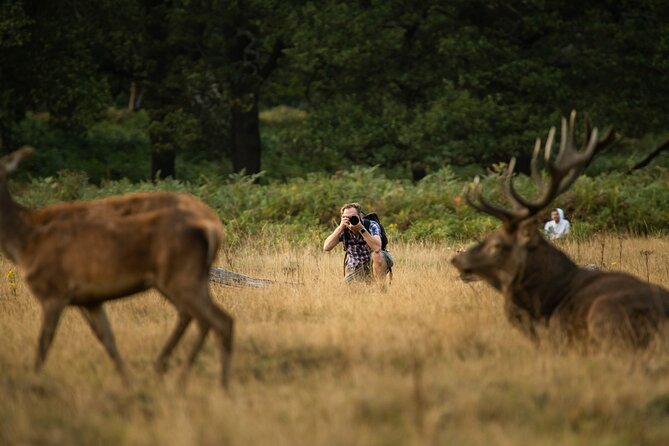
Deer photos start with the right lesson. This Richmond Park wildlife photography workshop pairs real animals, like red and fallow deer, with in-field teaching so you learn what to do and why. You’ll also work through composition and camera thinking, not just push the shutter at random.
There’s plenty to like if you’re new or upgrading your skills: clear guidance for different abilities, plus evening timing that uses the best light. One thing to watch: Richmond Park has gate closures, so plan your exit route early so you don’t get stuck hunting for unlocked gates.
In This Review
- Key highlights I’d plan around
- Richmond Park: why this deer-filled pocket of London works
- Who this Richmond Park wildlife workshop is for
- Meeting at Queen’s Road and getting in without drama
- The in-field coaching: settings, framing, and a proactive mindset
- Evening light in Richmond Park: where the best shots usually come from
- What you’ll photograph: deer, birds, and park backdrops that help your composition
- The camera side: what you’ll learn and how to apply it fast
- Group size and pacing: why max 8 matters for results
- Price and value: is $161.56 actually fair?
- Potential drawbacks: gate timing and not-for-everyone wildlife patience
- Should you book this Richmond Park wildlife workshop?
- FAQ
- Where is the workshop meeting point?
- How long does the workshop last?
- What is the group size?
- What language is the workshop offered in?
- What wildlife and scenery will we focus on?
- Is this workshop good for beginners?
- Are service animals allowed, and is there a fitness requirement?
- How do confirmation, cancellation, and weather changes work?
Key highlights I’d plan around
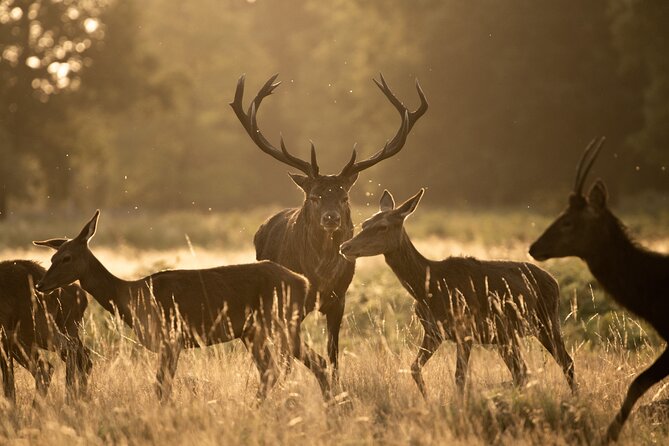
- Red and fallow deer as your main subjects for practical shooting practice
- Small group size (max 8) so you get real attention, not crowd-level coaching
- Evening workshop for better light when wildlife photography gets easier
- Backdrops that keep photos interesting, from silver birch copses to oak trees and lakes
- A focus on thought process, including composition and a proactive shooting mindset
Not sure yet? See how a few of London's most-booked trips stack up:
- From London: Harry Potter Warner Bros Studio Tour
★ 4.7 · 26,588 reviews - London: Westminster to Greenwich River Thames Cruise
★ 4.5 · 22,836 reviews - Magical London: Harry Potter Guided Walking Tour
★ 4.7 · 22,044 reviews - London: Madame Tussauds London
★ 4.6 · 20,915 reviews
Richmond Park: why this deer-filled pocket of London works
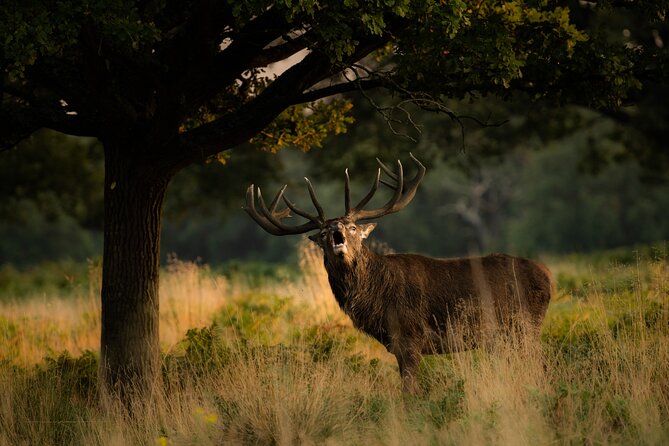
Richmond Park is one of those places where you can feel like you’ve escaped the city without actually leaving London. You’re in a proper wildlife setting, with red and fallow deer right where you’ll be learning. That matters, because wildlife photography is 50% timing and positioning, not just camera settings.
I also like the way the park gives you visual variety. You’re not stuck with the same background all session. Between silver birch tree copses, lone oaks, ferns, and lakes, you have a lot of natural “photo problems” to solve on the spot.
And yes, this is a workshop built for action. The goal isn’t theory on a bench. You’ll be working in front of the animals, with tutorials as you go.
Who this Richmond Park wildlife workshop is for
This workshop fits you if you either:
- want the basics of wildlife photography, or
- already know your way around your camera but want better results and a stronger plan
In the session, the teaching isn’t only technical. You’ll also talk about how to think through a shot—how to choose a subject, how to frame it, and how to keep your eye working when the light shifts or the animal moves.
One review also pointed out that the instructor handled a mixed group of abilities well. That’s a big deal. It usually means you won’t feel lost if you’re just starting, and you won’t feel bored if you already know common settings.
If you’re the kind of person who likes to observe first and plan second, you’ll probably do well here. If you just want to roam and hope for pictures, you might feel a bit frustrated, because the workshop pushes you to actively work the scene.
Meeting at Queen’s Road and getting in without drama
You’ll start at Queen’s Rd, Richmond TW10 6JJ, UK, and the activity ends back at the meeting point. That “out-and-back” setup is helpful in London, where getting oriented can eat time fast.
The big practical consideration is park access and the exit. One participant described real trouble leaving after many gates were locked, and they specifically asked about gate closure timing ahead of the session. So take this seriously.
Here’s my advice: before your workshop date, look up Richmond Park’s gate closing times for your specific evening. Then plan so you finish shooting with enough buffer to walk back comfortably. Wildlife photography can make you lose track of minutes, especially when something interesting starts showing up.
Also note that confirmation is sent within 48 hours of booking, subject to availability. If you’re tight on planning time, make sure your calendar can flex a little.
Still deciding? A handful more London outings we rated

The in-field coaching: settings, framing, and a proactive mindset
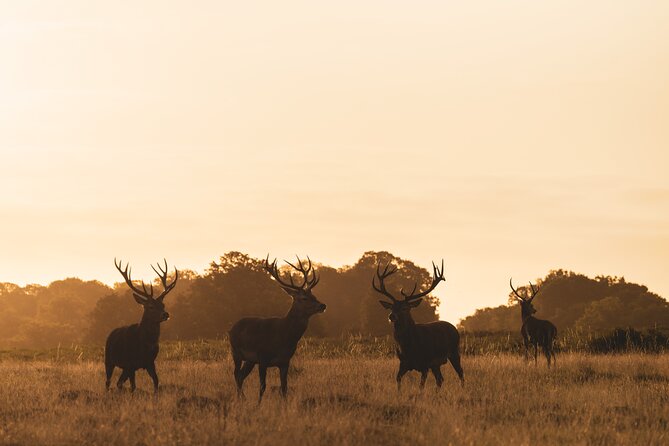
This is the heart of the experience. You get in-field tutorials in front of wildlife, and you’ll learn how to create images through both technique and decision-making.
The instructor’s approach (run by Matthew Williams-Ellis, often referred to as Matt) is practical: you’ll get tips on composition and how to develop a more proactive photography mindset. That means you learn to keep asking questions while you’re shooting:
- What background is supporting the subject?
- How do I shape the frame so the animal is clear?
- What do I do when the light changes or the animal shifts position?
You’re also learning beyond the shutter button. The session emphasizes that photography is a thought process, not just a capture. If you’ve ever come home with photos that are technically sharp but don’t feel “right,” this kind of coaching is exactly what you need.
One thing I’d be glad about if I were you: the teaching isn’t limited to one camera brand or one skill level. The workshop format is designed so everyone in a small group can work on something useful—whether that’s learning basics or refining specific approaches.
Evening light in Richmond Park: where the best shots usually come from
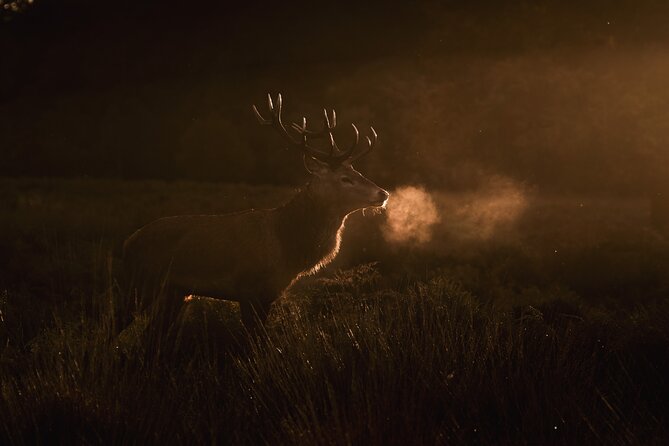
The workshop highlights evening timing for a reason: lighting can make or break wildlife photos. In low or changing light, you need to make smart exposure and focus choices quickly. You also need to watch for contrast—where the animal stands, what the background is doing, and how shadows affect the scene.
Even if you consider yourself “okay” with your camera, night-fall and dusk often expose weaknesses. This workshop is set up to train your eye and your settings at the moment you need them most.
You’ll also be shown where the best spots are for wildlife sightings in the park. Richmond Park has lots of space, and guessing where animals appear is a slow way to learn. With a guide who knows the park well, you can spend more time practicing and less time walking in circles.
What you’ll photograph: deer, birds, and park backdrops that help your composition
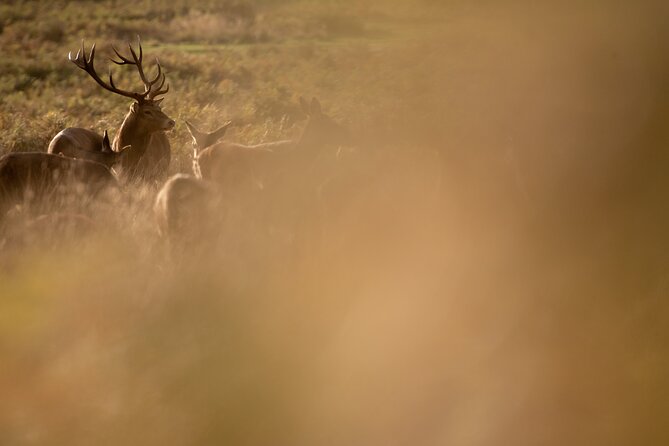
Your main subjects are the red and fallow deer in Richmond Park. You’re learning how to capture exciting wildlife images right in front of them. That’s valuable because deer tend to teach fundamentals: movement, partial occlusion (when something blocks the view), and the challenge of creating separation from the background.
The park also offers a bunch of “composition helpers” that are built into the environment:
- Silver birch tree copses can give you layered depth
- Lone oak trees can create a clear anchor in the frame
- Ferns can help with foreground interest
- Lakes can add reflections and atmospheric context
That backdrop variety is more than pretty scenery. It helps you learn how backgrounds affect the final image quality. You’ll be building instinct for what to simplify and what to use for storytelling.
Some participants have mentioned seeing birds like kestrels and woodpeckers, and even a little owl. You shouldn’t expect a guarantee for any specific species, but it’s a good sign that the workshop can lead to more than just deer.
If you’re hoping for animal portraits with clear detail, you’ll have the opportunity to practice. If you prefer environmental wildlife images—animals with the park around them—you’ll have plenty of natural settings to work with.
The camera side: what you’ll learn and how to apply it fast
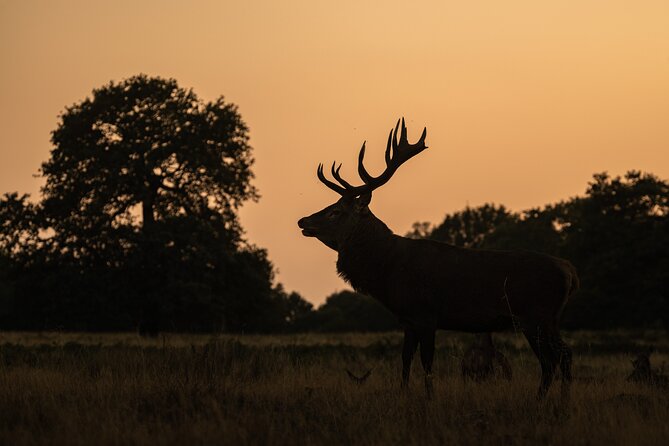
The workshop covers the technical side, but in a way that connects directly to what you’re seeing. That’s why it’s helpful for both beginners and experienced photographers.
From the guidance style described in feedback, you can expect help with:
- composition and framing decisions
- lighting and how to handle changes as you shoot
- practical camera settings work for wildlife, including birds in flight
That last point matters. Birds in flight are one of the hardest subjects for many cameras because you’re balancing shutter speed, focus tracking, and exposure. If your camera has manual or semi-manual modes, you’ll likely get pointed advice on how to set them so you’re not guessing every time a bird moves.
Even if you don’t own the most advanced gear, you’ll learn something important: how to react to real-world conditions. Wildlife doesn’t hold still for your lesson plan. The workshop tries to teach you how to keep shooting intelligently while things change.
Group size and pacing: why max 8 matters for results
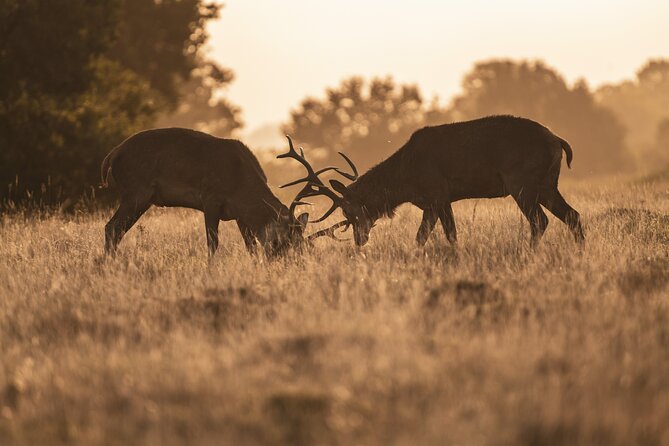
A maximum of 8 travelers is one of the most practical quality signals here. Small groups make a difference because wildlife photography is personal. Your settings, your questions, and your framing style all matter.
With fewer people, Matt can:
- notice when someone’s focus technique is struggling
- suggest a better angle quickly
- adjust the teaching flow based on what the group is seeing
And you’ll get better than generic advice like “try a different setting.” You’ll be encouraged to connect camera choices to the specific scene in front of you.
The session length is about 3 hours (approx.), which is long enough to practice, but not so long that you lose energy. For half-day London plans, that’s a sweet spot.
Price and value: is $161.56 actually fair?
At $161.56 per person, this isn’t a bargain-basement workshop. But value here is less about the number and more about what you’re buying: guided shooting in front of live wildlife with focused instruction.
You’re paying for:
- a guide who knows where to go for wildlife opportunities in the park
- teaching that covers both technique and composition thinking
- hands-on coaching in small group conditions
- evening light timing for better chances at usable photos
If you’re trying to learn wildlife photography, the cost of messing around solo can add up fast—especially when you don’t know where to stand or how to adjust settings in real time. In that sense, the price can feel reasonable if you leave with skills you’ll use again and again.
If your goal is purely a scenic walk with a few random snaps, then it might feel steep. But if you want to improve your photos and actually understand how to approach scenes, the structure justifies the spend.
Potential drawbacks: gate timing and not-for-everyone wildlife patience
The strongest drawback from real feedback is exit confusion due to locked gates. If you plan to shoot right up until the last moment, you could get trapped by park access rules. That’s not the workshop’s fault in a vacuum, but it can ruin your evening if you’re not prepared.
Another consideration: wildlife photography takes patience. Even with good guiding, animals don’t always cooperate at the exact moment you want. The instructor tries to keep the session productive through technique and mindset coaching, but you still need a willingness to wait and adapt.
Lastly, the workshop calls for moderate physical fitness level. Richmond Park involves walking and standing. It’s manageable for many people, but if you’re dealing with mobility limits, it’s worth thinking carefully before you book.
Should you book this Richmond Park wildlife workshop?
I think you should book if:
- you want hands-on coaching for wildlife photography, not just a photo walk
- you like learning how to frame shots and think through camera choices
- you want a small-group experience (max 8) with direct support from Matthew Williams-Ellis
- you’re excited by evening light and deer-centered practice in Richmond Park
I’d hesitate if:
- you’re very time-sensitive and hate the idea of managing gate timings
- you expect guaranteed sightings of specific birds
- you’re looking for a passive activity with minimal instruction
If you go in planning for a smooth entry and exit, and you’re ready to work the scene, this workshop is the kind of London nature experience that can genuinely level up your photography.
FAQ
Where is the workshop meeting point?
You’ll meet at Queen’s Rd, Richmond TW10 6JJ, UK. The workshop ends back at the meeting point.
How long does the workshop last?
It runs for about 3 hours (approx.).
What is the group size?
The workshop has a maximum of 8 travelers.
What language is the workshop offered in?
The workshop is offered in English.
What wildlife and scenery will we focus on?
You’ll learn in the field in front of red and fallow deer. You’ll also have different natural backdrops such as silver birch tree copses, lone oak trees, ferns, and lakes. Birds may also appear, depending on conditions.
Is this workshop good for beginners?
Yes. The workshop is designed for learning photography basics or enhancing existing skills.
Are service animals allowed, and is there a fitness requirement?
Service animals are allowed. The workshop recommends a moderate physical fitness level.
How do confirmation, cancellation, and weather changes work?
You receive confirmation within 48 hours of booking, subject to availability. You can cancel for a full refund up to 24 hours before the experience starts. If the experience is canceled due to poor weather, you’ll be offered a different date or a full refund.
More Photography Sessions in London
- London: Private Photoshoot with Video Clip Option
★ 4.8 · 182 reviews - Professional Photoshoot in London Photographer
★ 5.0 · 102 reviews - Private landmarks photoshoot for families and couples
★ 5.0 · 92 reviews - London: Private Landmark Tour with Professional Photographer
★ 4.7 · 91 reviews - Professional Private Photoshoot in London
★ 5.0 · 63 reviews
More Tour Reviews in London
- From London: Harry Potter Warner Bros Studio Tour
★ 4.7 · 26,588 reviews - London: Westminster to Greenwich River Thames Cruise
★ 4.5 · 22,836 reviews - Magical London: Harry Potter Guided Walking Tour
★ 4.7 · 22,044 reviews - London: Madame Tussauds London
★ 4.6 · 20,915 reviews - London: Warner Bros. Studio Harry Potter Tour & Branded Bus
★ 4.7 · 19,194 reviews
Just reviewed around London





Workshops, compared.
 ★ 5.0Traditional English Scone Making and Tea WorkshopFrom $45702 reviews
 ★ 4.8East End Street Art Tour and Spray Painting WorkshopFrom $50297 reviews
★ 5.0London Traditional English Scone Making and Tea WorkshopFrom $48271 reviews
 ★ 4.9Half-Day Street Art Tour and WorkshopFrom $60172 reviews
 ★ 4.7Traditional Scone Making WorkshopFrom $80129 reviews
 ★ 5.0Street Art Tour and Spray Painting Workshop in LondonFrom $5398 reviews
 ★ 5.0Street Art Walking Tour and Workshop in LondonFrom $7258 reviews
3 Hour Chinese Dumpling Cooking Class for 2-6 people in LondonFrom $11744 reviews
Browse the lists this tour appears in