
Reviewed · PRIVATE
Visit the Birthplace of The Rolling Stones – Private Tour
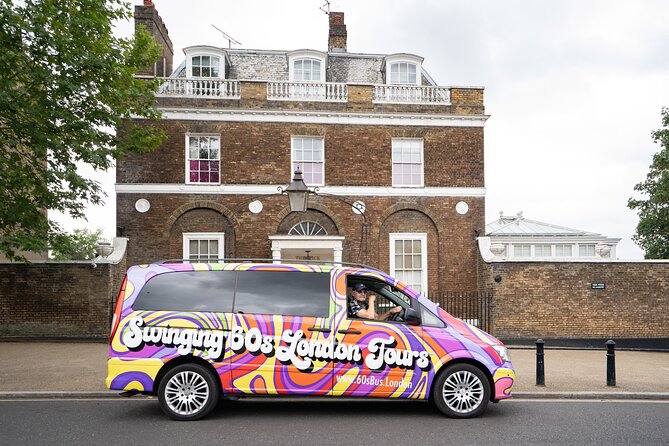
London has a secret Rolling Stones route. This private Birthplace of The Rolling Stones tour strings together famous and rarely seen street-level spots across London and Richmond, with an air-conditioned minivan and a guide who connects the dots as you go. I especially love how the stops aren’t just name-drops, they link to specific moments in the band’s early run, including the Beatles connection. You’ll also get real comfort for a 3-hour outing, with quick exterior stops timed to keep things moving. One possible drawback: many sights are brief look-outs from the curb, so if you’re hoping for lots of museum-style time inside buildings, this isn’t that kind of tour.
I also like the way the route funnels you from classic early stomping grounds toward Richmond, ending at a convenient transit hub. That means you can keep the momentum after the tour, walking along the river or heading to Richmond Park if you want more time. The price is high at $575.86 per group (up to 6), but it can work well if you share the cost with friends or family. If your group is small and you’re paying solo-to-two people, the value will depend more on how strongly you want a private, guide-led experience rather than a cheaper public option.
In This Review
- Key things you’ll notice on this private Stones tour
- The route: Earl’s Court to Richmond, with the band’s story in order
- Comfort and timing: why the air-conditioned minivan is part of the value
- The “early name” moments: Wetherby Pub, the 102 Edith Grove flat, and a Beatles link
- Cheyne Walk and the Swinging London vibe: street looks that tell you the neighborhood story
- Olympic Studios – Cinema: where six consecutive albums were recorded
- Putney’s The Half Moon: a private party stop that stays current
- Richmond begins: All Bar One Richmond and the first residency story
- Terrace Gardens and Richmond Hill: songwriting, famous neighbors, and a very specific address
- Ormond Road and Sandover Hall: another early performance stop
- Crawdaddy Club’s second location: the Yardbirds, plus a festival detour
- Price and value: $575.86 per group makes sense if you’re splitting the ride
- Who should book this private Stones tour
- Should you book the Birthplace of The Rolling Stones private tour?
- FAQ
- How long is the tour?
- What does this tour cost?
- Where do I meet the guide?
- Where does the tour end?
- Is this tour private?
- What language is the tour offered in?
- What’s included and what’s not included?
- Is there an age limit?
- Can I cancel for a refund?
Key things you’ll notice on this private Stones tour
- Street-level addresses tied to real band moments, not just vague “scene-setting”
- Air-conditioned minivan that keeps a 3-hour day comfortable
- Beatles and Decca story threads woven through multiple stops
- Olympic Studios context that explains where key recordings happened
- Richmond focus with Crawdaddy Club history and early residency details
- Plenty of exterior “quick stops” that make it easy to see a lot without rushing hard
Still deciding? A handful more London outings we rated
- Harry Potter Studios & Private Transfer from Central London
★ 4.5 · 6,134 reviews - The Premier Classic London: Private 4-Hour Tour in a Black Cab
★ 5.0 · 2,737 reviews - Stonehenge Inner Circle Private Tour from London with Bath Visit
★ 5.0 · 1,909 reviews - Private Tour: Black Taxi Tour of London
★ 5.0 · 1,153 reviews
The route: Earl’s Court to Richmond, with the band’s story in order
This tour starts at the Earl’s Court Police Box (232 Earls Ct Rd, London SW5 9RD) at 1:00 pm and ends at Richmond Station. That matters more than it sounds. You’re not doing a random scatter of landmarks; you’re moving through London so the Stones story progresses in a way that’s easy to follow.
You’ll spend about 3 hours in total, mostly riding and then pausing for short, purposeful look-arounds. It’s a smart format for this kind of theme tour because a lot of the “evidence” is on doorways and street corners. The guide uses those quick moments to tell you what happened there and why it mattered, so the spots connect in your head instead of feeling like a checklist.
Also, the finish location is a win. Richmond Station has fast, frequent trains and tube connections back to much of London and Windsor. If you want to stretch the day, Richmond itself is a good payoff zone: you can take a walk along the river or go toward Richmond Park for history and deer.
Comfort and timing: why the air-conditioned minivan is part of the value
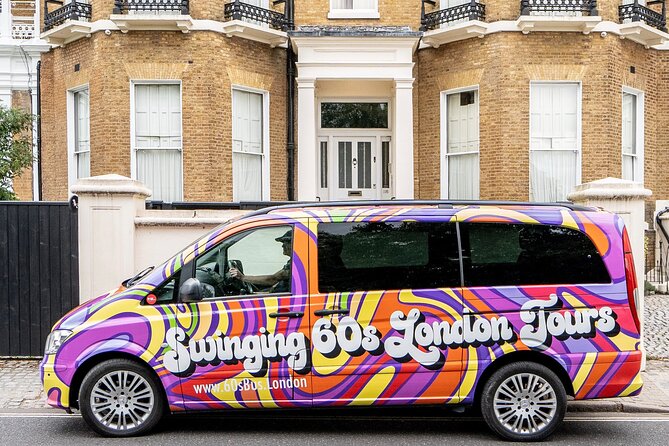
A private tour works best when it saves you mental energy, not just money. Here, the air-conditioned minivan is a big practical plus. London weather can be unpredictable, and waiting outdoors for long periods would kill the vibe. Instead, you get short stops plus comfortable travel between them.
The tour is also sized for real conversation. It’s private, so it’s only your group in the vehicle and on the street with the guide. With a group size up to 6, you’re more likely to ask questions and get answers that actually fit what your group wants to hear.
Most stops are free to view from outside, which helps you keep momentum without constantly shifting plans. A few areas aren’t ticket-included (like certain streetsides), but the overall setup keeps the day simple. And since this is offered in English with a mobile ticket, you’re not stuck doing extra admin once you’re in motion.
The “early name” moments: Wetherby Pub, the 102 Edith Grove flat, and a Beatles link
The day begins with a passing stop near the Wetherby Pub, tied to an audition moment involving Bill Wyman. You then move to the flat where they were given their name. Even though you’re not going inside, the guide’s job is to make these locations feel like turning points instead of trivia.
One of the most satisfying segments is Stop 1 at 102 Edith Grove. This is a quick curbside look at the shared flat between 1962 and 1963, where Brian, Mick, and Keith lived during a formative stretch. What makes this stop stick is the Beatles connection: they also invited The Beatles there after meeting them in Richmond. That detail helps you understand why the Stones and the Beatles are often placed in the same orbit of early 1960s London culture.
You’re only there for about 5 minutes, but that short time is usually enough because the story is the main attraction. If you’re a fan who likes how geography shapes music, this stop hits hard. If you prefer long photo sessions at one spot, you might wish each curbside moment lasted longer, but the payoff is that you’ll see more real addresses in a single outing.
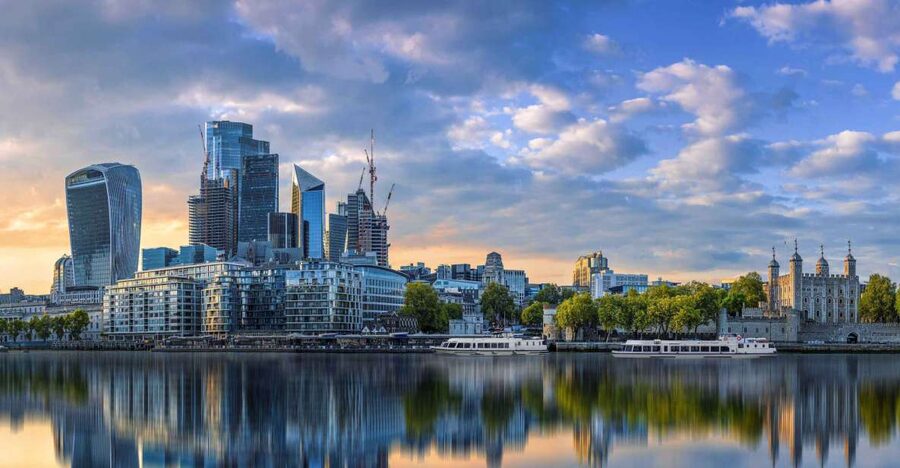


Cheyne Walk and the Swinging London vibe: street looks that tell you the neighborhood story
Next up is Cheyne Walk, where Mick and Keith purchased houses in 1968. It’s one of those streets where you immediately feel the shift from “band trying to break through” to “band with power and taste.” The quick 2-minute stop is designed to give you context more than sightseeing time.
After that, you get a stop connected to the beating heart of Swinging London, including the area associated with the Chelsea Drugstore location and nearby legendary fashion and music venues. Even when you’re just seeing façades from outside, the guide’s commentary turns it into atmosphere you can recognize. You start connecting the band’s personal story to the larger London scene they were part of.
Practical note: this part of the route is more “look around and absorb” than “stand still and photograph endlessly.” If your travel style is fast, focused, and guided, you’ll love it. If you’re trying to capture a perfect long-exposure shot at every location, you’ll want to balance your own photo time with what the guide is pacing.
Olympic Studios – Cinema: where six consecutive albums were recorded
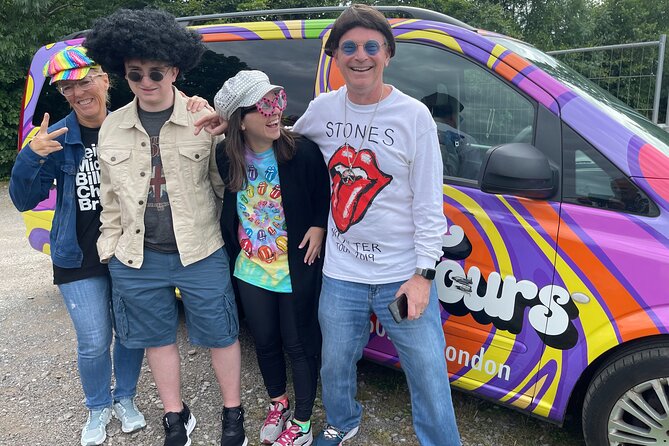
A big highlight is Olympic Studios – Cinema. You’re there for about 10 minutes, and the key point is what this address represents: the Rolling Stones recorded six consecutive albums here between 1966 and 1972 with Chris Kimsey and Glyn Johns. That’s the kind of detail that turns a studio location into something more than a landmark.
You also get a thread that reaches back further. Their first hit, Come On (released in 1963), was recorded at Olympic’s previous location off Baker Street in London. So the stop does double duty: it’s not only about the later era, it also shows the continuity of working within the same broader studio ecosystem.
What makes this stop valuable for you is how it reframes “where the music was made.” If you listen to albums and want to anchor them to real-world places, this is exactly the kind of stop that makes the discography feel less abstract. The tour doesn’t ask you to be a recording engineer. It gives you just enough structure to connect names, dates, and sound.
Putney’s The Half Moon: a private party stop that stays current
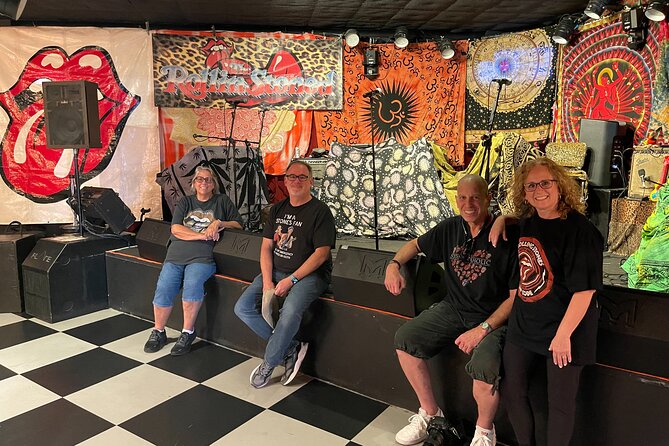
At The Half Moon in Putney, the tour points to the fact that the Stones performed there at a private party as recently as 2000. That’s an interesting twist because it prevents the story from becoming purely nostalgic. You get a sense that these venues and connections didn’t just belong to the 1960s; they kept resurfacing over decades.
You’ll spend about 10 minutes here, which typically works well because the guide can outline what the venue means and why it shows up in the band’s larger timeline. If you’re someone who enjoys “music touring” as much as music history, this stop provides that extra layer: it’s not only about where they started, it’s about where the band continued to plug into the London live scene.
Richmond begins: All Bar One Richmond and the first residency story
Richmond is where the tour becomes especially compelling, because it ties together several early turning points in one geographic area. Stop 5: All Bar One Richmond, previously the Station Hotel and home to the original Crawdaddy Club, is at the heart of that.
This is the Richmond location where the Stones secured their first residency on Sunday 24 February 1963. It’s also where they first met The Beatles and signed for Decca Records. That’s three major plot points in one place, which means the guide can connect the early business side of the band to the social side.
You’ll be there for about 10 minutes. Since the location is described as the home of the original Crawdaddy Club, it also helps you picture Richmond as more than “a nice suburb.” It becomes a stage for momentum—where relationships formed, and where opportunity showed up.
This is also a moment where the private format pays off. In a group tour, you might hear the story fast and move on. Here, you’re more likely to get the logic behind why these events are linked, not just the facts.
Terrace Gardens and Richmond Hill: songwriting, famous neighbors, and a very specific address
Then the tour heads to Terrace Gardens – Richmond Hill for a short stop (about 5 minutes) that’s packed with name-checks and songwriting lore.
You’ll see where Mick and Jerry lived in the early 1990s, with the note that Jerry still lives there with new husband Rupert Murdoch. Ronnie Wood is also connected to this neighborhood, described as living here from 1971. And crucially for fans, It’s Only Rock And Roll was written here in 1973.
This is also where the tour turns slightly into the celebrity-real-estate world, with a note that Pete Townsend owns the house currently up for sale for £15M. Whether you’re fascinated by that angle or not, it adds realism. It shows you how “rock history” can sit right inside everyday London life—people live here, write songs here, and the addresses are still part of the present.
Just keep expectations practical: you’re not going to linger long at a residential area, and you’re not meant to treat it like a photo set. The value is the connection the guide makes between the songs you know and the places they were created.
Ormond Road and Sandover Hall: another early performance stop
At Ormond Road, you’ll visit the Sandover Hall location in Richmond where the Stones performed between 1962 and 1963. It’s a quick stop—about 5 minutes—but it rounds out the early Richmond circuit.
This kind of extra performance stop matters because it helps you see the band’s early life as repeated gigs, not one big miracle event. When you add Sandover Hall to the Crawdaddy Club story and the first residency, the early era feels more grounded: it’s a sequence of places where the band kept showing up until things changed.
If you’re a fan who likes the “how they built momentum” story, these short performance stops are exactly what you’re here for.
Crawdaddy Club’s second location: the Yardbirds, plus a festival detour
The tour’s final cluster of Richmond history centers on Crawdaddy Club, described as the second location of the club in 1963. This stop lasts about 10 minutes and gives you two key ideas.
First, it explains a shift in the resident-band lineup: The Yardbirds replaced The Stones as the resident band. That kind of detail helps you understand how the scene moved. Bands weren’t isolated; venues changed lineups and opportunity as the club circuit evolved.
Second, it adds a wider music context through Harold Pendleton’s National Jazz and Blues Festival, held here from 1961 to 1965. After years at various locations, it moved to Reading—now described as the longest-running pop festival in the world. Even if you’re coming for the Stones, this detour is useful. It shows how the same venues and networks supported multiple styles and how London talent pipelines eventually stretched beyond the city.
For you, that’s part of the payoff: it’s not just a Stones museum. It’s a story of how popular music culture worked in the 1960s.
Price and value: $575.86 per group makes sense if you’re splitting the ride
The price is $575.86 per group (up to 6) for about 3 hours. That is clearly not a budget option, but it can still be good value because you’re paying for private guiding plus transportation with an air-conditioned vehicle.
Here’s the math perspective: if you fill the group to 6, you’re effectively paying around $96 per person. If your group is smaller, the per-person cost climbs, and the tour has to be worth it purely on experience quality—meaning you should be confident you’ll enjoy a structured, guide-led run through exact addresses with context.
The tour’s inclusions support that. You get taxes and handling charges covered, a professional guide, and the air-conditioned vehicle. You also get a mobile ticket. Externals like entrance fees aren’t the main part of the itinerary, with multiple stops marked as free to view from the outside.
The only additional “real world” costs you should plan for are public transportation at £5.00 per person (not included) and snacks (not included). If you’re starting and ending with trains that are already working for your schedule, that transportation line might matter less than you think. Still, plan for it if you’re budgeting tightly.
Who should book this private Stones tour
This is a great fit if you:
- Want address-based history you can picture later when you listen to albums
- Prefer a private, guided format over wandering on your own
- Like connecting the Stones to the broader 1960s scene, especially the Beatles and Decca threads
- Enjoy an efficient 3-hour London experience that ends in Richmond with easy transit
It’s less ideal if you:
- Want long indoor visits or museum-style ticket time
- Are traveling with a group that doesn’t care much about music history
- Prefer slow walking tours where you control every stop length
Should you book the Birthplace of The Rolling Stones private tour?
If your heart is in early Stones history and you like seeing real places tied to dates and recordings, I think it’s a smart booking. The route is built to make the story coherent: from the early identity moments through Olympic Studios and into Richmond’s key venues and residences. You’ll get comfort, a guide to connect names and locations, and an ending point that lets you keep exploring on your terms.
Book it especially if you can share the cost with a full group of up to 6. That’s when the private format turns from “splurge” into “reasonable luxury.” And if you’re hoping for something fun rather than just academic, the overall experience is designed to be lively, with lots of specific details rather than generic commentary.
FAQ
How long is the tour?
It runs for about 3 hours.
What does this tour cost?
It costs $575.86 per group, up to 6 people.
Where do I meet the guide?
You start at Earl’s Court Police Box 232, Earls Ct Rd, London SW5 9RD.
Where does the tour end?
The tour ends at Richmond Station.
Is this tour private?
Yes. It’s private, and only your group participates.
What language is the tour offered in?
The tour is offered in English.
What’s included and what’s not included?
Included: taxes, fees, and handling charges; a professional guide; and an air-conditioned vehicle. Not included: public transportation (£5.00 per person) and snacks.
Is there an age limit?
Yes, the minimum age is 9 years.
Can I cancel for a refund?
Yes, you can cancel for a full refund up to 24 hours in advance of the experience’s start time.
More Private in London
- Harry Potter Studios & Private Transfer from Central London
★ 4.5 · 6,134 reviews - The Premier Classic London: Private 4-Hour Tour in a Black Cab
★ 5.0 · 2,737 reviews - Stonehenge Inner Circle Private Tour from London with Bath Visit
★ 5.0 · 1,909 reviews - Private Tour: Black Taxi Tour of London
★ 5.0 · 1,153 reviews - Private London Arrival Transfer – Airport to Hotel / Accommodation
★ 3.5 · 1,085 reviews
More Tours in London
- From London: Harry Potter Warner Bros Studio Tour
★ 4.7 · 26,588 reviews - Magical London: Harry Potter Guided Walking Tour
★ 4.7 · 22,044 reviews - London: Warner Bros. Studio Harry Potter Tour & Branded Bus
★ 4.7 · 19,194 reviews - London Big Bus Hop-On Hop-Off Tour with Optional River Cruise
★ 3.5 · 10,803 reviews - London Small Group Tour of Historical Pubs
★ 5.0 · 10,422 reviews
More Tour Reviews in London
- From London: Harry Potter Warner Bros Studio Tour
★ 4.7 · 26,588 reviews - London: Westminster to Greenwich River Thames Cruise
★ 4.5 · 22,836 reviews - Magical London: Harry Potter Guided Walking Tour
★ 4.7 · 22,044 reviews - London: Madame Tussauds London
★ 4.6 · 20,915 reviews - London: Warner Bros. Studio Harry Potter Tour & Branded Bus
★ 4.7 · 19,194 reviews
Just reviewed around London





Private, compared.
 ★ 4.5Harry Potter Studios & Private Transfer from Central LondonFrom $2296,134 reviews
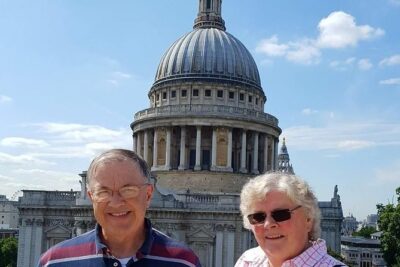 ★ 5.0The Premier Classic London: Private 4-Hour Tour in a Black CabFrom $5532,737 reviews
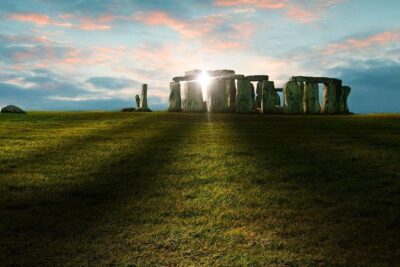 ★ 5.0Stonehenge Inner Circle Private Tour from London with Bath VisitFrom $1881,909 reviews
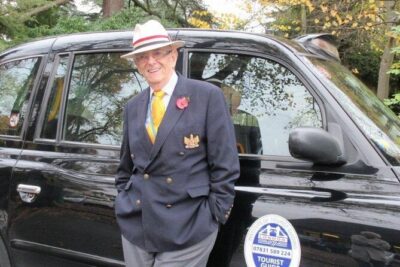 ★ 5.0Private Tour: Black Taxi Tour of LondonFrom $3061,153 reviews
 ★ 3.5Private London Arrival Transfer – Airport to Hotel / AccommodationFrom $861,085 reviews
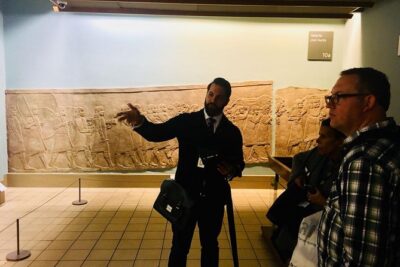 ★ 5.0British Museum London Guided Tour Semi-Private 8ppl MaxFrom $108984 reviews
 ★ 5.0London Sightseeing Private Black Cab Tour with Hotel Pick UpFrom $441917 reviews
 ★ 4.5VIP Tower of London and Crown Jewels Tour with Private Beefeater Meet & GreetFrom $155849 reviews