
Reviewed · PHOTOGRAPHY SESSIONS
Ultimate introduction to photography in Central London
First: London at photo-o’clock is a whole different city. This Central London photography workshop is a practical, in-the-field lesson with a pro, built around real scenes like the London Eye, Leake Street Arches, St. Paul’s, and the South Bank. I like that it mixes hands-on camera basics with the part most people skip: how to think before you press the shutter.
Two things I really like: the small group size (max 8), so you get real attention (not just standing at the back), and the focus on exposure fundamentals—ISO, shutter speed, and aperture—so your photos improve fast instead of by accident. One consideration: because the class works through daylight and then moves into sunset/blue hour/night, you’ll want to be ready for changing light and cooler evening walking.
In This Review
- Key highlights that make this workshop worth it
- Why this Central London photo workshop is a smart use of 5.5 hours
- The meeting point setup: Starbucks start, back to the same spot
- Small group size (8 max) means you actually get coached
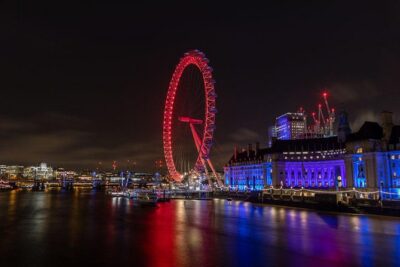
- London Eye: learning exposure on a subject with lots of contrast
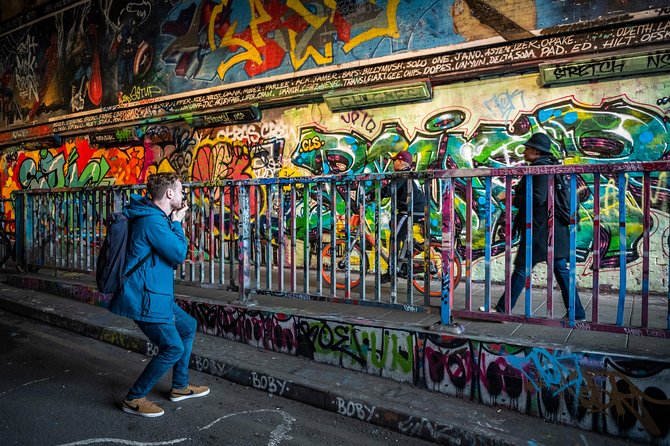
- Leake Street Arches: composition practice in a textured, graphic setting
- St. Paul’s Cathedral: sharpness and focus when the scene gets busy
- South Bank skate park: action first, then slow-shutter experiments
- Riverside sunset into blue hour/night: how to change strategy as light drops
- Why the instructor’s thought process teaching matters
- Price and value: what you’re really paying for
- Who this workshop suits best (and who might want something else)
- A few practical tips to get more from the session
- Should you book this Central London photography workshop?
- FAQ
- How long is the workshop?
- What’s the group size limit?
- Does it work if I mainly use a phone camera?
- Where does the workshop start and end?
- Is the workshop offered in English?
- Does the tour depend on weather?
- Can I cancel for a full refund?
Key highlights that make this workshop worth it
- Max group size of 8 means you can ask questions and get direct feedback
- ISO, aperture, and shutter speed taught as a working system, not separate trivia
- Live practice at iconic London locations, from the London Eye to St. Paul’s and the Thames
- Action + slowdown: skate park shooting first, then experiments with slower shutter speeds
- Riverside sunset through blue hour/night so you learn how low light changes everything
- Matthew’s teaching style is patient and adjustable, from first-time users to people who need structure
Still deciding? A handful more London outings we rated
- London: Private Photoshoot with Video Clip Option
★ 4.8 · 182 reviews - Professional Photoshoot in London Photographer
★ 5.0 · 102 reviews - Private landmarks photoshoot for families and couples
★ 5.0 · 92 reviews - London: Private Landmark Tour with Professional Photographer
★ 4.7 · 91 reviews
Why this Central London photo workshop is a smart use of 5.5 hours
If you’ve ever pointed your camera at London and thought, I know I’m taking a photo… but why doesn’t it look like the image in my head, this course is built for you. The whole point is to connect the technical knobs—ISO, aperture, and shutter speed—with the creative choice of what you want to show.
You’re not just roaming. You’re practicing on purpose. And you do that in a tight group, which keeps the pace moving and the questions coming.
The meeting point setup: Starbucks start, back to the same spot
The workshop meets at Starbucks Coffee, Belvedere Rd, London SE1 7GQ, and it ends back at the meeting point. It’s also near public transportation, which matters because you don’t want a time sink before you even begin shooting.
The class is roughly 5 hours 30 minutes, and it’s designed to use the day’s light. That means you’re scheduling your learning around London’s changing sky, not just squeezing technique into a single lighting mood.
Small group size (8 max) means you actually get coached
Max eight travelers is the big difference between learning and just watching. With a bigger group, you can end up repeating the same mistake while someone else gets the attention. Here, you’re more likely to get quick checks like, Try this next, adjust that setting, or re-think your framing before the light shifts again.
This also helps when you’re at different skill levels. Some people arrive knowing little beyond the auto button; others have used manual before. The instructor can work your starting point without making the whole group wait.
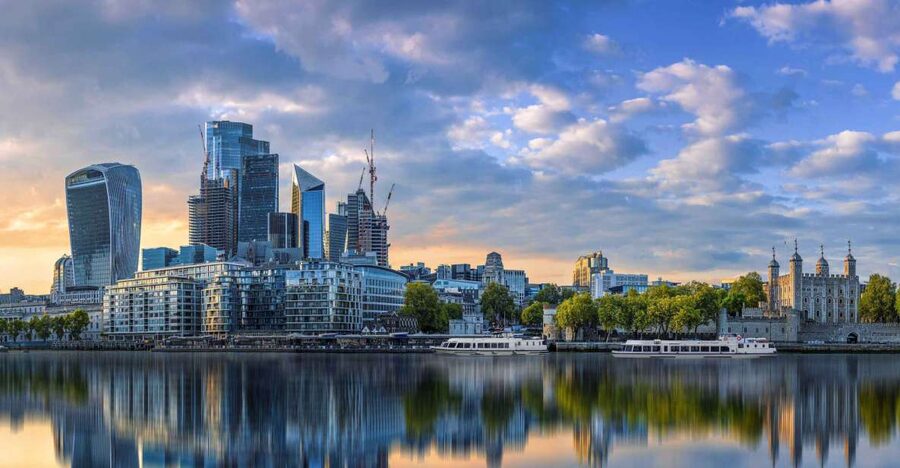

London Eye: learning exposure on a subject with lots of contrast
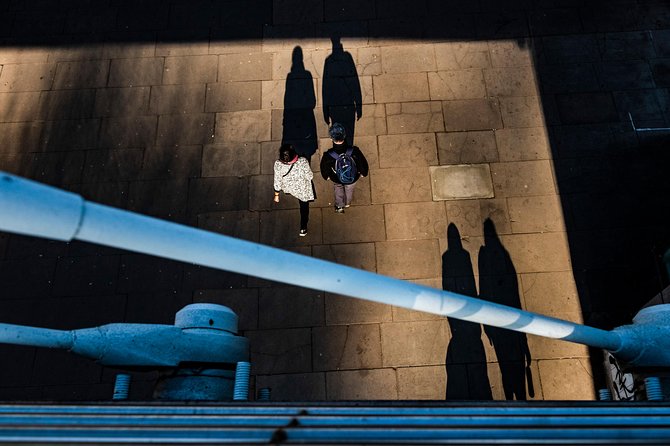
You start with the London Eye, a great early stop because it gives you clear targets plus tricky light. Bright areas, darker tones, and plenty of reflective surfaces make it obvious when your exposure is off.
This is where you start training your “camera brain.” You’ll learn how the three big settings work together:
- ISO changes your sensor’s sensitivity, which affects brightness and noise
- Shutter speed controls motion blur and how much time light hits the sensor
- Aperture adjusts depth of field and how your background falls away
The real win is the cause-and-effect thinking. Once you see how changing one knob affects the outcome, you stop guessing.
Leake Street Arches: composition practice in a textured, graphic setting
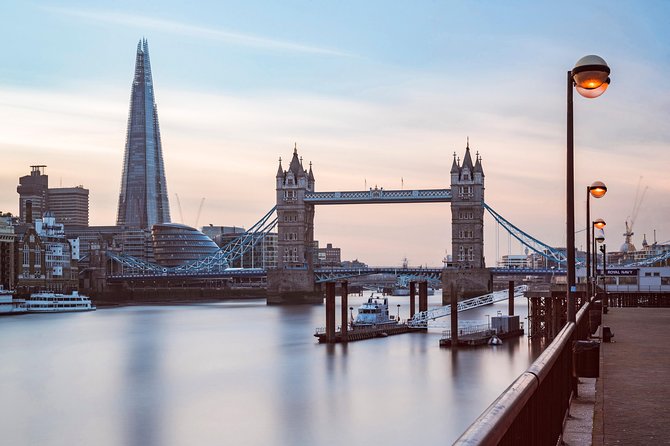
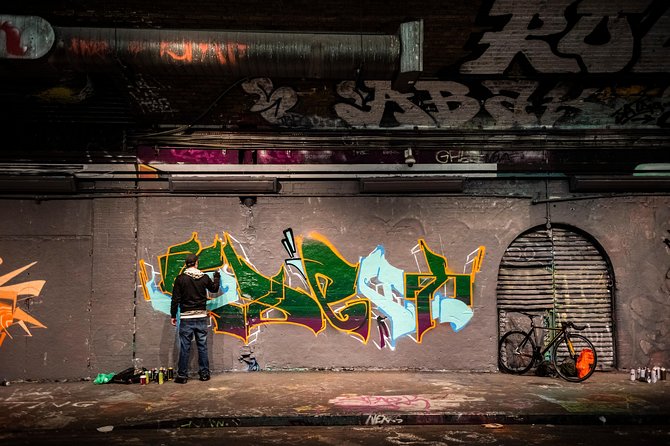
Next comes Leake Street Arches, an area with strong geometry and built-in visual rhythm. It’s ideal for composition because lines, repetition, and surfaces do a lot of the hard work for you—if you frame them well.
This stop is also a good test for focus and storytelling. You’re not just photographing a wall. You’re learning how to make the image say something: where the viewer’s eye should go first, what should be sharp, and what can fade into mood.
St. Paul’s Cathedral: sharpness and focus when the scene gets busy
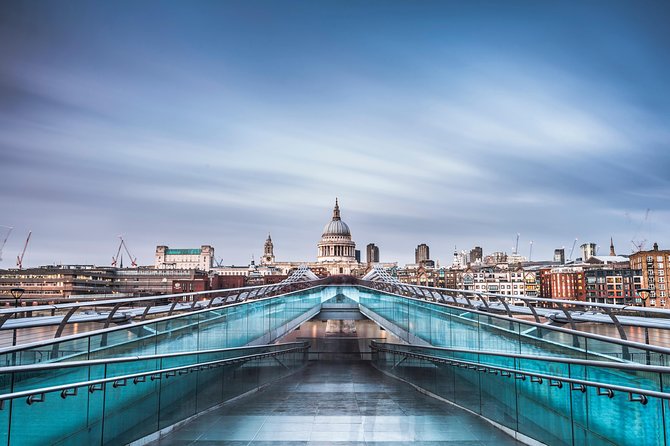
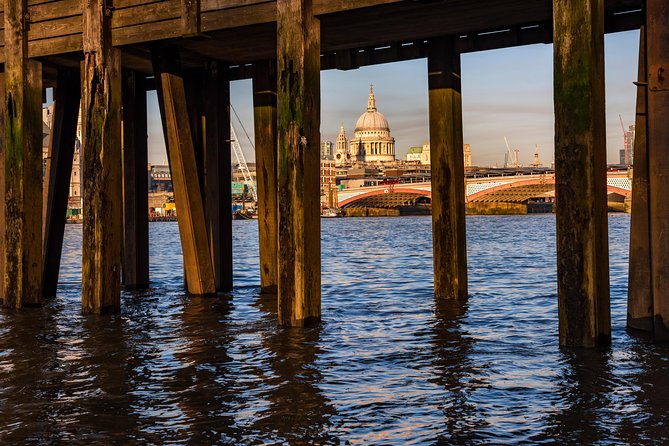
St. Paul’s Cathedral adds another challenge: scale. Big landmarks can be fun, but they tempt you to stand too far away and end up with a small subject inside a huge scene.
You’ll practice getting the image to feel intentional. That usually means choosing what part of the cathedral to emphasize, where the lines lead, and how you keep your focus where it matters. This is also the kind of stop where your camera settings start feeling less like abstract numbers and more like tools.
South Bank skate park: action first, then slow-shutter experiments
The course uses the South Bank skate park energy for a reason. Action teaches you quickly. If shutter speed is too slow, motion turns into a blur mess. If it’s too fast, you can end up with stiff-looking movement.
Once you’re comfortable capturing the fast stuff, you switch into experimentation—especially slower shutter speeds. This is where motion blur can become a creative effect instead of a mistake.
You’ll also start hearing the photography mindset the instructor emphasizes: you’re not just taking photos. You’re constructing them. That mindset helps later when you’re on your own, because you stop relying on “correct settings” and start choosing the look.
Riverside sunset into blue hour/night: how to change strategy as light drops
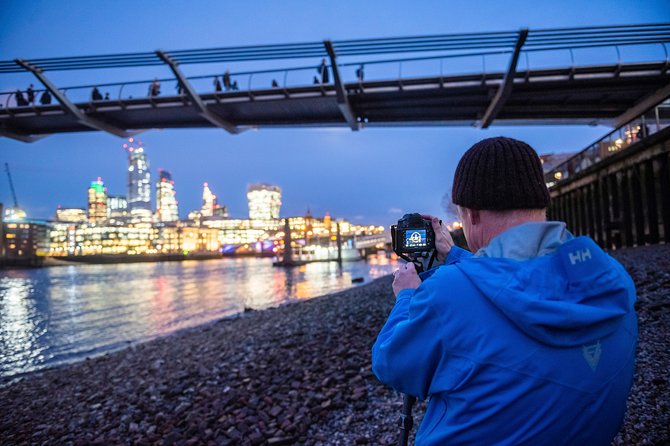
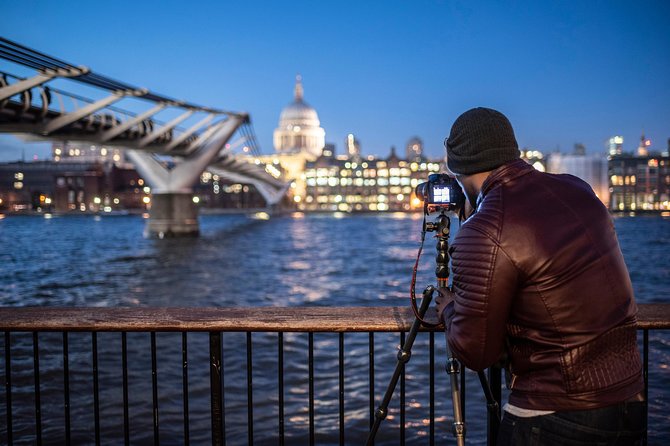
The finale is the part many people remember: a riverside sunset, blue hour, or night shoot with views over the Thames. This is not filler time. It’s the practical payoff, because low light is where most camera frustrations live.
As the light falls, you’ll see why ISO, shutter speed, and aperture all matter at once. You might need higher ISO to keep shutter speed usable. Or you might intentionally go slower to create the kind of motion blur and glow you can’t get in daylight.
The instructor wraps the workshop so you return with a variety of images you can be proud of—and more importantly, a set of habits you can reuse.
Why the instructor’s thought process teaching matters
Plenty of courses teach buttons. This one tries to teach the thinking behind the image. That shows up in the emphasis on learning to capture the photos in your mind’s eye, not just clicking and hoping.
You also spend time on composition ideas and photographic story-telling. That’s where your images start to look like you were aiming for a message, not just recording a location. And it’s the difference between an okay travel snap and something you’ll actually keep.
Price and value: what you’re really paying for
At $232.25 per person for about 5.5 hours, you’re paying for three main things:
1) a pro-led session with hands-on instruction
2) in-field practice in multiple landmark settings
3) enough time to actually move from daylight basics into blue hour/night shooting
The value comes from how quickly the feedback loop works. Instead of months of trial and error online, you get guided practice while London’s lighting gives you real-world tests. If you want a faster path to better photos, this is a sensible use of time.
Who this workshop suits best (and who might want something else)
This is a great fit if you want to:
- understand your camera beyond auto mode
- learn how settings work together (ISO, aperture, shutter speed)
- improve composition and thinking, not just technical settings
- shoot iconic Central London scenes in a focused session
You should also be okay with moderate physical fitness, since you’ll be walking between stops. And if you’re using a phone, you might still get value—some people join wanting to use phone cameras more effectively.
A few practical tips to get more from the session
You’ll get the most out of the workshop if you come willing to experiment. Even small changes—one setting at a time—make the lesson click.
Also, pay attention during the “slower shutter speed” phase. That’s where you stop treating blur like failure and start treating it like style.
Finally, don’t wait until the night portion to learn. The earlier stops are there to give you control before you need it most.
Should you book this Central London photography workshop?
Yes, I’d book it if you want real progress in one afternoon plus evening. The combination of a tight group, pro coaching, and hands-on practice around the London Eye, Leake Street Arches, St. Paul’s, the South Bank skate park, and the Thames is exactly how you learn faster than self-teaching alone.
If you hate walking or you’re only looking for a casual photo walk, then this might feel too structured. But if you’re ready to turn those settings into a creative system, this workshop is a strong bet.
FAQ
How long is the workshop?
It runs for about 5 hours 30 minutes.
What’s the group size limit?
The class has a maximum of 8 travelers.
Does it work if I mainly use a phone camera?
The workshop focuses on photography skills, and there’s evidence of participants improving how they use phone cameras more effectively.
Where does the workshop start and end?
It starts at Starbucks Coffee, Belvedere Rd, London SE1 7GQ, UK and ends back at the same meeting point.
Is the workshop offered in English?
Yes, it’s offered in English.
Does the tour depend on weather?
Yes. It requires good weather. If it’s canceled due to poor weather, you’ll be offered a different date or a full refund.
Can I cancel for a full refund?
Yes. You can cancel for a full refund if you cancel at least 24 hours before the start time. If you cancel less than 24 hours before, the amount paid will not be refunded.
More Photography Sessions in London
- London: Private Photoshoot with Video Clip Option
★ 4.8 · 182 reviews - Professional Photoshoot in London Photographer
★ 5.0 · 102 reviews - Private landmarks photoshoot for families and couples
★ 5.0 · 92 reviews - London: Private Landmark Tour with Professional Photographer
★ 4.7 · 91 reviews - Professional Private Photoshoot in London
★ 5.0 · 63 reviews
More Tour Reviews in London
- From London: Harry Potter Warner Bros Studio Tour
★ 4.7 · 26,588 reviews - London: Westminster to Greenwich River Thames Cruise
★ 4.5 · 22,836 reviews - Magical London: Harry Potter Guided Walking Tour
★ 4.7 · 22,044 reviews - London: Madame Tussauds London
★ 4.6 · 20,915 reviews - London: Warner Bros. Studio Harry Potter Tour & Branded Bus
★ 4.7 · 19,194 reviews
Just reviewed around London





Photography Sessions, compared.
 ★ 4.8Private Photoshoot with Video Clip OptionFrom $161182 reviews
 ★ 5.0Professional Photoshoot in London PhotographerFrom $305102 reviews
 ★ 5.0Private landmarks photoshoot for families and couplesFrom $16692 reviews
 ★ 4.7Private Landmark Tour with Professional PhotographerFrom $15691 reviews
 ★ 5.0Professional Private Photoshoot in LondonFrom $10963 reviews
 ★ 4.530 Major London Attractions Walking Tour With PhotosFrom $6751 reviews
 ★ 4.7Private travel vacation photoshoot -Romantic SpecialFrom $21150 reviews
 ★ 5.0Private Tour: Night Photography Tour in LondonFrom $33748 reviews
Browse the lists this tour appears in