
Clues make the Tower area feel brand-new. This self-guided walking tour turns the Tower of London neighborhood into a smartphone scavenger hunt, so you’re not just passing landmarks—you’re solving little puzzles as you go. I like that you can keep your own pace and skip the crowd shuffle.
The best part is that you’re learning as you walk, with clues tied to real places like Roman wall remains, the Thames skyline, and Great Fire landmarks. One practical catch: you’ll need your smartphone and data/internet to load the challenge, and you should also plan on only exterior sightseeing (no entry tickets included).
In This Review
- Key things to know before you go
- Tower Hill to Dragon Boundary Mark: what this walk really feels like
- Trinity Square Gardens and Wakefield Gardens: starting with memorials and Roman remnants
- Postern Gate and the Tower perimeter: how to enjoy it without expecting tickets
- Tower Bridge arch stops: clues that make the walk feel longer (in a good way)
- City of London vs Greater London: learning the boundaries while you walk
- HMS Belfast, Hay’s Galleria, and London Bridge: riverfront clues with real views
- North bank walk: churches, the 1666 Great Fire, and Blitz-era loss
- Malta George Cross Memorial and the final church near the Tower
- Practical tips: phones, pacing, and when to go
- Should you book this Tower of London scavenger hunt?
- FAQ
- How long does the Tower of London area scavenger hunt take?
- Is this tour offered in English?
- Do I need tickets for the Tower of London or other stops?
- What do I need to complete the challenge?
- Where do I start and where does it end?
- Is it a guided group tour?
- What hours is the experience available?
- Is there support if I have trouble during the hunt?
Key things to know before you go
- Self-paced fun instead of a group slog: walk when you want, pause when you like.
- Smartphone required: challenge instructions live on your device.
- Exterior-only route: you won’t enter the sites on the list.
- Roman, WWII, and 1666 all in one loop: the clues jump across eras quickly.
- Good family option: the challenge format is made to keep kids engaged.
- Tower Bridge is a highlight: you’ll stop at arch points and scan the skyline.
Crown Jewels and ravens: other ways in
- London: Tower Bridge Entry Ticket
★ 4.7 · 15,560 reviews - Tower of London and Crown Jewels Exhibition Ticket
★ 4.5 · 6,677 reviews - London: Westminster to Tower Bridge River Thames Cruise
★ 4.5 · 6,127 reviews - London Sightseeing Tour: Guard Change with Tower of London Option
★ 4.5 · 2,672 reviews
Tower Hill to Dragon Boundary Mark: what this walk really feels like
This isn’t a traditional guided tour where you’re stuck listening in one place. It’s a self-guided route that’s basically a “choose your own timing” way to see the Tower of London area, both sides of the river, and a bunch of smaller historical corners that most people walk past.
The route is designed to be doable in about 2 to 3 hours, depending on how long you linger with the clues. You start at Tower Hill (EC3N 4DJ) and end at the City of London Dragon Boundary Mark (EC3N 4EE), which is just one intersection from the start area across Byward St / Tower Hill Rd. That loop matters because it keeps you close to transit and lets you tack on an optional museum visit later if you want.
The “scavenger” part isn’t just a gimmick. The questions are placed at specific locations—parks, gates, river viewpoints, and churchyards—so you naturally build a mental map of the area while you’re walking. It’s a very practical way to do London sightseeing when you’d rather be moving than sitting.
Trinity Square Gardens and Wakefield Gardens: starting with memorials and Roman remnants
Your walk kicks off in Trinity Square Gardens, a small spot near Tower Hill underground. It’s a great opener because it’s compact enough to orient you fast, and the clues point you toward four significant memorials right from the start. That makes it easy to begin the hunt even if you’re jet-lagged or traveling with kids who need quick wins.
Next up is Wakefield Gardens, also close by. Here the clues shift from memorials to the ground beneath your feet: you’ll spot two more monuments and a section of the original Roman wall. Even if you don’t know Roman London yet, the clue format helps you notice details you might otherwise miss, like how layered the city is.
One drawback to keep in mind: because these are outdoor garden stops, wind and crowds can change your comfort level. I’d treat these early stops as your “get settled” phase—take a few minutes, let the hunt app load, and don’t worry if you don’t race through the first set of challenges.
Postern Gate and the Tower perimeter: how to enjoy it without expecting tickets
After the gardens, you head toward Postern Gate, walking under Tower Hill Rd. This is where the route turns into a “Roman ruins meet the modern fortress” moment, with more remnants along the way and then the Tower of London looming into view.
Here’s the key expectation-setting point: this tour is strictly exterior sightseeing. You’ll learn about the Tower as a grand fort, armory, garrison, prison, and museum while walking the perimeter approach, but you should not plan on entry tickets being part of the experience. If you want to go inside the Tower of London itself, you’ll need to arrange that separately, because the scavenger hunt is designed to keep you outdoors.
I actually like this approach. You still get the big emotional payoff—standing near one of London’s most famous fortresses—but you’re not spending your limited time in lineups or inside galleries. The trade-off is simple: if your dream is interior rooms and ticketed exhibits, this won’t replace that.
London on foot, a few more ways


Tower Bridge arch stops: clues that make the walk feel longer (in a good way)
Once you’re set near the Tower Bridge approach, the route pushes you across the river on foot. Crossing Tower Bridge is one of those “London must-do” experiences, and the tour uses that energy wisely: it places challenge stops along the arches so you pause instead of just drifting.
As you cross, you’ll solve five challenges and learn something at each arch point. The sights you’ll pick up naturally include major landmarks across the Thames, such as the Shard and the Gherkin. The scavenger format makes that skyline feel like part of the puzzle, not just background scenery.
A practical consideration: Tower Bridge is busiest in peak hours, and walking in crowds can make clue-hunting harder. The good news is you’re not locked into a guide’s pacing, so you can step aside to read prompts and check your answer without feeling like you’re holding anyone back.
City of London vs Greater London: learning the boundaries while you walk
Midway through the route, you’ll approach the old Greater London City Hall. This stop is small in distance but big in concept: the clues focus on the difference between the City of London and Greater London.
That matters more than it sounds. The Tower area sits right at the boundary of how London governs itself, and it’s easy to miss that if you’re only thinking about history in terms of kings and wars. This part of the hunt helps you notice that London’s geography includes institutions and jurisdictions, not just monuments.
You then move onto the Queen’s Walk, learning about the south shore neighborhood as you head from old city hall toward HMS Belfast. This portion is valuable because it slows you down along the river, letting you connect the “fortress on the hill” story to the water-based logistics that shaped London’s power.
HMS Belfast, Hay’s Galleria, and London Bridge: riverfront clues with real views
From the Queen’s Walk, the route guides you to HMS Belfast, a battleship anchored in the Thames. The clues here encourage you to focus on what you’re seeing while you walk toward it—no need to enter buildings to get meaning from the scene.
Next you continue along the south side toward Hay’s Galleria. This segment is short but it’s the kind of stop where the scavenger questions help you spot the historical angle of the riverside without turning it into a lecture. You get that feeling of “oh, this area used to function differently,” which is a big part of why I think the hunt format works.
Then you reach London Bridge City Pier, another quick clue stop. After that comes London Bridge itself, where the route leans into the long story of London Bridge’s different incarnations. You’re also asked to look at significant buildings from this vantage point, which is perfect because London Bridge views reward slow scanning.
If you’re walking with kids, this is where you often see them get more excited. There’s a clear payoff: you arrive at major bridge and river photo spots, then solve a final question while the view is still fresh.
North bank walk: churches, the 1666 Great Fire, and Blitz-era loss
After London Bridge, the route continues a bit on the north edge of the Thames. You’ll solve at least one clue during the riverside walk, and then you start hitting church-related stops tied to two heavy chapters of London’s past: the 1666 Great Fire of London and later Blitz damage.
One clue stop centers on a small church connected to the Great Fire. Another clue stop expands the Great Fire story, and the tour includes multiple clue moments as you move toward another church site.
Then you reach St. Dunstan In The East, which is the shell of a former church that was never rebuilt after the Blitz. Even without entry, this is a powerful sight, and the clue prompts help you connect the physical space to the event it survived.
A lot of London sightseeing focuses on what’s still standing. These stops flip that: you’re asked to pay attention to what was lost, too. That makes the walk feel more honest, and it also helps you notice how the city’s modern streets grew around destruction.
Malta George Cross Memorial and the final church near the Tower
As you continue, you’ll find the Malta George Cross Memorial. The scavenger challenge ties into Malta’s contributions during World War II. Even if you don’t know Malta’s role already, a dedicated clue stop makes it easier to take in a specific story without needing extra background research.
Your second-to-last destination is a grand church next to the Tower of London that survived the Great Fire of 1666 but not the Blitz. The clue here asks you to discover which American notable was baptized there. This is a great example of what the hunt does well: it turns a name you might otherwise overlook into a direct question you can actually answer.
You’ll end at the City of London Dragon Boundary Mark, which is a fitting final move. It’s the kind of detail that’s easy to miss on a normal walk, but the scavenger route gives it meaning by making it your destination finish line.
Practical tips: phones, pacing, and when to go
This works best if you treat it like an “activity” rather than a timed hike. The route is built for moderate physical fitness, and most of the stops are spaced with enough time to read prompts, look around, and keep moving.
Plan for the phone requirement up front:
- You’ll use your own smartphone to access the challenge.
- Data/internet is required, so don’t count on spotty signal.
- If your battery is low, bring a charger or power bank. There’s nothing worse than running out of power mid-bridge.
Timing is another practical issue. The experience operates daily 7:00 AM to 7:00 PM (for the 2026 season), so you’ve got flexibility. For comfort and easier photo moments, I’d choose a time when you can avoid the peak crush near the bridges.
Also, remember the “no entry tickets” reality. You’ll be doing exterior sightseeing only, so if you want the inside of the Tower of London, budget extra time to add that separately. Think of this scavenger walk as the connective tissue: it links the big attractions with smaller sites that make the Tower area feel like a whole neighborhood, not just one famous fortress.
Should you book this Tower of London scavenger hunt?
Book it if you want a structured, fun way to explore the Tower area at your own speed, with clue stops that push you to look closer than you normally would. It’s especially a good fit for families, because the challenge format gives kids a job while adults soak up the views.
Don’t book it if your main goal is ticketed entry into the Tower of London or you hate the idea of relying on smartphone internet/data. This is an outdoors walk, and it works best when you’re prepared for that.
If you want an easy win, do this: read the tour description carefully so there’s no confusion about tickets, then treat the Tower Bridge crossing and riverside church stops as your “slow moments.” You’ll come away with a much clearer sense of London’s layers, from Roman wall traces to WWII-era reminders, all wrapped into one walk.
FAQ
How long does the Tower of London area scavenger hunt take?
It typically takes about 2 to 3 hours to complete.
Is this tour offered in English?
Yes, the experience is offered in English.
Do I need tickets for the Tower of London or other stops?
No. The tour is strictly exterior sightseeing, and admission is not included for any location.
What do I need to complete the challenge?
You need your smartphone to access the scavenger hunt instructions, and internet access/data is required.
Where do I start and where does it end?
You start at Tower Hill (EC3N 4DJ) and end at the City of London Dragon Boundary Mark (EC3N 4EE).
Is it a guided group tour?
No. It’s a self-guided walking tour, and it’s also private, meaning only your group participates.
What hours is the experience available?
In 2026, it runs daily from 7:00 AM to 7:00 PM.
Is there support if I have trouble during the hunt?
Yes. The experience includes 24/7 customer support.
More Games and Escape Rooms
- London: Sherlock Holmes-Themed Walking Tour
★ 4.7 · 756 reviews - Sherlock: The Official Live Game
★ 4.5 · 460 reviews - Moriarty’s Game: The Professor’s Invitation by HiddenCity
★ 5.0 · 445 reviews - The Hunt for the Cheshire Cat by HiddenCity
★ 5.0 · 225 reviews - Sherlock Holmes Walking Tour in London
★ 5.0 · 207 reviews
More London Walks Worth the Shoe Leather
- Magical London: Harry Potter Guided Walking Tour
★ 4.7 · 22,044 reviews - London: The Original Jack the Ripper Walking Tour
★ 4.7 · 7,833 reviews - Tour for Muggles The Ultimate Harry Potter Walking Tour in London
★ 5.0 · 4,684 reviews - London Jack The Ripper Guided Walking Tour
★ 5.0 · 3,131 reviews - London: Harry Potter Movies Walking Tour (Kids Go Free)
★ 4.7 · 3,071 reviews
Back to the Tower: More to Book
- London: Tower Bridge Entry Ticket
★ 4.7 · 15,560 reviews - Tower of London and Crown Jewels Exhibition Ticket
★ 4.5 · 6,677 reviews - London: Westminster to Tower Bridge River Thames Cruise
★ 4.5 · 6,127 reviews - London Sightseeing Tour: Guard Change with Tower of London Option
★ 4.5 · 2,672 reviews - The London Pass®: 100+ Things To Do – Includes Tower Bridge
★ 3.5 · 1,916 reviews
Just reviewed around London





Tower of London Tours, compared.
 ★ 4.7Tower Bridge Entry TicketFrom $2115,560 reviews
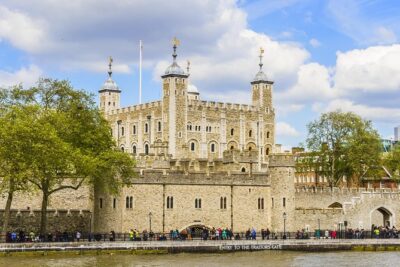 ★ 4.5Tower of London and Crown Jewels Exhibition TicketFrom $496,677 reviews
 ★ 4.5Westminster to Tower Bridge River Thames CruiseFrom $186,127 reviews
 ★ 4.5London Sightseeing Tour: Guard Change with Tower of London OptionFrom $952,672 reviews
 ★ 3.5The London Pass®: 100+ Things To Do – Includes Tower BridgeFrom $1351,916 reviews
 ★ 4.5Tower of London Early Access w/ Beefeater and JewelsFrom $551,639 reviews
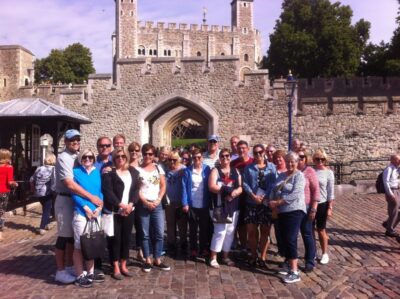 ★ 4.7Easy Access Tower of London and Crown Jewels TourFrom $1201,189 reviews
 ★ 4.5Tower of London: Crown Jewels & Beefeater Opening CeremonyFrom $88969 reviews
Browse the lists this tour appears in