
Reviewed · BRITISH MUSEUM TOURS
The British Museum: a highlights tour with a TV historian
The British Museum gets way more fun with a pro guide. This 3-hour private highlights tour brings you to the museum’s biggest names, but the best part is how the historian explains what you’re seeing and why it ended up here.
I like the personal service of a private group, because you can actually keep up and ask questions as you go. I also like the way the guide connects objects to bigger human stories, from writing systems to empire, rights, and even the way people fake history.
One possible drawback: the tour packs a lot into a short visit, so you’ll want to arrive ready to walk and keep moving.
In This Review
- Key things I’d plan around
- Starting in the Reading Room: how the tour sets your bearings
- Rosetta Stone to scripts: why translation is the real star
- Empire, rights, and war: getting past the postcard version
- Fakes, acquisition stories, and the question of who owns history
- Cross-world highlights you can actually remember
- Price and logistics: free museum tickets, paid storytelling
- Should you book this British Museum highlights tour?
- FAQ
- How long is the British Museum highlights tour?
- What language is the tour offered in?
- Is admission included in the price?
- Where do we meet for the tour?
- What time does the tour start?
- Is this a private tour?
- Are service animals allowed?
- What if I need to cancel?
Key things I’d plan around
- A TV-historian style guide (Loona) who uses clear, story-driven explanations and keeps the pace friendly
- Rosetta Stone and cuneiform translation made understandable in the context of real objects
- Controversy and acquisition stories, including how collections formed and why that matters
- Fakes-focused stops, with crystal skulls and mermaids to show how claims spread
- Big-name highlights plus deep cuts, from Sutton Hoo to Benin Bronzes and the Lewis Chess pieces
More among the marbles and mummies
- London: British Museum Guided Tour
★ 4.3 · 1,182 reviews - British Museum London Guided Tour Semi-Private 8ppl Max
★ 5.0 · 984 reviews - London: British Museum Guided Tour with Entrance Tickets
★ 4.9 · 748 reviews - London: Tour of the British Museum
★ 4.1 · 678 reviews
Starting in the Reading Room: how the tour sets your bearings

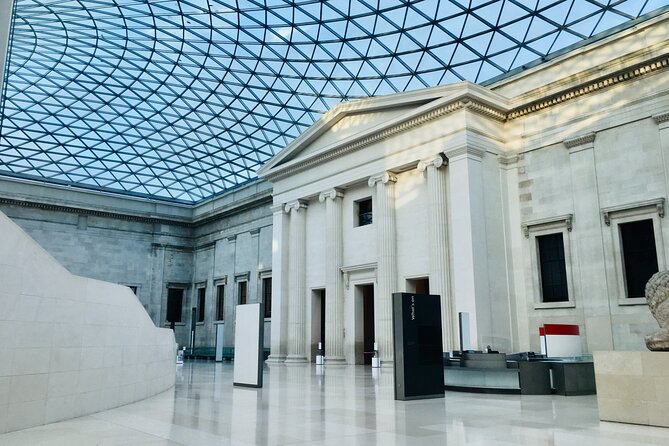
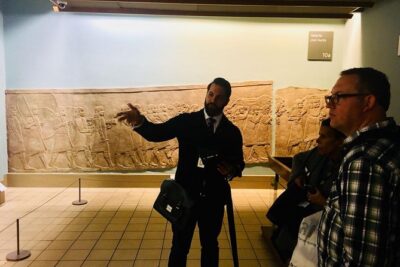
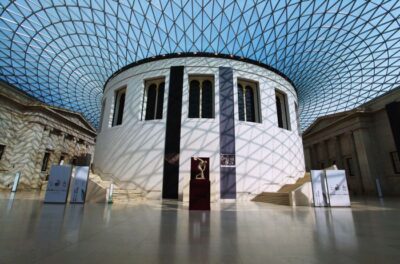
You meet at the British Museum Reading Room on Great Russell Street, with the tour starting at 11:00 am. From there, you’re guided toward the museum’s major highlights, but the real value begins early: you get an organized route through a huge place that can feel like a maze without help.
The best part is the guide’s angle. This isn’t just a list of famous artifacts. You’re hearing what they mean, what they were used for, and how people have interpreted them over time. The guide is also described as a former British Museum staff tour guide with hands-on experience, including supervising sleepovers with the mummies. That kind of background usually shows up as confidence in the storytelling and comfort with the space.
And yes, this tour is built to work for more than one kind of curiosity. If you’re with kids who aren’t wild about history, the approach can shift toward pop references like Harry Potter and modern-life comparisons, plus Hollywood-style story cues. That matters because the British Museum can be intimidating if you expect it to be only for serious scholars.
Practical note: the museum itself is free, but you still need timed entry tickets from the museum’s own website. Plan extra time for security and getting in. Even a smart tour can’t fix a slow entry line.
Rosetta Stone to scripts: why translation is the real star
The tour spotlights how humans figured out how to read the past. Two of the most important stops are the Rosetta Stone and the section on cuneiform, including how it was translated. Even if you’ve seen photos before, having a guide explain the logic behind decipherment helps everything click. You’re not just staring at symbols. You’re learning how scholars connected clues across languages and time.
This is where the tour feels different from a self-guided visit. Without context, ancient writing can look like abstract art or random marks. With the guide’s framing, you start seeing translation as detective work—pattern recognition, comparison, and the slow process of turning unknown scripts into readable history.
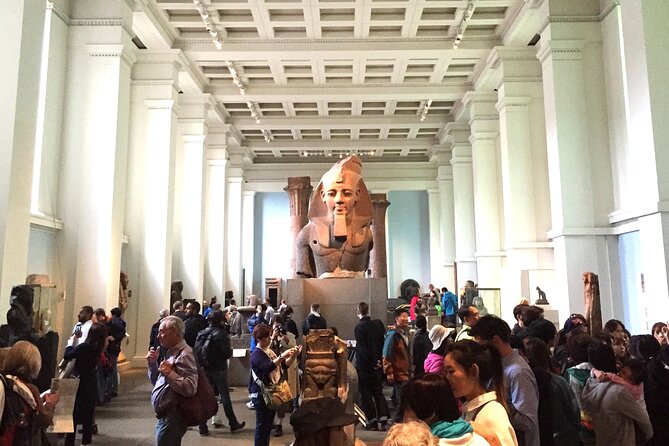
You’ll also get related “reading the world” moments through other headline objects. For example, the tour includes the bust of Rameses II and a wide range of items connected to ancient cultures, including Mayan carvings and Assyrian war machine themes. The point isn’t to memorize details. It’s to understand how different civilizations recorded power, belief, and daily life—and how those records survived.
For me, the best value is how the tour keeps the story moving between regions. You’re not stuck inside one culture for the whole time. Instead, you get a guided path through the idea that writing and communication shaped everything: law, empire, trade, religion, and propaganda.
If you want to geek out, this is the part that rewards you. If you want something more accessible, it still works, because the explanation is focused on what the objects do in the bigger story of human understanding.
Empire, rights, and war: getting past the postcard version
One thing I appreciate about this tour is that it doesn’t treat artifacts like trophies behind glass. You get the sense that they were made for real reasons—celebration, control, ritual, and sometimes propaganda.
The itinerary includes objects tied to military power, including the Assyrian war machine. That kind of stop helps you picture an empire not as a name in a textbook, but as an organized system built to project force. You’re also taken through the “who had authority” story with highlights like the bust of Rameses II and sections linked to other civilizations and rulers.
Then there’s the stop described as the first ever declaration of human rights. Even if you don’t know the background going in, a guided explanation helps you see why an artifact can become a moral and political reference point far beyond its original time. It’s a reminder that history isn’t only about rulers and battles. It’s also about ideas people argued over—and how those ideas traveled.
The tour also includes major “timeline anchors,” such as Anglo Saxon Sutton Hoo, the world’s oldest epic story, and the Parthenon sculptures. These stops help you understand why museums obsess over context: it’s not enough that something is famous. You need to know what it was, what it signaled, and what survived.
One drawback to flag: because the tour is a highlights route in about three hours, you won’t have hours for a single object. You’ll get strong explanations and an impressive number of stops, but if you’re the type who wants long, quiet time in front of one artifact, you may want to pair this tour with extra unscheduled museum time after.
Still deciding? A handful more London outings we rated



Fakes, acquisition stories, and the question of who owns history
A museum highlight tour can sometimes feel like a greatest-hits playlist. This one makes room for the harder questions, and that’s a major reason it’s so memorable.
You’ll hit a section called Fakes! Crystal skulls and mermaids. That stop is valuable because it trains your eye and your skepticism. It’s easy to think a museum label settles every question, but the guide’s focus on fakes helps you understand how claims can spread and how evidence gets weighed.
You’ll also hear acquisition stories—how objects came into the museum’s collection, not just what they look like. That’s the kind of context many visitors miss because they’re only scanning for names. The tour frames acquisitions as part of the artifact’s story, not a footnote.
And the tour includes disputed or heavily discussed classics like the Parthenon sculptures (often linked to the Elgin Marbles conversation). Whether you come in with strong opinions or none at all, a guided route makes it easier to see why the collecting question remains active today: it’s not only about what’s inside the building. It’s also about who removed objects, who claims cultural ownership, and how institutions explain their choices.
This is also where the guide’s personality matters. In one review, Loona is credited with making behind-the-scenes stories feel personal and immediate. That kind of storytelling helps you hold two truths at once: these objects are stunning, and their histories include human conflict and power.
If your goal is to leave with a richer, more honest museum experience, this section is a winner. If your goal is only pretty artifacts and quick photos, you may find the acquisition talk more than you expected—but it’s part of why the tour feels real.
Cross-world highlights you can actually remember
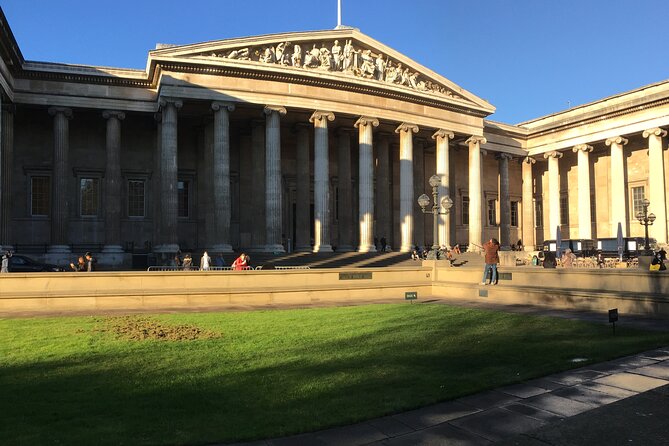
The British Museum is a world-spanning collection. The challenge is remembering what you saw and why it mattered. This tour helps because it builds a path you can follow, linking objects into themes: writing, power, belief, trade, and the way stories travel across geography.
Here are some of the highlights you’ll cover:
Egypt and beyond: the Rosetta Stone and hieroglyph decipherment themes, plus the bust of Rameses II.
Native and American connections: Aztec jewellery worn by Montezuma and Mayan carvings.
African and European craftsmanship: Benin Bronzes and Celtic jewellery.
Mind-bending puzzles: the Lewis Chess pieces, which feel like art and technology meeting on the same board.
Global belief and iconography: a Chinese Buddha and a Shiva statue from India.
Iconic “how did they move so far” objects: an Easter Island statue and other cross-cultural artifacts that show how early societies imagined the wider world.
You’ll also see famous “old-world names” that many people recognize only from posters—like the Lewis Chess pieces, Parthenon sculptures, and the Anglo Saxon Sutton Hoo material. With a guide, those stops stop being random trophies and start becoming evidence of how people lived.
One especially smart touch from the reviews is the emphasis on pacing and breaks. The tour keeps things moving, but it doesn’t feel like a sprint. You get time to catch your breath and reset your eyes, which matters because the museum can overwhelm you even when you’re excited.
If you’re traveling with mixed interests, this variety is practical. You won’t only get Egypt. You won’t only get Europe. You’ll see a spread that fits both your curiosity and your patience level.
Price and logistics: free museum tickets, paid storytelling
This tour keeps the cost story simple: you pay for guiding services only. The museum entry is free, but you are advised to book your own free timed entry ticket directly through the British Museum website. This is the part you should treat as non-optional planning. Free doesn’t mean easy walk-up access.
The tour duration is about 3 hours, and it’s offered in English. It’s also a private tour, meaning only your group participates. That’s a real value point: you’re not competing with strangers for attention or getting stuck listening to unrelated group needs.
Timing matters too. The tour starts at 11:00 am, and you should allow time to get inside the museum. One key tip from the experience is to book your ticket a few days in advance because timed entries can sell out even though the museum itself is free.
Who this suits best:
- You want top British Museum highlights without getting lost
- You care about context: translation, empire, rights, and acquisition questions
- You’re traveling with kids or teens and need a guide who can make ancient stuff feel relevant (the guide’s Harry Potter and pop-culture style approach is specifically mentioned)
- You like the idea of someone like Loona, with real museum experience, guiding you instead of just reciting facts
Should you book this British Museum highlights tour?
If you’re choosing between wandering on your own and hiring a guide, I’d lean toward booking this one. The strongest reason is the mix: major artifacts plus stories you won’t easily find on your own, including decipherment (Rosetta Stone and cuneiform), fakes, and acquisition context. Add the private pacing and the guide’s proven ability to explain in a way that works for different ages, and it’s good value for a short visit.
I’d skip it only if you want slow, quiet time in front of a single gallery. This tour is built to cover a lot of ground in about three hours. For most people, that’s exactly what you need to see the museum’s headline works and leave with clearer meaning in your head.
FAQ
How long is the British Museum highlights tour?
It’s about 3 hours.
What language is the tour offered in?
The tour is offered in English.
Is admission included in the price?
The museum entry ticket is free, but you should book your own free timed entry ticket from the British Museum’s website. The tour itself includes guiding services only.
Where do we meet for the tour?
You start at the British Museum Reading Room, Great Russell St, London, UK.
What time does the tour start?
The start time listed is 11:00 am.
Is this a private tour?
Yes. It’s a private tour/activity, so only your group participates.
Are service animals allowed?
Yes, service animals are allowed.
What if I need to cancel?
You can cancel for a full refund if you cancel at least 24 hours before the experience starts. If you cancel less than 24 hours before, the amount paid is not refunded. The experience may also be canceled if a minimum number of travelers isn’t met, with an alternative date offered or a full refund.
More Tours in London
- From London: Harry Potter Warner Bros Studio Tour
★ 4.7 · 26,588 reviews - Magical London: Harry Potter Guided Walking Tour
★ 4.7 · 22,044 reviews - London: Warner Bros. Studio Harry Potter Tour & Branded Bus
★ 4.7 · 19,194 reviews - London Big Bus Hop-On Hop-Off Tour with Optional River Cruise
★ 3.5 · 10,803 reviews - London Small Group Tour of Historical Pubs
★ 5.0 · 10,422 reviews
More Tour Reviews in London
- From London: Harry Potter Warner Bros Studio Tour
★ 4.7 · 26,588 reviews - London: Westminster to Greenwich River Thames Cruise
★ 4.5 · 22,836 reviews - Magical London: Harry Potter Guided Walking Tour
★ 4.7 · 22,044 reviews - London: Madame Tussauds London
★ 4.6 · 20,915 reviews - London: Warner Bros. Studio Harry Potter Tour & Branded Bus
★ 4.7 · 19,194 reviews
The British Museum, Continued
- London: British Museum Guided Tour
★ 4.3 · 1,182 reviews - British Museum London Guided Tour Semi-Private 8ppl Max
★ 5.0 · 984 reviews - London: British Museum Guided Tour with Entrance Tickets
★ 4.9 · 748 reviews - London: Tour of the British Museum
★ 4.1 · 678 reviews - London: British Museum Audio Tour & Priority Entrance Ticket
★ 4.5 · 631 reviews
Just reviewed around London





British Museum Tours, compared.
 ★ 4.3British Museum Guided TourFrom $231,182 reviews
 ★ 5.0British Museum London Guided Tour Semi-Private 8ppl MaxFrom $108984 reviews
 ★ 4.9British Museum Guided Tour with Entrance TicketsFrom $39748 reviews
 ★ 4.1Tour of the British MuseumFrom $14678 reviews
 ★ 4.5British Museum Audio Tour & Priority Entrance TicketFrom $9631 reviews
 ★ 5.0The British Museum London – Exclusive Guided Museum TourFrom $108555 reviews
 ★ 4.2Afternoon Tea at the British MuseumFrom $58511 reviews
 ★ 4.0British Museum Guided TourFrom $18470 reviews
Browse the lists this tour appears in