
Reviewed · CITY TOURS
Slave Trade Money Trail Tour in the City of London
Money, maps, and painful truths. This 3-hour walk through the City of London connects major money-making addresses to the transatlantic slave trade, with stops that make the city’s skyline feel personal and unsettling. I love that you get a tour booklet to keep the thread going after the tour ends.
I also like how the guide, Darrel Blake, turns information into something you actively process, not just stuff you hear. He brings artifacts, uses a clear delivery style, and prompts questions that keep the group engaged.
The only real downside is the subject matter. This is emotional and morally tough material, so if you want a light afternoon or a feel-good history tour, this won’t match your mood.
In This Review
- Key things I’d watch for on this tour
- Following the money: why this City of London route hits differently
- The 12:00 start at the Royal Exchange: logistics that matter
- Stop 1: The City of London (Bank area) and where finance got tangled up
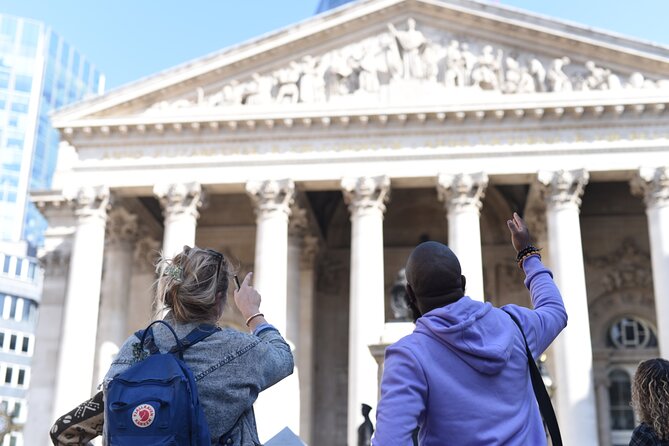
- Stop 2: The Royal Exchange building and commercial power at work
- Stop 3: 20 Fenchurch Street, shipping headquarters, and long time for context
- Stop 4: Lloyd’s of London and underwriting the slave trade
- Stop 5: Borough Market, sugar and tobacco, and the everyday aftertaste
- Darrel Blake’s guiding style: clear, interactive, and personal without getting sloppy
- Price and value: what you get for $48.01
- Who this tour suits best (and who should think twice)
- Should you book this Slave Trade Money Trail Tour?
- FAQ
- What is the duration of the Slave Trade Money Trail Tour in the City of London?
- How much does the tour cost?
- Where does the tour start and end?
- What time does the tour start?
- What’s included in the price?
- Is lunch or bottled water included?
- Is the tour in English?
- How big is the group?
- Is Borough Market admission included?
- What’s the cancellation policy?
Key things I’d watch for on this tour
- Short stops in the City of London, heavy meaning in the details—you move fast, but nothing feels rushed.
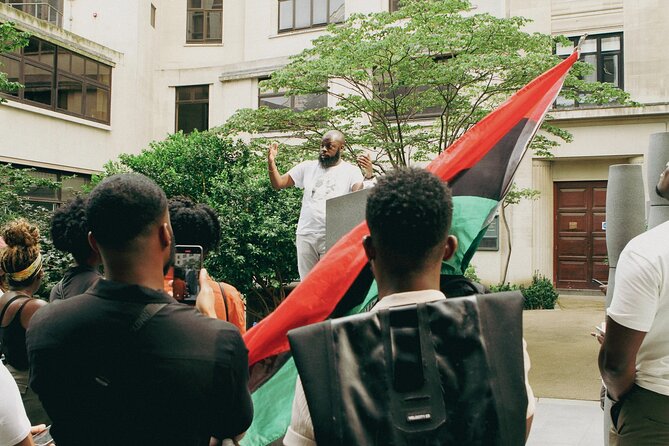
- Darrel Blake’s approach—clear explanations plus artifacts and interactive moments.
- A long look at 20 Fenchurch Street—the shipping-and-commerce side gets more time than you’d expect.
- Lloyd’s of London gets attention for underwriting—you see how risk and profit worked together.
- Borough Market links money to everyday goods—sugar and tobacco come into the story.
- A small group format—the max group size is 30, which helps the pace and conversation.
Still deciding? A handful more London outings we rated
- City Sightseeing London Hop-On Hop-Off Bus & Bookable Extras
★ 4.4 · 7,374 reviews - City Sightseeing London Hop-On Hop-Off Bus Tour & Bookable Extras
★ 4.0 · 1,224 reviews - London: Go City Explorer Pass® – Tickets for 2-7 Attractions
★ 4.3 · 1,111 reviews - Private Windsor Castle, Stonehenge, The City of Bath Day Tour
★ 5.0 · 468 reviews
Following the money: why this City of London route hits differently
Some London tours feel like a guided postcard tour: pretty buildings, neat dates, quick photo stops. This one works differently. You’re walking through the financial heart of the city and learning how institutions and businesses that handled commerce also intersected with the transatlantic slave trade.
What makes the experience valuable for you is the way the tour uses place as evidence. Instead of only talking about the past in the abstract, you’re guided to look at recognizable addresses—Bank-area finance streets, the Royal Exchange, Lloyd’s of London, and the trade hub area around Borough Market—and connect them to how money moved.
It’s also well suited to people who like context. If you enjoy understanding how an empire produced wealth, and how that wealth shaped cities, this fits your interests. If you want a comfortable “history as entertainment” style, you may find it harder to stay at ease.
The 12:00 start at the Royal Exchange: logistics that matter
The tour starts at Royal Exchange, London EC3V 3LL with a 12:00 pm start time, and it ends at Borough Market, London SE1 9AL. It runs about 3 hours, and the walking is set up into several timed stops, so it doesn’t drag endlessly.
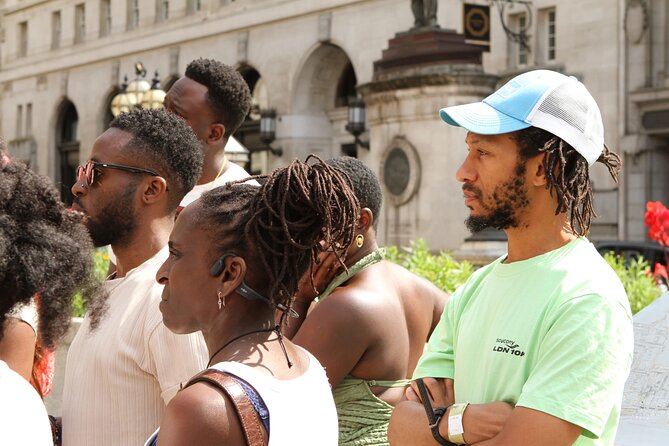
This is also a small-group tour, with a maximum of 30 people. That’s a plus if you like asking questions or if you don’t want your whole experience to happen in a single “listen-only” lane.
A few practical notes you can plan around:
- You’ll use a mobile ticket.
- It’s English.
- You’re close to public transportation.
- Service animals are allowed.
- The experience is marked as requiring good weather, and you’ll be offered a different date or a full refund if weather cancels it.
Because lunch and bottled water aren’t included, I recommend bringing a small snack and planning your water ahead of time. This is the kind of tour where you may forget to check the clock.
Stop 1: The City of London (Bank area) and where finance got tangled up
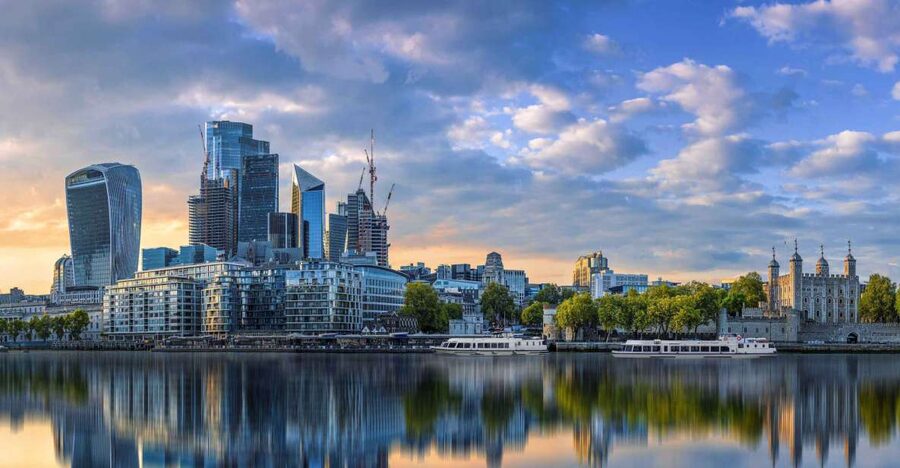
Your first stop is in the historic City of London, specifically the Bank area, where the tour zeroes in on financial institutions linked to the transatlantic slave trade. Even though the stop is short (about 15 minutes), it sets the tone: this wasn’t only a far-away tragedy. It was connected to the machinery of money back home.
This is a strong opening because it helps you shift your mental picture. You start thinking about shipping and plantations, sure, but you also start thinking about banking and finance—how value was managed, tracked, and moved.
If you do one thing here, do this: look at the area as an ecosystem, not a backdrop. The buildings and street grid are part of a system that supported commerce. Once you see that, the next stops make more sense.


Stop 2: The Royal Exchange building and commercial power at work
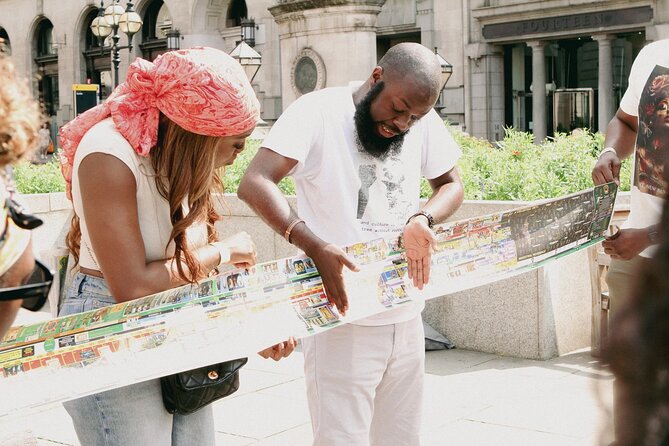
Next up is the Royal Exchange Building, where the story focuses on how this grand commercial space helped facilitate the transatlantic slave trade. The Royal Exchange is exactly the kind of place that can look purely ceremonial if you don’t know what it did in practice.
This stop lasts around 20 minutes, and it’s a good pacing break. You get time for explanation and time to take in how a “center of business” setting can also be a center of harm when the incentives are wrong.
One thing I appreciated in this segment is the framing. The tour doesn’t just say the institutions were involved; it connects involvement to the commercial role they played. You leave with a more precise idea of how trade systems functioned, not only what happened to people overseas.
Stop 3: 20 Fenchurch Street, shipping headquarters, and long time for context
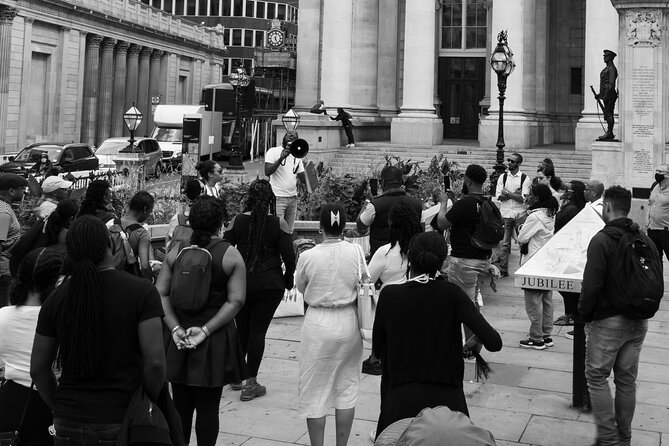
Then comes 20 Fenchurch Street, and it’s the longest stop on the route, at about 50 minutes. That extra time matters, because the tour uses this area to talk about the shipping industry ties and major companies that profited—companies that were headquartered here.
This is where the tour becomes especially useful if you’re the type who likes to understand mechanics. You’re learning how trade moved, who helped it run, and how profitable ventures created their own “normal” in the everyday business world.
Practical tip: wear comfortable shoes and slow down your pace here. Fifty minutes gives you room to absorb, ask questions, and let the story build. It’s also a segment where you’ll likely feel the weight of the topic more sharply than you did at earlier stops.
The tour keeps you moving, but this is the point where it can start to feel less like a history walk and more like a guided reckoning.
Stop 4: Lloyd’s of London and underwriting the slave trade
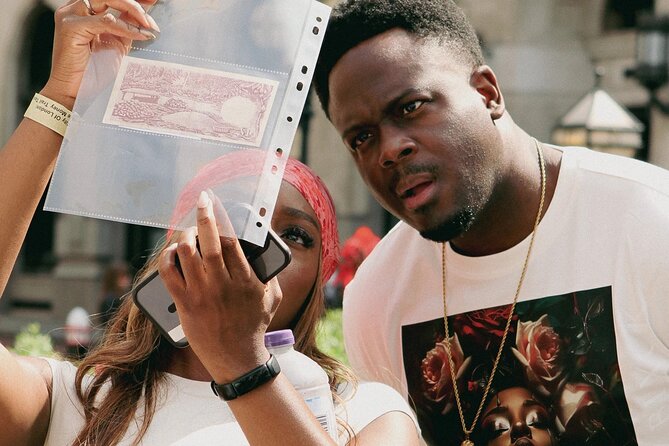
At Lloyd’s of London, the tour turns to an institution that’s often described as iconic for insurance and risk—this stop highlights how Lloyd’s played a role in underwriting the transatlantic slave trade. The stop is about 20 minutes.
This is a powerful lesson because it shows the trade wasn’t only driven by ships and people. Financial risk, coverage, and the ability to insure a voyage helped make the system repeatable.
Even if you’re not a finance person, you can follow the logic. When you insure risk, you encourage activity. When you underwrite transactions, you can turn cruelty into business-as-usual—at least from the perspective of profit.
I’d recommend using this stop to ask yourself a question: what gets normalized when money keeps finding a way to protect the investment? This tour pushes you right up against that idea.
Stop 5: Borough Market, sugar and tobacco, and the everyday aftertaste
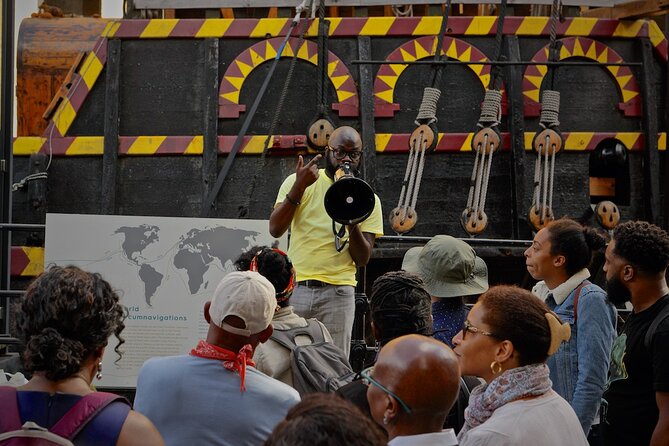
The final stop is Borough Market (about 20 minutes). Here the tour connects the historic trading hub to goods produced through enslaved labor—specifically mentioning commodities like sugar and tobacco.
This last segment is essential because it drags the story back to your present reality. Food and everyday items can carry long shadows. By ending here, the tour helps you see how slavery-related wealth wasn’t only about ships leaving London—it was also about products returning and feeding markets.
There’s one practical note: admission at this stop isn’t included (ticket not included). That doesn’t mean you can’t enjoy Borough Market at all, but it does mean you should expect that any paid entry or specific attractions may cost extra on your own.
If you can, bring your curiosity. Look at the market as a living place while also holding the moral context the tour gives you. That combination is what makes the ending hit.
Darrel Blake’s guiding style: clear, interactive, and personal without getting sloppy

The guide for this experience is Darrel Blake, and his delivery is one of the biggest reasons this tour earns high marks. The overall style you’ll notice right away is that he’s clear and concise, and he’s not afraid to stay honest about what happened and what it meant for London.
You’ll also notice an interactive edge. In a few moments he’ll prompt you to think back and stay engaged, rather than drifting into passive listening. That may sound small, but it changes the feel of the tour—your brain stays “on.”
He also shares personal experiences and artifacts, which help ground the story in more than just facts on a timeline. The artifacts don’t turn the tour into a museum, but they add texture that you can’t get from reading plaques alone.
And despite the heavy topic, there’s a human factor. The way the tour is organized and the group size keep it from feeling cold or lecture-like. You’re guided through the material, and you’re given space to react.
Price and value: what you get for $48.01
At $48.01 per person for about 3 hours, this isn’t a “cheap-and-cheerful” outing. But it’s also not priced like an all-day private experience. What justifies the value is the combination of:
- A real guide (Darrel Blake),
- Multiple timed stops in major financial locations,
- A tour booklet you keep,
- And a structure that gives extra time where it matters, like 20 Fenchurch Street.
Most of the stop locations don’t require paid admission for participation (the tour notes ticketed access as free at the City of London, Royal Exchange, 20 Fenchurch Street, and Lloyd’s of London). The one place where ticket coverage is flagged is Borough Market, where an admission ticket isn’t included.
The main extra cost to plan for is what you didn’t get: lunch and bottled water. If you show up hungry, your energy will drop mid-tour. If you show up hydrated, you’ll stay sharper for the emotional parts.
Another value detail: the tour is typically booked in advance (around 42 days on average). If this matters to your schedule, don’t wait for the last week—pick a date that fits, then plan the rest of your day around it.
Who this tour suits best (and who should think twice)
This experience fits you if you’re drawn to history that explains systems, not just events. It also fits well if you care about social justice, human rights, and how historical decisions shape modern cities.
It’s especially good for people who already visit London’s major landmarks and want a different angle—one that links the visible city (buildings, markets, institutions) to invisible power and profit.
If you’re bringing kids or teens, you might like that the tour seems designed for clear understanding and room for questions, based on how the experience is described. Still, because the topic is heavy, use your judgment for age and emotional readiness.
If you need a breezy sightseeing afternoon, this won’t be the right mood. The point is to face what the city profited from and what the legacy left behind.
Should you book this Slave Trade Money Trail Tour?
If you want a London walk that connects famous addresses to the transatlantic slave trade in a direct, specific way, I’d say book it. The strongest reasons are the route through real financial sites, the guide-led clarity, the tour booklet, and the way the pacing gives you time where the story needs it most (especially around shipping and companies).
Do it if you’re curious and willing to sit with uncomfortable truth. Don’t do it if you’re looking for a relaxed “see and smile” history tour.
Finally, plan your afternoon like an adult: wear good shoes, bring water and a snack, and make peace with the fact that by the time you reach Borough Market, you’ll be thinking about more than lunch.
FAQ
What is the duration of the Slave Trade Money Trail Tour in the City of London?
It’s about 3 hours.
How much does the tour cost?
The price is $48.01 per person.
Where does the tour start and end?
It starts at the Royal Exchange, London EC3V 3LL and ends at Borough Market, London SE1 9AL.
What time does the tour start?
The start time is 12:00 pm.
What’s included in the price?
The tour includes a tour guide.
Is lunch or bottled water included?
No. Lunch and bottled water are not included.
Is the tour in English?
Yes, it’s offered in English.
How big is the group?
The tour has a maximum of 30 travelers.
Is Borough Market admission included?
No. Admission at Borough Market is not included.
What’s the cancellation policy?
You can cancel for a full refund up to 24 hours before the experience starts. If you cancel less than 24 hours before, the amount you paid won’t be refunded. If the tour is canceled due to poor weather, you’ll be offered a different date or a full refund. Confirmation is received at the time of booking.
More City Tours in London
- City Sightseeing London Hop-On Hop-Off Bus & Bookable Extras
★ 4.4 · 7,374 reviews - City Sightseeing London Hop-On Hop-Off Bus Tour & Bookable Extras
★ 4.0 · 1,224 reviews - London: Go City Explorer Pass® – Tickets for 2-7 Attractions
★ 4.3 · 1,111 reviews - Private Windsor Castle, Stonehenge, The City of Bath Day Tour
★ 5.0 · 468 reviews - London: Speedboat Tour Through Heart of the City
★ 5.0 · 387 reviews
More Tours in London
- From London: Harry Potter Warner Bros Studio Tour
★ 4.7 · 26,588 reviews - Magical London: Harry Potter Guided Walking Tour
★ 4.7 · 22,044 reviews - London: Warner Bros. Studio Harry Potter Tour & Branded Bus
★ 4.7 · 19,194 reviews - London Big Bus Hop-On Hop-Off Tour with Optional River Cruise
★ 3.5 · 10,803 reviews - London Small Group Tour of Historical Pubs
★ 5.0 · 10,422 reviews
More Tour Reviews in London
- From London: Harry Potter Warner Bros Studio Tour
★ 4.7 · 26,588 reviews - London: Westminster to Greenwich River Thames Cruise
★ 4.5 · 22,836 reviews - Magical London: Harry Potter Guided Walking Tour
★ 4.7 · 22,044 reviews - London: Madame Tussauds London
★ 4.6 · 20,915 reviews - London: Warner Bros. Studio Harry Potter Tour & Branded Bus
★ 4.7 · 19,194 reviews
Just reviewed around London





City Tours, compared.
 ★ 4.4City Sightseeing London Hop-On Hop-Off Bus & Bookable ExtrasFrom $337,374 reviews
 ★ 4.0City Sightseeing London Hop-On Hop-Off Bus Tour & Bookable ExtrasFrom $371,224 reviews
 ★ 4.3Go City Explorer Pass® – Tickets for 2-7 AttractionsFrom $721,111 reviews
 ★ 5.0Private Windsor Castle, Stonehenge, The City of Bath Day TourFrom $991468 reviews
 ★ 5.0Speedboat Tour Through Heart of the CityFrom $66387 reviews
 ★ 4.0Upside Down House Westfield White City Entry TicketFrom $10338 reviews
 ★ 4.5Westminster Abbey Priority Access & Guided City TourFrom $73282 reviews
 ★ 5.0Heathrow London Airport Transfer to City centerFrom $94213 reviews