
Reviewed · HALF-DAY
Roman & Medieval London: Private Half-Day Tour in a Black Cab
Roman London rides better than you think. A private black cab tour strings together standout Roman and medieval landmarks with quick, story-heavy stops that skip the worst crowds.
I love the direct access to physical Roman remains, especially the Roman wall pieces you can actually see around the City. I also love that your driver guide can tune the route to your group, which matters when you have mixed ages or mobility needs.
The trade-off is that the subject matter gets dark at points, and you should expect brisk pacing through execution sites and grim tales, not a slow stroll.
In This Review
- Key things I’d plan around
- Why a black cab is the smart way to do Roman and medieval London
- What your four hours really feels like (and why it matters)
- Guildhall Art Gallery: Roman wall remains and the Magna Carta connection
- Tower of London area: cobblestones, Dead Man’s Hole, and real grit
- Tower Hill: where a phrase is born
- St. Paul’s Cathedral and the Great Fire: Wren’s city redesign
- Old Bailey and the justice machinery: Old Newgate’s gallows
- Guildhall Medieval Great Hall and the City’s survival story
- Palaces near the Thames: Tudor Henry VIII, without the heavy museum time
- One of London’s oldest thoroughfares: watching the street remember the past
- Charterhouse: 1348 origins and Black Death echoes
- Execution sites in the City: Smithfield Market and the Wallace story
- St Bartholomew the Great and Holy Sepulchre: medieval worship with darker footnotes
- Prospect of Whitby pub: Tudor roots and a noose by the river
- St. Bartholomew’s Hospital Museum: continuity since the 11th century
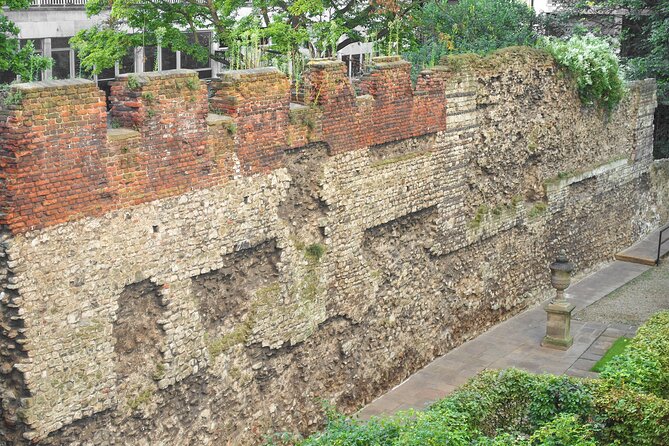
- Cooper’s Row and the Roman Wall: the physical proof
- St Mary Le Bow and Pickfords Wharf: Norman worship and medieval palace leftovers
- Clink Street and the Clink Prison: the place behind the nickname
- Southwark Anglican Cathedral and All Hallows by the Tower: churches that survived London’s worst days
- Value check: who this private cab tour is best for
- Should you book this Roman-and-medieval black cab tour?
- FAQ
- How long is the private black cab tour?
- How many people can be in a group?
- Where does the tour start, and is pickup included?
- Is the tour offered in English?
- Are admission tickets included for every stop?
- Is there a cancellation option if plans change?
Key things I’d plan around
- Private cab, not a walking grind: You get driven between sites, with short on-foot viewing windows.
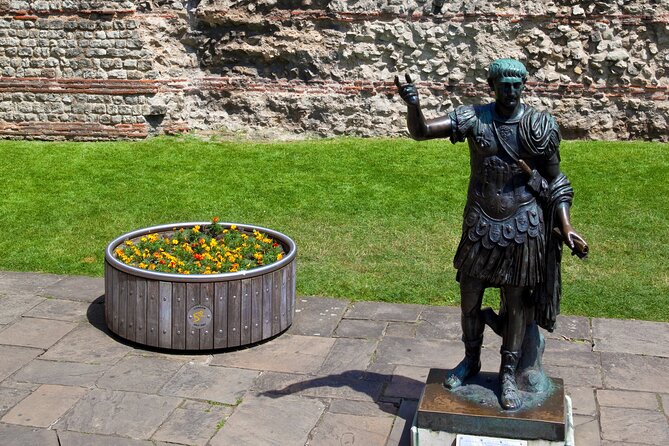
- Roman wall sightings in multiple places: From the Guildhall area down to Cooper’s Row.
- Medieval power centers nearby: Palaces, hospitals, and churches that survived war and fire.
- Execution-site storytelling: Expect sites connected to hangings and other grim episodes.
- Short stops, guided focus: You’ll see a lot in four hours, but interiors can vary by stop.
Still deciding? A handful more London outings we rated
- Harry Potter Studios & Private Transfer from Central London
★ 4.5 · 6,134 reviews - The Premier Classic London: Private 4-Hour Tour in a Black Cab
★ 5.0 · 2,737 reviews - Stonehenge Inner Circle Private Tour from London with Bath Visit
★ 5.0 · 1,909 reviews - Private Tour: Black Taxi Tour of London
★ 5.0 · 1,153 reviews
Why a black cab is the smart way to do Roman and medieval London
London can be frustrating on foot. Even when the sights are close, crowds and traffic make it feel like you’re working harder than sightseeing. This tour solves that by using a black cab for private transportation, so your driver guide can move you through quieter backstreets and keep your time aimed at real places, not bus delays.
The other big win is the feel of the experience. Instead of a large group being funneled into the same photo spots, you’re in a small bubble with a driver guide who can answer questions as you go. If your group leans Roman rather than medieval, you can steer the emphasis that way. In two of the best guide experiences shared, Greg and Mark both listened closely and adapted the pace.
One small thing to know: because the stops are short, you won’t linger like you might on a self-guided day. That’s great for covering ground in a half day, but it’s not ideal if you want long, quiet museum-style visits at every stop.
What your four hours really feels like (and why it matters)
This is an approx. 4-hour private tour for up to 6 people. That group size is part of the value, because it’s large enough to travel comfortably together but small enough to keep the guide’s attention on you.
Expect a rhythm of quick look, guided story, then roll to the next area. Many stops are timed around 5 to 15 minutes, which keeps the tour from dragging. You’ll also spend a lot of time looking outward at the street level landmarks—Roman walls, cathedral exteriors, palace sites—where London’s layers show up fast.
If you’re balancing an older family member, teens, and adults, this format can work well. One review specifically noted a guide made it easy for an age span from 18 to 81, including mobility challenges. That’s where a driver guide earns their keep: timing matters when everyone has different walking comfort.
Guildhall Art Gallery: Roman wall remains and the Magna Carta connection
Your morning (or afternoon) starts around the City of London’s core, where Roman London peeks through modern streets. At Guildhall Art Gallery, you’ll get a look back into Roman-era London tied to the old Roman wall, plus a special visit to the Roman Amphitheatre at the gallery.
The standout here is the way one spot connects multiple eras. The same stop also lets you view the City Corporation’s Magna Carta, an 800-year-old document. That pairing is useful because it shows how London’s authority and storytelling evolved: from Roman civic life to medieval legal power, all within walking distance of where you’re standing.
Practical note: the Roman Amphitheatre visit is included in the experience, and the admission for this stop is listed as free. Still, because the stop is about 15 minutes, plan to keep questions short and focused. If you care most about the Roman layers, ask those first.
Still deciding? A handful more London outings we rated
Tower of London area: cobblestones, Dead Man’s Hole, and real grit
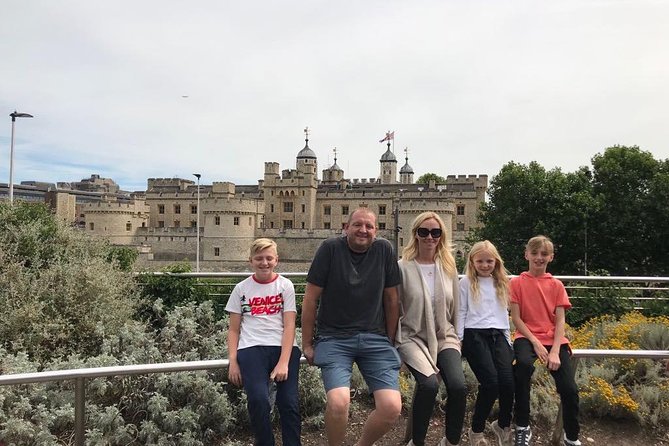
The Tower of London is a World Heritage Site, so even viewing the surrounding streets puts you in the right setting. This part of the tour adds a darker story thread by introducing Dead Man’s Hole, and it’s explicitly framed as not for the squeamish.
Here’s what I like about how the guide story is set up: it’s not just “big castle, big facts.” You’ll stand in an area where executions and imprisonment were part of day-to-day enforcement, then hear the explanations connected to that. That makes the Tower feel less like a postcard and more like a system.
This stop is also admission-ticket free as listed, with around 15 minutes set aside. That helps if you don’t want the extra time and cost of full-ticket museum roaming. One caution: the grim topic is the point here, so if your group prefers lighter stories, you might want to share that with your guide early.
Tower Hill: where a phrase is born
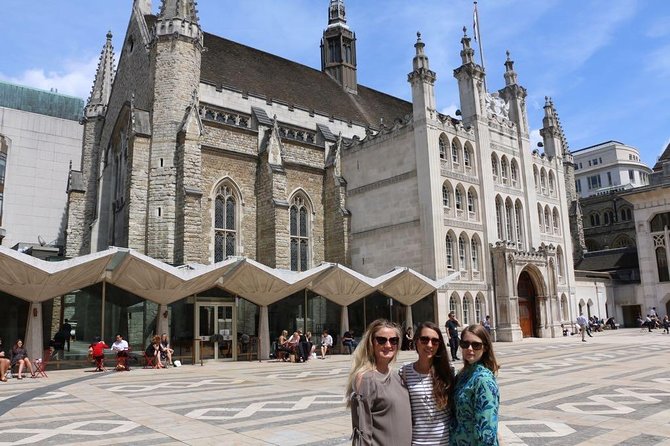
Tower Hill is another quick stop, timed around 15 minutes, but it’s built around execution-site context. The guide connects the meaning behind a well-known hanging-related phrase to what happened in this area.
This is one of those London moments where the city’s language becomes physical. If you like history as cause-and-effect—how events shaped sayings and attitudes—this stop delivers fast. If you’re sensitive to violence, just know this section stays in that lane.
Admission is listed as free at this stop, so you’re paying for the guided interpretation more than for entry.
St. Paul’s Cathedral and the Great Fire: Wren’s city redesign
From the Tower area, the tour swings toward St. Paul’s Cathedral, and it does so with a clear theme: London after disaster. You’ll hear about the Great Fire of London and then the replacement of older worship sites with Sir Christopher Wren’s architecture, including St. Paul’s Cathedral itself.
Even if you don’t go inside long, the value is in the way the guide links disaster to rebuilding. Wren’s work isn’t just famous because it’s beautiful; it’s a physical record of how the city tried to reset after catastrophe. That perspective makes the cathedral feel like an outcome, not a standalone monument.
This stop is around 10 minutes and is marked as admission-ticket free in the plan. So set expectations: you’ll get the “why it’s here” story, plus a chance to view key architectural elements, but not a full cathedral deep dive.
Old Bailey and the justice machinery: Old Newgate’s gallows
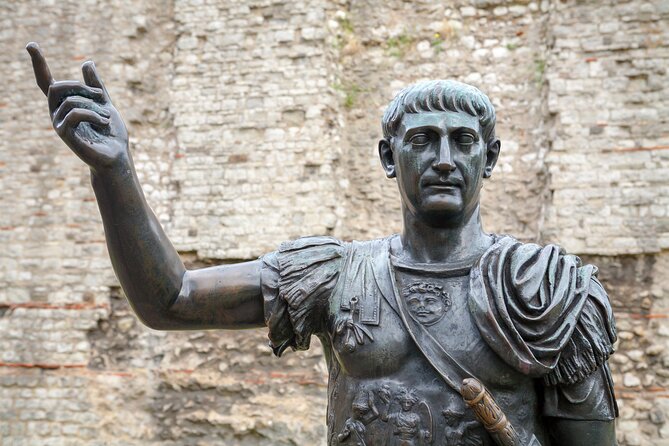
A short jump brings you to Old Bailey, the site of the gallows of Old Newgate Prison. This part is only listed as about 5 minutes and notes that admission tickets aren’t included.
So this is less about a ticketed interior and more about standing where the system worked. If you’re the type who likes to understand how justice functioned, including punishment and deterrence, this short stop fits well.
If you want more time inside, you might need a separate visit. But as a part of a half-day cab tour, it works because it keeps the story connected to the surrounding execution-era locations rather than turning it into a museum detour.
Guildhall Medieval Great Hall and the City’s survival story
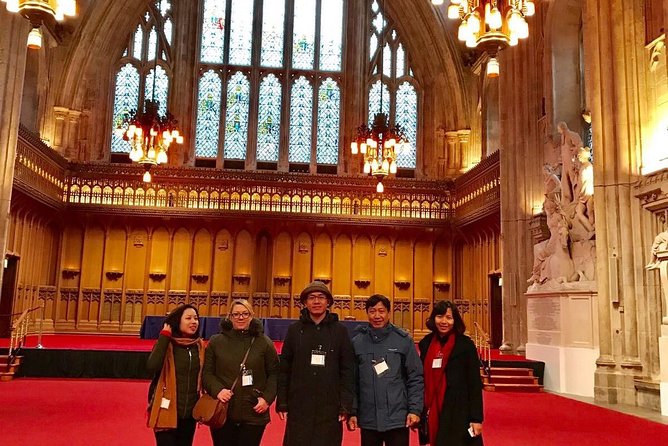
Back at Guildhall, you’ll see the Medieval Great Hall and hear why it’s a survivor despite the Blitz in World War Two. That’s an underrated angle for many people. Everyone remembers medieval London, but fewer people think about how those medieval structures outlast modern conflict.
You also return to Guildhall Art Gallery for Roman London visibility in the basement. In other words, the Roman theme isn’t a one-off. It’s reinforced in the same broader area, which helps if your brain likes repetition and reinforcement: Roman wall here, Roman wall there, then medieval civic power above.
Both Guildhall-related segments are listed with free admission in the plan, and each has about 10 to 15 minutes allocated. If you’re wondering whether you’ll feel like you’re repeating stops, this is the kind of repetition that actually makes sense because the Roman and medieval angles are different at each moment.
Palaces near the Thames: Tudor Henry VIII, without the heavy museum time
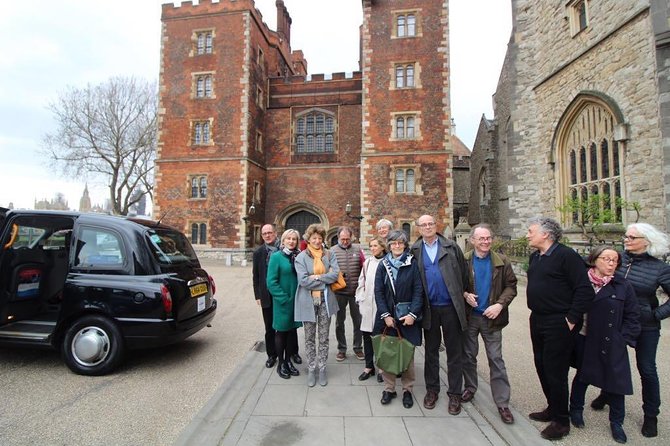
On the south bank, you’ll spend time around Lambeth Palace and St. James’s Palace, both Tudor-era and both tied to Henry VIII. The plan notes admission tickets aren’t included for these stops, which usually means expect exterior viewing and guided storytelling rather than an extended interior tour.
This matters because it keeps the half-day on track. If you only have four hours, you can’t spend them all inside. The trade is you may not see the full interiors, but you get the context: who lived here, why the Thames mattered, and how Tudor power expressed itself in physical space.
If your group is palace-obsessed and wants interiors, ask your guide what’s realistically possible within the time window. If you’re happy with guided views and stories, these stops are a good fit.
One of London’s oldest thoroughfares: watching the street remember the past
The route also includes a stop described as one of the oldest thoroughfares in London. While the name isn’t given in the details you provided, the concept is what’s useful: you’re walking in the line where long-distance movement and power corridors formed.
This is the kind of London detail that can feel abstract on your own. With a guide, the street becomes a timeline. You start understanding why certain neighborhoods and institutions cluster where they do.
Because the stop isn’t described with a specific ticketed attraction, this is likely another “story and view” window—perfect for a four-hour tour because it adds texture without stealing time from the bigger set pieces.
Charterhouse: 1348 origins and Black Death echoes
Next comes Charterhouse, described as living the nation’s history since 1348, and a former monastery in the heart of the City of London. Admission is listed as not included, so again, don’t count on a long interior museum experience in this window.
Right nearby is Charterhouse Square, where the plan points to a former plague pit for victims of the Black Death. That contrast is striking: one stop about an institutional religious and historical site, then a nearby reminder of mass suffering tied to a specific disease outbreak.
The square is timed around 5 minutes and is marked as admission free. This is short, but it lands. If you want to understand how London’s religious institutions and public health realities overlapped, this is a concentrated lesson.
Execution sites in the City: Smithfield Market and the Wallace story
Smithfield Market is a fast stop tied to execution history, including the place of execution of Sir William Wallace in the story. The plan also connects this to the popular culture memory of Braveheart, even though you’re really there to hear the medieval setting and why it mattered.
Admission is listed as free here, and the stop is about 5 minutes. That tells you what kind of experience this is: quick orientation plus guided context, not a long visit.
I like these small stops because they stop the tour from feeling like it’s only big-ticket landmarks. They anchor the stories in lived public spaces, where punishment and authority played out in the open.
St Bartholomew the Great and Holy Sepulchre: medieval worship with darker footnotes
St. Bartholomew the Great is described as a majestic medieval survivor hidden away in secret London, but admission isn’t included in this stop. The likely payoff is guided storytelling and exterior viewing, unless your guide finds a way to add time.
Then Holy Sepulchre Church brings the story back to grim human realities: body-snatchers and the meaning behind a bell-tolling reference. The stop is around 10 minutes, with free admission listed.
This is a good example of the tour’s tone. It’s not squeaky-clean museum history. It’s lived-in history, where people feared illness, theft of bodies, and punishment. If your group likes that honest darkness, you’ll probably find this section memorable.
Prospect of Whitby pub: Tudor roots and a noose by the river
Prospect of Whitby is a pub that’s described as being around since Tudor times, with a hanging noose on the river’s edge. You’ll get around 10 minutes here, and admission is listed as free.
What I like about including a pub stop (even briefly) is the way it gives you a human scale. You’re not only seeing architecture and institutions; you’re touching a place where locals and visitors have likely gathered for centuries. Even if you don’t order anything, it changes the feel of the tour.
St. Bartholomew’s Hospital Museum: continuity since the 11th century
Next is St. Bartholomew’s Hospital Museum, listed as the oldest hospital in London, with origins since the 11th century. Admission is marked as free and the stop is about 10 minutes.
If your group includes anyone who loves “how did people live” questions, hospitals usually hit those interests fast. It’s also one of the stops that can balance out the darker execution stories. You’re looking at care and continuity, not only punishment and crisis.
Again, the time is short, so think of it as a guided orientation rather than a full museum day.
Cooper’s Row and the Roman Wall: the physical proof
Cooper’s Row is one of the most concrete Roman moments on the route. It’s described as the best remaining section of the old Roman Wall, built nearly 2,000 years ago. Admission is listed as free and the stop is about 10 minutes.
This is the kind of stop that can instantly convert skeptics. Once you see Roman masonry in the real street environment, the Roman London stories stop sounding like they belong to textbooks. This is the part I’d tell friends to watch for, because it’s the clearest “you are standing on something ancient” experience in the plan.
St Mary Le Bow and Pickfords Wharf: Norman worship and medieval palace leftovers
St Mary Le Bow Church is included as a place of worship since Norman times, sitting on a street once tied to the route of monarchs. Admission is listed as free and the stop is about 10 minutes.
Then Pickfords Wharf is described as remains of Old Winchester Palace, one of the largest and most important buildings in medieval London. Admission is listed as free with about 5 minutes allocated.
These stops work because they show two angles of medieval life: religion and royal residence/power structures. They’re also quick, so you can fit them into a half day without burning time.
Clink Street and the Clink Prison: the place behind the nickname
Clink Street is described as the site of the notorious Clink Prison, associated with residence of the Mad the Bad the Sad. Admission is listed as free with about 5 minutes.
This is a short stop, but the guide’s storytelling is usually what makes it stick. It turns a street name into a character study of punishment and imprisonment outside the standard state narrative.
If your group likes crime history framed with real place-based context, you’ll probably enjoy this section. If you want purely monumental architecture, this one might feel more story-driven than visual.
Southwark Anglican Cathedral and All Hallows by the Tower: churches that survived London’s worst days
Southwark Anglican Cathedral is described as a place of worship since the 7th century, with stunning interior architecture. Admission is free and it’s about 15 minutes.
Then All Hallows by the Tower is described as the oldest surviving church in London, surviving the Great Fire and the Blitz. Admission is free and the stop is about 10 minutes.
These church stops are important because they’re about survival across shocks. When you hear the Great Fire and Blitz references tied to specific buildings, you start to understand why London’s architectural timeline is so layered. It’s not only what was built; it’s what endured.
If your group is tired of execution stories, these stops can be an emotional reset. They shift you from crisis to continuity.
Value check: who this private cab tour is best for
At $542.15 per group (up to 6), you’re paying for two things: private transportation in a black cab and an English-speaking driver guide who keeps the plan moving. If you were to do four hours of taxi use plus guided interpretation on top, the math often starts to make sense, especially for families or small groups who want one guided brain steering the day.
This tour is a good match for:
- groups who want Roman London plus medieval context without spending a whole day commuting
- people who like guided story framing over museum deep dives
- mixed-age groups, including those who need a car-based format
It may be less ideal if:
- your group prefers light, upbeat sightseeing and doesn’t want heavy execution themes
- you want long interior time at palaces, prisons, or museums (some stops note admission not included)
One more practical point: the tour’s safety setup includes a transparent partition screen and a separately controlled air-conditioning system, plus hand sanitiser availability. That’s useful if you’re traveling with health caution in mind, and it’s part of why the experience can feel more comfortable while still being private.
Should you book this Roman-and-medieval black cab tour?
I’d book it if you want a tight half-day that links Roman walls, medieval power, and the places where London’s darker episodes happened, all without dealing with big-tour crowd logistics. The short guided stops work well when you’re hungry for variety and you’d rather be steered than stuck planning every turn.
I’d think twice if your group is squeamish about execution-related stories or if you’re expecting lots of long-ticket interiors. In that case, you may be happier with a slower walking tour or a museum-focused day.
If you want Roman emphasis, send a note to your guide in advance. When Greg takes the lead with a Roman-leaning plan, the day can start near the Thames and follow routes that make the Roman layers feel connected, not random.
FAQ
How long is the private black cab tour?
It’s listed as approx. 4 hours.
How many people can be in a group?
The price is per group for up to 6 people, and it’s a private tour where only your group participates.
Where does the tour start, and is pickup included?
The meeting point is Embankment London WC2N 6NS. Pickup is also offered from any central London vacation residence and from Embankment Tube Station.
Is the tour offered in English?
Yes. It’s offered in English, with an English-speaking driver guide.
Are admission tickets included for every stop?
Not every stop includes admission. The details say some stops have admission ticket free, while others list admission ticket not included, including Old Bailey, Lambeth Palace, St. James’s Palace, Charterhouse, and Church of St. Bartholomew The Great.
Is there a cancellation option if plans change?
Yes. There’s free cancellation up to 24 hours in advance for a full refund. Changes made within 24 hours aren’t accepted, and cancellations less than 24 hours before start time won’t be refunded.
More Private in London
- Harry Potter Studios & Private Transfer from Central London
★ 4.5 · 6,134 reviews - The Premier Classic London: Private 4-Hour Tour in a Black Cab
★ 5.0 · 2,737 reviews - Stonehenge Inner Circle Private Tour from London with Bath Visit
★ 5.0 · 1,909 reviews - Private Tour: Black Taxi Tour of London
★ 5.0 · 1,153 reviews - Private London Arrival Transfer – Airport to Hotel / Accommodation
★ 3.5 · 1,085 reviews
More Tours in London
- From London: Harry Potter Warner Bros Studio Tour
★ 4.7 · 26,588 reviews - Magical London: Harry Potter Guided Walking Tour
★ 4.7 · 22,044 reviews - London: Warner Bros. Studio Harry Potter Tour & Branded Bus
★ 4.7 · 19,194 reviews - London Big Bus Hop-On Hop-Off Tour with Optional River Cruise
★ 3.5 · 10,803 reviews - London Small Group Tour of Historical Pubs
★ 5.0 · 10,422 reviews
More Tour Reviews in London
- From London: Harry Potter Warner Bros Studio Tour
★ 4.7 · 26,588 reviews - London: Westminster to Greenwich River Thames Cruise
★ 4.5 · 22,836 reviews - Magical London: Harry Potter Guided Walking Tour
★ 4.7 · 22,044 reviews - London: Madame Tussauds London
★ 4.6 · 20,915 reviews - London: Warner Bros. Studio Harry Potter Tour & Branded Bus
★ 4.7 · 19,194 reviews
Just reviewed around London





Half-Day, compared.
 ★ 4.4From London: Stonehenge Half-Day TripFrom $781,980 reviews
 ★ 4.0Stonehenge Half-Day Tour from London with AdmissionFrom $801,207 reviews
 ★ 4.4From London: Stonehenge Half-Day TourFrom $791,091 reviews
 ★ 4.4From London: Half-Day Trip to Windsor with Castle TicketsFrom $120840 reviews
 ★ 5.0Stonehenge Morning Half-Day Tour from London Including AdmissionFrom $91634 reviews
 ★ 4.9Grand London Half-Day Bicycle TourFrom $60432 reviews
★ 4.5Stonehenge Half-Day Tour from London with AdmissionFrom $80306 reviews
 ★ 4.9Half-Day Street Art Tour and WorkshopFrom $60172 reviews