
Reviewed · LIVE MUSIC & THEATRE SHOWS
Private Rock ‘n’ Roll Music Tour of Central London
London has a way of turning streets into song lyrics. This private, 3-hour walk strings together Central London stops tied to rock’s biggest names, from the Beatles to David Bowie and the Rolling Stones, with plenty of time to ask questions. You’ll start outside the London Palladium and end at Denmark Street, tracing how music, TV, radio, and fashion all collided in one compact route. It’s music history you can walk.
What I like most is the private format: it’s just your group, so the guide can tailor the pace and answer your questions as you go. I also like how the tour moves beyond the famous band names and points at the places that shaped them, like record shops, studios, pubs, and the business side of rock. One consideration: it’s a “see it, learn it, move on” route, with many stops kept intentionally short, so you’ll spend less time inside any venue (and you won’t get full admissions at certain stops).
In This Review
- Key things to know before you go
- Private Central London Rock ’n’ Roll Tour: who it’s for
- London Palladium to Broadcasting House: pop culture goes public
- Sigma 6 to Carnaby Street: where students and style shaped rock
- Kingly Street, Heddon Street, and Savile Row: Hendrix, Ziggy, and the rooftop myth
- Cordings Ltd and Hotel Café Royal: the business of style and Bowie’s big finish
- Wardour Street to Soho studios: live music, radio, and the places fans drank
- Soho Square, McCartney publishing, and Ronnie Scott’s Frith Street move
- ODEON Covent Garden to Foyles: Brian Epstein’s theater plans and punk’s early gig
- Denmark Street: guitars, publishing deals, and the punk graffiti legend
- Price and value: what $205.67 covers for up to 15
- Timing and comfort for a fast-paced walking route
- Should you book this Private Rock ’n’ Roll Music Tour?
- FAQ
- How long is the Private Rock ’n’ Roll Music Tour of Central London?
- Is this tour private?
- What’s the group size limit?
- Where does the tour start and end?
- What language is the tour offered in?
- Are tickets and admissions included at all stops?
- Do I need a print ticket?
- What’s the cancellation policy?
- Is it suitable for someone with moderate mobility?
Key things to know before you go
- Private group, question-friendly guiding: Only your group participates, so you’re not squeezed into a crowd.
- A tight route with iconic landmarks: London Palladium, Savile Row’s Beatles office, Soho studios, and Denmark Street.
- Photo-op moment built in: The Ziggy Stardust cover-location stop includes a chance to recreate the iconic shots.
- Studios and radio are part of the story: Broadcasting House and Trident Studios show how rock moved through media.
- Most stops are quick exterior stops: Expect lots of look-closely moments rather than long indoor visits.
- A mix of ticket-free and ticketed stops: Some entries aren’t included, so you may want to plan for those.
More nights out in the stalls
- London: The Great British Rock and Roll Music Walking Tour
★ 4.9 · 1,783 reviews - The Great British Rock and Roll Walking Tour
★ 5.0 · 1,371 reviews - London West End Musical Silent Disco Walking Tour Top 1% Rated
★ 5.0 · 1,057 reviews - London Rock and Roll Music Tour
★ 4.5 · 943 reviews
Private Central London Rock ’n’ Roll Tour: who it’s for
This tour is for people who love rock music, but also love the places behind it. It’s not just band name trivia. You’ll walk past sites connected to performances, record-making, radio decisions, and even the fashion that helped define the look of whole decades.
The group size matters here. You can book for a group up to 15 people, and it stays private. That means no fighting for hearing space at each stop. It also means your guide can slow down if you’re especially into the Beatles’ business moves or want to spend extra time on Bowie’s visual world.
If you’re traveling with teens who don’t always want long museums, this can work well. You’re outside, moving, and connecting music you already know to real streets you can point at.
London Palladium to Broadcasting House: pop culture goes public
You meet at the London Palladium on Argyll Street and begin where big-stage music and TV culture turned into a London obsession. The first stop is the Palladium itself, a venue where major music names performed and where UK pop culture gained momentum. The tour highlights two specific story threads: the start of Beatlemania energy in this part of London, and a Rolling Stones moment tied to how the band handled the end-of-show routine.
Then you head to Broadcasting House, the BBC HQ and the home of major radio stations. What makes this stop worth your attention is that it treats rock as more than guitars and stage lights. You learn how the BBC’s relationship with rock and pop wasn’t always smooth, including the fact that the BBC once banned some records from its airwaves. In practical terms, this helps you understand why certain songs blew up while others hit walls.
Even though each stop is brief, the pacing keeps you from zoning out. You get a location, a story, and then you’re off to the next street corner that matters to someone’s sound.
Sigma 6 to Carnaby Street: where students and style shaped rock
One stop on the route takes you to a university building used to be London Polytechnic. The tour zeroes in on September 1962, when Roger Waters, Nick Mason, and Richard Wright enrolled to study architecture. This is where the early rehearsal story begins, tied to a basement tea room band called Sigma 6—and later, Syd Barrett joining them as their path turned toward Pink Floyd.
This part of the tour is a good reminder that rock legends often start in ordinary places. It’s not all glam posters and flashing microphones. Sometimes it begins with students, schedules, and cheap rooms where ideas get tested.
From there, you walk to Carnaby Street, described as the center of fashion in swinging London. The tour connects clothing style to the bands you associate with the era, including the Small Faces, The Who, and the Rolling Stones. It also names Don Arden, a major music promoter and manager tied to how that scene grew. If you’re into the cultural side of music—how the look matched the sound—this is one of the more satisfying stops.
A practical note: Carnaby Street is popular. Plan for extra foot traffic here, and expect the stop to feel busy because it’s still a shopping destination.
Still deciding? A handful more London outings we rated
Kingly Street, Heddon Street, and Savile Row: Hendrix, Ziggy, and the rooftop myth
Kingly Street brings you to the site of the former Bag O’Nails, and the tour frames it as a meeting ground for world-famous musicians in the 60s. It’s connected to an impressive list of names, including Jimi Hendrix Experience, The Who, The Animals, and Tom Jones. The tour also highlights the personal side of rock fandom and love stories—saying at least three musicians met their future wives here, including Paul McCartney meeting Linda in 1967.
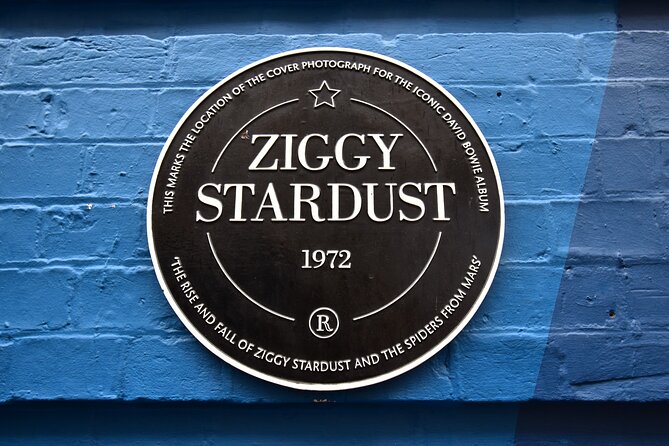
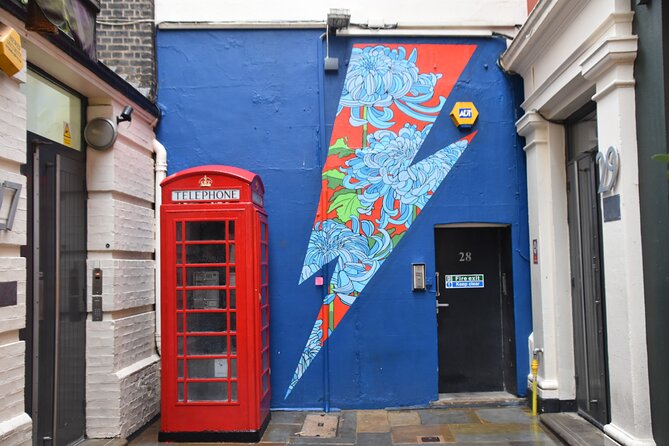
Then it’s Heddon Street, tied to one of rock’s most instantly recognizable visual moments: the front and back cover location for The Rise and Fall of Ziggy Stardust and the Spiders From Mars. The tour even sets the scene for the shoot—on a cold and wet January night in January 1972—and includes a chance to recreate the iconic photos.
That photo moment is a nice touch. It gives you something memorable to do besides standing and listening. If you’re traveling with a camera or phone, this is the best place to slow down and get your shots right.
Savile Row is where the route shifts into Beatles legend territory. Stop 3 Savile Row points to the former Beatles office and the site of their famous rooftop concert in 1969. The tour also ties number 3 Savile Row to Apple HQ and explains how the building became a magnet for Beatles fans worldwide. If you’ve seen clips of the rooftop performance, this stop helps you “rebuild” the full story in your mind: the band, the building, and the crowd energy around it.
Because these sites are outside, you won’t get an inside-view of everything. But the payoff is that you get the landmark recognition plus the story behind it.
Cordings Ltd and Hotel Café Royal: the business of style and Bowie’s big finish
At Cordings Ltd, the tour traces a teenager-to-industry connection involving Eric Clapton. The story is clear: a young Clapton window-shopped when he couldn’t afford the clothes, then later became a regular customer and eventually invested in the business, becoming its design director. That’s a neat angle, because it treats rock stars as long-term participants in the commercial world around them—not just people who wear whatever’s trendy.
Hotel Café Royal takes you deeper into Bowie’s Ziggy era. The tour says Bowie retired the character of Ziggy Stardust at a star-studded event in 1973 at this historic hotel. It also explains how the evening inspired a Ziggy Stardust cocktail bar inside the hotel, connecting the mythology to a physical space you can still picture today.
If you’re the type who likes a specific “phase” of Bowie—characters, staging, the theatrical side—this stop will land. And if you don’t know the Ziggy storyline deeply, you still get a clean, location-based explanation.
Wardour Street to Soho studios: live music, radio, and the places fans drank
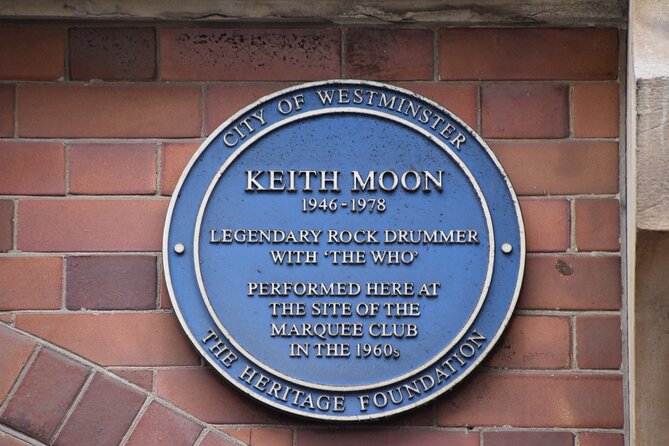
Wardour Street is home to the world-famous Marquee Club, and this stop is built around the venue’s importance. The tour highlights that the Marquee opened for 26 years and helped launch early careers for artists like The Who and David Bowie. It even mentions the dusty plaque to Keith Moon over the door, which gives you a visual detail to look for as you walk.
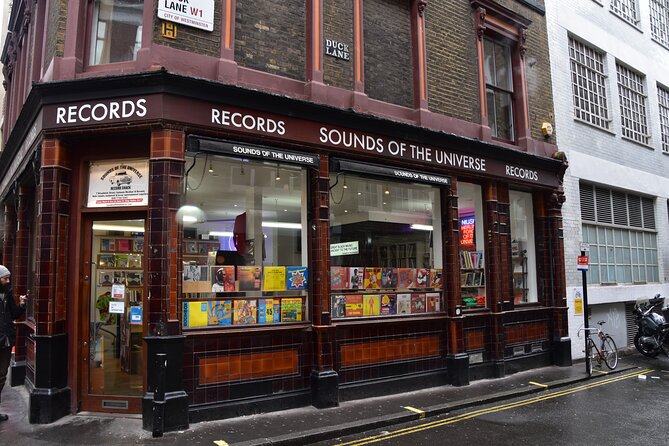
Next you head to Sounds Of The Universe, a record shop that occupies the old Bricklayers Arms pub site, where the Rolling Stones had their first rehearsal. This is the kind of stop that makes you appreciate how often music moves through everyday venues. A pub rehearsal becomes a legend, and a shop today lives on top of a turning point from long ago.
Then you visit The Ship in Soho, the fallback drinking spot when the Marquee lost their alcohol licence. The tour’s angle here is simple but fun: fans didn’t stop showing up, and the music scene followed them to the next pub. It focuses on the role of alcohol and late-night momentum in building community around bands.
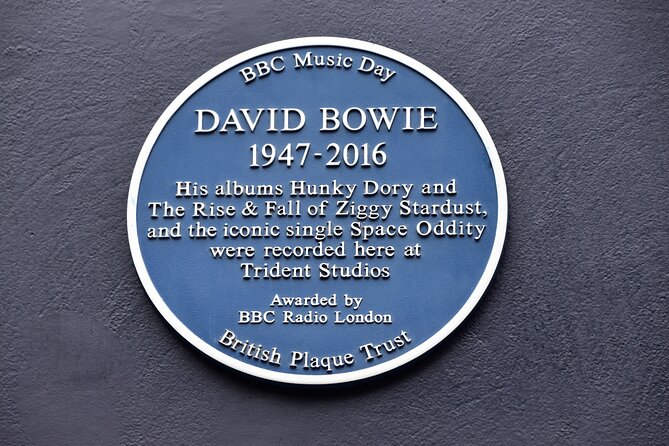
Trident Studios plaque is tucked away in a tiny alley near The Ship, and the tour uses it to cover a studio window from 1968 to 1981. It lists major recording names tied to the studio, including David Bowie, The Beatles, Queen, Elton John, Rolling Stones, and Black Sabbath. Even though you won’t see a full studio tour here, a plaque stop works when it ties names to the real geography of where they worked.
Soho Square, McCartney publishing, and Ronnie Scott’s Frith Street move
Soho Square is connected to MPL—McCartney Publishing Limited—and the tour connects it to Paul McCartney’s music empire. The tour says McCartney became a billionaire partly due to music publishing, and you’ll learn how his business side made him the richest of all the Beatles. This is one of the more “systems-level” moments on the route, and it’s great if you’ve ever wondered how artists turn creativity into long-term financial power.
Ronnie Scott’s Jazz Club comes next. The tour notes Ronnie Scott moved the venue to Frith Street in 1965 and uses the location to list famous performers associated with the club, including a surprise and shocking performance by Lady GaGa and the final performance of Jimi Hendrix. This stop broadens the tour beyond straight rock, which is a good reminder: London music scenes cross-pollinate all the time.
Like the other stops, the experience is focused on the outside location and the story tied to it, not a full ticketed entry. Still, the name recognition and the specific dates make it feel concrete.
ODEON Covent Garden to Foyles: Brian Epstein’s theater plans and punk’s early gig
At ODEON Covent Garden, the tour points to a major Beatles-adjacent business decision. It says Brian Epstein bought a theatre in 1966, then shares his grand plans and the legendary artists who played there, with an emphasis on how the 60s would soon be revived. This helps you see Epstein not just as a manager, but as a strategist shaping London’s entertainment ecosystem.
Foyles Bookshop adds a different flavor: punk’s early moments in a place you might think of as quiet. The tour says the building was once a university building and connects it to the Sex Pistols’ first gig there. It also names Malcolm McLaren’s approach, saying he would only book them for student gigs, and mentions Steve Jones getting their guitars from there. It’s a surprisingly grounded story—famous punk energy starting with access rules and practical help.
This section works well if you like variety. The tour doesn’t keep you in one decade. It moves from 60s mainstream energy into the 70s edge without losing momentum.
Denmark Street: guitars, publishing deals, and the punk graffiti legend
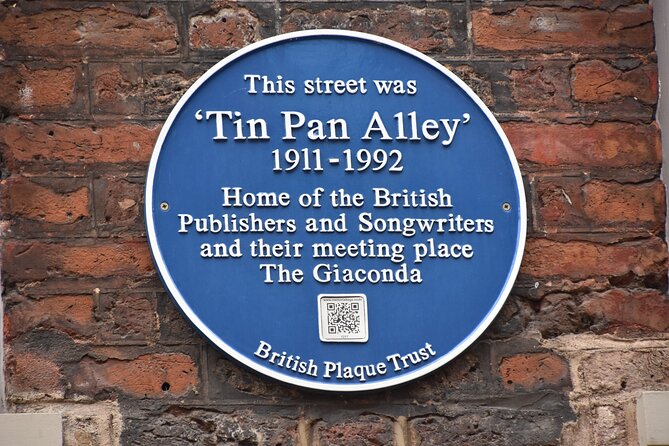
Denmark Street is the final stop and gets framed as one of the most important addresses for British 20th-century music. Today it’s known for guitar shops and music venues, but the tour ties it to major milestones across different scenes.
You learn that Beatles first music publishing deal happened here, and Rolling Stones recorded their first album here. Then the tour shifts to the Sex Pistols crashing and rehearsing here, plus a John Lydon detail involving rude pictures on the wall that are apparently visible to this day.
Finally, the tour closes with Elton John and David Bowie, presenting Denmark Street as a launchpad for early moves in both careers. If you want one last “why this street matters” moment, this is the place.
The only caveat is that this final stop is marked as not including admission. So think of it as a strong exterior-and-location storytelling finish, not a guarantee of inside access.
Price and value: what $205.67 covers for up to 15
At $205.67 per group (up to 15 people), the math often works out well for families, small friend groups, and music-obsessed couples traveling together. You’re not paying per person for the guide time; you’re paying for a private 3-hour experience that covers a concentrated slice of Central London.
Guiding fees are included, and the tour uses mobile tickets. That matters because it keeps the focus on the walk itself: you show up, get your route, and go.
One value check I’d do before booking: scan the day and decide if you actually want to step inside any venues that are marked as not included. Stops like Ronnie Scott’s Jazz Club and the ODEON Covent Garden are part of the route, but admission isn’t included there. If you want a full indoor add-on, you’d likely need to plan that separately.
Timing and comfort for a fast-paced walking route
This tour runs about 3 hours, and it hits a lot of addresses. Many stops are around 5 to 10 minutes, with one or two longer ones. That’s great for coverage, but it also means you won’t linger at each building the way you might on a slow, museum-style tour.
To enjoy it fully, I’d plan your walking comfort like this:
- Wear shoes that handle London sidewalks for a couple hours.
- Bring a light layer. The route is open-air for most of the day.
- If you have a specific favorite band, decide one or two priorities. Your guide can use your interests to steer the conversation.
The good news: the tour is near public transportation, so you can easily grab a bus or Tube afterward without complicated logistics. It’s also noted for moderate physical fitness, which usually means you should be comfortable walking but you don’t need to be an athlete.
A final planning tip: this tour is commonly booked about 51 days in advance. If Central London is a packed part of your schedule, it’s smart to lock it in earlier rather than later.
Should you book this Private Rock ’n’ Roll Music Tour?
Book it if you want a private, story-driven walk through the actual geography of rock music in Central London. You’ll get recognizable landmarks tied to big artists, plus a guide-led mix of TV, radio, studios, record shops, pubs, and fashion. The route also has a fun hands-on element at the Ziggy Stardust photo stop, which makes it more than just standing and listening.
Skip it or rethink it if you’re looking for long indoor visits with included ticketing everywhere. This is primarily an exterior-and-story format, and a few key places are marked as not including admission. If that matters to you, you can still book, but be ready to treat it as a guided orientation to the city’s music legacy rather than a full-entry museum day.
FAQ
How long is the Private Rock ’n’ Roll Music Tour of Central London?
The tour is about 3 hours.
Is this tour private?
Yes. It’s a private tour/activity, and only your group participates.
What’s the group size limit?
The price is per group up to 15 people.
Where does the tour start and end?
It starts outside The London Palladium at 8 Argyll St, London W1F 7TF, UK, and ends on Denmark Street, London WC2H, UK.
What language is the tour offered in?
The tour is offered in English.
Are tickets and admissions included at all stops?
Many stops are marked as admission ticket free, but some stops are marked as not included (for example Ronnie Scott’s Jazz Club, ODEON Covent Garden, and Denmark Street).
Do I need a print ticket?
No. You’ll receive a mobile ticket.
What’s the cancellation policy?
You can cancel for free up to 24 hours in advance for a full refund.
Is it suitable for someone with moderate mobility?
The tour recommends a moderate physical fitness level, and it’s near public transportation. Service animals are allowed.
More Tours in London
- From London: Harry Potter Warner Bros Studio Tour
★ 4.7 · 26,588 reviews - Magical London: Harry Potter Guided Walking Tour
★ 4.7 · 22,044 reviews - London: Warner Bros. Studio Harry Potter Tour & Branded Bus
★ 4.7 · 19,194 reviews - London Big Bus Hop-On Hop-Off Tour with Optional River Cruise
★ 3.5 · 10,803 reviews - London Small Group Tour of Historical Pubs
★ 5.0 · 10,422 reviews
More Tour Reviews in London
- From London: Harry Potter Warner Bros Studio Tour
★ 4.7 · 26,588 reviews - London: Westminster to Greenwich River Thames Cruise
★ 4.5 · 22,836 reviews - Magical London: Harry Potter Guided Walking Tour
★ 4.7 · 22,044 reviews - London: Madame Tussauds London
★ 4.6 · 20,915 reviews - London: Warner Bros. Studio Harry Potter Tour & Branded Bus
★ 4.7 · 19,194 reviews
More Shows and Live Music
- London: The Great British Rock and Roll Music Walking Tour
★ 4.9 · 1,783 reviews - The Great British Rock and Roll Walking Tour
★ 5.0 · 1,371 reviews - London West End Musical Silent Disco Walking Tour Top 1% Rated
★ 5.0 · 1,057 reviews - London Rock and Roll Music Tour
★ 4.5 · 943 reviews - London: Shakespeare’s Globe Theatre Guided Tour
★ 4.6 · 486 reviews
Just reviewed around London





Live Music & Theatre Shows, compared.
 ★ 4.9The Great British Rock and Roll Music Walking TourFrom $361,783 reviews
 ★ 5.0The Great British Rock and Roll Walking TourFrom $371,371 reviews
 ★ 5.0London West End Musical Silent Disco Walking Tour Top 1% RatedFrom $531,057 reviews
 ★ 4.5London Rock and Roll Music TourFrom $76943 reviews
 ★ 4.6Shakespeare’s Globe Theatre Guided TourFrom $29486 reviews
 ★ 5.0Drag Queen Disco Diva Tour – Silent Disco Walking TourFrom $40395 reviews
 ★ 4.5London Theatre: Wicked the MusicalFrom $43316 reviews
 ★ 4.5London Theatre: Moulin Rouge! The MusicalFrom $35272 reviews
Browse the lists this tour appears in