
Reviewed · CITY TOURS
Money and Power in the City Sightseeing Tour
Money runs this part of London, and you can feel it. This 2-hour small-group history walk turns the City of London’s financial district into a clear story of how power learned to count.
One big plus: I love the on-foot format. You’re not stuck staring at plaques. You move through real streets and alleys where the decisions happened.
Another thing I like: the guide’s storytelling style. Names, conflicts, and cause-and-effect come through in plain language, so big ideas like trade, finance, and politics make sense fast.
Possible drawback: it’s weather-dependent and you’ll do a fair amount of walking in a concentrated area. If you’re sensitive to crowds or standing time, plan accordingly.
In This Review
- Quick Hits
- Money and Power in the City: Why This Financial District Walk Feels Different
- Starting at Emperor Trajan: Getting Your Bearings in the City
- Stop One: Roman and Medieval Beginnings of the Financial District
- Stop Two: East India Company and the Power of Trade
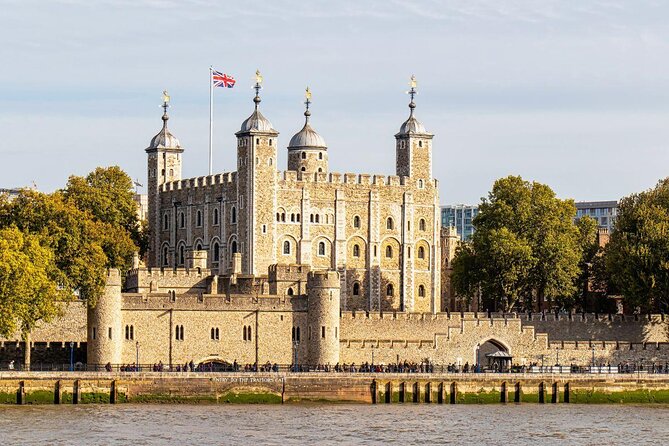
- Stop Three: Royal Exchange, Bank of England, and Mansion House
- Exchange Alley (Change Alley): From Shortcuts to the Stock Market’s Early Logic
- Guildhall and Medieval Guild Buildings: Rules, Storage, and Public Drama
- St Paul’s and the Modern Stock Market: Seeing the Timeline in One View
- Guide Style: Where the Story Becomes Easy to Follow
- Price, Time, and Group Size: Is It Worth $41.14?
- Weather and Walking Comfort: The Only Real Trade-Off
- Who Should Book This Tour?
- Should You Book Money and Power in the City?
Quick Hits
- A max group size of 8 means more chances to ask questions and get context
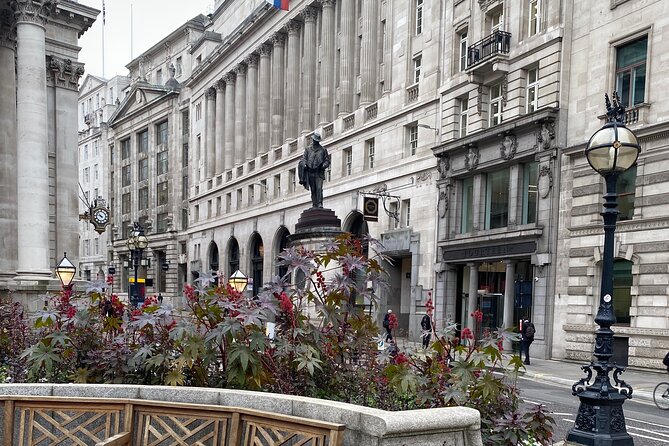
- Meeting at Emperor Trajan (EC3N 4DR) puts you right by the City’s old layers
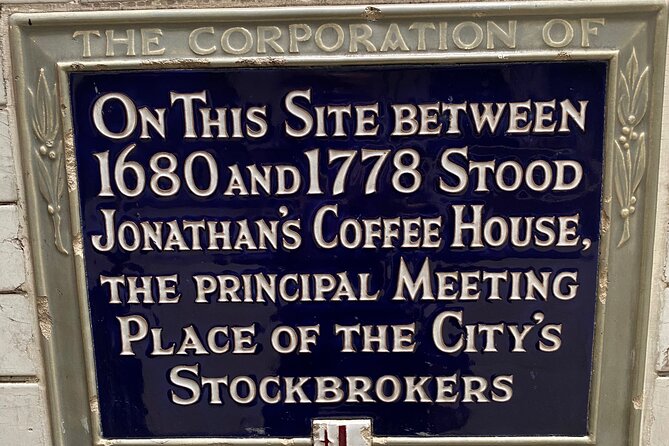
- Exchange Alley and coffeehouse origins connect street-level sights to the stock market’s early roots
- Royal Exchange, Bank of England, and Mansion House show how institutions look when they want authority
- Guildhall and nearby guild buildings explain how rules for commerce were enforced long before modern trading
- St Paul’s Cathedral as a visual anchor helps you see the City’s timeline in one direction
Still deciding? A handful more London outings we rated
- City Sightseeing London Hop-On Hop-Off Bus & Bookable Extras
★ 4.4 · 7,374 reviews - City Sightseeing London Hop-On Hop-Off Bus Tour & Bookable Extras
★ 4.0 · 1,224 reviews - London: Go City Explorer Pass® – Tickets for 2-7 Attractions
★ 4.3 · 1,111 reviews - Private Windsor Castle, Stonehenge, The City of Bath Day Tour
★ 5.0 · 468 reviews
Money and Power in the City: Why This Financial District Walk Feels Different
The City of London can look like glass towers and busy walkways. But step into the right streets, and it turns into something older and sharper. This tour focuses on a simple question: how did London’s money power grow, and how did people protect it?
You’ll be walking through the Financial District with a guide who keeps the story tight and human. This isn’t just dates and architecture. You’ll hear the politics, the pressure, and the behind-the-scenes drama that shaped institutions you can still see today. It’s also small-group by design, capped at 8 travelers, so you’re not lost in a crowd.
At $41.14 per person for about 2 hours, the value is in interpretation. You’re paying for a guided map made of stories: Roman and medieval beginnings, the trade empire that powered early finance, and the later rise of major financial buildings.
Starting at Emperor Trajan: Getting Your Bearings in the City
You start at Emperor Trajan A100, London EC3N 4DR, near the older fabric of the City. That matters because the route isn’t random. You’re dropped into the heart of where finance grew from trade and governance, then guided forward in time.
Your tour begins at 2:00 pm and ends at London Stock Exchange, 10 Paternoster Sq., by the main column. That end point is useful if you’re continuing on your own. You’ll already be near one of the City’s busiest landmarks, with plenty of transport options nearby since the tour is listed as close to public transit.
Also, you get a mobile ticket, which is a small thing but makes the day smoother. Just have it ready and you’re good.
Stop One: Roman and Medieval Beginnings of the Financial District
The tour starts by setting the base layer: Roman and medieval beginnings of the Financial District. This is more than scene-setting. It helps you understand why the City developed the way it did—because it wasn’t built from scratch. It was added to, reorganized, and defended by people with practical goals.
When you hear how the early City functioned, the later “big money” doesn’t feel like it appears out of nowhere. Instead, it feels like the next step in a long chain: control of trade, organization of disputes, and buildings designed to command confidence.
What to watch for here: the guide’s tone. The City can be intimidating if you only know it from modern business news. The explanation brings it back to street-level logic.



Stop Two: East India Company and the Power of Trade
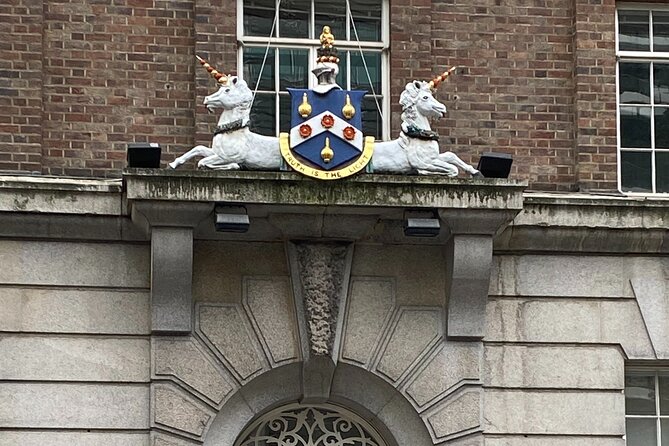
From there, the route moves into the story of the East India Company. The tour focuses on the most important historic location linked to it, after you’ve already seen other related sites along the way.
This stop is where “money and power” turns concrete. The East India Company wasn’t only about commerce; it shaped politics, law, and influence across huge distances. In a walking tour like this, that story lands differently because you’re standing near the kind of spaces where decisions became momentum.
Why this is valuable for you: if London finance feels abstract, this is the bridge. You’ll understand how trade networks and government-backed authority fed the financial world that followed.
A practical consideration: if you’re sensitive to dense information, pace yourself. This tour is packed with names and context, and it’s a lot easier to absorb when you slow down just enough to let the guide finish each thread.
Stop Three: Royal Exchange, Bank of England, and Mansion House
Next comes the neo-classical splendour of three heavyweights: the Royal Exchange, the Bank of England, and Mansion House. You’ll see how institutional power wanted to look credible, durable, and official—almost like architecture as a business strategy.
These sites matter because finance isn’t only transactions. It’s also legitimacy. The guide’s job here is to connect what you see (grand facades, formal spaces) to why it was built that way (trust, authority, and the theater of “we’re here to stay”).
What I think makes this stop work for first-timers: you get the names and the “what it is,” then you get the story about how the City’s leaders used buildings to signal control. That turns sightseeing into comprehension.
Possible drawback: these areas can feel busy and security-minded. It’s still a good experience, but expect that the most dramatic views can be from the sidewalk and nearby angles rather than inside.
Exchange Alley (Change Alley): From Shortcuts to the Stock Market’s Early Logic
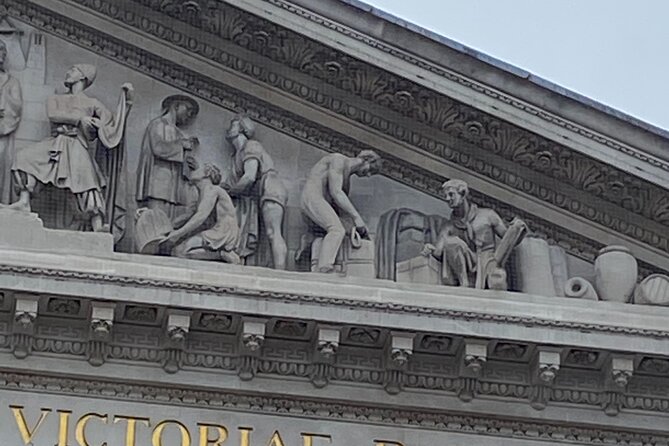
One of the most interesting parts of the walk is Exchange Alley or Change Alley. The alley is described as a narrow connection between shops and coffeehouses, originally linking Cornhill near the Royal Exchange to Lombard Street. It remains one of several alleys joining those streets, which is a big clue about how information moved.
This stop is where London’s finance becomes street-level. Think about it: before modern screens, value traveled through conversation, reputation, and daily routines. Coffeehouses were social spaces where traders gathered, listened, and traded ideas. And the tour also points you to the location of the coffee shop where the stock market was first based.
If you want a quick mental picture: the alley shows how people could move fast through the City, while the coffeehouse origin shows how markets formed around talk as much as paperwork.
What to do as you walk: look for the lane width and the sightlines. A place this narrow is perfect for short, repeated trips. Those patterns helped turn the City into a place where business happened regularly, not just occasionally.
Guildhall and Medieval Guild Buildings: Rules, Storage, and Public Drama
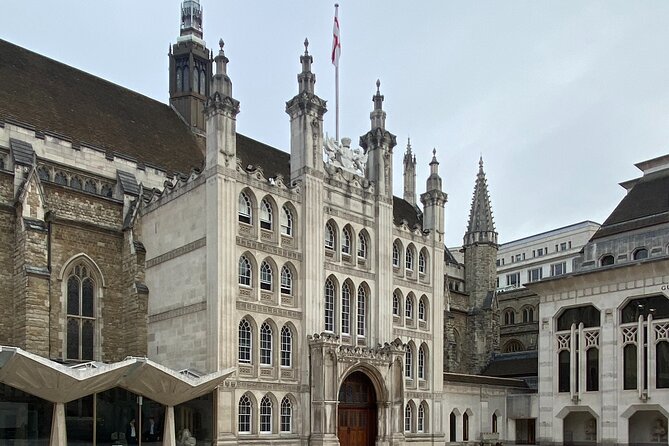
Then you’ll head toward Guildhall and selected nearby Guild buildings. This is one of the most “real life” stops because medieval guild halls weren’t just impressive rooms. They were working spaces for trade and community organization.
The tour explains that guild halls were used to store goods and also host celebratory events. And when guild members weren’t using the hall, it could become a place for town events, including Passion plays.
That detail is more than trivia. It shows how business communities weren’t separate from everyday culture. The same people who made and moved goods also participated in public life. In other words, power wasn’t hiding behind corporate walls. It was part of the civic rhythm.
Value for you: this stop helps you see that modern corporate structures didn’t just “arrive.” They evolved from older systems of regulation, community enforcement, and shared identity.
A small consideration: with historic sites, photo angles can be tricky. Build in patience. Narrow streets and crowd flow can limit the best shots.
St Paul’s and the Modern Stock Market: Seeing the Timeline in One View
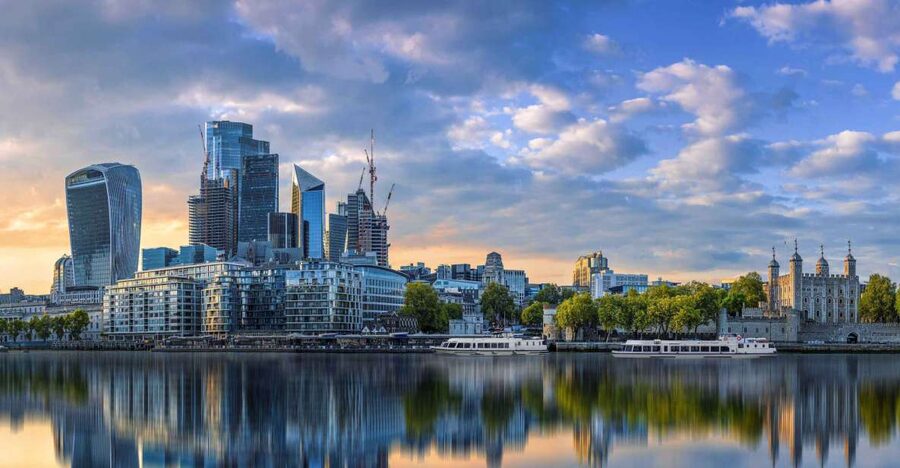
The final visual anchor is the modern financial center rising in the shadow of St Paul’s Cathedral. You’ll see the modern stock market as the towered setting around which the City’s trading energy gathers, with St Paul’s sitting above the scene.
St Paul’s Cathedral is described as an Anglican cathedral and the seat of the Bishop of London. It’s also noted as a Grade I listed building and located on Ludgate Hill, the highest point of the City of London. That positioning matters for how the City reads from the street.
Here’s the payoff: the tour is built like a timeline, and St Paul’s helps you place yourself on it. You end the walk with a sense of scale—how far the City has traveled from Roman/medieval beginnings to the institutional architecture and trading infrastructure of today.
Why it works as a finish: you’ve been learning about power and money building systems. Ending with a landmark that literally rises over the area gives your brain something stable to hold onto when everything else is complex.
Guide Style: Where the Story Becomes Easy to Follow
You can’t separate this tour from the people delivering it. The reviews point to a guide who keeps energy high and adapts to different backgrounds. One recurring theme is that the guide meets you where you are: if you know little, you still follow. If you’ve been to London before, you still pick up connections that make the places click.
You’ll hear clear explanations that link early, mid, and current London. That matters because the City of London’s story can feel like disconnected chapters if you only visit on your own. Here, the guide’s gift is turning complex topics into a chain you can track.
Also, there’s a practical humor to it—what gossip, scandal, and insider angles do best is reduce the intimidation factor. Finance history stops feeling like homework and starts feeling like a human saga.
Price, Time, and Group Size: Is It Worth $41.14?
Let’s talk value in the real way: you’re paying for a focused, time-efficient route through the City’s most relevant landmarks.
At about 2 hours, you won’t leave with every detail about every institution. But you will leave with:
- an organized sense of how money systems grew
- a set of names and places you can recognize later
- a better explanation for why the financial district looks and works the way it does
The maximum of 8 travelers is a key value driver. In a dense area like the City, small groups help the pace stay conversational. You can ask questions without the whole tour slowing down.
And since the tour is in English and described as suitable for most travelers, it’s a straightforward add-on even if your day is packed.
Weather and Walking Comfort: The Only Real Trade-Off
The tour requires good weather. That’s normal for a City walking route, but it’s worth respecting. If the forecast is bad, you can end up dealing with a reschedule or a refund per the policy.
Plan for walking in a compact area, including alleys and streets that aren’t always wide or scenic in the open-air sense. Bring layers if the weather shifts, and give yourself enough time to stay comfortable.
If you hate standing for long periods or you’re traveling with mobility constraints, you’ll want to think carefully before committing, since the experience is designed around foot travel.
Who Should Book This Tour?
This is a great fit if you:
- want context, not just photos
- are curious about how the City’s institutions shaped politics and trade
- like stories with cause-and-effect, including gossip and scandal
- prefer a small group over a big bus-style tour
You might consider skipping it if you:
- want a slower pace with more stops and longer time in each location
- dislike topic-heavy history about finance and governance
- need a fully seated, low-walking experience
Should You Book Money and Power in the City?
If you’re spending a day in London and you want one experience that makes the financial district feel understandable, I’d book it. The route is short enough to fit into an itinerary, but the storytelling is built to give you real structure: Roman and medieval beginnings, the East India Company’s influence, major institutions like the Royal Exchange and Bank of England, the coffeehouse origins near the alley network, medieval guild life at Guildhall, and a strong ending perspective with St Paul’s Cathedral.
For the best payoff, come with at least a small curiosity about how markets work and why governments and businesses stayed tangled in the City for centuries. If that sounds like you, this tour is a smart use of time.
More City Tours in London
- City Sightseeing London Hop-On Hop-Off Bus & Bookable Extras
★ 4.4 · 7,374 reviews - City Sightseeing London Hop-On Hop-Off Bus Tour & Bookable Extras
★ 4.0 · 1,224 reviews - London: Go City Explorer Pass® – Tickets for 2-7 Attractions
★ 4.3 · 1,111 reviews - Private Windsor Castle, Stonehenge, The City of Bath Day Tour
★ 5.0 · 468 reviews - London: Speedboat Tour Through Heart of the City
★ 5.0 · 387 reviews
More Tours in London
- From London: Harry Potter Warner Bros Studio Tour
★ 4.7 · 26,588 reviews - Magical London: Harry Potter Guided Walking Tour
★ 4.7 · 22,044 reviews - London: Warner Bros. Studio Harry Potter Tour & Branded Bus
★ 4.7 · 19,194 reviews - London Big Bus Hop-On Hop-Off Tour with Optional River Cruise
★ 3.5 · 10,803 reviews - London Small Group Tour of Historical Pubs
★ 5.0 · 10,422 reviews
More Tour Reviews in London
- From London: Harry Potter Warner Bros Studio Tour
★ 4.7 · 26,588 reviews - London: Westminster to Greenwich River Thames Cruise
★ 4.5 · 22,836 reviews - Magical London: Harry Potter Guided Walking Tour
★ 4.7 · 22,044 reviews - London: Madame Tussauds London
★ 4.6 · 20,915 reviews - London: Warner Bros. Studio Harry Potter Tour & Branded Bus
★ 4.7 · 19,194 reviews
Just reviewed around London





City Tours, compared.
 ★ 4.4City Sightseeing London Hop-On Hop-Off Bus & Bookable ExtrasFrom $337,374 reviews
 ★ 4.0City Sightseeing London Hop-On Hop-Off Bus Tour & Bookable ExtrasFrom $371,224 reviews
 ★ 4.3Go City Explorer Pass® – Tickets for 2-7 AttractionsFrom $721,111 reviews
 ★ 5.0Private Windsor Castle, Stonehenge, The City of Bath Day TourFrom $991468 reviews
 ★ 5.0Speedboat Tour Through Heart of the CityFrom $66387 reviews
 ★ 4.0Upside Down House Westfield White City Entry TicketFrom $10338 reviews
 ★ 4.5Westminster Abbey Priority Access & Guided City TourFrom $73282 reviews
 ★ 5.0Heathrow London Airport Transfer to City centerFrom $94213 reviews