
Reviewed · OXFORD TOURS
Medieval London Walking Tour Oxford PhD Historian Guide
Medieval London gets way more believable when someone with an Oxford PhD guides your feet. This 2.5-hour private walk with Dr Geoff is built around the story bridges between centuries, from the Great Fire’s aftermath near St Paul’s to survival-era architecture at Temple Church. I especially like how you get expert context that connects what you see on street level to events that shaped London, and I like that the route mixes big names with the quieter, still-standing pieces of medieval life.
The main trade-off is simple: it’s still a walking tour. You’ll want good shoes and you’ll feel the pace if you’re not comfortable with several stops in old churchyards and on uneven streets. Also, the experience needs good weather, so plan for a possible reschedule if London decides to rain.
In This Review
- Key highlights I’d plan my trip around
- How this medieval London walk beats a self-guided wander
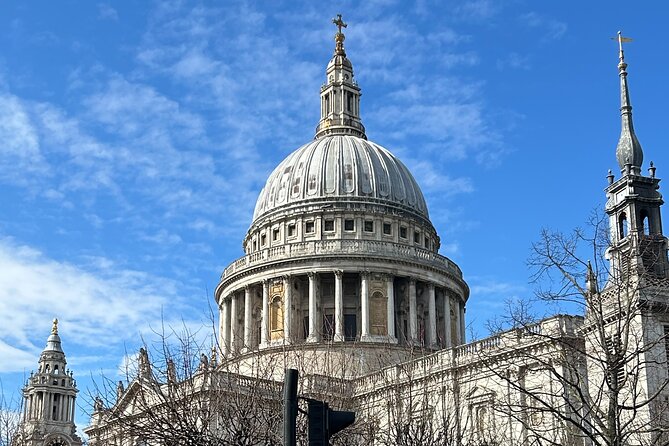
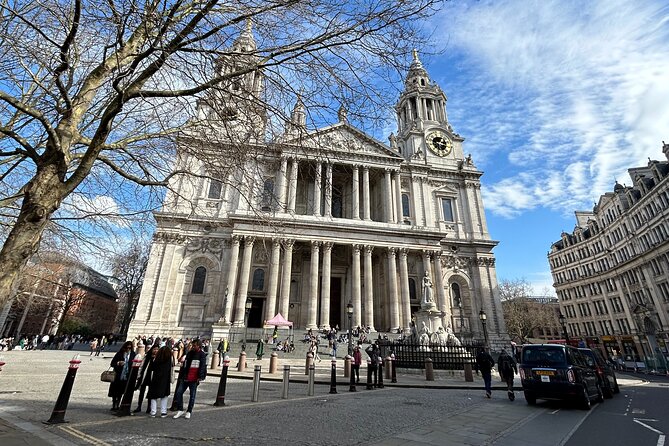
- Starting at St Paul’s: the Great Fire, Wren, and why 1666 matters
- William Wallace memorial: a quick stop with a useful context shift
- St Bartholomew the Great: Norman arches that outlasted fire, reform, war
- Newgate Street and the medieval entry point turned courtroom-and-prison story
- Temple Church: Knights Templar, a vaulted ceiling, and a US connection
- Pace, comfort, and what to expect from the 2.5-hour format
- Price vs. value: what $122.18 really buys you
- Who should book this medieval London tour (and who might not)
- Should you book it?
- FAQ
- Where does the tour start and end?
- How long is the medieval London walking tour?
- Is this a private tour?
- Is there pickup, and how do I find the guide?
- What language is the tour offered in?
- What about tickets for entry to the churches?
- Are any stops free to enter?
- What happens if the weather is bad?
- What is the cancellation policy?
Key highlights I’d plan my trip around
- Dr Geoff (Oxford historian) brings clear, thoughtful answers as you walk
- St Bartholomew the Great includes time inside a 12th-century church with long survival through major upheavals
- Temple Church links the Knights Templar story to an unexpected connection with the US Founding Fathers
- A route that tracks medieval defenses and gateways, not just famous landmarks
- You start near St Paul’s Cathedral and end in the Temple Church garden for an easy finish
- Admission is included for two major stops, keeping the cost-to-content ratio strong
London on foot, a few more ways
- Magical London: Harry Potter Guided Walking Tour
★ 4.7 · 22,044 reviews - London: The Original Jack the Ripper Walking Tour
★ 4.7 · 7,833 reviews - Tour for Muggles The Ultimate Harry Potter Walking Tour in London
★ 5.0 · 4,684 reviews - London Jack The Ripper Guided Walking Tour
★ 5.0 · 3,131 reviews
How this medieval London walk beats a self-guided wander
I like walking tours that don’t just list sites. This one is organized like a timeline you can physically follow. You start with what London looked like after the Great Fire, then step sideways into what survived nearby, and then you move through streets and churches that still carry traces of medieval power.
Because it’s private, you can actually ask follow-ups instead of rushing to fit your question into a group’s attention span. In the reviews, Dr Geoff stands out for answering questions in a way that connects architecture, politics, and daily life. That matters in London, where buildings often look similar from a distance but have wildly different stories underneath.
The tour also has a good mix of what you see versus what you understand. Some stops give you impressive stonework and atmosphere. Others are more about lines on the map—where entry points and defenses once mattered—so the medieval city starts to feel real, not vague.
Starting at St Paul’s: the Great Fire, Wren, and why 1666 matters
You meet at the West end of St Paul’s Cathedral, near the grand stairs, with the guide holding a blue lanyard for Historic Tours of England. From there, you’re not sent off immediately into random alleyways. You’re given the key context: St Paul’s was rebuilt after the Great Fire of 1666 by Sir Christopher Wren, and that event wiped out most of medieval London.
That’s the trick of the route. You learn what got lost and what didn’t, so when you reach older-looking places nearby, you understand why they’re rare and what survived by chance, politics, and construction choices. Dr Geoff also sets up the “cast of characters” before you reach the medieval-era buildings, so the architecture feels less like decoration and more like evidence.
The walk between St Paul’s and the next stop is part of the pacing. It’s long enough to settle in and start noticing street layout, but short enough that you’re still fresh when the tour turns into the church interiors and stone details.
William Wallace memorial: a quick stop with a useful context shift
On the way to St Bart’s Priory area, you pause at the William Wallace Memorial. It’s about ten minutes and admission is free.
This is a small detour, but it does something smart. It reminds you that the medieval story of the British Isles isn’t only about London’s English kings and laws. It brings in Scottish independence and the figure of Wallace, so the tour’s sense of medieval conflict and identity broadens beyond one city.
It’s the kind of stop that works well if you like history that feels human—named individuals, causes, and consequences—without turning the whole walk into a lecture marathon.
Other runs out to the colleges
St Bartholomew the Great: Norman arches that outlasted fire, reform, war
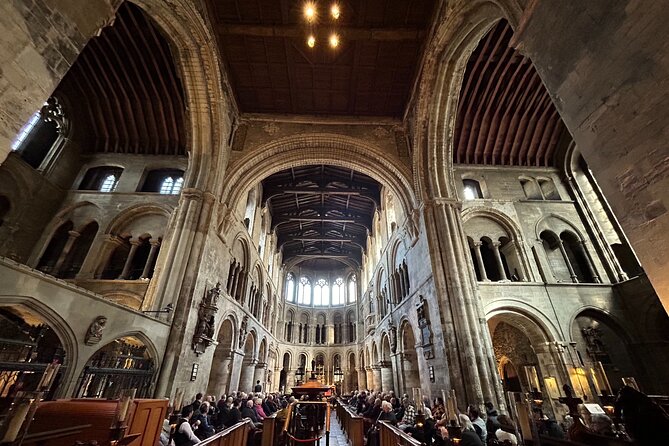
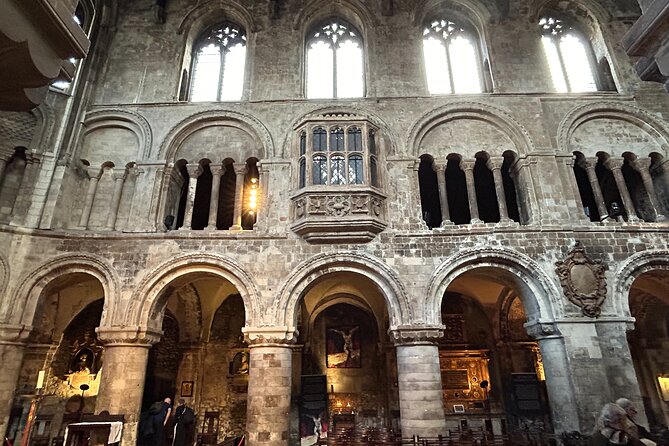
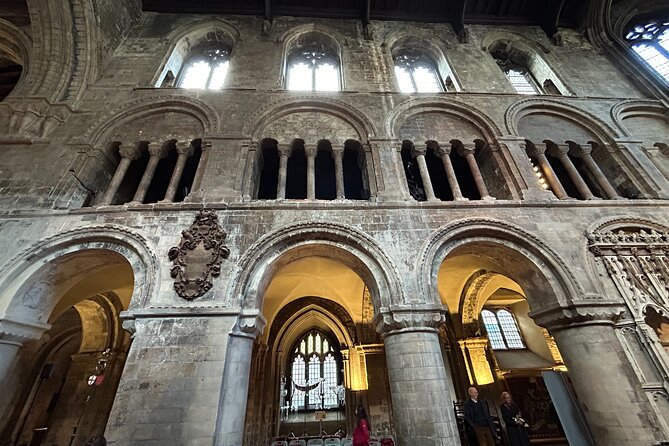
This is one of the core stops: St Bartholomew the Great, a 12th-century church where a lot of the structure survived repeated disasters. You get about 45 minutes here, and admission is included.
What makes this church a standout on the itinerary is not just age. The church’s fabric has lived through multiple major chapters: the Great Fire of 1666, the Reformation, the Civil War, and the Blitz in World War II. That list matters because it means the building isn’t just old. It’s persistent.
When you’re inside, the focus is on the eastern side, where you can see stunning arches, columns, and tombs. It also gets positioned as an early Norman church, which is useful because the tour later compares churches built in later medieval centuries. Even if you’re not an architecture expert, you’ll start picking up how styles shift over time and what the builders were trying to signal—power, devotion, and legitimacy.
A practical note: churches can be cool and dim compared to the street. Wear layers, and take your time with the stone details. This is where the guide’s expertise really pays off, especially if you like hearing how restorations and later damage changed what you think you’re looking at.
Newgate Street and the medieval entry point turned courtroom-and-prison story
After the churches, the tour moves to Newgate Street for a short but meaningful session. It’s around ten minutes, admission free.
Here, you’re talking about medieval London’s walls and then stopping at Newgate, one of the old entry points. This is where London’s geography turns into power. Entry gates weren’t only for traffic. They were for control, defense, and punishment.
Newgate later became famous as a prison, and it connects to the Old Bailey (London Criminal Court), which still operates. The guide uses this stop to show you how a street corner can be both medieval infrastructure and a modern institution’s ancestor.
One extra detail that tends to land well is when the walk ties the route back to older defenses. The way Dr Geoff frames it, you’re not just hearing names—you’re getting a sense of how Roman and medieval layers can line up in the same general area, which makes London’s long timeline feel less abstract.
If you prefer tours that prioritize sweeping viewpoints, this isn’t that. If you like how cities run, how they guard themselves, and how laws shape space, you’ll enjoy this stop a lot.
Temple Church: Knights Templar, a vaulted ceiling, and a US connection
You finish with the tour’s biggest story engine: Temple Church. You’ll spend about 45 minutes here, and admission is included.
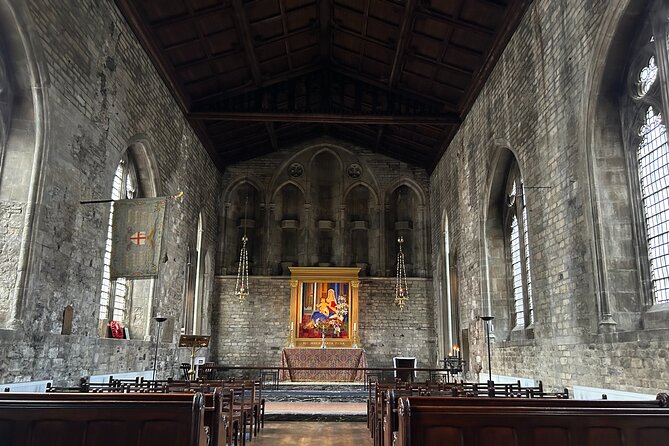
Temple Church is famously linked to the Knights Templar, the medieval monk-knights tied to Crusader-era wealth and mystery. The key point is the 12th-century church and the stone vaulting that survives in impressive form. The tour also explains a less flattering chapter: the Great Fire survived, but Victorian restorers did much of the damage. That matters because it reminds you that what you see today is shaped by multiple restoration eras, not just medieval builders.
And then there’s the Blitz in World War II. The tour highlights how the stone vaulted ceiling survived when bombs rained down around it. That kind of survival story makes the building feel like a witness, not a museum piece.
The most surprising part for many people is the link to the Founding Fathers of the United States. The tour doesn’t treat this as a trivia detour. It uses it as a bridge, showing how London’s institutions and medieval legacies can echo far beyond England.
You end in the garden at Temple Church, which is a nice change from being funneled back onto the street. If you want to keep the day relaxed, this is a good point to slow down and grab something nearby.
Pace, comfort, and what to expect from the 2.5-hour format
This tour is about 2 hours 30 minutes including the walk between stops. It also runs as a private tour, meaning only your group is involved, so you won’t be getting steamrolled by a larger crowd’s speed.
The practical takeaway: come ready to walk, stand, and look closely. Old London streets have their own rhythm—no one spot is “easy” if you’re trying to see everything. The tour is paced so you aren’t stuck sprinting from one interior to another, but you should still wear supportive shoes.
If you’re the type who likes to ask lots of questions, plan for a bit of flexibility. In the feedback I saw, Dr Geoff’s answers and follow-ups can extend the day slightly, in a good way.
The weather matters too. The experience requires good weather, and if conditions are poor, you’ll either get a different date or a full refund. London’s forecast can change quickly, so check the day before and keep your outer layer handy.
Price vs. value: what $122.18 really buys you
At $122.18 per person, the headline cost looks high if you’re used to group tours. But this price makes more sense once you factor in three things that this tour emphasizes:
- A private guide with an Oxford historian background
You’re not just paying for a route. You’re paying for a person who can interpret what you see and answer the questions you actually want answered.
- Multiple major historic sites with included admission
Admission is included for St Bartholomew the Great and Temple Church. The free stops (William Wallace Memorial and the Newgate Street area) add variety without adding expense.
- Time efficiency
In a single afternoon, you’re covering St Paul’s (as the post-1666 anchor), a Norman-era church, an entry/gateway story, and a Templar-era church. That’s a lot of architecture-and-history payoff for one continuous walk.
So if you’re traveling with someone who likes to talk history, or you want a guide to do the heavy lifting of context, this is priced like a “worth it” experience rather than a budget add-on.
Who should book this medieval London tour (and who might not)
This works best if you want medieval London as a connected story. If you like church architecture, street-level power, and the way disasters and restorations shape what survives, you’ll feel right at home.
It’s also a strong pick for couples and small groups who appreciate a private pace and direct Q&A. In the reviews, people praised Dr Geoff for being friendly and for explaining things clearly, including architectural research completed at Oxford. If you enjoy that professor-with-a-walking-map vibe, you’ll likely love it.
If you’re in London for very limited time and only want the biggest tourist photo stops, you might find parts of this tour more about interpretation than about view-heavy “wow” moments. But that trade-off comes with a real payoff: you walk away understanding the city’s layers instead of just collecting sights.
Should you book it?
Yes, if medieval London is the kind of trip you want to remember for how it makes sense. I’d book this if you want to see major surviving buildings, learn why they did survive, and get a guide who can connect Wren, the Great Fire, Norman architecture, medieval defenses, and Temple Church into one coherent day.
A smarter way to choose: decide whether you want facts that you can use while walking around afterward. If you do, the route and guide style here are built for that. If you hate walking and want only short, flat stops, then you might want a different format.
If the weather looks good, this is an easy yes. London’s stone and streets are best experienced with your eyes open and your questions ready.
FAQ
Where does the tour start and end?
The tour starts near the West end of St Paul’s Cathedral in St. Paul’s Churchyard, London EC4M 8AD. It ends in the garden at Temple Church, Temple, London EC4Y 7BB.
How long is the medieval London walking tour?
It’s approximately 2 hours 30 minutes, and that total includes the walking time from the meeting point to the end point.
Is this a private tour?
Yes. It’s a private tour/activity, so only your group participates.
Is there pickup, and how do I find the guide?
Pickup is offered. Dr Geoff will have a blue lanyard showing Historic Tours of England.
What language is the tour offered in?
The tour is offered in English.
What about tickets for entry to the churches?
You receive a mobile ticket. Admission is included for St Bartholomew the Great and Temple Church.
Are any stops free to enter?
William Wallace Memorial is free, and the Newgate Street stop is also free. The two church admissions are included.
What happens if the weather is bad?
This experience requires good weather. If it’s canceled due to poor weather, you’ll be offered a different date or a full refund.
What is the cancellation policy?
You can cancel for free up to 24 hours in advance of the experience for a full refund. If you cancel less than 24 hours before the start time, the amount you paid will not be refunded.
More Tour Reviews in London
- From London: Harry Potter Warner Bros Studio Tour
★ 4.7 · 26,588 reviews - London: Westminster to Greenwich River Thames Cruise
★ 4.5 · 22,836 reviews - Magical London: Harry Potter Guided Walking Tour
★ 4.7 · 22,044 reviews - London: Madame Tussauds London
★ 4.6 · 20,915 reviews - London: Warner Bros. Studio Harry Potter Tour & Branded Bus
★ 4.7 · 19,194 reviews
More Oxford Day Trips
- London: Full-Day Windsor, Stonehenge, and Oxford Tour
★ 4.4 · 5,368 reviews - Windsor Castle, Stonehenge, and Oxford Day Trip from London
★ 4.5 · 5,292 reviews - London: Harry Potter Studio Tour and Oxford Day Trip
★ 4.7 · 5,098 reviews - From London: Cotswolds and Oxford Guided Day-Trip
★ 4.7 · 3,720 reviews - Oxford, Stratford-upon-Avon, Cotswolds & Warwick Castle Day Trip
★ 4.5 · 2,943 reviews
More London Walks Worth the Shoe Leather
- Magical London: Harry Potter Guided Walking Tour
★ 4.7 · 22,044 reviews - London: The Original Jack the Ripper Walking Tour
★ 4.7 · 7,833 reviews - Tour for Muggles The Ultimate Harry Potter Walking Tour in London
★ 5.0 · 4,684 reviews - London Jack The Ripper Guided Walking Tour
★ 5.0 · 3,131 reviews - London: Harry Potter Movies Walking Tour (Kids Go Free)
★ 4.7 · 3,071 reviews
Just reviewed around London





Oxford Tours, compared.
 ★ 4.4Full-Day Windsor, Stonehenge, and Oxford TourFrom $1205,368 reviews
 ★ 4.5Windsor Castle, Stonehenge, and Oxford Day Trip from LondonFrom $1235,292 reviews
 ★ 4.7Harry Potter Studio Tour and Oxford Day TripFrom $1745,098 reviews
 ★ 4.7From London: Cotswolds and Oxford Guided Day-TripFrom $1063,720 reviews
 ★ 4.5Oxford, Stratford-upon-Avon, Cotswolds & Warwick Castle Day TripFrom $1092,943 reviews
★ 4.5Windsor Castle, Stonehenge, and Oxford Day Trip from LondonFrom $1232,474 reviews
 ★ 4.3From London: Windsor, Oxford & Stonehenge Full-Day TripFrom $1202,348 reviews
 ★ 4.6From London: Oxford and Cotswolds Villages Day TripFrom $801,659 reviews
Browse the lists this tour appears in