
Reviewed · TOWER OF LONDON TOURS
Medieval History Walking Tour from The Tower of London
Medieval London feels shockingly close. This 2-hour guided walk strings together Tower Hill landmarks, Thames crossings, and St Paul’s into one nonstop story of how London changed over centuries. You get the big names, but you also get the “why it matters” behind them, from medieval power to war and Shakespeare.
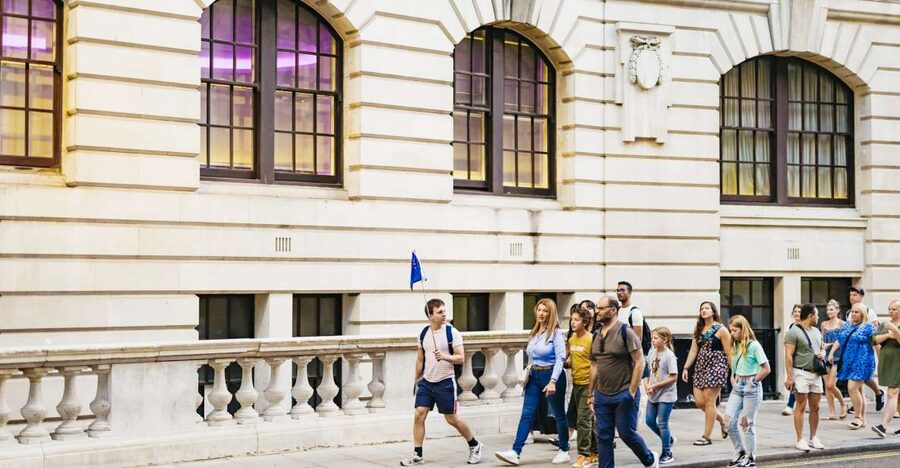
I love how the guide, often named Mick (and sometimes Michael), keeps the group engaged with clear explanations and entertaining delivery. I also love the route’s logic: it moves west in a way that helps you get your bearings fast, ending at St Paul’s where you can connect easily to the rest of your day.
One watch-out: this is a walk with short stops, so if you want to go inside places like the Tower of London or HMS Belfast, you’ll need separate plans and tickets since admission is not included for some stops.
In This Review
- Key highlights at a glance
- From Tower Hill to the Tower of London: where power really started
- What you should look for as you walk
- Potential drawback
- Tower Bridge and HMS Belfast: building pride on one side, conflict on the other
- Practical tip
- London Bridge, Borough Market, and Southwark: the medieval city had teeth
- Southwark Cathedral and Winchester Palace: heresy trials and medieval authority
- Why this part of the walk lands
- Drake to Shakespeare: Golden Hinde and the Globe near St Paul’s
- A note on where this fits
- The Thames history, Millennium Bridge views, and arriving at St Paul’s
- What if you want to go inside?
- What makes the guide the difference: stories, pace, and group-friendly care
- A small practical note from experience-style feedback
- Price and value: why $25 can work if you want direction
- Who this tour fits best
- Should you book the Medieval History Walking Tour from the Tower?
- FAQ
- How long is the Medieval History Walking Tour from the Tower?
- How much does the tour cost?
- Where does the tour start and what time does it begin?
- Where does the tour end?
- Is the tour in English?
- Do I need to buy admission tickets for the stops?
- How large is the group?
- Is there free cancellation?
Key highlights at a glance
- Tower Hill to St Paul’s in about two hours: a tight route that still covers major medieval-and-beyond landmarks.
- Thames crossings built into the story: Tower Bridge and Millennium Bridge are treated like time machines, not just scenery.
- War, trade, and punishment all show up: from HMS Belfast to the historical links around Southwark.
- Lots of famous names, explained simply: William the Conqueror, Bloody Mary, Drake’s voyage, and Wren’s St Paul’s.
- Small group size: up to 20 people makes it easier to hear the guide.
- A strong human touch: multiple guides are praised for humor, clarity, and group-friendly pacing.
Crown Jewels and ravens: other ways in
- London: Tower Bridge Entry Ticket
★ 4.7 · 15,560 reviews - Tower of London and Crown Jewels Exhibition Ticket
★ 4.5 · 6,677 reviews - London: Westminster to Tower Bridge River Thames Cruise
★ 4.5 · 6,127 reviews - London Sightseeing Tour: Guard Change with Tower of London Option
★ 4.5 · 2,672 reviews
From Tower Hill to the Tower of London: where power really started
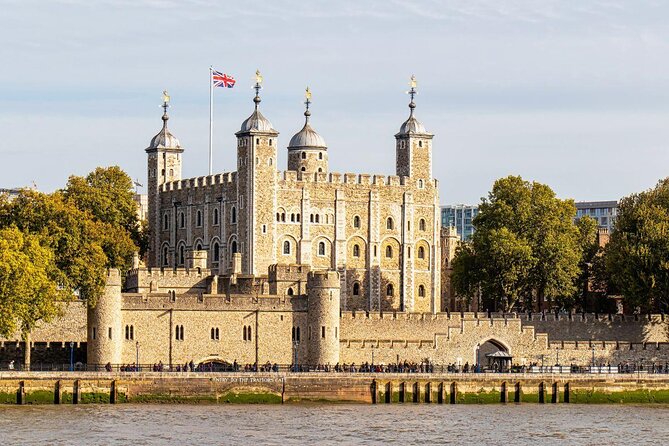
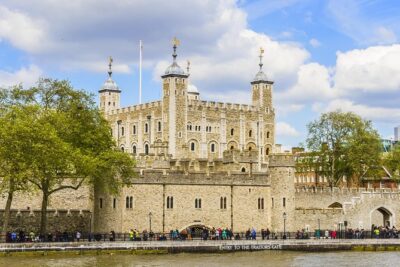
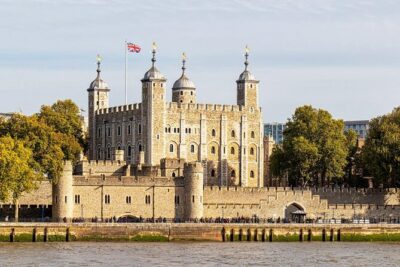
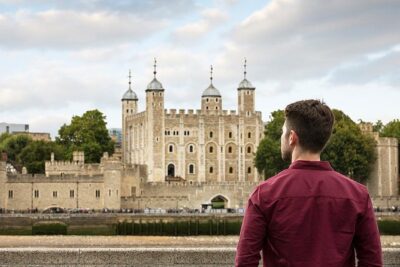
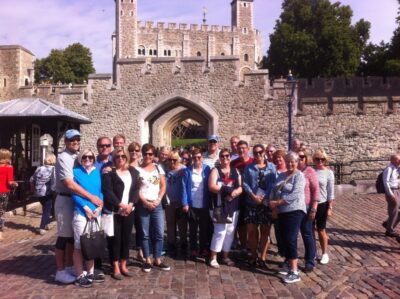
The tour starts at Tower Hill (EC3N 4DJ) at 2:00 pm and immediately sets the tone: medieval London wasn’t a theme park. It was a machine for control, defense, and fear, and the Tower of London is where you feel that.
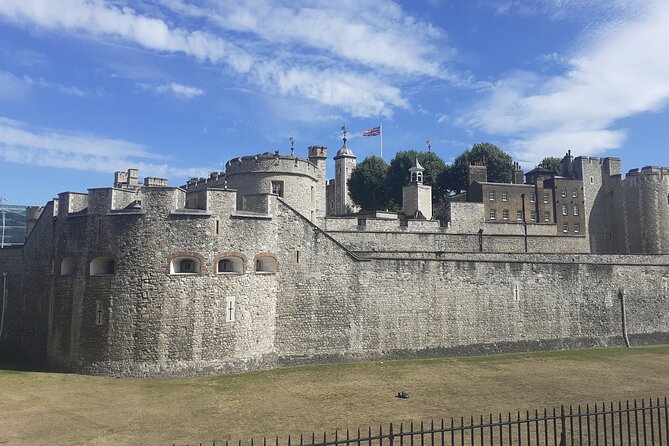
You pass the Tower and get its core timeline: it dates back to 1078, and it’s tied to the Norman era, including the age of William the Conqueror. That anchor matters because the Tower isn’t just one moment in time. It’s one place you can use to understand why London kept changing hands, laws, and loyalties across centuries.
What you should look for as you walk
- Think of the Tower as a symbol of authority, not just a building.
- Expect the guide to connect later landmarks back to this early military power base.
- Keep your questions ready; one of the strongest repeated impressions is that guides happily talk through details when people ask.
Potential drawback
The stop is brief, so you’re seeing a lot from the outside. If you want the full museum-style experience inside the Tower itself, this walk is best as your “story first” introduction.
London on foot, a few more ways

Tower Bridge and HMS Belfast: building pride on one side, conflict on the other
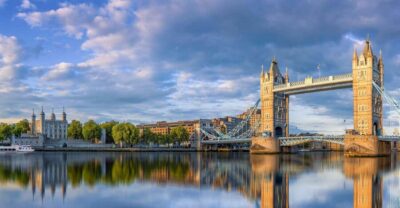
From the Tower area, you cross into a different mood with Tower Bridge. You’ll learn how it was built, and the point isn’t engineering trivia for its own sake. It’s about how London invested in visible infrastructure—especially over the Thames, where the city’s wealth and movement always concentrated.
Then you pass HMS Belfast, the famous World War II battleship. Here, the tour’s medieval focus expands outward in time on purpose. It reminds you that London’s key sites weren’t only medieval power centers. They kept getting reused, repurposed, and reinterpreted as the world entered modern conflict.
You’ll hear the ship’s big résumé, including action in multiple conflicts and its connection to the D-Day landings. Even though this is not “medieval,” it helps you see the Thames corridor as the same stage—different costumes, same strategic value.
Practical tip
Expect you’ll be walking and stopping quickly. If you’re the type who likes slow sightseeing, plan to come back later for deeper time at one or two sites.
London Bridge, Borough Market, and Southwark: the medieval city had teeth
Next comes the stretch where London feels most like a living timeline: London Bridge and the food-and-trade world around Borough Market.
You’ll hear the long arc of London Bridge starting from 43 AD and running through the medieval centuries. The tour also points to major turning points, including the 1212 Great Fire of Southwark and the turbulence of the English Civil War in the 1640s, before landing at the modern-day landmark you recognize.
That timeline is valuable because it reframes London Bridge. It’s not just a postcard. It’s an artery that kept getting rebuilt and rethought after disasters, politics, and pressure from growing neighborhoods.
Then you pass Borough Market, described as about 900 years old and linked to what’s considered the oldest food market in the world. One reason I like this part of the route is that it connects medieval London to everyday life. Fire, politics, and power live here too, but so does bread, meat, and trade—more human scale.
You also get context on the setting: early Victorian railway arches frame the market. It’s a reminder that cities stack eras. You’re literally looking at one layer of history while the older commercial habits still echo under it.
Southwark Cathedral and Winchester Palace: heresy trials and medieval authority
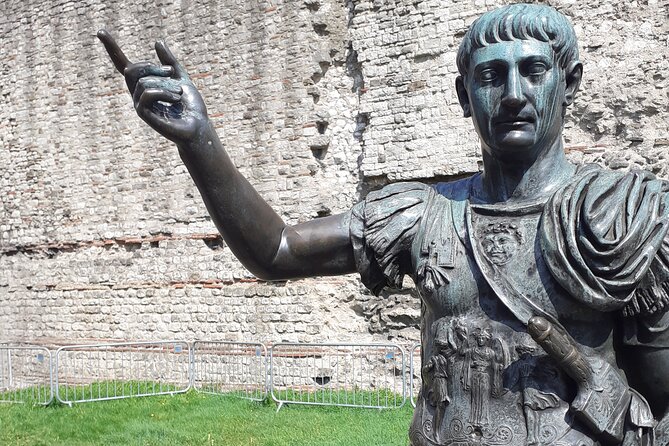
South of the river, the tour leans into religion and justice with Southwark Cathedral. You’re told that worship has existed on the site since 606, while the building you see has stood since 1420. That’s a huge concept for visitors: you’re not always staring at a single date. You’re staring at continuity—place after place after place built on top of earlier belief.
The story then sharpens with the period of “Bloody Mary.” In the 1550s, this cathedral area was used for heresy trials. You don’t just get a name. You get a sense that power in medieval London wasn’t only military. It also policed belief.
Then the walk continues toward the ruins of Winchester Palace, a 12th-century complex that once mattered a lot in medieval London. The tour frames it as dramatic and important, and it also connects it to the notorious Liberty of the Clink—a name that signals trouble. One detail that makes this stop memorable is the mention of the country’s oldest prison located in that broader history.
Why this part of the walk lands
This is where the medieval story stops being “costumes and kings” and becomes social power: courts, punishment, and who got to decide what counted as acceptable.
Drake to Shakespeare: Golden Hinde and the Globe near St Paul’s
After Southwark, the tour shifts again into exploration and literature—one part history of voyages, one part history of performance.
You’ll pass the Golden Hinde at St. Mary Overie dock. You learn about Sir Francis Drake’s 1577 round-the-world voyage, plus the controversies around it. I like that the guide doesn’t treat “famous explorer” as a single neat story. It’s presented as complex, which fits London’s reality: commerce, empire, and conflict often travel together.
Then you head toward Shakespeare’s Globe Theatre. You’ll be told it was painstakingly rebuilt after a cannon-related fire in 1613, and you get a quick sense of why it feels like stepping back in time. The Globe sits by the Thames and is directly opposite St Paul’s Cathedral, so you’re starting to see the “stage” of the city in a new way: government, theater, and worship all on the same river corridor.
A note on where this fits
If you’re visiting London for the first time, this stop helps connect the medieval-to-early-modern bridge. If you already love Shakespeare, it adds a layer of place-based context.
The Thames history, Millennium Bridge views, and arriving at St Paul’s
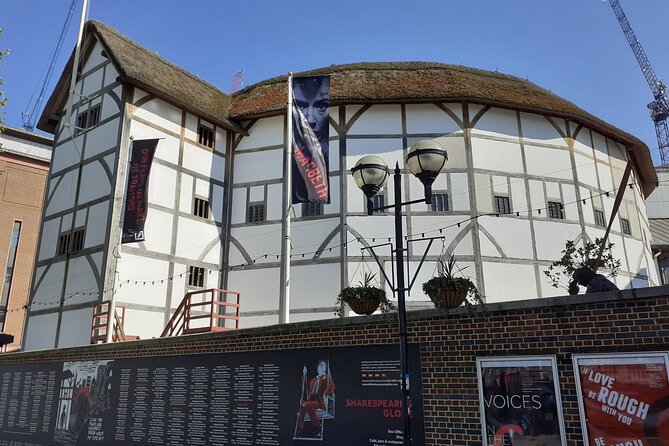
The last leg uses the Thames as the storyteller. You’ll hear that the river’s history stretches back about 30 million years, which sounds huge, then the guide brings it back down to human scale: the tour talks about the unpleasant and painful conditions associated with the Thames between the 11th century and Victorian times.
That’s not meant to be grim for grim’s sake. It helps you understand why the city kept trying to manage the river—economically and physically.
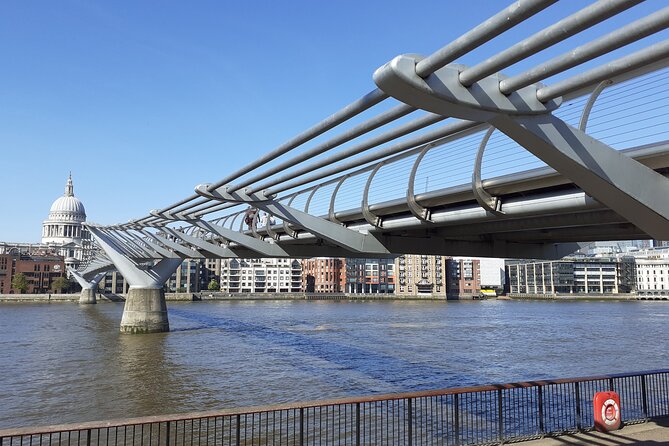
Next you’ll cross again on Millennium Bridge. This is where you’re rewarded with river views and the sense of direction as you move toward St Paul’s Cathedral.
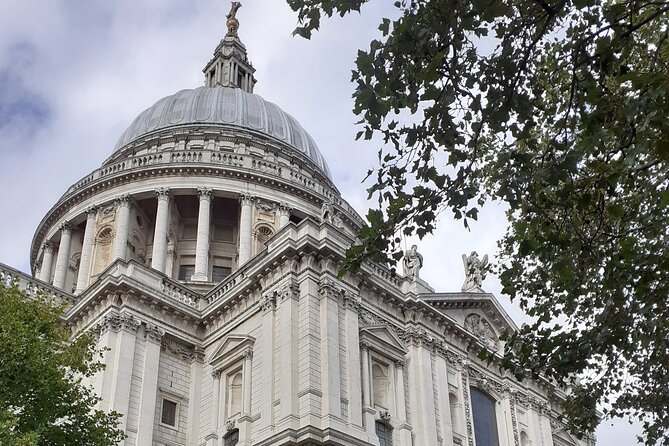
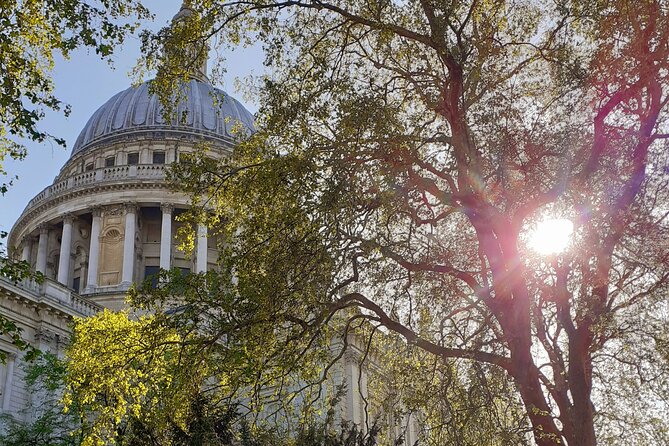
Finally, you reach the finish point at St Paul’s Churchyard (EC4M 8AD). The guide explains why St Paul’s feels like a monument to London’s rebuilding: it’s credited to Sir Christopher Wren and associated with the cathedral’s long life atop Ludgate Hill since the 1670s. You’ll also hear that a site of worship has existed here since the 7th century, meaning St Paul’s is both a single landmark and a long-running spiritual center.
One practical benefit of ending here is access. St Paul’s is served by major transport links, and it’s an easy handoff to keep exploring after the walk.
What if you want to go inside?
Admission at St Paul’s is not included, so keep that in mind. I like treating this walk as the overview that makes an inside visit later feel smarter.
What makes the guide the difference: stories, pace, and group-friendly care
This is where the tour’s reputation shines. Across multiple accounts, the strongest consistent praise is about the guide’s delivery style.
You should expect:
- Sharp storytelling with humor: the best guides don’t just list facts; they turn them into scenes you can picture.
- Real cross-links between sites: Tower power leading into later London Bridge developments, Southwark authority connecting to punishment stories, and river geography explaining why everything matters.
- Clear explanations: people singled out guides for being easy to follow, not a blur of dates.
- Good group pacing: one person noted the guide was considerate for a slower pace and mindful of group interests.
- Extra help on the ground: some guides reportedly give practical next-step suggestions after the tour.
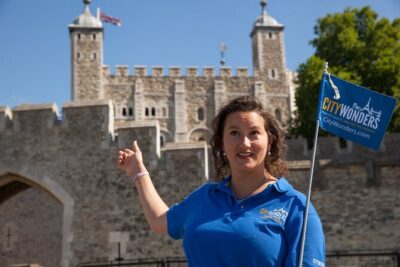
You’ll also see repeated mentions of guides like Mick, Michael, Mike, and Nick—which tells you something useful: the tour experience is built around a person who can narrate, not just recite. If you’re history-driven, this is what prevents a “name tour” from becoming forgettable.
A small practical note from experience-style feedback
Read the meeting instructions in your confirmation and rely on the exact starting address at Tower Hill. Some people warn that map pins can be vague, especially in dense areas.
Price and value: why $25 can work if you want direction
At $25 per person for about 2 hours, this is priced like an efficient intro route rather than a museum-ticket day. That matters for value.
Here’s how to judge whether it’s a good deal for you:
- If you want a guided framework for the medieval-to-early-modern story of London, the cost makes sense because you’re paying for interpretation and direction.
- If you already plan to pay for many separate attractions that aren’t included, you might prefer to pick one or two “inside” sites for deeper time and let the walk do the connecting.
Also, the group size is capped at 20, and the tour uses a mobile ticket. Those details usually translate into smoother logistics and fewer waiting headaches.
Who this tour fits best
This walk is ideal for:
- history buffs who want a guided narrative across multiple eras
- first-time visitors who need an orientation route from Tower Hill to St Paul’s
- travelers who like outside storytelling more than museum time
- anyone who enjoys connecting big events (heresy trials, fires, civil war, D-Day) to specific places
Should you book the Medieval History Walking Tour from the Tower?
I think you should book it if you want London’s medieval layer explained in plain language and stitched to real landmarks. The biggest strength is the guide-driven storytelling: people repeatedly call out engaging delivery and a sense that the guide genuinely loves the material. That’s exactly what turns famous sights into understanding.
Skip it (or treat it as a light intro) if you want long entry times inside major attractions. Since this is structured for short stops at many points—and admission is not included for several key sites—you’ll get the context, but you may not get the full museum hours you want.
If you want a smart “history map” that ends at St Paul’s and sets you up for the rest of your day, this is a solid use of two hours.
FAQ
How long is the Medieval History Walking Tour from the Tower?
It runs for approximately 2 hours.
How much does the tour cost?
The price is $25.00 per person.
Where does the tour start and what time does it begin?
It starts at Tower Hill, London EC3N 4DJ, at 2:00 pm.
Where does the tour end?
It ends at St. Paul’s Cathedral, St. Paul’s Churchyard, London EC4M 8AD.
Is the tour in English?
Yes, the tour is offered in English.
Do I need to buy admission tickets for the stops?
Admission is not included for some locations. Some stops are marked as admission free, while others explicitly note that tickets are not included.
How large is the group?
The maximum group size is 20 travelers.
Is there free cancellation?
Yes. You can cancel up to 24 hours in advance for a full refund.
If you tell me your travel dates and whether you plan to go inside any of the stops (like the Tower of London or HMS Belfast), I can help you pick the best way to pair this walk with your other London plans.
More Tour Reviews in London
- From London: Harry Potter Warner Bros Studio Tour
★ 4.7 · 26,588 reviews - London: Westminster to Greenwich River Thames Cruise
★ 4.5 · 22,836 reviews - Magical London: Harry Potter Guided Walking Tour
★ 4.7 · 22,044 reviews - London: Madame Tussauds London
★ 4.6 · 20,915 reviews - London: Warner Bros. Studio Harry Potter Tour & Branded Bus
★ 4.7 · 19,194 reviews
More London Walks Worth the Shoe Leather
- Magical London: Harry Potter Guided Walking Tour
★ 4.7 · 22,044 reviews - London: The Original Jack the Ripper Walking Tour
★ 4.7 · 7,833 reviews - Tour for Muggles The Ultimate Harry Potter Walking Tour in London
★ 5.0 · 4,684 reviews - London Jack The Ripper Guided Walking Tour
★ 5.0 · 3,131 reviews - London: Harry Potter Movies Walking Tour (Kids Go Free)
★ 4.7 · 3,071 reviews
Back to the Tower: More to Book
- London: Tower Bridge Entry Ticket
★ 4.7 · 15,560 reviews - Tower of London and Crown Jewels Exhibition Ticket
★ 4.5 · 6,677 reviews - London: Westminster to Tower Bridge River Thames Cruise
★ 4.5 · 6,127 reviews - London Sightseeing Tour: Guard Change with Tower of London Option
★ 4.5 · 2,672 reviews - The London Pass®: 100+ Things To Do – Includes Tower Bridge
★ 3.5 · 1,916 reviews
Just reviewed around London





Tower of London Tours, compared.
 ★ 4.7Tower Bridge Entry TicketFrom $2115,560 reviews
 ★ 4.5Tower of London and Crown Jewels Exhibition TicketFrom $496,677 reviews
 ★ 4.5Westminster to Tower Bridge River Thames CruiseFrom $186,127 reviews
 ★ 4.5London Sightseeing Tour: Guard Change with Tower of London OptionFrom $952,672 reviews
 ★ 3.5The London Pass®: 100+ Things To Do – Includes Tower BridgeFrom $1351,916 reviews
 ★ 4.5Tower of London Early Access w/ Beefeater and JewelsFrom $551,639 reviews
 ★ 4.7Easy Access Tower of London and Crown Jewels TourFrom $1201,189 reviews
 ★ 4.5Tower of London: Crown Jewels & Beefeater Opening CeremonyFrom $88969 reviews
Browse the lists this tour appears in