
Reviewed · LONDON GHOST TOURS
London’s Ghosts & Gruesome Past Nighttime Walking Tour
London’s night streets have teeth. This 2-hour guided walk turns landmarks like Farringdon and the Old Bailey into a trail of ghost lore, executions, plague, and grave-robbing tales at a relaxed evening pace. I like that you’re walking as a group with a tour leader, so the scares stay fun instead of random.
I especially love how the guide brings both storytelling and historical framing, with a scholar-style approach to the darker parts of London’s past. And I’m a fan of the small-group setup (up to 20 people), because it keeps the night from feeling like a parade.
One consideration: the theme is gruesome—public punishment, diseased outbreaks, and body theft—so this isn’t the tour for squeamish minds or anyone bringing young kids looking for mild spooky fun.
In This Review
- Quick hits before you go
- Price and what you actually get for $49
- Getting your bearings: the 6:00 pm start at Farringdon
- Stop 1: Farringdon and the girl said to haunt the station
- Stop 2: Smithfield Market and why executions felt public
- Stop 3: Charterhouse Square—plague pits, doctors, and skulls underfoot
- Stop 4: Cloth Fair—when a drink became part of the routine
- Stop 5: St. Bartholomew the Great—tombs, missing parts, and revenge
- Stop 6: William Wallace Memorial—triple execution and film vs reality
- Stop 7: St. Bartholomew’s Hospital Museum—what medicine looked like without modern hygiene
- Stop 8: Holy Sepulchre London—empty grave pits and the business of bodies
- Stop 9: Old Bailey—serial-killer lore that is not Jack the Ripper
- Who this tour suits best, and who should skip it
- Should you book this London ghost and gruesome past night walk?
- FAQ
- How long is the London Ghosts & Gruesome Past Nighttime Walking Tour?
- What does it cost?
- Where do I meet the guide, and where does the tour end?
- What time does the tour start?
- Do I need a paper ticket?
- How big is the group?
- Is free cancellation available?
Quick hits before you go
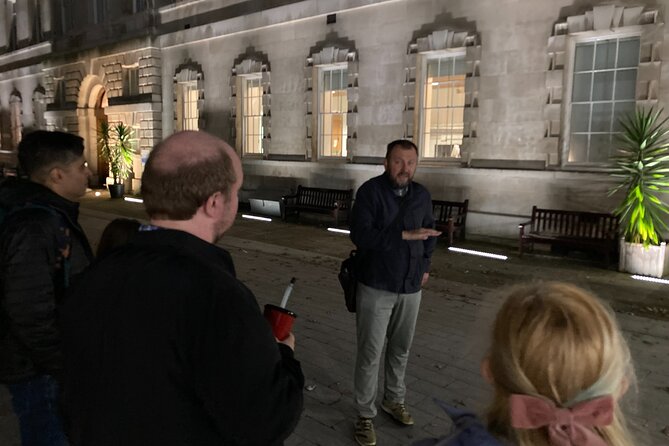
- Small group, safe-feeling walking on a night route from Farringdon toward the Old Bailey
- Scholar-led spooky storytelling with context, not just jump-scare vibes
- Start at 6:00 pm and finish near St. Paul’s Underground for an easy follow-on evening
- Stop-by-stop variety, from executions at Smithfield to plague pits at Charterhouse Square
- Hospital and grave-robbery stories that feel shockingly close to real life, even now
- Strong guide energy, including guides like Matt and Carolina turning drizzle into atmosphere
Braver still? More haunts and ghost walks
- Ghost, Ghouls and Gallows Tour : Guided Tour with Boat Ride
★ 4.5 · 3,212 reviews - London: Comedy Horror Ghost Tour on a Bus
★ 4.4 · 2,084 reviews - London: Ghost Walk and River Thames Boat Ride
★ 4.5 · 1,251 reviews - Ghost Bus Tour of London
★ 4.0 · 961 reviews
Price and what you actually get for $49
At $49 per person, this isn’t a cheap novelty. It’s a focused, guided night walking tour with a local guide who tells stories tied to specific sites across central London. You’re paying for two things: the convenience of a planned route that keeps moving, and the guide’s ability to stitch place + event + legend into something you can follow without needing to research beforehand.
A big value point is that it’s only about 2 hours. You don’t have to commit to a whole evening to get the vibe. And you’re ending near a major transit hub area, so you can keep your night going without stress.
The other thing: it’s deliberately dark. If you’re into chilling history and ghost lore, the price feels fair. If you want fluffy, family-friendly haunted London, you’ll probably wish for a different tone.
Getting your bearings: the 6:00 pm start at Farringdon
The tour starts at Cafe Pronto, Farringdon Station, 43 Cowcross St, London EC1M 6BY. You’ll meet your guide just outside the station area, and yes, they’ll remind you about minding the gap as part of the opener. The session begins at 6:00 pm, which is perfect for London evenings: it’s dark enough for mood, but you’re not trekking deep into late-night hours.
The route ends near 19 Old Bailey, London EC2A 9EA, within walking distance of St. Paul’s Underground. That’s handy. After you finish, you can head to dinner, a pub, or back to your hotel without feeling trapped.
Group size matters here. With a maximum of 20 travelers, it stays manageable on narrow passages and tight streets where you’re not constantly bumping elbows.
Stop 1: Farringdon and the girl said to haunt the station
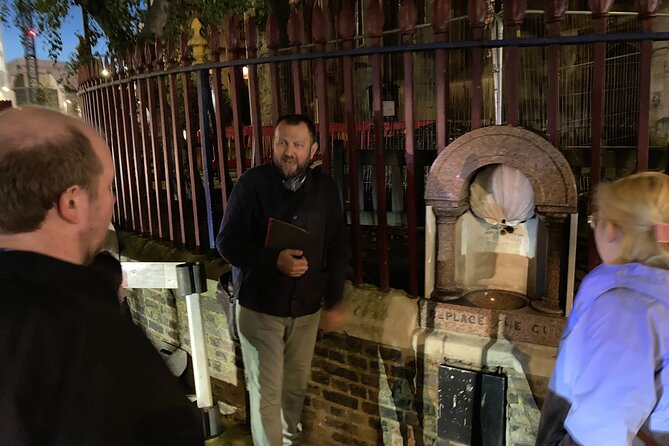
Farringdon kicks things off with a ghost legend tied to the station area: a tragic girl from the 18th century, badly treated while alive and even worse in the afterlife story people tell. Your guide sets a tone right away—one part history, one part legend, and one part challenge: are you curious enough to look for signs, or would you rather just listen?
What I like about this opener is that it’s not random spooky noise. Even if you treat the haunting as legend, the story gives you a reason to pay attention to the surroundings. You start in a busy, colorful station zone, then the guide helps you cut through the everyday noise and focus on what you’re hearing.
A small practical tip: since this stop includes a station environment, keep your phone volume sensible and be ready to listen closely. If there’s any drizzle, it only adds atmosphere—just keep your footing steady.
London on foot, a few more ways

Stop 2: Smithfield Market and why executions felt public
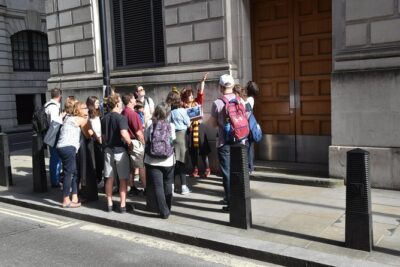
Then you move to Smithfield Market, which the guide frames as more than just a meat-market location. For centuries, it was a public stage for executions, where punishment played out in full view. The guide asks you to close your eyes and imagine what it looked like back then, and that simple prompt works. It helps you go from modern street-level impressions into the human reality of the place.
You’ll hear about heroes, martyrs, and people labeled innocent—then about how public punishment was carried out in inventive, brutal ways. It’s heavy material. But because the story is anchored in a real site, it doesn’t feel like horror-movie history. It’s closer to a grim lesson: how societies used spectacle to control fear.
The drawback? If you’re the type who dislikes graphic descriptions, this is likely one of the hardest stops. If you can handle dark stories, though, this stop is a strong example of why the tour is memorable.
Stop 3: Charterhouse Square—plague pits, doctors, and skulls underfoot

Charterhouse Square is where the tour changes pace from execution spectacle to medical disaster. You’ll reach a quieter pocket of city space—at least by London standards—but you’re told not to sit casually without thinking about what’s under the ground.
The guide talks about layers of time: plagues, how deadly they were, how doctors tried to respond, and what happened to people who survived. The tone gets eerie in a practical way. You’re encouraged to watch what’s around you and pay attention to the idea that you’re standing near the physical remnants of past outbreaks.
The phrase you’ll take from this stop is basically: you’re never far from skull imagery when you’re standing on top of old plague pits. Even if that’s presented as part warning and part storytelling device, it sticks.
A consideration here is footwear. You’ll be looking down and around for details, and you may be standing where the ground doesn’t feel like a museum exhibit. So bring shoes that handle uneven sidewalks gracefully.
Stop 4: Cloth Fair—when a drink became part of the routine
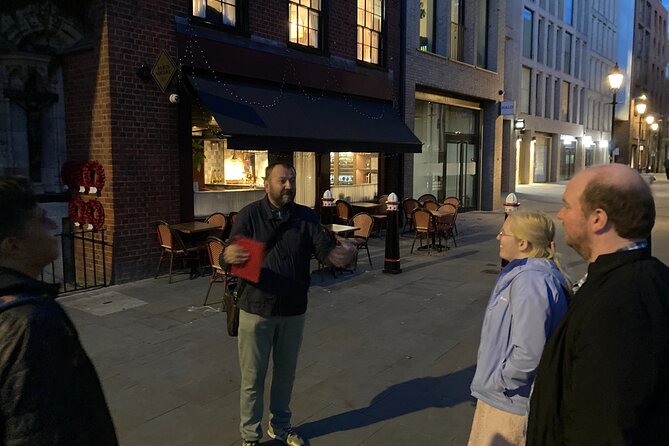
At Cloth Fair, the guide guides you toward a more human detail: where people might grab a drink before heading off to witness a public execution. It’s one of those stops where the tour uses dark humor to highlight what normal life looked like for different crowds in different eras.
This stop is short, but it adds texture. It nudges you to think beyond the event itself and toward the daily behavior that surrounded it. You can almost picture the flow—trade, streets, errands—then punishment happening as entertainment or duty depending on who you were.
For me, that’s why it works. It doesn’t only ask you to fear the past. It asks you to understand how people lived while fear was on the schedule.
Stop 5: St. Bartholomew the Great—tombs, missing parts, and revenge
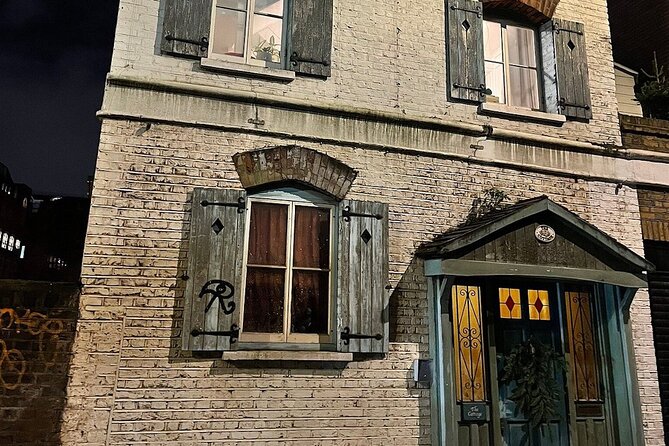
Next comes St. Bartholomew the Great, one of the older churches you’ll visit, and the guide frames it as a place for the living and the dead for centuries. You’ll move through narrow passages and older streets to reach a graveyard environment where the stories feel calmer on the surface—until you hear what disturbed rest, what’s missing now, and the revenge idea tied to the founder’s eternal peace.
This stop is quieter. You’re surrounded by old tombstones, and the guide leans into the contrast: tranquil setting, grim story. It’s a good reset after the heavier execution and plague themes.
The takeaway you’ll remember is how the tour uses religious sites not just as scenery, but as narrative anchors. Churches like this become time machines. Even if you don’t fully buy every legend, the sense of layered memory is real.
Stop 6: William Wallace Memorial—triple execution and film vs reality
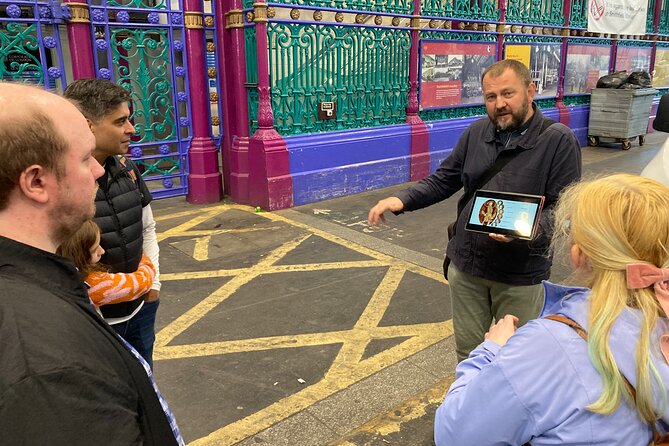
Then you head to the William Wallace Memorial area, where the tour steps back into the Scotland-England conflict era. Here, you’ll hear the true story tied to William Wallace, including references to his triple execution and the consequences that followed.
What I appreciate is that the guide doesn’t only repeat famous lines. You also get a comparison element—how stories get twisted by film, and where the movie version may be inaccurate compared with the traditional account.
This stop works well if you know the name but want the reality check. And even if you don’t, the conflict context gives the tour momentum. It turns London’s streets into a wider UK story instead of just a local haunt trail.
Stop 7: St. Bartholomew’s Hospital Museum—what medicine looked like without modern hygiene
At Saint Bartholomew’s Hospital Museum, the tour pivots from punishment and plague to medical practice. You’ll pass another church and then end up in the hospital yard area, where the guide talks about a long shared patron and long medical history.
This is one of the most practical-feeling stops because it focuses on what doctors used in the past and how treatment worked when hygiene standards were wildly different. You’ll hear examples like not washing hands, sharing beds, and the idea that surgery or amputation could happen under watch—sometimes even as a kind of spectacle. The tour also emphasizes that just watching could carry deadly risk.
I like that it doesn’t present medicine as purely evil caricature. It presents it as a world with limited understanding—then lets you feel how terrifying that must have been.
If you’re planning to do more walking after, keep this in mind: the emotional intensity can make the evening feel longer than the two hours on the clock.
Stop 8: Holy Sepulchre London—empty grave pits and the business of bodies
At Holy Sepulchre London, you’ll find a setting that feels wrong on purpose. It’s described as having empty pits, a reminder of a time when some people made money by removing dead bodies from graves and selling them.
The guide frames the moral question with a twist: taking or stealing might be debated, and the line could matter legally and economically. Then comes the practical problem—who would buy a dead body? The tour connects the dots using what you heard at the hospital stop and the darker cultural context around medicine.
The stop ends with a reference to a book with a very disturbing cover, which acts like a final “you asked for it” punctuation mark. This is one of those places where your mind fills in the rest, and that’s exactly the point of the tour’s scare style.
Stop 9: Old Bailey—serial-killer lore that is not Jack the Ripper
You finish at Old Bailey, an imposing courthouse area with a long criminal justice story. The guide saves a darker thread for the end: a focus on a particularly notorious figure described as England’s worst serial killer, with an explicit note that if you think Jack the Ripper is the answer, you’ll need to rethink.
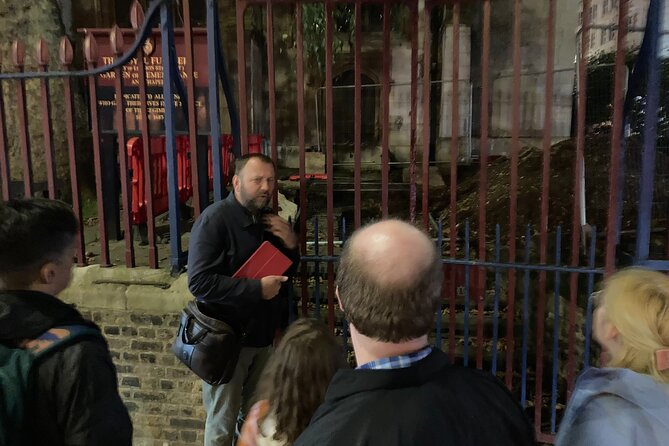
You’ll stand outside the courthouse, on a site tied to a former prison where thieves, murderers, and others were held. The guide then builds a portrait around an ordinary-seeming woman with a chilling look and a deadly touch, including the idea that she specialized in killing the innocent and managed to be caught twice while still continuing.
There’s also a family element in the story, including mention of her daughter. And the ending keeps tightening the screws: the tour offers a finish that feels like a conclusion without being predictable.
This last stop is why the tour is most satisfying for people who like narrative tension. It ends with intrigue, not just a ghost.
Who this tour suits best, and who should skip it
This is a great fit if you like serious spooky history and you enjoy hearing stories anchored to real London sites. You’ll probably enjoy it most if you’re into darker topics like executions, plague-era medicine, and grave-robbing legends, especially when the guide adds context and keeps the pace group-friendly.
You might want to skip it if you want a light, casual “haunted London” stroll. The tour’s own tone is clear: expect grim themes and graphic-sounding descriptions. And since it’s a walking tour with narrow passages, it’s also best for people who can handle an evening on foot.
What to bring:
- Comfortable shoes with decent grip
- A layer for London evenings
- A phone battery if you want photos, but don’t let screens steal the show
Should you book this London ghost and gruesome past night walk?
If you’re deciding whether to book, I’d use this simple rule: book it when you want a guided night story that takes London’s darker past seriously. The route from Farringdon to the Old Bailey gives you variety, and the guide-led pacing keeps the experience moving and easy to follow.
I’d skip it if you’re hoping for mild fun. The tour leans into executions, plague, and body theft, and it doesn’t pretend those are cute legends.
For value, it’s hard to beat a $49 two-hour evening with a local guide, a small group size (20 max), and a finish near a major transit area so you can keep your night going without extra planning.
FAQ
How long is the London Ghosts & Gruesome Past Nighttime Walking Tour?
It lasts about 2 hours.
What does it cost?
The price is $49.00 per person.
Where do I meet the guide, and where does the tour end?
You meet at Cafe Pronto, Farringdon Station, 43 Cowcross St, London EC1M 6BY. The tour ends near 19 Old Bailey, London EC2A 9EA, within walking distance of St. Paul’s Underground Station.
What time does the tour start?
The start time is 6:00 pm.
Do I need a paper ticket?
You get a mobile ticket.
How big is the group?
The tour has a maximum of 20 travelers.
Is free cancellation available?
Yes. You can cancel for a full refund up to 24 hours before the experience starts.
More Tour Reviews in London
- From London: Harry Potter Warner Bros Studio Tour
★ 4.7 · 26,588 reviews - London: Westminster to Greenwich River Thames Cruise
★ 4.5 · 22,836 reviews - Magical London: Harry Potter Guided Walking Tour
★ 4.7 · 22,044 reviews - London: Madame Tussauds London
★ 4.6 · 20,915 reviews - London: Warner Bros. Studio Harry Potter Tour & Branded Bus
★ 4.7 · 19,194 reviews
More London Walks Worth the Shoe Leather
- Magical London: Harry Potter Guided Walking Tour
★ 4.7 · 22,044 reviews - London: The Original Jack the Ripper Walking Tour
★ 4.7 · 7,833 reviews - Tour for Muggles The Ultimate Harry Potter Walking Tour in London
★ 5.0 · 4,684 reviews - London Jack The Ripper Guided Walking Tour
★ 5.0 · 3,131 reviews - London: Harry Potter Movies Walking Tour (Kids Go Free)
★ 4.7 · 3,071 reviews
More Ghosts and Ghouls
- Ghost, Ghouls and Gallows Tour : Guided Tour with Boat Ride
★ 4.5 · 3,212 reviews - London: Comedy Horror Ghost Tour on a Bus
★ 4.4 · 2,084 reviews - London: Ghost Walk and River Thames Boat Ride
★ 4.5 · 1,251 reviews - Ghost Bus Tour of London
★ 4.0 · 961 reviews - Ghastly Ghost Walking Tour in London
★ 5.0 · 878 reviews
Just reviewed around London





London Ghost Tours, compared.
 ★ 4.5Ghost, Ghouls and Gallows Tour : Guided Tour with Boat RideFrom $293,212 reviews
 ★ 4.4Comedy Horror Ghost Tour on a BusFrom $372,084 reviews
 ★ 4.5Ghost Walk and River Thames Boat RideFrom $261,251 reviews
 ★ 4.0Ghost Bus Tour of LondonFrom $38961 reviews
 ★ 5.0Ghastly Ghost Walking Tour in LondonFrom $34878 reviews
 ★ 4.9Ghastly Ghosts 2-Hour Walking TourFrom $33794 reviews
 ★ 3.5The Original Jack the Ripper Coach Tour of Haunted LondonFrom $82419 reviews
 ★ 3.7Ghosts and Legends of Mayfair Walking Tour – LondonFrom $55153 reviews
Browse the lists this tour appears in