
Reviewed · CITY TOURS
London Self Guided City Tour With an App
London looks different when you walk it. This self-guided route strings together major landmarks and lesser-known sights in a way that feels budget-friendly and surprisingly smooth thanks to the offline map. I especially like the tight route around the Tower area plus the way the app gives you narration while you move. The main catch: the advertised 1 to 2 hours can feel short if you stop for views and reading, and the map can be harder to follow if you don’t know London’s streets.
You’ll start at Monument Station and finish at St. Paul’s Churchyard, with the app guiding you stop by stop across the city’s layers: Tudor and Roman echoes, Great Fire landmarks, and modern icons like The Shard and Tate Modern. It’s also a good value format if you’re traveling with your own pace—no waiting for a group, just your route and your timing.
One more practical note up front: this is built for walking, and you’ll cover a lot of ground. I’d plan comfy shoes and a bit of extra time, especially if you actually want to enjoy each stop rather than just skim it.
In This Review
- Quick take before you go
- Price and value: what $9.99 buys you in London
- Getting the Trippy Tour Guide app working (so you don’t waste time)
- Monument Station start: easing in with The Monument and the Great Fire story
- Stop 1: Sky Garden and the Walkie-Talkie view
- Stop 2: The Monument to the Great Fire of London
- Tower area essentials: All Hallows and the Tower Hill sundial
- Stop 3: All Hallows by the Tower (a church with Roman threads)
- Stop 4: The Sundial at Tower Hill Underground Station
- Thames icons: Tower Bridge, Queen’s Walk, and the London Bridge twist
- Tower Bridge: the bridge people mix up
- Queen’s Walk: a riverside line of queens and changing eras
- London Bridge: not just a crossing, but a former street
- Modern height and old ground: The Shard, Southwark, and why foundations matter
- Stop 5: The Shard and the 310-meter skyline moment
- Food + culture in walking distance: Borough Market and Shakespeare’s Globe
- Stop 6: Borough Market
- Stop 7: Shakespeare’s Globe Theatre (the replica you can actually feel)
- Art in an old power station: Tate Modern’s turbine hall and Thames views
- Stop 8: Tate Modern
- Crossing after art: Millennium Bridge to the finish at St. Paul’s Churchyard
- Millennium Bridge
- End: 100 St. Paul’s Churchyard
- When this route feels perfect (and when it doesn’t)
- Should you book this self-guided London city tour?
- FAQ
- How much does the London Self Guided City Tour cost?
- About how long is the tour?
- Where does the tour start and end?
- What language is the tour offered in?
- Does the tour work offline?
- What’s included with the tour?
- Are any attraction tickets included?
- Do I need private transportation for this?
- Can I cancel for a refund?
Quick take before you go
- Offline map means you can keep moving without hunt-for-signal stress
- 30+ narration points help you connect what you’re seeing to what it means
- A Tower area core gives you Great Fire and centuries-old landmarks early
- Mix of big and small stops: free viewpoints, churches, bridges, markets, and galleries
- Time estimates are optimistic if you linger at viewpoints or markets
Still deciding? A handful more London outings we rated
- Magical London: Harry Potter Guided Walking Tour
★ 4.7 · 22,044 reviews - London: Emirates Stadium Entry Ticket and Audio Guide
★ 4.7 · 5,513 reviews - London: Christmas Lights Bus Tour With Live Guide
★ 4.0 · 5,410 reviews - Stonehenge, Windsor Castle and Bath Full Day Guided Tour
★ 4.5 · 5,346 reviews
Price and value: what $9.99 buys you in London
For $9.99 per person, you’re not paying for a guide’s time. You’re paying for a structured route plus a phone-based guide: narration points, detailed walking directions, and a map that works offline. That’s a real bargain in London, where even “small” guided experiences can cost a lot more.
Here’s the way I’d judge the value: you get a route that connects famous places (Sky Garden, Tower Bridge, The Shard, Tate Modern, Shakespeare’s Globe) with story-heavy stops that most people rush past (like the Sundial at Tower Hill and the oldest church at All Hallows by the Tower). If you use the app actively—following the map and listening as you walk—you’ll feel like you got your money’s worth quickly.
If you’re the type who hates phone navigation or you only want a quick photo loop, this might not feel “worth it.” But if you like the independence of self-guided travel with guardrails, it’s strong value.
Getting the Trippy Tour Guide app working (so you don’t waste time)
This tour runs through the Trippy Tour Guide app. The key setup detail is making sure the tour content is ready on your phone before you start—so it can function properly as you walk.
What matters in the real world:
- Download the tour so content is available offline (the map is designed to work without needing Wi‑Fi or data).
- Give the app the GPS access it needs so it can tell where you are and play the right narration at the right moments.
- Treat this like a guided walk that happens on your phone, not like a turn-by-turn driving app.
One more thing I think you’ll appreciate: you’re not stuck staring at your screen the whole time. The idea is that you glance, orient, then look up. London rewards that. When you’re on the Tower-side of the Thames, views and street patterns are your navigation clues.
Monument Station start: easing in with The Monument and the Great Fire story
The route begins at Monument Station (King William St, London EC4R 9AA). This is a smart place to start because you’re right in the center of the city’s older layers.
Still deciding? A handful more London outings we rated
Stop 1: Sky Garden and the Walkie-Talkie view
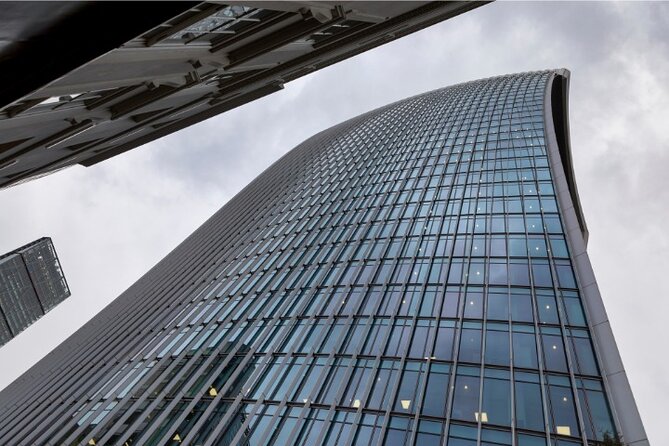
You’ll head to Sky Garden, the “Walkie-Talkie” building (Fenchurch). It’s a modern shape with an actual payoff: panoramic views from the top that let you see how London’s blocks, bridges, and spires line up.
The stop notes also flag free admission. Even if you just use this stop to orient yourself visually—like spotting where the river bends and where the Tower area sits—you’ll feel more confident for the rest of the walk.
Why it’s worth your time: Sky Garden gives you “map-in-the-head” orientation fast. That makes later stops easier to understand.
Stop 2: The Monument to the Great Fire of London
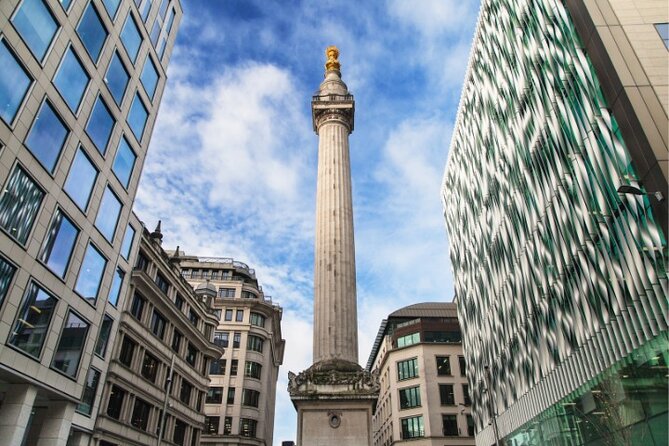
Next is The Monument to the Great Fire of London. This landmark isn’t just a symbol. It’s designed by Sir Christopher Wren, and its location and design point to where the Great Fire started.
You also get the option for the classic “do the steps” moment: climbing 311 steps for a wider view. The stop notes mention you can also receive a commemorative certificate, which is a nice little souvenir without turning it into a paid attraction.
Possible drawback: if stairs aren’t your thing, you might still want to see it from the outside and spend your time elsewhere.
Tower area essentials: All Hallows and the Tower Hill sundial
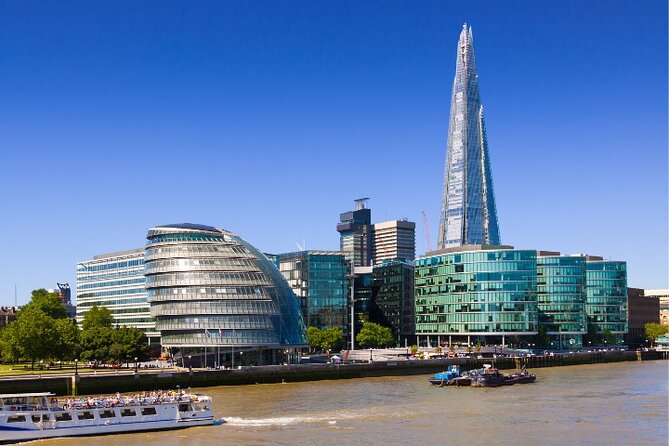
This is where the route really starts to feel like a story you can walk through.
Stop 3: All Hallows by the Tower (a church with Roman threads)
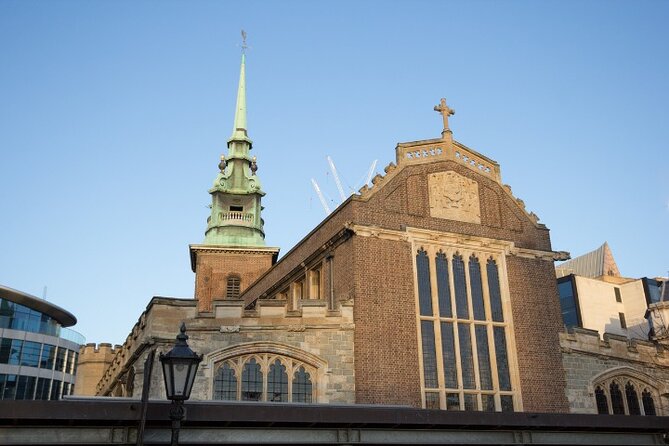
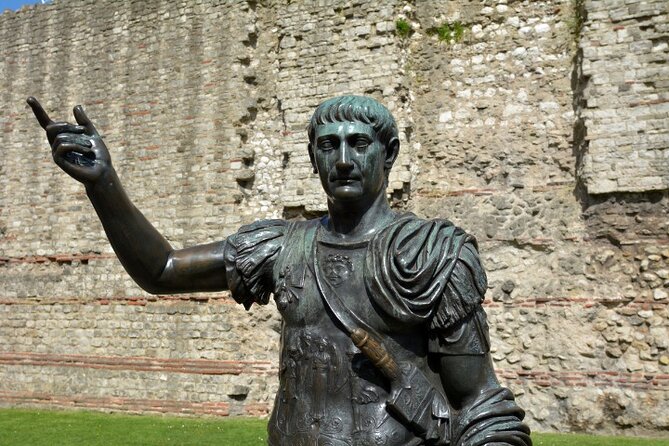
All Hallows by the Tower dates back to 675 AD, and it’s notable for what survived. The church is described as London’s oldest, including remnants from the 13th and 14th centuries and even a hidden Roman road.
If you like places that quietly reward curiosity, this stop works well. You’re also near the Tower of London, so the area naturally carries both royal-era power and darker history—without you needing to turn it into a lecture.
Why you’ll enjoy it: this is the kind of stop where listening helps. The app narration points you to what to notice.
Stop 4: The Sundial at Tower Hill Underground Station
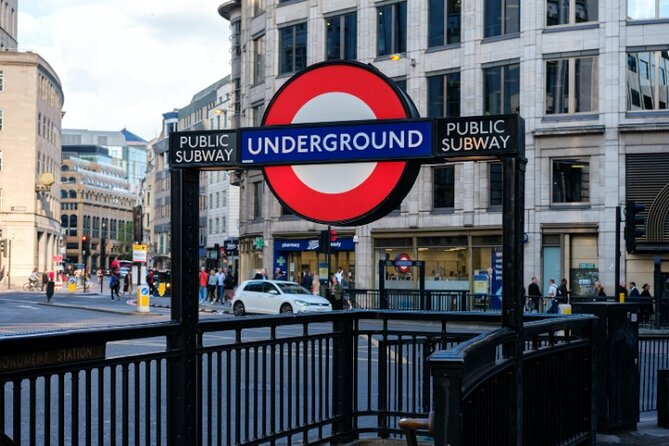
Right near Tower Hill Underground Station, the Sundial is more than a time-teller. It uses bronze plaques to mark significant moments in London’s past, from the Roman invasion all the way to the end of World War II. As the light shifts, it becomes a living timeline.
This stop is brief by design, but it’s clever. Instead of only reading about history, you physically relate it to the sun.
Thames icons: Tower Bridge, Queen’s Walk, and the London Bridge twist
Once you’re on the Thames corridor, the route shifts from “what happened” to “what still sits here.”
Tower Bridge: the bridge people mix up
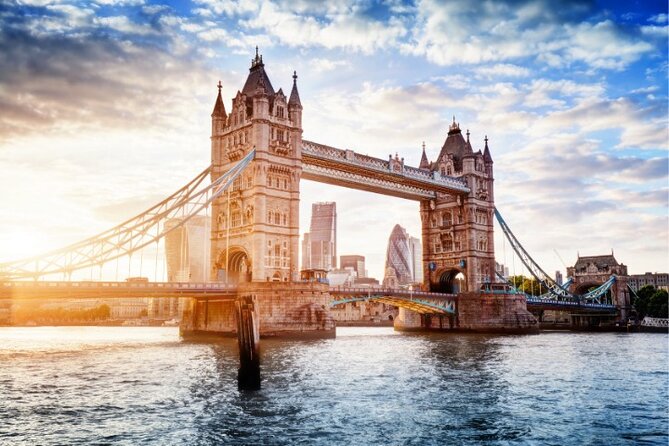
You’ll reach Tower Bridge, and the route calls out a key detail: it’s a unique combination of bascule and suspension design that allows ships to pass. It also helps you avoid the common mix-up with London Bridge—because it’s close to the Tower of London, and that context is part of the story.
One fun detail in the stop description: a bus driver reportedly jumped the bascules in 1952. It’s the sort of anecdote that makes a landmark feel human.
Queen’s Walk: a riverside line of queens and changing eras
Next is Queen’s Walk, a riverside stretch dedicated to queens who shaped London. The description connects time periods—from the 15th-century riverside atmosphere to grand houses after Henry VIII, and it even ties into the 1666 Great Fire.
This is also where you’ll see the city’s layers side by side: older structures with modern landmarks nearby, including the London Eye referenced in the stop notes.
London Bridge: not just a crossing, but a former street
The route also includes London Bridge with an interesting twist. In the stop notes, London Bridge isn’t just a bridge—it used to function like a lively street with shops, homes, and even a chapel in the 15th century.
Practical tip: when you reach this area, slow down for a minute. Bridges can look similar from a distance, but the riverside layout changes how the story makes sense.
Modern height and old ground: The Shard, Southwark, and why foundations matter
Stop 5: The Shard and the 310-meter skyline moment
The Shard is described as 310 meters tall—Western Europe’s iconic modern skyscraper. It’s the kind of stop that works best if you use it as a contrast point: you’re coming from Great Fire monuments and centuries-old churches, then suddenly you’re at a vertical statement of today.
The stop notes add a key context detail: its foundations are in Southwark, an area that was once active with inns and even connected to Shakespeare’s Globe Theatre history.
This kind of connection helps the walk feel more coherent. You’re not hopping randomly—you’re moving through time.
Food + culture in walking distance: Borough Market and Shakespeare’s Globe
Stop 6: Borough Market
Borough Market is included with a long timeline: it’s been at the heart of London since 1014 AD and evolved into a major trading hub by the 16th century. It once acted like a key trading spot connected to London Bridge.
If you want to turn this self-guided walk into a day, this is where you should pause. Even if you don’t eat much, the market atmosphere is worth time—plus it’s a convenient reset point after the sightseeing stretches.
Stop 7: Shakespeare’s Globe Theatre (the replica you can actually feel)
The route then goes to the modern Shakespeare’s Globe, opened in 1997. The stop notes credit the inspiration of Sam Wanamaker and explain the replica approach, including use of traditional materials like unseasoned oak and thatch.
The big idea here is interaction. Elizabethan theatre experiences are described as audience-participation style, and that’s the kind of energy many people miss when they only see theatres from the outside.
Value angle: this is free to reach as a stop on the walk. If you want to go inside for a performance, that would be separate, but the exterior and context alone are useful.
Art in an old power station: Tate Modern’s turbine hall and Thames views
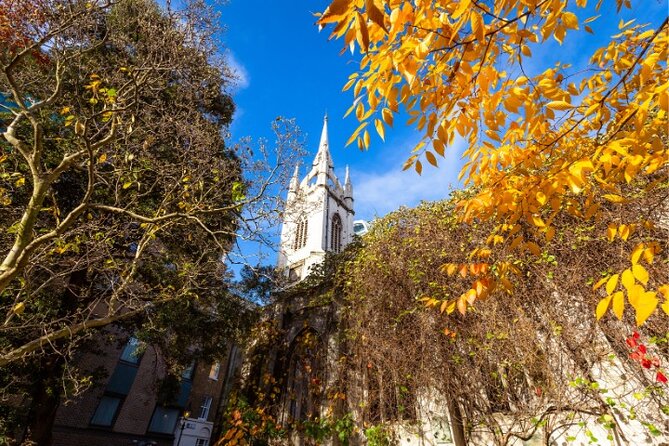
Stop 8: Tate Modern
Tate Modern is included as another free stop, with a surprisingly grounded origin story: it was once a power station designed by Sir Giles Gilbert Scott. It was repurposed in 2001 and redesigned by Herzog and de Meuron, and the stop notes call out the way the building blends industrial space with contemporary galleries.
If you only have a short amount of time, focus on one space: the former turbine hall (mentioned in the stop notes) because it’s so large it changes how you experience the art. The upper floors are also flagged for panoramic views of the Thames, which is a nice way to tie back into the walk’s river theme.
Crossing after art: Millennium Bridge to the finish at St. Paul’s Churchyard
Millennium Bridge
The route includes the Millennium Bridge, which the stop notes describe as having been known for wobbling after its 2001 debut—though it’s been stable since. It’s the kind of bridge you might feel more than see, because it’s light and connected to how pedestrians move.
End: 100 St. Paul’s Churchyard
You’ll finish at 100 St. Paul’s Churchyard (London EC4M 8AE), the last stop. Ending here makes sense because St. Paul’s sits like a visual anchor for the city’s big-picture vibe—especially after your walk has covered everything from Great Fire markers to modern architecture.
When this route feels perfect (and when it doesn’t)
This experience is best if you want:
- a budget-friendly way to see a lot without paying for private transport
- a history-leaning walk that mixes famous landmarks with lesser-known story points
- the freedom to stop for photos, snacks, and quiet reading without negotiating with a group
It may feel less ideal if:
- you expect the map to behave exactly like a turn-by-turn Google Maps experience every step of the way
- you plan to cover all stops quickly and treat “1 to 2 hours” as a strict promise
- you dislike phone-based navigation (even though the route is designed to work offline)
My practical advice: treat the listed time as a minimum. If you actually want to enjoy places like Sky Garden, The Monument climb (if you choose it), Borough Market, and Tate Modern calmly, you’ll likely want more time than the headline.
Should you book this self-guided London city tour?
I’d book it if you’re comfortable using your phone like a tool and you like the idea of walking through London in “chapters”—Great Fire sites, Tower area landmarks, bridges, markets, theatre, art, then the big finish near St. Paul’s. For the price, it’s a strong structure, and the offline map is genuinely useful in a city where data plans don’t always cooperate.
I’d skip it if you want a fast, low-effort stroll with minimal screen time. In that case, the route may feel like a lot of navigating for not enough payoff.
If you’re on the fence, do this: download the tour before you leave, keep your phone brightness reasonable (so you’re not stuck squinting), and build in extra time at the stops that are view-heavy and indoor-friendly. Then this walk turns into a smart, self-paced London day.
FAQ
How much does the London Self Guided City Tour cost?
It’s priced at $9.99 per person.
About how long is the tour?
The tour duration is listed as 1 to 2 hours (approx.).
Where does the tour start and end?
It starts at Monument Station, Underground Ltd, King William St, London EC4R 9AA, UK and ends at 100 St. Paul’s Churchyard, London EC4M 8AE, UK.
What language is the tour offered in?
The narration and app content are offered in English.
Does the tour work offline?
Yes. The tour includes a fully offline map, and you don’t need Wi‑Fi or data during the walk.
What’s included with the tour?
You get access to the London Self Guided City Tour on the Trippy Tour Guide app, 30+ narration points, and detailed directions to attractions and hidden spots.
Are any attraction tickets included?
The stop notes provided for the sights listed include Admission Ticket Free for those major locations.
Do I need private transportation for this?
No. Private transportation is not included, since this is a walking self-guided route.
Can I cancel for a refund?
Yes. There is free cancellation. You can cancel up to 24 hours in advance for a full refund.
More Guided in London
- Magical London: Harry Potter Guided Walking Tour
★ 4.7 · 22,044 reviews - London: Emirates Stadium Entry Ticket and Audio Guide
★ 4.7 · 5,513 reviews - London: Christmas Lights Bus Tour With Live Guide
★ 4.0 · 5,410 reviews - Stonehenge, Windsor Castle and Bath Full Day Guided Tour
★ 4.5 · 5,346 reviews - London Jack the Ripper Guided Tour with Ripper-Vision
★ 4.5 · 4,840 reviews
More Tours in London
- From London: Harry Potter Warner Bros Studio Tour
★ 4.7 · 26,588 reviews - Magical London: Harry Potter Guided Walking Tour
★ 4.7 · 22,044 reviews - London: Warner Bros. Studio Harry Potter Tour & Branded Bus
★ 4.7 · 19,194 reviews - London Big Bus Hop-On Hop-Off Tour with Optional River Cruise
★ 3.5 · 10,803 reviews - London Small Group Tour of Historical Pubs
★ 5.0 · 10,422 reviews
More Tour Reviews in London
- From London: Harry Potter Warner Bros Studio Tour
★ 4.7 · 26,588 reviews - London: Westminster to Greenwich River Thames Cruise
★ 4.5 · 22,836 reviews - Magical London: Harry Potter Guided Walking Tour
★ 4.7 · 22,044 reviews - London: Madame Tussauds London
★ 4.6 · 20,915 reviews - London: Warner Bros. Studio Harry Potter Tour & Branded Bus
★ 4.7 · 19,194 reviews
Just reviewed around London





City Tours, compared.
 ★ 4.4City Sightseeing London Hop-On Hop-Off Bus & Bookable ExtrasFrom $337,374 reviews
 ★ 4.0City Sightseeing London Hop-On Hop-Off Bus Tour & Bookable ExtrasFrom $371,224 reviews
 ★ 4.3Go City Explorer Pass® – Tickets for 2-7 AttractionsFrom $721,111 reviews
 ★ 5.0Private Windsor Castle, Stonehenge, The City of Bath Day TourFrom $991468 reviews
 ★ 5.0Speedboat Tour Through Heart of the CityFrom $66387 reviews
 ★ 4.0Upside Down House Westfield White City Entry TicketFrom $10338 reviews
 ★ 4.5Westminster Abbey Priority Access & Guided City TourFrom $73282 reviews
 ★ 5.0Heathrow London Airport Transfer to City centerFrom $94213 reviews
Browse the lists this tour appears in