
Reviewed · HISTORICAL TOURS
London Past & Present Backstreet Historical Tour
London history, minus the museum shuffle. This London backstreet historical tour strings together major landmarks and lesser-visited streets, with your guide pointing out how the city changed over roughly 2,000 years. I love the way you get your bearings fast—you start with a wide view from St Paul’s, then the story tightens into specific streets and places.
My second favorite part is the focus on markets and bridges, including time at Borough Market and Leadenhall Market, where the atmosphere does half the explaining. One thing to consider: it’s a walking route with frequent brief stops, so if you want long sit-down viewing or slow, stop-to-smell pacing, this won’t feel like that.
In This Review
- Key Takeaways Before You Go
- London Backstreets With Big Stories: The Core Idea
- Starting at 1 Cheapside: Where the Walk Builds Its Momentum
- From St Paul’s Overview to Two Thousand Years in One Route
- Shakespeare’s Globe Theatre Site: Passing From Old Roots to New Structure
- Borough Market: A Food-Lovers Stop That Teaches the City
- Leadenhall Market: The Arcade Look and the Harry Potter Connection
- London Bridge and the Great Fire Story: How Disaster Shapes Cities
- Toward Tower Bridge and the Tower of London Views
- Pace, Walking Comfort, and How to Dress
- Price and Value: Is $94.61 Worth It?
- Who Should Book This Tour (and Who Might Skip It)
- Should You Book It?
- FAQ
- How long is the London Past & Present Backstreet Historical Tour?
- How many people are in the group?
- Where do you meet and where does the tour end?
- What is included in the price?
- Are there any admission tickets required for stops?
- What is the cancellation policy if plans change?
Key Takeaways Before You Go
- Small group size (max 12) helps you actually ask questions and hear the route details clearly.
- St Paul’s overview first gives you a smart mental map before you start turning corners.
- Borough Market + Leadenhall Market bring food-market sights into the history mix.
- Shakespeare’s Globe site walk-by connects the famous theater story to the street-level real world.
- London Bridge and Great Fire storytelling makes these famous names feel personal and specific.
- Tower area finish at Tower Hill positions you for an easy next stop after the walk.
Still deciding? A handful more London outings we rated
- London Small Group Tour of Historical Pubs
★ 5.0 · 10,422 reviews - Soho Music & Historic Pubs Tour
★ 5.0 · 1,993 reviews - London: Historic Pubs of Central London Walking Tour
★ 4.9 · 1,065 reviews - London: Soho Music and Historic Pubs Walking Tour
★ 4.9 · 836 reviews
London Backstreets With Big Stories: The Core Idea
This is the kind of London tour that works because it keeps moving, but not in a frantic way. The route is built around the idea that history is easiest to understand when you can see the geography—which neighborhoods connect, where the river-facing views happen, and why certain places became important.
You’ll get a professional guide leading the narration and answering questions as you go. And with a maximum of 12 people, it stays conversational instead of turning into a lecture where you’re shouting at the person holding the mic.
The payoff is that you’re not only seeing names you’ve heard before. You’re also picking up the “how London actually functions” layer: markets where people still trade, bridges that have been rebuilt and argued over, and streets that help explain why the city grew the way it did. If you like history that feels grounded in daily life, you’ll enjoy this format.
Starting at 1 Cheapside: Where the Walk Builds Its Momentum
You’ll meet at 1 Cheapside, London EC2V 6AA, and you’ll end near Tower Hill, by the Tower of London next to Tower Hill Station. That start-to-finish flow matters because it helps you build continuity: you’re not just bouncing between random landmarks. You’re moving through a corridor where the city’s story has plenty of overlap.
From the first segment, you begin with a broader “lay of the land” view heading away from St Paul’s—the kind of geographic orientation that makes later stops click. London can feel like a maze, even when you’re using maps. This tour front-loads the big-picture stuff so the smaller details later don’t feel random.
You’ll also appreciate that the tour uses a mobile ticket, so you’re not stuck hunting for paper tickets in a crowded city. And because it’s offered in English with near public transportation access, you can fit it into a day without a ton of logistical headache.
From St Paul’s Overview to Two Thousand Years in One Route
The tour kicks off with a “look ahead” moment from the St Paul’s area, meant to give you a sweep of what’s coming next. The point isn’t to memorize everything. It’s to help you understand why the route is going where it goes.
I like this approach because London history is so layered that it can overwhelm you if you start with dates only. When you first see the big picture—how the city stretches, how the river relates to major hubs, where key districts sit—you’re better prepared for the stories that follow.
You’ll also notice the narration is framed around long change, not just one-off events. That’s when the later stops feel like chapters in the same book instead of separate highlights pasted together.
This also connects to a moment mentioned by past guests: Roman wall remains can show up as one of those “wait, really?” street-level details. That’s exactly what I’m hoping for when I pick a backstreet style tour—small physical evidence that makes ancient London feel less abstract.


Shakespeare’s Globe Theatre Site: Passing From Old Roots to New Structure
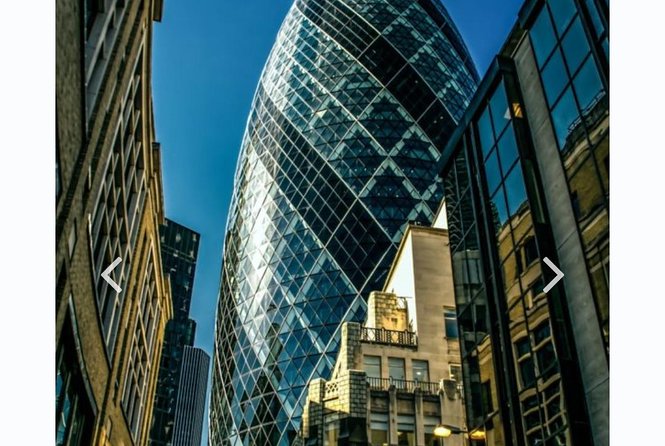
One of the first landmark stops is Shakespeare’s Globe Theatre. You’ll visit the site connected to the original Globe, and you’ll also walk past the newer Globe nearby. The time here is brief—around 10 minutes—but it’s a good example of how this tour uses quick stops without skimping on context.
What makes this stop valuable is the contrast. You’re not only looking at a famous modern reconstruction or only listening to Shakespeare trivia. You’re standing in a place tied to the story of the Globe, then walking past the newer version so you can feel the continuity and the change.
Even if you’re not a theater superfan, the Globe segment helps explain why London’s cultural power is tied to specific neighborhoods and public spaces. It’s also one of those quick photo opportunities that doesn’t eat your day.
And because admission is marked as free for this stop, you can treat it as sightseeing with minimal friction.
Borough Market: A Food-Lovers Stop That Teaches the City
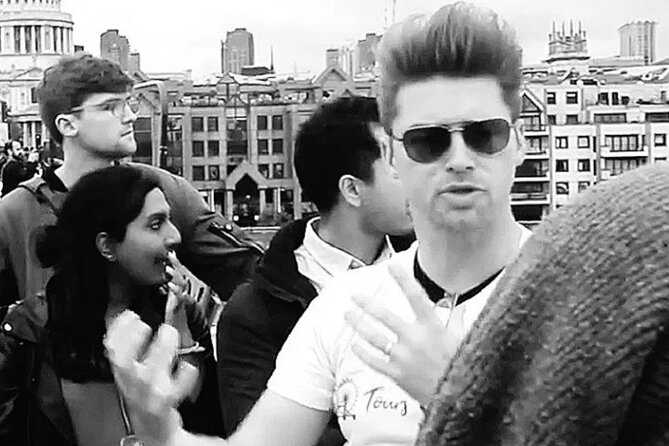
Next up is Borough Market, with about 20 minutes on the schedule. The market is described as the oldest market in London, and the vibe is clear: it’s food-centric, loud in the best way, and easy to enjoy even if you’re not buying anything.
This is where the tour does something smart for travelers: it ties history to everyday activity. Markets are how cities feed themselves, exchange goods, and build a local identity. Borough Market isn’t just a pretty stop—it’s a living example of how London kept reinventing trade over centuries.
You’ll walk through with the guide talking about what makes the market significant and how it fits into the wider city story. And if you want a practical payoff, this is one of the best points in the walk to decide whether you want a snack, something to drink, or to plan your next meal nearby. (That restaurant-and-activity guidance often shows up in the style of the guide—especially when the group gets a chance to ask questions.)
There’s no admission ticket required for this stop based on the tour details, so you’re free to spend your time looking and tasting at your own pace.
Leadenhall Market: The Arcade Look and the Harry Potter Connection
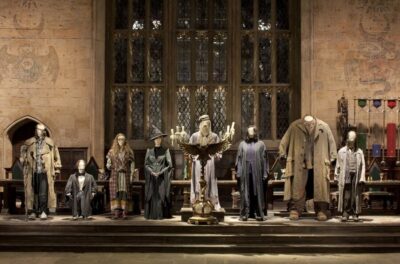
Between the big-name landmarks, you’ll get time at Leadenhall Market—often described as an old-styled market space that feels straight out of a film. The tour also points out that it has been used as a setting for Harry Potter.
You should expect a different mood here than at Borough Market. Leadenhall Market tends to feel more architectural and atmospheric, like you’re walking through an older London “set” that still functions as a market. Even if you’re not chasing movie locations, it’s a good reminder that London’s historic looks are not frozen in time. They’re still part of how people move through the city and shop.
This stop is also a useful break in the walking rhythm. You get a chance to slow down, take in details, and reset before moving toward the river views and the Tower area.
London Bridge and the Great Fire Story: How Disaster Shapes Cities
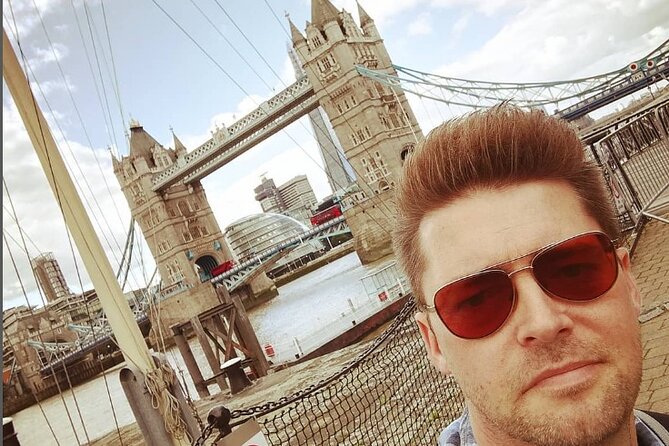
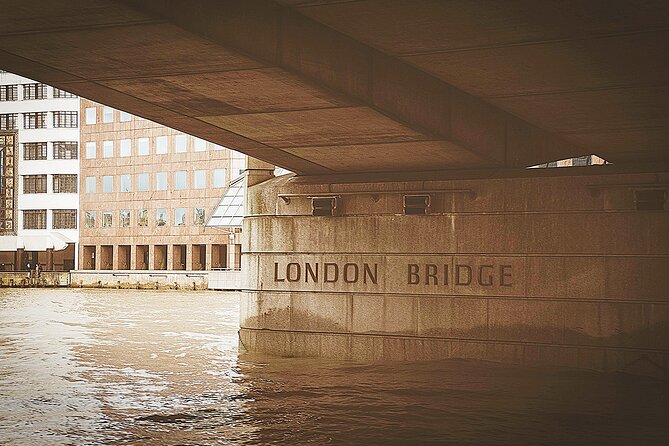
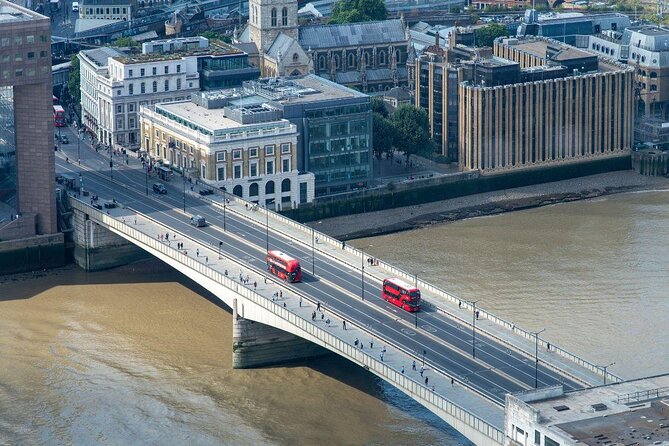
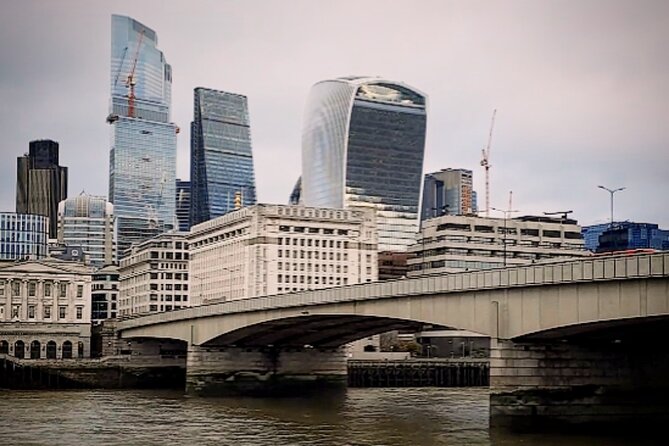
Then you head to London Bridge, with around 10 minutes allocated to the stop. The narration covers the bridge’s crazy past, and the story expands into the Great Fire of London as you go a bit deeper into what shaped the city afterward.
This is one of those segments where a walking tour can beat reading. When you’re standing near the river crossings and hearing how London changed, the Great Fire stops being a dry textbook event. It becomes about decisions, rebuilding, and what happens when a city’s systems break.
You’ll also get a sense of why bridges are more than “crossing points.” In London, they’ve been linked to commerce, movement, and repeated pressure to adapt. That’s the kind of context that sticks.
If you like history that connects cause and effect—this is the moment where the tour’s storytelling probably feels most satisfying.
Toward Tower Bridge and the Tower of London Views
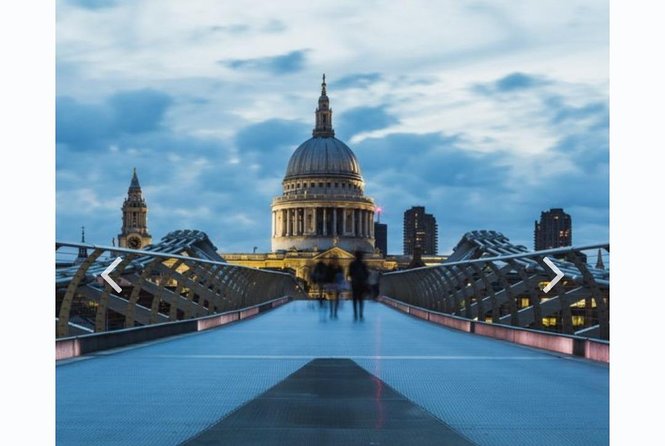
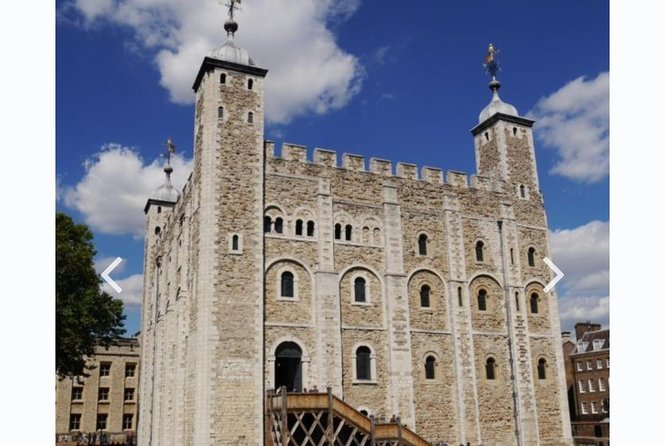
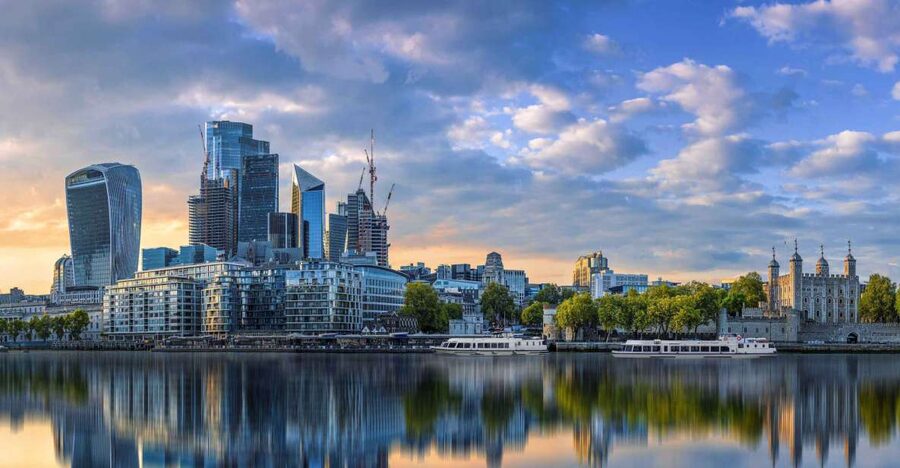
After London Bridge, you’ll see Tower Bridge and get views toward the Tower of London. The emphasis here is on perspective: you’re walking the area and taking in the shapes of the river infrastructure and the iconic fortress-like presence of the Tower.
The tour then continues with a short walk connecting the area toward Brick Lane and Whitechapel. That’s a good way to end the story. You get major landmark sights, then you shift toward neighborhoods that are often associated with London’s more street-level character.
As a final note, the structure of the route keeps it fun for mixed groups. If someone in your party wants famous landmarks, they get them. If someone else wants “how London actually looks on foot,” they also get that through the backstreets-and-corners style route.
Pace, Walking Comfort, and How to Dress
This tour runs about 1 to 2 hours and stays small, with up to 12 travelers. The stops are short, which is great for keeping the energy up—but it also means you’ll want to be ready for quick transitions.
Plan for city walking: comfortable shoes are a must. Also, London weather loves surprises. Dress in layers so you can adjust when the wind off the river shows up.
If you’re traveling with kids or older adults, the pace can still work for many people because it’s guided and structured. Just keep expectations realistic: this is a route with movement, not a sitting-and-strolling museum crawl.
Price and Value: Is $94.61 Worth It?
At $94.61 per person for a 1–2 hour guided walk, this isn’t the cheapest way to spend an afternoon in London. But it can be good value if you care more about interpretation than checklists.
Here’s why. You’re paying for:
- a professional guide who narrates and answers questions,
- a route that strings together major landmarks plus market and bridge storytelling,
- small group conditions (max 12), which improves the quality of interaction,
- and stops where admission is marked as free for certain listed sights.
If you were trying to recreate this experience on your own—finding the right sequence, understanding what connects each place, and planning a logical backstreet route—you’d likely spend money on transit, time getting lost, and lots of reading on your phone. The guide compresses that work into one smooth walk.
Also, the ending at Tower Hill is practical. You’re not done in a random corner. You’re positioned for the next leg of your day, whether that’s another viewpoint, a meal, or a museum.
Who Should Book This Tour (and Who Might Skip It)
I’d recommend this tour if you:
- want a history-focused walking route that also feels like London now,
- enjoy markets and city streets more than indoor-only sightseeing,
- like asking questions and getting direct answers from a guide,
- and want a route that feels less cookie-cutter than “stand here, take photo, move on.”
You might consider a different option if you:
- strongly prefer long stays at single sites,
- dislike walking routes with multiple brief stops,
- or want a tour that centers only on one major attraction.
The small group size helps, and the guide attention is a standout point in the experience—especially in the way guests describe the tour as personal and helpful, not scripted.
Should You Book It?
If your goal is to understand London as a living city—with the Tower, bridges, Shakespeare connections, markets, and disaster rebuilding all placed into one sensible route—this is a strong choice. The biggest reason to book is the format: short but meaningful stops, good geographic setup from the St Paul’s area, and a guide who keeps the story moving while you’re still seeing the real streets.
If you’re on the fence, I’d use this rule: book it if you want guidance and storyline more than you want a long list of attractions. Skip it if you want slow pacing or mostly indoor time.
FAQ
How long is the London Past & Present Backstreet Historical Tour?
The tour runs about 1 to 2 hours.
How many people are in the group?
The tour has a maximum group size of 12 travelers.
Where do you meet and where does the tour end?
You start at 1 Cheapside, London EC2V 6AA, and you end near Tower Hill, by the Tower of London next to Tower Hill Station.
What is included in the price?
The tour includes a tour guide.
Are there any admission tickets required for stops?
For the listed stops such as Shakespeare’s Globe Theatre, Borough Market, and London Bridge, the tour notes admission ticket free for those segments.
What is the cancellation policy if plans change?
You can cancel for a full refund up to 24 hours in advance of the experience start time.
More Historical Tours in London
- London Small Group Tour of Historical Pubs
★ 5.0 · 10,422 reviews - Soho Music & Historic Pubs Tour
★ 5.0 · 1,993 reviews - London: Historic Pubs of Central London Walking Tour
★ 4.9 · 1,065 reviews - London: Soho Music and Historic Pubs Walking Tour
★ 4.9 · 836 reviews - Royal Historic Pubs Walking Guided Tour in London
★ 5.0 · 803 reviews
More Tours in London
- From London: Harry Potter Warner Bros Studio Tour
★ 4.7 · 26,588 reviews - Magical London: Harry Potter Guided Walking Tour
★ 4.7 · 22,044 reviews - London: Warner Bros. Studio Harry Potter Tour & Branded Bus
★ 4.7 · 19,194 reviews - London Big Bus Hop-On Hop-Off Tour with Optional River Cruise
★ 3.5 · 10,803 reviews - London Small Group Tour of Historical Pubs
★ 5.0 · 10,422 reviews
More Tour Reviews in London
- From London: Harry Potter Warner Bros Studio Tour
★ 4.7 · 26,588 reviews - London: Westminster to Greenwich River Thames Cruise
★ 4.5 · 22,836 reviews - Magical London: Harry Potter Guided Walking Tour
★ 4.7 · 22,044 reviews - London: Madame Tussauds London
★ 4.6 · 20,915 reviews - London: Warner Bros. Studio Harry Potter Tour & Branded Bus
★ 4.7 · 19,194 reviews
Just reviewed around London





Historical Tours, compared.
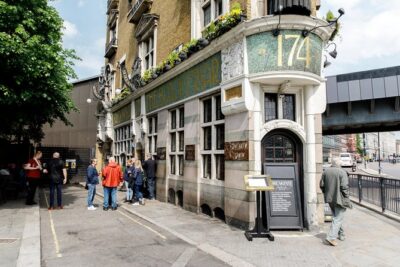 ★ 5.0London Small Group Tour of Historical PubsFrom $4010,422 reviews
 ★ 5.0Soho Music & Historic Pubs TourFrom $441,993 reviews
 ★ 4.9Historic Pubs of Central London Walking TourFrom $391,065 reviews
 ★ 4.9Soho Music and Historic Pubs Walking TourFrom $39836 reviews
 ★ 5.0Royal Historic Pubs Walking Guided Tour in LondonFrom $44803 reviews
 ★ 5.0Private Group: Historical Pub Walking Tour of LondonFrom $173660 reviews
 ★ 4.6Rock ‘n’ Roll History TourFrom $74645 reviews
 ★ 4.7Westminster Abbey Tour with a Royal Heritage GuideFrom $93614 reviews
Browse the lists this tour appears in