
Reviewed · HISTORICAL TOURS
London: Natural History Museum Guided Tour w/ Priority Entry
Blue whales greet you the moment you walk in. This Natural History Museum guided tour uses priority entry to get you into the action fast, then focuses on the headliners you’ll remember: Hintze Hall, dinosaur rooms, and the Darwin Centre.
I really like the way the guide turns huge galleries into a clear path, especially when you’re staring up at the suspended skeletons and trying to work out where to go next. I also like the mix of big-ticket science topics—dinosaurs, geology, evolution, and research specimens—in just 90 minutes. One thing to consider: 90 minutes moves quickly, so you won’t see every nook, and the museum can feel noisy when crowds build.
If you’re short on time but long on curiosity, this is a smart way to get oriented and still have fun. The tour’s pace is usually described as perfect, but if you want a slower, deeper tour of one gallery, you may find it more like a focused highlights walk than a full museum marathon.
In This Review
- Key things you’ll notice on this guided tour
- Hintze Hall first: the blue whale moment that frames your whole visit
- Priority entry + a 90-minute rhythm: what that time box really means
- How the dinosaur stops land: T. rex, fossils, and a guided storyline
- Earth science you can actually picture: volcanoes, gemstones, and evolution
- The Darwin Centre: behind-the-scenes research energy
- Earthquake simulator and interactive displays: fun without feeling childish
- Victorian building + crowd noise: planning your comfort inside
- What’s included, what’s not, and how to judge the value
- Meeting point near South Kensington: find the Embassy entrance and start smart
- Rules and basics: camera, water, and the flash line
- Who should book this guided tour?
- Should you book London: Natural History Museum Guided Tour w/ Priority Entry?
- FAQ
- How long is the Natural History Museum guided tour?
- What is included in the price?
- Are special exhibitions included?
- Is flash photography allowed?
- Where do we meet the guide?
- Is the tour wheelchair accessible?
Key things you’ll notice on this guided tour
- Priority entry helps you get moving into the museum without losing your whole visit to queues
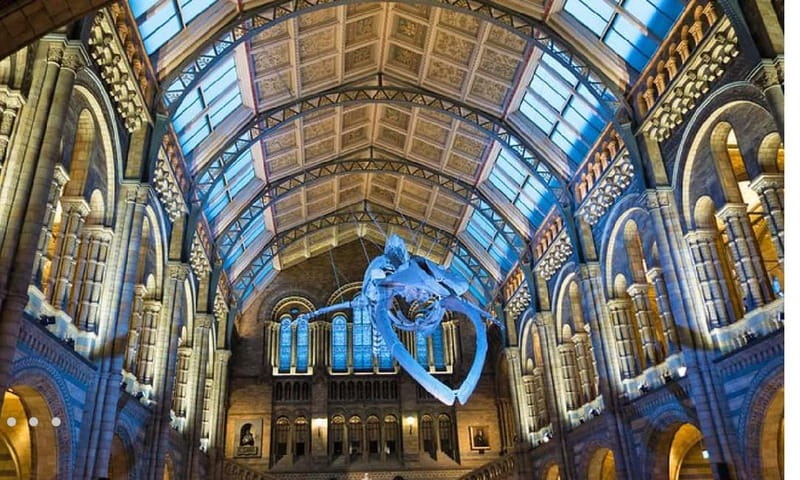
- Hintze Hall sets the tone immediately, with the iconic blue whale skeleton overhead
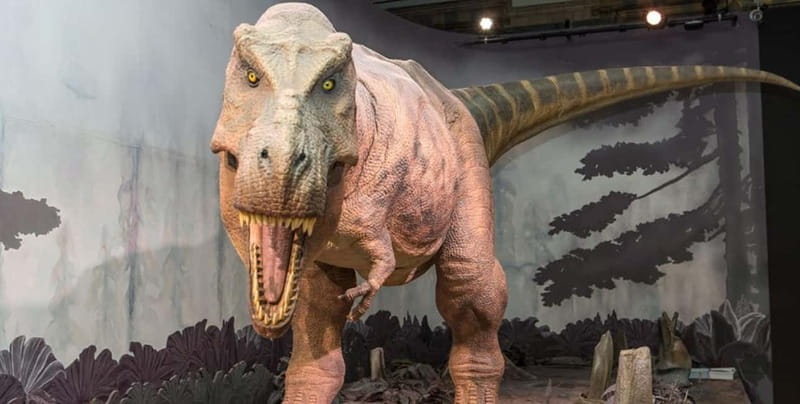
- Life-sized dinosaur moments, including a life-sized animatronic T. rex, make the science feel real
- Darwin Centre access shows behind-the-scenes research areas plus preserved specimens
- Interactive learning includes displays for all ages and an earthquake simulator
Still deciding? A handful more London outings we rated
- Magical London: Harry Potter Guided Walking Tour
★ 4.7 · 22,044 reviews - London: Emirates Stadium Entry Ticket and Audio Guide
★ 4.7 · 5,513 reviews - London: Christmas Lights Bus Tour With Live Guide
★ 4.0 · 5,410 reviews - Stonehenge, Windsor Castle and Bath Full Day Guided Tour
★ 4.5 · 5,346 reviews
Hintze Hall first: the blue whale moment that frames your whole visit
Start at Hintze Hall, where the blue whale skeleton hangs in a way that makes you stop mid-step. It’s not just a photo op. The tour uses this as your visual anchor—once you’ve seen that ceiling-scaled presence, everything else in the museum feels part of the same story about Earth and life.
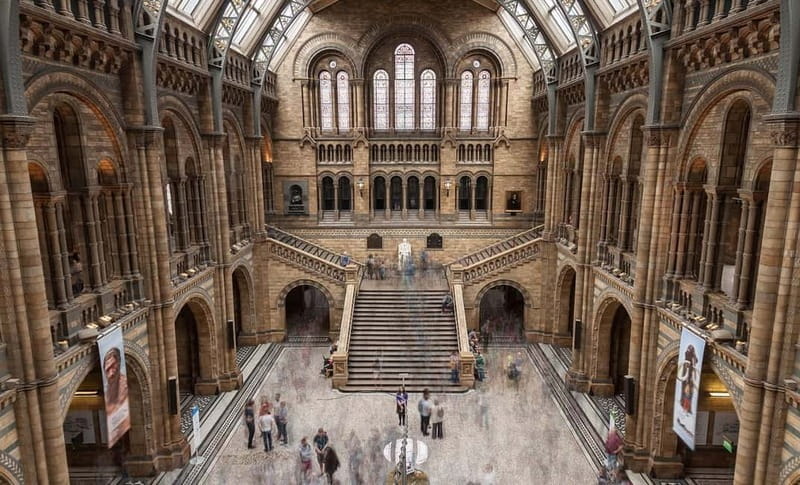
I like that the guide doesn’t treat the museum like a random checklist. The opening helps you understand the museum’s layout and themes right away, so you’re not wandering with a vague sense of direction. If you’re visiting for the first time, this is the moment that helps everything else click.
And yes, the space can be lively. One visitor noted the museum felt a bit noisy, even with a guide. Still, if you go in expecting crowds and echo, you’ll be fine—and you’ll get a lot more out of the tour because you’re listening for the key connections, not trying to hear every word in the loudest spot.
Priority entry + a 90-minute rhythm: what that time box really means
A 90-minute guided tour sounds short until you realize how enormous the Natural History Museum is. This is a highlights approach with just enough structure to keep you from wasting time deciding where to start.
The practical value is obvious: you walk in ready, not frazzled. People specifically liked the idea of skipping the worst of the entry lines, and priority entry does exactly that—especially on busy days when the museum is packed with families and school groups.
The tradeoff is also real. Several comments point out that in 90 minutes you only touch a few parts of the museum. That’s not a flaw if you’re using the tour as a strategy: you’ll leave with a mental map and a list of what you want to return to later on your own.
If you hate rushing, consider pairing this tour with a longer self-guided visit the same day. If you’re okay with a fast, focused museum taste test, this duration is a good fit.
How the dinosaur stops land: T. rex, fossils, and a guided storyline
Dinosaurs are the obvious “must see,” but the real win on a guided format is how the guide connects the displays. Instead of you staring at labels one by one, the tour helps you build a sequence—what you’re looking at, why it matters, and how it fits into bigger questions about Earth’s changes over time.
A standout is the life-sized animatronic T. rex. It’s hard to ignore and it changes the mood from static fossils to something that feels almost alive. It also gives kids and adults an easy entry point: even if you’re not a fossil expert, you instantly understand why scientists use dramatic scale and behavior models to explain extinct animals.
One caution: because it’s a “highlights” tour, you may not get to linger as long as you want. If you’re the type who could spend an hour comparing teeth or tracking down specific fossil stories, you’ll probably want follow-up time inside the museum.
But if you want the most memorable dinosaur moments plus context, this stops-first approach works.
Still deciding? A handful more London outings we rated
Earth science you can actually picture: volcanoes, gemstones, and evolution
After dinosaurs, the tour moves into the museum’s Earth and life themes—geology, volcanoes, rare gemstones, and evolution of mammals and early humans. This section is where the guide’s job matters most, because it’s easy to get lost in categories that sound technical.
The Earth geology and volcano focus is useful because it gives you a framework for what you’re seeing. When you understand the basic “how the planet changes” storyline, rocks and mineral displays stop being random shiny objects and become evidence of processes across deep time.
Gemstones can be a similar unlock. They’re beautiful, but a guide can help you notice features and material types in a way you might miss alone. You’ll still be impressed just by seeing the collections, but you’ll also leave with a better grasp of how Earth’s chemistry turns into what you can hold and look at.
Evolution, mammals, and early humans add another layer. The museum doesn’t just show skeletons—it often tells you how traits change and how we fit into the wider timeline. The most valuable part of having a guide here is that you’re not just looking; you’re interpreting.
The Darwin Centre: behind-the-scenes research energy
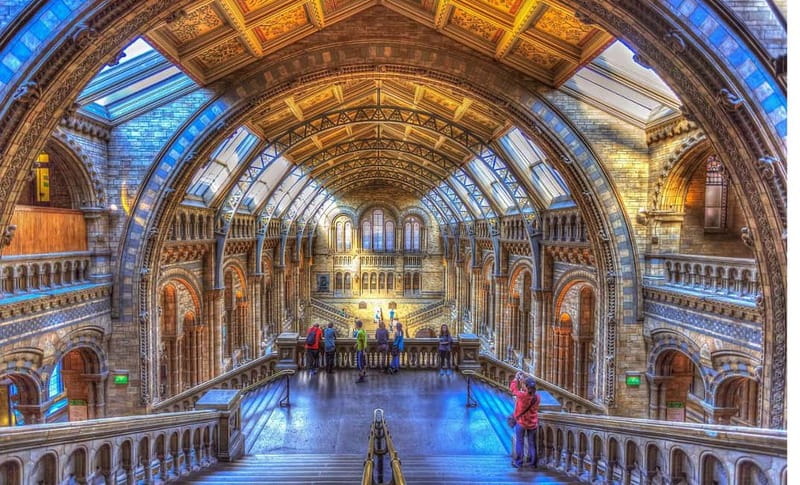
The Darwin Centre is one of the most interesting parts of this tour because it shifts from “look at the specimens” to “see how science gets done.” You get behind-the-scenes views of scientific research plus preserved specimens.
That matters because most museum visits are one-way: you look, you move on. Here, you get a stronger sense that specimens are living parts of ongoing work—studied, cataloged, and used to answer new questions.
The tour also tends to keep this section engaging, not overly academic. Visitors highlight that guides speak clearly and make explanations vivid, with a friendly tone. One person mentioned a philosophical touch from a guide named Mr. Newman, which is a good reminder that this isn’t always a strict lecture; it’s often storytelling that uses science as the backbone.
If you enjoy the idea of museums as research centers (not just beautiful rooms), this stop can be the one you feel most in your bones after you leave.
Earthquake simulator and interactive displays: fun without feeling childish
A big reason families like this tour is the interactive side. You’ll find displays for all ages, and the earthquake simulator is a hit because it turns a scary real-world phenomenon into something you can test and understand with your own body.
Interactive tools also help with attention span. When a museum gets crowded, it’s easy to feel like you’re just being carried through halls. An interactive moment gives you a break from constant walking and lets you engage instantly.
Even if you’re traveling solo, this kind of stop adds variety. You get science, plus hands-on learning, without needing prior knowledge.
Victorian building + crowd noise: planning your comfort inside
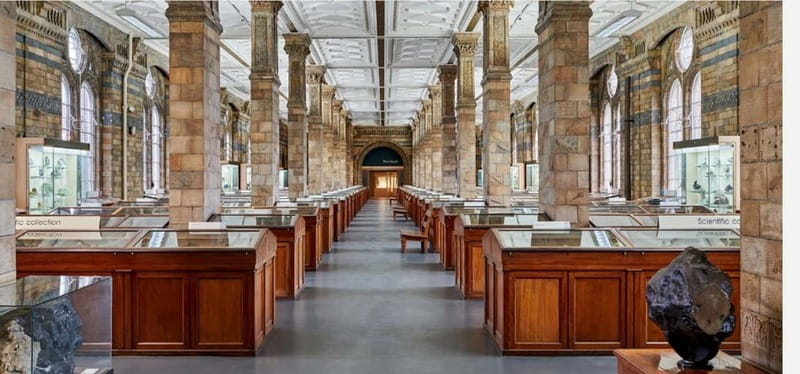
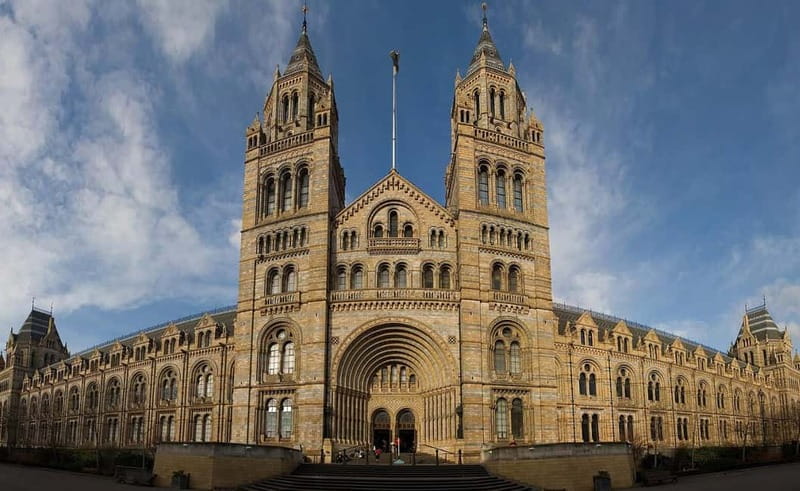
The museum’s setting is part of the experience. Victorian architecture adds weight and drama to the visit, and it’s a nice contrast to the science content—old stone and modern understanding in the same breath.
Still, here’s the honest comfort note: crowds can make the museum feel noisy. If you’re sensitive to sound, bring patience and plan for brief pauses. The good news is that guides are usually able to keep explanations clear even in busy areas, and that’s what keeps the tour from turning into background chatter.
Also, wear shoes you can walk in. This tour is only 90 minutes, but museum walking adds up fast on uneven crowd flow. Water is also a smart idea; you’ll thank yourself if you end up lingering after the tour.
What’s included, what’s not, and how to judge the value
This tour includes entrance to the Natural History Museum, access to permanent exhibitions, and a live English-speaking tour guide. Special exhibition tickets are not included.
That difference matters for value. If you’re only interested in the museum’s core galleries, you’re set. If you’re hoping to see a separate special exhibit that requires extra tickets, you’ll need to add that on top.
The price—about $33 per person—can be a good deal when you’re getting a guide plus priority entry for a museum this large. The “value” isn’t the number of rooms. It’s the time you save and the way the tour helps you choose what to prioritize inside the museum.
I’d think of it like this: you’re paying to get your bearings fast, learn a few key storylines, and leave with a short list of what you want to revisit.
Meeting point near South Kensington: find the Embassy entrance and start smart
You meet outside the Embassy of Venezuela at 1 Cromwell Rd, South Kensington, London SW7 2JB. Then the guide leads you toward the museum.
One practical tip: don’t rely on an incorrect map pin. There was at least one issue with a meeting-point map link not matching where people needed to go. Use the exact street address as your anchor, and give yourself the extra time to orient before the group assembles.
Once you’re walking together, the guide’s value shows up quickly—direction, pacing, and who you should look at what when.
Rules and basics: camera, water, and the flash line
Bring comfortable shoes, a camera if you like photos, and water. Flash photography isn’t allowed, so if you plan to shoot indoors, skip flash and let the museum lighting do its job.
This rule is small, but it affects how you take photos. If you’re used to taking nighttime-style photos with flash, remember you’ll need steady hands or adjust expectations for indoor lighting.
Who should book this guided tour?
This tour is a strong match if you:
- want a first-visit orientation to the Natural History Museum
- like science topics but don’t want to plan a complex self-made route
- are traveling with kids and want interactive moments like the earthquake simulator
- have a limited time window and want priority entry and a guide-led highlights plan
It may be less ideal if you:
- expect to see every gallery in depth during the 90 minutes
- prefer very quiet, slow pacing
- need very specific accommodations, since there’s conflicting accessibility information listed for wheelchair visitors (see below)
Should you book London: Natural History Museum Guided Tour w/ Priority Entry?
I’d book it when you want the museum’s biggest ideas and best-known displays without spending your whole visit just figuring out your next turn. Priority entry is a real advantage in a place this popular, and Hintze Hall plus Darwin Centre gives you variety: spectacle up top, research back behind the scenes.
Skip it only if you’re planning to dedicate an entire day solely to going gallery-by-gallery and you strongly prefer self-guided wandering over a guided route. In that case, you might get more value from a longer independent visit plus a separate plan for any special exhibitions.
If you’re on the fence, here’s the simplest way to decide: you’re paying for direction and a high-impact 90-minute route. If that’s your style, this tour fits.
FAQ
How long is the Natural History Museum guided tour?
The tour runs for 90 minutes.
What is included in the price?
You get entrance to the Natural History Museum, access to permanent exhibitions, and a live English-speaking tour guide.
Are special exhibitions included?
No. Special exhibition tickets are not included.
Is flash photography allowed?
No, flash photography is not allowed.
Where do we meet the guide?
You meet outside the Embassy of Venezuela, 1 Cromwell Rd, South Kensington, London SW7 2JB, and then you walk to the museum.
Is the tour wheelchair accessible?
The information provided includes a wheelchair accessibility note, but it also lists wheelchair users as not suitable. Because of that contradiction, you should confirm details with the provider before booking.
More Guided in London
- Magical London: Harry Potter Guided Walking Tour
★ 4.7 · 22,044 reviews - London: Emirates Stadium Entry Ticket and Audio Guide
★ 4.7 · 5,513 reviews - London: Christmas Lights Bus Tour With Live Guide
★ 4.0 · 5,410 reviews - Stonehenge, Windsor Castle and Bath Full Day Guided Tour
★ 4.5 · 5,346 reviews - London Jack the Ripper Guided Tour with Ripper-Vision
★ 4.5 · 4,840 reviews
More Tours in London
- From London: Harry Potter Warner Bros Studio Tour
★ 4.7 · 26,588 reviews - Magical London: Harry Potter Guided Walking Tour
★ 4.7 · 22,044 reviews - London: Warner Bros. Studio Harry Potter Tour & Branded Bus
★ 4.7 · 19,194 reviews - London Big Bus Hop-On Hop-Off Tour with Optional River Cruise
★ 3.5 · 10,803 reviews - London Small Group Tour of Historical Pubs
★ 5.0 · 10,422 reviews
More Tour Reviews in London
- From London: Harry Potter Warner Bros Studio Tour
★ 4.7 · 26,588 reviews - London: Westminster to Greenwich River Thames Cruise
★ 4.5 · 22,836 reviews - Magical London: Harry Potter Guided Walking Tour
★ 4.7 · 22,044 reviews - London: Madame Tussauds London
★ 4.6 · 20,915 reviews - London: Warner Bros. Studio Harry Potter Tour & Branded Bus
★ 4.7 · 19,194 reviews
Just reviewed around London





Historical Tours, compared.
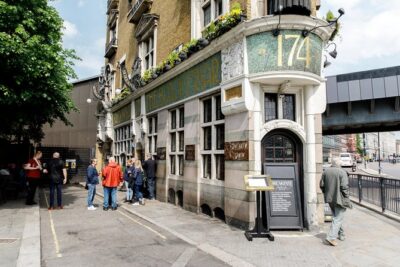 ★ 5.0London Small Group Tour of Historical PubsFrom $4010,422 reviews
 ★ 5.0Soho Music & Historic Pubs TourFrom $441,993 reviews
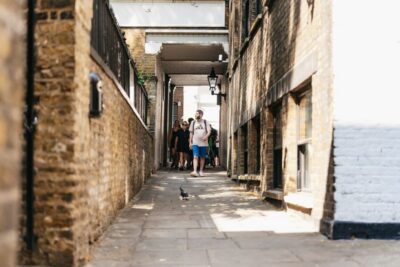 ★ 4.9Historic Pubs of Central London Walking TourFrom $391,065 reviews
 ★ 4.9Soho Music and Historic Pubs Walking TourFrom $39836 reviews
 ★ 5.0Royal Historic Pubs Walking Guided Tour in LondonFrom $44803 reviews
 ★ 5.0Private Group: Historical Pub Walking Tour of LondonFrom $173660 reviews
 ★ 4.6Rock ‘n’ Roll History TourFrom $74645 reviews
 ★ 4.7Westminster Abbey Tour with a Royal Heritage GuideFrom $93614 reviews
Browse the lists this tour appears in