
Reviewed · HISTORICAL TOURS
London: Natural History Museum Guided Tour
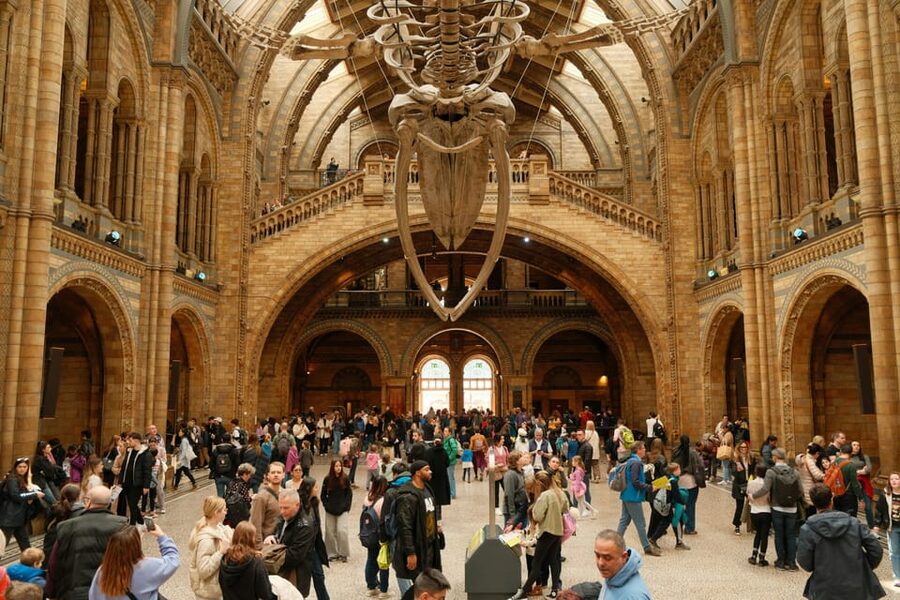
One giant skeleton can change your whole day. This guided run through London’s Natural History Museum lets you hit the big science moments fast, with a guide keeping the pace lively and the stories clear. I especially like the chance to stand face-to-face with Sophie the Stegosaurus and the way the tour threads evolution through fossils and famous science.
The other standout for me is the mix of eras and themes in one visit: a 1300-year-old Giant Sequoia cross-section, plaster casts from Pompeii, and even rocks from the Moon and Mars. One possible drawback: it’s still a highlights tour, so if you already know the basics on dinosaurs, volcanoes, and gems, you may want more time per exhibit.
In This Review
- Key highlights I’d plan around
- A Natural History Museum tour that actually feels doable in 2.5 hours
- Getting in smoothly: meeting outside the red telephone box
- Sophie the Stegosaurus and the Dodo: the fossils that pull you in
- Archaeopteryx and Darwin: the evolution thread you’ll remember
- The Giant Sequoia cross-section: a 1300-year-old reality check
- Pompeii casts and Vesuvius: science with a human pulse
- Earth’s Vault gems and rocks from the Moon and Mars
- Price and value: is $93 worth it for 2.5 hours?
- Who this tour fits best (and who should skip)
- Small watch-outs to plan for
- Should you book the London Natural History Museum guided tour?
Key highlights I’d plan around
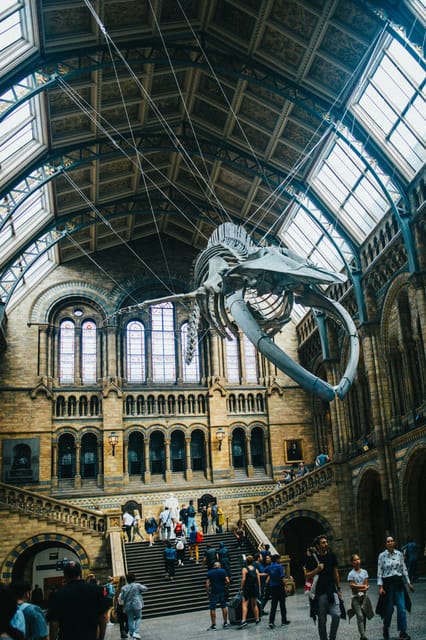
- Sophie the Stegosaurus: the museum’s most complete stegosaurus skeleton as your first “wow.”
- Archaeopteryx + Darwin: evolution stories connected across fossils and a landmark book.
- Giant Sequoia cross-section: a literal time machine—1300 years old when it was felled.
- Pompeii/Vesuvius casts: plaster casts that make a volcanic eruption feel real.
- Earth’s Vault + space rocks: gemstones plus rock samples from the Moon and Mars.
Still deciding? A handful more London outings we rated
- Magical London: Harry Potter Guided Walking Tour
★ 4.7 · 22,044 reviews - London: Emirates Stadium Entry Ticket and Audio Guide
★ 4.7 · 5,513 reviews - London: Christmas Lights Bus Tour With Live Guide
★ 4.0 · 5,410 reviews - Stonehenge, Windsor Castle and Bath Full Day Guided Tour
★ 4.5 · 5,346 reviews
A Natural History Museum tour that actually feels doable in 2.5 hours
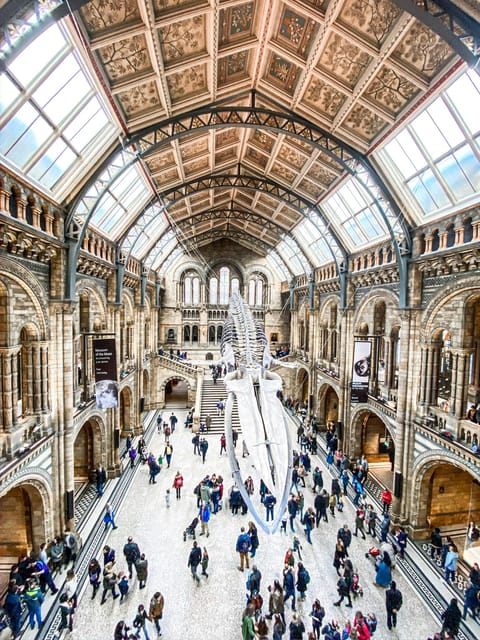
The Natural History Museum can swallow an entire afternoon. One minute you’re reading about minerals, the next you’re lost in fossils, then suddenly the gift shop is judging your life choices. This kind of guided, must-see-focused route helps you get your bearings fast, because you’re not trying to plan the museum from scratch while you’re staring at 80 million specimens’ worth of temptation.
You’re in good hands with a live English guide, and the format works best when you want real stories, not just directions. Instead of wandering randomly, you move from one high-impact exhibit to the next, with explanations designed to give you meaning, not homework.
Two details make this tour feel practical. First, it’s timed to keep momentum. Second, it includes a way to skip the line through express security, which matters in a busy central London museum.
Getting in smoothly: meeting outside the red telephone box
Your meetup point is outside the red telephone box opposite the Exhibition Road entrance to the Natural History Museum. That’s specific enough that you can arrive, check the street, and stop circling.
Why this matters: when you’re paying for a guided experience, you want your time going into exhibits, not into navigation. Also, the tour duration is listed as 2.5 hours, which is short enough that being late can compress your view of the best rooms.
If you’re traveling with family, a guide-led start also helps everyone settle in quickly. One guide name that shows up in feedback is Sasha, with comments about keeping the group engaged and moving at a pace that worked for families.
Sophie the Stegosaurus and the Dodo: the fossils that pull you in
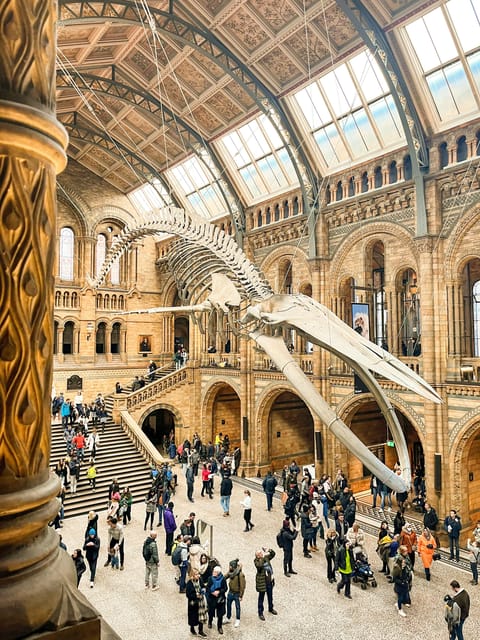
The tour’s early anchor is Sophie the Stegosaurus—described as the world’s most complete stegosaurus skeleton. You don’t need a degree to feel the scale here. Stegosaurus is already a crowd magnet, but the completeness is what makes it click: you can see the full silhouette and understand why this animal looked the way it did.
Right alongside that kind of attention-grabber, you’ll also see other iconic displays such as the long-extinct Dodo. That matters because the museum isn’t just about dinosaurs. It’s about how species disappear, how science records what’s left, and how humans try to interpret deep time from fragments.
What I like about starting with fossils like Sophie is the learning style. Your eyes lock onto a dramatic subject, and then the guide can explain the bigger ideas—classification, anatomy, and how paleontologists build a story from evidence. It’s much easier to listen when you’re not forcing yourself to care first.
Still deciding? A handful more London outings we rated
Archaeopteryx and Darwin: the evolution thread you’ll remember
One of the tour highlights is Archaeopteryx, often discussed as the “missing link” between dinosaurs and birds. The phrase gets repeated a lot, but the value here is that the guide can connect the exhibit to what scientists look for—features that suggest relationship and evolutionary change.
Then comes Darwin’s part of the story. You’ll get to see the first edition of On the Origin of Species, a scientific classic that turns the exhibit from entertainment into history of ideas. Seeing a milestone like this in a museum setting helps you grasp that evolution isn’t just a modern classroom topic. It’s part of how science developed, documented, and argued its way forward.
If you’re wondering whether this section is too “theory-heavy,” the format is built to be practical. You’re standing in front of real objects—fossil displays and a historic book—so your questions come naturally. And when the guide keeps the pace brisk, you don’t drift into lecture mode.
One more note from real-world experience: a guide named Wesley has been praised for keeping the time moving without dead moments. That’s the kind of tour you want if you don’t want to fight your attention span.
The Giant Sequoia cross-section: a 1300-year-old reality check
Next you’ll stand awestruck at a cross-section of a Giant Sequoia, noted as a 1300-year-old tree when it was felled in the 19th century. This is one of those stops that hits both emotion and science at the same time.
On the emotional side, it’s simple: seeing the rings means you can picture time as something physical. On the science side, it reinforces how museums turn natural materials into measurable clues—growth patterns, age, and the idea that forests have their own history the way rocks do.
If you’ve been living on fast-moving travel days, this kind of stop helps you slow down for a minute without trying too hard. It’s not just a photo opportunity. It’s a way to understand how long-scale time works, even if you only have a couple hours.
Pompeii casts and Vesuvius: science with a human pulse
Then the tour moves into the plaster-cast world of Pompeii. You’ll see casts of victims from the eruption of Mount Vesuvius. This is one of the most striking shifts in tone across the museum highlights you’ll cover.
Here’s why it’s valuable: volcanoes are easy to treat like distant headlines. Plaster casts make the event concrete—people become bodies with posture and presence. A guide can help you process it without sensationalism, focusing on what the casts represent and why such preservation happens.
A quick reality check for your expectations: this section is not gentle. If you prefer your museum moments light and purely whimsical, you might find it heavy. But if you like that science can be meaningful—real, uncomfortable, and then teach you something—this is exactly the kind of stop that earns its place in a highlights tour.
Earth’s Vault gems and rocks from the Moon and Mars
After fossils and ancient catastrophes, the tour turns toward the planet itself. You’ll have time to admire some of the finest gemstones from the museum’s Earth’s Vault, plus rock from the Moon and Mars.
This combo works well because it shows two ends of the same curiosity: the materials under your feet and the materials in space. Even if you don’t go deep into geology, a good guide can translate what you’re seeing—how minerals form, what makes something valuable visually, and how space rocks help scientists test theories about the solar system.
This is also a great spot for mixed-age groups. Kids often get hooked by shiny objects, while adults tend to enjoy the physics of how we know what’s out there. Either way, it’s one of those sections that keeps the museum from feeling like only one subject.
And since flash photography isn’t allowed, you’ll rely on your eyes and the guide’s pacing for the best viewing. That also means you won’t have the constant distraction of camera flashes bouncing around glass cases.
Price and value: is $93 worth it for 2.5 hours?
At $93 per person for about 2.5 hours, the value depends on what you want from your museum time.
Here’s the math in plain terms. You’re paying for:
- a live English guide,
- access to the museum’s main highlights,
- express security so you’re not losing time in a long queue,
- a private or small-group option (depending on what you choose).
If you go on your own, you can still see many major exhibits. But you’ll have to decide your route with your own instincts, and you’ll miss context that makes the exhibits “click.” This tour is designed to reduce that decision fatigue. In a museum this big, convenience is part of the product.
Where the cost may feel high is if you already know the basics and you want deeper rabbit holes. One piece of feedback pointed out that the tour can feel basic and expensive for what you get. That’s a fair warning. If your goal is a subject-specific expert deep dive, you may feel boxed in by the highlights format.
My take: it’s a strong value if you want guided clarity, quick wins, and a smooth, efficient museum visit. It’s less compelling if you treat museums like slow, self-guided reading libraries.
Who this tour fits best (and who should skip)
I’d steer you toward this tour if:
- you want a highlights plan that covers the museum’s star exhibits in a short window,
- you’re traveling with family and need a guide to keep attention steady,
- you like evolution, fossils, and natural science explained in approachable language,
- you appreciate a route that mixes time periods—from dinosaurs to Pompeii to space rocks.
You might skip it if:
- you’re very comfortable reading exhibits on your own and don’t need much interpretation,
- you’re looking for a long-form geology or paleontology lesson,
- you need full accessibility for wheelchair use, since the tour isn’t suitable for wheelchair users.
Also, if you’re sensitive to heavier historical content, take note: the Pompeii casts section is part of the highlights. You don’t have to avoid it, but it should be on your radar.
Small watch-outs to plan for
A few details can shape your experience more than you’d think.
- Flash photography isn’t allowed. Plan to rely on natural light and your phone camera without flash if you take photos.
- This isn’t listed as suitable for wheelchair users, so accessibility planning matters.
- The meeting point is specific, so if you’re late, you’re more likely to lose the first stops that set the tone.
- There’s at least one reported issue where a guide wasn’t present. If that happens to you, the best move is to contact the provider right away so you can resolve it quickly and not waste your museum window.
Should you book the London Natural History Museum guided tour?
Book it if you want your time in London’s Natural History Museum to feel structured, story-driven, and efficient. The lineup is strong: Sophie the Stegosaurus, the Archaeopteryx and Darwin connection, a 1300-year-old Giant Sequoia cross-section, Pompeii casts, and the planet-to-space science mix with gemstones and rocks from the Moon and Mars. For many visitors, that combination in 2.5 hours is exactly the kind of value you pay for: guidance that saves you from wandering.
Skip or consider alternatives if you already know the subject matter well and want a slower, more detailed education. In that case, a self-guided museum plan might feel better.
If you’re aiming for a smart “greatest hits” museum day, this tour is a very reasonable choice.
More Guided in London
- Magical London: Harry Potter Guided Walking Tour
★ 4.7 · 22,044 reviews - London: Emirates Stadium Entry Ticket and Audio Guide
★ 4.7 · 5,513 reviews - London: Christmas Lights Bus Tour With Live Guide
★ 4.0 · 5,410 reviews - Stonehenge, Windsor Castle and Bath Full Day Guided Tour
★ 4.5 · 5,346 reviews - London Jack the Ripper Guided Tour with Ripper-Vision
★ 4.5 · 4,840 reviews
More Tours in London
- From London: Harry Potter Warner Bros Studio Tour
★ 4.7 · 26,588 reviews - Magical London: Harry Potter Guided Walking Tour
★ 4.7 · 22,044 reviews - London: Warner Bros. Studio Harry Potter Tour & Branded Bus
★ 4.7 · 19,194 reviews - London Big Bus Hop-On Hop-Off Tour with Optional River Cruise
★ 3.5 · 10,803 reviews - London Small Group Tour of Historical Pubs
★ 5.0 · 10,422 reviews
More Tour Reviews in London
- From London: Harry Potter Warner Bros Studio Tour
★ 4.7 · 26,588 reviews - London: Westminster to Greenwich River Thames Cruise
★ 4.5 · 22,836 reviews - Magical London: Harry Potter Guided Walking Tour
★ 4.7 · 22,044 reviews - London: Madame Tussauds London
★ 4.6 · 20,915 reviews - London: Warner Bros. Studio Harry Potter Tour & Branded Bus
★ 4.7 · 19,194 reviews
Just reviewed around London





Historical Tours, compared.
 ★ 5.0London Small Group Tour of Historical PubsFrom $4010,422 reviews
 ★ 5.0Soho Music & Historic Pubs TourFrom $441,993 reviews
 ★ 4.9Historic Pubs of Central London Walking TourFrom $391,065 reviews
 ★ 4.9Soho Music and Historic Pubs Walking TourFrom $39836 reviews
 ★ 5.0Royal Historic Pubs Walking Guided Tour in LondonFrom $44803 reviews
 ★ 5.0Private Group: Historical Pub Walking Tour of LondonFrom $173660 reviews
 ★ 4.6Rock ‘n’ Roll History TourFrom $74645 reviews
 ★ 4.7Westminster Abbey Tour with a Royal Heritage GuideFrom $93614 reviews
Browse the lists this tour appears in