
Reviewed · HISTORICAL TOURS
London: Natural History Museum Entry Ticket and Guided Tour
Dinosaurs plus real answers in one hour. This Natural History Museum guided visit is a fast, focused way to hit the big names—like the Hintze Hall skeletons and the Wildlife Garden—without wasting time figuring out where to start. I like that you get headsets when needed, so the guide’s explanations stay clear even in busy galleries. I also like how the guide’s route points you toward a handful of must-sees you can then revisit on your own later. The main drawback: one hour is tight, so you’ll see highlights rather than getting lost in every gallery.
The tour is in English with a live guide, and it runs for about 1 hour at the museum in South Kensington. It’s wheelchair accessible, and it includes a reservation ticket plus express security screening so you can get in sooner. The overall rating is 3.8 from 212 reviews, with many people praising the guide experience.
What stands out most is the human touch. The guide doesn’t just point at objects; they connect what you’re seeing to the larger science story—how the museum’s scientists work with specimens and how that research shapes what we understand about nature.
In This Review
- Key things to know before you go
- Why the Natural History Museum hits hardest with a guided route
- Finding the meeting point at South Kensington, step by step
- Central Hall and the Diplodocus skeleton: your fast intro
- Hintze Hall essentials: blue whale, dinosaurs, and scale
- Volcanoes and Earthquakes plus minerals and gems
- Evolution gallery and butterfly collection: seeing patterns in life
- Wildlife Garden walk-through: London’s bird-and-bee break
- Headsets, express security, and how the 1-hour format works
- Is $76 worth it for a guided hour?
- Should You Book This Natural History Museum Guided Tour?
- FAQ
- How long is the guided tour?
- What language is the live guide?
- What’s included with the reservation?
- Do I get help with security lines?
- Where do I meet the guide near South Kensington?
- Is the tour wheelchair accessible?
- Is transportation or food included?
- What are the cancellation and pay-later options?
Key things to know before you go
- Skip-the-line express security helps you start sightseeing sooner, not later.
- Hintze Hall scale is the star, especially the blue whale skeleton and dinosaur skeletons.
- Central Hall and Diplodocus give you a memorable “museum intro” in the first stretch.
- Volcanoes and Earthquakes bring Earth science to life with clear, gallery-based storytelling.
- Wildlife Garden is a calmer change of pace inside the museum complex.
- Headsets make the 1-hour pace easier to follow, especially when it’s crowded.
Still deciding? A handful more London outings we rated
- London: Tower Bridge Entry Ticket
★ 4.7 · 15,560 reviews - London: St Paul’s Cathedral Entry Ticket
★ 4.7 · 9,813 reviews - London: London Eye and Madame Tussauds Combo Ticket
★ 4.7 · 7,428 reviews - Buckingham Palace: The State Rooms Entrance Ticket
★ 4.6 · 7,395 reviews
Why the Natural History Museum hits hardest with a guided route
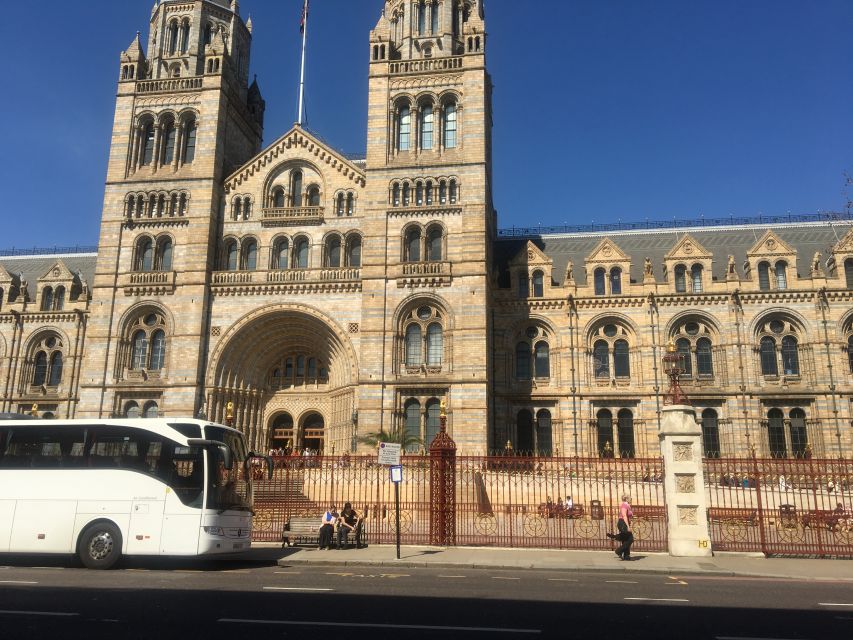
The Natural History Museum is famous for a reason: it’s not just displays, it’s scale. Even if you’ve seen dinosaur pictures a hundred times, standing near the real skeletons changes your sense of time and size. With a guide, you get more than “look at that”—you get a thread that helps the whole visit make sense.
I like this format because it respects your energy. In one hour, you’re not meant to do everything. You’re meant to land on the key rooms and leave knowing what to chase next. If you’re traveling with kids, it also helps because the guide can explain big ideas without you having to constantly stop and translate your way through signage.
You’ll also notice the difference in how the museum’s science is explained. The guide talks about how scientists preserve and study specimens—and how those studies contribute to our understanding of the natural world. That framing turns random objects into “evidence,” which is exactly what a place like this is.
The big consideration is time. If you tend to linger—especially in places like the minerals and gems or butterfly displays—you may feel a little rushed. The upside is that a guided highlights pass gives you a clean shortlist for a second visit (or a self-guided return later the same day).
Finding the meeting point at South Kensington, step by step
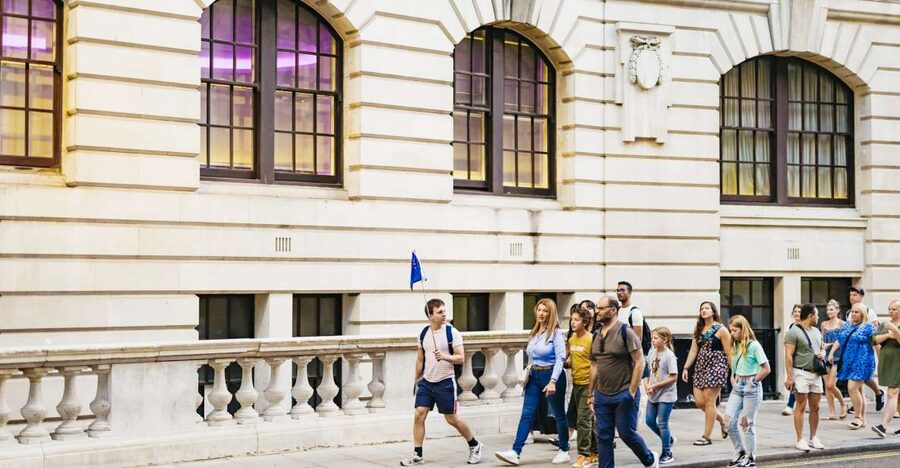
This tour starts at Metro South Kensington. From there, take the exit called Natural History Museum Ismaili Centre Exit. Your guide meets you at a metal plate marked The Royal Borough of Kensington and Chelsea on Exhibition Road SW7.
That level of specificity is helpful, but it also means you should arrive with enough time to orient yourself. On a museum day, it’s easy to walk a few minutes in the wrong direction and then feel flustered. I’d give yourself a cushion so you can find the exact spot calmly before your time starts.
Also, plan to go with “walking mode,” not “strolling mode.” You’ll be moving through multiple galleries with a steady pace. If you have a knee brace or other mobility needs, it’s worth letting the guide know immediately so the route can feel comfortable for you.
Central Hall and the Diplodocus skeleton: your fast intro
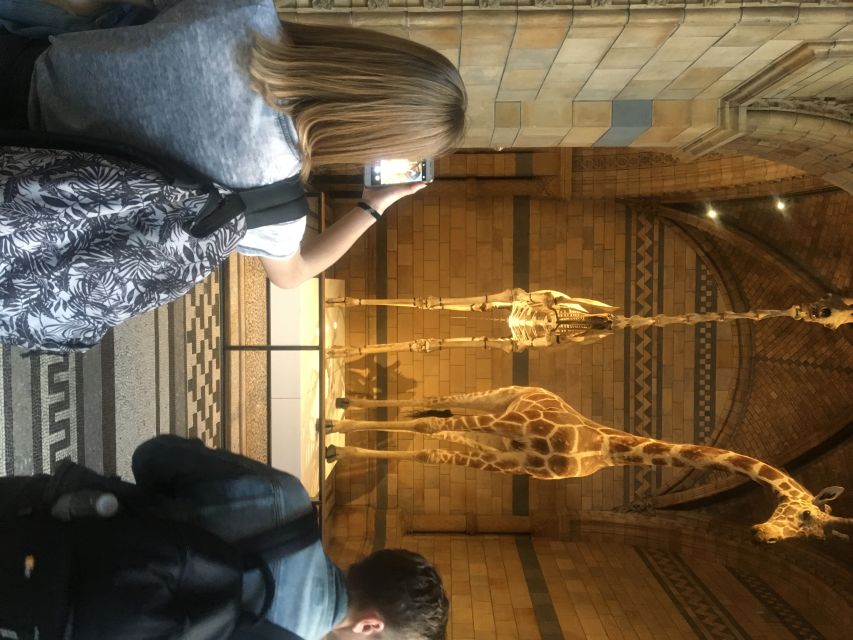
If you only see one thing early, it should be the Diplodocus skeleton in the Central Hall. That’s the kind of exhibit that instantly calibrates your brain. You stop thinking about museum time and start thinking in deep-time—what animals were like, how they lived, and how long Earth has been changing.
This is a smart first stop because it gives you a visual anchor. Once you’ve seen a long-necked dinosaur in the flesh (and in full scale), the rest of the museum’s Earth-and-life story feels more connected. The guide’s job here is to help you interpret the display quickly: what you’re looking at, and why the museum preserves objects like this in the first place.
One thing I like about starting with an iconic skeleton is that it reduces decision fatigue later. You don’t waste your energy trying to choose between the dinosaurs, the gems, and the science galleries. Instead, you know the “must-see big picture” already clicked.
Still deciding? A handful more London outings we rated



Hintze Hall essentials: blue whale, dinosaurs, and scale
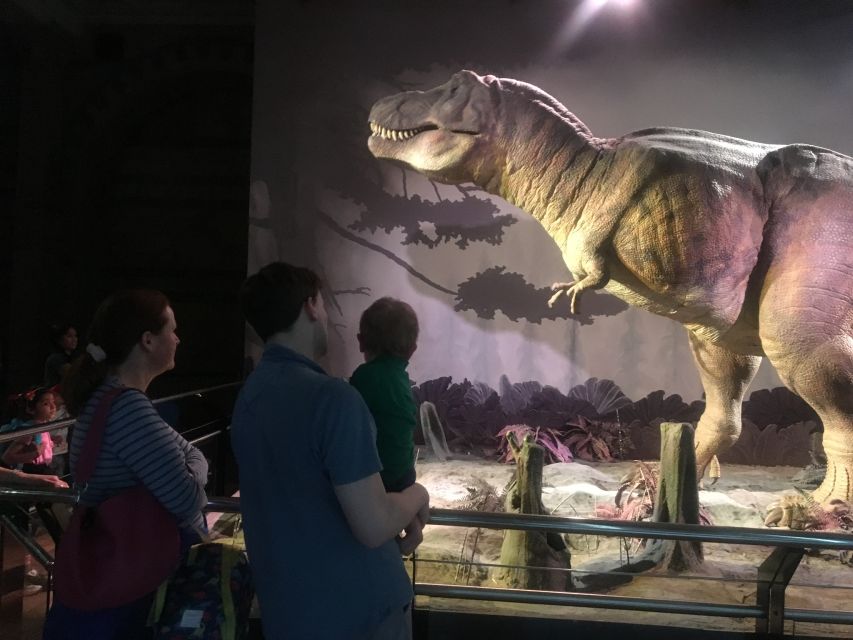
Next up is Hintze Hall, and it lives up to the hype. The blue whale skeleton is listed as 82 feet (25 meters) long, and that’s the kind of fact that’s almost hard to picture until you’re standing there. The sheer length makes it feel less like a display and more like a living creature suspended in time.
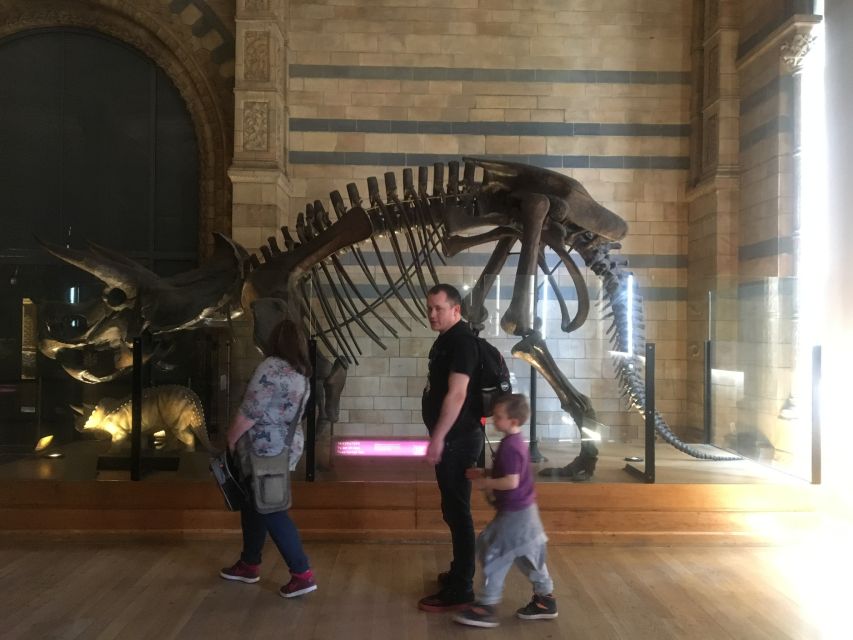
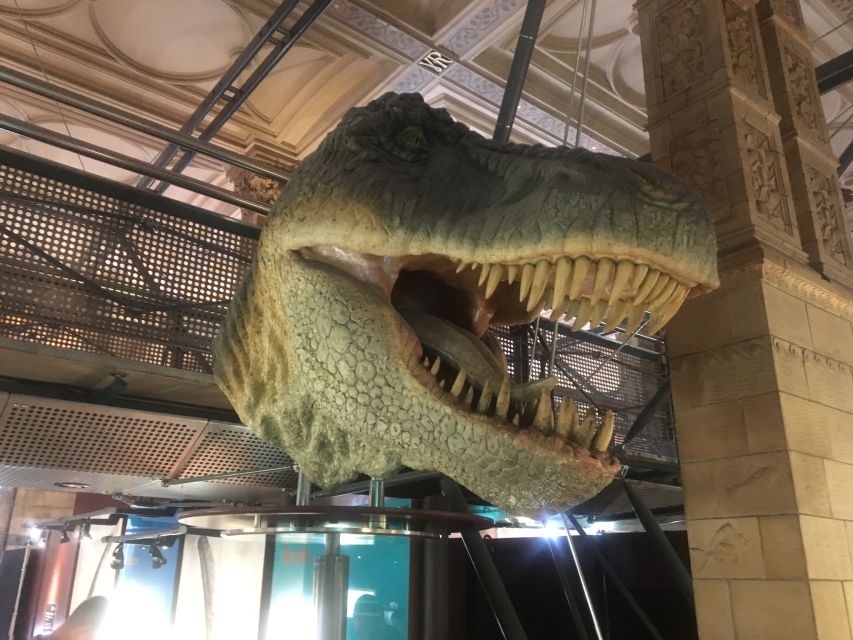
Then there are the massive dinosaur skeletons, which are usually what people come for in the first place. But here’s the real value of having a guide: they help you see beyond the “wow” into the “how and why.” You’re learning what the museum wants you to understand about evolution and Earth’s history, not just admiring the shapes.
This is also where headsets matter. If your group can’t hear well over the museum noise, the tour can feel choppy. With headsets included (when necessary), you’re more likely to keep the story straight while you look around.
The drawback, if you’re sensitive to crowds, is that this is one of the museum’s busiest zones. If you prefer quiet, treat Hintze Hall like your “pay attention” moment and then let your eyes rest in calmer spaces afterward—like the Wildlife Garden later in the route.
Volcanoes and Earthquakes plus minerals and gems
After the dinosaur power stops, the tour shifts into Earth processes and the materials beneath your feet. The Volcanoes and Earthquakes Gallery is where you start seeing Earth as an active system—dynamic, changing, and still shaping the planet now.
This is a good pairing with the earlier skeletons. One moment you’re looking at the physical record of life; the next you’re looking at the physical record of Earth’s forces. Together they help you understand that evolution didn’t happen in a vacuum. Earth’s changes influence habitats, environments, and survival.
The guide also points you to minerals and gems with intricate designs. Even if you don’t think you’re a “rocks person,” these displays can be surprisingly moving because they show how structure creates beauty. It’s also useful because it trains your eye: you start noticing patterns rather than just looking for something sparkly.
In a guided hour, you won’t get long, slow time in every display. But you will get direction—what to focus on, and what might be worth revisiting if you want more detail.
Evolution gallery and butterfly collection: seeing patterns in life
The Evolution gallery ties the visit together. You’re not just collecting random facts; you’re watching one big idea connect to many displays: life changes over time, and Earth’s history shapes that change.
Along the way, you’ll encounter items like the intricately detailed butterfly collection. This is one of those stops where the museum’s craftsmanship matters. Close-up patterns can feel like art, but the guide helps you connect them to biology and variation.
I like the way a guide handles this section because it prevents the visit from becoming “spot the pretty thing.” When explanations connect what you’re seeing to evolution, you start noticing differences in a more meaningful way. You’re learning to read a collection, not just admire it.
This part of the tour is often a solid choice for mixed ages. Adults tend to appreciate the science context, while kids usually latch onto the visuals. That said, if your group includes very young toddlers, the museum’s pace can be tough. The tour is designed to move through key highlights, and tiny attention spans may need extra breaks outside the guided plan.
Wildlife Garden walk-through: London’s bird-and-bee break
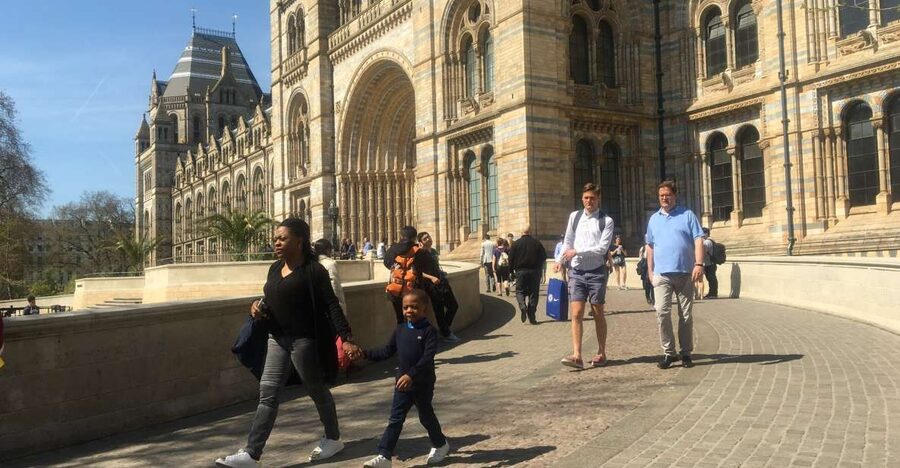
Toward the later part of the visit, you reach the Wildlife Garden—a haven for birds, bees, and other animals. This is a smart contrast after the indoor halls. It gives your brain a different kind of input: you’re still inside the Natural History Museum world, but nature feels closer and less locked behind glass.
The Wildlife Garden also changes the tone from “deep time” to “right now.” Even without a long stop, it’s a reminder that the natural world isn’t just a museum theme—it’s living and local. I like it because it makes the science feel practical, not distant.
If you’re traveling in warm weather, this garden stop can become a highlight on its own. If it’s cooler, you may want a bit more time later to warm up and return for a longer look. Either way, it’s a good way to end your guided hour on a less intense note.
Headsets, express security, and how the 1-hour format works
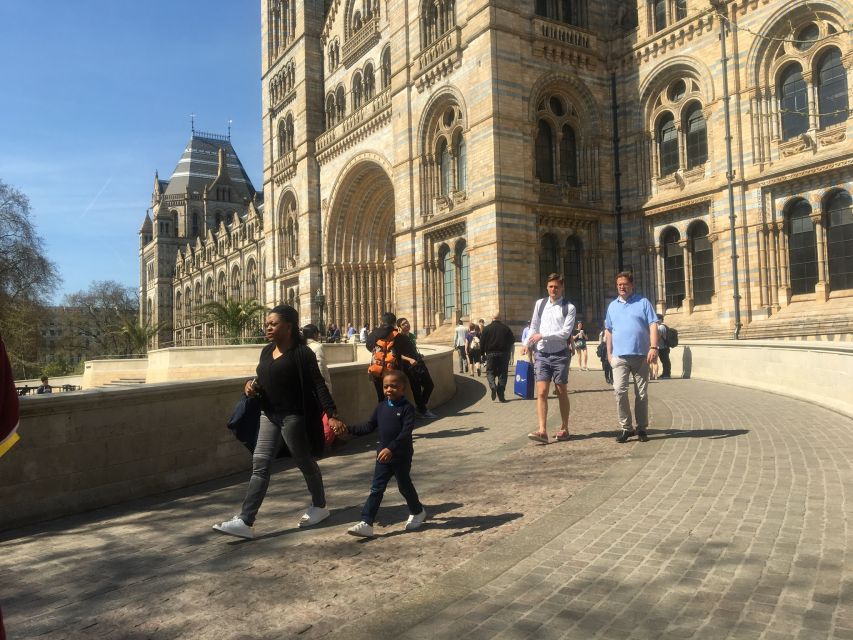
This tour is built for efficiency without turning into a sprint-for-the-sake-of-sprinting. You get express security screening, so you’re not stuck in long lines before you even start. Then you move through the museum’s top galleries with a guide who keeps the story organized.
Headsets are included to help you hear the guide if necessary. That sounds like a small detail, but in a museum setting it can be the difference between a smooth experience and a constant “what did they say?” moment.
Duration is listed as 1 hour, so the guide’s job is to hit key exhibits and explain what matters most. Many people love this for adults because it provides a clear overview. Parents also tend to enjoy it when the guide can answer questions and keep kids engaged while still covering the essentials.
The main limitation is that you’re not doing a slow, self-paced museum stroll. If you’re the type who likes reading every label, you’ll likely want extra time after the tour to linger. The best plan is to use the guided hour as your orientation, then return on your own to the displays you’re most curious about.
Is $76 worth it for a guided hour?
$76 per person can feel like a lot at first glance, especially because you still need to think about how much time you’ll spend in the museum overall. Here’s how I’d judge value for this specific experience:
You’re paying for three things that usually cost you time:
- a guide who explains the bigger story behind the objects
- a reservation ticket that helps you get in smoothly
- express security plus headsets, which reduces friction once you arrive
If you’re the type who would otherwise walk in and wander—then later realize you missed the best rooms—this tour can be a time-saver that pays for itself in mental energy. In a place this big, the “hidden cost” is decision fatigue and wasted transit between galleries.
If, on the other hand, you love museum label reading and you’re comfortable planning your own route, you might prefer to skip the guide and do self-guided at your own speed. This tour shines most when you want a structured highlights pass and a list of what to see next.
One more value note: the guide names that show up often here are friendly and interactive, including Paul, who is repeatedly described as helpful with questions and good at keeping the visit moving for different ages and needs. That matters because in a short tour, the guide’s pacing and communication are everything.
Should You Book This Natural History Museum Guided Tour?
Book it if you want a high-impact overview in a short window: dinosaurs in Hintze Hall, the blue whale skeleton, the Central Hall Diplodocus intro, plus the science galleries like Volcanoes and Earthquakes and Evolution, ending with the Wildlife Garden. It’s also a smart choice if you’d rather spend your time looking at objects than figuring out where to go first.
Skip (or plan extra solo time after) if you’re the slow-and-sure museum type who needs long stretches in one room. With only 1 hour, you’ll likely leave wanting more, not because the tour is lacking, but because the museum is that big.
If your schedule is tight, this guided highlights approach is a practical way to see the museum’s headline wonders and walk away with a clearer sense of the science behind them.
FAQ
How long is the guided tour?
The tour duration is listed as 1 hour.
What language is the live guide?
The live tour guide is English.
What’s included with the reservation?
The experience includes a guide, a reservation ticket, and headsets to hear the guide if necessary.
Do I get help with security lines?
Yes. The tour includes an express security check to help you skip the line.
Where do I meet the guide near South Kensington?
Meet at Metro South Kensington and take the exit Natural History Museum Ismaili Centre Exit. Then meet the guide at the metal plate The Royal Borough of Kensington and Chelsea, Exhibition Road SW7.
Is the tour wheelchair accessible?
Yes, the experience is listed as wheelchair accessible.
Is transportation or food included?
Transportation and food and drink are not included.
What are the cancellation and pay-later options?
You can cancel up to 24 hours in advance for a full refund. You can also reserve now and pay later.
More Tickets in London
- London: Tower Bridge Entry Ticket
★ 4.7 · 15,560 reviews - London: St Paul’s Cathedral Entry Ticket
★ 4.7 · 9,813 reviews - London: London Eye and Madame Tussauds Combo Ticket
★ 4.7 · 7,428 reviews - Buckingham Palace: The State Rooms Entrance Ticket
★ 4.6 · 7,395 reviews - Windsor Castle Admission Ticket
★ 4.7 · 7,032 reviews
More Tours in London
- From London: Harry Potter Warner Bros Studio Tour
★ 4.7 · 26,588 reviews - Magical London: Harry Potter Guided Walking Tour
★ 4.7 · 22,044 reviews - London: Warner Bros. Studio Harry Potter Tour & Branded Bus
★ 4.7 · 19,194 reviews - London Big Bus Hop-On Hop-Off Tour with Optional River Cruise
★ 3.5 · 10,803 reviews - London Small Group Tour of Historical Pubs
★ 5.0 · 10,422 reviews
More Tour Reviews in London
- From London: Harry Potter Warner Bros Studio Tour
★ 4.7 · 26,588 reviews - London: Westminster to Greenwich River Thames Cruise
★ 4.5 · 22,836 reviews - Magical London: Harry Potter Guided Walking Tour
★ 4.7 · 22,044 reviews - London: Madame Tussauds London
★ 4.6 · 20,915 reviews - London: Warner Bros. Studio Harry Potter Tour & Branded Bus
★ 4.7 · 19,194 reviews
Just reviewed around London





Historical Tours, compared.
 ★ 5.0London Small Group Tour of Historical PubsFrom $4010,422 reviews
 ★ 5.0Soho Music & Historic Pubs TourFrom $441,993 reviews
 ★ 4.9Historic Pubs of Central London Walking TourFrom $391,065 reviews
 ★ 4.9Soho Music and Historic Pubs Walking TourFrom $39836 reviews
 ★ 5.0Royal Historic Pubs Walking Guided Tour in LondonFrom $44803 reviews
 ★ 5.0Private Group: Historical Pub Walking Tour of LondonFrom $173660 reviews
 ★ 4.6Rock ‘n’ Roll History TourFrom $74645 reviews
 ★ 4.7Westminster Abbey Tour with a Royal Heritage GuideFrom $93614 reviews
Browse the lists this tour appears in